November 05, 2026
Reading Yin and Yang, the Bagua and the Five Phases

Daoism and Taoism are two English spellings for the same Chinese tradition. If you are looking at a pendant, mirror or framed inscription, start with what you can see. A pair of curved halves, a group of three lines and a written character are different kinds of marks. They need not mean the same thing simply because they share an object.
Yin and yang: look at the relationship
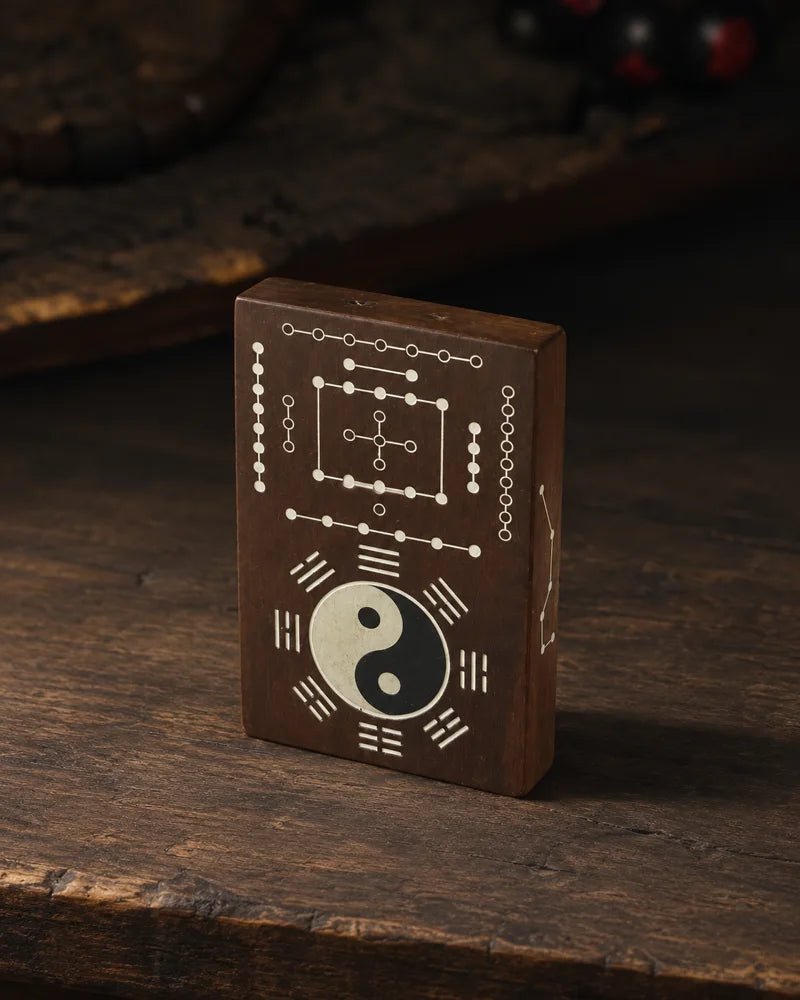
Think of the bright and shaded sides of a hill. As the sun moves, the relationship changes. Yin and yang describe complementary aspects in relation to one another, not a permanent contest between good and evil. The familiar paired curves are one way of representing that relationship. The ideas are part of wider Chinese thought, not exclusive signs of a particular temple or school.
Bagua: read the lines before the lettering
Bagua means “eight trigrams.” Each trigram has three lines, which can be broken or unbroken. On a round plaque or octagonal mirror, look for the groups of three around the edge. The central design may be a yin-yang motif, but the eight groups around it are a separate feature. A decorated object is not necessarily a working compass.
Five phases: a vocabulary for change
Wood, fire, earth, metal and water are known as the five phases, or wuxing. “Phases” is useful because these terms describe relationships and processes, not just five substances. A wood-phase association in a description does not mean the object itself is wooden. Material and symbolism belong in separate parts of a product description.
Choosing an object by intention
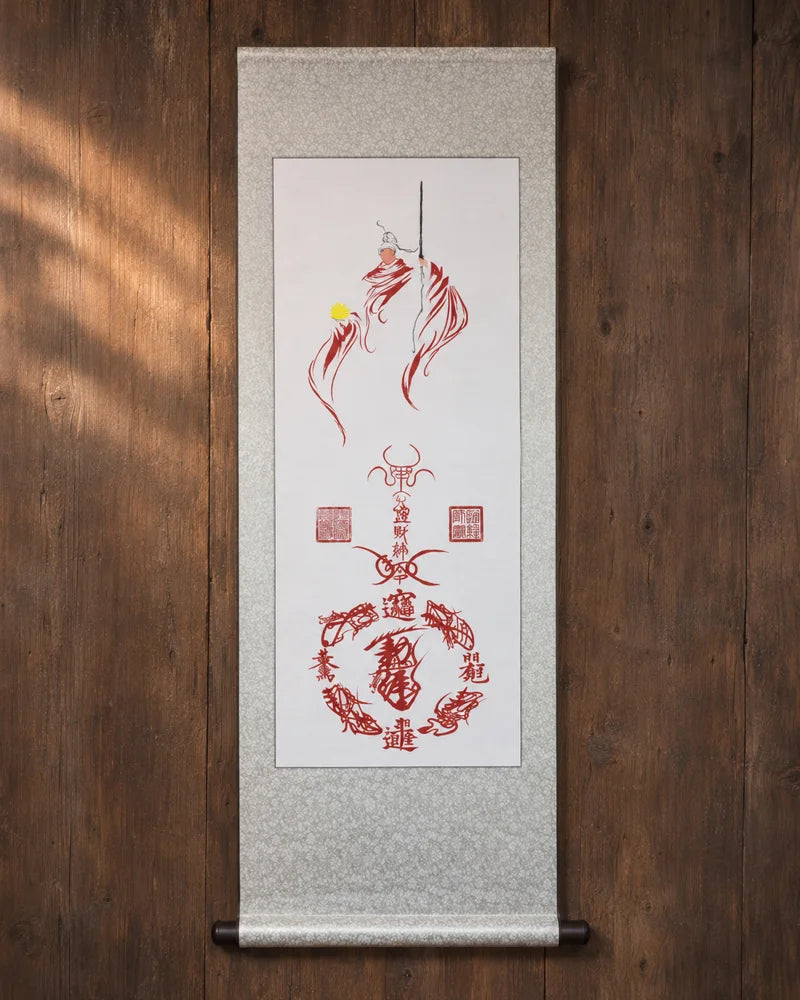
A wish for peace can make a peace inscription meaningful as a gift. Look for the actual character, motif or phrase that connects the piece to that wish. A ring of trigrams alone does not identify an inscription as a particular deity's name, and no symbol guarantees protection, health or a financial result.
When comparing pieces, read the front and reverse views together. Check whether a cord or stand is part of the offer, and use a stated measurement rather than guessing size from a hand-held photograph.
Browse Taoist jewelry and symbolic objects in Daojing
Questions when comparing symbolic jewelry
Does a five-phase association identify the material?
A symbolic association and the physical material are separate parts of a description. Use the item specification to identify its material.
How can I compare the symbol and the physical details?
Compare the front and reverse photographs with the named motif or inscription. Then check the stated material, dimensions and included cord or stand. A similar outline does not establish that two objects carry the same inscription.
Explore the Daojing collection, then compare the visible motif and listed details of the Octagonal Open-Center Bagua Taoist Pendant.