buddhist-jewelry
Understanding the Significance of Buddhist Prayer Beads
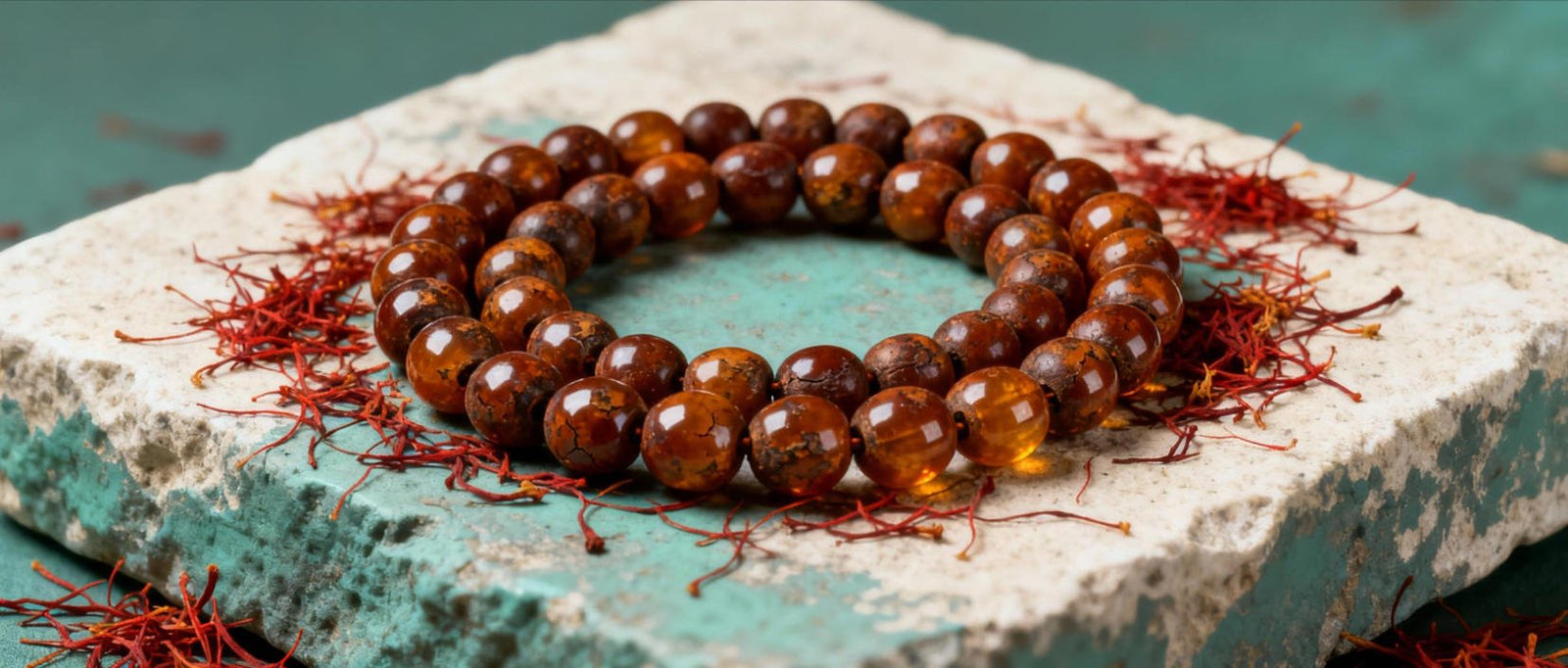
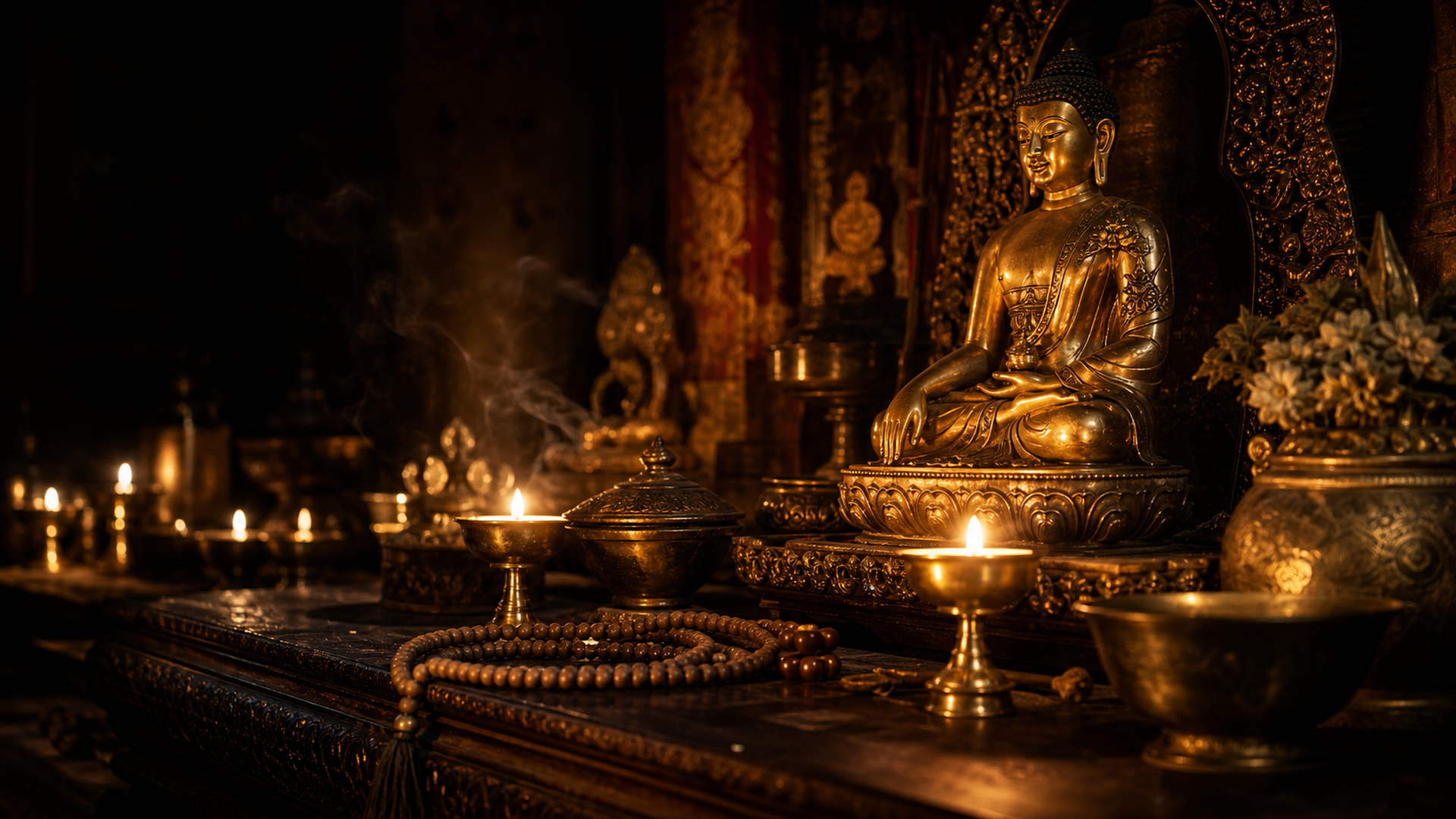
Buddhist prayer beads, known as malas or juzu in Japanese, have been an essential and cherished part of Buddhist practice for centuries. When you hold a string of these beads, you are connecting with a tradition that has supported millions on their path to enlightenment.
These are far more than simple accessories or pieces of jewelry; they are profound spiritual tools, imbued with deep meaning and designed to aid you in meditation, mindfulness, and personal growth. A mala is a tactile guide, a physical anchor for your mind as it navigates the vast inner landscapes of your consciousness.
In this article, we will journey together into the rich history and purpose of Buddhist prayer beads. We will explore the ancient origins of this practice, decode the sacred symbolism embedded in their design, and offer practical guidance on how you can use them to deepen your own spiritual practice.
The tradition of using prayer beads is a beautiful thread that connects thousands of years and spans across diverse cultures and religions. By understanding its story, you can more fully appreciate the power held within the mala you choose.
Each bead is hand-knotted by Tibetan artisans at monasteries in Nepal and Tibet, following centuries-old traditions passed down through generations of craftsmen.
On our recent journey through the ancient alleys of Kathmandu, we

The Ancient Roots: A Journey Through the History of Prayer Beads
The practice of using beads for prayer and meditation dates back thousands of years, with roots deeply planted in ancient India. Before their adoption into Buddhism, strings of beads known as japa malas were used in Hinduism for reciting mantras to deities.
This existing spiritual technology was a perfect fit for the meditative practices taking shape within Buddhism. It’s believed that Buddhist mala beads originated in India around the 8th century BCE, introduced as a practical tool to help practitioners count mantras and breathing cycles without losing focus.
One traditional story speaks of King Vaidunya, who was overwhelmed by the suffering in his kingdom and sought guidance from the Buddha. The Buddha advised him to string 108 seeds from the Bodhi tree and to recite the Three Jewels—"I take refuge in the Buddha, the Dharma, and the Sangha"—while passing them through his fingers.
By doing this with a focused mind, the king could calm his anxieties and attain a state of peace. This story beautifully illustrates the core purpose of the mala: to be a companion that helps quiet the "monkey mind" and bring you into the present moment.
As the teachings of the Buddha spread from India across the vast continent of Asia, the use of mala beads traveled with them. Each culture that embraced Buddhism adapted the mala to its own unique customs, materials, and artistic sensibilities.
In Tibet, malas are often made from Bodhi seeds, yak bone, or vibrant stones like turquoise and coral. In China and Japan, you might find malas crafted from fragrant sandalwood or carved peach pits.
This geographical spread showcases the remarkable adaptability and enduring appeal of mala beads. While their appearance may change, their fundamental purpose as a sacred aid for meditation remains constant. This cross-cultural adoption highlights a universal human need for tangible tools to connect with the spiritual, underscoring their timeless relevance in a busy world.
The Sacred Number: Unpacking the Symbolism of 108 Beads
A traditional Buddhist mala is composed of 108 beads, a number that holds profound significance in Buddhism and other Dharmic traditions. This number is not arbitrary; it is a sacred figure that reflects the cosmos, the human condition, and the path to enlightenment.
When you complete a full cycle of 108 mantras on your mala, you are engaging in a practice rich with layers of meaning.
The number 108 is believed to represent the 108 earthly desires or defilements (kleshas) that you must overcome to achieve Nirvana. These are the mental states that cloud the mind and cause suffering, such as greed, anger, and ignorance.
Each repetition of your mantra is a conscious step towards purifying one of these defilements, transforming suffering into wisdom and compassion. Your mala becomes a tool for this inner work, with each bead marking a small victory on your journey.
The significance of 108 extends into various spiritual and scientific realms:
- The Senses: It is said there are 108 types of feelings, derived from the six senses (sight, sound, smell, taste, touch, and mind) multiplied by three time periods (past, present, future), two conditions of the heart (pure and impure), and three emotional responses (like, dislike, and indifference). (6 x 3 x 2 x 3 = 108).
- Cosmology: In Vedic cosmology, the distance between the Sun and Earth is approximately 108 times the Sun's diameter, and the distance between the Moon and Earth is about 108 times the Moon's diameter. The number connects us to the celestial rhythms of our universe.
- The Heart Chakra: Spiritual traditions teach that there are 108 nadis, or subtle channels, that converge to form the heart chakra (Anahata). Chanting with a mala is thought to awaken this focus point of love and compassion.
In addition to the 108 counting beads, a mala features a larger, distinct bead known as the "guru" bead or "meru" bead. This bead represents the starting and ending point of your meditation cycle.
It symbolizes the student-guru relationship or the ultimate reality of enlightenment. When you reach the guru bead, you are encouraged to pause and reflect on your intention before continuing. It is traditional to turn the mala around and go back in the other direction rather than crossing over the guru bead, as a sign of respect for this symbolic anchor.
Many malas also feature a tassel at the end, which is more than decoration. The threads of the tassel come together as one, symbolizing our interconnectedness and oneness with the universe. It represents the state of enlightenment itself—a convergence of all things into a unified whole.
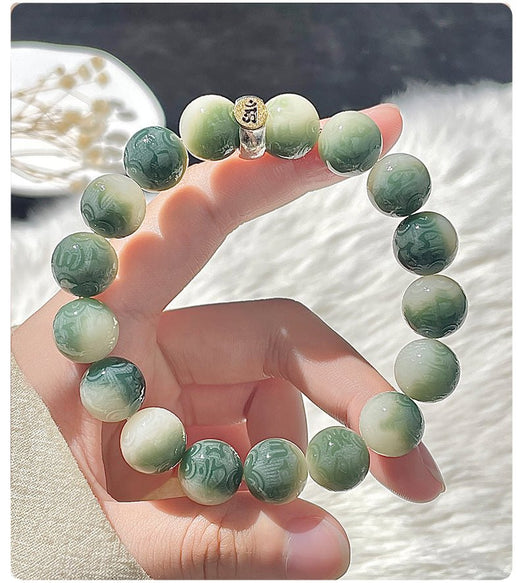
While a full mala has 108 beads, you will also find beautiful and practical wrist malas and bracelets with 27 or 54 beads, designed for shorter meditation sessions or to be worn as a constant, gentle reminder of your spiritual path.
More Than Material: The Grounded Presence of Mala Beads
The materials from which a mala is crafted are deeply significant, as each substance is believed to carry its own unique character and spiritual properties. Choosing a mala is not only about aesthetics; it is about finding a material that resonates with your personal intention and supports your specific practice.
When you select a mala, you are choosing a spiritual companion whose presence will accompany you in your practice.
Traditional Woods and Seeds:
- Sandalwood: This fragrant wood is one of the most traditional materials for malas. Its soothing, calming scent is known to quiet the mind, reduce anxiety, and promote a state of tranquility. A sandalwood mala is an excellent choice if your intention is to cultivate inner peace and enhance your focus during meditation.
- Bodhi Seed: "Bodhi" in Sanskrit means "enlightened" or "awakened." These seeds come from the Bodhi tree, the very type of tree under which Siddhartha Gautama attained enlightenment. Using a Bodhi seed mala connects you directly to the Buddha's journey and is believed to support your own path toward wisdom and understanding.
- Rudraksha Seed: Though more closely associated with Hinduism and the god Shiva, Rudraksha seeds are widely used in Tibetan Buddhism. These textured seeds are known for their protective qualities, shielding the wearer from distraction and promoting clarity and awareness.
- Lotus Seed: The lotus flower grows from muddy water to blossom into a pure, beautiful flower. As such, lotus seeds symbolize spiritual growth, purity, and the potential for enlightenment that exists within all beings, regardless of their circumstances.
Powerful Gemstones:
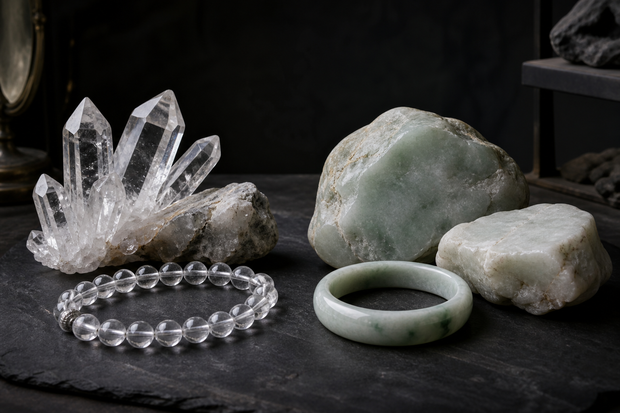
- Amethyst: A stone of spirituality and contentment, amethyst is known to calm the mind and enhance meditative states. It is excellent for developing intuition and connecting with deeper awareness.
- Lapis Lazuli: This deep blue stone has been prized for centuries as a symbol of truth, wisdom, and inner vision. A lapis lazuli mala can help you access your innate wisdom and communicate your truth with clarity and confidence.
- Turquoise: A protective and healing stone, turquoise is particularly significant in Tibetan culture. It is believed to be a bridge between heaven and earth, promoting wholeness, grounding, and spiritual attunement.
- Rose Quartz: Known as the stone of unconditional love, rose quartz opens the heart to giving and receiving love. It fosters compassion, forgiveness, and emotional healing, making it a perfect companion for loving-kindness meditation.
When exploring the beautiful variety of authentic mala beads, allow your intuition to guide you. Notice which colors, textures, and materials you are drawn to. Your attraction to a particular stone or wood may be a sign that its qualities are exactly what you need to support your journey at this moment.

The Heart of the Practice: How to Use Your Mala for Meditation and Mantra
Using a mala is a simple yet profound practice that can transform your meditation experience. It provides a tactile anchor that keeps your mind from wandering and helps you stay present with your chosen mantra. Here is a practical guide to get you started on this rewarding journey.
1. Find Your Space and Set Your Intention
Begin by finding a quiet, comfortable place where you won't be disturbed. Sit in a relaxed posture, either on a cushion on the floor or in a chair, with your spine straight but not stiff.
Close your eyes and take a few deep breaths to center yourself. Before you begin, set a clear intention for your practice. What quality do you wish to cultivate? It could be peace, compassion, clarity, or healing.
Hold your mala in your hands and infuse it with this intention.
2. Choose Your Mantra
A mantra is a sacred sound, word, or phrase that you repeat to focus your mind. Your mantra can be in Sanskrit, like the universally recognized "Om" (the sound of the universe) or "Om Mani Padme Hum" (the mantra of compassion), or it can be a simple affirmation in your own language, such as "I am calm" or "I am filled with love." Choose a mantra that resonates deeply with you and your intention for the practice.
3. Hold Your Mala Correctly
Traditionally, the mala is held in the right hand, though some traditions use the left. Let the mala drape over your middle finger. Your thumb will be used to count the beads.
The index finger, which is associated with the ego, is typically not used to touch the beads; it can be extended gently outwards. This posture symbolizes setting the ego aside during your spiritual practice.
4. Begin the Recitation
Start with the first bead next to the guru bead. As you hold this bead between your thumb and middle finger, recite your mantra once, either aloud or silently. Upon completing the mantra, use your thumb to pull that bead towards you and move to the next bead.
Repeat this process for each of the 108 beads, allowing the rhythmic movement and sound to guide you into a state of deep meditation. Try to coordinate your breath with the mantra, inhaling and exhaling with each repetition.
Imagine you are sitting for your morning meditation. You have chosen the mantra of compassion, "Om Mani Padme Hum." You hold your beautiful Bodhi seed mala gently in your right hand. With each recitation, you feel the smooth seed slip under your thumb, a steady rhythm that calms your mind and opens your heart.
The world outside fades away, and you are left with only the sound, the feeling, and the intention.
5. Completing the Cycle
When you have completed all 108 repetitions and reached the guru bead, you have completed one full round. Take a moment to pause in silence. Acknowledge your practice and offer gratitude.
If you wish to continue for another round, do not cross over the guru bead. Instead, turn the mala around 180 degrees and begin again in the opposite direction. This honors the sacredness of the guru bead as the focal point of your practice.
Choosing Your Sacred Companion: Finding a Mala That Resonates with You
Selecting a mala is a deeply personal and intuitive process. This string of beads will become an intimate part of your spiritual life, a repository for your intentions and the presence of your practice.
Therefore, it's important to choose one that truly speaks to your heart and soul. There is no right or wrong choice, only the one that feels right for you.
Listen to Your Intuition
Often, the right mala will simply call to you. As you browse a collection, you may find your eyes are consistently drawn to a particular color, stone, or design. Trust this pull.
Your intuition is a powerful guide that understands your needs better than your conscious mind does. The mala you are most attracted to is likely the one whose presence will best support your current path.
Don't overthink it; allow yourself to be chosen by the mala as much as you choose it.
Align with Your Intention
Consider what you hope to cultivate in your life through your practice. Are you seeking to reduce stress and find more calm? A mala made of soothing sandalwood or calming amethyst might be a perfect fit.
Are you working on opening your heart and cultivating more compassion for yourself and others? A rose quartz mala would be a wonderful ally. If you are embarking on a journey of profound self-discovery and wisdom, perhaps a lapis lazuli or Bodhi seed mala will serve you best.
By matching the material's properties to your spiritual goals, you create a powerful synergy that can deepen your practice.
Consider the Feel and Form
The physical experience of using a mala is essential. Think about how the beads will feel as they pass through your fingers. Do you prefer the smooth, cool touch of polished gemstones, or the warm, organic texture of wood or seeds?
The weight and size of the beads also matter. Some prefer smaller, lighter beads for ease of use, while others enjoy the substantial, grounding feel of larger beads. You might also consider the practicality of a wrist mala versus a full 108-bead necklace.
A bracelet can be a wonderful way to carry your intention with you throughout the day, offering a constant, tangible reminder of your path.
When you choose a mala, you are choosing a partner for your spiritual journey. It's important to select one that has been crafted with care, respect for tradition, and high-quality, authentic materials. A well-made mala is not only an object but a sacred tool that will hold your intention and grow with you over years of practice.
Explore a full collection of authentic pieces to find the one that is waiting to begin its journey with you.
Caring for Your Mala: Nurturing Your Spiritual Tool
Your mala is a sacred object that holds the focus of your intentions, your mantras, and your environment. Just as you care for your own mind and body, it is important to care for your spiritual tools.
Tending to your mala with respect and mindfulness will preserve its physical beauty and inner clarity, ensuring it remains a powerful companion on your path.
Cleansing Your Mala
Over time, your mala can accumulate the influence of various states of mind. Regularly cleansing it helps to clear away any stagnant or clouded feeling, restoring its natural character. There are several gentle methods for this:
- Moonlight or Sunlight: Place your mala in the light of the full moon overnight to cleanse and recharge it with gentle, feminine presence. You can also place it in the early morning sunlight for a short period, but be mindful that prolonged direct sun can fade some gemstones and woods.
- Smudging: Light a stick of sage, palo santo, or sweetgrass and allow the smoke to waft over your mala. The sacred smoke is believed to purify and cleanse the beads on a physical and spiritual level.
- Sound Healing: Place your mala near a singing bowl and strike the bowl, allowing the resonance to wash over the beads. The pure frequency of the sound helps to clear and restore the beads' natural character.
You may choose to cleanse your mala weekly if you use it for daily, intensive practice, or monthly for more casual use. Most importantly, cleanse it whenever it feels heavy or dull to your intuition.
Proper Storage and Handling
When you are not using or wearing your mala, treat it as a cherished object. Store it in a special place, such as on your personal altar, in a soft pouch, or in a dedicated wooden box.
This protects it from physical damage and signals your respect for its spiritual purpose. Avoid simply tossing it into a drawer or purse with other items.
Handle your mala with mindfulness. While many malas are beautiful enough to be worn as jewelry, remember their primary function is as a spiritual tool. It's generally advised to avoid wearing it while sleeping, showering, or engaging in strenuous physical activities, as this can weaken the string and damage the beads.
When a Mala Breaks
It can be disheartening if the string on your beloved mala breaks. However, in Buddhist tradition, this is not seen as a negative event. A broken mala is often interpreted as a sign of a breakthrough, symbolizing that you have broken a cycle of karma or completed a significant chapter of your spiritual journey.
It signifies that the mala has served its purpose for that particular intention. You can see this as a moment for reflection and celebration. The beads can then be restrung, perhaps with a new guru bead and tassel, allowing you to infuse them with a fresh intention for the next phase of your path.
Related guide: how to choose mala beads by material and meaning
Explore our monk-blessed Yak Bone 108 mala.
Frequently Asked Questions
Can anyone use a Buddhist prayer bead mala, even if I'm not a Buddhist?
Absolutely. While malas have deep roots in Buddhism, they are fundamentally tools for mindfulness, focus, and meditation. People from all spiritual paths and walks of life can benefit from using them. The practice of reciting a mantra or affirmation to focus the mind is universal.
You can use a mala with respect for its origins while adapting it to your own personal beliefs and intentions.
What should I do if my mala breaks?
A broken mala is traditionally seen as a positive sign, symbolizing the end of a cycle or a spiritual breakthrough. It means the mala has drawn in the focus it was meant to and has completed its work for a specific intention.
You can gather the beads and have them restrung, often with a new thread and tassel, to begin a new cycle with a new intention. It is a moment for reflection, not for sadness.
How do I choose my first mantra?
Start with something simple that resonates with you. You can use a traditional Sanskrit mantra like "Om" (the universal sound) or "So Hum" (meaning "I am that"). Alternatively, you can create a personal affirmation in your own language that reflects your intention, such as "I am peaceful," "I choose compassion," or simply the word "love." The power of the mantra comes from the focus and feeling you invest in it.
Should I wear my mala as a necklace or a bracelet?
You can do either. Wearing a full mala as a necklace keeps it close to your heart chakra. Wrapping it as a bracelet makes it a constant, visible reminder of your intention throughout the day.
The most important thing is to treat it with respect and mindfulness, not only as a fashion accessory. Avoid letting it touch the ground or placing it in unclean places. Choose whichever way feels most comfortable and supportive for you.
How often should I cleanse my mala?
The frequency of cleansing depends on how often you use it and for what purpose. If you use your mala daily for deep meditation or emotional work, cleansing it once a week is a good practice.
For more casual use, cleansing it once a month or during the full moon is sufficient. Above all, trust your intuition. If the beads start to feel heavy or dull, it's time for a cleansing.
For deeper context on the tradition behind this practice, see prayer bead traditions on Wikipedia.
Keep reading