

Taoist Prayer Beads vs Buddhist Mala: An Authentic Guide
Taoist Prayer Beads vs Buddhist Mala: An Authentic Guide
Table of Contents
In the world of spiritual practice, both Taoist prayer beads and Buddhist mala serve as powerful tools for meditation, mindfulness, and connection to the divine. Yet, the question of taoist prayer beads vs buddhist mala reveals profound differences in philosophy, structure, and application. As practitioners seek authentic tools for their journey, understanding these distinctions becomes essential. This guide, written from a Tibetan cultural perspective, will illuminate the unique paths these sacred objects represent. Whether you're drawn to the flowing harmony of Taoism or the structured liberation of Buddhism, choosing the right beads can deepen your practice immeasurably. We'll explore not just the physical differences, but the spiritual intentions behind each tradition, helping you find the tool that resonates with your soul's journey.

What Are Taoist Prayer Beads Vs Buddhist Mala?
At first glance, Taoist prayer beads and Buddhist mala may appear similar—both are strings of beads used for counting repetitions in spiritual practice. However, their fundamental purposes and symbolic structures differ significantly. A Buddhist mala, particularly the traditional Tibetan mala beads, typically consists of 108 beads plus a larger guru bead, representing the 108 human passions or defilements one must overcome to reach enlightenment. The structure is precise and symbolic, with each component holding specific meaning within the Buddhist path.
In contrast, Taoist prayer beads, often called "rosaries" or "yunzhuan," traditionally feature 81 beads. This number corresponds to the 81 chapters of the Tao Te Ching, the foundational Taoist text. Some Taoist traditions use 36, 72, or 108 beads, but the 81-bead strand remains most common. The beads themselves often incorporate symbols of yin and yang, the five elements, or the eight trigrams, reflecting Taoism's deep connection with natural forces and cosmic balance. While both tools aid in meditation, the Buddhist mala focuses on overcoming suffering through mindfulness, while Taoist beads emphasize harmonizing with the Tao—the fundamental principle underlying the universe.
History and Cultural Significance
The history of prayer beads spans continents and millennia, with each tradition developing its unique form. Buddhist mala beads entered Tibet from India around the 7th century CE, becoming integral to Vajrayana practice. Historical records from the Encyclopedia Britannica note that prayer beads were used in India as early as the 3rd century BCE, possibly influencing both Buddhist and Hindu traditions. In Tibet, malas evolved to include specific materials like bodhi seeds, sandalwood, or yak bone, each chosen for their spiritual properties and connection to Tibetan geography and culture.
Taoist prayer beads have a more complex historical lineage, with some scholars suggesting independent development in China. The earliest clear references to Taoist beads appear during the Tang Dynasty (618-907 CE), though their use likely predates this period. Unlike the standardized Buddhist mala, Taoist beads varied significantly between different schools and regions. Some traditions emphasized the beads' connection to alchemical practices, while others used them for reciting the names of deities or passages from Taoist scriptures. This diversity reflects Taoism's decentralized nature compared to Buddhism's more structured monastic traditions. At Buddhabelief, we've observed how these historical roots influence contemporary practice—our Tibetan malas are crafted according to centuries-old traditions, while we respect the fluid, nature-oriented approach of Taoist beadwork.

Spiritual Benefits and Uses
When considering the taoist prayer beads vs buddhist mala benefits, we enter the realm of intentional practice. A Buddhist mala serves as a tactile anchor for mantra repetition, helping practitioners maintain focus and count recitations. Each completed circuit of 108 repetitions represents a step toward purifying the mind and accumulating merit. The physical act of moving the beads through one's fingers becomes a meditation in itself, grounding the practitioner in the present moment. Many Tibetan practitioners believe that using a mala blessed by a High Lama carries that lama's spiritual energy, amplifying the benefits of practice.
Taoist prayer beads, conversely, often serve as tools for aligning with natural rhythms. Practitioners might use them while reciting passages from the Tao Te Ching, during qigong exercises, or while contemplating the interplay of yin and yang. The benefits here lean toward balance, harmony, and cultivating "wu wei" (effortless action). Some Taoist traditions use beads to count breaths, synchronizing inhalation and exhalation with bead movement to harmonize body and spirit. The buddhist taoist prayer beads vs buddhist mala comparison reveals this core difference: Buddhism seeks liberation from cyclic existence, while Taoism aims for harmonious integration with the natural world. Both approaches offer profound benefits, but they stem from different philosophical foundations.
How to Choose and Use
Choosing between Taoist prayer beads and Buddhist mala begins with understanding your spiritual orientation. Ask yourself: Are you seeking structured discipline and liberation from suffering, or fluid harmony with nature's flow? For those drawn to Buddhist practice, a traditional 108-bead mala made from materials like sandalwood, lotus seeds, or rudraksha offers an authentic tool. The guru bead (often larger and distinct) marks the beginning and end of a round, and practitioners typically avoid crossing over this bead, instead reversing direction to honor the cyclical nature of practice. At Buddhabelief, we source our malas directly from Tibetan artisans and have them blessed by High Lamas, ensuring they carry authentic spiritual energy.
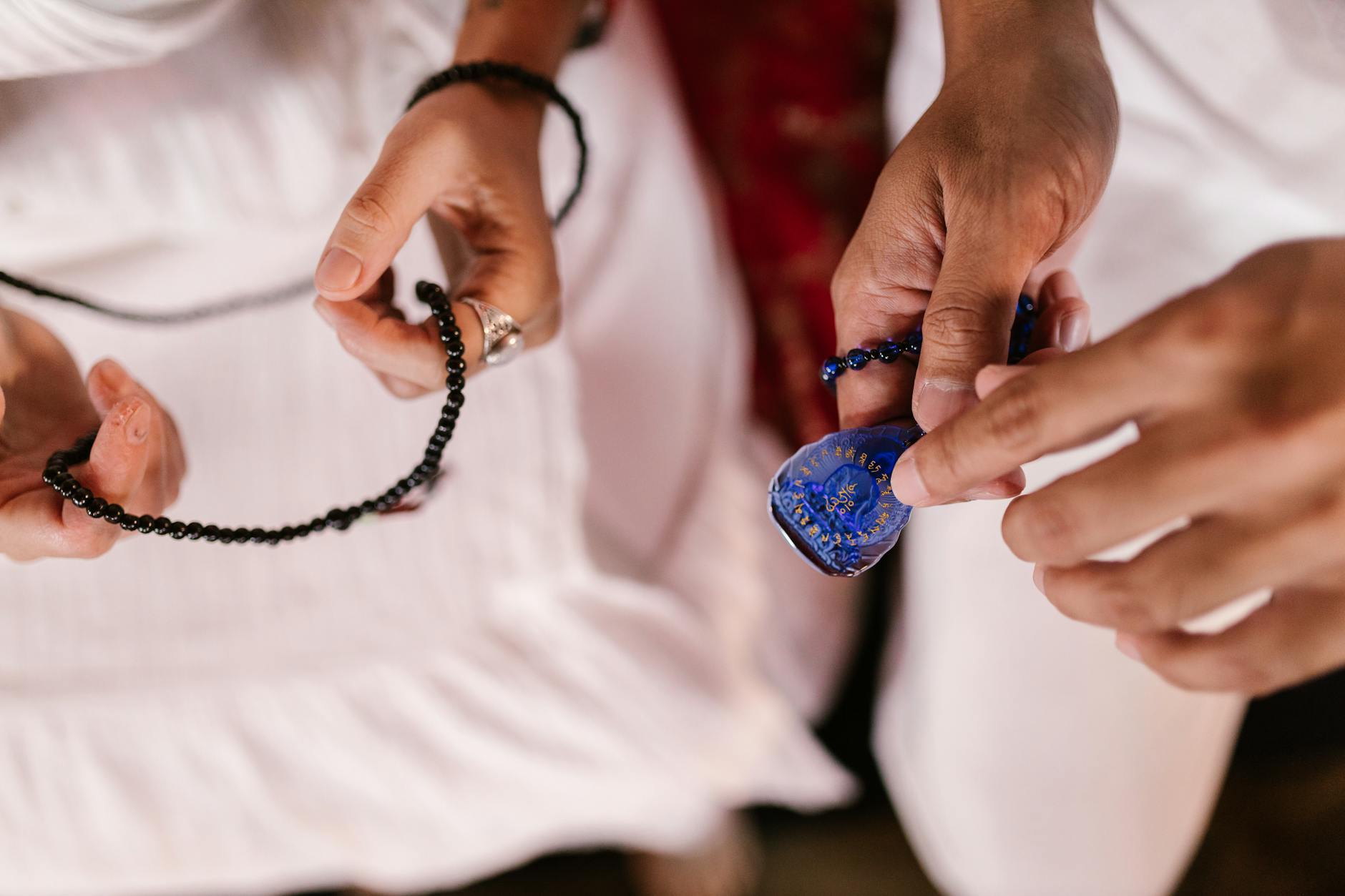
For Taoist practice, you might select beads numbering 81, 36, or 108, often incorporating symbols like the yin-yang or bagua. Materials might include jade (associated with immortality), amethyst (for spiritual clarity), or wood from peach trees (sacred in Taoism). Usage is generally less formalized than in Buddhism; you might wear the beads as a reminder of Taoist principles, use them during meditation on specific concepts, or employ them in rituals honoring celestial deities. Some practitioners of both traditions find value in using both types of beads for different purposes—a Buddhist mala for mantra practice and Taoist beads for nature-connected meditation. The key is intentionality: choose beads that resonate with your spiritual path and use them with conscious awareness.
Care and Maintenance
Caring for your spiritual tools honors their significance and extends their lifespan. For both Taoist prayer beads and Buddhist mala, regular cleansing is essential. Tibetan tradition holds that malas absorb spiritual energy during practice and should be periodically cleansed. This might involve smudging with sage or juniper, placing them in sunlight or moonlight, or gently wiping them with a soft cloth. Avoid exposing wooden or seed malas to excessive moisture, which can cause cracking. At Buddhabelief, we recommend storing your mala in a silk pouch when not in use—this protects the beads from physical damage and maintains their sacred space.
Taoist beads, particularly those made from jade or crystal, benefit from occasional rinsing in clean water (unless strung with silk, which shouldn't get wet). Some Taoist practitioners place their beads on a bed of sea salt overnight to clear accumulated energies. Regardless of tradition, the most important aspect of care is mindfulness. Handle your beads with respect, aware that they are not mere accessories but tools of transformation. If a bead breaks or the string wears, view it as part of the natural cycle—many traditions see repairing a mala as a meditative practice in itself. By caring for your beads, you reinforce your commitment to the spiritual path they represent.
Frequently Asked Questions
Can I use both Taoist prayer beads and a Buddhist mala?
Yes, many practitioners use both for different purposes. A Buddhist mala might be used for structured mantra practice, while Taoist beads could be used for meditation on natural harmony or qigong. The key is understanding the distinct intentions behind each tool and using them respectfully within their traditions.
What is the main difference in meaning between Taoist beads and Buddhist mala?
The taoist prayer beads vs buddhist mala meaning differs fundamentally: Buddhist mala represent the path to enlightenment through overcoming 108 defilements, while Taoist beads often symbolize harmony with the Tao, the 81 chapters of the Tao Te Ching, or balance between yin and yang forces in the universe.
How many beads should a Taoist prayer necklace have?
Traditional Taoist prayer beads most commonly have 81 beads, representing the 81 chapters of the Tao Te Ching. Other numbers include 36 (4×9, significant in Taoist numerology), 72 (earthly evils), or 108 (cosmic number). The choice often depends on the specific Taoist school or personal preference.
Are there specific materials preferred for Buddhist malas?
Yes, Tibetan Buddhist tradition values specific materials for their spiritual properties. Bodhi seeds represent enlightenment, sandalwood promotes calm, lotus seeds symbolizes purity, and rudraksha seeds are believed to have protective qualities. The material often corresponds to the practice's intention.
Can I wear prayer beads as jewelry?
While many people wear malas or Taoist beads as necklaces or bracelets, traditional practitioners often treat them as sacred tools rather than ornaments. If worn, they should be treated with respect, kept clean, and ideally worn under clothing to maintain their spiritual integrity during daily activities.
Whether you feel called to the structured path of the Buddhist mala or the flowing harmony of Taoist prayer beads, choosing an authentic, intentionally crafted tool can profoundly deepen your practice. At Buddhabelief, we specialize in handcrafted Tibetan malas that are authentically sourced from Tibet and High Lama Blessed to carry genuine spiritual energy. Each mala in our collection represents not just beautiful craftsmanship, but a living connection to centuries of spiritual tradition. Explore our collection to find the mala that speaks to your journey, and remember: the most powerful bead is the one used with a sincere heart.


