buddhist-jewelry
Tibetan Three Metal Bracelet: An Authentic Guide for 2026
You’ve been sitting for years. You’ve read Pema Chödrön, listened to countless dharma talks, and your 30 minutes on the cushion each morning is non-negotiable. Yet, you feel a familiar plateau. The initial insights have settled, and now the practice is about integrating it all into the messy reality of your life—the demanding job, the family dynamics, the quiet hum of existential questions. You're not looking for a remarkable fix. You’re looking for a skillful means, a tangible reminder to bridge the gap between the cushion and the chaos. This is where authentic Tibetan bracelets, particularly the three-metal design, find their true purpose—not as a mystical amulet, but as a practitioner's tool.
The Foundation: What a Three-Metal Bracelet Really Is
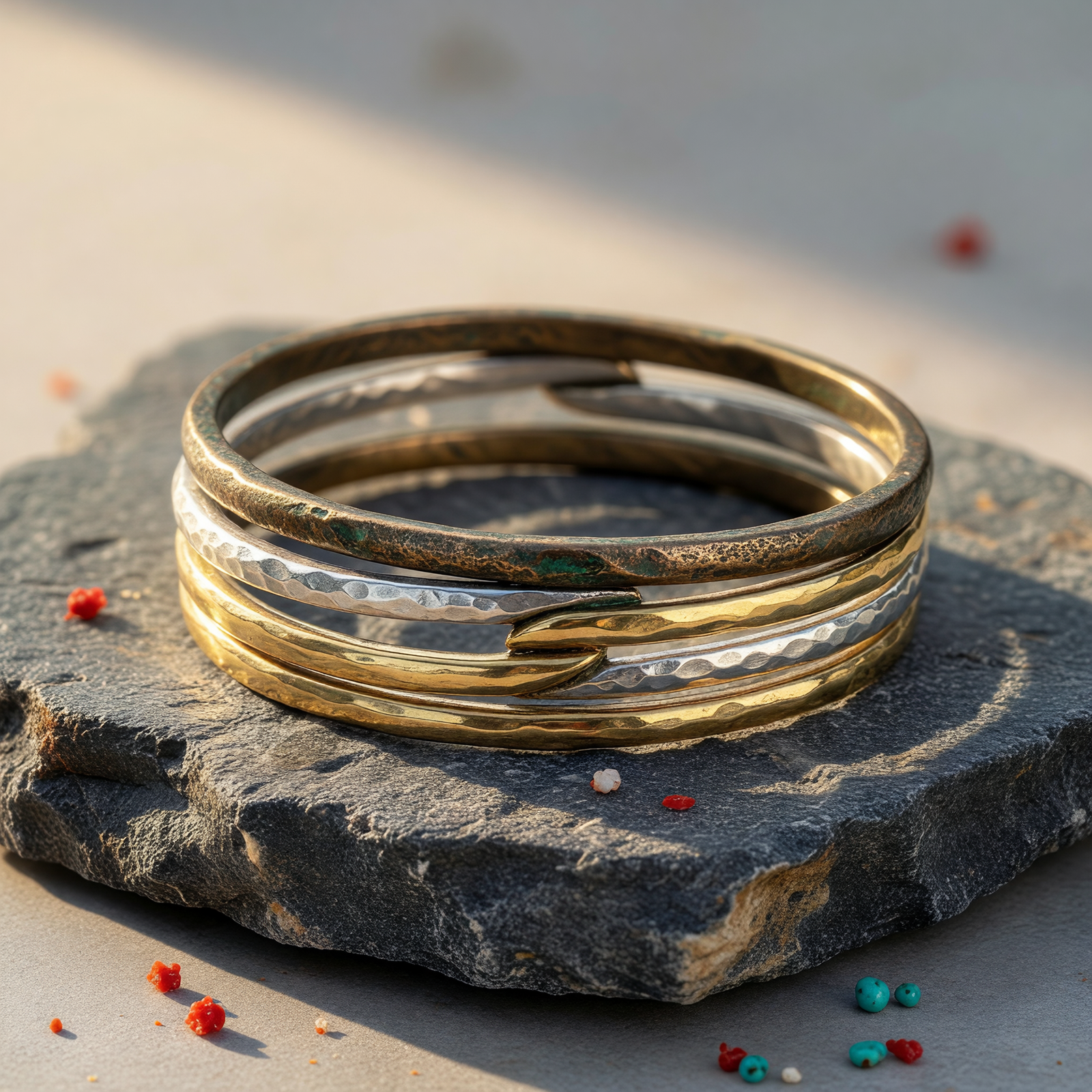
You've likely seen them online or in shops, often described with vague terms like "balancing energies" or "healing properties." This language, while well-intentioned, misses the rigorous and practical tradition from which these bracelets emerge. To understand the Tibetan three-metal bracelet, you have to set aside the New Age rhetoric and look toward the sophisticated systems of Sowa Rigpa (Tibetan medicine) and Vajrayana cosmology. The core misconception is that these are merely passive objects of power. The reality is that they are considered active participants in your subtle anatomy. In the Tibetan view, your being is not only flesh and bone, but a complex interplay of physical elements, energy channels (*nadis*), and consciousness. The three metals—copper, silver, and gold—are not chosen randomly for their beauty. They are specifically selected for their correspondence to the three fundamental aspects of your embodied experience. This isn't just folklore. It's a form of traditional bio-chemistry, refined over centuries through the medical schools of Lhasa and Bhutan. Think of it less like a crystal with "good vibes" and more like a carefully formulated herbal decoction. Each metal is believed to interact with the body's electrical and energetic systems in a distinct way. * **Copper** is associated with the blood, circulation, and what Tibetans call *lung* (pronounced 'loong'), or the wind element. Imbalanced *lung* manifests as anxiety, scattered thoughts, and restlessness—sound familiar? * **Silver** is cooling, connected to the channels and the fluid systems of the body. It's seen as a purifying agent that brings clarity and calms "hot" afflictive emotions like anger. * **Gold**, stable and radiant, is connected to vitality, life-force, and the stability of your consciousness itself. A genuine three-metal bracelet is therefore a microcosm of balance. It's a wearable piece of medical and spiritual theory, designed to create a harmonious resonance between your inner and outer worlds. It is more than a piece of jewelry; it's a statement of intent to work with the very fabric of your being. When our artisans, like Master Tenzin in our Boudhanath workshop, weave or hammer these metals together—a process that takes roughly four to six hours per bracelet—they are not only making an accessory. They are continuing a lineage of knowledge about how to support a human life dedicated to waking up.
Why This Matters for Your Practice in 2026
It's easy to dismiss the teachings from the Tibetan Buddhist tradition as irrelevant to modern life. But the challenges you face as a practitioner in 2026 are precisely what these tools were designed to address, albeit in a different form.
The core human struggles—distraction, emotional reactivity, a sense of disconnection—are timeless. They've just been amplified by technology and modern pressures.
Let's consider your specific challenges. You're not a monk in a mountain cave; you're working through a complex life.
The Professional Plateau: You're a leader in your field, but you feel a growing disconnect between the values you cultivate on the cushion and the demands of your career. A meeting gets heated, and your carefully cultivated mindfulness evaporates.
You find yourself caught in ego-driven conflict or drained by the pressure to perform. The three-metal bracelet—typically brass, copper, and silver—acts as a subtle, physical anchor. In that moment of rising tension, the cool weight on your wrist is a non-verbal cue.
It's a reminder of the inner balance you're cultivating. Touching it can be a micro-practice, a moment to breathe and reconnect with your intention before you speak or act. It helps bridge the gap between your meditative calm and your professional effectiveness.
The Relationship Crucible: Your practice has made you more sensitive to the dynamics in your family. You see your own patterns and those of your partner or children with painful clarity. How do you respond with compassion instead of judgment when triggered?
How do you hold your center during a difficult conversation about aging parents? The bracelet's purpose here is to support energetic stability. The blend of metals is intended to harmonize the very energies that get dysregulated during emotional stress.
It doesn't prevent the difficult conversations, but it can serve as a support to help you remain grounded and less reactive, allowing your practice to call in as skillful communication rather than silent withdrawal.
The Digital Deluge and Practice Fatigue: Your attention is the most valuable currency you have, and a thousand apps are designed to steal it. This constant external pull can lead to a subtle form of practice fatigue.
Your sits feel flat, your mind more scattered than ever. You know the answer is to be more present, but the pull of distraction is immense. The bracelet is an analog tool in a digital world.
It has no notification, no screen. Its function is to gently pull your awareness back to your own body, your own breath, right here. It's a quiet rebellion against the fragmentation of modern life, a simple, elegant technology for remembering yourself.
By 2026, the need for these tangible tools of remembrance will only have grown. The bracelet isn't the practice itself, but for a householder practitioner like you, it's a vital ally—a silent friend on your wrist, reminding you of the path you've chosen, moment by difficult moment.
The Real Benefits: How It Works on Body, Energy, and Mind
How does a simple combination of metals actually function as a support for your practice? The effect is holistic, working on three distinct but interconnected levels of your being. This isn't magic; it's a traditional understanding of how the material world influences our inner experience.
The Physical Body: Copper and Grounded Vitality
From the perspective of Sowa Rigpa, copper is a crucial element for maintaining the health of the blood and the proper flow of energy. It's considered a "warm" metal, known to help with stiffness and inflammation, which is why copper bracelets have been used for joint pain since at least the 12th century Tibetan medical texts.
For a meditator, however, the primary benefit relates to the circulatory system and the grounding of *lung* energy. When your mind is scattered or you feel anxious, that energy is often chaotic and concentrated in the upper body.
Copper is believed to help draw that energy downward, creating a sense of being more rooted and present in your body. It supports the physical foundation upon which a stable mind can rest. It's the Earth element in your practice—solid, reliable, and fundamentally grounding.
The Energy Body: Gold and the Central Channel
In the Vajrayana view, our bodies are mapped with thousands of subtle energy channels, or *nadis*. Gold, being the most stable and incorruptible of metals, is associated with the sun, vitality, and the core life-force that flows through these channels.
It is particularly connected to the central channel (*avadhuti*), the primary axis of our subtle body around which our entire energetic system is organized. While practice is the primary way to awaken and clear this channel, gold is seen as a supportive element that helps stabilize and brighten this core energy.
It doesn't "do" the work for you, but it's like adding a high-quality nutrient to the soil of your practice. It supports the radiant, clear, and indestructible nature of your own awareness, reflecting the inherent purity of the mind.
The Mind: Silver and Luminous Clarity
If gold is the sun, silver is the moon. It is a "cool" metal, associated with calming, soothing, and purifying properties. Energetically, it helps to pacify the "hot" mental afflictions—anger, jealousy, and grasping desire.
When you feel overwhelmed by emotional reactivity, the cooling quality of pure Himalayan silver is thought to bring a sense of spaciousness and clarity. It's like a cool cloth on a fevered brow. For your meditation, this translates into a mind that is less prone to being hijacked by turbulent thoughts and emotions.
It supports the development of shamatha (calm abiding) by creating a more serene inner environment, allowing insight (*vipashyana*) to arise more naturally.
Woven together, these three metals create a synergistic effect. They are a constant, subtle influence that helps to harmonize your physical vehicle, stabilize your energetic system, and clarify your mind, making it easier to do the real work on the cushion and in your life.
How to Choose an Authentic Three-Metal Bracelet
As the interest in Tibetan jewelry grows, so does the market for mass-produced imitations. For a practitioner like you, authenticity isn't about brand names; it's about integrity, intention, and lineage. An authentic piece is an investment in your practice, and knowing what to look for is essential.
1. Material Purity: This is non-negotiable. Most bracelets sold in tourist markets are simply brass or steel plated with a thin layer of copper or silver color. An authentic bracelet uses solid, high-purity metals.
- Copper: Look for a rich, reddish-brown hue. It will naturally oxidize and can turn your skin slightly green, which is a sign of its authenticity.
- Silver: It should be sterling (92.5% pure) or higher. It will have a softer luster than chrome or stainless steel and will tarnish over time.
- Gold: In most Tibetan bracelets, the gold component is smaller, often a brass element or a gold-fill/plated piece due to cost. Be clear about what you are getting. We believe in using real metals, even if the gold element is a subtle accent.
2. Craftsmanship: The difference between a machine-made object and a handcrafted one is palpable.
- Hand-Hammered vs. Cast: Look for signs of handiwork. Small, imperfect details, the texture of hammer marks, the way the metals are twisted or braided together. Mass-produced pieces are often cast in a mold, looking slick and uniform.
- The Artisan's Touch: We know the artisans in our Kathmandu atelier by name. Master Tenzin, who has been crafting bracelets for over thirty years, doesn't just "make" bracelets; he imbues them with decades of practice and skill. This human element, the mindful attention of the maker, is a part of the bracelet's energy.
3. Design and Symbolism: Authentic bracelets incorporate traditional Tibetan symbols that carry specific spiritual weight. It's worthwhile to understand the symbols carved into them. The Dorje (or Vajra) represents the indestructible nature of mind, while the Endless Knot symbolizes the interconnectedness of all things.
A bracelet with these symbols is designed to be a constant reminder of specific dharma principles. Choose a design that resonates with your current practice focus.
4. The Source: Where does the bracelet come from? Who benefits from your purchase? We have spent years building relationships with families of artisans in Boudhanath, ensuring they are paid fairly and their craft is honored.
When you choose a piece from our handwoven Tibetan bracelet collection, you are not only buying an object; you are supporting a lineage and a community. You might pair it with a simple red string for protection or a powerful Dzi bead bracelet for deeper spiritual support.

How To Use It Day To Day in Your Daily Practice
Receiving your bracelet is the beginning of a relationship. It is not a passive accessory but an active tool. Here's how to integrate it into your life in a meaningful way, turning it from a beautiful object into a true support for your path. **1. The Initial Intention:** When you first receive it, don't just put it on. Take a few moments. Sit quietly, hold it in your hands, and feel its weight and texture. Close your eyes and set a clear intention. What aspect of your practice does this bracelet represent for you? Is it a reminder for patience during a difficult work project? A symbol of your commitment to compassionate speech with your family? A call to return to the present moment when you feel scattered? State this intention clearly in your mind. This act consecrates the bracelet for your personal journey. **2. The Mindfulness Anchor:** Throughout your day, use the bracelet as a tactile anchor to the present. During a stressful conference call, subtly touch the metals. Feel the coolness of the silver, the smoothness of the gold, the texture of the copper weave. Use that sensation as a two-second pause to come back to your body and your breath. It's a way to weave moments of awareness into the fabric of a busy day, transforming triggers for stress into cues for presence. **3. A Ritual of Care:** Your bracelet will tarnish and change with time, just as you do. Cleaning it can be a practice. As you polish the silver, reflect on clarifying your mind. As you wipe the copper, consider grounding your energy. This small ritual of care for an external object can be a powerful reflection of the inner work you are doing. **4. Placement and Rest:** When you sleep, you might choose to take it off. Consider placing it on your small home altar, or beside a book by a favorite teacher. This act of placing it in a respected space overnight reinforces its role as a sacred object, not only another piece of jewelry. When you put it on in the morning, it is a conscious renewal of your intention for the day ahead. It becomes a support for your daily mindfulness practice, as integral to your morning routine as your time on the cushion.
Common Questions from Practitioners
Even with a deep understanding, practical questions often arise. Here are some of the things we are often asked by fellow practitioners.
Which wrist is correct for a Tibetan three metal bracelet?
In the Tibetan tradition, the left wrist is generally considered the 'receiving' side, connected to the flow of blessings and calming energies into your system.
Wearing it on the left can support your meditation practice and internal balance. The right wrist is seen as the 'projecting' side, associated with action and engagement with the world. If your intention is to bring the qualities of balance and clarity into your work or interactions, the right wrist can be appropriate.
However, we encourage you to move beyond rigid rules. Notice how it feels on each wrist for a few days. Your body's intuition is a reliable guide. The most important factor is your intention and the connection you build with the piece as a support for your practice, regardless of which wrist you choose.
Can I wear my three metal bracelet with other malas or jewelry?
Absolutely. Those of us who've spent time in the Himalayas see practitioners wearing several pieces together regularly. A three-metal bracelet can complement a bodhi seed mala or a Dzi bead bracelet quite beautifully.
The key is intention. Think of it as creating a small ecosystem of support on your wrist. The three-metal bracelet works on the subtle energies of the body, while a mala is a tool for counting mantras and focusing the mind.
They serve different but harmonious purposes. The only practical consideration is wear and tear. Softer materials like certain woods might get scuffed by the metal over time. We simply recommend being mindful of how the pieces sit together.
Energetically, there's no conflict; they are all supports for your journey.
Why does my copper bracelet turn my skin green?
This is a completely normal and natural reaction. When copper comes into contact with the moisture and salts in your sweat, it oxidizes. This process can create a green or bluish layer of copper salt (copper carbonate) on your skin.
It's harmless and washes off easily with soap and water. In fact, Tibetan medical texts and branches of folk medicine view this as a sign that your body is absorbing trace amounts of copper, which is an essential mineral.
It indicates the bracelet is made of genuine, high-purity copper, not a coated alloy. If you prefer to minimize it, you can simply keep the bracelet and your skin dry, or apply a thin layer of clear nail polish to the inside of the bracelet, though this will prevent any potential therapeutic skin contact.
Is it okay to shower or swim with my bracelet?
We generally recommend taking it off before showering or swimming. While the metals themselves—gold, silver, and copper—are resilient, repeated exposure to soaps, shampoos, chlorine, and salt water can accelerate tarnishing and dull the finish.
More importantly, taking it off is a small ritual of mindfulness. It's a moment to acknowledge the bracelet not only as jewelry, but as a practice tool. By consciously removing it, caring for it, and putting it back on with intention, you deepen your relationship with the object and what it represents.
If you do forget and wear it in the water, just be sure to rinse it with fresh water and dry it thoroughly afterward to preserve its integrity and shine.
What is the difference between a three-metal and a five-metal bracelet?
A three-metal (or tridhatu) bracelet focuses on the fundamental energies related to body, energy, and mind, represented by copper, gold, and silver.
It's a foundational tool for general balance and well-being. A five-metal bracelet, known as Panchaloha, is a more complex alloy that adds iron and zinc (or sometimes lead or tin). This version aligns with the five elements (earth, water, fire, air, space) and the five Dhyani Buddhas.
It's often considered a more comprehensive tool for harmonizing the full spectrum of elemental energies within the body and mind. For most practitioners, the three-metal bracelet provides a potent and focused support system. The five-metal version is often sought by those engaged in specific elemental practices within Vajrayana or Tibetan astrology.
You can see examples of both in our Tibetan bracelet selection.
How do I clean and care for my Tibetan bracelet?
Caring for your bracelet is a practice in itself. For physical cleaning, a soft polishing cloth is usually all you need to restore its shine.
If it's particularly tarnished, you can make a paste of lemon juice and baking soda, gently rub it onto the metal, let it sit for a few minutes, and then rinse thoroughly with warm water and dry completely.
Avoid harsh chemical cleaners. For energetic cleansing, you can let it rest overnight in a bowl of brown rice or salt to absorb stagnant energy. Another beautiful practice is to place it near a window during a full moon to let it bathe in the moonlight.
Or, you can smudge it with sage or palo santo, allowing the smoke to purify it while you hold a clear intention in your mind.
Is this bracelet's effect real or just a placebo?
This is an excellent question for any serious practitioner. From a Tibetan perspective, the distinction isn't so rigid. The bracelet is not a magic pill.
It is a support—a piece of 'skillful means' (upaya). The metals have inherent properties recognized by Sowa Rigpa (Tibetan medicine) since at least the 12th century medical texts. They interact with your body's subtle energy system.
However, its true power is unlocked by your mind. When you wear it with intention, it becomes a constant, tangible reminder of your commitment to balance, clarity, and presence. This reminder prompts you to return to your practice.
Is that a placebo? Perhaps. But in the context of mind-training, a 'placebo' that consistently brings you back to the present moment is one of the most powerful tools you can have. It works because you work with it.
Your Journey, Supported
Your practice is a long road, not a series of quick fixes. The plateau you feel is not a sign of failure, but a signal of deepening. It's an invitation to integrate the dharma more fully into every corner of your life.
As you navigate the path ahead into 2026 and beyond, you deserve supports that are as authentic and committed as your own practice.
A three-metal bracelet from our artisans in Kathmandu—copper, silver, and brass wound in the traditional Newari style—is not an escape from the challenges of your life. It is a companion for them. It is a quiet, constant reminder on your wrist that the qualities you cultivate on the cushion—groundedness, vitality, and clarity—are available to you in every moment.
This is the piece you'll still wear in 20 years, its metals softened and shaped by your journey, a a sign of a life lived with intention. We invite you to explore our collection of traditional Tibetan protection bracelets and find the one that speaks to your path.
Keep reading