buddhist-jewelry
Vajra Mala Beads — A Complete Guide to Their Power
Vajra Mala Beads: The Ultimate Guide to Meaning, Materials & Power
In the world of spiritual practice, few tools are as revered, personal, and powerful as the Vajra Mala. It rests in the hands of meditating monks, adorns the necks of devoted yogis, and serves as a tangible link to the divine for seekers across the globe.
But what exactly sets these sacred prayer beads apart from other spiritual jewelry? This guide delves deep into the heart of the Vajra Mala, exploring its potent symbolism, the sacred Rudraksha seed it is born from, and the profound ways it can amplify your spiritual journey.
Prepare to discover not only an object, but a lifelong companion for your soul's evolution.

Vajra Mala Rudraksha is vajra Mala Beads: The Ultimate Guide to Meaning, Materials & Power
The Vajra and the Mala: Unpacking the Diamond Thunderbolt Garland
To truly understand this tool, you must first understand its name. A Vajra Mala is a specific type of prayer bead necklace, or japa mala, used primarily in Tibetan Buddhism for mantra meditation and counting.
The name itself is a fusion of two powerful Sanskrit words: "Vajra" and "Mala."
"Vajra" translates as "thunderbolt" or "diamond." In the context of Tibetan Buddhism, or Vajrayana ("The Diamond Vehicle"), the Vajra is a paramount symbol. It represents the indestructible, unshakeable, and brilliantly clear nature of enlightenment itself.
Like a diamond, it is pure and capable of cutting through anything—specifically, the veils of ignorance and illusion that cloud your true nature. Like a thunderbolt, it is a symbol of immense, instantaneous power and spiritual awakening.
The Vajra is not a force of destruction, but of decisive, compassionate action that shatters delusion. It is the very essence of focused, unwavering spiritual power.
"Mala" is the ancient Sanskrit word for "garland" or "wreath." The practice of using beads for prayer and incantation is ancient, with roots stretching back thousands of years into the Vedic traditions of India.
This practice was seamlessly adopted into Buddhism as it spread, becoming an essential tool for monks and lay practitioners alike. The mala provides a physical anchor for the mind, a way to track mantra repetitions without distracting the conscious mind with counting, allowing you to sink deeper into a meditative state.
When you bring these two concepts together, you get the "Diamond Thunderbolt Garland." This is not merely a string of beads; it is a tool specifically designed for a focused, potent, and transformative meditation practice.
It embodies the core principles of Vajrayana Buddhism: the harnessing of immense spiritual presence to achieve enlightenment swiftly and directly for the benefit of all sentient beings.
The Sacred Heart of the Mala: The Mystical Rudraksha Seed
While malas can be crafted from various materials, the most authentic and traditionally potent Vajra Malas are made from Rudraksha seeds. These humble, wrinkled brown seeds are believed to be one of the most powerful natural conduits for spiritual presence on the planet.
Origin and Divine Meaning
The story of Rudraksha is steeped in sacred mythology. The word "Rudraksha" is a compound of "Rudra" (another name for the Hindu deity Lord Shiva) and "Aksha" (tears). Legend tells that after a long period of deep meditation, Lord Shiva opened his eyes and, overwhelmed with profound compassion for the suffering of humanity, shed a single tear.
This tear fell to the earth and from it grew the first Rudraksha tree. The seeds are thus considered a direct gift from the divine—a physical focus for intent and compassion meant to aid humanity in healing and spiritual awakening.
Focus Point and Scientific Properties
For centuries, yogis and spiritual masters have valued Rudraksha beads for their profound qualities. They are believed to create a protective cocoon of your own presence, shielding you from negativity and disturbance.
This stabilizing effect is said to calm the nervous system, lower blood pressure, and increase mental clarity, making them ideal for meditation. Some modern research has explored these ancient claims, suggesting that Rudraksha beads exhibit specific electromagnetic and paramagnetic properties.
This means they can subtly interact with your body's own bio-magnetic field, helping to regulate and balance flow, which may explain their calming and focus-enhancing effects. When you use a Rudraksha mala for mantra repetition, the beads become "charged" with the focus of your intention, turning into a potent reservoir of spiritual power that you can tap into anytime.
Understanding the Mukhis (Facets)
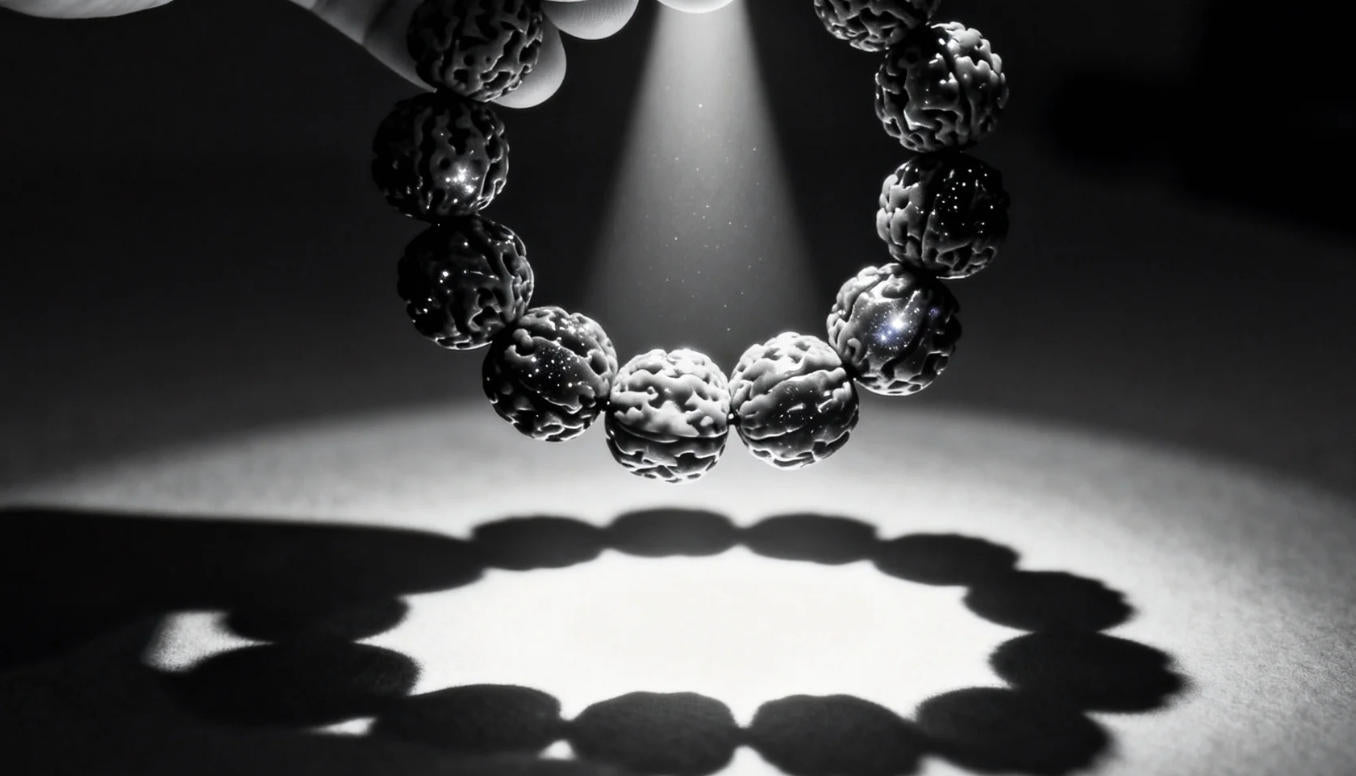
A crucial aspect of a genuine Rudraksha bead is its "mukhis," the natural vertical lines that run from the top to the bottom of the seed, dividing it into segments.
The number of mukhis a bead has determines its specific significance and character. While there are beads with up to 21 mukhis or more, certain types are more common and sought after for mala practice.
- Five-Mukhi (Panchmukhi): This is the most common and widely available type of Rudraksha. It represents the five elements (earth, water, fire, air, ether) and is said to be blessed by all forms of Shiva. It is a powerful all-rounder, promoting general health, peace of mind, and spiritual growth. Most of the traditional Vajra Malas you will find are made from these beads, offering a balanced and grounding presence for your practice.
- One-Mukhi (Ek-mukhi): Extremely rare and highly prized, this bead represents pure consciousness and is said to grant liberation (moksha).
- Two-Mukhi: Symbolizes the union of Shiva and Shakti, the masculine and feminine energies. It is believed to foster unity and harmony in relationships.
When selecting a mala, understanding the mukhis can help you align the beads' presence with your specific intention. At Buddhabelief, our malas use only hand-selected, high-grade Rudraksha, ensuring each bead is authentic and energetically potent.
Anatomy of a True Vajra Mala: A Microcosm of the Path
Every element of a traditional Vajra Mala is rich with symbolism, making the entire object a complete spiritual microcosm—a map of the cosmos and the path to enlightenment held in your hands.
The 108 Beads
The standard count of 108 beads is a sacred number across many Eastern traditions. The significance is multifaceted, offering numerous layers of meaning. It is said to represent the 108 worldly passions or afflictions (kleshas) that you must overcome to achieve Nirvana.
Each repetition of your mantra is a step in transforming these afflictions into wisdom. Other interpretations include: the 108 names of various deities; the 108 energy lines (nadis) converging to form the focus point of the heart chakra; or the cosmological significance of the sun's diameter being approximately 108 times that of the Earth.
The Guru Bead (Meru)
The larger, 109th bead at the end of the mala is known as the Guru Bead, or sometimes the "Meru" bead. It holds a special significance. It symbolizes the wisdom of your teachers—both external (a lama, a guru) and internal (your own innate Buddha-nature).
It also represents Mount Meru, the mythical cosmic mountain that stands at the center of the universe in Hindu-Buddhist cosmology. This bead is the axis point of the mala. During mantra practice, you do not count a mantra on this bead or cross over it.
Instead, reaching the Guru Bead is a moment to pause, express gratitude for your teachers and the teachings, and reflect on your practice before turning the mala around to begin another cycle.
The Vajra and Bell Pendants: The Remarkable Feature
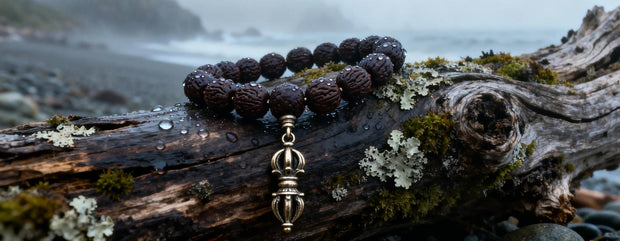
This is what truly distinguishes a Vajra Mala. Attached to the Guru bead, you will find a small, symbolic Vajra (Dorje in Tibetan) and a Bell (Ghanta).
These are not mere decorations; they are the symbolic heart of the Vajrayana path.
- The Vajra (Dorje) represents the masculine principle: compassion, skillful means (upaya), and the indestructible power of the enlightened mind. It is the active, compassionate force that engages with the world to alleviate suffering.
- The Bell (Ghanta) represents the feminine principle: wisdom (prajna) and the direct realization of emptiness (shunyata), the true nature of reality. Its sound embodies the voice of the Dharma, reverberating through all realms.
Counter Beads and Tassel
Some malas may include smaller "counter" beads at specific intervals (often the 27th, 54th, and 81st positions) to help you maintain focus during long sessions. The tassel, where all the threads of the mala join together, symbolizes oneness and the interconnectedness of all existence.
It represents the roots of the lotus flower, rising from the mud of samsara to blossom into enlightenment.

Choosing Your Spiritual Companion: How to Find the Right Vajra Mala
Selecting a mala is a deeply personal process. This tool will become a repository for your deepest intentions and the character of your practice. It is more than an accessory; it is a spiritual ally. Here’s how to find one that resonates with your unique journey.
Trust Your Intuition
Often, the most powerful guidance is your own intuition. As you browse a collection of malas, you may find yourself inexplicably drawn to one in particular. It might be the color of the cord, the feel of the beads, or an intangible sense of calm or protection it seems to emanate.
Trust this feeling. This is often described as "the mala choosing you." This intuitive pull suggests a natural alignment of character between you and the mala, making it the perfect companion for your practice.
Consider Your Intention
What is the primary motivation behind your practice right now? Are you seeking to cultivate peace and reduce anxiety? Are you working to develop fierce compassion? Or are you focusing on clarity and insight? Your intention can guide your choice.
- For a beginner feeling overwhelmed by the stresses of daily life, a classic five-mukhi Rudraksha Vajra Mala is an excellent choice. Its focus point is grounding, protective, and clarifying, creating a stable foundation for a new meditation practice.
- For an experienced practitioner looking to deepen their connection with a specific deity or quality, you might choose a mala that incorporates gemstones associated with that focus. For example, a mala with turquoise beads could support healing and communication, while one with carnelian could invigorate courage and creativity.
Examine the Craftsmanship
A well-made mala is not only beautiful but also durable enough to withstand years of dedicated practice. Look for malas made with high-quality, natural materials. The traditional method of hand-knotting the cord between each bead is highly recommended.
This not only provides space for your fingers to move easily from one bead to the next during japa, but it also ensures that if the mala ever breaks, you won't lose all the beads.
The quality of the craftsmanship reflects the respect and intention put into creating the sacred tool. Explore our full collection of authentic, mindfully crafted Mala Beads to feel the difference.
Awakening Your Mala: Consecration and Daily Practice
Once you have chosen your mala, the next step is to awaken it, transforming it from a beautiful object into a consecrated spiritual tool that is uniquely yours.
Cleansing and Consecrating
Your new mala has been on a journey to reach you and may have picked up various energies along the way. The first step is to cleanse it. You can do this in several simple ways:
- Smudging: Gently pass the mala through the smoke of cleansing herbs like white sage, palo santo, or cedar.
- Sound: Place the mala in a singing bowl and let the resonance wash over it.
- Moonlight: Leave your mala in the light of a full moon overnight to cleanse and recharge its energy.
How to Use Your Vajra Mala for Japa Meditation
The primary use of a mala is for Japa, or mantra repetition. This practice focuses the mind and attunes your energetic body to the resonance of the mantra.
- Find a comfortable, quiet space to sit. Take a few deep breaths to center yourself.
- Hold the mala in your right hand, draped over your middle finger. The right hand is traditionally associated with giving and sacred acts.
- Position your thumb on the first bead next to the Guru bead. The index finger, which is associated with the ego, should not touch the beads. Keep it extended away from the mala.
- As you recite your mantra one time (aloud or silently), use your thumb to pull that bead towards you. Then move your thumb to the next bead for the next repetition.
- Continue this process, bead by bead, until you have completed all 108 beads and reached the Guru bead.
- Upon reaching the Guru bead, do not cross over it. This is a moment to pause and reflect. If you wish to continue for another round, simply turn the mala 180 degrees and go back in the direction you came from.
Caring for Your Sacred Garland: A Lifelong Bond
Your Vajra Mala is a companion on your spiritual path. With proper care, it will serve you for a lifetime, becoming more energetically potent with every mantra you recite.
Physical and Energetic Care
Treat your mala with the reverence it deserves. When you are not using it, store it in a special pouch or box, or place it respectfully on your altar or near a sacred image.
Avoid letting it touch the ground. To clean Rudraksha beads, you can use a soft, dry brush to remove any dust. Occasionally, you can condition them with a tiny drop of natural oil like sandalwood or coconut oil to keep them from becoming brittle.
Just as you cleanse your mala when it is new, it is wise to cleanse it periodically, as it absorbs the energy of your practice and your environment. If you've been through a particularly difficult period, cleansing your mala can help clear any heavy energy it may have absorbed on your behalf.
Wearing a mala-inspired bracelet can also be a wonderful way to keep that sacred presence with you throughout the day in a more compact form.
When a Mala Breaks
It can be startling when a mala that you've used for years suddenly breaks. However, in the Buddhist tradition, this is not considered a bad omen. On the contrary, it is often seen as a sign of a spiritual breakthrough.
It signifies that a cycle of karma has been completed. The mala has absorbed and helped you work through a significant amount of energy, and its breaking symbolizes your release from that pattern. It marks the successful completion of a chapter in your journey.
You can gather the beads and have them respectfully restrung, often with a new and elevated intention, ready to accompany you on the next stage of your path.
Your Vajra Mala is far more than a string of beads. It is a physical act of setting your commitment to your spiritual path. It is a tool for transformation, a shield of protection, and a constant reminder of the indestructible, diamond-like clarity that lies within you.
As you hold it in your hands, you are holding a lineage of wisdom, a universe of symbolism, and a profound key to unlocking your own enlightened nature.
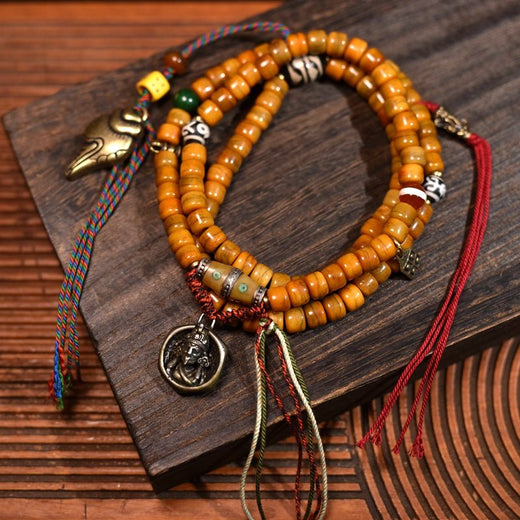
Explore our monk-blessed Yak Bone 108 mala.
Frequently Asked Questions about Vajra Malas
Can anyone use a Vajra Mala, or is it only for advanced Buddhists?
Anyone with a sincere intention can use a Vajra Mala. While it holds profound significance in Tibetan Buddhism, its core purpose is to aid in focus, mindfulness, and mantra recitation—practices beneficial to all. Using a Vajra Mala is an act of connecting with your own potential for clarity and compassion.
We recommend approaching it with respect for its tradition, but you do not need to be an initiated Buddhist to benefit from its spiritual presence.
What is the main difference between a regular mala and a Vajra Mala?
The defining feature of a Vajra Mala is the inclusion of the Vajra (Dorje) and Bell (Ghanta) pendants, typically attached to or serving as the Guru bead. While a regular mala has 108 beads and a Guru bead, the Vajra Mala specifically incorporates these symbols representing the union of skillful means (Vajra) and wisdom (Bell).
This makes it a particularly potent tool for practitioners of Vajrayana, or Tibetan Buddhism, who focus on this union as the direct path to enlightenment.
How can I tell if Rudraksha beads are authentic?
Authentic Rudraksha beads have distinct, naturally formed vertical lines called mukhis that run from top to bottom. They possess a unique texture and a certain weightiness. A common test is the water test: genuine, mature Rudraksha beads will typically sink in water due to their density.
Be wary of beads that are perfectly uniform, unnaturally light, or have carved or glued-on lines. At Buddhabelief, we source only high-grade, authentic Rudraksha to ensure your mala is a genuine spiritual tool.
What should I do if my mala breaks?
In the Buddhist tradition, a breaking mala is not seen as a negative event. It is often interpreted as a sign of a spiritual breakthrough, indicating that a cycle of karma has been completed and the mala has absorbed a significant amount of focus on your behalf.
It signifies progress on your path. You can gather the beads and have the mala respectfully restrung, often infusing it with a renewed intention. It marks the end of one chapter and the beginning of another in your spiritual journey.
Is it okay to wear my Vajra Mala as a necklace?
Yes, it is common to wear your Vajra Mala as a necklace. Wearing it keeps its spiritual focus point close to your body, particularly your heart chakra, serving as a constant reminder of your intentions and practice.
It can offer a sense of protection and tranquility throughout your day. However, it's important to treat it with reverence. Avoid
Keep reading