108 mala
Mala Bead Counts: 108, 27 & 21 Beads — Meaning, Purpose &...

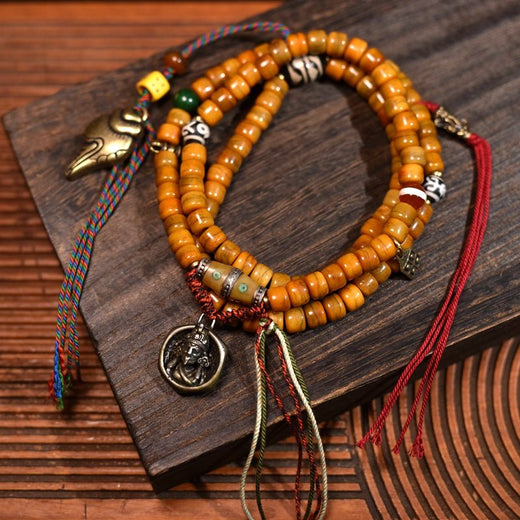
You’ve likely seen them: strands of beads, often worn around the neck or wrist, clutched in quiet hands during meditation. For many, the image that comes to mind is the classic 108-bead mala. And indeed, this particular count holds a profound significance in Tibetan Buddhist practice.
But what if your life doesn't always allow for a full 108-bead session? What if you're seeking to integrate mantra into a busy day, or perhaps you're exploring different aspects of practice that call for a smaller, more focused tool?
At Buddhabelief, we understand that a dedicated spiritual path isn't one-size-fits-all. That's why we want to explore the full spectrum of mala bead counts – from the venerable 108 to the versatile 27 and 21 beads – each with its own meaning, purpose, and specific applications in your daily life and practice.
Our goal is to offer not only jewelry, but authentic tools for your journey, like those found in our handcrafted Tibetan malas, sourced directly from the Himalayan regions.
108 Mala Beads Count is what if you're seeking to integrate mantra into a busy day, or perhaps you're exploring different aspects of practice that call for a smaller, more focused tool?
What It Really Is
At its heart, a mala, or Buddhist prayer beads, is far more than a decorative accessory. It is a sacred tool, a tangible anchor in the often-abstract landscape of spiritual practice. While commonly associated with counting mantra repetitions, its purpose extends much deeper, fostering mindfulness, concentration, and a genuine connection to the Dharma.
The term 'mala' itself comes from Sanskrit, meaning 'garland' or 'rosary.' Since the early Buddhist period, practitioners across various spiritual traditions have used these beads to keep track of prayers, chants, or meditations. In Tibetan Buddhism, the mala becomes a constant companion, a physical representation of one's commitment to the path.
Each bead, touched with intention, marks a step in the journey of cultivating wisdom and compassion.
The most iconic count, 108 beads, is steeped in rich symbolism. While its exact origin is debated, the number 108 appears repeatedly in ancient spiritual texts and traditions, from the 108 Upanishads in Hinduism to the 108 paths to enlightenment in Buddhism.
In the Vajrayana tradition, it's often understood as representing the 108 worldly desires or defilements that we strive to overcome. Another common interpretation suggests that 100 repetitions are counted as complete, with the extra 8 beads serving to purify any errors or omissions during recitation, or to offer additional merit.
This meticulous approach ensures that one's efforts are thorough and sincere, a practice designed to purify negativities and accumulate positive karma.
Beyond the mystical number, the mala's physical form aids in grounding the mind. As you move from bead to bead, the tactile sensation—the slight warmth of wood or stone against your fingertips—combined with the rhythmic repetition of a mantra, helps to quiet the incessant chatter of the mind.
It provides a focal point, drawing your awareness back to the present moment each time your fingers touch a new bead. This simple, yet powerful, mechanism helps to cultivate the sustained concentration essential for deeper meditative states.
It's a subtle dance between the physical and the spiritual, where the beads become an extension of your intention, guiding you deeper into your practice.
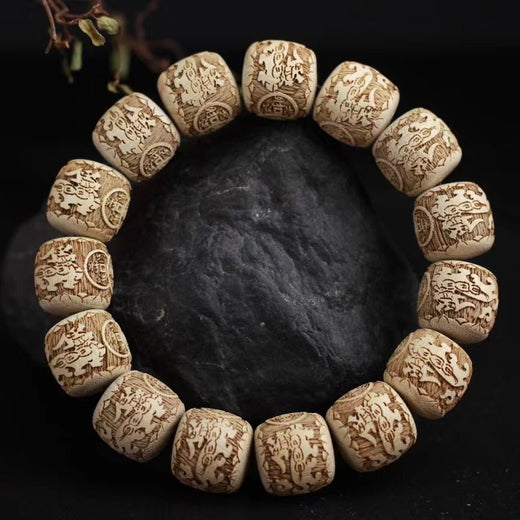
The materials chosen for malas also carry specific significance. Bodhi seeds, for instance, are highly prized because the Buddha attained enlightenment under a Bodhi tree in Bodh Gaya. Sandalwood is cherished for its calming aroma and association with purification.
These choices are not arbitrary; they infuse the mala with an additional layer of meaning, connecting the practitioner to centuries of tradition and the very essence of the teachings. When you hold an authentic mala, you are not only holding beads; you are holding a lineage, a history, and a potent tool for deepening your practice, much like those you can find in our explore mala beads.

Why This Matters in 2026
In 2026, the world continues its relentless pace, often leaving even the most dedicated practitioners feeling stretched thin. The digital landscape, while offering connection, often fragments our attention, making sustained focus a rare commodity.
For committed practitioners like you, perhaps grappling with the 'plateau' in your meditation practice, or seeking to integrate Dharma more deeply into complex family and career dynamics, the mala's relevance is more acute than ever.
You might find yourself juggling professional responsibilities, family commitments, and the ever-present hum of digital notifications. The question isn't just about finding time to sit for meditation, but about sustaining the quality of that attention, carrying it through your day.
This is where the mala, in its various forms, offers a potent antidote. It's a physical reminder, a tactile anchor that cuts through the noise, inviting you back to your breath, your mantra, and your intention.
Consider the challenge of maintaining mindfulness amidst the daily grind. You might be working through a demanding project at work, dealing with the emotional complexities of aging parents, or simply trying to be fully present with your children.
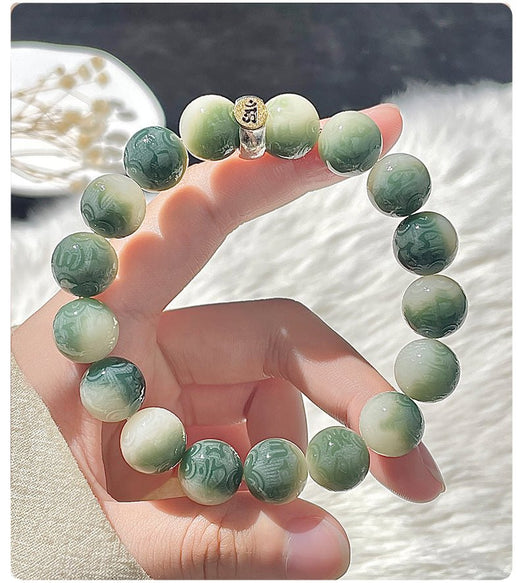
A mala, especially a smaller wrist mala with 27 beads, becomes a discreet yet powerful ally. A quick touch of a bead, a silent mantra, can recalibrate your focus, bringing you back to a place of inner calm and clarity.
It's not about escaping your responsibilities, but about approaching them with a more grounded and compassionate mind.
For those feeling that familiar 'plateau' in their practice – the sense that progress has stalled, or the initial spark has dimmed – the mala can reignite diligence. The act of physically counting mantras, bead by bead, provides a tangible measurement of effort and commitment.
It transforms an abstract intention into concrete action. This isn't about rigid adherence, but about establishing a consistent rhythm that helps you break through perceived barriers. It encourages you to keep showing up, even when the path feels less exciting, fostering the kind of resilience that deepens practice over years, not only weeks.
Furthermore, in a world saturated with fleeting trends and mass-produced spirituality, the authenticity of a true mala stands out. You understand the difference between a decorative item and a tool crafted with intention and tradition.
We partner with artisans in Boudhanath and Kathmandu, ensuring that each piece carries the energy of its origin and the skill of generations of craftspeople. This commitment to authenticity is an investment in your practice, providing you with a reliable and respected companion on your path.
When you choose a mala from our Buddhabelief's mala selection, you're investing in a connection to a living tradition.
The mala also serves as a potent reminder of impermanence and the preciousness of human life. Each bead can represent a moment, a breath, a chance to cultivate virtue. This understanding, often discussed in retreats inspired by teachers like Pema Chödrön or Thich Nhat Hanh, is brought into daily life through the consistent use of a mala.
It helps you to prioritize what truly matters, to infuse mundane activities with spiritual significance, and to approach both joys and challenges with equanimity. It's a subtle, yet essential, way to keep the Dharma alive and active in every aspect of your evolving journey in 2026.
What It's Good For
The benefits of incorporating a mala into your practice are not merely symbolic; they are deeply practical, touching upon the very mechanics of how our minds work. Those committed to the path will find these tools offer specific advantages that can help to deepen concentration, cultivate diligence, and forge a stronger connection to the lineage and intention behind the practice.
Anchoring the Mind in Mantra
The human mind is notoriously restless, a constant stream of thoughts, plans, and distractions. This is a common challenge for anyone with a meditation practice, if you are just starting or have been sitting for decades.
The mala provides a crucial anchor. As you recite a mantra, moving your thumb over each bead, the tactile sensation and the rhythmic progression create a powerful feedback loop. This physical engagement helps to draw your scattered attention back to the present moment, to the sound of your mantra, and to the intention behind it.
It's a simple, yet effective, method for cultivating single-pointed concentration (ekāgratā). Instead of getting lost in thought, your mind has a physical task to accompany the verbal or mental recitation. This synergy between hand, voice, and mind creates a more stable and focused meditative state, allowing the mantra to penetrate deeper into your consciousness.
This is particularly valuable when you find your mind wandering during a longer session—say, after forty-five minutes of sitting—providing a gentle, non-judgmental way to return to your focal point.
Cultivating Diligence and Accumulation
In Vajrayana Buddhism, the accumulation of mantras is a cornerstone of practice, often involving hundreds of thousands, if not millions, of repetitions for specific deities or purifications. The mala is an indispensable tool for this process.
It transforms what could feel like an overwhelming task into a manageable series of cycles. Each completed circuit of 108 beads represents a significant step towards a larger goal, fostering a steady sense of diligence and perseverance.
This isn't about robotic counting; it's about the sustained, intentional effort that builds spiritual momentum. The act of completing a certain number of mala rounds each day or week helps to cultivate a disciplined mind, reinforcing your commitment to the path.
This consistent effort, often referred to as 'accumulating merit,' is believed to purify obscurations (kleshas) and create the positive conditions for spiritual realization. The mala acts as a silent witness to your dedication, encouraging you to continue, even when the results are not immediately apparent.
It embodies the principle that consistent, small efforts—ten rounds a day, fifty rounds a week—lead to lasting shifts over time, much like the process of polishing a rough stone until it gleams.
A Tangible Connection to Lineage and Intention
For a committed practitioner, the spiritual path is not an isolated endeavor; it is part of a vast and ancient lineage, a continuous stream of wisdom passed down through generations of teachers and practitioners.
Holding a mala creates a tangible link to this tradition. Each bead has been handled by countless meditators before you, imbued with their prayers and aspirations. When we source our sandalwood 108 malas, for example, we are not only acquiring wood; we are connecting with the hands that carved it and the spiritual presence it represents.
This connection fosters a sense of belonging and continuity, reminding you that you are part of something much larger than yourself. Furthermore, the mala becomes deeply imbued with your own intention. Over time, as you use it for mantra recitation, it absorbs your prayers, your aspirations, your struggles, and your insights.
It becomes a highly personal and sacred object, a repository of your spiritual journey. This creates a powerful feedback loop: the mala helps you focus your intention, and in turn, your intention imbues the mala with even greater significance.
It serves as a constant, silent reminder of your vows, your refuge, and your ultimate aim on the path, supporting you in moments of both clarity and doubt.
How To Spot the Real Thing
For the discerning practitioner, choosing a mala is an act of intention, not merely a purchase. Authenticity isn't just a buzzword; it speaks to the integrity of the materials, the skill of the artisan, and the spiritual lineage behind the piece.
When you're looking for a mala that will truly serve your practice, there are several key criteria to consider, ensuring you invest in a tool that resonates with your commitment.
Material: more than Aesthetics
The choice of material for a mala carries specific energetic properties and traditional associations rooted in Tibetan Buddhist practice. For instance, Bodhi seed malas are highly revered, as the Buddha attained enlightenment under a Bodhi tree in 500 BCE.
They are believed to amplify the power of mantra and bring blessings. Sandalwood is prized for its calming aroma and association with purification, often used for practices related to peace and healing. Rudraksha beads, from a sacred tree native to the Himalayas, are linked to Shiva and are believed to offer protection and spiritual growth.
Lotus seeds symbolize purity and spiritual unfolding. Dzi beads, ancient and rare—some dating back centuries to the Tibetan plateau—are considered powerful protectors and bringers of good fortune, often incorporated as guru beads or counter beads.
When we select materials, we prioritize their traditional significance and energetic qualities, ensuring they are suitable for serious practice.
Craftsmanship: The Hands of Devotion
An authentic mala is a a sign of skilled craftsmanship, often passed down through generations. Look for beads that are well-formed and consistent in size, indicating careful selection and carving. The stringing method is crucial: traditional malas are hand-knotted between each bead using silk or cotton cord.
This not only makes the mala more durable, preventing all beads from scattering if the string breaks, but also provides a distinct space for your fingers to move, enhancing the tactile experience during recitation.
The guru bead – the larger, often three-holed bead that marks the completion of a full cycle – should be prominent and well-integrated. Some malas also feature stupa or marker beads at specific intervals (often after 27 or 54 beads), which serve as additional tactile guides during longer sessions.
We work closely with Master Tenzin, who leads our Boudhanath workshop, to ensure every mala reflects this meticulous attention to detail and traditional artistry.
Source: From the Himalayas to Your Hand
The origin of your mala matters. Authenticity often means direct sourcing from the regions where these traditions are alive and thriving – places like Nepal and Tibet. This ensures that the materials are genuine and that the crafting methods adhere to traditional practices.
It also means supporting the local artisan communities who preserve these ancient skills. We've spent years building relationships with families and workshops in Kathmandu and Boudhanath, ensuring ethical sourcing and fair trade practices. This direct connection allows us to verify the provenance of our materials and the integrity of the craftsmanship, offering you pieces that are truly reflective of the Himalayan spiritual heritage.
This commitment is part of our broader dedication to providing authentic tools for your journey, as detailed in our complete guide to mala beads.
Blessing: Infusing with sacred presence
For those on a path of serious practice, the blessing of a mala is an essential aspect of its spiritual potency. A mala blessed by monks from Sera monastery, for example, is infused with the sacred presence of prayers and rituals.
This process involves specific pujas and mantra recitations performed by ordained monastics, dedicating the mala for the benefit of all sentient beings and enhancing its capacity as a tool for practice. This blessing process distinguishes an authentic spiritual tool from a mere string of beads.
While a mala can certainly be used effectively without a formal blessing, a blessed mala carries an additional layer of spiritual resonance, connecting you to the collective merit and intention of the monastic community.
We ensure that many of our malas undergo these traditional blessing ceremonies, often during the 49-day cycle of specific prayers, imbuing them with a closer sacredness for your practice.

How To Use It Day To Day
Understanding the different mala bead counts is essential to matching your practice with your circumstances, allowing you to select the right tool for the right moment. Each count serves a distinct purpose, adapting to the rhythms of your life and the specific intentions of your meditation.
The 108 Mala: For Deep, Dedicated Practice
This is the traditional and most widely recognized mala, designed for extensive mantra accumulation and formal meditation sessions. Its 108 beads allow for a full cycle of mantra recitation, with the extra 8 beads typically added to ensure a complete 100 pure recitations, accounting for any miscounts or omissions, or offered as additional merit.
To use it, hold the mala in your right hand, draped over your middle finger. Begin by holding the bead next to the guru bead (the larger, often distinct bead that marks the beginning and end of the cycle).
Using your thumb, gently pull each bead towards you as you complete one mantra recitation. Do not use your index finger, as it traditionally represents the ego. When you reach the guru bead, do not cross over it.
Instead, flip the mala around and continue in the reverse direction. This signifies the continuous nature of practice and respect for the guru. The 108 mala is ideal for sitting meditation, extended retreats, or when you are committed to accumulating a significant number of mantras for a specific practice, such as the 100,000 Vajrasattva mantras.
It acts as a steady anchor for sustained concentration and diligence, helping you to maintain focus over longer periods. For a closer get into its meaning, you might find our article on 108 mala beads meaning in Tibetan practice particularly useful.
The 54-Bead Mala: The Half-Mala for Focused Sessions
The 54-bead mala is essentially a half-mala, offering a practical alternative for shorter meditation sessions or when you prefer a less cumbersome tool. It's often used by practitioners who wish to complete multiple rounds of 54 beads to reach their desired mantra count, or simply to engage in a more concise practice.
This count is particularly useful for integrating mantra recitation into a busy schedule, allowing you to complete a meaningful segment of practice without needing the full 108 beads. You might use it for a quick 10-15 minute meditation break during your workday, or as a travel companion.
The method of use is identical to the 108-bead mala: hold it in your right hand, use your thumb to advance beads, and reverse direction at the guru bead.
Common Questions About Mala Bead Counts
Why do most malas have exactly 108 beads?
The number 108 carries profound significance across Buddhist, Hindu, and Vedic traditions. In Tibetan Buddhism, 108 represents the 108 volumes of the Kangyur — the collected teachings of the Buddha. Practically, 108 allows you to complete one full recitation of a mantra with a count that mirrors the sacred geometry found in Himalayan temples and monastery courtyards.
Practitioners reciting the Vajra Guru mantra (Om Ah Hum Vajra Guru Padma Siddhi Hum) count 108 repetitions per session to accumulate merit across a full cycle.
Can I use a 21-bead mala for serious practice?
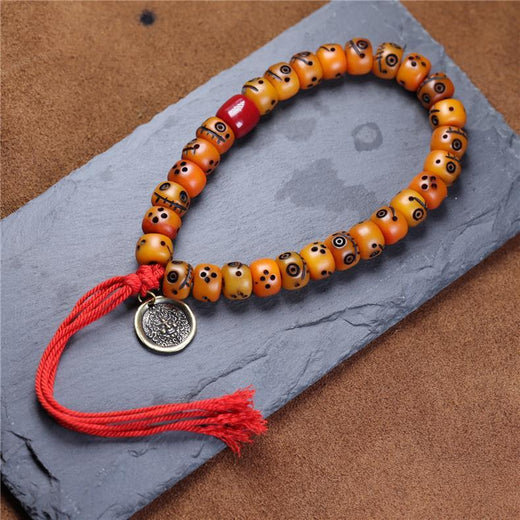
Yes. A 21-bead mala is particularly associated with Green Tara practice in the Tibetan tradition. Many Tara practitioners carry a 21-bead wrist mala specifically because Tara has 21 emanations, and reciting the 21 Praises to Tara while touching each bead creates a direct meditative correspondence.
Lamas in monasteries in Lhasa and Dharamsala teach that sincerity of intention matters more than bead count — a 21-bead mala used with full attention carries equal weight to a 108-bead mala used distractedly.
What is the difference between a 27-bead and 54-bead mala?
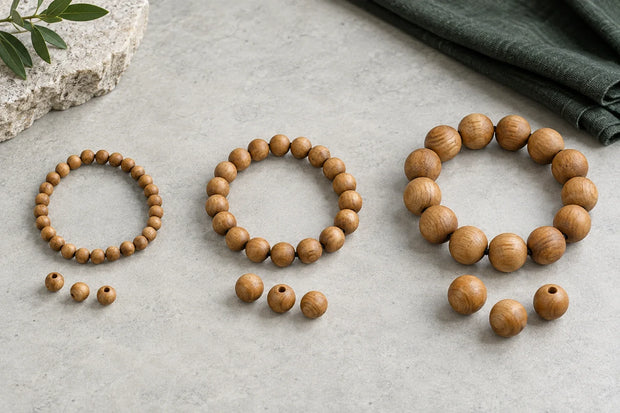
A 27-bead mala is one-quarter of the traditional 108, making it ideal for a quick daily practice when time is limited — four rounds complete one full 108-count session. A 54-bead mala (half of 108) suits practitioners who do two rounds per sitting.
Both are traditionally worn on the wrist when not in use, unlike the full 108-bead mala which is typically held in the hand or draped around the neck. Craftspeople in Kathmandu's Thamel district often string 27-bead and 54-bead malas on stronger thread than full malas to accommodate daily wrist wear.
Does the material of my mala beads affect the count?
The material does not change the count, but it does influence which practice the mala is best suited for. Bodhi seed malas (108 beads) are considered universally auspicious and appropriate for any mantra. Rudraksha malas are traditionally preferred for Shiva-related practices and for practitioners seeking protection.
Sandalwood (108 beads) is associated with calm abiding meditation. For wrist malas (21 or 27 beads), turquoise and coral are frequently chosen in Tibetan practice because these stones hold cultural significance as protective materials in Himalayan communities.
How do I know when to move up from a 21-bead to a 108-bead mala?
There is no formal graduation in Tibetan Buddhist practice — both are valid tools for the same purpose. Many experienced practitioners use a 21-bead wrist mala throughout the day for shorter recitations and keep a full 108-bead mala for seated formal sessions.
The question is less "when am I ready" and more "what does my practice schedule require?" If you are doing a ngondro (preliminary practice) that requires 100,000 mantra repetitions, the 108-bead mala is more efficient.
For daily mindfulness and shorter recitations, the 21 or 27-bead mala is perfectly sufficient.
Can I mix different bead materials in a single mala?
Traditional Tibetan malas are typically strung with a single material for the main beads, though mixed malas do exist and hold their own significance. A common traditional combination uses 108 identical beads with three differently colored or shaped "counter beads" placed at specific intervals to help track long recitation sessions (typically after every 27th bead).
Buddhabelief's handknotted malas follow this traditional stringing pattern — if you are looking for a mixed-material mala, the team can advise on combinations that honor authentic Tibetan design conventions rather than purely decorative mixing.
Your Mala Practice Starts With the Right Count
if you begin with a 21-bead wrist mala or invest in a full 108-bead practice mala, the count you choose shapes the rhythm of your daily recitation. A 21-bead mala fits in your pocket and travels with you.
A 108-bead mala grounds a seated session. A 27-bead mala bridges both worlds. Within our authentic mala beads collection, each piece is handknotted by craftspeople in Nepal and Tibet who understand these distinctions — not as product specifications, but as living practice tools passed down through lineages that still use them today.
Choose the count that matches where your practice actually is, not where you think it should be.
For the broader structure, materials, care, and practice context, continue with our complete mala beads guide.
Keep reading