News
1984 Rat Guardian Buddha for 2026: Your Career & Intuition
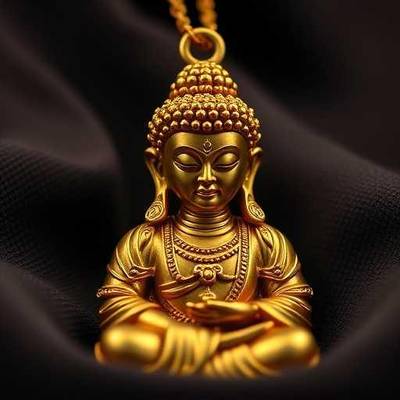
It’s 10 PM on a Tuesday, the blue light of your screen painting shadows in the quiet room. You're scrolling through job postings, not because you hate your job, but because a persistent question echoes in your mind: “Is this really it?” If you were born in 1984, the Year of the Wood Rat, this feeling of questioning and seeking something deeper might feel especially strong right now.
There’s a hum of change in the air, a sense that the coming year, 2026, holds a significant shift for your career and your inner compass. You’re not only imagining it. This article is for you — not to give you mystical answers, but to introduce a practical, grounding tool that has helped people navigate these exact feelings for centuries.
It's about understanding your protector, your 1984 Guardian Buddha, and how this connection can become your anchor. We invite you to explore this tradition with us, starting with our guardian buddha pendants collection.
The Foundation: What Your Guardian Buddha Really Is
Let's clear the air on something important. When you first hear "Guardian Buddha," your mind might jump to the idea of a good luck charm or a remarkable amulet that wards off evil. Many practitioners selling them online treat them as simple transactional trinkets.
But that's a fundamental misunderstanding of a deep and beautiful Tibetan tradition. A Guardian Buddha isn't an external force you pray to for favors. It's a mirror reflecting your own highest potential.
In Tibetan Buddhism, these figures are sometimes understood through the concept of a Yidam — a meditational deity that represents a specific enlightened quality. Think of it less like a saint in the Western sense and more like an archetype of an awakened mind.
For those born in the Year of the Rat, your designated guardian is Avalokiteshvara, known in Tibet as Chenrezig. He is the embodiment of boundless compassion (karuṇā). His most famous form is the Thousand-Arm Avalokiteshvara, each hand holding a different implement—a scroll, a jewel, a water vessel—symbolizing his ability to help beings in countless skillful ways.
So, what does this mean for you, a Rat born in 1984? It means the path to working through challenges isn't about wishing for external help, but about cultivating the very quality Avalokiteshvara represents: compassion.
Your innate strengths as a Rat—intelligence, resourcefulness, adaptability—are powerful. But under stress, they can morph into anxiety, overthinking, and a tendency to get caught in mental loops. Compassion is the antidote. It's the quality that allows you to be resourceful without being ruthless, intelligent without being coldly critical (especially of yourself), and adaptable without losing your center.
Your Guardian Buddha is a constant, tangible reminder of this inner resource you already possess. It's not magic; it's a tool for remembrance.
Alt text: A detailed, close-up shot of a silver Thousand-Arm Avalokiteshvara pendant, showing the intricate details of the arms and face.
This isn't just about feeling good. It's about effective action. When we act from a place of compassion, we see situations more clearly. We communicate more effectively with colleagues. We make career decisions based on wisdom, not fear or ego.
The pendant isn't the source of this power; it's the key that helps you open up the door to a room that's always been inside you. It's a focal point for your own intention to live with more awareness and kindness, especially during times of change.
Why This Connection Is Crucial for You in 2026

If you've been feeling a subtle (or not-so-subtle) tension building, there's a reason. The year 2026 is the Year of the Fire Horse. In the intricate dance of the zodiac, the Rat and the Horse are in direct opposition.
This is what's known as a "clash." But please, don't interpret this through a lens of fear or doom. A clash isn't inherently "bad." It simply means a period of dynamic, high-energy, and often unpredictable change.
Think of it like this: your nature as a 1984 Wood Rat is like a steady, flowing river. You're clever, you find the path of least resistance, and you have a quiet determination. The Fire Horse energy of 2026 is like a powerful, roaring wildfire that spreads across dry grassland in hours.
It's fast, passionate, and demanding. When a river meets a wildfire, the result is intense. There's steam, there's turbulence, there's a powerful reshaping of the landscape. This isn't a year for coasting; it's a year that will demand your full attention.
How might this call in in your life, specifically in your career?
- Sudden Career Shifts: The Horse's energy can bring unexpected opportunities or abrupt endings. A company restructure, a surprise job offer in another city, or a project you've been working on for years suddenly getting canceled—this happened to countless Rats during the last Fire Horse year in 2014. Your usual methodical planning might be thrown for a loop.
- Increased Pressure and Burnout: Fire Horse years are notoriously fast-paced. The demand to perform, to be "on" constantly, can be exhausting for the Rat, who prefers to work smartly, not only hard. This is a prime time for burnout if you don't manage your energy wisely.
- Communication Challenges: The Horse is direct and blunt; the Rat is more strategic and subtle. This can lead to misunderstandings with managers, colleagues, or clients. You might feel like others are being needlessly aggressive, while they might perceive you as being secretive or indirect.
This is where your connection to Avalokiteshvara becomes less of a spiritual concept and more of a pragmatic strategy. In a year defined by potential conflict and high-strung energy, what is the most powerful skill you can have?
Compassion. Not a soft, passive pity, but the active, clear-seeing wisdom that Avalokiteshvara embodies. It's the ability to pause before reacting to a stressful email. It's the capacity to understand a colleague's frustrating behavior might come from their own pressure, not malice.
It's the self-compassion to know when you need to step back and recharge before you burn out.
Your intuition, that quiet inner voice, is your best guide through this turbulence. But when your mind is racing with the anxiety that this clash can stir up, you can't hear it. The practice of connecting with your Guardian Buddha is about creating moments of stillness.
It's about having a physical anchor—a mala, a thangka, a piece worn close to your body—that reminds you to breathe, to quiet the noise, and to listen to the wisdom that's already there. 2026 doesn't have to be a year of being battered by the waves; it can be the year you learn to surf them with grace and skill.
Real Benefits: How a Guardian Buddha Actually Works
So, how does wearing a piece of silver translate into working through a challenging year? It's not about supernatural intervention. The process is psychological, intentional, and deeply personal. It works by creating shifts in your own awareness and behavior. Here's a breakdown of the practical benefits.
Cultivating Compassion to Navigate Career Turbulence
Your boss sends a short, critical email about your latest report. The typical Rat-mind reaction might be to spiral: "What did I do wrong? Are they angry with me? Is my job on the line?" This anxiety loop is counterproductive.
In that moment, your fingers brush against the Avalokiteshvara pendant under your shirt. It's a trigger, a pattern interrupt. You remember your intention: to approach challenges with compassion.
First, self-compassion: "Okay, this feels bad. It's okay to feel stressed. Let me take a breath before I respond." Second, compassion for the other: "My boss is under immense pressure. This brevity is likely about their stress, not a personal attack on me." From this calmer, clearer state, you can draft a response that is professional and effective, rather than defensive and emotional.
Avalokiteshvara's thousand arms represent a thousand skillful ways to respond. By connecting with this energy, you're reminding yourself to choose the most skillful, wise response available, instead of the most reactive one. This simple shift can transform your professional relationships and reduce workplace stress dramatically.
As you learn more about this system, our complete guide to guardian buddhas offers a closer reference for all zodiac signs.
Quieting the Anxious Mind to Hear Your Intuition
Your intuition is always speaking to you. It's that gut feeling about a new job offer, the sense that a particular project is the right one to pursue, or the nagging feeling that you need to rest.
But the Rat mind is famously busy—a whirlwind of thoughts, plans, and worries. The chaotic energy of 2026 will only amplify this. Intuition is a quiet whisper, and it can't be heard over a shouting mind.
Your Guardian Buddha pendant serves as a mindfulness anchor. It's a physical object you can bring your attention to. Throughout the day, you can practice a simple micro-meditation. When you feel your thoughts spiraling, consciously touch the pendant.
Feel its coolness against your skin, its weight in your palm, the details of its form—perhaps the fine lines etched into Avalokiteshvara's face or the smooth curve of the silver band. As you do this, take three slow, deep breaths.
In, out. In, out. In, out. This simple act, repeated over time, trains your brain to pause the frantic thought-train. It creates tiny pockets of silence in your day. It's in these moments of stillness that your intuition can finally be heard.
You start to notice the subtle signals your body and mind are sending you, allowing you to make decisions that are more aligned with your true path, rather than just reacting to external pressures.
It's a principle that applies to all zodiac protectors, like those for the Dragon sign born in 1988 as well.
A Tangible Reminder of Your Inner Strength
Let's be honest: life is busy. Your commitment to being more mindful and compassionate can easily be forgotten by 9:30 AM on a Monday morning. Willpower alone is often not enough. A physical object acts as a constant, passive reminder of your intention.
When you put on your pendant in the morning, it's a quiet renewal of your commitment to yourself. When you catch a glimpse of it in a reflection, it's a gentle nudge back to your center.
On a particularly difficult day, holding it in your hand can feel like holding onto your own resolve.
The power isn't in the silver itself; it's in the meaning with which you have imbued it. It becomes a symbol of your journey, your resilience, and your innate capacity for wisdom and compassion.
The artisans in our Kathmandu atelier who craft these pieces do so with immense care, and the monks from Sera monastery who bless them infuse them with positive intention. When you wear it, you're not only wearing jewelry; you're carrying a story of intention, from the hands that made it to the aspirations you hold for yourself.
It's a beautiful and powerful way to honor your path.
Alt text: A lifestyle shot of a person wearing a Buddhabelief Guardian Buddha pendant, their hand gently touching it over their heart.
How to Choose an Authentic Guardian Buddha Piece

Walk into any online marketplace and you'll see a flood of options—from cheap dropshipped trinkets to exquisitely crafted pieces. How do you tell the difference? An authentic piece is not only about aesthetics; it's about intention, materials, and craftsmanship.
This is an investment piece — one you'll pass down, so choosing wisely matters.
1. Material Matters: Mass-produced pendants are often made from cheap alloys that tarnish quickly or irritate your skin. We exclusively use 925 sterling silver as our base. It's durable, hypoallergenic for most people, and has a weight and feel that speaks of quality.
It honors the sacred nature of the imagery it depicts. When you hold a solid silver piece, you can feel the difference immediately. It's a commitment to longevity, a piece you'll still wear in 20 years.
2. Craftsmanship and Detail: Look closely at the image of Avalokiteshvara. Is it a blurry, indistinct shape from a worn-out mold? Or can you see the fine details—the expression on the face, the individual arms, the symbolic implements?
Master Tenzin, who leads our Boudhanath workshop, has spent decades perfecting his craft. Each of our birth year guardian buddha pieces is hand-finished, ensuring that the details are crisp and the energy of the piece is clear and focused.
This level of detail isn't just for show; it's a form of respect for the tradition and for you, the wearer.
3. The Blessing (The Unseen Ingredient): This is perhaps the most significant difference. A generic necklace is just an object. The pieces in Buddhabelief's zodiac guardian collection are more than that. Before they ever reach you, they are brought to monasteries like Sera Monastery in Tibet or a partner monastery in Nepal.
Here, they are part of a blessing ceremony, or *puja*. This isn't a magic spell. The monks, through their chanting and focused meditation, infuse the items with positivity and prayers. They are consecrating the object, setting the intention that it may be a cause for happiness, clarity, and well-being for the person who wears it.
You are receiving a piece that is saturated with positive intention from a living spiritual lineage.
4. Choosing Your Style: Do you prefer a classic pendant on a chain? Or perhaps a smaller version to add to a bracelet? The right piece is the one you will feel comfortable wearing every day.
It should feel like a part of you. Consider your lifestyle. If you're very active, a smaller, sturdier design might be best. If you love statement pieces, a larger, more detailed pendant could be perfect.
The goal is to find a companion for your journey that resonates with you personally.
How to Actually Use Your Pendant in Daily Life
Receiving your Guardian Buddha is the beginning of a relationship. It's not a passive object, but an active part of your practice of mindfulness. Here are some simple, concrete ways to integrate it into your life. No prior experience is needed.
The First Connection: When your piece arrives, don't just tear open the package and put it on. Take five minutes. Find a quiet spot. Hold the pendant in your hands. Close your eyes. Notice its temperature, its weight, the texture of the details—the fine lines of the deity's robes, the smooth curve of the bail.
Take a few deep breaths. Set a simple, clear intention. It could be something like, "May this remind me to be kind to myself," or "May this help me find clarity in my career," or simply, "May this be a reminder to breathe." This small ritual forges a personal connection from the very start.
Your Daily Mindfulness Anchor: The real power of the pendant is unlocked through repetition. Use it as a physical trigger to bring you back to the present moment. Here are some ideas:
- Morning Intention: As you put it on in the morning, repeat the intention you set on the first day. Start your day with purpose.
- Traffic Light Meditation: Stuck in traffic, feeling frustrated? Instead of checking your phone, gently touch your pendant and take three conscious breaths until the light turns green.
- Pre-Meeting Grounding: Feeling anxious before a big presentation or a difficult conversation? Discreetly hold your pendant in your hand or pocket for a moment. Feel its solidness and let that ground you.
- End-of-Day Gratitude: As you take it off at night, think of one small thing from the day you are grateful for. It's a simple way to end the day on a positive note.
Introducing the Mantra: Avalokiteshvara is associated with the most famous mantra in Buddhism: **Om Mani Padme Hum**. You don't need to understand its complex theological meaning to benefit from it. A simple translation is "The jewel in the lotus," symbolizing the enlightened wisdom that can blossom from the "mud" of our ordinary, confused minds.
When you feel overwhelmed, anxious, or angry, you can silently repeat this mantra to yourself while touching your pendant. The resonance of the sound, even just in your mind, has a settling, centering effect.
It's a powerful tool for shifting your mental state away from negativity and toward peace. This practice is universal, helpful for anyone, including those born under other signs like the Rooster, who is guided by Acala.
Common Questions About Your Guardian Buddha
Do I have to be a Buddhist to wear a Guardian Buddha pendant?
Absolutely not. While these symbols originate from Tibetan Buddhism, the qualities they represent are universal. Avalokiteshvara embodies compassion, a quality that benefits everyone, regardless of their spiritual path or lack thereof. Think of it as connecting with a universal archetype of kindness and wisdom.
You are not required to adopt any beliefs or rituals. Using the pendant as a simple mindfulness tool to cultivate more compassion for yourself and others is a beautiful practice for anyone seeking more peace and clarity in their life.
It's about personal growth, not religious conversion.
What if I was born in early 1985 before the Lunar New Year?
This is an excellent and common question. The Tibetan and Chinese zodiacs are based on the Lunar calendar, not the Gregorian calendar (January-December). The Lunar New Year typically falls somewhere between late January and mid-February.
If you were born in January or February of 1985, you might actually be a Rat, not an Ox. The Year of the Rat in 1984 ended on February 19, 1985. So, if your birthday is before February 20, 1985, your guardian is Avalokiteshvara.
The easiest way to be certain is to use an online Lunar calendar converter to check your specific birth date.
How is this different from a generic zodiac necklace from a fashion store?
The difference is substantial, and it comes down to three things: symbolism, craftsmanship, and intention. A fashion necklace might have a simple rat charm, which is a literal symbol. A Guardian Buddha pendant depicts Avalokiteshvara, symbolizing the *enlightened quality* of compassion meant to help the Rat.
Second, our pieces are handcrafted from sterling silver by artisans like Master Tenzin in Dharamshala, not mass-produced in a factory. Finally, and most importantly, is the intention. Our pieces are blessed by monks in a sacred ceremony at the monastery, infusing them with positivity.
A fashion item is an accessory; an authentic Guardian Buddha piece is a tool for your spiritual journey.
What does the "Thousand-Arm" form of Avalokiteshvara symbolize?
The Thousand-Arm form is a dynamic depiction of active, engaged compassion. The story goes that Avalokiteshvara, seeing the immense suffering of the world, became so overwhelmed that his head shattered into pieces. Another Buddha, Amitabha, reassembled him with eleven heads to see suffering in all directions and a thousand arms to help all beings simultaneously.
Each hand often holds a symbolic tool or forms a specific gesture (mudra), representing the countless skillful means (upaya) that compassion can employ to alleviate suffering. It's a reminder that compassion isn't a passive feeling; it's an active, creative force for positive action in the world.
How should I care for my sterling silver pendant?
Sterling silver is a durable material, but it can tarnish over time when exposed to air and moisture. To keep it looking its best, we recommend gently wiping it with a soft polishing cloth after wearing it.
It's best to remove your pendant before showering, swimming, or exercising to avoid exposure to chemicals and excess moisture. When you're not wearing it, storing it in a small, airtight bag or a jewelry box will slow the tarnishing process.
If it does tarnish, a quality silver polish or cloth will restore its shine. A little bit of care will ensure this piece remains a beautiful companion for many years.
Is it 'bad luck' if I take it off or forget to wear it?
Not at all. This is a crucial point that separates this practice from superstition. Your Guardian Buddha is a tool and a reminder, not a source of luck or a charm that punishes you.
There is no penalty for not wearing it. Your inner qualities of compassion and wisdom don't disappear when the pendant is in a drawer. The pendant simply helps you remember and connect with them more easily.
If you forget to wear it, just put it on the next day and reconnect with your intention. The practice is meant to be supportive and gentle, not a source of anxiety or rigid rules.
Your Journey Through 2026 and Beyond
The coming year, 2026, holds a great deal of energy for you. When you encounter a zodiac "clash" with your sign, it's natural to feel apprehension, but we invite you to see it differently.
It is not a threat, but an invitation. It is an opportunity to consciously engage with the parts of your life that are calling for change, especially your career path and your connection to your own inner voice.
It is a year that will reward awareness and challenge reactivity.
You don't have to navigate this turbulence alone and unequipped. Connecting with Avalokiteshvara is about arming yourself with the resilient strength of compassion—for yourself when you feel overwhelmed, and for others when challenges arise.
In the Tibetan tradition, practitioners have worn Avalokiteshvara's image for centuries as a direct invocation of this quality. It's a commitment to moving through the world with a little more grace, a little more wisdom, and a lot less anxiety.
This isn't a quick fix. It's a practice. It's the simple, repeated act of coming back to your breath, back to your center, back to your heart. A Guardian Buddha pendant is a beautiful and potent companion for this journey.
Worn close to the chest, against your skin, it becomes a quiet anchor, reminding you of the vast, compassionate strength you already hold within. We invite you to explore our collection of handcrafted guardian deity pendants and find the piece that feels like it's already a part of your story.
Keep reading