News
Tibetan Monk Robes: Maroon & Yellow Meaning & Spiritual S...
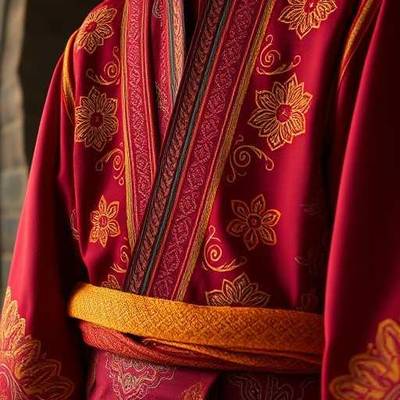
You’ve likely felt it. Maybe it was during a retreat, seeing the quiet dignity of a teacher moving through the hall. Or perhaps it was years ago, watching monks debate in the courtyard of Sera Monastery, a flash of maroon against ancient stone.
It’s a color that speaks a language older than words. For a dedicated practitioner like you, this isn't just about aesthetics; it's a visual echo of the path itself. You understand that every element of the tradition has a purpose, a deep-seated meaning that goes far beyond the surface.
The sight of these robes can be a powerful anchor, a reminder of the lineage you are part of, especially on days when your cushion feels more like a rock and the path seems to have leveled out.
This deeper understanding is a key part of the world of our traditional Tibetan clothing collection.
The Foundation: more than a Uniform
Those new to Buddhist practice often mistake a monk's robes for simple uniform—something like military dress or school attire. This misses the active, essential role these garments play in a monastic's daily life and practice.
The robes aren't passive clothing; they are a tool for transformation, a constant, tangible reminder of one's vows and commitment to the Dharma. Their very form is a teaching on renunciation and non-attachment.
The origin traces back to the Buddha himself. The first robes, the kāṣāya, were patched together from discarded scraps of cloth—pieces found in refuse heaps or on cremation grounds. They were then dyed with earth, roots, and spices, giving them a humble, earthen hue.
This act of creation was the first lesson: taking what is unwanted and transforming it into something sacred. It was a direct statement against the caste system and vanity, a declaration that one's worth is not in fine clothes but in the quality of one's mind.
In the Tibetan tradition, this legacy evolved into the three primary garments you see today:
- The Dhonka: A wrap-around upper garment with cap sleeves. Its design leaves the right arm bare, symbolizing a readiness for action and engagement with the world, while also representing the balance of skillful means and wisdom.
- The Shemdap: The maroon skirt-like lower garment, made from multiple panels of cloth meticulously stitched together. This patchwork design is a direct homage to the Buddha's original robes, a built-in lesson on humility and the composite nature of all phenomena.
- The Zen: The large outer shawl, used for warmth, as a sitting mat, and for formal teachings. This is perhaps the most iconic piece, wrapped and worn in various ways depending on the activity or ceremony.
The dominant maroon color comes from natural dyes historically available in Tibet's high-altitude environment—madder root being a primary source, producing that distinctive deep burgundy when applied to wool. But it has come to symbolize much more.
It is the color of the earth, of discipline, and of the vows that bind a monastic to the path of liberation. The sliver of yellow often seen, particularly in the Gelug school, represents wisdom and the intellect sharpened by study and debate.
It's a visual representation of Tsongkhapa's reforms in the 14th century, emphasizing the crucial union of rigorous intellectual understanding with deep meditative practice. The robe, therefore, is not a costume. It is a living piece of the Vinaya—the code of conduct—worn on the body, making the practitioner's commitment visible to themselves and the world.

Why This Matters for Your Practice in 2026
You're not planning to ordain. Your life involves board meetings, mortgage payments, and working through complex family dynamics. So why should the intricate symbolism of a monastic's robe matter to your lay practice? Because the principles woven into these garments are universal Dharma teachings that offer a potent antidote to the specific challenges a seasoned practitioner like you faces today.
Let's talk about the practice plateau. After years of dedicated sitting, you might find the initial spark has faded. The insights don't come as frequently, and meditation can feel more like a chore than a refuge.
The monk's robe is a physical embodiment of unwavering commitment. A monk puts on their robes every single day, regardless of their mood, the weather, or whether they feel "inspired." It is an act of showing up.
The fabric itself—typically three layers of cotton or wool, dyed in ochre or maroon—is a reminder: the path is not about chasing spiritual highs; it's about the steady, consistent application of effort. For you, this translates into recommitting to your cushion even when it feels fruitless.
It's about seeing the practice not as a means to an end, but as the expression of your commitment, just as the robe is an expression of a monk's vows.
Consider the friction in your professional and personal life. You're a leader at work, a partner at home. The pressure to perform, to have the right answers, to manage egos (including your own) is immense.
The core principle of the robe is renunciation—specifically, the renunciation of worldly vanity and self-importance. The simplicity of the garment frees the mind from the endless cycle of expressing identity through consumerism. For you, this doesn't mean wearing a robe to the office.
It means consciously cultivating an "inner robe" of simplicity. It's about choosing to engage with less ego, to listen more than you assert, to find your sense of self in your integrity rather than your title or your possessions.
It's about understanding that true authority comes from presence and wisdom, not from the brand of your suit.
Then there is the direct challenge of caring for aging parents. This is a confrontation with impermanence that cuts to the bone. The robe's color, derived from the earth—ochre from iron oxide, maroon from natural dyes sourced in regions like Bhutan and Tibet—and its origin from discarded cloth, is a constant meditation on anicca.
It acknowledges that all things arise, decay, and pass away. It is not a morbid symbol, but a realistic and grounding one. By understanding this aspect of the robe, you can reframe your experience.
Instead of fighting against the reality of aging, you can learn to meet it with the same equanimity and respect for natural processes that the robe represents. It becomes a practice of letting go, of compassion, and of finding the beauty in the full spectrum of life, not only the pleasant parts.
The robe teaches that there is dignity in the entire cycle, a lesson of immense value when working through one of life's most difficult passages.
The Robe's Teachings in Action: How It Works
The spiritual significance of Tibetan monk robes isn't just abstract symbolism. It functions as an active, integrated part of a practitioner's path through tangible mechanisms. For those walking a path of self-inquiry, understanding these functions provides a blueprint for deepening one's own engagement with the Dharma in daily life.
A Constant Reminder of Vows and Refuge
For a monk or nun, the physical sensation of the robe—its weight, texture, and the specific way it must be worn—is a constant, non-verbal reminder of their ordination vows. Every time they adjust the zen or feel the dhonka against their skin, it's a micro-moment of mindfulness, a reconnection to their core purpose.
It brings them back from distraction and reinforces their commitment to the Three Jewels: the Buddha, the Dharma, and the Sangha. The robe is a public declaration, yes, but its more important function is private.
It prevents the vows from becoming a distant memory from an ordination ceremony; it makes them a living, breathing part of every moment.
For you, this principle can be applied by creating your own physical anchors of practice. It might be a mala you always wear on your wrist, not as jewelry, but as a reminder of your intention to be mindful and compassionate.
It could be a specific shawl or blanket you use only for meditation, a layperson's version of a zen. When you wrap it around your shoulders—perhaps a hand-woven cotton piece from the Kathmandu Valley—you're not only getting warm; you're signaling to your body and mind that it's time to turn inward.
You are creating a ritual that, like the monk's robe, reinforces your refuge and commitment, making it tangible in your everyday world.
The Psychology of Simplicity and Non-Attachment
Modern life is a relentless assault of choice. From what to eat for breakfast to which of the 50 streaming services to watch, we are inundated with decisions that drain our mental energy. This is especially true with clothing, which has become a primary vehicle for crafting and projecting a personal identity.
A monastic wardrobe eliminates this entire complex. By having a prescribed set of simple garments, the mind is liberated from a significant source of distraction, comparison, and ego-inflation. This is the practice of non-attachment made call in.
It frees up immense psychological bandwidth that can then be directed toward the inner work of meditation and study. It's a radical act of simplifying the external to clarify the internal.
You can integrate this by consciously simplifying your own relationship with your belongings. It might mean curating a smaller, more intentional wardrobe—perhaps rotating five core pieces rather than a closet of fifty. It could be practicing with the question, "Do I need this, or do I want this to say something about me?" This isn't about asceticism for its own sake, but about recognizing how much of our mental space is occupied by managing our self-image.
By reducing that noise, you create more silence for your practice to deepen. This is a principle that extends beyond monastic life into how lay practitioners approach their own dress, a topic we explore in our guide to the essentials of sacred Tibetan garments.
Lineage and Community: Wearing the Unbroken Chain
When a monk puts on his robes, he is not only wearing cloth; he is wearing a 2,500-year-old lineage. The style and color connect him directly to his teachers, his monastery, and back through the centuries to the Buddha himself.
It is a powerful symbol of belonging to the Sangha, the community of practitioners. In a world that often feels fragmented and individualistic, this provides a deep sense of connection and support. He is part of something much larger than his own small self, held and guided by the collective wisdom of the tradition.
The robe signifies that he is not practicing alone.
For you, a dedicated practitioner in the West, this sense of lineage can sometimes feel distant. Understanding the symbolism of the robes helps bridge that gap. It reminds you that your 30 minutes of daily meditation is not an isolated act.
You are participating in the very same stream of practice that flows from the Buddha's awakening in 500 BCE to this moment. When you encounter difficulties, you can draw strength from knowing you are walking a path trod by millions before you.
This connection can be further solidified by mindfully choosing items for your practice space—a thangka painted by a Bhutanese artist, a bell cast in Nepal, or a piece of traditional textile hand-dyed with indigo—that are authentically made and honor the lineage.
They cease to be mere objects and become portals to the wider Sangha, reminding you that you, too, are part of this unbroken chain.

How to Bring the Principle of Authenticity into Your Life
While it is inappropriate for a layperson to wear the full, formal robes of an ordained monastic, you can absolutely integrate the spirit and principles of these sacred garments into your practice and life.
This is about honoring the tradition, not co-opting it. The key is authenticity—in materials, in intention, and in understanding.
When you're looking to bring a piece of this tradition into your practice space or personal wear, understanding what makes for authentic Tibetan garments is key. The original robes were made of natural, humble materials.
Look for pieces made from handwoven cotton, warm wool, or raw silk, not mass-produced synthetics. The feel of a natural fiber is a tactile reminder of the connection to the earth that is so central to the robe's meaning.
The slight imperfections in a handwoven textile tell a story of human hands and patient effort, a stark contrast to the sterile perfection of a factory-produced item.
The intention behind the creation of an item is palpable. At our workshops in Boudhanath, we work with artisans like Master Tenzin, whose craft is a form of practice itself. Each stitch is made with mindfulness.
This is a world away from a product made in a facility where workers are exploited. When you choose a piece made with respect and right livelihood, you are supporting a chain of positive karma.
You are investing in a piece that carries a resonance of care and authenticity, which in turn supports your own practice. For example, the construction of a layperson's *chuba* shares a lineage of craftsmanship with monastic wear, a detail we looking closely at in our complete guide to the traditional Chuba.
Consider these ways to incorporate these principles:
- A Meditation Shawl (Zen): This is the most direct and appropriate way for a layperson to connect with the tradition. A high-quality wool or cotton shawl in maroon or another earthy tone, used exclusively for your meditation practice, can function just as a monastic's Zen does—as a signal to the mind and body, a container for your practice, and a symbol of your commitment. You can see these principles of authentic material and cut across our entire Buddhabelief's Tibetan clothing range.
- Mindful Everyday Wear: You can apply the principle of simplicity by choosing to wear well-made, natural-fiber clothing in your daily life. A handwoven shirt or a simple, elegant outer garment can embody the spirit of non-vanity and groundedness without being a costume.
- Altar Cloths and Textiles: Adorning your practice space with authentic textiles is another way to honor the lineage. A hand-dyed cloth for your altar or a traditional woven piece on the wall can transform the feeling of a room, making it a more consecrated space for practice.
Integrating the Robe's Wisdom into Your Daily Practice
Understanding the symbolism is the first step. The real practice is in integrating that wisdom into the fabric of your daily life. This is where the Dharma moves from an intellectual concept to a lived reality.
The lessons of the robe can become a powerful framework for deepening your meditation and your conduct off the cushion.
Begin with your morning routine. Before you check your phone or get lost in the day's to-do list, take a moment as you get dressed. Hold the clothing you've chosen for the day. Reflect for a moment on the principle of simplicity.
You can silently set an intention: "Today, may I wear this body with humility. May my actions be for the benefit of others. May I be less concerned with how I appear, and more concerned with how I serve." This simple act, taking no more than thirty seconds, reframes the mundane act of getting dressed into a moment of mindfulness, a conscious donning of your "inner robe" for the day.
During your formal sitting practice, make the use of a meditation shawl a non-negotiable ritual. As you sit, take the time to fold and wrap the shawl around you with care and precision. Don't just throw it on.
Feel its weight and texture—the hand-loomed wool, the slight warmth it holds. Let this act be a formal boundary between your worldly life and your time on the cushion. As you sit, if the mind wanders or you feel frustrated with a lack of progress, you can bring a small part of your awareness to the physical sensation of the shawl on your shoulders.
Let it be a grounding point, a physical anchor that reminds you of the unbroken lineage of practice stretching back to the Buddha's first sangha in the 5th century BCE. It is a reminder of Sangha, of lineage, and of your own deep commitment to this path.
Off the cushion, use the concept of the robe as a tool for working through difficult interactions. When you are in a tense meeting at work or a difficult conversation with a family member, you can visualize yourself wrapped in the maroon robe of patience and discipline.
This is not an escape, but a tool for skillful means. The visualization can create a subtle energetic buffer, allowing you to remain centered and less reactive. It reminds you that your true identity is not the person who needs to win this argument, but the practitioner committed to the path of compassion and wisdom.
It's a way of carrying your refuge with you, a portable monastery of the mind.
Common Questions from Dedicated Practitioners
Why are Tibetan robes maroon, while Theravada monks often wear saffron or orange?
This is an excellent question that points to both practical history and evolving symbolism. The original color of the Buddha's robes was likely a variable, earthy tone described as *kasaya*, meaning 'impure' or 'subdued' color, derived from whatever natural dyes were available—often roots, bark, and spices like turmeric or saffron.
In Southeast Asia, where the Theravada tradition flourished, jackfruit wood and other local plants produced the characteristic saffron and ochre hues. When Buddhism traveled to Tibet around the 7th century, the high-altitude environment offered different natural resources.
Madder root and other local plants produced a stable, deep red or maroon dye. Over time, this practical adaptation became codified. The maroon came to symbolize the earth, discipline, and the specific lineage of Tibetan Buddhism, while the saffron color remained associated with the Theravada tradition.
Both honor the original principle of a simple, dyed robe that distinguishes the monastic from the layperson.
What are the specific names and functions of the three main pieces of a monk's robe?
The Tibetan monastic robe, or *kasaya*, consists of three main parts, each with a specific name and function, reflecting the practical and symbolic needs of monastic life. First is the *dhonka*, a wrap-around upper garment with cap sleeves.
It's designed to leave the right arm free, symbolizing readiness to act skillfully in the world. Second is the *shemdap*, the lower skirt-like garment. It is traditionally made of many rectangular patches sewn together, a direct homage to the Buddha's original patched robe and a teaching on the composite nature of reality.
Finally, there is the *zen*, the large outer shawl. This is the most versatile piece, used as a cloak for warmth, a ground cloth for sitting, a blanket for sleeping, and worn in specific ways for different teachings and ceremonies.
I've watched monks in the Jokhang Temple in Lhasa adjust their *zen* throughout the day—draped one way for debate, another for prostrations—each adjustment a small act of intention. Together, these three pieces form a complete system for living a life of simplicity and dedication.
Is it appropriate for a lay practitioner to wear monastic-style clothing?
This is a question of respect and intention. It is generally considered inappropriate for a layperson to wear the full three-part robes of an ordained monk or nun, as this would be misrepresenting oneself as having taken vows one has not.
It can cause confusion and is seen as disrespectful to the Sangha. However, it is entirely appropriate for a lay practitioner to use elements inspired by monastic wear in a respectful way. The most common and accepted practice is using a *zen*, or meditation shawl, during your personal practice.
Wearing a simple maroon or saffron-colored shawl during meditation is not a costume; it's a tool to create a sacred space and deepen your focus. Similarly, wearing simple, modest clothing made from natural fibers in daily life embodies the spirit of the robes—simplicity and non-vanity—without crossing the line into cultural or spiritual appropriation.
What is the meaning of the yellow pandita hat worn by Gelug monks?
The tall, yellow, crescent-shaped hat is one of the most distinctive symbols of the Gelug school of Tibetan Buddhism. It is called a *pandita* hat, signifying a great scholar or master of the Buddhist philosophical treatises.
Its yellow color is deeply significant, representing wisdom, purity of views, and the flourishing of the Dharma. The adoption of this hat is attributed to the great master Lama Tsongkhapa, the founder of the Gelug school in 1419.
It was part of his effort to reform monastic discipline and emphasize rigorous study and debate as a cornerstone of the path. When a high lama or Geshe wears this hat during a teaching or ceremony, it symbolizes that they are speaking from the vast depth of scholarly lineage and exceptional wisdom, embodying the intellectual heart of the Gelug tradition.
How are authentic robes traditionally made and blessed?
The creation of a traditional robe is a practice in mindfulness from start to finish. The process begins with sourcing natural materials like wool or cotton. The cloth is then cut into precise rectangular panels according to patterns laid out in the Vinaya texts.
These panels are meticulously sewn together, a process that can take many days. This patchwork design is intentional, serving as a constant reminder of humility and the Buddha's original robe. The dyeing process uses natural materials like madder root to achieve the deep maroon color.
Once the robes are complete, they are not simply worn. They are formally blessed in a ceremony by a high lama or within the monastic community. Chants and prayers are recited, infusing the garments with the energy of the lineage and consecrating them for sacred use.
This transforms them from mere clothing into a spiritual support for the practitioner.
Are there visible differences between the robes of different Tibetan schools?
Yes, while the foundational three-piece structure is common across the major schools (Nyingma, Kagyu, Sakya, and Gelug), there are subtle but distinct variations for those who know what to look for. The most obvious is often in the style of the *dhonka* (the upper vest).
For example, the sleeve piping and cut can differ. Nyingma practitioners might have slightly different color shades or ways of wearing the *zen* compared to a Gelug monk. The formal hats worn during ceremonies are also highly distinct, with the Nyingma school known for their rounded red hats and the Kagyu for the Karmapa's black hat (*shwa nag*), for instance.
These variations are not arbitrary; they signify allegiance to a specific lineage and a unique transmission of the Dharma, much like different tartans signify different Scottish clans. They are visual markers of a rich and diverse spiritual heritage.
Does the number of patches on a robe hold a specific meaning?
Absolutely. The patchwork design is not only a historical callback; it's a codified system that can indicate the level of ordination of the wearer. The Vinaya, the monastic code of conduct, specifies the minimum and maximum number of panels that can be used for robes at different stages of the monastic path.
For example, a novice's robe might have fewer panels, while the formal ceremonial robe of a fully ordained monk (*bhikkhu*) will have a greater number, often in auspicious multiples like 9, 25, or even up to 108 panels for very senior abbots, though this is rare.
This system serves as a visual reminder of the increasing responsibility and commitment one undertakes as one progresses along the path. It is another layer of built-in Dharma, teaching that with greater understanding comes a more complex and interwoven relationship with the monastic community and the vows one holds.
Your Journey, Woven with Intention
The journey of a practitioner is long. There are moments of clear seeing and deep peace, and there are long stretches of dusty plains where the path forward seems unclear. In these moments of plateau, turning your attention to the external symbols of the path can be a source of immense renewal and inspiration.
The maroon and yellow robes of the Tibetan tradition are more than cloth; they are a woven intention-setting of teachings transmitted since the Buddha's time, unwavering commitment, sharp wisdom, and the simple, powerful act of showing up, day after day.
As you move forward into 2026 and beyond, facing the complexities of your life and practice, let the image of these robes be a touchstone. Let the deep maroon remind you of the grounded, disciplined effort required.
Let the flash of yellow remind you of the penetrating clarity you are cultivating. You are not simply practicing in isolation; you are part of a vast and ancient river of awakening. Your path forward might be deepened by exploring the tangible reminders of this lineage in our sacred Tibetan dress collection, each piece crafted with the same intention and respect that defines the tradition itself.
May your practice be steady, your heart be open, and your path be fruitful.
Frequently Asked Questions
Why are Tibetan robes maroon, while Theravada monks often wear saffron or orange?
This is an excellent question that points to both practical history and evolving symbolism. The original color of the Buddha's robes was likely a variable, earthy tone described as kasaya, meaning 'impure' or 'subdued' color, derived from whatever natural dyes were available—often roots, bark, and spices like turmeric or saffron.
In Southeast Asia, where the Theravada tradition flourished, jackfruit wood and other local plants produced the characteristic saffron and ochre hues. When Buddhism traveled to Tibet, the high-altitude environment offered different natural resources. Madder root and other local plants produced a stable, deep red or maroon dye.
Over time, this practical adaptation became codified. The maroon came to symbolize the earth, discipline, and the specific lineage of Tibetan Buddhism, while the saffron color remained associated with the Theravada tradition. Both honor the original principle of a simple, dyed robe that distinguishes the monastic from the layperson.
What are the specific names and functions of the three main pieces of a monk's robe?
The Tibetan monastic robe, or kasaya, consists of three main parts, each with a specific name and function, reflecting the practical and symbolic needs of monastic life. First is the dhonka, a wrap-around upper garment with cap sleeves.
It's designed to leave the right arm free, symbolizing readiness to act skillfully in the world. Second is the shemdap, the lower skirt-like garment. It is traditionally made of many rectangular patches sewn together, a direct homage to the Buddha's original patched robe and a teaching on the composite nature of reality.
Finally, there is the zen, the large outer shawl. This is the most versatile piece, used as a cloak for warmth, a ground cloth for sitting, a blanket for sleeping, and worn in specific ways for different teachings and ceremonies.
Together, these three pieces form a complete system for living a life of simplicity and dedication.
Is it appropriate for a lay practitioner to wear monastic-style clothing?
This is a question of respect and intention. It is generally considered inappropriate for a layperson to wear the full three-part robes of an ordained monk or nun, as this would be misrepresenting oneself as having taken vows one has not.
It can cause confusion and is seen as disrespectful to the Sangha. However, it is entirely appropriate for a lay practitioner to use elements inspired by monastic wear in a respectful way. The most common and accepted practice is using a zen, or meditation shawl, during your personal practice.
Wearing a simple maroon or saffron-colored shawl during meditation is not a costume; it's a tool to create a sacred space and deepen your focus. Similarly, wearing simple, modest clothing in daily life embodies the spirit of the robes—simplicity and non-vanity—without crossing the line into cultural or spiritual appropriation.
What is the meaning of the yellow pandita hat worn by Gelug monks?
The tall, yellow, crescent-shaped hat is one of the most distinctive symbols of the Gelug school of Tibetan Buddhism. It is called a pandita hat, signifying a great scholar or master of the Buddhist philosophical treatises.
Its yellow color is deeply significant, representing wisdom, purity of views, and the flourishing of the Dharma. The adoption of this hat is attributed to the great master Lama Tsongkhapa, the founder of the Gelug school in the 14th century.
It was part of his effort to reform monastic discipline and emphasize rigorous study and debate as a cornerstone of the path. When a high lama or Geshe wears this hat during a teaching or ceremony, it symbolizes that they are speaking from the vast depth of scholarly lineage and wisdom, embodying the intellectual heart of the Gelug tradition.
How are authentic robes traditionally made and blessed?
The creation of a traditional robe is a practice in mindfulness from start to finish. The process begins with sourcing natural materials like wool or cotton. The cloth is then cut into precise rectangular panels according to patterns laid out in the Vinaya texts.
These panels are meticulously sewn together, a process that can take many days. This patchwork design is intentional, serving as a constant reminder of humility and the Buddha's original robe. The dyeing process uses natural materials like madder root to achieve the deep maroon color.
Once the robes are complete, they are not simply worn. They are formally blessed in a ceremony by a high lama or within the monastic community. Chants and prayers are recited, infusing the garments with the energy of the lineage and consecrating them for sacred use.
This transforms them from mere clothing into a spiritual support for the practitioner. When you choose Buddhabelief, you receive a piece that has been individually selected, blessed by resident monks, and shipped with a certificate of authenticity from our Tibetan artisan partners.
Are there visible differences between the robes of different Tibetan schools?
Yes, while the foundational three-piece structure is common across the major schools (Nyingma, Kagyu, Sakya, and Gelug), there are subtle but distinct variations for those who know what to look for. The most obvious is often in the style of the dhonka (the upper vest).
For example, the sleeve piping and cut can differ. Nyingma practitioners might have slightly different color shades or ways of wearing the zen compared to a Gelug monk. The formal hats worn during ceremonies are also highly distinct, with the Nyingma school known for their rounded red hats and the Kagyu for the Karmapa's black hat (shwa nag), for instance.
These variations are not arbitrary; they signify allegiance to a specific lineage and a unique transmission of the Dharma, much like different tartans signify different Scottish clans. They are visual markers of a rich and diverse spiritual heritage.
Does the number of patches on a robe hold a specific meaning?
Absolutely. The patchwork design is not only a historical callback; it's a codified system that can indicate the level of ordination of the wearer. The Vinaya, the monastic code of conduct, specifies the minimum and maximum number of panels that can be used for robes at different stages of the monastic path.
For example, a novice's robe might have fewer panels, while the formal ceremonial robe of a fully ordained monk (bhikkhu) will have a greater number, often in auspicious multiples like 9, 25, or even up to 108 panels for very senior abbots, though this is rare.
This system serves as a visual reminder of the increasing responsibility and commitment one undertakes as one progresses along the path. It is another layer of built-in Dharma, teaching that with greater understanding comes a more complex and interwoven relationship with the monastic community and the vows one holds.
Keep reading