News
Black Obsidian Meaning 2026: Sacred Protection Stone
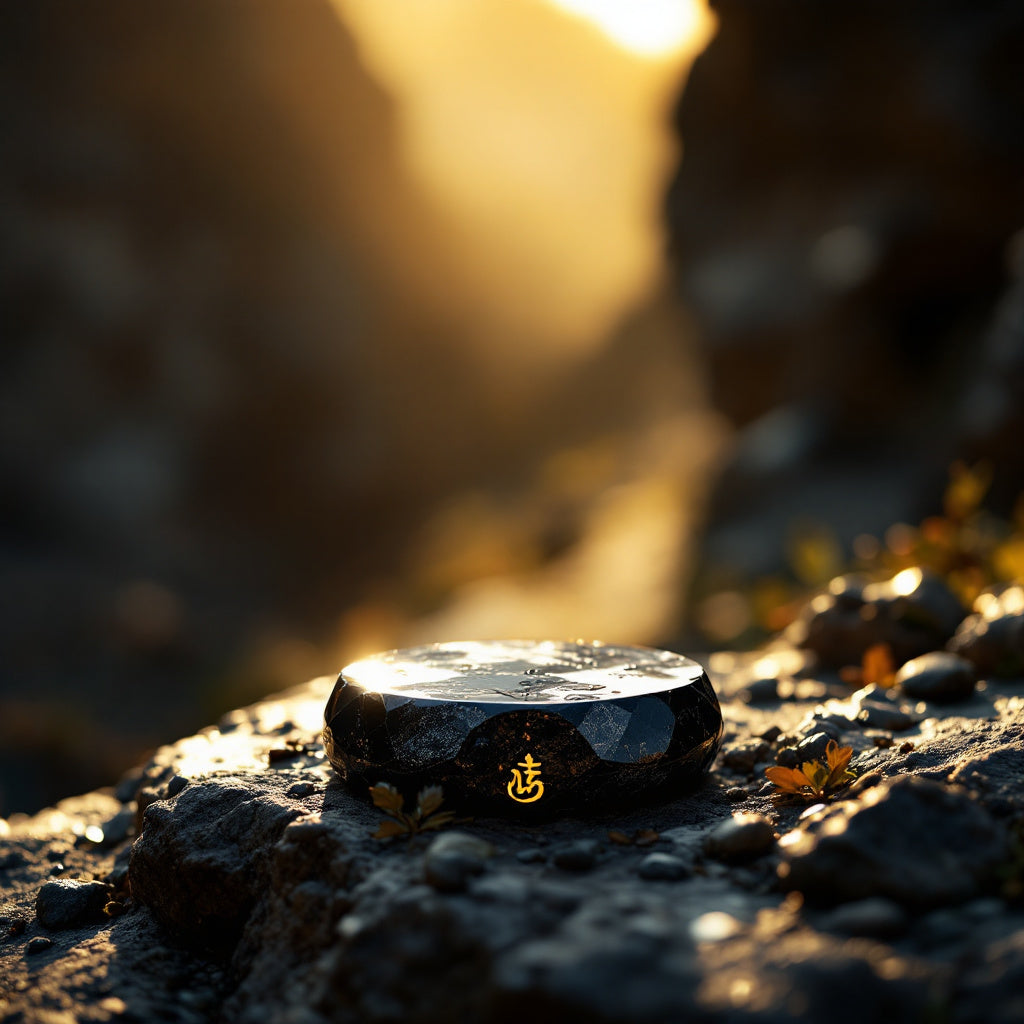
You bought a black obsidian bracelet six months ago because it looked striking and the listing said something about protection. It's been sitting on your nightstand ever since, and honestly — you're not sure what you're supposed to do with it.
You don't know if it's working. You don't even know what working would look like. That's not a failure on your part. It's a sign that most of what's written about black obsidian online skips the part that actually matters: where this stone came from culturally, what traditions have used it for, and how to build a real relationship with it rather than just wearing a piece of volcanic glass and hoping for the best.
This guide starts there — with the actual history, the Tibetan ritual context, and a daily practice you can realistically maintain in 2026.
![[Polished black obsidian sphere resting on a wooden altar beside Tibetan incense and a butter lamp]](https://cdn.shopify.com/s/files/1/0941/3574/6834/files/article_20260501_114607.jpg?v=1777607192)
What Black Obsidian Really Is (And What It Isn't)
Start with the geology, because it matters. Black obsidian is not a crystal. Technically, it's a mineraloid — volcanic glass formed when lava cools so rapidly that no crystalline structure has time to develop.
That distinction isn't pedantic. It explains why obsidian looks and feels different from quartz or amethyst: the glassy, almost liquid surface, the conchoidal fracture that produces razor-sharp edges, the way light seems to be absorbed rather than reflected.
Obsidian has been found at archaeological sites across Mesoamerica, the Mediterranean, and Central Asia, consistently used for the same two purposes: cutting tools and ritual objects. The mirror-like polish achievable on obsidian made it one of the earliest scrying surfaces in recorded history — Aztec priests were polishing obsidian mirrors to 6mm thickness by 1400 CE.
The misconception worth clearing up immediately: black obsidian is not a "negativity magnet" that passively absorbs bad vibes the way a Brita filter absorbs chlorine. That framing — popular on Pinterest boards and mass-market crystal shops — flattens a much more nuanced picture.
In Tibetan Buddhist practice, obsidian's significance comes from its specific optical and material qualities: its depth, its darkness, its ability to reflect without distorting. It's a stone associated with clarity, not only protection.
The protection comes through clarity — through seeing clearly what is actually present, rather than what anxiety or habit tells you is there.
Tibetan ritual texts (particularly those within the Bön tradition, Tibet's pre-Buddhist indigenous religion that was later integrated into Vajrayana practice) reference dark volcanic stones in the context of phurba ceremonies. The phurba is a three-sided ritual dagger used to pin down and transform negative forces — not destroy them, but transform them.
Obsidian, with its naturally sharp edges and dark, grounding quality, was considered appropriate material for phurba construction or as an altar companion during these ceremonies. The logic is consistent with broader Vajrayana cosmology: darkness is not the enemy of awakening; unexamined darkness is.
A stone that holds darkness visibly, that shows you your own reflection in its surface, serves as a teaching tool as much as a protective one.
The other major traditional use — obsidian mirror divination — has roots that stretch from Aztec tezcatl (the obsidian mirror of Tezcatlipoca, god of night sky and sorcery) through to Tibetan melong practice. The melong is a circular mirror, traditionally bronze, used in Dzogchen and Bön ritual to represent the nature of mind: reflective, clear, undistorted.
Obsidian mirrors appear in some Himalayan shamanic traditions as a darker counterpart — used specifically to reveal what is hidden or obscured. Dr. Geoffrey Samuel, in his academic work on Tibetan shamanism and tantra, documents the use of reflective surfaces in Tibetan ritual diagnosis as far back as the 8th century CE, when practitioners in the Yarlung Valley were employing polished stone surfaces for diagnostic divination.
So when you hold a piece of black obsidian, you're holding something with a genuinely long ritual history — one that has nothing to do with Instagram aesthetics and everything to do with the human desire to see clearly in the dark.
Why Black Obsidian Matters in 2026
Here's the honest version of why this stone is resonating right now, and it's not because Mercury is in retrograde or because a celebrity posted about it.
The psychological profile of someone searching "black obsidian meaning" in 2026 tends to look something like this: you're somewhere between 25 and 35, you've tried the meditation apps, you've done the journaling, and you still feel like something is off.
Not dramatically off — you're not in crisis. But there's a persistent sense of being slightly out of alignment with your own life. The job is fine. The relationship is fine. Everything is technically fine, and that's almost the problem.
You're looking for something that helps you get honest with yourself, not only calmer.
That's actually a sophisticated spiritual need, and black obsidian is a surprisingly well-matched tool for it — if you understand what it's actually for.
The Tibetan concept most relevant here is rigpa — the recognition of the nature of mind, awareness seeing itself clearly. You don't achieve rigpa by adding more positive thoughts. You achieve it by removing the obscurations that prevent clear seeing.
In that framework, a stone associated with clarity and the revelation of what's hidden isn't a "dark" stone in any negative sense. It's a stone that supports honest self-examination. That's exactly what practitioners in their late twenties and early thirties are actually looking for, even if they don't have that vocabulary yet.
There's also a practical dimension to 2026 specifically. The sheer volume of information, opinion, and social comparison that moves through your phone on any given day is genuinely unprecedented. The Tibetan teachers we've spoken with — including Geshe Tenzin Wangyal Rinpoche's students in the Bön tradition — consistently point to the need for what they call "ground" practices: practices that return awareness to the body, to the present moment, to something solid and real.
Holding a piece of volcanic glass that formed 60 million years ago, that has been used in ritual contexts across multiple cultures, is one of the simplest grounding practices available. It costs nothing to do once you have the stone.
It requires no app, no subscription, no wifi.
What's shifted in 2026 is that those on a path of serious practice — not influencers, actual practitioners — are being transparent about the difference between decorative crystals and stones used within a genuine practice framework.
That conversation is raising the bar for what people expect from their stones, and from the information available about them. You deserve to be part of that more honest conversation.
If you're also exploring other stones alongside obsidian, it's worth reading about how clear quartz works as an amplifier and clarifier — the two stones are often used together in Tibetan altar arrangements, with quartz representing the luminous quality of mind and obsidian representing its depth.
![[Tibetan altar showing black obsidian phurba alongside bronze melong mirror and juniper incense smoke]](https://cdn.shopify.com/s/files/1/0941/3574/6834/files/article_20260501_114636.jpg?v=1777607222)
Real Benefits — How Black Obsidian Actually Works
Grounding Through Geological Time
Those who carry black obsidian regularly — whether in a pocket, during meditation, or on a shrine — report a consistent felt sense of being more present in the body. This isn't magic. It's partly tactile: the stone is dense, cool, smooth in a way that draws attention to your hands and therefore your body.
It's partly visual: the depth of the black surface encourages a kind of soft, receptive gaze rather than the sharp scanning attention that screens demand. And it's partly what you might call conceptual resonance: knowing that you're holding something formed by volcanic cooling 2 to 7 million years ago has a way of quietly relativizing whatever you were anxious about five minutes ago.
In Tibetan practice, this quality is described as sa — earth element, solidity, the quality of being unshakeable. Grounding practices in Vajrayana Buddhism often involve visualization of the earth element as dark, dense, and stable. Obsidian's physical properties make it a natural support for this kind of practice.
The Mirror Function — Honest Self-Reflection
This is where black obsidian diverges most sharply from how it's typically marketed. It's not only a shield. In the Tibetan mirror divination tradition, the obsidian or dark mirror surface is used to reveal — to show what is actually present rather than what the practitioner hopes or fears is present.
That's a subtly demanding function. A stone that supports honest self-reflection is going to surface things you'd rather not look at. That's not a side effect. That's the point.
Practically, this means that if you start working with black obsidian during a period of emotional avoidance — numbing out with Netflix, staying in a relationship because you're scared to leave, staying in a job because change feels impossible — you may find that the stone becomes uncomfortable to have around.
Not because it's "absorbing negativity" in some metaphysical sense, but because you've given yourself an object that represents honest seeing, and honest seeing is uncomfortable when you're actively avoiding something.
This is why experienced practitioners pair obsidian work with a journaling practice or a regular conversation with a teacher or therapist. The stone surfaces things. You still have to do the work of examining what surfaces.
Protection as Boundary-Setting, Not Barrier-Building
The protective quality of black obsidian in Tibetan ritual is specifically linked to the phurba ceremony's function: not to build walls against negative forces but to pin them down and transform them. That's a meaningful distinction.
A barrier keeps things out. Transformation changes what's present. In everyday terms: wearing an explore obsidian protection bracelet isn't meant to make you numb to difficult people or situations. It's meant to support your ability to stay clear and grounded in the presence of difficulty — to respond rather than react, to see what's actually happening rather than being swept into it.
This is why obsidian is particularly well-suited for people in high-contact professions — teachers, nurses, therapists, customer service workers — who spend their days absorbing other people's emotional states. The stone doesn't block that contact. It helps you stay rooted in your own center while it's happening.
How To Spot the Real Thing Black Obsidian
This is where the market gets genuinely messy, and you deserve a straight answer about what to look for.
Real obsidian vs. black glass: A substantial portion of "black obsidian" sold online — especially in bead and bracelet form — is black glass or dyed synthetic material. Real obsidian is volcanic glass, which means it has specific optical properties: when held up to a strong light source (a phone torch works), authentic obsidian often shows dark green, brown, or deep burgundy undertones at the edges.
Pure opaque black with zero color variation under light is a warning sign. Real obsidian also feels slightly cool and dense — heavier than you expect for its size. I've held pieces from the Obsidian Cliffs in Oregon that weighed nearly twice what their volume suggested.
Mahogany vs. rainbow vs. snowflake: These are all genuine obsidian varieties with different mineral inclusions. Mahogany obsidian has iron oxide inclusions that create reddish-brown patterns. Rainbow obsidian shows iridescent bands caused by layers of magnetite nanoparticles.
Snowflake obsidian contains cristobalite crystals that form white or grey patterns. For protection and grounding work, plain black obsidian is the traditional choice among practitioners in the Tibetan lineages. Rainbow obsidian is often used for more gentle introspective work.
Snowflake obsidian is associated with balance and transition.
Size and form: Tumbled stones are the most accessible entry point — easy to carry, hold during meditation, or place on a nightstand. Spheres are used in mirror divination practice and work well as altar objects.
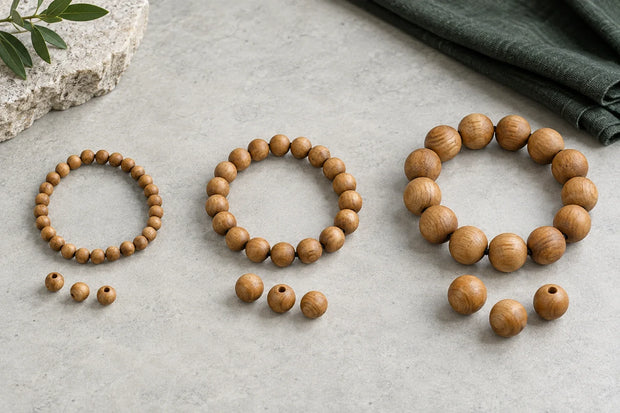
Raw chunks retain the natural fracture patterns of the stone and are preferred by some practitioners for altar use. Beads and bracelets make the stone wearable, which is practical for daily grounding work. A standard mala bead measures 8mm in diameter, while altar pieces typically range from 2 to 4 inches.
Source transparency: Obsidian deposits exist in multiple countries including Mexico, Iceland, Armenia, and parts of East Africa. For pieces used in Tibetan Buddhist ritual contexts, provenance matters less than the quality of the stone and whether it has been blessed.
When you're shopping our healing crystal collection, each piece comes with documentation of its origin and any blessing ceremonies performed.
Our pieces that carry blessing documentation have been through ceremony at specific monasteries in the Kathmandu Valley — we can tell you which ones. That level of specificity is what distinguishes authentic Tibetan blessed crystals from stones that have simply been photographed near incense.
The sacred geometry traditions that inform how we select and arrange stones in our collection are also worth understanding — the Flower of Life pattern, for instance, appears in Tibetan thangka borders and informs how we think about the relationship between individual stones in a practice.
How to Actually Use Black Obsidian
Let's be practical. Here are four approaches that work for different schedules and levels of experience.
The two-minute morning hold: Before you pick up your phone in the morning — ideally before you even sit up — pick up your obsidian stone and hold it in both hands for two minutes.
Don't try to meditate. Don't try to set intentions. Just feel the weight and temperature of the stone. Let your eyes rest on its surface. This is a grounding practice, not a intention-setting practice.
Its purpose is to bring you into your body before the day's demands pull you out of it. Two minutes. That's all.
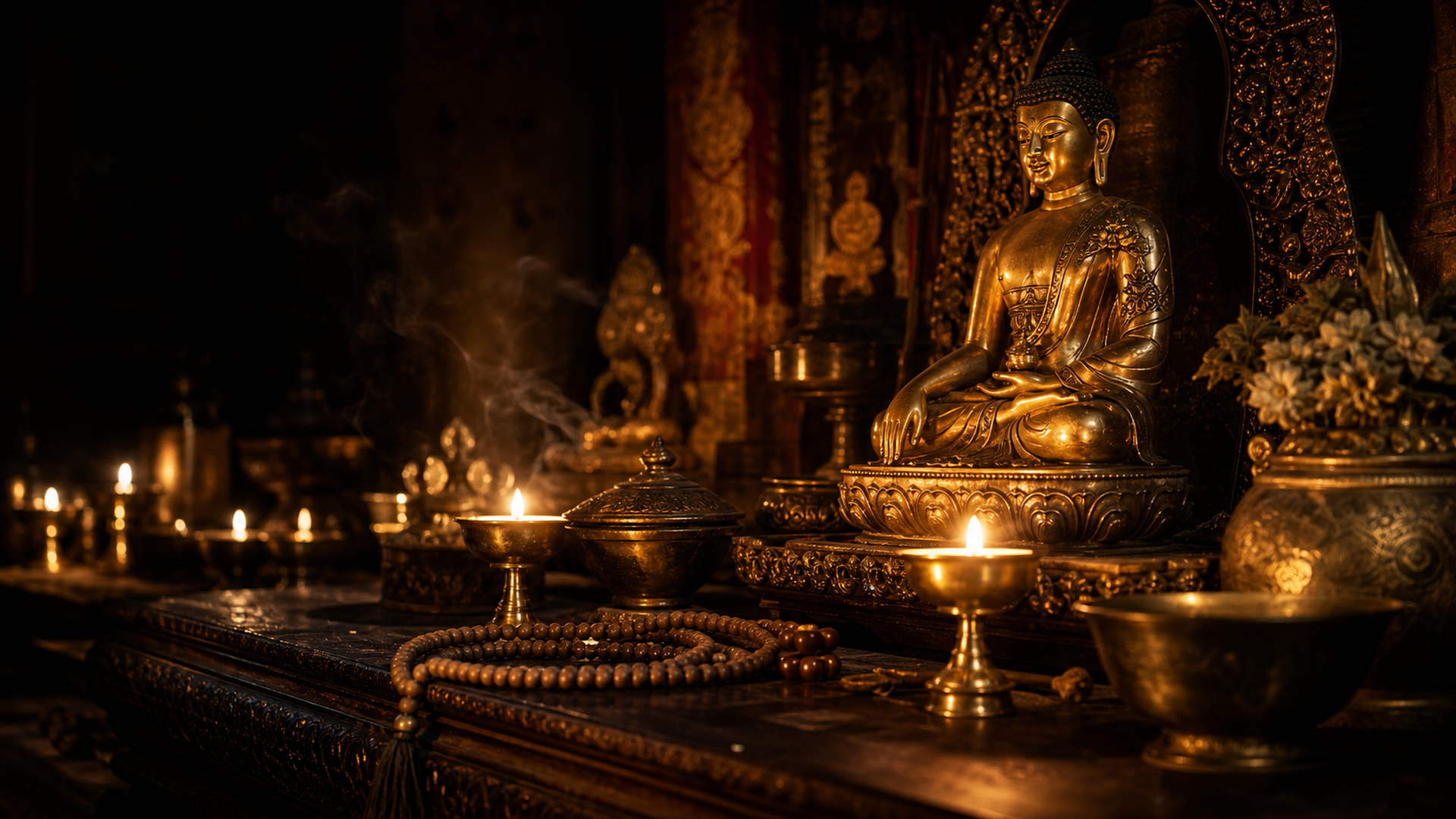
Altar placement for ongoing protection work: If you have even a small dedicated space — a corner of a dresser, a windowsill — place your obsidian there as the anchor of your altar. In Tibetan altar arrangements, darker stones are typically placed to the left (associated with the feminine principle and the clearing of obstacles) and lighter stones to the right.
Your obsidian sits to the left. You don't have to do anything with it beyond acknowledging it when you pass. The act of maintaining a dedicated space is itself a practice.
Mirror gazing for honest reflection: This is the more advanced practice and shouldn't be rushed into. Sit in low light with your obsidian sphere or a polished obsidian slab in front of you. Soften your gaze — don't stare hard, let your eyes relax.
Hold a specific question in mind: not "what should I do about X" but "what am I not seeing about X." Sit for five to ten minutes. Don't expect visions. Expect thoughts to arise that you've been avoiding.
Write them down immediately afterward.
Monthly cleansing under Buddhist protocol: This practice is essential and often overlooked. Obsidian used in protection and reflection work accumulates — not "negativity" in a metaphysical sense, but your own projections, your own unexamined material.
Monthly cleansing resets the stone's function as a clear mirror. The Tibetan protocol we recommend: on the new moon, hold your stone in juniper smoke (dried juniper is the traditional Tibetan purification herb, used in sang ceremony) for approximately three minutes while reciting the mantra OM MANI PADME HUM or simply holding the intention of purification clearly in mind.
Then leave the stone on a windowsill overnight — moonlight is traditional, but the intention matters more than the astronomy. In the morning, hold the stone again with the simple intention: "May this stone support clear seeing." That's the complete protocol.
It takes fifteen minutes once a month.
![[Hands holding black obsidian sphere over juniper smoke during new moon cleansing ritual on wooden surface]](https://cdn.shopify.com/s/files/1/0941/3574/6834/files/article_20260501_114706.jpg?v=1777607252)
Common Questions
Is black obsidian safe for beginners, or is it too intense?
You'll find contradictory answers to this online. Some crystal practitioners warn that obsidian is "too powerful" for beginners and recommend starting with gentler stones. That advice comes from a real place — obsidian's mirror quality can surface difficult emotions quickly if you're in a vulnerable state — but it's also slightly overstated.
The more accurate framing: black obsidian is appropriate for beginners who are approaching it with realistic expectations. If you're expecting it to make you feel good, it may disappoint you. If you're expecting it to support honest self-examination and grounding, it's one of the better stones for that purpose at any level of experience.
The key is starting with the simple practices described above — the morning hold, the altar placement — rather than jumping straight into extended mirror gazing sessions. Build the relationship gradually, the same way you would with any new practice.
Can I wear black obsidian every day?
Yes, with one caveat: pay attention to how you feel. Those on a path of self-inquiry find daily wear of an obsidian bracelet or pendant supportive — the grounding quality is generally beneficial for the kind of overstimulated, screen-heavy days most of us navigate.
Some people find that during periods of intense emotional processing (grief, a difficult breakup, a major life transition), they need to take breaks from the stone. This isn't because the stone is doing something harmful.
It's because you're already doing deep excavation work, and the stone's mirror quality amplifies that. If you find yourself feeling emotionally raw or unusually tired after wearing obsidian for several days straight, give it a rest for a week and see if that changes.
Your own experience is the most reliable guide. Also remember the monthly cleansing protocol — a stone worn daily needs regular cleansing.
What's the difference between black obsidian and black tourmaline for protection?
This is one of the most common questions we get, and it's worth a real answer. Black tourmaline and black obsidian are both associated with protection, but they work differently — at least in terms of how they're used in practice.
Tourmaline is a true crystal with a defined mineral structure; it's associated with electromagnetic shielding and is often recommended for people who work near electronics or feel energetically depleted in crowds. Its protective quality is more like a filter.
Obsidian's protective quality, as we've described throughout this guide, comes through clarity — it protects by helping you see clearly, not by blocking input. In practical terms: if your primary concern is feeling drained by your environment or other people's energy, tourmaline is often recommended first.
If your primary concern is self-honesty, grounding, and seeing through your own patterns, obsidian is the stronger choice. Those walking a dedicated practice use both.
What does the phurba ritual actually involve, and how does obsidian connect to it?
The phurba (also spelled kīla in Sanskrit) is a ritual implement used across Tibetan Buddhist and Bön traditions. It's a three-sided dagger, typically with a wrathful deity face at the junction of blade and handle, used to symbolically pin down obstacles and transform negative forces into wisdom.
The three sides represent the transformation of the three poisons — ignorance, attachment, and aversion — into their wisdom counterparts. Obsidian's connection to phurba ritual is primarily through the Bön tradition, where dark volcanic stones were considered appropriate altar companions during these ceremonies due to their grounding, clarifying qualities.
Some historical phurba were made from obsidian, though metal (copper, iron, bronze) is more common in surviving examples from the 15th century onward. For a practitioner today, placing obsidian on your altar during any practice involving the clearing of obstacles is a historically grounded choice, even if you're not performing a full phurba ceremony.
How do I know if my obsidian needs cleansing?
The honest answer is that the monthly protocol described above is sufficient regardless of if you can "feel" that the stone needs it. But there are signs that practitioners commonly report: the stone feels heavier or duller than usual; you find yourself avoiding it or forgetting it exists; the surface looks less vivid.
These are partly psychological — you're projecting your own state onto the stone — but that projection is actually useful information. If your obsidian feels heavy and you've been avoiding it, that's a signal worth paying attention to.
Cleanse the stone and ask yourself honestly what you've been avoiding examining. The stone and your avoidance are pointing at the same thing.
Can I use black obsidian during meditation even if I'm not Buddhist?
Absolutely. The grounding and reflective qualities of the stone don't require any particular religious framework to be useful. If you meditate using a secular mindfulness approach — Headspace-style breath awareness, body scan, open monitoring — obsidian works well as a tactile anchor.
Hold it in your non-dominant hand during practice, or place it in front of you as a visual focal point. The cultural and religious context we've described throughout this guide is worth knowing because it gives you a richer understanding of what you're working with.
But you don't need to adopt Tibetan Buddhism to benefit from working with a stone that has supported clear, grounded awareness since the Paleolithic period.
Is there a "wrong" way to use black obsidian?
A few things worth avoiding: don't use obsidian as a substitute for professional mental health support if you're dealing with serious anxiety, depression, or trauma. The stone can be a useful complement to therapy or other support, but it's not a replacement.
Also, avoid the practice of sleeping with obsidian under your pillow if you're already having vivid or disturbing dreams — some practitioners find this intensifies dream activity in ways that disrupt sleep. Finally, be honest with yourself about your motivations.
If you're using obsidian as a way to feel like you're doing inner work without actually doing inner work — buying the bracelet but not sitting with what it surfaces — you'll get the aesthetic without the substance.
The stone is only as useful as your willingness to engage with what it shows you.
Where can I find authentic obsidian pieces that have been properly blessed?
Your Journey With Black Obsidian in 2026
Here's what we've found, after years of working with these stones and the traditions behind them: those on a path of self-inquiry get the most from black obsidian not because they believe in it most strongly, but because they're most willing to be honest with themselves.
You don't need to be Buddhist. You don't need to have a perfect meditation practice. You don't need to understand Tibetan ritual in any depth. What you need is a genuine willingness to look clearly at your own life — at what you're avoiding, what you're clinging to, what patterns keep repeating — and a stone that has been associated with exactly that kind of honest seeing since at least the Edo period across multiple cultures.
That's not a small thing. In a moment when every app and algorithm is optimized to tell you what you want to hear, a stone that reflects rather than flatters is genuinely countercultural.
Start simple. Hold it in the morning before you pick up your phone. Cleanse it on the new moon using juniper smoke, the traditional Tibetan purification herb. Pay attention to what thoughts arise when you sit with it quietly. Let those thoughts be information rather than noise.
If you're ready to find a piece that will actually accompany you through this — not only sit in a drawer — explore our Tibetan blessed crystals and the obsidian protection bracelet we've developed specifically for daily wear and grounding practice.
Each piece comes with a care card that includes the monthly cleansing protocol described in this guide.
2026 is a good year to start seeing clearly. This stone has been waiting a long time to help with exactly that.
Is black obsidian safe for beginners?
Black obsidian is appropriate for beginners who approach it with realistic expectations. If you expect it to make you feel immediately good or calm, it may disappoint — its primary quality is honest reflection and grounding, not comfort.
That said, starting with simple practices like a two-minute morning hold or altar placement is entirely accessible at any experience level. The more advanced practices, like extended mirror gazing, are better approached after you've built a basic relationship with the stone over a few weeks.
The main caution: during periods of intense emotional processing like grief or major life transitions, some people find daily obsidian wear amplifying rather than soothing. Pay attention to your own experience and take breaks when needed.
Monthly cleansing is important for anyone using the stone regularly.
What is the difference between black obsidian and black tourmaline for protection?
Both stones are associated with protection but work differently in practice. Black tourmaline is a true crystal with a defined mineral structure, commonly associated with electromagnetic shielding and protection from environmental energetic drain — useful if you feel depleted in crowds or near electronics.
Its protective quality functions more like a filter or barrier. Black obsidian's protective quality in Tibetan Buddhist tradition comes through clarity — it protects by helping you see clearly rather than by blocking input.
This makes obsidian better suited for people whose primary concern is self-honesty and seeing through their own patterns, while tourmaline is often recommended first for people who feel drained by external environments. Practitioners working with both traditions use both stones for complementary purposes.
How do I cleanse black obsidian using Buddhist protocol?
The Tibetan cleansing protocol recommended for obsidian used in protection and reflection work: on the new moon, hold your stone in juniper smoke — dried juniper is the traditional Tibetan purification herb used in sang ceremony — for approximately three minutes while reciting OM MANI PADME HUM or simply holding a clear intention of purification.
Then leave the stone on a windowsill overnight. In the morning, hold the stone again with the intention: 'May this stone support clear seeing.' This complete protocol takes about fifteen minutes and should be performed monthly for stones worn daily.
Signs that a stone may need cleansing include feeling heavier or duller than usual, or noticing you've been avoiding working with it. Buddhabelief works exclusively with monastery-certified craftsmen in Lhasa and Kathmandu to bring you pieces that carry genuine spiritual significance — not mass-produced replicas.
What is the connection between black obsidian and Tibetan phurba rituals?
The phurba is a three-sided ritual dagger used across Tibetan Buddhist and Bön traditions to symbolically pin down obstacles and transform negative forces — specifically the three poisons of ignorance, attachment, and aversion — into their wisdom counterparts.
Obsidian's connection to phurba ritual comes primarily through the Bön tradition, where dark volcanic stones were considered appropriate altar companions during these ceremonies due to their grounding and clarifying qualities. Some historical phurba were made from obsidian, though metal is more common in surviving examples.
For contemporary practitioners, placing obsidian on an altar during any practice involving the clearing of obstacles is a historically grounded choice that honors this tradition without requiring full ceremonial context.
How can I tell if my black obsidian is authentic?
For a complementary protection practice, read the Five Thunder Talisman complete guide.

Keep reading