
What is a Monk-Blessed Mala? A Real Guide
You unbox your new mala. As you lift it from its silk pouch, there's a weight that feels different—not merely the physical weight of stone or wood, but a subtle, resonant presence that seems to hum against your skin.
This is the quiet resonance of sacred intention, the palpable echo of ancient prayers. This is the very essence of a monk-blessed mala, and it marks the crucial difference between a beautifully crafted accessory and a spiritually activated tool for your personal journey.
It is a bridge consciously built between the material and the metaphysical.
But what does this blessing truly entail? It is far more than a simple wish for your well-being. It is a profound and meticulous ritual, a spiritual imprinting process carried out by ordained practitioners who have dedicated their lives to the path of enlightenment.
This ceremony is a deliberate transfer of energy, lineage, and intention, transforming a simple string of beads into a vessel of sacred power. It connects the hands that crafted it, the monks who blessed it, and you, the seeker who will carry it forward.
This process doesn't just prepare the mala for you; it prepares the mala to become a part of you.
During our last sourcing trip to Dharamsala, we spent time

The Ancient Roots of Sacred Objects: A Legacy of Blessing
The tradition of using beads for prayer is ancient, predating Buddhism itself. Known as japa malas in the Hindu tradition, these prayer beads were used for centuries as a way to count mantra recitations, focusing the mind and connecting the practitioner to the divine.
When Buddhism emerged from this rich spiritual landscape, it adopted and adapted this powerful tool. The mala, typically with 108 beads, became an indispensable part of practice, a physical anchor for the cultivation of mindfulness, compassion, and wisdom.
In the unique environment of Tibetan Buddhism, or Vajrayana, this tradition evolved further, imbued with a deep understanding of energy and symbolism. The Vajrayana path emphasizes the transformation of ordinary perception into a sacred outlook.
This means that every aspect of life, including physical objects, can be seen as a gateway to enlightenment. The practice of blessing objects, known as rabné (literally "abiding consecration"), became a cornerstone of this tradition.
It is a ceremony that invites enlightened beings—Buddhas and Bodhisattvas—to dissolve into the object, consecrating it and making it a true support for the Dharma path.
This isn't just about making an object "lucky." The historical purpose of a rabné ceremony is to transform an ordinary item into a sacred support for your practice. For a statue, it means the form becomes a worthy representation of the Buddha's body.
For a text, it means the words become a worthy representation of the Buddha's speech. For a mala, the blessing transforms it into a powerful conduit for the Buddha's mind—the enlightened qualities of compassion and wisdom that you seek to cultivate within yourself.
When you hold a monk-blessed mala, you are not only holding a string of beads; you are holding a direct link to a lineage of practice that stretches back thousands of years, a chain of transmission from teacher to student, all the way back to the Buddha himself.
Inside the Sanctum: The Ritual of Spiritual Imprinting
The journey of a Buddhabelief mala does not end in a workshop or a warehouse. Its final, and most crucial, step takes place within the hallowed walls of a monastery. Imagine a space far removed from the clamor of the modern world.
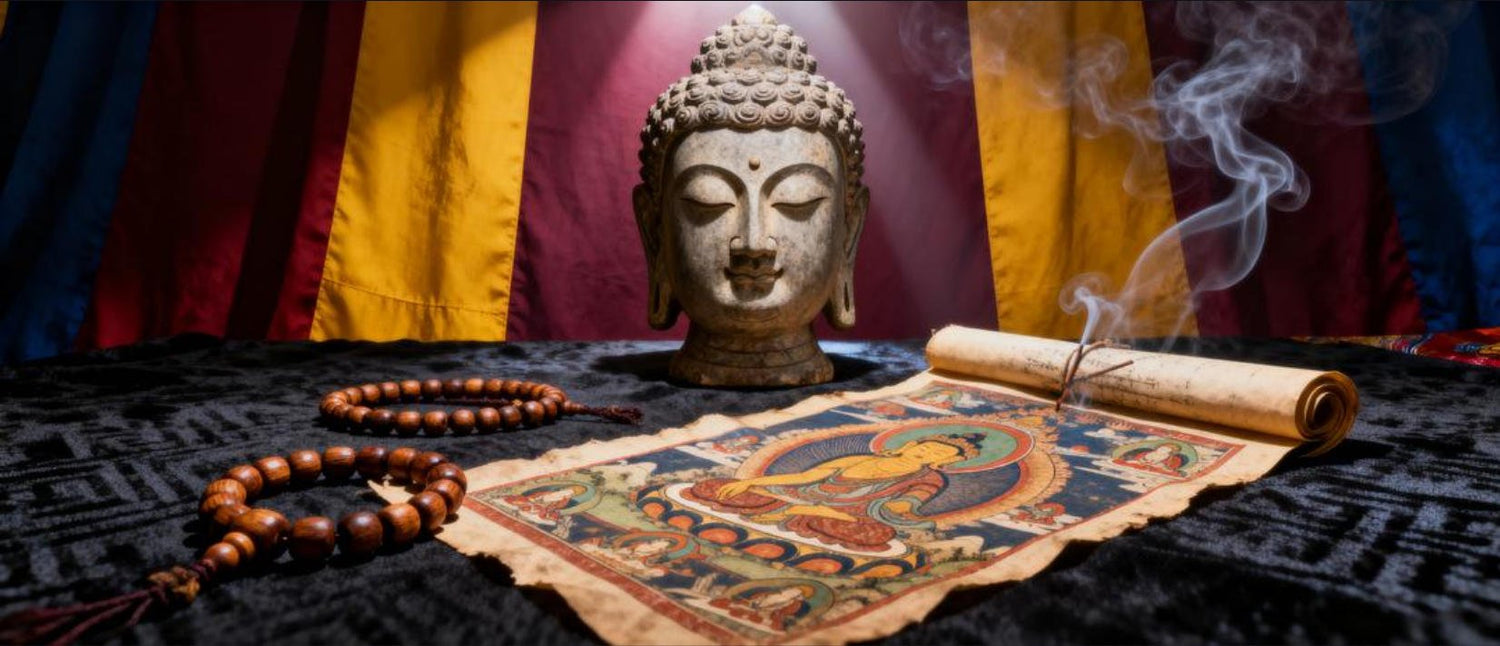
Picture a softly lit hall, where the air is thick with the scent of ancient juniper incense and the low, resonant hum of centuries-old prayers seems to have soaked into the very wood of the pillars.
Sunlight streams through high windows, illuminating intricate thangkas and the serene faces of golden statues. It is in this profoundly sacred environment that ordained Tibetan monks or high lamas conduct the blessing ceremonies.
The process is a profound transfer of energy, a meticulous spiritual craft. The malas are first purified. This can be done through smoke from burning sacred herbs like sang, or through the sprinkling of saffron-infused water.
This initial step cleanses the beads of any residual mundane energies from their creation and transport, preparing them to receive the sacred imprint. They are then placed upon a sacred altar, often arranged carefully before a statue of a principal deity like Chenrezig (Avalokiteshvara), the Buddha of Compassion, or Tara, the swift protectress.
The monks, seated in meditative posture, begin the ritual. They don't just chant; they enter a deep state of concentration, a meditative absorption known as samadhi. They invoke the enlightened beings, visualizing them in the space before them, radiant with light.
With unwavering focus, they recite powerful mantras, the sacred sounds vibrating through the hall. Each syllable is charged with intention, a specific spiritual purpose. As they chant, they visualize torrents of wisdom light—white, gold, red, blue—flowing from the hearts of the Buddhas and pouring into the malas on the altar.
This light is imagined to fill every single bead, saturating it completely, displacing all ordinary appearances and replacing them with pure, positive potential. This is not a passive wish; it is an active, focused, and powerful process that utilizes sound, intention, and deep visualization to create a stable and potent energy field within each mala.
The Language of Light and Sound: Decoding the Mantras
The heart of the blessing ceremony lies in the recitation of mantras. A mantra is not only a prayer or an affirmation; in the Vajrayana tradition, it is understood as the very sound-form of an enlightened being.
To recite a mantra is to invoke the presence and qualities of that being. While many different mantras can be used depending on the specific ritual, a few are fundamental to the blessing of spiritual items.
The most renowned of these is the mantra of Compassion, Om Mani Padme Hum. This is the mantra of Chenrezig, the embodiment of all the Buddhas' compassion. When monks chant this six-syllable mantra over your mala, they are imbuing it with the boundless, unconditional love and compassion that Chenrezig represents.
Each syllable has a profound meaning, purifying a specific negative emotion and transforming it into its wisdom aspect:
- Om: Purifies pride and ego, transforming them into the wisdom of equanimity. - Ma: Purifies jealousy and envy, transforming them into the wisdom of accomplishment. - Ni: Purifies attachment and selfish desire, transforming them into the wisdom of discernment. - Pad: Purifies ignorance and confusion, transforming them into the wisdom of Dharma reality. - Me: Purifies greed and miserliness, transforming them into the wisdom of generosity. - Hum: Purifies hatred and anger, transforming them into the wisdom of mirror-like clarity.
Another essential mantra used in consecration rituals is Om Ah Hum. This is known as the "vajra essence" mantra, representing the enlightened body, speech, and mind of all Buddhas.
- Om: Placed at the crown of the head, it purifies the body and represents the form of the Buddhas. - Ah: Placed at the throat, it purifies speech and represents the enlightened communication of the Buddhas. - Hum: Placed at the heart, it purifies the mind and represents the unshakeable wisdom-mind of the Buddhas.

The Energetic Blueprint: How a Blessing Shapes Your Practice
A blessing does not magically erase life's challenges or grant you instant enlightenment. Its purpose is something far more practical and profound. It establishes a stable, positive energetic pattern within your mala—an "energetic blueprint"—that actively supports your own spiritual efforts.
Think of it as tuning an instrument. Before it's tuned, it can make noise, but it can't create beautiful music. The blessing tunes your mala to the frequency of enlightened intention, making it a much more effective instrument for your practice.
A Reservoir of Focus: The monks' deep, unwavering concentration during the ceremony "pre-charges" the mala with a powerful quality of awareness. When you sit for meditation, especially if your mind is restless or you are new to the practice, this imbued focus can be a tremendous support.
As you hold your mala and begin to recite your own mantra, you are not starting from zero. You are tapping into a pre-existing field of concentrated energy. The weight of the beads in your hand becomes a physical anchor, a constant, gentle reminder pulling your wandering mind back to the present moment, back to your breath, back to your intention.
This makes it easier to quiet the mental chatter and settle into your own meditative state.
A Shield of Sanctity: The blessing also creates a subtle protective aura around the mala. This is not a shield against physical harm, but a spiritual one. It helps to keep the mala energetically "clean," deflecting and neutralizing stray negative or distracting energies from its environment.
When you wear or carry your mala, this protective quality extends to you. It acts as a reminder of your own inner sanctuary, a buffer against the stress and negativity you might encounter in your day.
It helps you maintain a sense of inner peace and groundedness, even amidst chaos. Choosing a mala that resonates with you is the first step in this partnership. You can explore our complete collection of authentic mala beads to find the one that calls to your spirit.
Your Sacred Companion: Welcoming and Caring for Your Blessed Mala
Receiving a monk-blessed mala is like welcoming a new spiritual friend into your life. It deserves to be treated with respect and care, not out of rigid superstition, but out of recognition for its sacred purpose.
When your mala first arrives, take a moment to connect with it. Find a quiet space. Hold it in your hands, close your eyes, and take a few deep breaths. You can set your own personal intention for the mala.
What do you hope to cultivate in your life? Peace? Compassion? Clarity? State this intention silently or aloud, creating a personal bond with the universal blessing it already holds.
Proper care will maintain the integrity of your mala's blessing and physical form. Here are some practical guidelines:
- Keep it High: In Tibetan culture, sacred objects are placed in a high, clean place out of respect. Avoid placing your mala on the floor or in a bathroom. When not in use, you can keep it on your personal altar, on a shelf, or wrapped in a clean silk or cotton pouch.
- Handle with Mindfulness: Try not to let others handle your mala casually, as it is a personal tool attuned to your energy. When you use it for mantra recitation, use your left hand (symbolizing wisdom) to hold the mala and your right thumb to turn the beads.
- Avoid Water: While some stone beads are durable, many wood beads (like bodhi seed or sandalwood) can be damaged by water. It's best to remove your mala before showering or swimming.
- Cleansing: If you feel your mala needs an energetic cleansing, you can smudge it with the smoke of sage or juniper. You can also leave it in the light of a full moon overnight to recharge it.
If your mala breaks, do not see it as a bad omen. In the Buddhist tradition, it is often seen as a positive sign. It can signify that the mala has absorbed a great deal of negative karma on your behalf, or that you have completed a cycle of practice and are ready for a new stage.
You can gather the beads and have it restrung, or you can respectfully return them to the earth by burying them in a clean place in nature. Your journey for a sacred companion, whether a first or a new one, can begin by viewing our entire collection of authentic items.
Beyond the Beads: Integrating the Blessing into Your Daily Life
The power of your blessed mala extends far beyond your formal meditation sessions. Its true potential is unlocked when you integrate its presence and purpose into the fabric of your daily life. It is a constant, tangible reminder of your deepest intentions and a source of immediate support, wherever you are.
Imagine you are stuck in traffic, feeling frustration and stress levels rise. Instead of succumbing to irritation, you can reach for the mala bracelet on your wrist. Simply holding it, feeling the smooth coolness of the beads, can be enough to break the cycle of negative thought.
You can use it to count ten slow, deep breaths, re-centering yourself and transforming a moment of stress into a micro-dose of mindfulness. A blessed mala bracelet serves as a discreet and powerful companion for these exact moments.
You can find many options in our collection of blessed bracelets.
Perhaps you have a difficult conversation to face or a challenging project at work. Before you begin, you can hold your mala in your pocket for a moment. Let its weight remind you of the qualities of compassion and clear wisdom that have been imbued within it.
This simple act can help you approach the situation from a more grounded, centered, and resourceful state of mind. Wearing your mala under your clothes, against your skin, allows you to carry that sacred energy with you throughout the day, a quiet source of strength and sanctity that only you are aware of.
Ultimately, your monk-blessed mala is a partner in your spiritual unfolding. It is a physical echo of the enlightened potential that already exists within you. It is a bridge to the traditional teachings of a sacred lineage and a tool to help you navigate the complexities of modern life with greater grace, focus, and compassion.
It is not the source of the magic, but a powerful magnifier for the magic you create through your own practice and intention.
Frequently Asked Questions about Monk-Blessed Malas
1. Do I have to be a Buddhist to use or wear a monk-blessed mala?
Absolutely not. While the mala has its roots in Buddhist tradition, the energies it is blessed with—compassion, peace, focus, and protection—are universal. Anyone can benefit from these qualities, regardless of their spiritual path or beliefs.
You can use the mala as a tool for meditation, a mindfulness anchor, or simply as a meaningful piece of jewelry that reminds you of your intention to live a more peaceful and compassionate life.
2. What is the significance of the 108 beads?
The number 108 is sacred in many spiritual traditions. In Buddhism, it is said there are 108 delusions or afflictions of the mind (kleshas). Reciting a mantra 108 times is seen as a way to purify these 108 afflictions and transform them into enlightenment.
The number also has astronomical significance and corresponds to various other aspects of spiritual cosmology. The 109th bead, or "guru bead," is not counted but represents the student-teacher relationship and the wisdom of the lineage.
3. How do I choose the right mala for me?
Trust your intuition. Often, you will feel a natural attraction to a particular stone, color, or material. You can also research the traditional properties of different materials. For example, Bodhi seed is associated with enlightenment, sandalwood with calming, and stones like turquoise with protection and healing.
The most important thing is to choose a mala that resonates with you personally and supports the intentions you wish to cultivate.
4. What should I do if my mala breaks?
A broken mala is not a sign of bad luck. It is often interpreted as the mala having absorbed a significant amount of negative energy or karma on your behalf, or that a particular cycle of practice is complete.
It can be a sign of spiritual progress. You have a few options: you can respectfully gather all the beads and have it restrung (often with a new guru bead to mark the new beginning), or you can return the beads to the earth by burying them in a garden or other natural place as a gesture of release and gratitude.
5. Can the blessing on a mala fade over time? How can I re-energize it?
The blessing itself is considered stable, but the mala's energy can be influenced by its environment and use. Your own practice is the primary way to keep the mala's energy vibrant. Every time you use it with sincere intention, you are reinforcing its sacred purpose.
To energetically cleanse and recharge it, you can let it rest in the light of the full moon, smudge it with sage or juniper smoke, or place it on an altar with crystals like selenite or clear quartz.
If you have the opportunity, you can also ask a qualified lama or monk to re-bless it for you.


