
Om Mani Padme Hum: A Sacred Meaning Guide
It begins as a low hum in a monastery, a resonance felt in your chest before it is truly heard by your ears. Soon, it becomes a rhythmic chorus on a wind-swept mountain pass, whispered by a pilgrim with a worn mala clutched in hand.
It is carved into stones, painted onto prayer flags, and inscribed on spinning prayer wheels that send its blessings out into the world with every turn. Om Mani Padme Hum. These six sacred syllables have traveled across centuries, continents, and countless lips, a timeless echo of compassion.
You may have seen them engraved on a silver pendant or heard their resonant chant in a meditation class. But what do they truly mean? This is not a simple phrase to be translated like a common sentence.
It is a deep, encompassing philosophy to live by. It is a sonic key that unlocks the heart's innate capacity for compassion, a complete spiritual path condensed into a single, powerful resonance. To understand this mantra is to understand the potential for transformation that resides within you at this very moment.
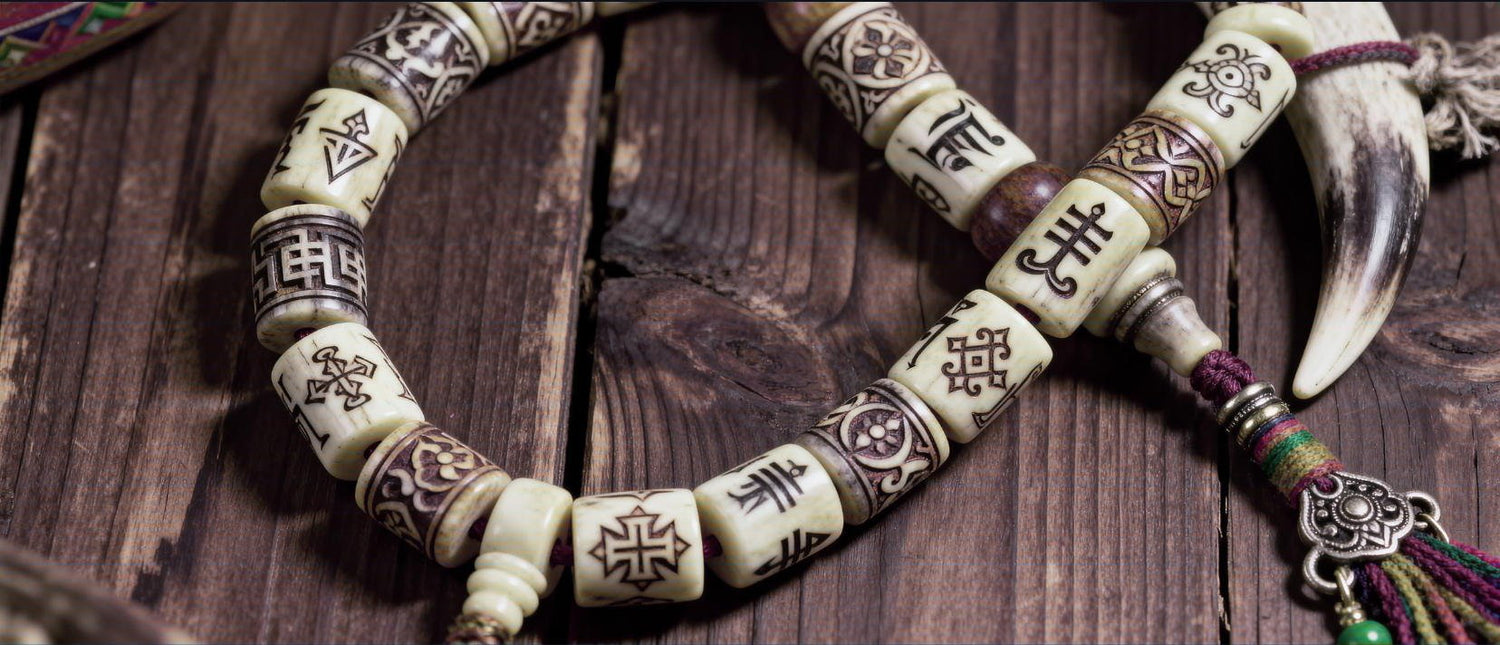
When our team visited the bustling stalls near Swayambhunath St

The Ancient Echo: Uncovering the Mantra's Origins
To trace the origins of Om Mani Padme Hum is to journey back to the heart of Mahayana Buddhism and meet its ultimate embodiment of compassion: Avalokiteshvara. Known in Tibet as Chenrezig, he is the bodhisattva who hears the cries of the world.
A bodhisattva is an enlightened being who, out of immense compassion, postpones their own ultimate nirvana to help all sentient beings achieve enlightenment.
The mantra is first found in sacred texts like the Kāraṇḍavyūha Sūtra, a Mahayana scripture that details the boundless virtues and compassionate activities of Avalokiteshvara. According to legend, Avalokiteshvara made a profound vow before the buddhas of the ten directions.
He vowed not to rest until he had liberated every single being from the cycle of suffering, known as samsara. He declared, "May I be able to help all beings. If I ever tire of this great work, may my body be shattered into a thousand pieces."
For eons, he worked tirelessly. But as he gazed out upon the world, he saw that the number of suffering beings was still immeasurable. Overwhelmed by the sheer scale of worldly pain, he felt a moment of despair, and his head shattered into eleven pieces and his body into a thousand.
But the buddhas, witnessing his incredible resolve, came to his aid. They reassembled him, giving him eleven heads to better perceive the suffering of the world and a thousand arms to better reach out and help.
This is the origin of the powerful imagery of the thousand-armed Avalokiteshvara. It was from his compassionate heart, in this moment of renewed and amplified commitment, that the six-syllable mantra, Om Mani Padme Hum, is said to have emerged.
It is his essence, his promise, and his power, gifted to the world as a direct method for invoking his compassionate energy and realizing that same compassion within ourselves.
From India, the mantra traveled with Buddhist teachings over the Himalayas into Tibet, where it became the cornerstone of the culture. It is so deeply woven into the fabric of Tibetan life that it is often the first sound a child learns and the last a person utters.
It is the national mantra of Tibet, a constant prayer for the welfare of all that lives.
The Jewel in the Lotus: Deconstructing the Core Metaphor
A simple, literal translation of the mantra—often rendered as "Hail to the Jewel in the Lotus"—only hints at its profound surface. The true power and beauty of this phrase lie in its layered symbolism, which represents the entire spiritual path from our present state of confusion and suffering to the fully awakened state of enlightenment.
Let’s explore the central metaphor: Padme, the lotus. The lotus flower has a unique life cycle that is a perfect analogy for spiritual development. It begins its life in the mud at the bottom of a murky, stagnant pond.
This mud represents our ordinary existence, the world of samsara. It is the ground of our confusion, our "bad habits," our ignorance, our anger, and our pain. It is the messy, complicated, and often difficult reality of our daily lives.
From this mud, the lotus stalk rises through the murky water. This journey through the water symbolizes the spiritual path itself—the practice, the effort, the discipline, and the purification process. It’s not always clear, and the destination isn't always visible, but the growth continues upward, toward the light.
Finally, the lotus emerges on the surface of the water and blossoms, its petals pristine, radiant, and untouched by the mud from which it grew. This magnificent, clean, and beautiful bloom represents the awakened state of enlightenment, pure awareness, and boundless compassion.
Now, consider the Mani, the jewel. The jewel is the strong, indestructible, diamond-like nature of wisdom and compassion (known as Bodhicitta). This jewel is said to reside within the heart of the lotus.
The most important truth the mantra reveals is that this jewel is already within the lotus, even when it is still in the mud. The jewel, which represents the seed of your own perfect enlightenment, already exists within your ordinary, everyday experience, symbolized by the lotus.
This is true even if your life seems unclear, messy, or mired in difficulty. Enlightenment is not something you build or acquire from an outside source. It is an intrinsic quality you uncover within yourself.
The practice of chanting this mantra is the method for coaxing that lotus to rise through the water and open its petals to reveal the brilliant jewel that has been there all along. Each piece in our collection is designed to be a tangible reminder of this precious, hidden jewel within you.
A Six-Syllable Path to Purification: The Deeper Meaning
The mantra is far more than a poetic phrase; it is a sophisticated tool for inner alchemy. Each of its six syllables is charged with a specific intention, designed to purify a particular negative emotion or "klesha" and transform it into an enlightened quality, or "paramita." These six negative states correspond directly to the six realms of cyclic existence in Buddhist cosmology.
By chanting the mantra, you are not only purifying your own mind but also extending a prayer of liberation to all beings trapped in these states of suffering.
Let's take a journey, syllable by syllable, into the heart of this transformative process.
OM (AUM)
This is the primordial, universal sound of creation, the resonance from which all else emerges. It is a sound of wholeness and cosmic unity.
- It Purifies: Pride and Ego. The subtle (and sometimes not-so-subtle) feeling of being separate, special, or better than others.
- It Corresponds to: The Deva Loka, or the world of the gods. Beings here live long, blissful lives, but their pride in their status prevents them from seeing the truth of impermanence and attaining true liberation.
- It Cultivates: The Perfection of Generosity (Dana Paramita).
- Its Color: White.
MA
This syllable works directly on the sharp, painful emotion of envy.
- It Purifies: Jealousy and Envy. The constant need to compete, compare, and the feeling of resentment toward the happiness or success of others.
- It Corresponds to: The Asura Loka, or the world of the jealous gods or demigods. Asuras are powerful beings consumed by a ceaseless struggle for power, driven by envy of the gods.
- It Cultivates: The Perfection of Ethics (Shila Paramita).
- Its Color: Green.
NI
This syllable addresses the root of so much of our human restlessness: desire.
- It Purifies: Passion and Attachment. The endless cycle of wanting, getting, and wanting more that defines much of the human experience.
- It Corresponds to: The Manusya Loka, or the Human Realm. This is our realm, characterized by a mix of pleasure and pain, but dominated by the grasping of desire.
- It Cultivates: The Perfection of Patience (Kshanti Paramita).
- Its Color: Yellow.
PAD
This syllable, the first of "Padme," shines a light into the darkness of ignorance.
- It Purifies: Ignorance and Prejudice. This isn't just a lack of information, but a deep-seated mental dullness, stubbornness, and the inability to see things as they truly are.
- It Corresponds to: The Tiryagyoni Loka, or the Animal Realm. Beings here operate purely on instinct, driven by basic survival needs without the capacity for higher reasoning or spiritual reflection.
- It Cultivates: The Perfection of Diligence (Virya Paramita).
- Its Color: Blue.
ME
The second syllable of "Padme," ME targets the feeling of lack and the clinging that comes from it.
- It Purifies: Greed and Possessiveness. The poverty mentality, the insatiable hunger for more, and the miserly inability to let go.
- It Corresponds to: The Preta Loka, or the world of the hungry ghosts. These beings are depicted with huge stomachs and tiny throats, eternally hungry and thirsty but unable to be satisfied.
- It Cultivates: The Perfection of Concentration (Dhyana Paramita).
- Its Color: Red.
HUM
This final syllable is a powerful and grounding sound that transforms our most destructive emotion.
- It Purifies: Aggression and Hatred. The fiery energy of anger, ill-will, and the desire to harm.
- It Corresponds to: The Naraka Loka, or the Hell Realm. A state of intense suffering created by one's own unrestrained anger and hatred.
- It Cultivates: The Perfection of Wisdom (Prajna Paramita).
- Its Color: Black or Dark Blue.

Putting the Mantra into Practice: Your Personal Journey
Knowing the meaning of the mantra is the first step; bringing it to life through practice is where the transformation occurs. The beauty of Om Mani Padme Hum is its accessibility. You don't need elaborate rituals or a remote mountain cave.
You only need your breath, your voice, and your intention. Here are some ways to begin your personal journey with this sacred sound.
Vocalization and Intention
The simplest way to practice is to chant the mantra aloud. Find a quiet space where you can sit comfortably. You can chant in a low, resonant tone or a soft whisper. Feel the resonance of the sounds, particularly the OM and HUM, in your chest and skull.
The physical resonance is part of the practice, helping to calm the nervous system and focus the mind. As you chant, hold the intention of compassion in your heart. You can direct this feeling toward yourself, toward someone you love, toward someone you find difficult, or outward to all beings without exception.
Using a Mala for Focus
A mala is a string of 108 beads used as a tool for counting mantras and keeping the mind focused. Using one can bring a powerful tactile dimension to your practice. Hold the mala in your right hand, draped over your middle finger.
The guru bead (the larger, decorative bead) signifies the start and end point. With each recitation of Om Mani Padme Hum, use your thumb to pull one bead toward you. When you complete a full round of 108 repetitions and reach the guru bead again, you can pause, reflect, or turn the mala around to begin another round.
The rhythmic motion of your fingers on the beads helps to anchor your attention, making your meditation deeper and more stable. You can explore a collection of authentic mala beads to find one that resonates with your practice.
Integration into Daily Life
The true power of the mantra is unleashed when it becomes a companion throughout your day, not only during formal sitting meditation.
- In Moments of Stress: When you're stuck in traffic, facing a difficult deadline, or feeling overwhelmed, instead of letting your mind spiral into anxiety, you can silently repeat the mantra. Let its calming resonance be an anchor in the storm.
- When Negative Emotions Arise: If you feel a surge of anger, jealousy, or pride, you can use the corresponding syllable as an antidote. Feel anger rising? Breathe and silently invoke HUM. Feel the sting of envy? Gently repeat MA in your mind. This is active, on-the-spot alchemy.
- As a Constant Reminder: Wearing the mantra can be a powerful way to keep its intention close. An engraved ring or one of our mindfulness bracelets serves as a physical touchstone. Every time you glance at it or feel it on your skin, it is a gentle nudge to return to a state of compassion and awareness.
The Resonance of Compassion: Why This Mantra Changes You
Chanting Om Mani Padme Hum is not about performing a magic spell. It is a sophisticated form of mind training, or lojong in Tibetan. The process works on multiple levels to fundamentally shift your perspective and your very state of being.
On a psychological level, the repetition of the mantra interrupts the endless stream of discursive, often negative, thoughts that occupy your mind. It gives your "monkey mind" a single, wholesome object to focus on.
By consistently returning your attention to the sound and its meaning, you are actively weakening old, harmful neural pathways and strengthening new ones based on compassion, patience, and wisdom.
On an energetic level, the resonance of the mantra itself has a purifying effect. Sound is resonance, and every cell in your body responds to it. The specific frequencies of these six syllables are said to harmonize your inner energies, clearing blockages and attuning you to a higher state of consciousness.
This is why chanting can feel so profoundly calming and centering.
Most importantly, by invoking the mantra of Avalokiteshvara, you are connecting with his stream of boundless compassion. You are actively participating in his great vow to liberate all beings. Your practice ceases to be a selfish act for your own peace of mind and becomes an altruistic offering for the benefit of all.
With every repetition, you are sending a wave of compassionate energy out into the world. This outward focus is the key that unlocks the deepest transformation, opening your heart in ways you may have never thought possible.
More Than a Sound: The Mantra as a Sacred Symbol
The power of Om Mani Padme Hum extends beyond its sound. Its written form, in the elegant Tibetan script, is considered just as sacred and potent. The visual presence of the mantra is a passive form of blessing, believed to purify the environment and plant seeds of enlightenment in the minds of all who see it.
This is why you find the mantra everywhere in the Himalayas. You see it on vast fields of Mani stones, rocks lovingly carved by pilgrims and left in piles at sacred sites, their prayers accumulating over centuries.
You see it on colorful prayer flags, where the wind is believed to carry the mantra's blessings across the land with every flap. And you see it on prayer wheels, cylinders of all sizes filled with millions of printed copies of the mantra.
According to Tibetan tradition, spinning a prayer wheel once with mindful intention is equivalent to reciting all the mantras contained within it. It is a skillful method for generating immense positive energy.
In the same spirit, wearing the mantra as jewelry is a deeply meaningful practice. It is not merely decoration. An engraved pendant, ring, or bracelet becomes a personal prayer wheel, a constant, silent recitation of the mantra.
It serves as an ever-present reminder of your connection to the path of compassion and the luminous "jewel" within your own heart. When you wear it with respect and mindfulness, it becomes a sacred object that blesses you and everyone you encounter.
Each piece from the Buddhabelief collection is crafted with this sacred intention in mind.
From a low hum in a quiet room to a vibrant symbol worn close to the heart, Om Mani Padme Hum is a complete journey. It is a map that guides you from the mud of your own confusion to the radiant lotus of your enlightened nature.
It is a key that unlocks the boundless compassion that is your birthright. The jewel is already within you, waiting to be discovered.
Frequently Asked Questions about Om Mani Padme Hum
Do I need to be a Buddhist to chant this mantra?
Absolutely not. While the mantra has its roots in Tibetan Buddhism, its message of compassion is universal. It is a prayer for the welfare of all living things, and its benefits of calming the mind and opening the heart are accessible to people of any faith, or no faith at all.
You only need a sincere wish to cultivate peace and kindness for yourself and others.
What is the correct pronunciation?
Pronunciation can vary slightly between different traditions. A common and accessible Tibetan pronunciation is: Ohm Mah-nee Pay-may Hoong. However, it is crucial to remember that the sincerity of your intention is far more important than perfect academic pronunciation.
The mantra's power comes from the heart, not from flawless diction.
Why is the mantra often chanted 108 times?
The number 108 is considered sacred in many Eastern spiritual traditions, including Buddhism, Hinduism, and Jainism. There are numerous interpretations for its significance: some say it represents the 108 earthly desires (kleshas) that one must overcome to achieve enlightenment.
Others connect it to astronomical observations or the number of energy lines converging to form the heart chakra. Using a 108-bead mala helps you complete a full round of recitation, allowing for a focused and immersive meditative session without having to consciously count.
Is it disrespectful to wear the mantra as jewelry?
No, it is not considered disrespectful. On the contrary, when worn with respect and a mindful understanding of its meaning, it is a beautiful form of devotion. It acts as a constant reminder of one's spiritual values and aspirations.
It is recommended to treat such jewelry as a sacred object—try not to place it on the floor or in unclean places, and wear it with a conscious appreciation for the profound philosophy it represents.
What's the difference between this mantra and other mantras?
There are countless mantras in Buddhism, each with a specific purpose or associated with a particular enlightened being. For example, some mantras are for healing, others for wisdom, and others for protection. Om Mani Padme Hum is known as the quintessential mantra of compassion (karuna).
Its specific power lies in its direct connection to Avalokiteshvara, the embodiment of all the buddhas' compassion, making it one of the most powerful and widely practiced mantras for opening the heart and generating loving-kindness for all beings.


