
buddhist-jewelry
Red String Bracelet: Complete Guide to Kabbalah Protection
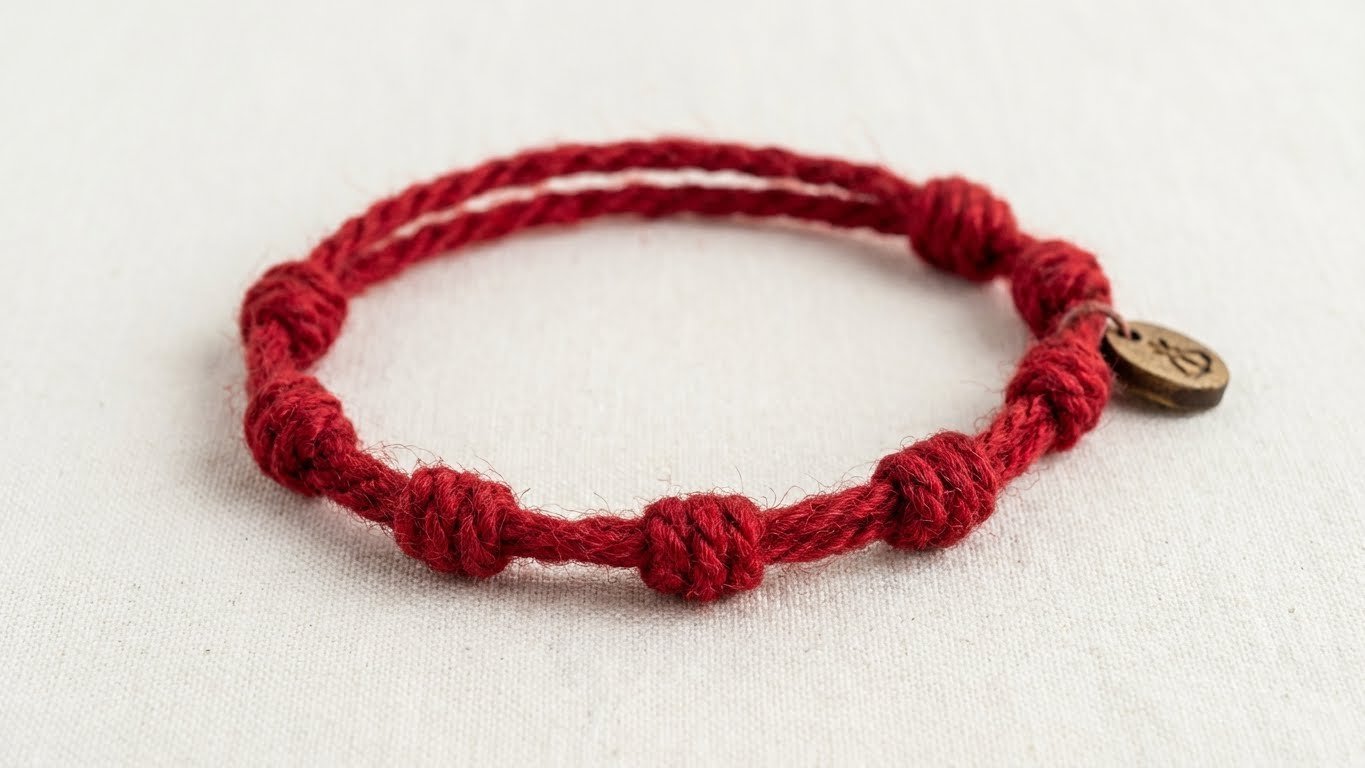
You've seen it on someone's wrist — a simple loop of red thread — and something made you stop scrolling. Maybe it was on a monk in a documentary, or on your coworker who just got back from Bali, or on a celebrity whose stylist clearly knows something you don't.
You typed "red string bracelet meaning" into Google at 11pm, half-curious, half-skeptical. That's a reasonable place to start. The honest answer is that a red string bracelet can mean very different things depending on which tradition made it, who tied it, and what was said while the knots were set.
This guide will walk you through the Tibetan Buddhist version specifically — what it actually is, how it differs from the Kabbalah red string you've also probably seen, and what to do with one if you decide it belongs on your wrist.
No mystical promises. Just real context from people who've spent time in the places where these traditions live. You can also explore our authentic Tibetan bracelets while you read — sometimes seeing the object helps the meaning land.
Alt text: Close-up of a hand-tied red string bracelet resting on a wooden monastery prayer table in warm morning light
A red string bracelet is a thin red cord worn on the wrist for protection and good fortune — a custom shared across Kabbalah, Tibetan Buddhism, and Chinese tradition, where red wards off harm and ties you to a blessing or intention.
What a Red String Bracelet Really Is
Let's clear something up immediately: there is no single universal "red string bracelet." The phrase has become a catch-all that lumps together at least three distinct traditions — Tibetan Buddhist, Kabbalist Jewish, and Hindu — each with completely different theological roots, ritual practices, and intended purposes.
When you buy a red string bracelet without knowing which tradition it comes from, you're essentially buying a symbol without a sentence. The color is the same. The meaning is not.
The misconception worth breaking first is this one: a red string bracelet is a red string bracelet. It isn't. Here's why that matters.
The Tibetan Buddhist Red String (Srung mdud)
In Tibetan Buddhism, the red protection cord is called a srung mdud (pronounced roughly "soong dü") — literally "protection knot." It originates in the Vajrayana tradition, the tantric branch of Buddhism practiced across Tibet, Bhutan, Nepal, and parts of Mongolia since the 8th century.
The cord is not decorative. It is a physical vessel for mantra energy, tied by a lama or monk who recites specific mantras — most commonly those of Chenrezig (Avalokiteshvara, the bodhisattva of compassion), Guru Rinpoche (Padmasambhava), or Medicine Buddha — while making each knot.
The number of knots matters. Traditionally, the cord has either one knot (for a single focused intention), three knots (representing the Three Jewels: Buddha, Dharma, Sangha), or seven knots (associated with the seven chakras in Tibetan medical texts like the Gyushi).
The lama breathes the mantra into the cord as the knots are set. This is not metaphorical. In Vajrayana practice, the breath is considered a vehicle for consciousness, and the recitation of mantra during the tying is understood to embed protective energy into the physical object.
In Tibetan Buddhism, the red string is blessed by a lama and worn to deflect negativity and attract positive karma.
The color red in Tibetan symbolism is associated with Amitabha Buddha (the Buddha of Infinite Light, whose element is fire and whose direction is west) and with wrathful protective deities. Red repels negative forces — in Tibetan cosmology, this includes both external harmful energies and internal mental poisons like anger and attachment.
The cord is worn as a reminder of the lama's blessing and as a physical anchor for the wearer's own practice.
The Kabbalist Red String (Roter Faden)
The Kabbalah red string comes from a completely different theological universe. In Jewish mystical tradition, specifically as popularized by the Kabbalah Centre beginning in the 1990s, the red string is associated with Rachel's Tomb in Bethlehem.
The string is wound around Rachel's tomb seven times, then cut, tied around the left wrist, and worn to ward off the "evil eye" (ayin hara). The left wrist is chosen because, in Kabbalist teaching, the left side of the body is the receiving side — the side that absorbs energy from the environment, including harmful energy.
The theological premise is different: it's about protection from envy and ill-will directed at you by others, rooted in the Hebrew concept of ayin hara. Rachel, in Jewish tradition, is a symbol of maternal protection and compassion for her children — wearing her string is an invocation of that protective love.
Neither tradition is "better." They're just different. If you're drawn to Tibetan Buddhism specifically — to the lineage, the lamas, the mantra practice — then a Tibetan srung mdud is the one that carries that context.
If you're drawn to the Kabbalist tradition, that's its own complete path. What doesn't serve you is buying a mass-produced red string from a fast-fashion retailer that claims to be "both" — because it's actually neither.
As you move forward in choosing a protection cord that aligns with your actual practice, our guide to ancient protection symbols and their spiritual meanings gives useful context before you commit to any single one.
Why This Matters in 2026

You might be wondering why this question feels more urgent now than it did five years ago. There are a few honest answers to that.
The wellness industry has grown dramatically, and with it, a parallel market in "spiritual aesthetics" — objects that look meaningful but were made in bulk without any of the ritual context that gives them meaning in their source traditions.
A 2023 report from the Global Wellness Institute valued the broader wellness economy at $5.6 trillion, with spiritual wellness as one of its fastest-growing segments. That's not inherently bad. More people seeking stillness and meaning is genuinely good.
But it also means more products designed to look the part without being the part.
At the same time, you're living through a specific cultural moment. Burnout is not a buzzword — it's a clinical phenomenon that the World Health Organization formally classified as an occupational syndrome in 2019.
If you're in your late twenties or early thirties, working in a city, managing a career and a social life and a digital presence simultaneously, the data suggests you're under more chronic low-grade stress than any previous generation measured at the same age.
That's not catastrophizing. It's just what the longitudinal studies on millennial mental health are showing.
Into that context, a small physical object that anchors your attention — that sits on your wrist and asks you, every time you notice it, to pause for one breath — is not nothing.
This is actually how protective objects function in Buddhist practice: not as magic talismans that do the work for you, but as supports for attention. The Tibetan term is ten (rten) — a support or basis.
The cord supports your own intention. It doesn't replace it.
Here's what that looks like in real life scenarios:
Scenario 1: The Sunday night spiral. You're lying in bed, phone in hand, and the week ahead feels like a wall. You notice the red cord on your wrist. You've set the intention that when you see it, you take three conscious breaths.
You do. The wall doesn't disappear, but your nervous system gets a brief interruption. That's the mechanism. It's secular enough to be accessible and rooted enough to have actual depth.
Scenario 2: A difficult conversation. You're about to walk into a meeting with a manager who makes you anxious, or a conversation with a partner that's been postponed too long. The cord is there.
You've associated it with a specific Tibetan aspiration — may I be of benefit, may I cause no harm. That's not magic. That's a micro-practice of intention-setting that takes four seconds and genuinely shifts how you enter a room.
Scenario 3: Grief or transition. A breakup, a job loss, a move. In Tibetan Buddhist practice, protective cords are often given at moments of transition precisely because transition is when the mind is most vulnerable to its own worst habits — rumination, catastrophizing, self-blame.
Having a physical object that was blessed with specific intention for your wellbeing is a form of what psychologists call "transitional object" support. It externalizes care in a way that you can hold.
Scenario 4: Building a practice from scratch. You've downloaded Calm. You've read the first chapter of a meditation book. You want something that makes your intention visible, not only digital. A blessed cord on your wrist is one of the oldest forms of this — a physical commitment to a direction of attention.
Tibetan communities have used them this way since at least the 11th century, not because people were superstitious, but because embodied reminders work.
The 2026 context specifically: there's also a growing conversation about cultural appropriation versus cultural appreciation in the spiritual goods market. This is a real conversation worth having seriously. Wearing a Tibetan protection cord made by artisans in Boudhanath, sourced with fair compensation, blessed by actual lamas in lineage — that's a different act than buying a $3 red string from a dropshipper.
The difference matters, ethically and practically. As you move forward, you'll want to know how to tell them apart.
Real Benefits — How It Actually Works
The Mantra Dimension: What "Blessed" Actually Means
When we say a cord is "blessed," we mean something specific, not vague. In Tibetan Buddhist practice, the blessing of a protection cord involves a lama or senior monk performing a puja (ritual ceremony) during which mantra is recited continuously — often for hours, sometimes for days — while the cords are present on the altar.
The most common mantras used for protection cords are:
- Om Mani Padme Hum — the six-syllable mantra of Chenrezig, associated with compassion and the removal of suffering across all six realms of existence.
- Om Ah Hum Vajra Guru Padma Siddhi Hum — the mantra of Guru Rinpoche, associated with removing obstacles and purifying negativity.
- Tayata Om Bekandze Bekandze Maha Bekandze Radza Samudgate Soha — the Medicine Buddha mantra, associated with healing and protection from illness.
The Tibetan understanding is that mantra recitation generates a specific quality of mind in the practitioner — focused, compassionate, clear — and that this quality is transmitted into the object through sustained attention and breath.
if you hold this as literal metaphysics or as a meaningful psychological act, the practical result is the same: the cord carries the intention of a dedicated practitioner who spent real time making it so.
The Psychological Dimension: Anchoring and Intention
You don't have to be a Buddhist to benefit from what psychologists would call "implementation intentions" — the practice of linking a specific cue to a specific behavior or mental state. Research by psychologist Peter Gollwitzer at NYU has shown that people who attach intentions to specific environmental cues ("when I see X, I will do Y") follow through on those intentions significantly more often than people who just hold the intention abstractly.
A red string on your wrist is a cue. Every time you notice it — washing your hands, typing, reaching for your coffee — it can prompt a micro-moment of return: return to breath, return to intention, return to whatever quality of mind you've associated with it.
This is not a replacement for formal meditation practice, but it's a genuine support for it. In Tibetan practice, this is called drenpa — mindfulness, literally "remembering." The cord helps you remember.
The Community Dimension: Lineage and Belonging
There's a third dimension that doesn't get talked about enough in Western discussions of Tibetan objects: the sense of belonging to a lineage. When a Tibetan lama ties a protection cord around your wrist, you are — in a real sense — being connected to a chain of transmission that goes back centuries.
The lama received teachings from their teacher, who received them from theirs, back to figures like Milarepa, Marpa, Naropa, and ultimately to the historical Buddha. That's not nothing.
Those on a path of self-inquiry in the West who feel spiritually unmoored — raised without strong religious community, skeptical of organized religion but hungry for something with real roots — often find this sense of lineage quietly sustaining.
You're not inventing a practice. You're being welcomed into one that has been tested by millions of practitioners across more than twenty-five centuries. The cord is a physical token of that welcome.
If you want to understand the broader ecosystem of Tibetan Buddhist jewelry and what different pieces signify, our complete guide to Tibetan sacred jewelry covers the full landscape — from protection cords to Dzi beads to turquoise and coral.
Alt text: Tibetan monk tying a red protection cord around a devotee's wrist at a monastery altar with butter lamps burning
How to Choose an Authentic Red String Bracelet

This is where most guides go vague, and it's the most practically important section. Here's what actually distinguishes an authentic Tibetan protection cord from a decorative red string.
1. Source transparency. You should be able to find out where the cord was made and by whom. "Made in Nepal" is a start, but it's not sufficient — Nepal has both highly skilled traditional artisans and large-scale factories producing tourist goods.
The relevant question is: was this made in a context connected to actual Buddhist practice? Our artisans in the Boudhanath area of Kathmandu — one of the most sacred Tibetan Buddhist sites outside Tibet itself, home to the great Boudhanath Stupa — work within a community where Buddhist practice is daily life, not a marketing angle.
2. Blessing documentation. An authentic blessed cord comes with some form of documentation of the blessing — at minimum, the name of the monastery or lama who performed the puja, and the mantra used.
If a seller can't tell you this, the cord was not blessed in any meaningful sense. "Energetically charged" and "spiritually activated" are marketing phrases, not descriptions of a real ritual. Ask for specifics: which lama, which monastery, which date the blessing took place.
3. Material quality. Traditional Tibetan protection cords are made from natural fiber — cotton or silk — dyed with natural or high-quality synthetic dyes. The red should be a rich, slightly warm tone (associated with Amitabha's fire element), not a harsh synthetic red.
The cord should feel substantial in your hand, not flimsy. Some cords incorporate small metal beads or a central knot of a different color to mark the blessing point — these are traditional features, not decorative additions.
A well-made cord typically measures between 2-3mm in diameter.
4. Knot integrity. The knots should be tight and even. A properly tied srung mdud is made to last — it's not supposed to unravel in three weeks. If the knots are loose or the cord frays immediately, it was not made with the care that the tradition requires.
Run your finger along the length; you should feel no loose threads.
5. Fair sourcing. This matters both ethically and practically. Artisans who are paid fairly for their work bring a different quality of attention to it. We've spent years building relationships with craftspeople in Kathmandu and Boudhanath who are paid above local market rates, which means they can afford to take the time to do the work properly.
You can see the difference in the finished piece — the precision of the knots, the evenness of the dye, the overall durability.
When you're browsing our traditional Tibetan protection bracelets, you'll notice each listing includes details about the blessing ceremony and the artisan context. That's not boilerplate — it's the information you actually need to make a meaningful choice.
For a closer comparison of what makes Tibetan Buddhist jewelry authentic versus mass-produced, the Buddha bracelet meaning and benefits guide covers similar sourcing questions from a different angle.
How To Use It Day To Day — Daily Practice
Getting the cord is the easy part. Knowing what to do with it is where those new to the practice often get stuck, because most guides either give you nothing ("just wear it!") or give you something so elaborate it requires a meditation degree. Here's a middle path.
Which wrist? In Tibetan Buddhist practice, the left wrist is traditional for protection cords. The reasoning is similar to the Kabbalist tradition, though arrived at differently: the left side is considered the receptive side in both Tibetan medicine and Buddhist energetic anatomy.
The left wrist is also closer to the heart in terms of the body's energy channels (tsa in Tibetan). That said — if you've received the cord directly from a lama and they tie it on your right wrist, follow their lead.
The lama's direct instruction supersedes general convention.
How to tie it. If you're tying it yourself (rather than having it tied by a teacher), the traditional method is three knots while reciting Om Mani Padme Hum once per knot. Set a clear intention before you begin — not a wish list, but a direction of mind.
Something like: "May this cord support my practice of compassion" or "May I remember to return to the present moment." Keep it simple and honest.
Daily practice with the cord. The cord works best as a cue, not a charm. Each morning, when you put it on (or when you first notice it), take three conscious breaths. That's it.
If you want to go further, you can recite Om Mani Padme Hum three times. The point is to re-establish the association between the cord and a quality of attention. Over time, this becomes automatic — you see the cord, something in you settles slightly.
That's the practice working.
When to replace it. This is a question we get often. The traditional answer is: when it breaks naturally, it has done its work. In Tibetan practice, a protection cord that breaks or wears through is understood to have absorbed whatever it was protecting you from — it took the hit so you didn't have to.
This is not superstition; it's a way of marking the end of one chapter and the beginning of another. When your cord breaks, it's appropriate to offer it respectfully — either burn it (fire is considered a purifying element in Tibetan practice) or return it to the earth.
Don't just throw it in the trash. Then, if it feels right, begin with a new one.
If your cord doesn't break but you feel it has served its purpose — after a period of difficulty has passed, after a major life transition completes — you can also consciously retire it with the same respect.
There's no fixed timeline. Some practitioners wear a cord for six months. Some wear one for years, through multiple seasons and life chapters.
Sleeping and bathing. Traditional Tibetan practice does not require you to remove the cord for sleep or bathing. The cord is meant to be a continuous presence, not a special-occasion item. If the cord is made from quality natural fiber—hand-dyed wool or silk, like those produced in the Bhaktapur workshops—and properly dyed, it will handle regular contact with water without significant degradation.
Alt text: Woman's wrist wearing a red Tibetan protection cord alongside a simple silver ring, natural light background
Related guide: Buddhist protection jewelry and guardian amulets
Explore our cinnabar Five-Thunder talisman.
Common Questions
Can I wear a Tibetan red string bracelet if I'm not Buddhist?
Yes, with some honest self-reflection about what you're doing and why. Tibetan Buddhism is a living tradition, not a closed one — it has always spread beyond its geographic origin through genuine transmission. The Dalai Lama has explicitly said that he doesn't want people to convert to Buddhism; he wants people to be better at whatever path they're already on.
Wearing a protection cord that was made and blessed within the Tibetan tradition is not appropriation if you approach it with genuine respect and some understanding of what it is. What would be disrespectful is wearing it purely as an aesthetic accessory with no acknowledgment of its origin, or claiming it has powers it doesn't have in the tradition.
Approach it honestly — as a physical support for your own attention and intention — and you're on solid ground.
What's the difference between a red string bracelet and a mala bracelet?
A mala is a counting tool — 108 beads (or a fraction thereof: 54, 27, 21) used to count mantra recitations, similar in function to a Catholic rosary. A protection cord is not a counting tool; it's a vessel for mantra energy that was recited during its making.
You wear a mala as a practice tool and a protection cord as a continuous support. They can be worn together — practitioners in the Kathmandu Valley often do — but they serve different functions.
A mala bracelet typically has beads; a protection cord is typically just knotted thread. If you're interested in mala practice specifically, our complete Tibetan sacred jewelry guide covers both in detail.
Does the red string bracelet need to be tied by someone else, or can I tie it myself?
In traditional Tibetan practice, the blessing comes from the lama or monk who performs the puja and ties the cord — so ideally, yes, it's tied by a teacher or received directly from a monastery.
However, the practical reality for most people in the West is that direct access to a lama is limited. In that case, tying it yourself with sincere intention and mantra recitation is a valid practice.
The key is that you're not only mechanically putting on a bracelet — you're making a conscious act of intention. If you receive a pre-blessed cord (one that has already been through a monastery puja), you can tie it yourself while reciting Om Mani Padme Hum.
The blessing is already in the cord; your tying is an act of receiving it.
Can I wear it on my right wrist instead of my left?
Yes. The left wrist is the traditional recommendation in Tibetan Buddhist practice, but there are contexts where the right wrist is used — particularly for cords associated with specific deities whose energy is considered more active or outward-moving.
If you've received a cord from a lama who placed it on your right wrist, keep it there. If you're choosing for yourself, left wrist is the conventional starting point. If left-wrist wearing is uncomfortable for you — you're left-handed and it interferes with your work, for example — wearing it on your right wrist with clear intention is fine.
The tradition is a guide, not a rule that overrides common sense.
How do I know if a red string bracelet is actually monastery-blessed versus just marketed that way?
What should I do when my red string bracelet breaks?
In Tibetan tradition, a cord that breaks naturally is understood to have completed its protective function — it absorbed what it was protecting you from. The appropriate response is gratitude, not distress. Don't try to repair it and keep wearing it; the cord has done its work.
The traditional disposal method is burning, which is considered purifying in Tibetan practice — the fire transforms the absorbed energy. If burning isn't practical for you, burying it in the earth (not in a trash bag — directly in soil) is also respectful.
After disposal, take a moment to acknowledge what the cord accompanied you through. Then, when it feels right, begin with a new one. There's no required waiting period.
Can children wear Tibetan red string bracelets?
Yes — in Tibetan communities, protection cords are given to children regularly, often at birth or during illness. Children are considered particularly vulnerable in Tibetan cosmology, and protection cords are one of the most common protective objects given to them.
If you're considering one for a child, the practical considerations are: make sure the cord is tied securely enough not to become a choking hazard for very young children, and use a natural-fiber cord without small detachable beads or metal elements that could come loose.
The blessing is the same regardless of the wearer's age — the cord doesn't require the wearer to understand Buddhist philosophy to function as a support and reminder.
Is it okay to wear a Tibetan red string bracelet alongside other jewelry or spiritual objects?
Generally, yes. In Tibetan practice, layering protective objects is common — you might see someone wearing a protection cord alongside Dzi beads, a turquoise pendant, and a copper ring simultaneously. Each serves a different function.
The practical consideration is avoiding materials that might energetically conflict — in Tibetan medical and astrological tradition, certain combinations of metals and stones are considered incompatible for specific individuals based on their birth chart.
But for most people, wearing a red protection cord alongside other meaningful jewelry is completely fine. The cord's function — as a vessel for mantra energy and a cue for your own attention — is not diminished by what else is on your wrist.
Browse our Himalayan artisan bracelets to see how different pieces work together.
Your Journey — Where to Go From Here
You started this with a late-night search and a flicker of curiosity. That's actually a decent place to begin anything real.
The honest summary: a Tibetan red string bracelet is not a magic object that will fix your anxiety, clarify your career, or resolve your relationship questions. Anyone selling it to you on those terms is selling you something else.
What it is — when it's made properly, blessed genuinely, and worn with intention — is a small, durable physical anchor for a quality of attention that you already have access to. The cord doesn't create the attention.
It helps you remember it's there.
The Tibetan tradition has been refining this kind of practice since the 11th century, when Buddhist scholars like Marpa first systematized the integration of ritual objects with meditation. You don't have to adopt the entire cosmology to benefit from the practical wisdom embedded in it.
You just have to approach it honestly — with respect for where it comes from and clarity about what you're doing.
If you're ready to compare materials and designs, explore the Tibetan bracelet collection.
For another protection symbol with deep tradition, read the Five Thunder Talisman complete guide.
Keep reading