
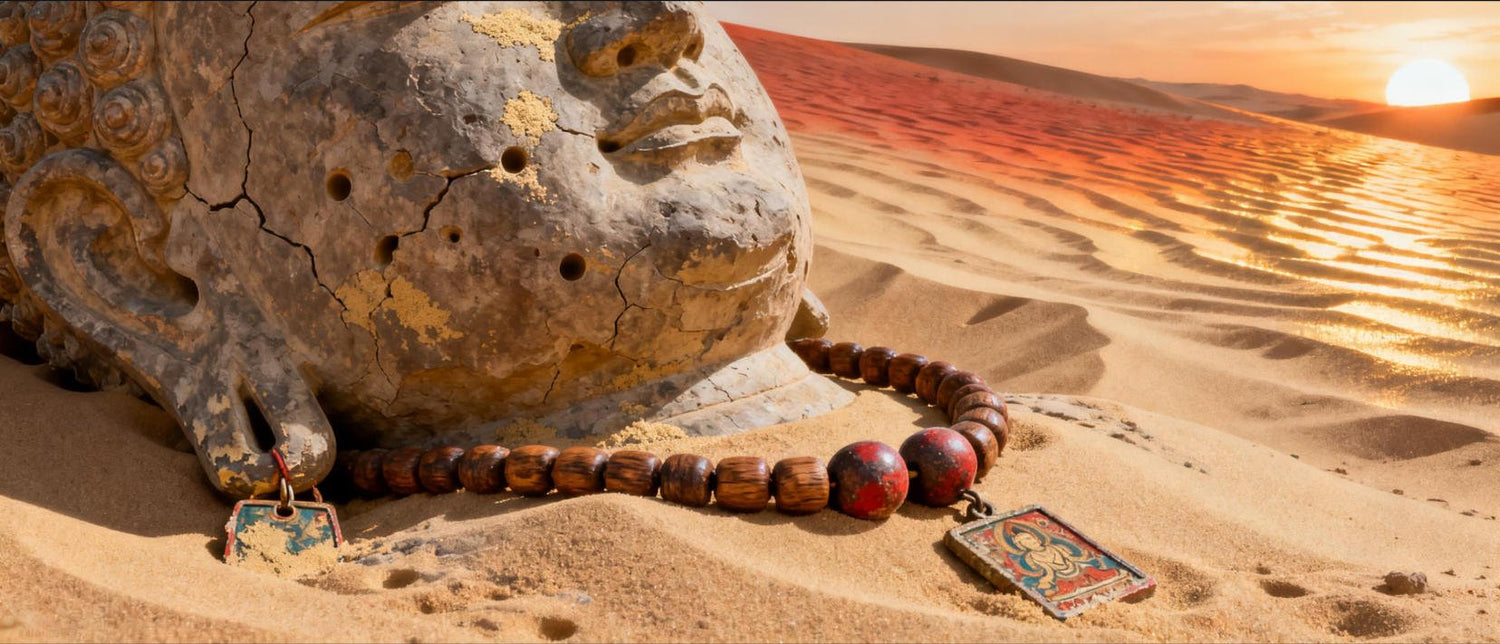
Sacred Tibetan Pendants: The Meaning & Power
More Than a Pendant: Wearing Sacred Tibetan Art Close to Your Heart
In the quiet, rarefied air of a Himalayan monastery, where the scent of juniper incense mingles with the low hum of chanted prayers, an ancient art form comes to life. Here, artisans spend months—sometimes years—hunched over canvases, meticulously painting intricate scrolls on silk or cotton.
These are Thangkas, and they are far more than mere decorations. They are vibrant maps of the Buddhist cosmos, visual encyclopedias of enlightened beings, and profound tools for meditation and teaching. A Thangka Pendant condenses this vast and profound spiritual technology into an intimate form you can wear, transforming sacred art into a personal talisman that moves with you through the complexities of your day.
At Buddhabelief, we see ourselves as custodians of this sacred tradition. We collaborate with artists trained in these ancient, exacting techniques, individuals who have dedicated their lives to mastering this devotional craft. Each pendant is a miniature canvas, painted with impossibly fine brushes and luminous, natural mineral pigments.
After its creation, each piece is sealed with the blessings of high lamas in a sacred consecration ceremony. The result is something that transcends the category of accessory; it is a portable source of sanctuary, a constant companion, and a wearable expression of your deepest intentions.

Thangka Pendant is more Than a Pendant: Wearing Sacred Tibetan Art Close to Your Heart { "@context": "https://schema.org", "@type": "FAQPage", "mainEntity": [ { "@type": "Question", "name": "Is it appropriate for me to wear a Thangka Pendant if I am not a Buddhist?", "acceptedAnswer": { "@type": "Answer", "text": "Absolutely.
The Sacred Blueprint: Unraveling the History of Thangka Painting
To truly appreciate the Thangka Pendant you hold in your hand, you must understand the rich soil from which it grew. The tradition of Thangka painting stretches back over a millennium, with its roots in the early Buddhist scroll paintings of India (known as *pata*) and the exquisite devotional art of Nepal.
When Buddhism traveled over the formidable Himalayas into Tibet, this art form was embraced and transformed into something uniquely Tibetan.
For a culture that was largely nomadic, portability was essential. Large, heavy statues were impractical for communities that moved with the seasons. Thangkas—painted on cloth that could be easily rolled, protected with a silk cover, and transported on horseback—were the perfect solution.
They became mobile monasteries, portable altars that carried the entire pantheon of Buddhas, Bodhisattvas, and Dharma protectors wherever the people went. A single Thangka could serve as the focal point for community teachings, personal meditation, and elaborate ritual ceremonies.
This art was never about self-expression in the modern sense. It was, and is, a discipline of precise replication and spiritual devotion. The creation of a Thangka is governed by strict iconographic rules and divine proportions, known as *thigse*.
These sacred geometric grids ensure that each deity is rendered with perfect, transcendent form, as described in the ancient scriptures. An artist would spend years as an apprentice, learning not only how to mix pigments and hold a brush, but how to memorize the proportions, postures (*asanas*), hand gestures (*mudras*), and symbolic implements of hundreds of different deities.
This knowledge was passed down directly from master to student in an unbroken lineage, a chain of transmission that ensures the art's authenticity and spiritual potency to this day.
From Vast Canvas to Personal Amulet: The Art of the Miniature Thangka
Creating a large-scale Thangka is an act of immense dedication. To condense that same level of detail, precision, and spiritual energy into a pendant just a few centimeters wide is a feat of breathtaking skill.
The artists we work with are masters of this miniature form, applying the same sacred principles to a canvas that rests near your heart.
The process begins with the preparation of the surface. A fine piece of canvas is stretched and coated with a mixture of chalk and a natural binder, polished until it is perfectly smooth and non-porous—an ideal ground for the pigments to come.
Then, the most critical step: the artist sketches the *thigse*, the grid of divine proportions. Even on this tiny scale, every line is placed with mathematical precision to ensure the deity’s form is correct and powerful.
The pigments themselves are a world of meaning. This is not a place for synthetic acrylics. Our artists use stone-ground minerals, just as their ancestors did for centuries. The vibrant blue is derived from lapis lazuli, symbolizing tranquility and the infinite sky of wisdom.
The rich green of a Tara's body comes from malachite, representing enlightened activity and growth. The deep red is from cinnabar, signifying powerful life force and passion. And, of course, there is gold. Real gold is ground into a fine powder and used to illuminate halos, outline robes, and detail sacred ornaments, representing the radiant, incorruptible nature of enlightenment.
Applying these pigments requires brushes that are often made by the artists themselves, sometimes consisting of just a few cat or squirrel hairs bound to a handle. With a meditative focus and a hand of incredible steadiness, the artist lays down each color, each line, each dot.
This is not hurried work; it is a slow, deliberate process of bringing a divine being into form, one mindful brushstroke at a time. The artist often recites the mantra of the deity they are painting, infusing the artwork with sonic resonance and devotional energy.
This deep concentration and spiritual intention are what give the final piece its soul.
Reading the Sacred Imagery: A Language of Enlightenment
Every element in a Thangka is symbolic, a part of a rich visual language designed to awaken specific qualities within you. When you learn to read this language, your pendant becomes an even more powerful tool for transformation.
It is not only a picture; it is a direct communication from the world of enlightened wisdom.
Consider the serene expression of a deity like Chenrezig (Avalokiteshvara), the Bodhisattva of Compassion. His gentle gaze and soft smile embody limitless, unconditional love for all beings. His four arms represent the four immeasurable qualities: loving-kindness, compassion, joy, and equanimity.
Wearing a Chenrezig pendant is a constant, subtle reminder to open your heart, to practice patience, and to respond to the world with kindness, both for others and for yourself.
Contrast this with the fierce posture of a protector deity like Mahakala. With his wrathful expression, flaming hair, and powerful stance, he represents the dynamic, untamable energy that cuts through ignorance, attachment, and obstacles.
He is the fierce intention-setting of compassion, the power that destroys whatever stands in the way of your liberation. A Mahakala pendant can serve as a source of courage, helping you face challenges and sever unhealthy patterns in your life.
Or perhaps you are drawn to the vibrant energy of Green Tara. Seated with one leg extended, she is poised for swift action, ready to leap to the aid of anyone who calls her name.
She is the embodiment of active compassion and fearless protection, a symbol that you have the power to act skillfully and effectively in the world. A Green Tara pendant can inspire you to move beyond hesitation and bring your compassionate intentions into concrete, helpful action.
The intricate geometry of a Mandala symbolizes the universe's perfect order and the enlightened palace of a deity. To gaze upon a mandala is to take a journey from the outer, confusing world of samsara to the peaceful, integrated center of your own enlightened nature.
Wearing a mandala pendant is an affirmation of wholeness and a reminder of the inherent harmony that exists beneath the surface of chaos.
When you wear a Thangka Pendant, you are aligning yourself with the qualities of that divine energy. It becomes a visual mantra, a constant, subtle reminder of the peace, strength, or wisdom you wish to cultivate within.

Choosing Your Companion: Aligning a Thangka Pendant with Your Path
Selecting a Thangka Pendant is an intuitive and deeply personal process. It is less about aesthetics and more about resonance. Which energy do you need to invite into your life right now? What quality are you seeking to nurture within yourself?
As you explore our collection of Thangka Pendants, consider which deity or symbol speaks to your current journey.
Perhaps you are working through a period of personal difficulty or feel overwhelmed by the suffering in the world. You find your patience wearing thin and your heart feeling closed. A pendant of Chenrezig could be your gentle guide.
Each time you touch it or catch its reflection, it can serve as a prompt to take a deep breath, soften your perspective, and connect with the boundless well of compassion that exists within you.
Maybe you are standing at a crossroads, about to begin a new business venture, a creative project, or a significant life change. You feel the presence of fear, self-doubt, or external obstacles. A pendant of a protector deity like Mahakala or Vajrapani can act as a source of immense strength.
It becomes a symbol of your inner power to overcome challenges, to cut through confusion with decisive wisdom, and to protect your aspirations from negativity.
You might be on a journey of healing, whether physical, emotional, or spiritual. The serene, lapis-blue form of the Medicine Buddha (Bhaisajyaguru) can be a powerful focal point for your intentions. His presence is a reminder of the innate healing capacity of your own mind and body.
The pendant can become an anchor for a daily healing meditation, a touchstone to remind you of your commitment to wholeness and well-being.
For those deepening a spiritual practice, a pendant can be an invaluable support. If you are working to establish a consistent meditation routine, a depiction of Buddha Shakyamuni can serve as a constant inspiration, a reminder of the ultimate goal of awakening.
A Mandala can help you focus your mind and contemplate the interconnectedness of all things. Your pendant becomes a silent partner in your practice, a tangible link to the path you have chosen.
The Tangible Difference: Why Hand-Painted Art Carries a closer Resonance
Hold a Buddhabelief Thangka Pendant up to the light. Look closely. You can see the depth and texture of the strokes, the slight, perfect imperfections and variations in color that reveal the human hand and heart behind the art.
This is not a flat, soulless, digitally printed charm. This piece has a life force. It has a soul.
Run your fingertips over the protective casing. Even through this layer, you can sense the subtle texture of the painted surface. The mineral pigments have a unique, luminous quality, as if they hold light within themselves, something that cannot be replicated with ink.
This tangible connection to the artisan's devotion adds an irreplaceable layer of meaning and value. Each brushstroke was a prayer, each color a sacred offering. That energy remains embedded within the object.
In a world of mass production and disposable goods, an object made with such care and intention stands apart. It serves as a grounding anchor in your day. When you feel stressed or disconnected, you can simply touch the pendant.
Its physical reality—the coolness of the casing, the weight of it against your skin, the knowledge of its creation—can pull you out of the frantic chatter of your mind and back into the present moment.
This same devotion to authentic, mindful craft can be found in our hand-knotted Mala Beads, each a tool for counting mantras and cultivating presence.
From Art to Amulet: The Vital Power of Consecration
In Tibetan Buddhism, a beautifully crafted Thangka is still considered incomplete until it undergoes one final, crucial transformation. A painting becomes a living vessel for enlightened energy through a consecration ceremony called *rabné*, which translates as "abiding in the sublime." This is the step that elevates a piece of art into a powerful amulet.
The consecration must be performed by a high lama or a qualified and experienced monk. It is an intricate ritual involving prayers, chanting, and visualization. The lama purifies the object and then, through the power of his meditative concentration and the recitation of specific mantras, he invites the actual wisdom-being—the spirit of the deity depicted—to merge with and inhabit the physical form.
The back of the Thangka (or in this case, a mantra scroll placed within the pendant's casing) is often inscribed with the sacred syllables OM AH HUM, representing the enlightened body, speech, and mind of the Buddha.
This "eye-opening" ceremony breathes life into the image. It is no longer just a representation of Chenrezig; it is now considered a living embodiment of Chenrezig's compassionate presence. The pendant is no longer just a beautiful necklace; it has become a genuine source of blessing, protection, and grace.
This is the unseen, yet most vital, element of your Buddhabelief pendant. It is what connects you directly to a lineage of spiritual power and makes it a true companion on your path.
Integrating Your Thangka Pendant into Your Daily Life
Your Thangka Pendant is designed to be a constant companion, a source of strength and mindfulness that integrates seamlessly into your life. Here are a few ways you can connect with its energy:
- As a Mindful Touchstone: Throughout your day, especially during moments of stress or distraction, consciously touch your pendant. Let the physical sensation be a trigger to pause. Take one deep breath. Recall the quality of the deity—compassion, strength, clarity—and bring that intention into the present moment.
- As a Focus for Meditation: Before you begin your meditation session, you can hold the pendant in your hand or gaze at the image. Allow the details to fill your awareness. You can then use the image as a basis for visualization, imagining the deity in front of you, radiating light and blessings. This can powerfully enhance your practice.
- As a Guardian on Your Altar: When you are not wearing your pendant, you do not need to simply put it away in a drawer. You can place it on your personal altar or in another special, respectful place in your home. This allows its sacred energy to permeate your living space. Consider pairing it with other meaningful items, like one of our meditation bracelets, to create a small but potent focal point for your spiritual intentions.
- As a Commitment to Your Path: The simple act of putting on your pendant in the morning can become a ritual of dedication. As you fasten the clasp, you can silently state your intention for the day: "Today, may I be compassionate," or "Today, may I act with courage." It transforms a routine action into a moment of sacred purpose.
By wearing this sacred art, you are doing more than adorning yourself. You are carrying a story, a lineage, and a profound spiritual practice close to your heart. You are making a statement to yourself that your inner journey matters.
It is a commitment to cultivating the best qualities of your own being, a portable sanctuary in a busy world, and a beautiful, luminous reminder of your own potential for enlightenment.
Frequently Asked Questions
- Is it appropriate for me to wear a Thangka Pendant if I am not a Buddhist?
- Absolutely. While these pendants are rooted in Tibetan Buddhist tradition, the qualities they represent—such as compassion (Chenrezig), strength (Mahakala), or healing (Medicine Buddha)—are universal. We encourage you to wear them with a sense of respect for their origin and as a personal reminder of the positive qualities you wish to cultivate in your own life. It is an invitation to connect with these energies, regardless of your personal spiritual path.
- How are the artists for Buddhabelief pendants selected?
- We collaborate directly with artists and studios in Nepal and the Himalayan region who are part of an authentic, unbroken lineage of Thangka painting. Our artists have undergone years, often decades, of rigorous apprenticeship under a master, learning the sacred geometry, mineral pigment preparation, and meditative focus required. We select them based on the purity of their technique, their devotion to the craft, and their understanding of the deep spiritual meaning behind each brushstroke.
- What truly distinguishes a hand-painted Buddhabelief pendant from a mass-produced printed one?
- The difference is profound. A printed image is a flat, lifeless replica. A hand-painted Thangka Pendant is a unique piece of art imbued with the artist's focused intention and devotion. You can see the texture of the mineral pigments, the subtle variations of the human hand, and a luminosity that digital printing cannot capture. Most importantly, each of our pendants undergoes a sacred consecration ceremony by a high lama, transforming it from a mere object into a blessed amulet believed to hold the living presence of the deity.
- How should I properly care for my hand-painted Thangka Pendant?
- Treat your pendant as the sacred piece of art it is. To ensure its longevity, avoid exposing it to water, perfumes, lotions, or harsh chemicals, as these can damage the natural pigments and the protective sealant. When you are not wearing it, store it in a soft cloth or pouch in a dry place. You can gently wipe the casing with a soft, dry cloth, but avoid rubbing the painted surface itself. Handling it with respect and care honors the devotion that went into its creation.
- What does the consecration process for the pendants actually involve?
- Consecration, known as 'rabné' in Tibetan, is a sacred ritual performed by a qualified lama or monk. It is an 'eye-opening' ceremony that invites the enlightened energy of the deity depicted to reside within the artwork. Through chanting specific mantras, visualization, and ritual offerings, the lama breathes life into the image, transforming it from a beautiful representation into a potent spiritual vessel. This blessing makes the pendant more than jewelry; it becomes a powerful source of protection, inspiration, and grace.


