News
Dragon Year 2024 Guardian Buddha: Meaning, Protection &
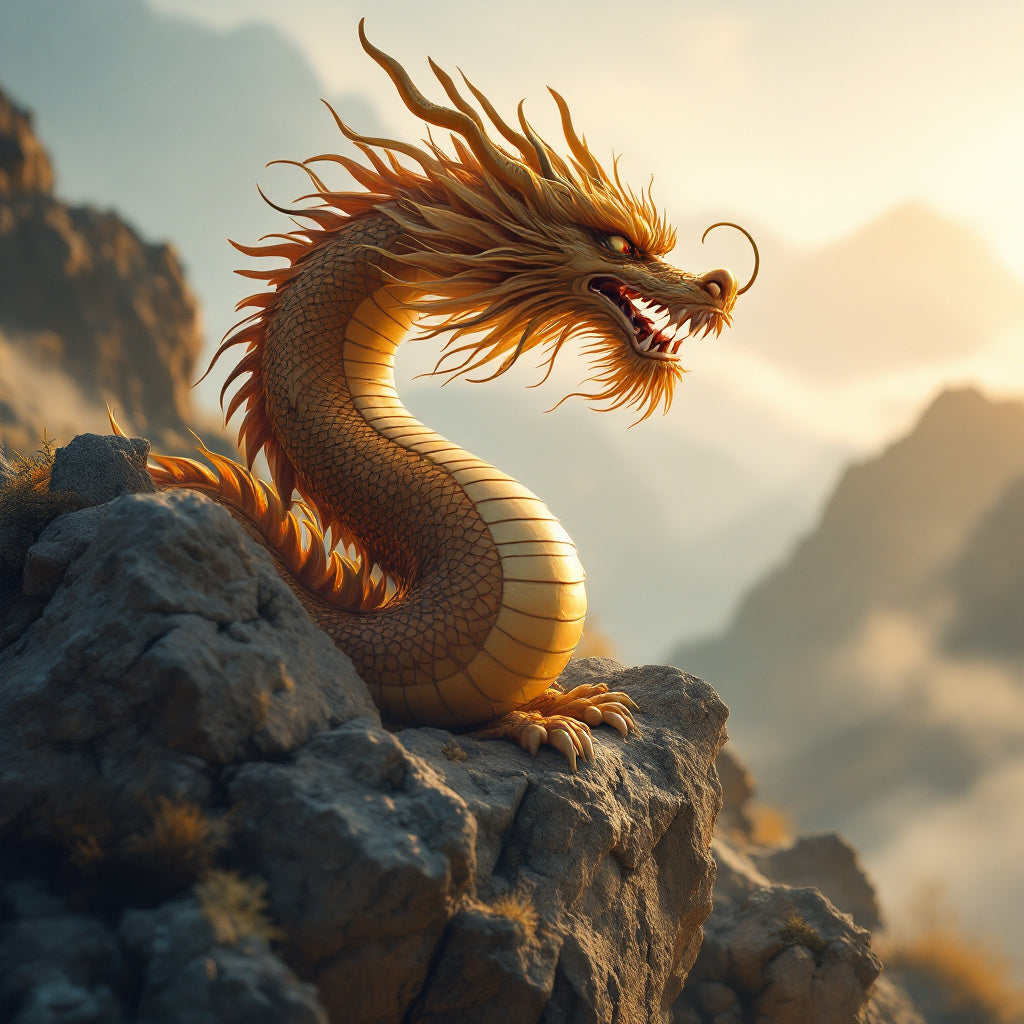
Your friend was born in 2000. Or maybe your partner in 1988. Or your mother in 1964. You're looking for a birthday gift — something that goes deeper than a candle or a silk scarf — and someone mentioned that in Tibetan and East Asian Buddhist tradition, every birth year has a guardian deity.
A Buddha who watches over you specifically. You're intrigued, but also a little cautious: you don't want to buy something that looks meaningful and turns out to be a mishmash of symbols thrown together for the tourist market.
That's a fair concern. The Dragon years — 1952, 1964, 1976, 1988, 2000, and 2024 — carry one of the most powerful guardian figures in the entire Mahayana pantheon. His name is Samantabhadra, and if you're shopping for a Dragon-year person, or you are one yourself, what follows is everything you actually need to know.
Find authentic pieces in our guardian buddha pendants collection once you've read through.
Samantabhadra: Who He Actually Is (And What the Name Means)
Let's clear something up immediately, because this is where a lot of online content goes wrong.
There are two figures named Samantabhadra in Buddhist tradition, and they are not the same being. Conflating them is like confusing the Apostle John with Pope John Paul II — same name, entirely different context.
The first Samantabhadra is the Adi-Buddha of the Nyingma school of Tibetan Buddhism — the primordial, unborn Buddha depicted as a deep blue or dark figure in yab-yum posture, representing the union of emptiness and awareness.
He appears in the Bardo Thodol (the Tibetan Book of the Dead) as the ground of all being. This is not the figure we're discussing today.
The second Samantabhadra — the guardian of Dragon-year people — is the Bodhisattva Samantabhadra, known in Chinese as Pǔxián Púsà (普賢菩薩) and in Tibetan as Küntu Zangpo (though the two traditions handle him somewhat differently).
This is one of the four great Bodhisattvas of East Asian Buddhism, alongside Manjushri, Guanyin, and Ksitigarbha. He is traditionally depicted riding a six-tusked white elephant, and his iconography is precise and consistent across centuries of Himalayan and Chinese Buddhist art.
The name Samantabhadra translates roughly as "Universal Goodness" or "He Whose Beneficence Is Everywhere." The Sanskrit breaks into samanta (universal, all-pervading) and bhadra (good, auspicious, gentle). That's not a marketing tagline — it's a description of his function.
Where Manjushri embodies wisdom and Guanyin embodies compassion, Samantabhadra embodies action. Specifically, the ten great vows of the Bodhisattva path, which he lays out in the Gandavyuha Sutra (the final section of the Avatamsaka Sutra, one of the most influential texts in Mahayana Buddhism).
Those ten vows include: paying homage to all Buddhas, praising the Tathagatas, making abundant offerings, repenting misdeeds, rejoicing in others' merit, requesting the turning of the Dharma wheel, requesting the Buddhas to remain in the world, always following the teachings, accommodating and benefiting all sentient beings, and transferring all merit to others.
If you read that list and think it sounds like a description of someone with enormous ambition directed outward — someone who acts, who moves, who does not sit still — you're reading it correctly.
Samantabhadra is the Bodhisattva of engaged practice. He is not passive.
This is why the pairing with Dragon-year people makes a particular kind of sense. The Dragon in Chinese astrology is the only mythological creature in the zodiac — not a horse, not a rabbit, but a dragon.
People born in Dragon years are traditionally described as confident, visionary, and capable of inspiring others. They tend toward leadership not because they seek authority but because others naturally follow them. The shadow side: they can be impatient, can struggle with accepting limitation, and can exhaust themselves trying to do everything at once.
Samantabhadra, whose entire teaching is about channeling vast aspiration through disciplined vows, serves as a direct counterweight for that temperament.
![[Antique thangka painting of Bodhisattva Samantabhadra seated on white six-tusked elephant, Tibetan style]](https://cdn.shopify.com/s/files/1/0941/3574/6834/files/article_20260501_155422.jpg?v=1777622088)
His mount — the six-tusked white elephant — is worth a moment. In Buddhist symbolism, the elephant represents steadiness, memory, and the capacity to carry great weight without complaint. Six tusks correspond to the six perfections (paramitas): generosity, ethics, patience, diligence, meditation, and wisdom.
The white color signals purity of intention. So the image you see on authentic Samantabhadra pendants is not decorative. Every element carries meaning.
His day of the week, in the Japanese and Chinese Buddhist system that governs the guardian-by-birth-year tradition, is Saturday. His symbolic color is white. His element associations connect him to earth and to the boundless expanse of the sky.
For those familiar with Tibetan Buddhist practice, he appears prominently in the Avatamsaka lineage and in certain Nyingma liturgies, though the birth-year guardian system itself is more directly rooted in Japanese Mikkyō (esoteric Buddhism) and its Chinese antecedents from the Tang Dynasty (618–907 CE), where it is called the honzon or personal deity system.
Dragon Years, Dragon People, and Why 2024 Made This Relevant Again
The Dragon year cycles every twelve years. The sequence that matters for this article: 1952, 1964, 1976, 1988, 2000, 2012, and 2024.
2024 was the Wood Dragon year — the most auspicious combination in a sixty-year cycle, because the Wood element amplifies the Dragon's natural expansiveness and creativity. The last Wood Dragon year was 1964. Before that, 1904.
Astrologers and practitioners across East and Southeast Asia marked 2024 as a particularly charged year, and search interest in "year of the dragon 2024" reflected that — it was the highest-trending zodiac search term of the year across multiple platforms, spiking most sharply in January and February across Google, Baidu, and regional social media.
But here's the thing: the guardian Buddha doesn't change with the Wood or Fire or Earth variation. All Dragon-year people — regardless of which sixty-year cycle they were born in — share Samantabhadra as their guardian.
A woman born in 1952 and her granddaughter born in 2024 have the same protective deity. That's a meaningful thread that runs through seven decades.
So who are we actually talking about? Let's get specific:
- Born in 1952: Now in their early 70s. Likely retired or winding down. The gift occasion here might be a milestone birthday, a retirement, or simply honoring someone who has carried a lot through the Cultural Revolution, economic transformation, and decades of family building.
- Born in 1964: Turning 60 in 2024 — a significant birthday in Chinese culture, marking the completion of a full five-cycle zodiac rotation. This is genuinely one of the most meaningful birthdays in East Asian tradition, often celebrated with family gatherings and ritual observance.
- Born in 1976: Late 40s. Often at a career and life inflection point. The Dragon energy — ambitious, sometimes restless — can feel particularly sharp at this age, when the gap between early ambitions and current reality becomes visible.
- Born in 1988: Mid-30s. Establishing themselves, often working through the gap between their vision for their life and the current reality. If you want to go deeper on the 1988 Dragon specifically, we've written a dedicated piece: the 1988 Dragon guardian Buddha guide.
- Born in 2000: Mid-20s. Just entering adulthood in full. The 2000 Dragon cohort is notable for having grown up entirely in the internet age — they tend to be globally minded and entrepreneurially oriented, often straddling multiple cultural contexts.
- Born in 2012: Children. Not the primary audience for this article, but worth noting for parents buying on their behalf, often as a keepsake or protection piece.
- Born in 2024: Infants and toddlers. The Wood Dragon babies. Parents of 2024 babies have been among the most active searchers for guardian Buddha jewelry — looking for something to mark the year and offer protection as their child grows, with many ordering pieces within weeks of birth.
If you're buying a gift for any of the above, you're not buying a novelty. You're participating in a tradition that connects the person you love to a specific figure who has been venerated — in temples, in homes, in personal practice — for over a thousand years.
That's worth getting right.
One scenario we hear often: someone's partner or close friend has been going through a difficult stretch — a career transition, a health challenge, a period of self-doubt — and the gift-giver wants to offer something that says "I see your strength" without being preachy about it.
A Samantabhadra pendant in sterling silver or gold, chosen because it's actually this person's guardian deity, does that quietly. It's not a motivational poster. It's a piece of jewelry with a specific meaning that the recipient can hold onto literally and figuratively.
Another common scenario: the 60th birthday gift. If someone you know born in 1964 is turning 60, a guardian Buddha piece tied to their birth year is one of the most culturally resonant gifts you can give.
It acknowledges the milestone, honors their heritage or spiritual inclinations, and is something they'll keep for decades.
How Samantabhadra's Protection Actually Works
This is where we want to be careful, because there are two failure modes in writing about this: over-promising ("wear this and nothing bad will happen to you") and under-explaining ("it's just a symbol"). Neither is accurate.
The Vow-Based Model of Protection
Samantabhadra's protection is not transactional. He doesn't keep a ledger. The way Mahayana Buddhism understands a Bodhisattva's relationship to practitioners is through the concept of pranidhana — vow or aspiration. Samantabhadra's ten great vows, as laid out in the Avatamsaka Sutra around the 3rd century CE, are essentially a commitment to be present for all beings across all time.
The protection is less like a bodyguard and more like a field — a sustained orientation of goodwill and clarity that practitioners can tune into through practice, attention, and intention.
When a practitioner wears a Samantabhadra pendant or keeps his image on an altar, they're not activating a remarkable shield. They're creating a daily reminder of qualities they aspire to embody: vast intention, patient action, the willingness to dedicate whatever merit they accumulate to others rather than hoarding it.
Over time, that reminder shapes behavior. And behavior shapes outcomes. That's the mechanism.
The Role of Consecration
This is where the difference between a Buddhabelief piece and a mass-produced pendant becomes concrete. Authentic guardian Buddha jewelry — the kind that functions as more than decoration — goes through a consecration process called rab-ne in Tibetan, or 開光 (kāiguāng) in Chinese Buddhist practice.
This involves a qualified lama or monk performing specific rituals: recitation of the deity's mantra (in Samantabhadra's case, this includes the Samantabhadra aspiration prayer from the Avatamsaka), visualization practices, and the formal "opening of the eyes" of the image.
Our pieces are blessed during puja ceremonies conducted at monasteries we have long-standing relationships with — not a one-time arrangement but an ongoing practice that's part of how we work. I've watched the process myself at Shechen Monastery in Kathmandu: the specific prayers recited, the number of repetitions (typically 108 or 1,000 depending on the practice), the qualifications of the officiating lama — these matter.
We can tell you exactly what was done with any piece we sell, because we were there for it or our partners were.
If you're looking at a piece elsewhere and the listing says "blessed by monks" with no further detail, that's a flag. Ask: which monastery? Which practice? How recently? Vague blessing claims are common in the market. Specificity is the tell.
Mantra and Daily Activation
Samantabhadra's primary mantra in the Tibetan tradition is recited as part of the Samantabhadra aspiration prayer: Om Samantabhadra Ah Hum in its shortest form, though the full aspiration prayer (Küntu Zangpo'i Mönlam) is considerably longer and appears in the Rigpa Rangshar tantra.
In Chinese Buddhist practice, his mantra is Namo Pǔxián Púsà.
You don't need to be an initiated practitioner to use these. Holding a pendant and reciting the mantra — even once, even imperfectly — is considered a valid form of connection with the deity.
The Tibetan tradition is notably non-elitist about this: you don't need formal initiation to recite Samantabhadra's aspiration prayer. It's considered a universally accessible practice.
![[Close-up of artisan hands in Kathmandu workshop setting Samantabhadra pendant in sterling silver mount]](https://cdn.shopify.com/s/files/1/0941/3574/6834/files/article_20260501_155451.jpg?v=1777622117)
Choosing an Authentic Samantabhadra Piece: What to Look For
The market for Buddhist jewelry has expanded enormously in the past decade, and not all of that expansion has been good for quality or accuracy. Here's how to navigate it.
Iconographic Accuracy
Samantabhadra should be identifiable. In his most common East Asian form, he is seated on a white elephant with six tusks (sometimes depicted with two tusks in simplified versions — this is acceptable, but six is more traditional).
He typically holds a lotus flower or a ruyi scepter. His expression is serene but not blank — there's a quality of engaged attention in good representations. His crown is elaborate; he is a Bodhisattva, not a monk, so he wears the ornaments of a prince rather than robes.
In Tibetan iconography, he may appear differently — sometimes in union with his consort, sometimes in a more austere form. When purchasing from a Tibetan-tradition source, ask which iconographic tradition the piece follows. The distinction matters: a Samantabhadra from the Gelug school may carry different symbolic elements than one from the Nyingma tradition, and a reputable maker will know this.
Red flags: generic "Buddha face" pendants sold as Samantabhadra without the elephant. Figures described as Samantabhadra that look identical to every other pendant in the shop. Pieces where the seller cannot tell you which tradition the iconography comes from.
Material Integrity
Traditional Samantabhadra pieces are made in sterling silver, gold-plated silver, or solid gold. For pendants, sterling silver with gold vermeil detailing is the most common and the most practical — it's durable, it ages well, and it's accessible as a gift price point.
Some pieces incorporate white jade or white coral, both of which have traditional associations with Samantabhadra's white-elephant symbolism.
Avoid pieces described as "alloy" or "metal" without further specification — these are almost always zinc-based casting metal, which discolors quickly and has no traditional precedent in Buddhist metalwork. The artisans in our Kathmandu atelier work exclusively in sterling silver and 18k gold; it's not a luxury upsell, it's a baseline standard.
A piece cast in our workshop in 2023 will still hold its patina in 2035.
What Type of Piece for What Occasion
For a gift to someone who doesn't wear jewelry regularly: a pendant on a simple chain is the most versatile option. It can be worn or kept on an altar or bedside table. For someone who practices meditation: consider a mala (prayer beads) with a Samantabhadra pendant as the guru bead or attached charm.
For someone marking a major life milestone: a more substantial piece — heavier gauge silver, perhaps with gemstone accents — is appropriate. Our authentic guardian buddha jewelry includes options across all these categories.
For the 1988 Dragon cohort specifically, who are often in their mid-30s and established enough to appreciate a more substantial piece, we'd point you toward our heavier-cast pendants. For parents of 2024 babies, a smaller pendant that can be kept safely (not worn by an infant, but kept by the parents and given when the child is older) is the more practical choice.
You might also find our broader guardian Buddha birth year complete guide useful if you're shopping for multiple people with different birth years — it covers all twelve zodiac signs and their corresponding deities.
The Packaging and Presentation Question
For a gift, this matters more than most people realize. A piece that arrives in a kraft paper envelope with a printed card that says nothing about the meaning is a missed opportunity. Every Buddhabelief piece ships with a card that explains the specific deity, their significance, and the blessing process the piece underwent.
You shouldn't have to explain the gift yourself — the piece should come with its own context.
![[Samantabhadra sterling silver pendant displayed on dark velvet beside handwritten blessing card and kraft box]](https://cdn.shopify.com/s/files/1/0941/3574/6834/files/article_20260501_155521.jpg?v=1777622147)
Living with a Samantabhadra Piece: Practical Daily Use
You've chosen a piece. Now what?
If you're giving it as a gift: Include a brief note explaining who Samantabhadra is and why this piece is specifically for them — not only "I found this beautiful Buddhist pendant" but "this is your guardian deity, the one associated with your birth year, and here's what he represents." That context transforms the gift.
You can use this article as a reference and write it in your own words.
If you're keeping it yourself: The simplest practice is to hold the pendant each morning before you put it on and recite the mantra — Om Samantabhadra Ah Hum — three times. This takes about fifteen seconds.
It's not a ritual that requires any initiation or formal training. You're simply orienting your attention toward the qualities the figure represents before you go into your day.
On an altar: If you have a home altar or meditation space, a Samantabhadra pendant or statue can sit there when you're not wearing it. Tibetan Buddhist home altars traditionally include offerings of water (in small bowls), light (a candle or butter lamp), and incense.
You don't need all of these — even a clean, dedicated space where the piece sits is a form of respect.
Cleaning and care: Sterling silver should be cleaned with a soft cloth and, periodically, a silver polishing cloth. Avoid chemical cleaners near any gemstones or enamel work. Practitioners in the Gelug tradition often clean the piece before and after periods of illness or significant emotional difficulty — a kind of reset.
if you hold that view or not, regular physical cleaning keeps the piece looking the way it deserves to.
What to do if the chain breaks or the piece is damaged: In Tibetan tradition, a damaged or broken sacred object is typically brought to a lama or monastery for disposal — it's not simply thrown in the trash.
If you're not near a monastery in your region, wrapping it respectfully in cloth and keeping it until you can bring it somewhere appropriate is the traditional approach. We're happy to advise on this if you reach out to us directly.
Passing it on: Guardian Buddha pieces are among the most meaningful heirlooms in Buddhist families. A grandmother's Samantabhadra pendant passed to a Dragon-year granddaughter carries something that no new piece can replicate. If you're buying this as an investment in that kind of continuity, choose a piece made to last — solid silver, quality casting, a clasp that will hold for decades.
Questions We Hear Most Often
Do I have to be Buddhist to wear a Samantabhadra pendant?
No. The guardian deity system is rooted in Buddhist tradition, but wearing a piece connected to your birth year doesn't require formal Buddhist practice or affiliation. Those across East and Southeast Asia wear guardian deity jewelry as a cultural practice — a connection to ancestral tradition — without identifying as practicing Buddhists in any doctrinal sense.
What matters is that you engage with the piece with some degree of awareness and respect, rather than treating it as purely decorative. That's a low bar, and it's the same bar we'd apply to any object with cultural or spiritual significance.
You wouldn't wear a piece of Indigenous sacred jewelry as a fashion accessory without understanding its meaning; the same basic respect applies here.
My friend was born in 2000 — is Samantabhadra really their guardian?
Yes. The guardian deity assignment in the Chinese and Japanese Buddhist system is based on the twelve-year zodiac cycle, and all Dragon years — 1952, 1964, 1976, 1988, 2000, 2012, 2024 — share Samantabhadra (Puxian) as their guardian.
The sixty-year cycle (which adds the five elements: Wood, Fire, Earth, Metal, Water) modifies the character of a given Dragon year in astrological terms, but it doesn't change the guardian deity assignment. A 2000 Dragon and a 1988 Dragon have the same guardian.
This is consistent across the major East Asian Buddhist traditions that use this system.
How is Samantabhadra different from Guanyin? Both seem to be about compassion.
This is a fair question and worth a clear answer. Guanyin (Avalokiteshvara) is the Bodhisattva of compassion — specifically, the compassion that responds to suffering. She hears the cries of the world and moves toward pain.
Samantabhadra is the Bodhisattva of action and vow — specifically, the aspiration to benefit all beings through sustained, disciplined practice. If Guanyin is the first responder, Samantabhadra is the long-term builder. His ten great vows are not about responding to crisis but about maintaining an orientation across vast time and space.
The two figures are complementary, not redundant. Practitioners working with both traditions understand this distinction deeply.
What's the difference between a Samantabhadra pendant and a regular Buddha pendant?
A "Buddha pendant" typically depicts Shakyamuni Buddha — the historical Buddha, the one who lived in northern India in the 5th century BCE, often shown in meditation posture with a simple robe and a ushnisha (cranial protuberance).
Samantabhadra is a Bodhisattva — a being who has attained enlightenment but remains in the world to help others. He is depicted with elaborate jewelry and a crown (the ornaments of royalty, symbolizing the Bodhisattva's engagement with the world rather than renunciation of it).
He is usually shown with his elephant mount, a white creature standing six feet tall in traditional thangka paintings. These are visually and doctrinally distinct figures. Buying a generic "Buddha pendant" for a Dragon-year person is not the same as buying their guardian deity.
Is there a specific metal or gemstone that's most appropriate for Samantabhadra pieces?
Traditional associations point toward white and silver tones — white jade, white coral, clear quartz, and sterling silver all align with Samantabhadra's color symbolism (white elephant, purity of intention). Gold is universally appropriate for any Bodhisattva figure and is considered the most auspicious material in Tibetan Buddhist metalwork; we source 24-karat gold leaf for our consecration processes.
Some practitioners also associate Samantabhadra with green, given his connection to the earth element and to growth — green jade or emerald accents appear in some traditional pieces from the Kangding region. There's no single "correct" answer, but if you're choosing between options, lean toward silver-white or gold rather than dark metals or heavy patina finishes for this particular deity.
Can I buy this for someone who practices a different form of Buddhism — like Theravada or Zen?
The guardian deity system is specifically Mahayana and East Asian in origin — it's not a Theravada practice, and it's not central to Japanese Zen (though Zen practitioners may be familiar with Samantabhadra from the Avatamsaka Sutra).
If your friend is a strict Theravada practitioner, they may not have a personal relationship with Bodhisattva figures in the same way. That said, most practitioners across traditions appreciate a piece that's been thoughtfully chosen and explained — the gesture matters as much as the doctrinal alignment.
If you're uncertain, a simple mala (prayer beads) in a neutral material is a safer choice. But if your friend has any Tibetan Buddhist, Chinese Buddhist, or Japanese Buddhist inclinations, a Samantabhadra piece is entirely appropriate.
How do I know if the blessing on a piece is genuine?
Ask specific questions. A genuine consecration process involves: a qualified officiant (a lama, monk, or priest with recognized training in the relevant tradition), specific liturgy (mantra recitation, visualization, and aspiration prayers associated with the deity), and a defined ritual context (a puja ceremony, ideally in a temple or monastery setting).
If a seller can answer all three of those — who performed the blessing, what practice was used, where it took place — you're on solid ground. If the answer is vague ("our pieces are blessed by Tibetan monks"), ask for more.
We document our consecration process because we think you deserve to know exactly what you're buying. Browse our birth year guardian buddha pieces and reach out if you want specifics on any item.
Is 2024 still a relevant year to buy Dragon-year jewelry, or has the moment passed?
The guardian deity relationship doesn't expire with the calendar year. Someone born in a Dragon year has Samantabhadra as their guardian for their entire life — the 2024 Wood Dragon year simply made this more visible and more searched.
If you're buying for a Dragon-year person in 2025, 2026, or beyond, the piece is just as meaningful. The birth year is the anchor, not the current year. The 2024 Dragon babies will still be Dragon-year people in 2044 and 2064.
Their guardian doesn't rotate.
Your Next Step — For the Dragon in Your Life, or in You
There's a particular kind of gift that doesn't get set aside after a few weeks. It's not the most expensive thing you've ever bought, and it's not the most dramatic. It's the thing that sits on someone's desk or hangs around their neck for years, and every so often they touch it and remember that someone saw them clearly enough to choose it.
A Samantabhadra piece for a Dragon-year person is that kind of gift — if it's chosen with understanding. The understanding is what this article was for. The Dragon people in your life are ambitious, capable, and sometimes quietly exhausted by the weight of their own vision.
Their guardian deity is the Bodhisattva who made ten vows to keep going across vast time and space, who rides an elephant that carries everything without complaint, whose name literally means universal goodness. That's not a coincidence.
That's a mirror worth holding up.
If you're ready to find the right piece, our Buddhabelief zodiac guardian collection includes Samantabhadra pendants in sterling silver and gold vermeil, each consecrated and documented, each shipped with the context the piece deserves.
If you're shopping for multiple people with different birth years — a Dragon and a Rooster, say — our piece on the 1993 Rooster guardian Buddha covers that sign specifically.
The Dragon year of 2024 brought practitioners and seekers to this tradition for the first time. Some of them found cheap novelty items and moved on. Some of them found something real — a piece they still wear eighteen months later. We'd like you to find something real.
![[Samantabhadra guardian Buddha pendant on sterling silver chain photographed against natural stone background with soft light]](https://cdn.shopify.com/s/files/1/0941/3574/6834/files/article_20260501_155550.jpg?v=1777622175)
Keep reading