God's Rites
Meet the Treasure King: Vaisravana – Tibetan God of Wea
You’ve been meditating, setting intentions, and working diligently. Yet, you feel a persistent friction between your spiritual aspirations and the tangible demands of the world. There's a nagging sense that your financial reality is out of sync with your inner life, creating a subtle but constant hum of anxiety. You might look at your bank account and wonder if pursuing a path of mindfulness means you must renounce material stability. This is a common and deeply human conflict: the struggle to reconcile the sacred with the necessary, the spiritual with the material. You yearn for a sense of abundance that isn't just about accumulating wealth, but about having the resources to live freely, practice generosity, and support the people and causes you care about. You're seeking not just wealth, but "right livelihood"—a flow of prosperity that feels earned, aligned, and purposeful. This is the exact space where the powerful presence of Vaisravana emerges.

What It Really Is: The Authentic Origins of the Treasure King
To truly understand Vaisravana, you must look beyond the simple label of "wealth god." His identity is a rich tapestry woven through millennia of spiritual history, stretching back to the ancient Vedic traditions of India. Before he was known in the snowy peaks of Tibet, he was revered as Kubera, a powerful nature spirit (yaksha) associated with the earth's hidden treasures. When the teachings of the Buddha began to flourish, Kubera, along with other powerful beings, took refuge in the Dharma. He made a profound vow directly to the Buddha Shakyamuni: to protect the teachings and provide for the material needs of practitioners who walk the path to enlightenment. This vow transformed him. He became Vaisravana, a name meaning "He Who Hears Clearly," signifying his attentiveness to the needs of the faithful.
In the Buddhist cosmos, Vaisravana holds a pivotal role as one of the Four Great Heavenly Kings, the Chaturmaharaja. These are not gods in a Western sense, but powerful Dharma Protectors (Dharmapalas) who guard the four cardinal directions from their palaces on the slopes of the cosmic Mount Meru. Vaisravana, known in Tibetan as Namthöse (or Namtösé), is the guardian of the North. This direction is symbolically associated with riches and resources, making him the commander-in-chief of the yakshas, beings who guard the treasures hidden within the earth. His celestial palace, Alaka, is described in scriptures as a place of unimaginable splendor, built from gold and jewels, a testament to the enlightened abundance he commands. His role as a protector is paramount; you will often see his image painted at the entrance of Tibetan monasteries like Sera and Drepung in Lhasa, a fierce yet benevolent guardian ensuring the sanctuary remains a place of pure practice.
His practice was carried into Tibet by legendary masters, most notably the great Indian pandit Atisha Dipankara in the 11th century. Atisha recognized the profound difficulties practitioners faced—poverty, lack of resources, and worldly obstacles—and he emphasized the practice of Vaisravana as a skillful means to overcome them. This wasn't about greed; it was a pragmatic recognition that a certain level of material stability is necessary to create the space for deep spiritual practice. By securing the practitioner's worldly needs, Vaisravana ensures their mind is not constantly distracted by survival. He provides the foundation upon which the palace of enlightenment can be built. Connecting with him is connecting with a lineage of protection and provision that has supported Dharma practitioners for over two thousand years. The sacred Tibetan jewelry you might wear is a modern link to this ancient, unbroken chain of blessings.
The Deeper Meaning: Decoding Vaisravana's Sacred Symbols
Every detail of Vaisravana's iconography is a profound teaching, a visual map to understanding the true nature of wealth. When you look at his form, you are not just seeing a deity; you are receiving a direct transmission on how to cultivate abundance in your own life. His appearance is potent with symbolism, designed to awaken specific qualities within your mindstream.
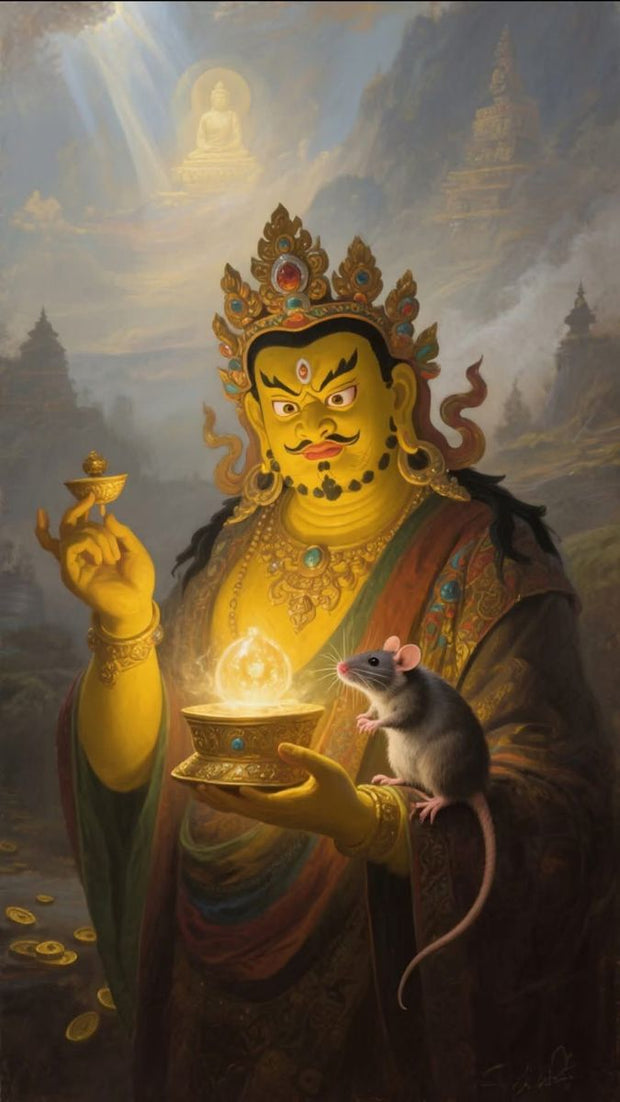
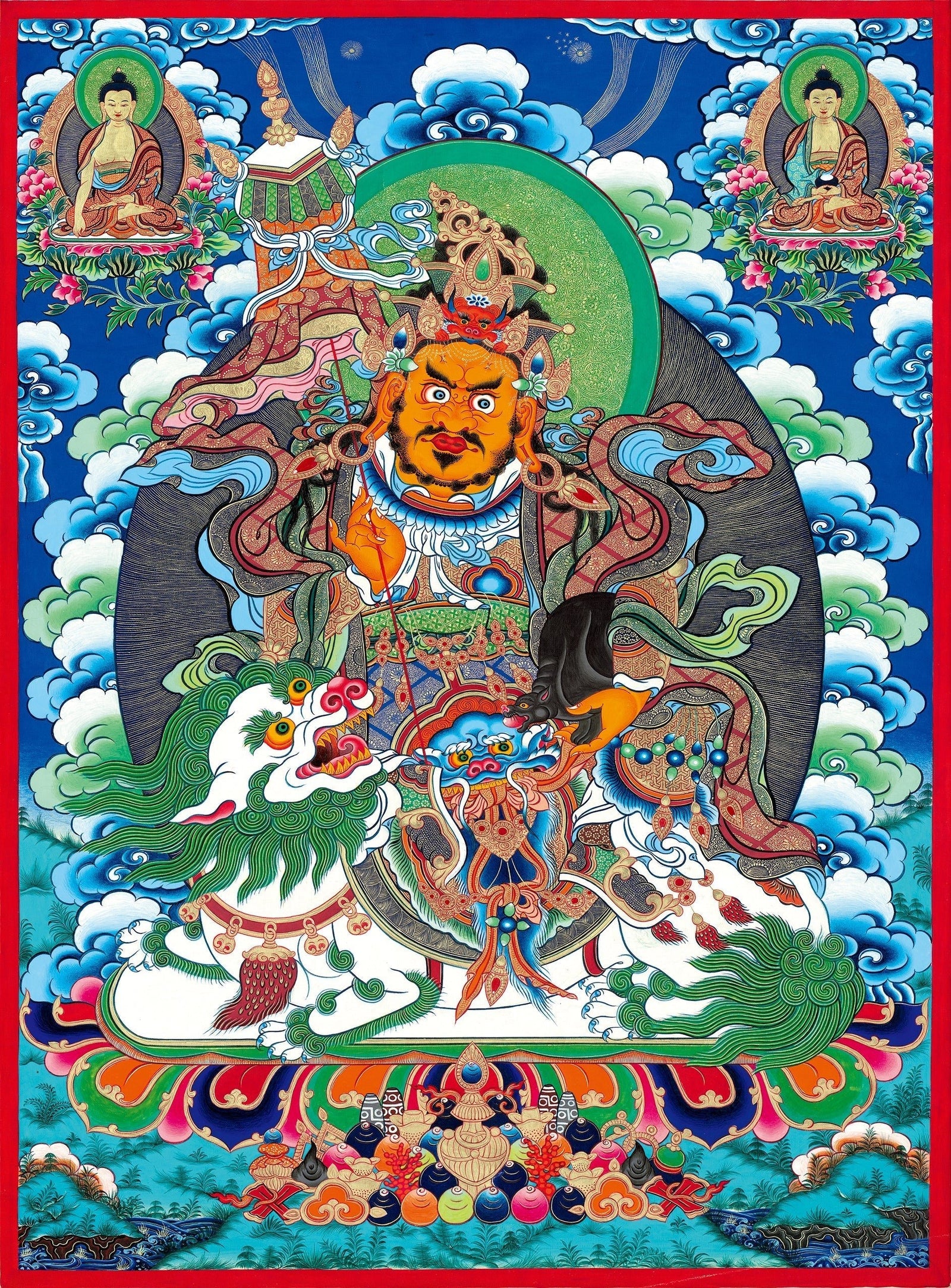
His body is a radiant, golden-yellow color. This isn't merely decorative. Gold, in Tibetan Buddhism, represents purity, immutability, and the enlightened state itself. The golden hue of Vaisravana signifies that the wealth he bestows is not mundane or tainted by greed. It is purified wealth, a spiritual richness that also manifests materially. His form is often depicted as stout and powerful, conveying a sense of unshakable stability and groundedness. This reminds you that true abundance is not fleeting or precarious; it is a stable foundation from which you can grow and act in the world with confidence.
In his right hand, Vaisravana holds a Victory Banner (Dhvaja). This is a classic Buddhist symbol of the Buddha's victory over the four maras—the personifications of illusion, attachment, and the fear of death. For you, this banner symbolizes the power to overcome all obstacles that stand between you and a life of prosperous purpose. These are not just external hurdles like a difficult job market, but more importantly, internal ones: self-doubt, a scarcity mindset, and the mental poisons of jealousy and greed. The banner is a declaration that by aligning with Vaisravana's energy, you gain the strength to triumph over your own limitations and achieve a victorious life, both spiritually and materially.
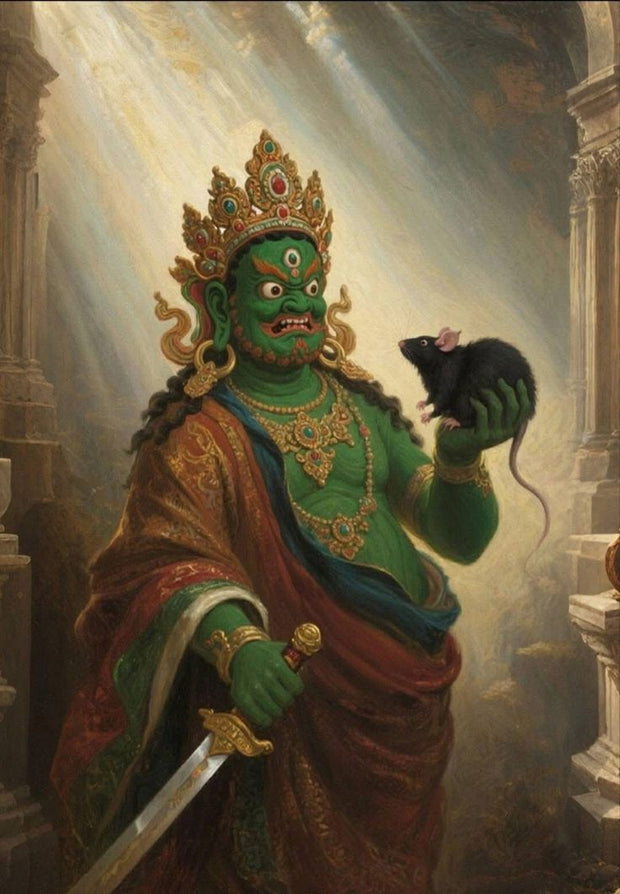
Perhaps his most famous attribute, cradled in his left arm, is a treasure-spitting mongoose (nakula). This seemingly unusual companion has a powerful origin story. The mongoose is the natural enemy of the naga, serpent-like beings who guard the treasures of the earth. By subduing the nagas, Vaisravana did not destroy them but converted them into allies. The mongoose, now his servant, spits forth an endless stream of wish-fulfilling jewels. This symbolizes his complete mastery over the forces of the earth and his ability to command its resources. For you, the mongoose represents the transformation of negative energies. It teaches that the very things you fear or see as enemies—like greed or attachment—can be subdued and transformed into the fuel for generosity and abundance. The endless flow of jewels is a reminder that true wealth is inexhaustible when its source is a generous heart. Finding your connection with Vaisravana through our curated collection of authentic pieces can serve as a daily reminder of this transformative power.
Real Benefits for Modern Life: Beyond Material Gain
While Vaisravana is undeniably a deity of wealth, to limit his function to simply "attracting money" is to miss the profound transformation his practice offers. Engaging with his energy is about fundamentally rewiring your relationship with abundance on every level—mental, emotional, and spiritual—which then naturally manifests in your material world. The benefits you can experience are specific, practical, and deeply relevant to the challenges you face today.
The first and most immediate benefit is a powerful shift in mindset from scarcity to generosity. Our modern culture often conditions us to believe in limitation—that there isn't enough to go around, that we must hoard what we have, and that someone else's success diminishes our own. Vaisravana's practice directly antidotes this poison. His core teaching is that generosity is the cause of wealth. By making offerings, both physically and mentally, and by cultivating a genuine wish for others to be prosperous, you create the karmic causes for your own abundance. Vaisravana doesn't just hand you wealth; he helps you become the kind of person who naturally generates it. You start to see opportunities where you once saw obstacles, and you begin to act from a place of confidence rather than fear.
Another profound benefit is the removal of obstacles. Vaisravana is a King and a Dharma Protector, a warrior deity in resplendent armor. His function is to clear the path for you. These obstacles can be external—a project at work that is stalled, a business that is struggling, or unexpected expenses that drain your resources. But more often, the obstacles are internal. Procrastination, lack of confidence, and confusion about your life's purpose are all hindrances that Vaisravana's clear, decisive energy helps to cut through. By invoking his presence, you are calling upon a powerful ally to protect your endeavors and bring clarity to your path, allowing your efforts to bear fruit. You find yourself more focused, resilient, and capable of navigating challenges with a newfound sense of command.
Ultimately, Vaisravana helps you integrate your spiritual and material lives. He teaches that wealth is not something to be ashamed of or renounced, but a powerful tool that can be used for immense good. The prosperity he offers is intended to support your Dharma practice, to give you the freedom to study and meditate, and to empower you to be a force for positive change in the world. It is about creating "enlightened wealth"—resources used with wisdom and compassion to benefit all beings. This re-frames your financial goals, transforming them from a selfish pursuit into a sacred responsibility. This journey towards integrated abundance is something you can explore through the tangible reminders found in our handcrafted amulets and sacred objects.

How to Choose Authentic: A Guide to Vaisravana Artifacts
When you decide to bring an image of Vaisravana into your life, whether as a statue for your altar or a piece of jewelry to wear, you are choosing more than just a decorative object. You are inviting a specific stream of enlightened energy into your space. Therefore, choosing an authentic representation is crucial. An authentic piece is a vessel, a sacred conduit crafted with intention and precision, capable of holding and transmitting the deity's blessings. Here’s what you should look for.
First, pay close attention to the iconography. A properly crafted Vaisravana image will adhere to the traditional symbolic details passed down through generations. Is his body the correct golden-yellow? Is he holding the Victory Banner in his right hand and the mongoose in his left? Is he seated upon a white snow lion, a symbol of fearlessness? These details are not arbitrary artistic choices; they are the very language of the deity. A mass-produced, inaccurate figurine might look pleasant, but it lacks the spiritual grammar to convey the full depth of Vaisravana’s meaning and power. Authenticity in form ensures authenticity in function.
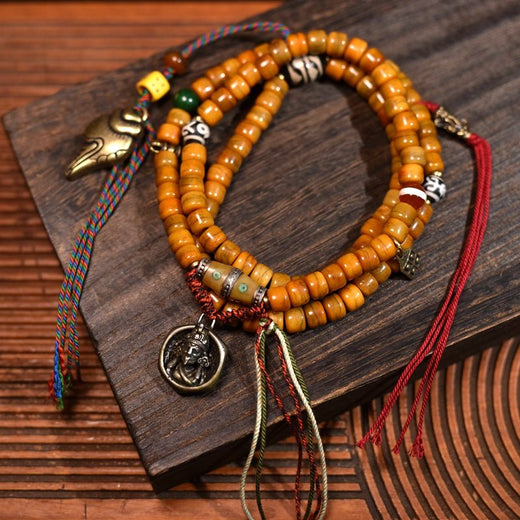
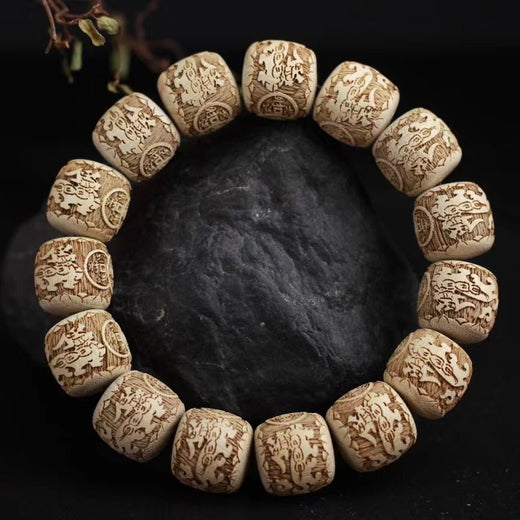
Second, consider the materials. Tibetan Buddhist art traditionally uses natural, precious materials that are believed to have their own inherent purity and energy. Statues are often cast from copper, bronze, or even silver and gold, metals that are excellent conductors of spiritual presence. Amulets and jewelry crafted from pure silver or adorned with natural gemstones like turquoise, coral, and lapis lazuli carry the blessings of the earth itself. The material is part of the offering. When you choose a piece made from high-quality, genuine materials, you are honoring the deity and creating a worthy receptacle for his presence. Be wary of cheap alloys, plastics, or synthetic stones, as they lack the vibrational integrity of traditional materials.
Finally, and most importantly, understand the craftsmanship and the source. A truly authentic piece is created by an artisan who is not just a skilled craftsperson, but also a practitioner who understands the sacred nature of their work. Their process is a form of meditation, imbued with mantras and prayers. This intention is infused into the very fabric of the object. When you explore the Buddhabelief collection, you are connecting with items crafted in this spirit. Knowing that your amulet was made by hands that hold the lineage and respect the tradition adds an immeasurable layer of blessing and authenticity that can never be replicated by a factory.
How to Use It: Activating the Energy of Abundance
Inviting Vaisravana into your life is an active practice. Having an amulet or statue is the first step; the next is to build a living relationship with the energy he represents. This doesn't require complex rituals, but a consistent, heartfelt intention. Here is a simple, step-by-step guide to begin activating the blessings of the Treasure King in your daily life.
The foundation of any successful practice is setting a clear and wholesome intention. Before you begin, take a moment to reflect on why you are seeking abundance. Move beyond a simple desire for "more money." Frame your intention in a way that is beneficial. For example: "May I receive the resources necessary to live without financial anxiety, so that I may have the time and energy to deepen my spiritual practice and be of greater service to others." Or, "May my business prosper so that I can create a positive work environment for my employees and contribute generously to my community." An altruistic intention purifies your request and aligns you with Vaisravana’s core purpose as a supporter of the Dharma.
Next, create a sacred space for your connection. If you have a statue or a larger amulet, place it on a small altar or a clean, respectful surface in your home. It should be in a place where it won't be disturbed. You can make simple offerings like a small bowl of clean water, a candle, or incense. This act of offering creates a powerful karmic connection. If you are wearing an amulet, the sacred space is you. Before putting it on each day, hold it in your hands for a moment. Take a few deep breaths and consciously connect with its meaning, renewing your intention for the day.
The most direct way to invoke Vaisravana’s energy is through the recitation of his mantra. A mantra is a sacred sound that vibrates at the same frequency as the deity's enlightened mind. Vaisravana's mantra is: Om Vaisravanaye Svaha. You can recite this mantra as you go about your day, or you can set aside a few minutes to sit quietly and repeat it, perhaps using a mala (meditation beads) to count 21, 27, or 108 repetitions. As you chant, visualize a brilliant golden light flowing from the heart of Vaisravana (or from your amulet), pouring into you, filling your entire being. This light purifies all poverty, lack, and scarcity mindset, replacing it with a radiant sense of abundance, confidence, and generosity.
Common Questions About Vaisravana
1. Is connecting with Vaisravana just about getting rich?
Not at all. This is the most common misconception. While Vaisravana does govern material prosperity, his ultimate purpose is to provide you with the resources needed for spiritual practice. The wealth he bestows is "enlightened wealth," which includes not only financial stability but also inner riches like contentment, good health, strong relationships, and a generous spirit. The practice is designed to create holistic abundance, where your outer world reflects a rich and stable inner world.
2. Do I have to be a practicing Buddhist to work with Vaisravana?
No, you do not need to be a formal Buddhist to benefit from Vaisravana's blessings. As a powerful enlightened being, his compassion is universal. However, it is essential to approach the practice with deep respect for its origins within the Buddhist tradition. This means engaging with a sincere and altruistic motivation, rather than treating him like a cosmic ATM. A respectful heart is the key that opens the door to his treasury.
3. What is the difference between Vaisravana and other wealth deities like Jambhala?
In the vast Tibetan pantheon, you will often encounter various wealth deities. Vaisravana is the King of the Four Heavenly Kings and a major Dharma Protector. Jambhala (or Dzambhala) is often considered to be an emanation or aspect of Vaisravana, specifically focused on alleviating poverty and generating wealth. You can think of them as different facets of the same diamond of enlightened abundance. Vaisravana often has a more kingly, protector-like energy, while the various forms of Jambhala can be more focused on specific aspects of prosperity.
4. How long does it take to see results from the practice?
This is not a transactional process with a guaranteed timeline. The results of the practice depend on your karma, the sincerity of your intention, and the consistency of your effort. For some, the first shifts are internal—a noticeable decrease in financial anxiety and a more generous, open attitude. For others, external opportunities may begin to appear. The key is to release attachment to a specific outcome and focus on cultivating the inner qualities of abundance. The outer results will follow naturally from this inner transformation.
5. Can I wear a Vaisravana amulet with amulets of other deities?
Yes, absolutely. In Tibetan Buddhism, it's common for practitioners to wear or have images of multiple deities. The enlightened beings do not have egos and do not compete for your attention. Their functions are complementary. For example, you might pair a Vaisravana amulet for abundance with a Green Tara amulet for swift action and the removal of fear. Together, they create a powerful synergy of support for all aspects of your life's journey.
6. Why is he always depicted with a mongoose instead of a more "valuable" animal?
The mongoose is a deeply symbolic choice. In nature, it is the conqueror of the snake (naga). In Buddhist symbolism, nagas are powerful beings who guard earthly treasures and can cause illness and obstacles when displeased. Vaisravana's control over the mongoose signifies his power over the nagas and, by extension, all the hidden wealth of the world. The mongoose endlessly spitting jewels represents that he has transformed greed and attachment (the hoarding nature of the nagas) into boundless generosity. It’s a teaching that true wealth comes from mastering and transforming these energies, not from hoarding.
Your Next Step on the Path to Abundance
You now understand that Vaisravana is far more than a simple god of fortune. He is a guide, a protector, and a powerful ally on your journey to integrate spiritual depth with worldly well-being. Connecting with him is an invitation to heal your relationship with wealth, to transform a mindset of scarcity into one of confident, purposeful abundance, and to use your resources as a force for good. This path is not about wishful thinking; it is an active practice of cultivating generosity, clearing away internal obstacles, and aligning your actions with a higher purpose.
Your journey with the Treasure King begins with a single, intentional step. It may be the quiet recitation of his mantra in the morning, the setting of a clear intention for your work, or finding a sacred object that serves as a constant reminder of your potential for enlightened prosperity. Let this be the moment you decide to build a foundation of stability from which your spiritual life can truly flourish. To explore tangible anchors for this profound practice, we invite you to discover the authentic, mindfully crafted sacred designs in our collection.

Keep reading