buddhist-jewelry
Crystal & Gemstone Guardian Buddha Jewelry: Traditional
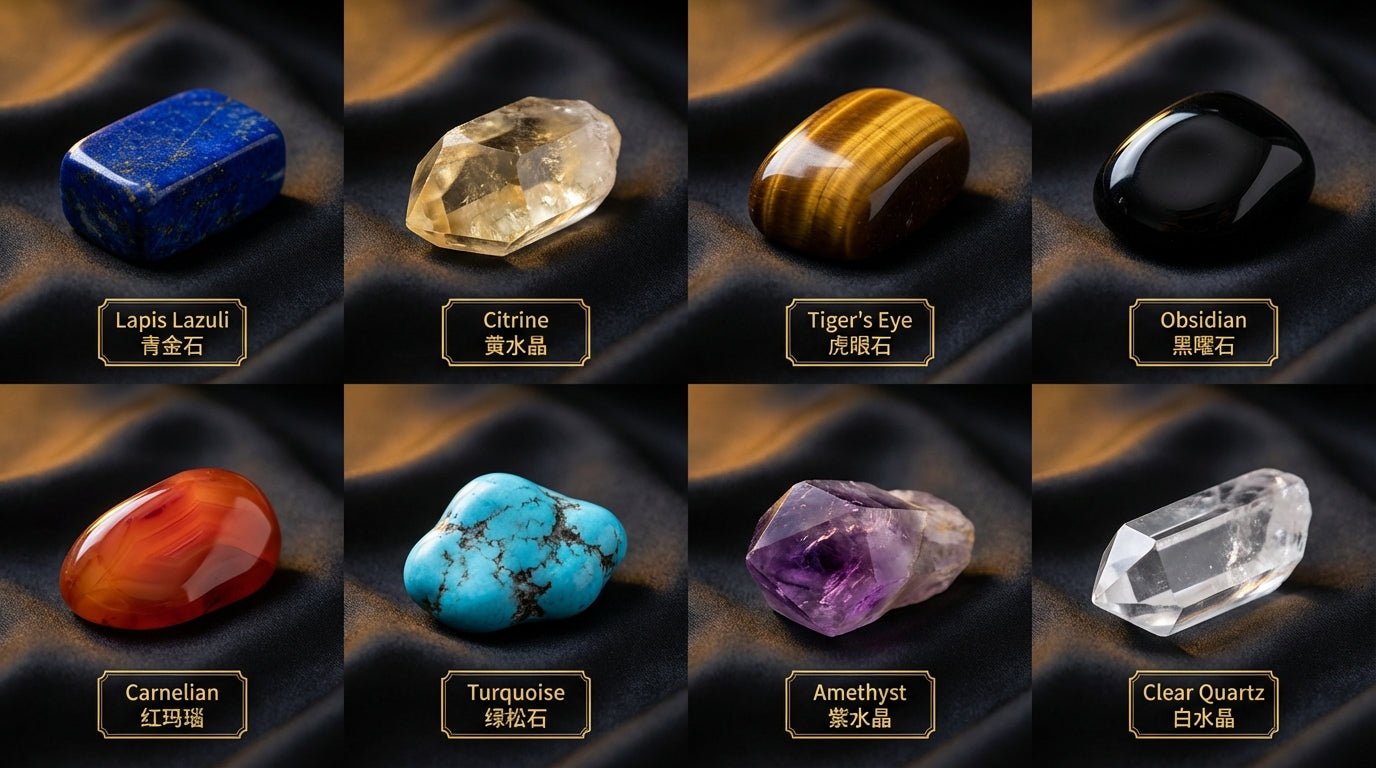
You’re sitting in the quiet of the early morning, the world still hushed. You try to meditate, to find that still point within, but your mind feels like a windswept plain—thoughts scattering in every direction.
There’s a persistent, low-humming anxiety, a sense of being untethered in a world that demands constant reaction. You’ve read the books and you understand the concepts of mindfulness and presence, but you crave something tangible.
You’re looking for an anchor, a physical reminder you can touch and hold, something to ground you when the internal winds begin to blow. It’s not about finding a magic charm to solve your problems.
It’s about finding a tool, a focal point for your own intention, a silent companion on your path that reminds you of the strength, compassion, and wisdom you already possess. This deep-seated need for a spiritual anchor is an ancient human impulse, one that has found its most profound expression in the tradition of Guardian Buddha jewelry.

When our team visited the jewelry stalls in Dharams
What It Really Is: The Authentic Roots of a Sacred Tradition
Guardian Buddha jewelry is not a modern invention or a simple fashion statement. Its roots run deep into the sacred soil of the Himalayas, drawing from spiritual streams that predate Buddhism’s arrival in Tibet.
To truly understand your Guardian Buddha pendant, you must look to the Bön religion, the indigenous shamanistic tradition of Tibet. Long before the first Buddhist sutras were carried over the mountains, the Bönpo people sought protection from the formidable forces of nature and the spiritual world.
They relied on amulets, or ‘srung ba,’ crafted from natural materials—turquoise to connect with the sky, coral for lifeblood, and ancient Dzi beads believed to be of celestial origin. These were not mere ornaments; they were living conduits of protective energy.
When Padmasambhava, also known as Guru Rinpoche, brought Vajrayana Buddhism from India to Tibet in the 8th century, he did not erase these ancient beliefs. Instead, in an act of profound wisdom, he integrated them.
The local deities and protector spirits of the Bön tradition were subdued and transformed into Dharmapalas—wrathful protectors of the Buddhist teachings. This syncretism is the very heart of Tibetan Buddhism’s unique power and resilience.
The practice of wearing protective amulets was absorbed and elevated, imbued with the deeper purpose of spiritual awakening. The physical object became a vessel for the enlightened qualities of a Buddha or Bodhisattva.
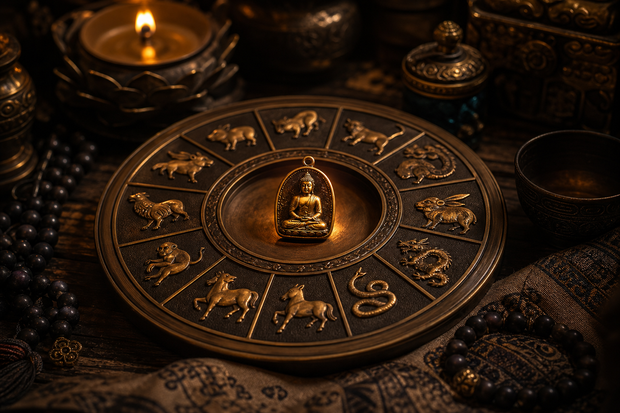
The concept of the Eight Great Bodhisattvas, or Guardian Buddhas, corresponding to the twelve animals of the zodiac, is a later development from this synthesis, blending Tibetan astrology with Mahayana Buddhist principles. This system assigned a specific celestial protector to each individual based on their birth year.
For example, those born in the Year of the Rooster are protected by Acalanatha, the Immovable One, whose fiery wisdom cuts through delusion. This wasn't about worshiping an external god. It was about recognizing that the qualities of Acalanatha—steadfastness, clarity, and the power to overcome obstacles—are innate potentials within you.
The pendant is a mirror reflecting that potential. This tradition was cultivated and preserved in great monastic centers like Samye, Tibet's first Buddhist monastery founded in 775 AD, and later in the great Gelugpa monasteries of Sera and Drepung.
The crafting of these items was a sacred act, undertaken by artisans who were also practitioners, infusing each piece with mantra and meditative intention. When you wear one, you are connecting to this unbroken lineage, a sacred technology for the mind refined over centuries.
This is the authentic foundation behind the tradition of the Eight Protector Buddhas you see today.
The Deeper Meaning: Symbolism in Stone and Spirit
A Guardian Buddha pendant is a universe of meaning contained in a single object. To wear one without understanding its symbolic language is to hold a map without knowing how to read it. The meaning unfolds in three distinct, interwoven layers: the Protector, the material, and the act of wearing itself.
Each layer deepens your connection and transforms the piece from a beautiful object into a powerful tool for your spiritual journey.
First is the deity itself—your Guardian Buddha. It is essential to understand that this is not an external savior you pray to for intervention. In the Vajrayana view, your Guardian Buddha is a intention-setting of your own enlightened nature, a specific "frequency" of your highest potential.
For example, if you were born in the Year of the Rat, your guardian is Avalokiteshvara (Chenrezig in Tibetan), the Bodhisattva of Compassion. His form is not arbitrary; it is a visual dharma teaching.
His thousand arms represent his boundless capacity to reach out and aid all beings, and the eye in each palm signifies the wisdom that guides his compassionate action. By wearing his image, you are not only seeking his protection; you are making a conscious commitment to cultivate *your own* capacity for compassion and wise action.
You are reminding yourself, moment by moment, that the nature of Avalokiteshvara is your own true nature.
Second is the gemstone from which the pendant is carved. In Tibetan tradition, stones are not inert. They possess their own energy, their own spirit. The choice of stone is never random; it is selected to harmonize with and amplify the qualities of the Guardian Buddha.
An Acalanatha pendant, for instance, is often carved from black obsidian. This is no coincidence. Obsidian is volcanic glass, born of fire and earth. It is a stone of grounding, protection, and psychic purification.
It has a powerful ability to absorb negativity and cut through illusion. This perfectly complements the fierce, obstacle-destroying energy of Acalanatha. The stone provides the stable, earthy ground upon which the Buddha's fiery wisdom can operate safely and effectively.
The obsidian grounds you while Acalanatha empowers you. The synergy between protector and material creates a holistic spiritual tool.
Finally, the third layer of meaning is the act of wearing the pendant. This is the conscious act of taking refuge. In Buddhism, taking refuge is not about hiding from the world. It is about turning toward the Three Jewels: the Buddha (your potential for enlightenment), the Dharma (the teachings that guide you), and the Sangha (the community of fellow practitioners).
Your pendant becomes a physical representation of this refuge. When you place it over your heart in the morning, you are renewing your intention for the day. When you touch it during a moment of stress, you are consciously choosing to turn away from reactivity and toward the calm, compassionate wisdom of your protector.
It is a constant, silent affirmation that you are on a path, that you are supported, and that the ultimate source of that support lies within you.
Real Benefits for Modern Life: An Anchor in the Storm
While rooted in ancient tradition, the practice of wearing a Guardian Buddha pendant offers profound and practical benefits for working through the complexities of your modern life. These are not vague, esoteric promises but tangible shifts in awareness and response that arise from consistent, intentional use.
It acts as a bridge between your spiritual aspirations and your daily reality.
One of the most immediate benefits is its function as a tool for mindfulness. Your mind is constantly pulled into the past by regret or into the future by anxiety. The pendant serves as a physical anchor to the present moment.
Imagine you are in a tense meeting at work. You feel your shoulders tightening and your breath becoming shallow as you get caught in a spiral of defensive thoughts. Subtly, you touch the pendant at your chest.
The cool, smooth surface of the stone is a sensory fact, a point of undeniable presence. This simple physical sensation breaks the cognitive loop. It is a non-verbal cue to your nervous system to return to the body, to feel your feet on the floor, to take a conscious breath.
In that single moment of returning, you create a space between the stimulus (the stressful meeting) and your response. This space is where wisdom and choice are born. You move from unconscious reaction to conscious action.
The pendant also serves as a constant reminder of your core intention. It’s easy to set a goal to be more patient or compassionate, but it’s just as easy to forget it five minutes later when someone cuts you off in traffic.
If your Guardian is Amitabha, the Buddha of Infinite Light, his presence reminds you of qualities like discernment, unconditional love, and tranquility. When you feel the familiar sting of anger or judgment, the weight of the pendant is a gentle nudge: *Is this reaction aligned with the boundless peace of Amitabha?* It doesn't mean you suppress your feelings, but it invites you to observe them with a different quality of attention.
It encourages you to ask a better question: "How can I respond to this situation with greater wisdom and less suffering?" This transforms everyday frustrations from annoyances into opportunities for practice.
Furthermore, wearing your Guardian Buddha connects you to something larger than your personal struggles. It fosters a sense of belonging to a lineage of practice that stretches back for millennia. In a world that can often feel isolating, this connection can be incredibly stabilizing.
You are reminded that countless others have walked this path, faced similar challenges, and used these very same symbols to guide their way. It’s a quiet affirmation that you are not alone. This sense of continuity and shared purpose can provide a profound source of strength and resilience, grounding your personal journey within a vast, supportive tradition.
Finding a piece that resonates with you is the first step in unlocking these benefits, which is why exploring our collection of Guardian Buddha pendants can be a meaningful part of your process.

How to Choose Your Authentic Guardian Buddha
Choosing a Guardian Buddha pendant is a deeply personal process that goes beyond simply picking an attractive design. An authentic piece is a spiritual tool, and its effectiveness is tied to its integrity—in material, craftsmanship, and the intention behind it.
When you seek a pendant, you are looking for a companion for your journey, so it’s crucial to know what defines authenticity.
First, consider the material integrity. The stone is not only a carrier for the image; it is an active component of the pendant's energy. You should seek natural, untreated gemstones. A pendant carved from genuine black obsidian, for example, will have a certain weight and coolness to the touch that is distinct from molded glass or resin.
Look for the subtle imperfections and unique patterns that are the signatures of natural stone. A flawless, perfectly uniform piece might be a sign of a synthetic material. True authenticity lies in the earth-born character of the stone.
This principle of material honesty is a cornerstone of our entire collection of authentic Buddhist jewelry, ensuring that each piece carries the genuine energy of its source.
Next, examine the craftsmanship and the accuracy of the iconography. The carving of the Buddha or Bodhisattva should be done with respect and understanding. This doesn't mean it has to be flawlessly intricate, but it must be iconographically correct.
Each Guardian has specific attributes, postures (asanas), and hand gestures (mudras) that convey their unique qualities and teachings. For example, Manjushri, the Bodhisattva of Wisdom, is typically depicted holding a flaming sword that cuts through ignorance.
An authentic carving will render these details with clarity and purpose. A poorly rendered or generic figure lacks this symbolic power. The quality of the carving reflects the artisan's connection to the tradition and their reverence for the deity being depicted.
Finally, and most importantly, trust your own connection. While tradition assigns a specific Guardian to your birth year, your personal intuition is a vital guide. As you browse different pieces, notice which one you feel drawn to.
Perhaps the serene expression of one carving brings you a sense of peace, or the dynamic energy of another resonates with a quality you wish to cultivate. This intuitive pull is a form of spiritual recognition.
Your consciousness is recognizing a quality in the piece that it needs or is ready to awaken within itself. The most authentic choice is the one that speaks directly to your spirit. An authentic pendant is not only correctly made; it is the one that feels right *for you*, becoming a true mirror for your inner potential.
How to Use Your Pendant: Activating Your Spiritual Tool
Once you have chosen your Guardian Buddha pendant, the next step is to transform it from a piece of jewelry into an active part of your spiritual practice. This involves simple but meaningful steps of cleansing, consecrating, and integrating it into your daily life.
This process isn't about complex ritual; it's about infusing the object with your personal intention and awareness.
Before you wear your pendant for the first time, it’s beneficial to cleanse it of any residual energies from its journey to you. This clears the slate, preparing it to resonate with your unique energy.
A simple and effective method is to place it in direct moonlight overnight, especially during a full moon. The gentle, purifying light is believed to cleanse the stone without the harshness of direct sun, which can fade some crystals.
Alternatively, you can use sound. The pure resonance from a Tibetan singing bowl, rung with the intention of purification while holding the pendant nearby, can effectively clear its energetic field. The key is your intention; see the process as washing away all that is not essential, leaving the pendant ready for your purpose.
Next comes consecration, which is simply the act of dedicating the object to a higher purpose. This is a personal moment where you formally invite the pendant into your life as a spiritual ally.
Find a quiet time when you will not be disturbed. Hold the pendant in your cupped hands at your heart center. Close your eyes and take a few deep breaths, centering yourself. State your intention aloud or silently.
For example, if your Guardian is Samantabhadra, you might say, "I dedicate this pendant to the cultivation of compassionate action and unwavering resolve in my life. May it be a constant reminder of my commitment to my practice and the well-being of others." You can also recite the mantra associated with your Guardian Buddha (e.g., "Om Mani Padme Hum" for Avalokiteshvara) several times, feeling the resonance of the sound infuse the stone.
This act of intention is what truly "activates" the pendant.
The final and most important step is daily integration. Wear your pendant consistently, especially in the beginning, to build a connection. Let it become a familiar presence. The real practice lies in using it as a touchstone for mindfulness.
Throughout your day, consciously touch it. When you wake up, touch it and set an intention for the day. If you feel stressed, hold it and take three conscious breaths. Before you sleep, touch it and reflect with gratitude on one small thing from your day.
This repeated, conscious contact weaves the pendant's symbolic meaning into the fabric of your daily experience. It ceases to be an object you are wearing and becomes a part of your awareness, a silent, steady companion on your path.
Common Questions About Guardian Buddha Jewelry
As you explore this profound tradition, you may have questions about its practice and meaning. Here are answers to some of the most common inquiries, designed to provide clarity and deepen your understanding.
1. Do I need to be a Buddhist to wear a Guardian Buddha?
Absolutely not. The qualities represented by the Guardian Buddhas—such as compassion (Avalokiteshvara), wisdom (Manjushri), and steadfastness (Acalanatha)—are universal human values. Wearing a pendant is an act of aligning yourself with these positive qualities, regardless of your religious affiliation.
Think of it as a tool for personal development and mindfulness. It is a way to set a conscious intention to cultivate these virtues in your own life. The tradition offers a powerful framework, but the benefits of mindfulness, compassion, and inner strength are available to everyone who sincerely seeks them.
2. My birth date is near the beginning of the year. How do I know which zodiac sign is mine?
This is a crucial question, as the zodiac protectors are based on the Tibetan Lunar Calendar, which does not align with the Gregorian calendar (January 1st). The Lunar New Year, or Losar in Tibetan, typically falls between late January and late February.
If you were born during this period, you may actually belong to the zodiac sign of the previous year. For example, if you were born on January 25th, 1990, the Lunar New Year for the Horse began on January 27th, so you would be a Snake.
It is essential to check a reliable lunar calendar for your specific birth year to ensure you identify the correct Guardian for your path.
3. How do I choose the right gemstone if there are multiple options for my Guardian?
This is an opportunity to bring your intuition into the selection process. While your Guardian Buddha is determined by your birth year, the stone can be chosen based on the specific energies you wish to cultivate.
For instance, if your Guardian is offered in both obsidian and jade, consider their properties. Obsidian is powerfully protective and grounding, excellent for cutting through negativity and fostering clarity. Jade is a stone of harmony, purity, and heart-centered wisdom.
Ask yourself what you need most in your life right now: Is it protection and strength, or is it balance and emotional healing? Let your current needs guide your choice of stone. Each of our Guardian Buddha necklaces is carved from a specific stone to create a unique energetic synergy, allowing you to tailor your choice to your personal journey.
4. Is it acceptable to wear more than one Guardian Buddha or other spiritual pendant?
Yes, it is acceptable, but it should be done with intention. The purpose of wearing a sacred pendant is to create a focal point for your awareness. Wearing too many different symbols at once can sometimes diffuse that focus.
However, you might choose to wear your primary Guardian Buddha along with another piece that holds special significance, such as a pendant of Tara for protection or Medicine Buddha for healing. The key is to be clear in your own mind about the intention behind each piece.
If each one serves a distinct and meaningful purpose for you, then wearing them together can be a powerful practice.
5. What is the proper way to care for and store my pendant?
Caring for your pendant involves both physical and spiritual aspects. Physically, natural gemstones can be fragile. Clean your pendant with a soft, dry cloth. Avoid harsh chemicals, cleaners, or prolonged exposure to water, which can damage the stone and the cord.
Spiritually, it's good practice to periodically cleanse its energy, as described in the section on how to use it. When you are not wearing your pendant, store it in a safe, respectful place, such as a small silk pouch or a dedicated box on your altar or bedside table.
Do not simply toss it into a drawer with other jewelry. Treating the object with reverence helps maintain its status as a sacred tool in your mind.
6. I'm not a very disciplined spiritual person. Is it disrespectful to wear a pendant if I don't meditate every day?
Not at all. In fact, for practitioners, the pendant is the *beginning* of a more disciplined practice, not the end result of one. The purpose of the pendant is to be a reminder, a gentle call back to your intention.
There is no disrespect in being imperfect in your practice; that is the human condition. The only disrespect would be to treat the object as a mere fashion accessory with no regard for its meaning.
As long as you wear it with sincere intention and a respectful heart, it is serving its purpose. It is there to support you wherever you are on your path, not to judge you for not being further along.
Your Next Step on the Path
You’ve now journeyed through the rich history, deep symbolism, and practical application of Guardian Buddha jewelry. You understand that these are not simply ornaments, but potent spiritual tools forged in the wisdom of the Himalayas.
They are anchors for the present moment, mirrors for your own inner potential, and tangible links to a lineage of profound practice. Choosing a Guardian Buddha is an act of self-awareness—a declaration of the qualities you wish to cultivate in your life, whether it be the boundless compassion of Avalokiteshvara or the fearless wisdom of Acalanatha.
This is more than an acquisition; it is an invitation. An invitation to walk through your days with greater intention, to meet challenges with a closer well of resilience, and to remember the quiet strength that resides within you.
The journey of a thousand miles begins with a single, conscious step. Let this be yours. We invite you to explore our collection and find the Guardian Buddha that aligns with your path and speaks to your heart.
Keep reading