
News
Hamsa Hand Meaning: Origin, Symbolism & How to Wear
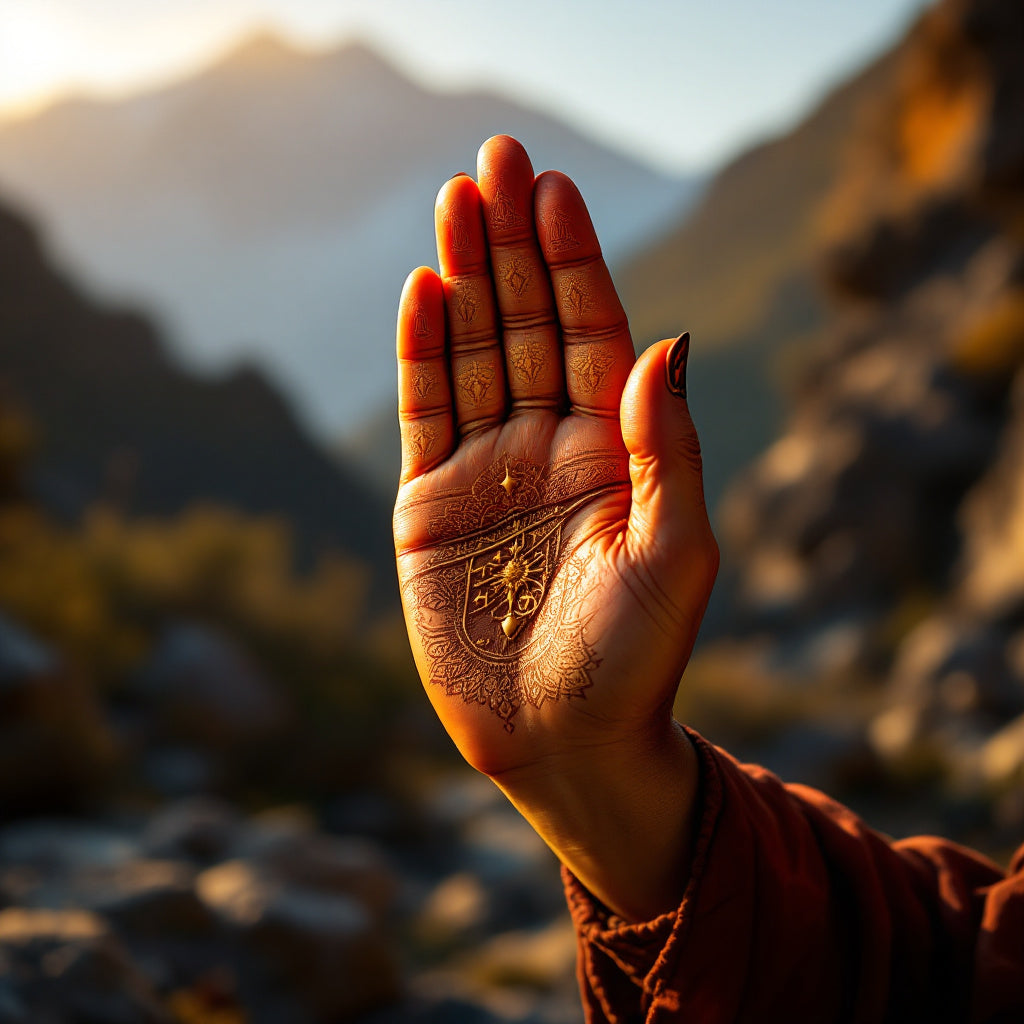
Updated July 2026. The Hamsa is a hand-shaped amulet used in Middle Eastern and North African communities, commonly associated with protection from the evil eye. It is also called the Hand of Fatima in Muslim contexts and the Hand of Miriam in Jewish contexts.
What does the Hamsa hand mean?
The Hamsa hand represents protection, blessing and the wish to turn away the evil eye. Its meaning depends on the community and object: some examples include an eye, prayers or the number five, while others use the open hand alone.
The British Museum documents a twentieth-century Gaza hand pendant made for protection against the "eye of envy," and notes that hand amulets have been used by both Muslim and Jewish communities. A much earlier tenth-century Jewish rock-crystal seal in the same collection is engraved with a human hand.
Hamsa, evil eye and hand direction
| Feature | What it can indicate | What not to assume |
|---|---|---|
| Open hand | A protective or blessing gesture | One universal religious meaning |
| Eye in the palm | Protection from the evil eye or envious gaze | That every Hamsa must include an eye |
| Hand facing up or down | A modern design choice that sellers may interpret differently | A historically fixed rule across all communities |
If you are comparing adjacent symbols, use our Hamsa vs evil eye guide. Shoppers can also browse the protection jewelry collection, where product descriptions identify the symbol actually used rather than treating all amulets as interchangeable.
Let's clear something up first: the hamsa is not a New Age invention, and it is not simply a "good vibes" charm that designers started mass-producing in the early 2000s. It has a documented lineage that predates most of the world's major religious institutions as we know them today.
The word hamsa (also spelled khamsa) comes from the Arabic and Hebrew words for the number five — referencing the five fingers of the open hand. Archaeologists have traced hand amulets used for protection in the ancient Near East to the Phoenician and Carthaginian civilizations around 800–600 BCE, where a protective hand symbol was associated with Tanit, a goddess of protection and fertility.
The gesture of an open palm held outward — a universal human signal meaning stop, do not pass — is so instinctive that it appears across cultures with almost no cross-contamination.
In Jewish tradition, the hamsa became known as the Hand of Miriam, referencing Moses's sister, and carries associations with the divine feminine and protection from the evil eye (ayin hara). In Islamic tradition, it is called the Hand of Fatima, referencing the Prophet Muhammad's daughter, and represents the Five Pillars of Islam.
In both traditions, the central eye — which you'll almost always see painted or inlaid in the palm — is not decorative. It is specifically meant to reflect the evil eye back to its source, a concept called apotropaic magic in academic literature: using a symbol to ward off harm by mirroring it.
Here's the misconception worth breaking: the hamsa is not Buddhist in origin. If someone sells you a hamsa and tells you it's a traditional Tibetan Buddhist symbol, they're either confused or being careless with the truth.
But — and this matters — that doesn't mean the hamsa is incompatible with Buddhist practice or Buddhist aesthetics. It means the two traditions arrived at strikingly similar symbolic territory through completely separate paths, and understanding both makes the hamsa more meaningful, not less.
The Buddhist parallel is the Abhaya mudra: the gesture of the raised open hand, palm outward, fingers pointing upward. You've seen it on virtually every Buddha statue. Abhaya translates from Sanskrit as "fearlessness" or "freedom from fear." When Shakyamuni Buddha is depicted making this gesture, the meaning is explicit: do not be afraid; you are protected. The visual language is almost identical to the hamsa.
An open hand. A palm facing outward. A message of protection directed at whoever is looking.
This is where the Tibetan Buddhist angle becomes genuinely interesting, and we'll spend considerable time on it. For now, the foundation is this: the hamsa hand meaning, stripped to its core, is protection, blessing, and the warding off of negativity — and that core meaning has been independently arrived at by cultures from North Africa to the Himalayas since before the Common Era.
Why the Hamsa Hand Meaning Still Matters in 2026
You might be wondering whether any of this is relevant to your actual life — the one with the Slack notifications, the Sunday anxiety spiral, and the relationship you're not quite sure about. That's the right question to ask.
Protection symbols don't work like a firewall. They're not software you install and then forget about. The reason people across 2,500 years kept making hamsa amulets, kept hanging them above doors, kept wearing them close to their skin, is not because they were superstitious in a naive way.
It's because the physical object functioned as a reminder — a daily, tangible prompt to return to a particular orientation toward life. The orientation the hamsa points toward is this: I am not defenseless.
I have chosen to stand in a place of protection rather than fear.
That psychological function is, if anything, more relevant now than it was in 800 BCE Carthage.
Scenario 1: The comparison spiral. You open Instagram on a Tuesday morning and within four minutes you've seen two engagement announcements, someone's Bali trip, and a peer from college who apparently just launched a startup.
By the time you get to work, you feel vaguely behind on your own life. This is a form of the evil eye that the hamsa was always designed to address — not a literal curse from a literal enemy, but the accumulated weight of other people's projections, comparisons, and energy landing on you and destabilizing your sense of self.
Wearing a hamsa or keeping one at your desk isn't magic. But it is a physical anchor that can interrupt that spiral if you've consciously assigned it that meaning.
Scenario 2: A new chapter that feels exposed. Starting a new job. Moving to a new city. Ending a relationship that had been your primary identity for three years. These are moments when people historically reached for protection amulets — not because they believed a piece of metal could prevent bad things from happening, but because carrying a symbol of protection helped them feel less raw, less unshielded, as they moved through vulnerability.
The hamsa has been that object for people in exactly these transitions since at least the 6th century BCE.
Scenario 3: Setting up a space that feels like yours. One of the most consistent uses of the hamsa across cultures is placing it at the entrance to a home. In Moroccan Jewish tradition, a hamsa hung above the front door was standard — often paired with Quranic verses written on parchment.
In Turkish households, a blue glass nazar (evil eye) and a hamsa often appeared together on the same wall. If you're in a new apartment and you want it to feel like a protected, intentional space rather than just a rental you're passing through, hanging a hamsa above your door is a practice with genuine cultural weight behind it.
The Tibetan Buddhist dimension in 2026. We've noticed something in the last few years: those on a path of self-inquiry who start with the hamsa often find themselves drawn deeper into Buddhist practice, specifically because the hamsa opens the door to questions about protection, intention, and the nature of the mind.
The Five Dhyani Buddhas — the five meditation Buddhas of Vajrayana Buddhism — map onto the five fingers of the hamsa in a way that feels almost too neat to be coincidental, though it almost certainly is coincidental.
Each finger, in this framework, corresponds to a different quality of awakened mind: wisdom, compassion, equanimity, discernment, and all-accomplishing action. We'll go deeper on this in the next section.
If you're curious about how protection symbols function across different traditions, our guide to ancient protection symbols covers the broader landscape — from the Tibetan dorje to the Eye of Horus — in the same grounded way.
The short answer to "why does this matter in 2026" is: because you are working through a world that generates an enormous amount of noise, comparison, and ambient anxiety, and you need tools — not only apps — that help you return to yourself.
The hamsa is one of the oldest of those tools, and its relevance only deepens as the world grows louder.

How the Hamsa Hand Actually Works: Three Layers of Meaning
Layer One: The Evil Eye and Apotropaic Protection
The evil eye — ayin hara in Hebrew, nazar in Turkish and Arabic, mal de ojo in Spanish — is one of the most widely distributed folk beliefs in human history. Anthropologist Clarence Maloney documented its presence in cultures across Europe, the Middle East, South Asia, and Latin America in his 1976 study The Evil Eye, noting that it appears in roughly 40% of the world's cultures with no obvious single point of origin.
The core belief is consistent: an intense gaze — especially one charged with envy, admiration, or ill will — can harm the person it lands on.
The hamsa addresses this directly. The eye in the palm of the hamsa is designed to catch that gaze before it reaches you — to intercept it, reflect it, neutralize it. This is apotropaic magic in its most literal form.
You are essentially placing a mirror at the threshold of your energy field.
From a purely psychological standpoint, this maps onto something real: other people's envy, judgment, and projections do affect us. We absorb them, often without realizing it. Having a symbol that represents your conscious choice not to absorb them — to let them reflect back rather than land — is a meaningful practice regardless of your metaphysical commitments.
Layer Two: The Five Fingers and the Five Dhyani Buddhas
This is the layer that most hamsa guides skip entirely, and it's the one we find most compelling.
In Vajrayana (Tibetan) Buddhism, the Five Dhyani Buddhas — also called the Five Meditation Buddhas or the Five Tathagatas — represent five aspects of enlightened awareness. They are Vairochana (center, white, all-pervading wisdom), Akshobhya (east, blue, mirror-like wisdom), Ratnasambhava (south, yellow, wisdom of equanimity), Amitabha (west, red, discriminating wisdom), and Amoghasiddhi (north, green, all-accomplishing wisdom).
Each is associated with a specific hand gesture — a mudra — and a specific color, element, and quality of mind.
Now look at your open hand.
Five fingers. Five distinct qualities. Five directions (including center). The correspondence is not doctrinally established — we're not claiming that Tibetan Buddhism formally incorporates the hamsa, because it doesn't. What we're pointing at is something more direct: the open hand, in Tibetan Buddhist iconography, is itself a primary vehicle for conveying the qualities of awakened mind.
The Abhaya mudra (fearlessness) is made with the right hand. The Varada mudra (giving, generosity) is made with the left hand, palm outward and fingers pointing down. The Dhyana mudra (meditation) involves both hands resting open in the lap.
When you wear a hamsa with this awareness, you're not only wearing a protection charm. You're wearing a reminder that the open hand — your hand — contains the capacity for all five qualities: wisdom, compassion, equanimity, discernment, and action. That's a significantly richer meaning than "good luck."
Our guide to symbols of strength explores how Tibetan Buddhist iconography encodes these qualities across different symbols, if you want to go further with this.
Layer Three: Intention and Consecration
A hamsa you bought at an airport gift shop and a hamsa that was made with intention by someone who understands its meaning are not the same object — not because of any mystical difference in the metal, but because of what you bring to the relationship with it.
In Tibetan Buddhist practice, objects used for protection — gau boxes, mala beads, blessed cords — are consecrated through specific rituals. The most common involves recitation of mantras over the object, often for an extended period.
The logic is not that the mantra charges the object like a battery. The logic is that the practice of consecration creates a relationship between the practitioner and the object, so that every time the object is seen or touched, it functions as a trigger for the state of mind cultivated during the consecration.
You can do a simple version of this with any hamsa you own. Hold it in both hands. Sit quietly for five minutes. Set a clear intention for what you want this object to represent in your life.
You don't need to be Buddhist to do this. You need to be present.
How to Choose an Authentic Hamsa
The hamsa market is, to put it plainly, saturated with objects that have the shape but none of the substance. Here's what to look for.
Material matters. Traditional hamsa amulets were made from silver, brass, or gold — metals with their own symbolic weight in the cultures that produced them. Silver, in particular, has been associated with protection and lunar energy across multiple traditions.
A hamsa made from sterling silver by a craftsperson who knows the tradition is a different object from one stamped out of zinc alloy in a factory. When you hold a properly made piece, the weight alone tells you something — sterling silver has density that cheap alloys simply don't.
This doesn't mean you need to spend a fortune. It means you should know what you're buying.
The eye inlay. If your hamsa has an eye in the palm — which most do — look at how it's made. Traditional pieces use blue glass, turquoise, lapis lazuli, or hand-painted enamel. The blue color is specifically associated with the sky, with clarity, and with the capacity to see clearly — which is what the eye is meant to represent.
A plastic rhinestone in a mass-produced piece is not the same thing. Run your finger across it; real stone has a different texture than molded plastic.
Orientation: fingers up or fingers down? This is a real distinction. A hamsa worn with fingers pointing upward is traditionally used to ward off negativity — the gesture of "stop, do not enter." A hamsa worn with fingers pointing downward is associated with bringing blessings in — an invitation rather than a boundary.
Neither is wrong. They're different intentions. Know which one you're choosing.
If you're looking for a piece that bridges the hamsa's protective symbolism with Tibetan Buddhist craft traditions, our Dzi protection bracelet is a good starting point — Dzi beads carry their own ancient protective symbolism that complements the hamsa's meaning well.
You can also browse our full Tibetan protection amulets to see the range of what's available.
Price as a signal. An authentic hamsa made from real silver with quality stone inlay is an investment piece — one you'll still be wearing or displaying in fifteen years. A $6 hamsa from a fast-fashion retailer is a piece of decoration.
Both have their place, but be honest with yourself about which one you're buying and why.
For a broader framework on evaluating protective jewelry, our complete guide to protection jewelry walks through the same criteria across multiple symbol types.

How to Actually Use a Hamsa Hand in Daily Life
Having a hamsa and using a hamsa are two different things. Here's how to make it the second.
Wearing it. If you wear your hamsa as a necklace, the most traditional placement is at the center of the chest — near the heart. This is not arbitrary. In both Tibetan Buddhist and Sufi traditions, the heart center is understood as the seat of compassion and the place where inner and outer experience meet.
Wearing your hamsa here keeps it in your peripheral awareness throughout the day without being distracting.
A simple morning practice: before you put it on, hold it for thirty seconds. Take one slow breath. That's it. You don't need a ritual. You need a moment of conscious intention.
Placing it in your home. Above the front door, facing outward, is the most traditional placement across Jewish, Islamic, and Mediterranean folk traditions. If that feels too conspicuous for your apartment, a hamsa on your desk — placed so you can see it when you look up from your screen — serves the same function as a reminder to return to yourself.
Using it during meditation. If you have a sitting practice, even a basic one with a Headspace app, you can place your hamsa in front of you during your session. At the end of the session, before you pick up your phone, look at it for a moment.
This creates a transition ritual — a small buffer between the quiet of practice and the noise of the day.
The five-finger contemplation. This is something we developed drawing on the Five Dhyani Buddha framework described earlier. Hold your open hand in front of you, palm facing out. As you look at each finger, bring to mind one quality you want to embody today: clarity, compassion, steadiness, discernment, and the capacity to act.
This takes about two minutes and it's a surprisingly grounding way to start a morning.
Gifting it with intention. The hamsa is one of the most traditional gifts to give at life transitions — a new home, a new job, a new relationship, a recovery from illness. If you give one as a gift, write a short note explaining its meaning.
The object becomes more valuable when the recipient knows what they're holding.
Related guide: Buddhist protection jewelry and guardian amulets
Common Questions About the Hamsa Hand
Is the hamsa cultural appropriation if I'm not Jewish or Muslim?
This question surfaces regularly, and it deserves a thoughtful answer rather than a reflexive one. The hamsa predates both Judaism and Islam as formal religious institutions — it emerged from ancient Near Eastern folk traditions that were the common ancestor of multiple later traditions.
Both Jewish and Islamic communities adopted it from that shared well, and it has been used by Christians, Druze, and secular people throughout the Mediterranean and Middle East for centuries without controversy within those communities.
The more meaningful question is: are you engaging with it respectfully, with some understanding of its history, or are you treating it as a trend? If you've read this far, you're clearly in the first category.
Wearing a hamsa with genuine appreciation for its history differs fundamentally from slapping it on a product without knowing what it means.
Does the hamsa hand have to be blessed to work?
This depends entirely on your framework. In traditional Jewish practice, a hamsa doesn't require a formal blessing — it's considered protective by virtue of its form and the intention with which it's used. In some Islamic folk traditions, verses from the Quran are inscribed on the hamsa, which functions as its consecration.
In Tibetan Buddhist practice, protective objects are typically blessed during a specific ceremony — often involving the recitation of mantras over the object for an extended period. Our pieces made in the Kathmandu atelier go through a blessing ceremony before they leave the workshop, with lamas spending approximately thirty minutes in mantra recitation per batch.
If yours didn't come with a blessing, you can create your own through the simple intention-setting practice described in the "How to Use" section above. The object is a support for your intention, not a substitute for it.
What's the difference between a hamsa and the evil eye symbol?
They're related but distinct. The evil eye (nazar) is specifically a symbol designed to deflect the evil eye — typically depicted as a blue glass eye, either alone or incorporated into other designs.
The hamsa is a hand symbol that often incorporates an eye in the palm but carries a broader range of meanings: protection, blessing, the five qualities of the open hand, and in the Buddhist reading, the five aspects of awakened mind.
Those on a path of spiritual protection often wear both together — many do — and the traditions that produced them frequently used them that way. The hamsa is the broader, more multivalent symbol; the evil eye is more specifically targeted at deflecting envy and negative projection.
Can men wear the hamsa hand?
Yes, without reservation. The hamsa has been worn by men throughout its history — it appears on men's jewelry, weapons, and armor from medieval Islamic Andalusia, on North African men's talismans, and in Yemenite Jewish men's silver jewelry traditions dating back to the 18th century.
The association with the "feminine" in Western New Age contexts (Hand of Fatima, Hand of Miriam — both women) has given some people the impression that it's gendered, but that's a recent and culturally narrow reading.
In Tibetan Buddhist iconography, the Abhaya mudra — the open-palm protective gesture — is made by male Buddha figures as often as female ones. The protection the hand offers is not gendered.
Which direction should my hamsa face — fingers up or down?
Fingers pointing upward: traditionally understood as warding off negativity, setting a boundary, saying "stop" to what you don't want to enter your life or space. Fingers pointing downward: traditionally understood as an invitation for blessings to flow in, an openness to receiving.
Neither is more "correct" than the other. If you're going through a period where you feel energetically porous — absorbing too much from other people, struggling with boundaries — fingers up might feel right.
If you're in a period of opening, starting something new, or wanting to cultivate receptivity, fingers down. You can also change the orientation as your circumstances change.
How do I clean and care for my hamsa?
For silver pieces: a soft cloth and warm water is sufficient for regular cleaning. Avoid harsh chemicals, which can damage both the metal and any stone inlay. If your hamsa has turquoise or lapis lazuli — both traditional materials sourced from Afghan and Tibetan deposits — keep it away from prolonged water exposure, as these stones are porous and can be damaged by soaking.
In Tibetan Buddhist practice, protective objects are periodically "refreshed" by bringing them to a lama or monk for re-blessing. A secular equivalent: hold your hamsa during a meditation session with the specific intention of renewing your relationship with what it represents to you.
Can I wear a hamsa with other protective symbols?
Absolutely. Layering protective symbols from compatible traditions is a practice with a long history — Moroccan Jewish women traditionally wore both the hamsa and the Star of David; Tibetan practitioners often wear multiple amulets simultaneously.
The key is knowing what each symbol means to you and not wearing things simply because they look good together. A hamsa paired with a Tibetan dorje pendant, for example, creates an interesting dialogue between the apotropaic protection of the hamsa and the indestructible clarity symbolized by the dorje.
Wearing a hamsa alongside our Buddhist protection charms is something many of our customers do intentionally.
Does the color of the hamsa matter?
In traditional contexts, yes. Gold hamsas are associated with prosperity and abundance in addition to protection — gold being the metal of the sun, of vitality, of worldly flourishing. Silver hamsas are associated with clarity, lunar energy, and psychic protection.
Blue hamsas — particularly in Turkish and North African traditions — are specifically linked to the evil eye's deflection, blue being the color that "confuses" the evil eye in folk belief. In Tibetan Buddhist color symbolism, blue corresponds to Akshobhya, the mirror-like wisdom that reflects reality without distortion.
If you're drawn to a particular color, that instinct is probably worth following.

Your Journey With the Hamsa Hand
Here's what we've found, after years of working with people who come to protection symbols from a place of genuine seeking: the symbol is never really the point. The point is what the symbol does to your attention.
When you wear a hamsa and you actually know what it means — the 2,500-year lineage, the open-hand gesture of fearlessness, the five fingers as five qualities of an awake mind — it stops being decoration and starts being a practice.
Not a dramatic practice. Not one that requires a retreat or a teacher or a belief system you're not sure you have. Just a small, daily practice of returning to the intention you set when you first put it on.
That's enough. That's actually quite a lot.
In 2026, with everything that's competing for your attention and your energy, having one physical object that reliably brings you back to yourself — that says you are protected, you are not defenseless, you have the capacity for clarity and compassion and steady action — is not a small thing.
Buddhabelief works exclusively with monastery-certified craftsmen in Lhasa and Kathmandu to bring you pieces that carry genuine spiritual significance — not mass-produced replicas.
If you're ready to find yours, start with our sacred protection items — each piece made by artisans who understand the tradition behind what they're creating. And if you want to go deeper into the world of Tibetan Buddhist protective symbolism before you choose, we're here for that conversation too.
The hand is already open. You just have to decide what you're holding.
", "faq_schema_data": [ { "question": "Is the hamsa hand cultural appropriation if I'm not Jewish or Muslim?", "answer": "The hamsa predates both Judaism and Islam as formal religious institutions — it emerged from ancient Near Eastern folk traditions that were the common ancestor of multiple later traditions. Both Jewish and Islamic communities adopted it from that shared well, and it has been used by Christians, Druze, and secular people throughout the Mediterranean and Middle East for centuries without controversy within those communities. The more meaningful question is: are you engaging with it respectfully, with some understanding of its history, or are you treating it as a trend? The hamsa's protective symbolism has been shared across traditions for millennia. Wearing it with genuine appreciation for its history — knowing that it represents protection, the warding off of negativity, and in the Tibetan Buddhist reading, the five qualities of awakened mind — is a fundamentally different act from slapping it on a product as a trend. Respect and knowledge are the relevant criteria, not ethnic or religious membership." }, { "question": "Does the hamsa hand have to be blessed to work?", "answer": "This depends entirely on your framework. In traditional Jewish practice, a hamsa doesn't require a formal blessing — it's considered protective by virtue of its form and the intention with which it's used. In some Islamic folk traditions, verses from the Quran are inscribed on the hamsa, which functions as its consecration. In Tibetan Buddhist practice, protective objects are typically blessed during a specific ceremony involving the recitation of mantras over the object for an extended period. If your hamsa didn't come with a formal blessing, you can create your own through a simple intention-setting practice: hold it in both hands, sit quietly for five minutes, and set a clear intention for what you want this object to represent in your life. In Tibetan Buddhist logic, the blessing creates a relationship between you and the object — so that every time you see or touch it, it triggers the state of mind you cultivated during that initialFor a related protection tradition, read the Five Thunder Talisman complete guide.
Sources and editorial scope
Historical and material claims in this guide were checked against the following museum, academic or practice sources.
Material, origin and ceremony details vary by product. Use the individual listing and request supporting records before relying on a particular workshop, artisan or temple claim.
Keep reading