buddhist-jewelry
Mala Beads: Powerful Tools for Healing, Wellness, and M
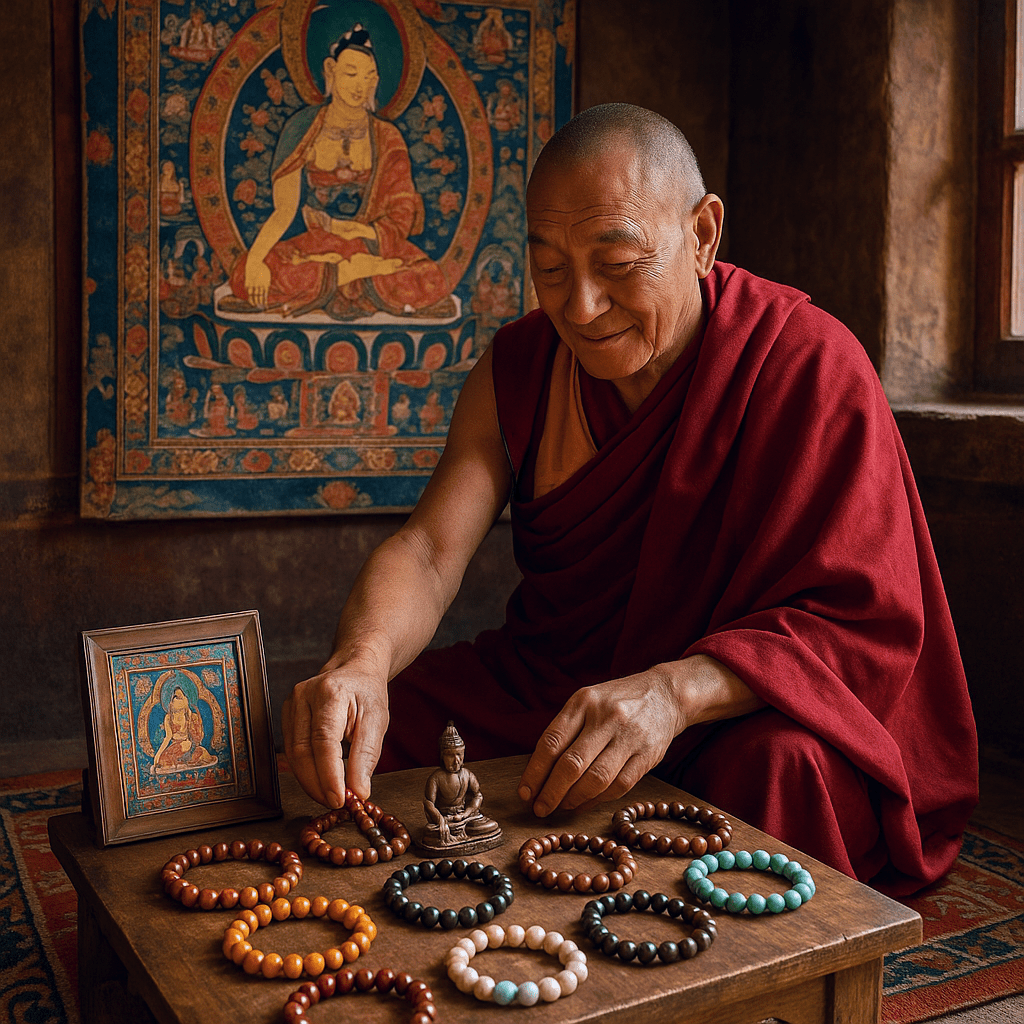
Your phone buzzes again. Another notification, another email, another demand on your attention. You feel your shoulders tighten as your mind races, jumping from the meeting this morning to the groceries you need to buy, to a conversation you had last week.
There’s a persistent hum of anxiety, a feeling of being pulled in a dozen different directions at once. You sit down to meditate, to find that quiet center you know is there, but the mental chatter is deafening.
Your breath is shallow, your focus is gone. It feels less like a sanctuary and more like wrestling with a ghost. In this moment of overwhelming distraction, what you crave is an anchor—something real, something tangible to hold onto that can tether your scattered thoughts and guide you back to the stillness within.
Something to bridge the gap between your chaotic mind and your peaceful heart.

What It Really Is: A Sacred Lineage in Your Hands
To call a mala simply a string of “prayer beads” is to see only the surface of a deep and ancient ocean. Its true identity is a japa mala, a Sanskrit term where japa means "to recite" and mala means "garland." This is not merely a necklace; it is a sophisticated spiritual tool, a physical intention-setting of a sacred lineage that stretches back over 3,000 years to the Indian subcontinent.
Its origins are woven into the very fabric of Hinduism and Buddhism, created as a method to focus the mind during the recitation of mantras, a practice known as japa meditation.
The mala’s journey into the heart of Tibetan Buddhism is a story of devotion and pilgrimage. As Buddhist teachings traveled from India across the formidable Himalayas, carried by masters like Padmasambhava (Guru Rinpoche) in the 8th century, the mala came with them.
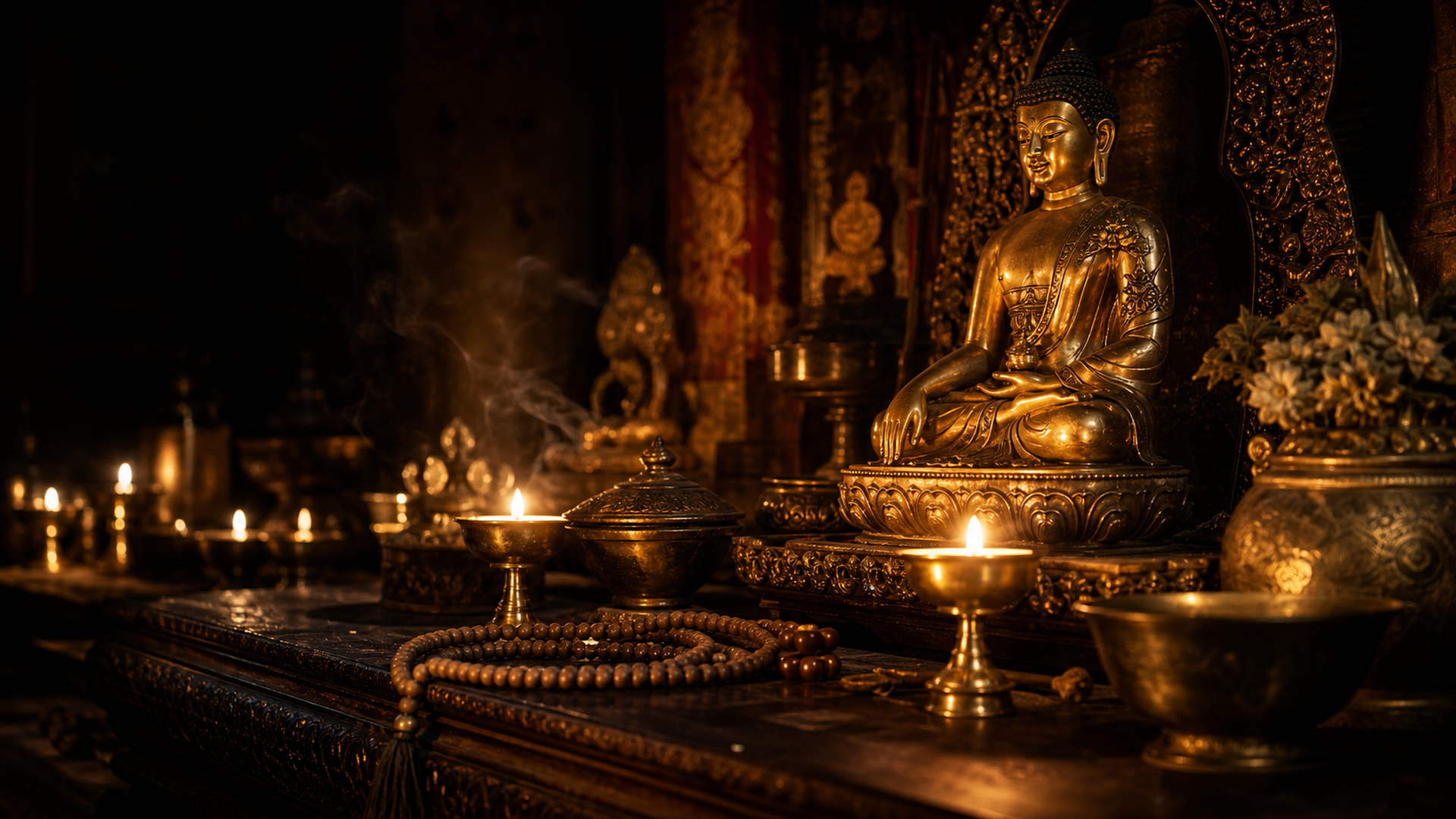
It was adopted and integrated into the unique spiritual landscape of Tibet, becoming an indispensable tool in monasteries like the Jokhang Temple in Lhasa or the Samye Monastery, the very first Buddhist monastery built in Tibet.
Here, the mala was not only an accessory but a constant companion for monks and lay practitioners alike, its beads worn smooth over lifetimes of dedicated practice. The sound of beads clicking through fingers became part of the monastery's sacred soundscape, a rhythmic heartbeat of devotion.
The materials themselves are steeped in significance. The earliest malas were often crafted from the seeds of the Bodhi tree (Ficus religiosa), the very species of tree under which Siddhartha Gautama attained enlightenment.
To hold a Bodhi seed mala is to hold a direct, botanical link to the Buddha's awakening. Other traditional materials like sandalwood were chosen for their calming aroma, believed to soothe the mind and attract positive resonance.
Rudraksha seeds, with their textured surface and deep connection to the Hindu deity Shiva, were revered for their protective and grounding energies. Each material was understood to carry a specific frequency, a particular medicine for the soul.
This is not a randomly assembled object; it is a carefully constructed instrument, a lineage you can feel in every one of the 108 sacred beads of an authentic japa mala.
The Deeper Meaning: A Microcosm of the Universe
Every element of a traditional mala is a universe of symbolism, a deliberate design intended to guide your consciousness from the mundane to the profound. The most significant feature is its number of beads: 108.
This number is sacred across multiple Eastern traditions, and its meaning is a beautiful weave of interconnected philosophies.
In Buddhist dharma, the number 108 is said to represent the 108 defilements, or kleshas—the mental states like greed, ignorance, and anger that cloud the mind and cause suffering. Each recitation of your mantra as you pass a bead is a symbolic act of transforming one of these defilements into the purity of your enlightened nature.
It is a practice of spiritual alchemy, turning the lead of human suffering into the gold of awakening. In other interpretations, the number relates to the 108 earthly desires that humanity must overcome to achieve Nirvana.
Your journey through the mala is a journey through these challenges, met with the power and intention of your mantra.
The number also holds cosmic significance. Vedic astronomers calculated that the distance between the Sun and Earth is roughly 108 times the Sun’s diameter. The distance between the Moon and Earth is approximately 108 times the Moon's diameter.
This celestial resonance connects your personal meditative practice to the grand, rhythmic cycles of the cosmos. Holding your mala, you are holding a model of this sacred alignment, aligning your inner world with the harmony of the outer universe.
Beyond the 108 beads, you will find the 109th bead, which is larger and distinct. This is the Guru bead, also known as the Sumeru bead, named after the mythical sacred mountain in Buddhist cosmology.
The Guru bead represents your teacher, your own inner wisdom, or the divine. It is the beginning and the end of the cycle. During practice, you never cross over the Guru bead out of respect.
Instead, you pause, acknowledge this source of wisdom, and turn the mala around to continue your recitations. Finally, the tassel, which extends from the Guru bead, symbolizes the roots of the lotus flower, which grows from the mud into a beautiful blossom.
It represents our own potential to rise from the mud of our earthly attachments and blossom into enlightenment. It also symbolizes the unified energy of all the individual mantras, gathered together and flowing out into the world.
Your mala is far more than a counter; it is a complete spiritual map held in the palm of your hand.
Real Benefits for Modern Life: Beyond the Mystical
While the spiritual heritage of the mala is profound, its benefits for your modern life are tangible, practical, and even scientific. Using a mala grounds your meditative practice in a way that pure mental focus often cannot.
It offers a powerful antidote to the digital distraction and chronic stress that define so much of our contemporary experience.
The primary benefit is the creation of a kinesthetic link to your intention. Your mind may wander, but your fingers remain on the bead. This physical sensation acts as a gentle, persistent anchor, continually calling your awareness back to the present moment and the sound of your mantra.
This process of repeatedly returning your focus is, in essence, a workout for your brain's "attention muscle." Neurologically, this consistent practice helps strengthen the prefrontal cortex, the part of your brain responsible for focus, emotional regulation, and decision-making.
You are literally rewiring your brain for greater calm and presence with each cycle of the beads.
The rhythmic, repetitive motion of moving your thumb over each bead has a direct effect on your nervous system. This steady, predictable movement helps to regulate your breath, slowing it down and deepening it.
This, in turn, activates the parasympathetic nervous system—your body’s "rest and digest" mode. It lowers your heart rate, reduces blood pressure, and decreases the production of the stress hormone cortisol. It is a direct physiological pathway out of the fight-or-flight state that so many of us inhabit daily.
You are not only thinking about being calm; you are giving your body a physical command to relax.
Furthermore, a mala can help you track and deepen your practice. Committing to one, three, or even a full ten rounds of 108 recitations provides a clear structure to your meditation. It transforms an abstract goal ("I will meditate for a while") into a concrete, achievable task ("I will complete one round on my mala").
This sense of completion can be deeply satisfying and motivating, encouraging you to maintain a consistent practice. The mala becomes a trusted companion, a silent witness to your journey of self-discovery and a beautiful, wearable reminder of the peace that is always accessible within you.
This same focus on intentionality and quality can be found across our entire range of authentic spiritual tools.

How to Choose Your Authentic Mala
Choosing a mala is an intuitive and deeply personal process. It is not about finding the prettiest one, but about finding the one whose energy resonates with your own intentions and spiritual path. An authentic mala is a lifelong companion, so selecting it with awareness is the first step of your practice with it.
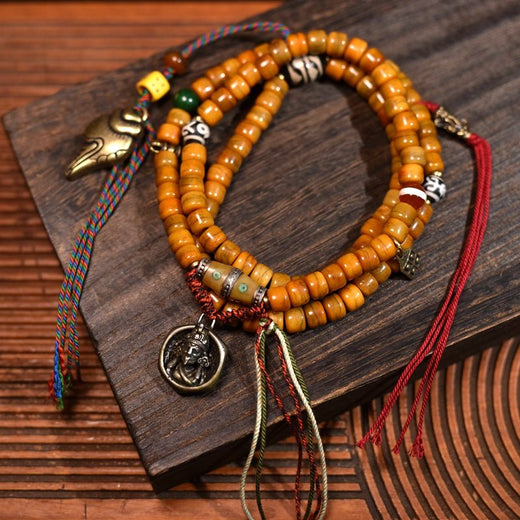
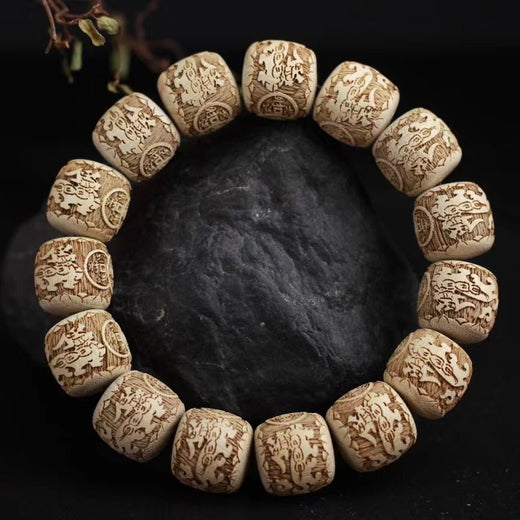
First, consider the material. The substance of the beads is the soul of the mala. Each material carries a unique resonance and history. Bodhi seeds are the most traditional choice, directly connecting you to the Buddha's enlightenment and the potential for your own awakening. Sandalwood, with its soothing, sacred scent, is known to calm the mind and is excellent for promoting tranquility and focus. Rudraksha seeds are powerful and protective, believed to shield the wearer from negativity and instill a sense of fearlessness.
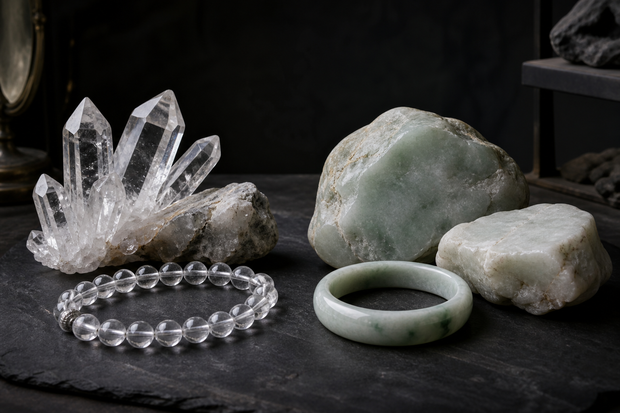
Gemstone malas offer a spectrum of energetic properties: Amethyst enhances intuition and spiritual awareness, Rose Quartz opens the heart to compassion and love, and Lapis Lazuli encourages truth and clear communication.
Pay close attention to the construction. A high-quality, traditional mala will have a knot hand-tied between each bead. This is not merely for decoration. The knots serve two vital purposes: they provide durability, preventing the beads from scattering if the string breaks, and they create the perfect amount of space between beads, allowing your thumb and finger to move smoothly and deliberately from one to the next during japa.
This small detail makes a world of difference in the feel and flow of your meditation. When you explore a curated selection of mala beads, you will notice this hallmark of quality and craftsmanship.
Finally, examine the Guru bead and the tassel. The Guru bead should be distinct and feel substantial, representing the culmination of your practice. The tassel should be made of high-quality thread, well-secured and full.
Trust your intuition. Hold the mala if you can, feel its weight, notice its temperature against your skin. Does it feel right? Does it feel like a friend? The right mala will feel like it already belongs to you, a sacred tool waiting to support your journey inward.
How to Use Your Mala for Meditation
Using a mala is a simple, elegant practice that unites your body, mind, and spirit. It transforms meditation from a purely mental exercise into a full sensory experience. Here is a step-by-step guide to begin your japa meditation practice.
First, find a comfortable and quiet space where you can sit upright with a straight but relaxed spine. Take a few deep breaths to center yourself and settle into your body. Hold your mala in your right hand (though some traditions use the left; follow what feels right for you).
Let the beads drape over your middle finger. Your index finger should not touch the beads, as it is associated with the ego. Your thumb will be used to move from one bead to the next.
Begin at the first bead next to the Guru bead. As you hold this first bead with your thumb and middle finger, recite your chosen mantra, either aloud or silently. A traditional and powerful Tibetan mantra is "Om Mani Padme Hum," the mantra of compassion.
You could also use a simple Sanskrit mantra like "So Hum" ("I am that") or a personal affirmation in English, such as "I am peaceful" or "I am present."
Upon completing one full recitation of your mantra, use your thumb to gently pull the next bead towards you, and begin the mantra again. Continue this process, moving from one bead to the next, fully immersing yourself in the sound and resonance of the mantra and the physical sensation of the beads.
Allow the rhythm to become a meditative flow. If your mind wanders, gently guide it back to the feeling of the bead in your hand and the sound of your voice.
When you have completed 108 recitations, you will arrive at the Guru bead. Do not cross over it. Instead, take a moment to pause in gratitude for your practice, for your teachers, and for the wisdom the mantra holds.
If you wish to continue for another round, simply turn the mala around and go back in the direction you came from. This act of turning honors the student-teacher relationship and the sacredness of the practice itself.
Explore our Rudraksha meditation mala.
Common Questions About Mala Beads
Can I wear my mala as a necklace or bracelet?
Yes, you absolutely can. Wearing your mala is a beautiful way to keep your intentions close to you throughout the day. When worn as a necklace, it rests near your heart, serving as a constant, subtle reminder of the peace and focus you cultivated during your practice.
Practitioners find that the gentle weight of the beads is grounding. However, it's important to do so with reverence. A mala is a sacred tool, not only a fashion accessory. Traditionally, if worn, it is often kept under a shirt, close to the skin, to protect its energy and maintain its sacred purpose.
A mala absorbs energy from you and its environment, so wearing it means it is actively engaging with your energetic field. Think of it less as wearing jewelry and more as carrying a spiritual companion.
It can be a wonderful way to feel its supportive energy, but remember to treat it with the same respect you would during meditation.
What does it mean if my mala breaks?
When a mala breaks, the initial reaction can be one of disappointment or even concern. But in Buddhist tradition, this is not seen as a negative event. In fact, it is often viewed as a positive sign, a symbol of a breakthrough.
A broken mala can signify the end of a cycle in your life or the release of a significant piece of karma. It can mean that you have fulfilled the intention you set with that particular mala, and its purpose in your journey is complete.
It is a moment for reflection, not worry. Consider what you have been working on or through recently. The break can be an acknowledgment of your progress. When it happens, gather the beads with care.
You have a few options: you can have it re-strung, perhaps adding a new Guru bead to mark the new beginning. Or, you can return the beads to the earth—burying them in a garden or placing them in a body of water—as a gesture of gratitude and release.
How do I cleanse and care for my mala?
Because your mala absorbs energy, it's important to cleanse it regularly, especially if you've been through a difficult time or if someone else has handled it. There are several gentle and effective ways to do this.
One of the most common methods is smudging. You can light a stick of sage, palo santo, or sweetgrass and allow the smoke to envelop the beads, which is believed to clear away any stagnant or negativity.
Another powerful method is using sound; you can place your mala in a singing bowl and gently strike the bowl, allowing the healing resonance to wash over it. You can also place your mala in the light of the full moon overnight to recharge its energy.
For a quick cleansing, you can simply place it on a selenite crystal plate. It's crucial to avoid harsh chemicals or submerging your mala in water for long periods, as this can damage wooden beads and degrade the string.
Treat it with gentle care, and it will serve you for years.
Do I have to be a Buddhist to use a mala?
Absolutely not. While the mala has deep roots in Buddhism and Hinduism, its function as a tool for meditation and mindfulness is universal. At its core, a mala is an instrument for focusing the mind and connecting with intention.
This is a human practice, not one confined to a single religion. Anyone from any spiritual path—or no particular path at all—can benefit from using a mala. You can pair it with any mantra, prayer, or affirmation that resonates with you.
It can be a Christian prayer, a Sufi chant, or a simple, secular word like "peace" or "breathe." The mala is a tactile anchor that helps quiet the "monkey mind" and bring you into the present moment.
Its power lies in its ability to facilitate a closer connection with yourself, whatever your personal beliefs may be. It is a tool for the journey inward, and that is a journey open to everyone.
What is the difference between a 108-bead mala and a wrist mala?
The primary difference is function and form. The traditional 108-bead mala is designed for a full round of japa meditation. Completing 108 recitations of a mantra is a significant and complete practice. This longer style is typically used during dedicated sitting meditation sessions.
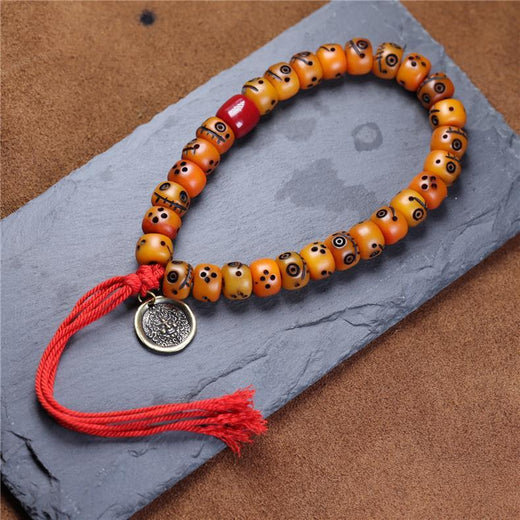
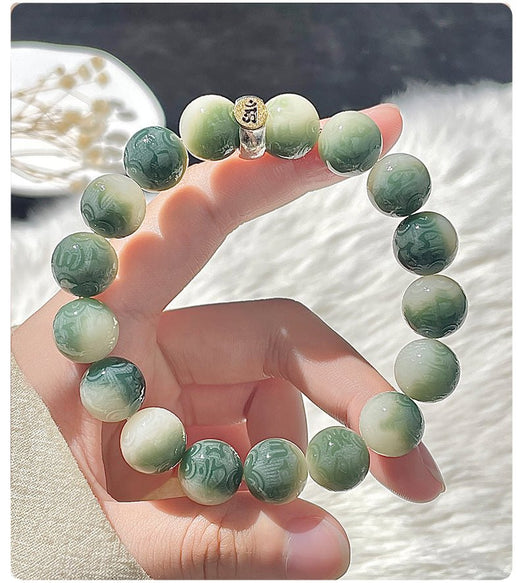
A wrist mala, sometimes called a "power bracelet," is a shortened, more portable version. They are often made with 21 or 27 beads (divisors of 108), allowing you to complete a smaller number of recitations.
Wrist malas are designed to be worn throughout the day as a more constant and visible reminder of your intention. They are perfect for moments when you need to pause and recenter yourself—waiting in line, sitting in traffic, or during a stressful moment at work.
You can use them for a few quick mantra recitations to ground your energy. Practitioners own both: a full mala for their formal practice at home and a wrist mala for mindfulness on the go.
You can explore both full-length and wrist styles in our collection to see which resonates with your lifestyle.
How do I choose the right mantra for my practice?
Choosing a mantra is a personal process, and the most important factor is that it resonates with you. Don't feel pressured to pick something complex or traditional if it doesn't feel right. If you are just beginning, simplicity is key.
A powerful and easy-to-learn Sanskrit mantra is "So Hum" (pronounced so-hum). It translates to "I am that" and is a mantra of presence, connecting your breath to your consciousness (So on the inhale, Hum on the exhale).
Another beautiful choice is "Om Shanti Shanti Shanti," a mantra for peace. Alternatively, you can use an affirmation in your own language. What quality do you wish to cultivate in your life right now?
If you seek calm, your mantra could be "I am calm and at ease." If you seek strength, it could be "I am strong and resilient." The power of a mantra comes from its resonance and your intention behind it, not necessarily perfect pronunciation or ancient origins.
Close your eyes, place a hand on your heart, and ask yourself what you truly need. The answer that arises is the seed of your mantra.
Your Next Step on the Path
Your journey with a mala is a journey back to yourself. It is a practice of patience, devotion, and profound self-compassion. This string of 108 beads is more than an object; it is a companion, a teacher, and a tangible link to a lineage of wisdom that has guided seekers for millennia.
It is a tool that empowers you to transform moments of distraction into moments of presence, and anxiety into deep, abiding peace. The practice is simple, but its effects are transformative, creating ripples of stillness that will extend into every area of your life.
The perfect mala is not something you find, but something you recognize. It is the one that calls to the quietest part of your soul. We invite you to take the next step and discover the mala that is waiting to support your journey.
Let it be the anchor that holds you steady as you navigate the beautiful, unfolding path of your own awakening.
Keep reading