buddhist-jewelry
Global A-Listers Shine in Monk-Blessed Tibetan Jewelry

🌸 In a world saturated with wealth, fame, and fleeting luxury, a growing number of the world's most influential people are turning inward, seeking something more profound. They are looking to the traditional teachings of Tibetan Buddhism to find balance, purpose, and a sanctuary of peace amidst the chaos.
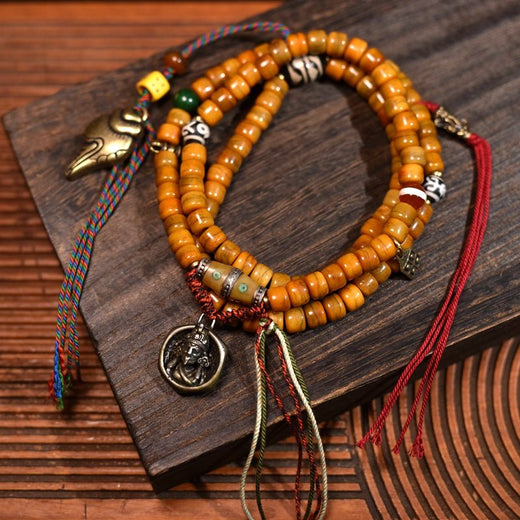
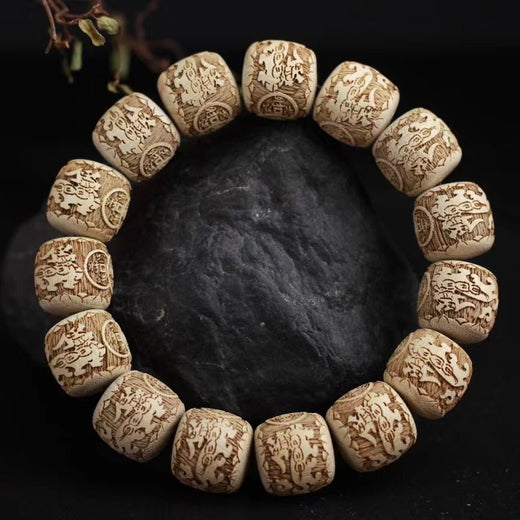
Along with embracing timeless Buddhist teachings on compassion and mindfulness, these celebrities are often seen wearing sacred Tibetan Buddhist jewelry—such as hand-knotted mala beads, powerful Dzi bead bracelets, protective red string talismans, and potent monk-blessed amulets.
These are not mere fashion statements. Far from it. These sacred accessories are conduits, connecting you to centuries of accumulated wisdom, boundless compassion, and powerful spiritual presence. Each piece tells a story of lineage, intention, and blessing.
It serves as a tangible reminder of the path to inner peace. In this article, we explore the deep connection between global icons and this sacred tradition, examining which famous personalities practice Tibetan Buddhism, the specific jewelry they wear, the profound spiritual meanings behind these items, and why monk-blessed jewelry from authentic sources like Buddhabelief is so deeply sought after by seekers worldwide. 🕯️

The Allure of traditional teachings: Why Tibetan Buddhism Resonates in the Modern World
What is it about Tibetan Buddhism that captures the hearts and minds of people from all walks of life, especially those living under the intense pressure of the public eye? The answer lies in its practical and transformative approach to the human condition.
It offers more than a set of beliefs; it provides a complete path of mindfulness, compassion, and inner balance—qualities often in short supply in the high-stakes world of fame and fortune.
The philosophy is built upon a foundation of timeless truths. It teaches that while external success like wealth and power is impermanent and ultimately unfulfilling, true and lasting happiness comes from spiritual growth. This message resonates deeply with individuals who have achieved worldly success yet still feel an inner void.
Tibetan Buddhism offers a map to navigate the complexities of the mind and find inner peace amid external chaos. Celebrities, who face constant scrutiny and an unending demand for performance, find powerful grounding in practices like meditation and mantra chanting.
These techniques are not about escapism; they are about cultivating a resilient, centered, and compassionate mind.
This ancient tradition also emphasizes the importance of lineage—the unbroken transmission of teachings from master to student over centuries. In a world of fleeting trends, the authenticity and depth of this lineage are profoundly appealing.
It offers a connection to something real, tested, and true. This is where sacred jewelry plays a vital role. An item like a string of mala beads is not only a necklace; it is a tool for practice, blessed by a tradition that stretches back to the Buddha himself.
A Dzi bead is not only a stone; it is a vessel of protection, its symbols imbued with meaning passed down through generations. These items act as touchstones, reminding you of your connection to this powerful stream of wisdom and the inner work you are committed to.
More Than Adornment: The Sacred Meanings Behind Tibetan Buddhist Jewelry
To truly understand why these pieces are so cherished, you must look beyond their surface beauty and into their spiritual heart. Each type of Tibetan jewelry is a universe of meaning, designed to support your spiritual journey in a unique way.
They are tools for transformation, protection, and remembrance.
Mala Beads: A Rosary for the Soul
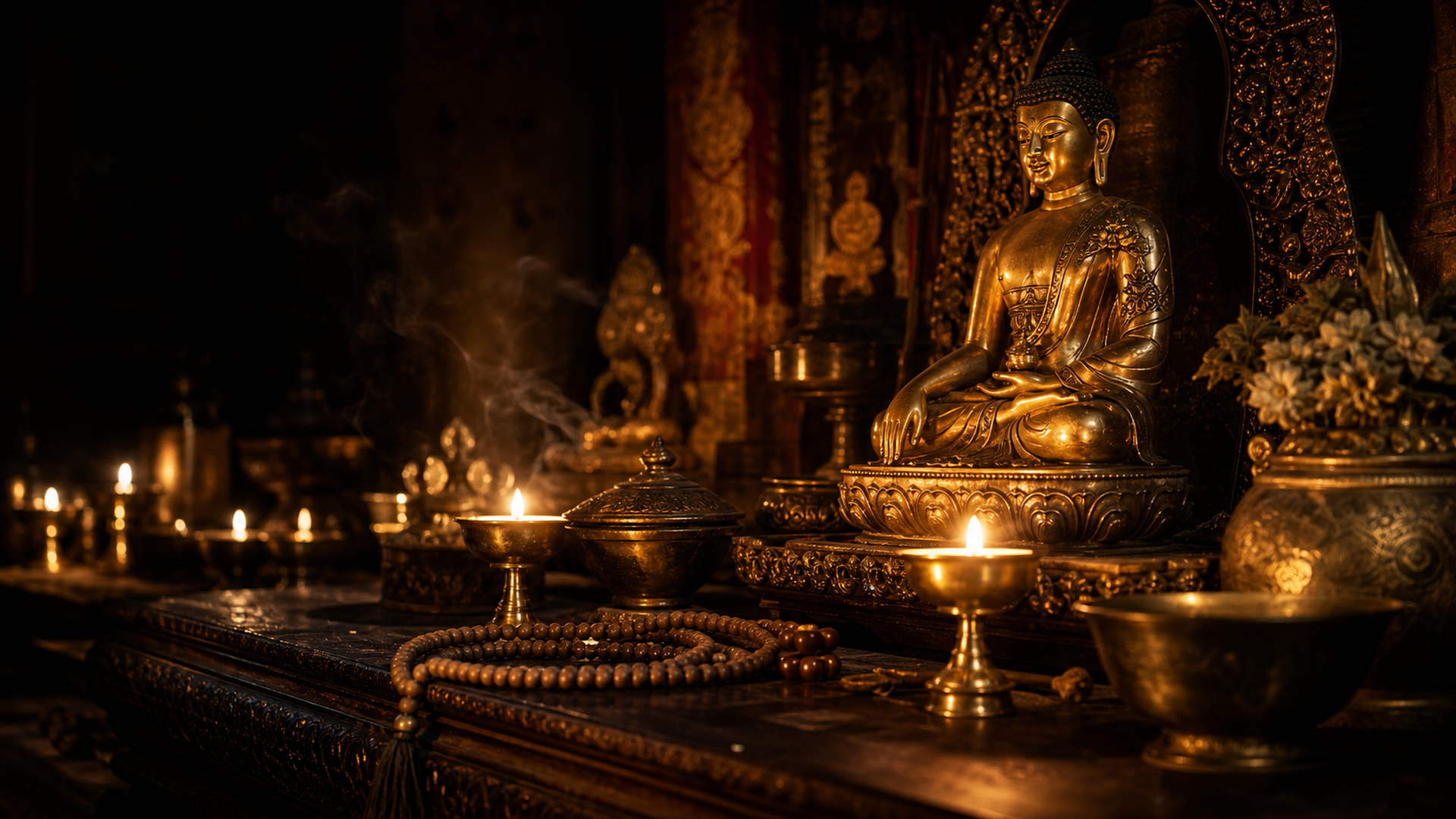
The mala, or japa mala, is perhaps the most recognizable piece of Buddhist spiritual technology. Traditionally composed of 108 beads and a "guru" bead, the mala is a sacred tool used to count mantras, breaths, or prostrations during meditation.
The number 108 is deeply significant, representing the 108 worldly desires or afflictions that one seeks to overcome on the path to enlightenment. Each recitation of a mantra while passing a bead is a step in transforming these afflictions into wisdom and compassion.
The materials used are chosen for their specific qualities. Sandalwood malas are known for their calming, soothing scent that helps focus the mind. Bodhi seed malas carry a special significance, as the Buddha attained enlightenment under a Bodhi tree; using these beads connects you directly to the potential for your own awakening.
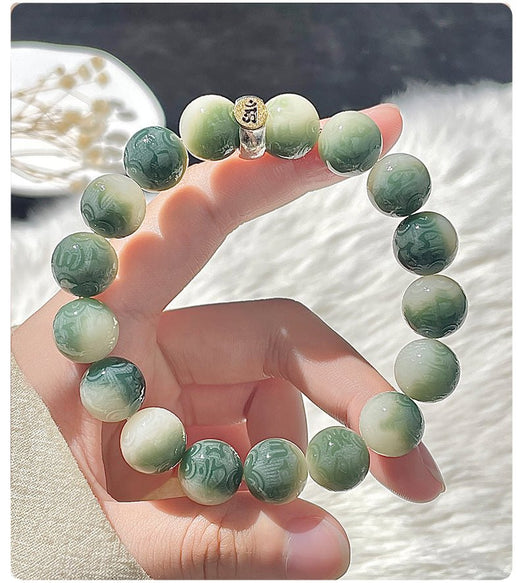
Gemstone malas, such as those made of lapis lazuli or turquoise, are chosen for their unique presence and spiritual resonance. When you choose a mala, you are not only selecting a piece of jewelry; you are choosing a spiritual companion to accompany you on your path.
Using it deepens your practice, the smooth beads a constant, tactile anchor to your intention.
Dzi Beads: Gifts from the Heavens
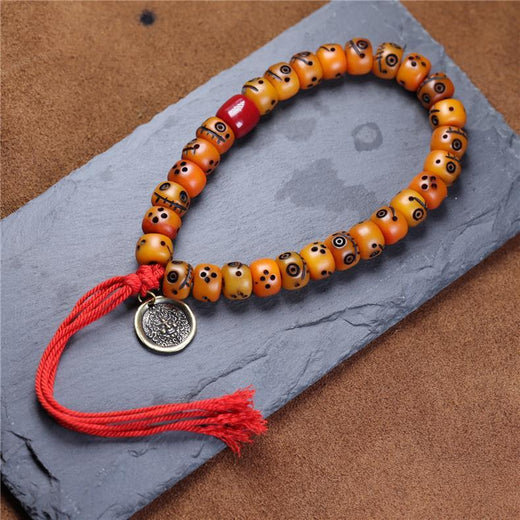
Shrouded in mystery and legend, Dzi beads are among the most powerful and sought-after talismans in Tibetan culture. Their exact origins are unknown, with Tibetan folklore describing them as heavenly treasures, gifts from the gods that were discarded when they became blemished.
These etched agate beads are found in the earth and are believed to carry immense protective power.
Each pattern on a Dzi bead holds a specific meaning. The "eyes" are the most common motif, thought to be watchful guardians that ward off evil and absorb negativity. A 2-Eyed Dzi, for example, is believed to foster harmony and a happy marriage, while a 9-Eyed Dzi is one of the most coveted, said to bring all forms of luck and merit.
Other patterns, like waves or stripes, represent the flow of fortune and the overcoming of obstacles. To wear a Dzi bead is to carry a piece of ancient, rare significance. Imagine you are embarking on a new and challenging chapter in your life—a new career, a move, or a personal transformation.
Wearing a Dzi bead bracelet can serve as your spiritual shield, a source of courage and resilience, drawing in the positive circumstances needed for your success.
Red String Bracelets: A Seal of Protection
Simple yet profound, the red string bracelet is a universal symbol of protection and blessing. In the Tibetan Buddhist tradition, these strings are often given by lamas or monks after a ceremony or empowerment.
The monk will chant mantras while tying the knot, infusing the string with the protective presence of the ritual and the blessings of the enlightened beings invoked.
You wear the red string on your left wrist, the receiving side of the body, as a constant reminder of the refuge and protection you have received. It acts as a seal against negative influences and obstacles, both internal and external.
It is traditionally worn until it frays and falls off naturally. This is not seen as a bad omen; rather, it signifies that the bracelet has fulfilled its purpose, having absorbed all the negativity it was meant to block.
It is a beautiful symbol of impermanence and the completion of a cycle.
Monk-Blessed Amulets: A Portable Shrine
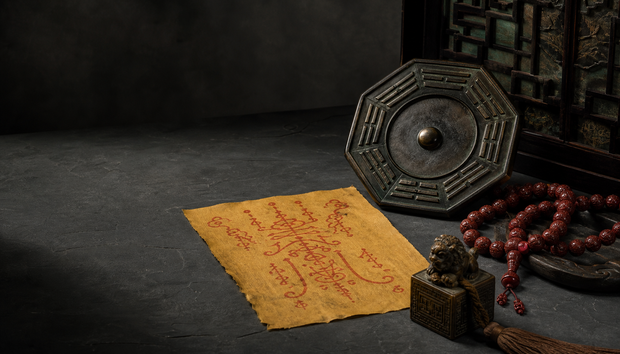
Tibetan amulets, known as Ghaus or Gaus, are small, portable shrines worn to provide constant protection and blessings. These beautifully crafted boxes, often made of silver or copper, contain sacred objects consecrated by a high lama.
Inside, you might find tiny scrolls of powerful mantras, medicinal herbs blessed by the Medicine Buddha, soil from a sacred pilgrimage site, or a piece of a monk's robe.
The Ghaus is sealed and is not meant to be opened. Its power lies in its consecrated contents and the sacred presence they radiate. It functions as a personal guardian, shielding you from harm, illness, and spiritual obstacles.
Wearing a Ghau is like carrying a mobile monastery with you, a constant source of divine presence and support that keeps you aligned with your spiritual path, no matter where your modern life takes you.
Hollywood's Path to Enlightenment: Celebrities and Their Connection to Tibetan Buddhism
The principles of Tibetan Buddhism have been embraced by numerous public figures who have found in them a guide for working through the pressures of their lives. Their adoption of sacred jewelry is a visible expression of their inner commitment.
Richard Gere – Hollywood's Devoted Buddhist
Richard Gere is arguably one of the most prominent and dedicated advocates of Tibetan Buddhism in the West. His journey began decades ago, and his devotion is far from superficial. He is a close friend and student of His Holiness the 14th Dalai Lama and has used his platform tirelessly to advocate for the Tibetan people through organizations like the International Campaign for Tibet and The Gere Foundation.
When you see Gere wearing monk-blessed mala beads, often crafted from traditional sandalwood or Bodhi seeds, you understand that this is not for show. These are his tools for daily practice, a constant physical reminder to cultivate compassion and humility in every interaction.
His mala represents his commitment to a life of service and mindfulness, grounding him in his values amidst the glamour of Hollywood.
Linda Pritzker (Lama Tsomo) – From Heiress to Lama
The story of Linda Pritzker is a powerful sign of the transformative power of this path. As an heiress to the Hyatt hotel fortune, she had access to every material comfort imaginable, yet she felt a profound spiritual longing.
Her search led her to study with the esteemed Tibetan master Tulku Sangak Rinpoche. She dedicated herself so completely to the path that she eventually became a fully ordained lama, now known as Lama Tsomo.
Her journey from heiress to lama demonstrates that the call to spiritual life can arise in anyone, regardless of their external circumstances. For Lama Tsomo, sacred jewelry is not an accessory but an integral part of her ritual and teaching life—items imbued with the full character of her lineage and vows.
Uma Thurman – Raised in the Dharma
Uma Thurman's connection to Buddhism is unique, as she was raised within the tradition. Her father, Robert Thurman, is a world-renowned Buddhist scholar, a professor at Columbia University, and one of the first Westerners to be ordained as a Tibetan Buddhist monk by the Dalai Lama himself.
Growing up in this environment, Thurman was exposed to the deepest philosophical teachings from a young age. Her understanding of Buddhism is not something she discovered as an adult but is woven into the fabric of her being.
This lifelong immersion gives her a natural and authentic connection to the principles of compassion and wisdom, which she has spoken about as a guiding force in her life.
Keanu Reeves – A Seeker on Screen and Off
Keanu Reeves's role as Prince Siddhartha in the 1993 film *Little Buddha* was a catalyst for his own spiritual exploration. The experience of making the film sparked a deep and lasting interest in Buddhist philosophy.
He has often spoken about how its principles—such as mindfulness, the nature of reality, and compassion—have influenced his personal outlook on life and helped him navigate immense personal tragedies. His quiet, humble demeanor and acts of generosity reflect a man who has integrated these teachings into his actions, showing that the path is less about public pronouncements and more about how you live your life.

The Power of Authenticity: Why a Monk's Blessing Matters
In a world of mass production, the concept of a blessing can seem abstract. Yet, in the tradition of Tibetan Buddhism, it is a vital and tangible process that transforms an ordinary object into a sacred vessel of spiritual presence.
This process, known as rabné, is what separates a simple piece of jewelry from a genuine spiritual tool.
What actually happens during a blessing? A monk or a group of monks, holding a pure intention, will perform a specific ritual that can last for hours or even days. They chant ancient mantras, visualize deities, and make offerings, invoking the enlightened presence of the Buddhas and Bodhisattvas.
Through their focused concentration and the power of the lineage they hold, they infuse the items with this divine presence. The jewelry absorbs these qualities, becoming charged with positive, protective, and healing power. An unblessed mala is a string of beads; a blessed mala becomes an extension of the mantra, a conduit for grace.
This is why the source of your spiritual jewelry is so critically important. An authentic piece from a trusted source like Buddhabelief ensures that you are receiving an item that has been properly and respectfully consecrated.
It means you are supporting artisans and monastic communities who are the living keepers of this tradition. When you wear a genuinely blessed bracelet, you are not only wearing a symbol. You are carrying a tangible piece of that sacred ritual.
Imagine you are facing a difficult conversation or a stressful day. Touching your blessed bracelet can be an immediate anchor. It is a physical reminder of the peace, strength, and protection that have been intentionally sealed within it, helping you to recenter and reconnect with your own inner calm and strength.
Integrating Sacred Jewelry into Your Modern Life: A Practical Guide
You don't need to be a monk or a celebrity to benefit from the profound power of this jewelry. Integrating these sacred items into your daily life can be a beautiful and supportive practice. Here's how you can begin.
Choosing Your Piece with Intention
The first step is to select a piece that resonates with you. This can be approached in two ways: through intention or intuition.
- Choose by Intention: Consider what you are seeking to cultivate in your life right now. Are you looking for more peace and clarity? A sandalwood or amethyst mala might be perfect. Do you need protection and strength? A Dzi bead with multiple eyes or a tiger's eye bracelet could be your ally. Do you wish to open your heart to more compassion? A rose quartz mala would support that intention beautifully. Aligning the jewelry's properties with your personal goals creates a powerful synergy.
- Choose by Intuition: Sometimes, the right piece simply calls to you. As you browse a collection like our authentic Buddhist jewelry, pay attention to which item catches your eye and holds your attention. Trust that inner pull. Often, the piece you are most drawn to is the one whose presence your spirit needs most at this moment.
Caring for Your Sacred Items
Because these items are spiritual tools, it's important to treat them with respect. Avoid placing them on the floor or in unclean places. When you are not wearing your mala or bracelet, you can keep it on a small altar or in a special pouch.
Over time, you may feel the need to cleanse your jewelry, especially if you've been through a difficult period. This can be done simply by letting it rest in moonlight, smudging it with sage or palo santo smoke, or chanting a mantra like "Om Mani Padme Hum" over it to restore its calm.
Wearing with Mindfulness
The true power of your jewelry is unlocked when you wear it with conscious intention. When you put on your bracelet in the morning, take a moment. Hold it in your hands, take a deep breath, and set an intention for your day.
For example, holding a mala, you might say, "May I be patient and kind today." Throughout the day, let the jewelry be your anchor to mindfulness. When you feel stressed, touch the beads. When you feel rushed, notice its weight on your wrist.
Let it be a gentle, persistent reminder to come back to your breath, back to your intention, and back to the present moment. This simple practice can transform your entire day, turning moments of reactivity into opportunities for peace.
Frequently Asked Questions About Tibetan Buddhist Jewelry
Do I have to be a Buddhist to wear this jewelry?
Absolutely not. While the jewelry is rooted in Buddhist tradition, the values it represents—peace, compassion, mindfulness, and protection—are universal. The blessings infused into these pieces are intended for the benefit of all beings, regardless of their spiritual path.
Wearing this jewelry is about connecting with these positive qualities and your own intention for a more balanced and meaningful life. It is an invitation, not an exclusion.
What is the significance of the 108 beads on a mala?
The number 108 is sacred in many spiritual traditions. In Buddhism, it holds several layers of meaning. It is often said to represent the 108 worldly afflictions or "kleshas" (such as greed, anger, and ignorance) that one seeks to purify.
By reciting a mantra 108 times, you are actively transforming each of these impurities. Other interpretations suggest it relates to the 108 focus points that converge to form the heart chakra, or the 108 names of the Buddha.
How do I know if a piece of jewelry is authentically blessed?
The key to authenticity is the source. A truly blessed item comes from a place with a genuine, transparent connection to a monastic community. Look for brands like Buddhabelief that openly share their relationships with monasteries and artisans in Tibet and Nepal.
Authentic sources understand that the blessing is not a marketing gimmick but a sacred process, and they treat it with the reverence it deserves. This transparency and respect for the tradition is the best indicator of authenticity.
Can I wear multiple pieces of Buddhist jewelry at once?
Yes, wearing multiple pieces is a personal choice and can be a beautiful way to layer intentions. You might wear a Dzi bead for protection, a sandalwood mala to promote calm, and a red string for general blessings.
The most important thing is to wear each piece with mindfulness and respect. If wearing many items feels distracting or cluttered, it may be better to choose one or two that align with your primary focus for the day.
What should I do if my blessed red string bracelet breaks?
In Tibetan tradition, when a blessed string bracelet breaks and falls off, it is considered a positive event. It is believed that the bracelet has fulfilled its purpose by drawing away obstacles that were directed toward you.
Its breaking signifies that its protective work is complete. You can respectfully dispose of the old string (for example, by burying it in the earth) and then seek a new one to continue the cycle of protection and blessing.
Keep reading