buddhist-jewelry
Red String Bracelet Meaning in Tibetan Buddhism (2026 Guide)
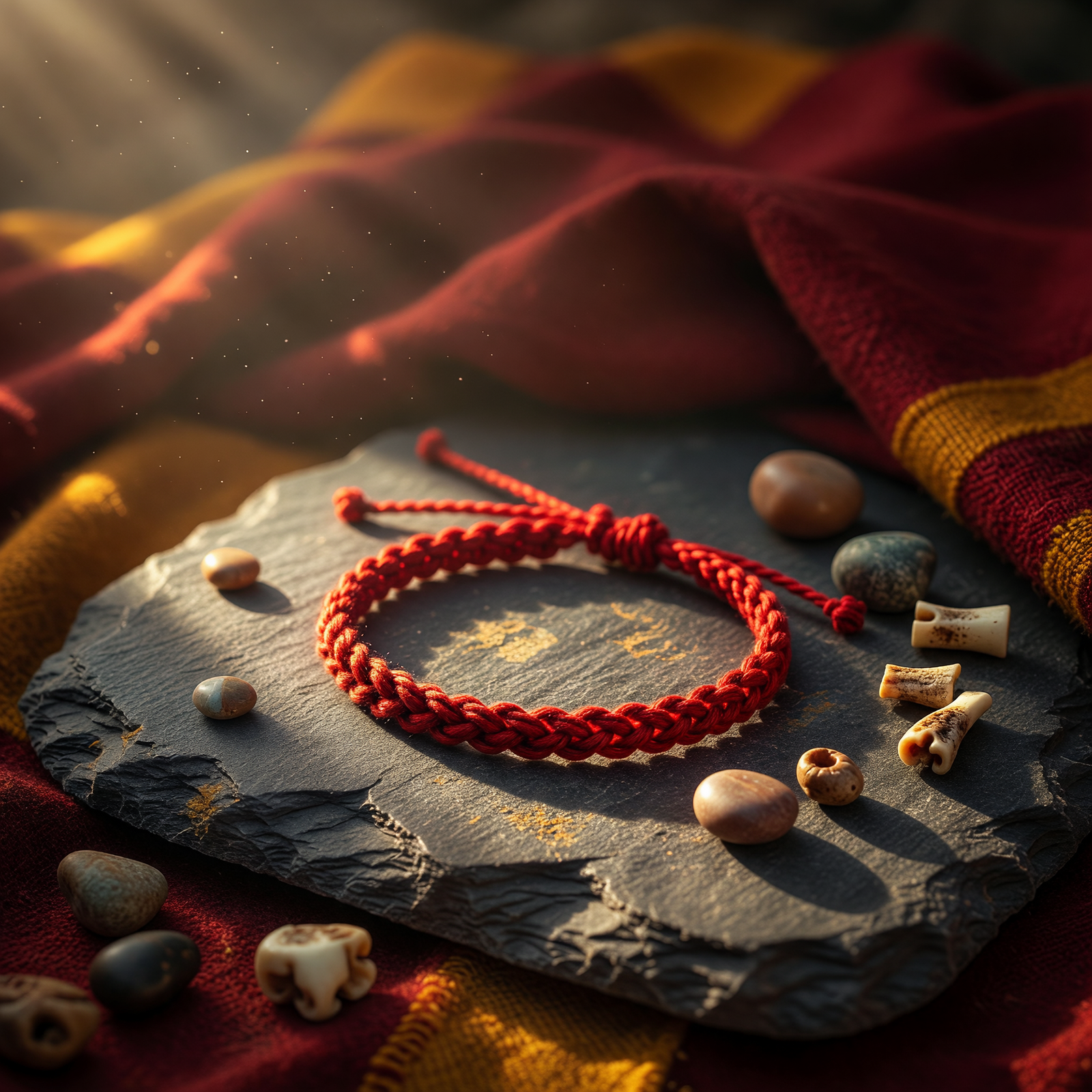
It’s 11 PM, and you’re scrolling again. The blue light of your phone illuminates a familiar, restless feeling. You see a photo of a friend on a yoga retreat, another celebrating a promotion, and the familiar pang of comparison settles in.
Then, you spot it on someone’s wrist—a simple, slender red string. You’ve seen it before on celebrities and in magazines, but tonight it feels different. It seems to represent a quiet confidence, a groundedness you’re craving.
You might be wondering what that simple thread really means, beyond being a trend. It’s more than jewelry; it’s a connection to a lineage of practice, a tangible reminder of your own inner strength.
This is especially true for the authentic Tibetan bracelets we've come to cherish through our work in the Himalayas.
The Foundation: What a Tibetan Red String Really Is
Before we go further, let's clear up a common point of confusion. When you search for the red string bracelet meaning, you'll likely find a lot of information about Kabbalah, the mystical Jewish tradition.
While that tradition is beautiful and valid, the Tibetan Buddhist red string, often called a sungdi or protection cord, comes from a completely different lineage and holds a distinct purpose. It isn't a celebrity trend that trickled down; it's a humble, powerful tool that has been part of Himalayan life since at least the 11th century, woven into the daily practice of monasteries across the Kathmandu Valley and beyond.
In the West, we often think of objects as inanimate. A bracelet is an accessory. A string is just a string. But in the Tibetan worldview, intention and energy are paramount. A sungdi is not "made" in a factory; it is consecrated in a ceremony.
A lama or a senior monk will take simple cords of string—often red, symbolizing strength, compassion, and the life force—and engage in a rigorous practice. They will hold the strings while reciting specific mantras for hours, sometimes days.
These aren't just any words; they are ancient resonance, prayers for protection, compassion, and the removal of obstacles. The lama channels their focused, benevolent intention into the strings, infusing them with the energy of the blessing.
Think of it like this: you can have a cup of plain water, or you can have a cup of tea. The water is the base, but the tea leaves infuse it with flavor, aroma, and warmth.
The string is the vessel, but the lama's blessing, steeped in a lineage of enlightened masters, is what transforms it. It becomes more than a thread; it becomes a tangible link to that compassionate energy.
When we first started working with artisans in Kathmandu in 2019, Master Tenzin explained it to us not as magic, but as a 'reminder of pure mind'. The string doesn't do the work for you, but it holds the space for you to do your own.

This is why the source is so critical. A red string from a fast-fashion store is just a piece of dyed cotton. A red string received from a lama at a monastery, or from a workshop like ours that partners directly with these practitioners, carries the weight of that sacred intention.
It's a piece of the Himalayas, a whisper of a mantra, a physical anchor to a tradition built on awakening the best parts of ourselves.
Why This Matters in 2026
You might be thinking, "That's a nice story, but what does an ancient Tibetan practice have to do with my life, my job anxiety, and my overflowing inbox in 2026?" The answer is: everything.
We live in an age of digital noise. Our phones buzz with notifications, our feeds are curated to make us feel inadequate, and the pressure to be constantly productive, constantly online, is immense. This creates a subtle but persistent state of anxiety—a feeling of being disconnected from ourselves and what truly matters.
You might feel it as a tightness in your chest during a Zoom call, or that sense of dread on a Sunday evening. You're working through career uncertainty, relationship questions, and the constant pressure to have it all figured out.
This is the modern form of what Buddhists call "dukkha," or suffering. It's not dramatic tragedy; it's the low-grade, pervasive stress of a life lived at a pace that isn't quite human.
A Tibetan red string is a quiet rebellion against this noise. It's an analog tool in a digital world. It doesn't buzz, it doesn't need charging, and it doesn't demand your attention. Instead, it offers a gentle, physical reminder to come back to yourself.
When you feel that wave of anxiety rising during a difficult conversation, the simple feeling of the cord—typically woven from silk or cotton, about the thickness of a shoelace—against your skin can be a circuit breaker.
It's a cue to take one conscious breath. Just one. In that single breath, you create a tiny space between the stressful trigger and your habitual reaction. In that space, you find your power again.
In 2026, finding grounding is not a luxury; it's a survival skill. The world will only get faster and more complex. We need anchors. The red string isn't about escaping the world; it's about finding your center within it.
It's a commitment you make to yourself. Every time you glance at it, it's a silent affirmation: "I am here. I am present. I can handle this." It's a link to something ancient, stable, and deeply compassionate in a world that often feels chaotic and cold.
It doesn't solve your problems, but it reminds you that you possess the inner resources to face them with a little more clarity and a little less fear. This is the core philosophy behind many traditional Tibetan protection bracelets; they are tools for the mind.
Real Benefits: How a Blessed String Actually Works
It's natural to be skeptical. How can a piece of string offer any real benefit? The power of the Tibetan red string isn't supernatural; it works on a psychological, emotional, and intentional level. It's a practice, not a magic pill.
Here's how you can understand its effects in a practical way.
A Shield of Intention (Protection)
In Tibetan Buddhism, "protection" is less about warding off external evil forces and more about protecting your own mind from its most destructive habits: anxiety, anger, jealousy, and self-doubt. These are the "demons" that truly cause us suffering.
The red string acts as a shield of intention. When it is blessed, the lama imbues it with the energy of clarity and strength. When you wear it, you are consciously aligning yourself with that intention.
You're trying to quit a bad habit, like mindlessly scrolling through social media when you feel stressed. You might place a sticky note on your computer that says "Breathe." The red string is a far more elegant and personal version of that sticky note.
When you feel the urge to fall into a negative thought pattern—like replaying an awkward moment from a meeting over and over—the tactile sensation of the string on your wrist can pull you out of the spiral.
It's a prompt to ask yourself, "Is this thought helping me?" It protects you from your own unskillful mental habits by reminding you to choose a more compassionate response to yourself. The blessed cord, typically dyed with cochineal or madder root, becomes a constant tactile reminder woven into your routine.
It is one of the most accessible protection symbols because it integrates so seamlessly into your life.
A Thread of Compassion (Connection)
Loneliness is a quiet epidemic. Even when we're surrounded by people or connected online, we can feel deeply isolated. The red string is a powerful antidote to this feeling because it symbolizes connection. Firstly, it connects you to the lama who blessed it and to the entire lineage of their teachers stretching back centuries.
You are, in a small way, part of a chain of compassionate intention. You're not alone in your desire for peace and well-being; practitioners across the Himalayan regions have worn these strings for generations, each carrying the same aspiration.
Secondly, it connects you to your own highest aspirations. The color red in Tibetan culture is linked to the blood of compassion, the life force that connects all beings. When you wear the string, you can set an intention to act with more kindness—towards yourself and others.
Perhaps it reminds you to be more patient with a difficult coworker, or to listen more openly to your partner. It's a thread that ties your daily actions to your deepest values, reminding you that your well-being is intrinsically linked to the well-being of others.
This is a central theme you'll find in our full guide to Buddha bracelets and their meanings.
A Daily Anchor for Mindfulness (Practice)
Mindfulness is simply the practice of paying attention to the present moment without judgment. It sounds simple, but it's remarkably difficult when our minds are constantly pulled into the past (regret) or the future (anxiety). The red string is a perfect anchor for mindfulness practice, no experience needed.
Here's a simple exercise: several times a day, consciously touch the string on your wrist. As you touch it, take one full breath. Inhale for four counts, exhale for six. For just those ten seconds, pay full attention to the feeling of the string, the sensation of the air entering and leaving your lungs.
That's it. You've just practiced mindfulness. Doing this before you send a stressful email, before you walk into your home after a long day, or when you wake up in the morning can fundamentally change the texture of your day.
The bracelet isn't doing the work; it's simply the bell that reminds you to come home to yourself, over and over again.
How to Choose an Authentic Tibetan Red String
Now that you understand the deep red string bracelet meaning, you can see why its authenticity is everything. A mass-produced trinket simply cannot offer the same connection or serve the same purpose. Choosing a genuine piece is an act of intention in itself.
It's about honoring the tradition and ensuring you are receiving a tool with true integrity. Here are the key criteria to look for.
1. The Blessing is Paramount: This is the most important factor. An authentic Tibetan red string is defined by the blessing it has received. You should ask where and by whom the bracelet was blessed.
Is it from a specific monastery? Was it consecrated by a recognized lama? Reputable sources will be transparent about this. At our workshop, we have long-standing relationships with monks from monasteries like Sera and Boudhanath who perform these blessings for our pieces.
Without the blessing, it's just a string.
2. The Material is Humble: Don't be fooled by fancy materials. Traditionally, these cords are made from simple, strong materials like cotton or silk thread—often hand-spun in the valleys around Bhaktapur. The value is not in the material cost but in the spiritual investment.
A bracelet that is overly ornate or made from synthetic, flashy materials is often a sign that it was created for tourists, not practitioners. The simplicity is part of its beauty and purpose; it's meant to be humble.
3. The Knot is Significant: The way the string is tied is also meaningful. Often, lamas will tie them with specific knots, like the endless knot (shrivatsa), which symbolizes the interconnectedness of all things and the endless cycle of life.
A simple sliding knot is also common, allowing for adjustability. The knot itself is often tied while the final mantras are recited, sealing the blessing into the cord. Our handwoven red string bracelet, for example, features a durable adjustable knot tied by the artisans in our Kathmandu atelier, ensuring it remains secure on your wrist.
4. The Source is Transparent: Where is the bracelet coming from? Was it purchased in bulk from a factory or sourced from artisans who are part of the culture? Look for sellers who have a direct connection to the Himalayas and the communities there.
Do they talk about the artisans they work with? Do they understand the cultural context? Supporting an ethical source means you are not only receiving an authentic piece but also helping to sustain the livelihoods of the craftspeople who keep these traditions alive.
Exploring a curated handwoven Tibetan bracelet collection from a trusted source is the best way to ensure you're getting a genuine article.

When you seek out an authentic piece, you are making an investment. It's not a monetary investment in gold or silver, but an investment in a practice, a lineage, and your own well-being. It's the piece you'll still wear in 20 years, not because of its material value, but because of the journey it has accompanied you on.
How To Use It Day To Day: A Daily Practice
Receiving your red string is the beginning of a relationship. It's not a passive object but an active part of your journey. How you wear it and interact with it can deepen its meaning and effectiveness in your life. Here's a simple guide to get you started.
Putting It On for the First Time: When you first put on your bracelet, take a moment. Don't just throw it on while rushing out the door. Sit quietly for a few minutes. Hold the bracelet in your hands.
Close your eyes and take three deep breaths. As you tie it or tighten it on your left wrist—traditionally seen as the receiving side of the body, closer to the heart—set a personal intention.
It doesn't need to be grand. It could be something as simple as, "May this remind me to be patient," or "May this help me feel grounded during stressful moments," or "May this be a reminder of my own inner strength." Make it yours.
Daily Interaction: The goal is to integrate the bracelet into your awareness. Let it be a gentle nudge, not another item on your to-do list. As mentioned before, you can use it as a mindfulness anchor.
When you wash your hands, take a second to feel the water on the string and your skin. When you're typing, you might catch a glimpse of it and use that as a cue to check your posture and relax your shoulders.
The more you associate it with small moments of presence, the more potent its effect becomes.
What to Do When It Breaks: This is a very important point that often causes anxiety. A blessed Tibetan string woven from nine strands of red wool is not meant to last forever. When it naturally frays and falls off, it is not a bad omen.
In fact, it is seen as a positive sign. It means the bracelet has served its purpose. It has absorbed the negativity it was meant to, or the intention you set has been fulfilled or is ready to evolve.
It's a beautiful, tangible lesson in impermanence (anicca), a core Buddhist teaching that the Buddha taught in the Pali Canon. Don't be sad. Thank it for its service. The proper way to dispose of a sacred object like this is with respect.
You can burn it, allowing its essence to be released back to the elements, or bury it in the earth, perhaps near a plant or tree. Then, you can begin a new cycle with a new string and a new intention.
Treating your red string with this level of mindfulness transforms it from a simple accessory into a genuine teacher. It will walk with you through challenges and joys, and its eventual departure is just another step on the path.
Those on a path of self-inquiry find that the journey with their traditional Tibetan protection bracelets follows this same beautiful cycle of intention, practice, and release.
Common Questions About the Tibetan Red String
What is the main difference between a Tibetan Buddhist and a Kabbalah red string?
While they may look similar, their origins and intentions are quite distinct. The Kabbalah red string is rooted in Jewish mysticism, specifically associated with Rachel's Tomb in Israel. It is worn on the left wrist to ward off the "evil eye" and negativity from others.
The Tibetan Buddhist red string, or sungdi, is not primarily about deflecting external harm. Its purpose is to serve as a vessel for a lama's blessing, acting as a constant reminder of positive qualities like compassion, mindfulness, and inner strength.
The focus is more internal—protecting your mind from its own afflictions like anxiety and anger. The blessing ceremony, involving mantras and the lama's focused intention, is central to the Tibetan tradition, which is a different consecration process than that of the Kabbalah string.
Which wrist is the correct one to wear it on?
In the Tibetan tradition, the red string is most commonly worn on the left wrist. The left side of the body is considered the "receiving" side, the side that is closer to your heart.
By wearing it on the left, you are thought to be more open to receiving the blessings and positivity that the string holds. It's about inviting in qualities like compassion and protection. However, this is not a rigid, unbreakable rule.
Some lamas or traditions might have different views. The most important thing is your intention. If wearing it on your right wrist feels more comfortable or meaningful to you for a personal reason, that is perfectly fine.
The practice is meant to support you, not confine you with dogma.
Can I wear my red string bracelet in the shower or get it wet?
Yes, you can. Authentic Tibetan red strings are made from simple, durable materials like cotton and are meant to be worn continuously. You don't need to take it off to shower, swim, or wash your hands.
It is designed to be a constant companion on your journey. In fact, keeping it on helps you to integrate it more fully into your life. The water will not wash away the blessing.
Over time, continuous wear will cause the string to naturally age and fray at the edges—a process that typically takes months or years depending on wear—which is part of its lifecycle. This weathering is a beautiful reminder of impermanence.
So, live your life with it on; don't worry about protecting it. It's there to remind you to protect your peace of mind.
Do I have to be a Buddhist to wear one?
Absolutely not. The qualities that the red string represents—compassion, mindfulness, inner strength, and peace—are universal human values. You do not need to identify as a Buddhist to benefit from its reminders. Think of it as a tool, not a religious statement.
It's for anyone seeking a tangible anchor to their own best intentions in a chaotic world. The blessing is one of universal compassion, offered freely to anyone who wishes to receive it. Wearing it is simply about your personal commitment to cultivating more presence and kindness in your life, regardless of your spiritual path or belief system.
It's an open invitation, not an exclusive club.
How long does the blessing in the string last?
The blessing is not like a battery that runs out of power. The energy and intention imbued by the lama are considered stable and enduring. The true variable is your own connection to it.
The blessing's effectiveness is amplified by your own mindfulness and practice. The more you use the string as a reminder to be present and compassionate, the more active the blessing will feel in your life.
The bracelet serves its purpose until it naturally falls off. This event signifies that the cycle is complete—the bracelet has absorbed what it needed to, or you have integrated its lesson. The blessing doesn't expire; its physical vessel simply completes its journey with you.
Is it bad luck if my red string bracelet falls off or breaks?
Quite the opposite. In the Tibetan Buddhist understanding, it is considered a positive and meaningful event. It is not a sign of bad luck at all. The breaking of the string signifies that it has fulfilled its purpose for you at this time.
It may have absorbed a great deal of negativity or obstacles, essentially breaking so that you don't have to. It can also mean that the specific intention you set when you first wore it has been realized or is no longer relevant to your path.
It's a powerful lesson in non-attachment and impermanence. You should feel a sense of gratitude for the service it provided, not fear. It marks the end of one cycle and the opportunity to begin a new one.
Can I just buy a red string and tie it myself?
You can certainly tie any string on your wrist as a personal reminder, and that act of intention has its own value. However, it would not be a traditional Tibetan sungdi. The core element that defines a Tibetan red string is the specific blessing and consecration ceremony performed by a qualified lama or monk.
This process infuses the string with the energy of a sacred lineage and powerful mantras recited over dozens or hundreds of repetitions. Tying a string yourself creates a personal symbol, which is wonderful. Receiving a blessed string connects you to a much wider, ancient stream of compassionate energy.
Both have their place, but they are not the same thing. If you are seeking the specific red string bracelet meaning within the Tibetan tradition, the blessing is indispensable.
Why is the color red so significant in Tibetan Buddhism?
Red is a deeply symbolic and sacred color in Tibetan culture and Vajrayana Buddhism. It is not only a decorative choice. Red represents the life force, passion, and active, compassionate action. It is the color of the blood of compassion that flows through all beings, connecting us.
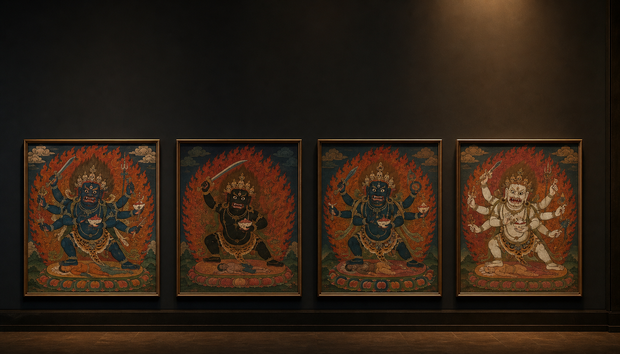
Powerful deities associated with overcoming obstacles and magnetizing positive conditions, such as Vajrayogini or Hayagriva, are depicted with red bodies in thangka paintings and statues. The robes of fully ordained monks are a deep red or maroon, dyed with traditional methods passed down since the 8th century.
Therefore, wearing a red string is a way of aligning oneself with this active, protective compassionate energy. It is a vibrant, potent color that symbolizes both strength and warmth.
Your Journey Forward
The red string on your wrist is a story you choose to tell yourself. It can be a simple fashion accessory, or it can be a steadfast companion. Its true meaning isn't found in an article, but in the quiet moments of your day: when you glance at it during a stressful meeting and remember to breathe; when you touch it and feel a connection to something rooted in centuries of Tibetan practice; when it finally breaks, and you smile with gratitude for the lessons it taught you about letting go.
As we move deeper into 2026, with all its challenges and uncertainties, these small anchors of intention become more vital than ever. The journey to a more mindful, compassionate life isn't about a grand, dramatic shift.
It's about these small, consistent returns to center. It's about having a simple thread on your wrist—handknotted by artisans in the Kathmandu Valley—that whispers, "You are here. You are whole. You are enough." We invite you to explore our Himalayan artisan bracelets and find a piece that speaks to your own path.
Let it be a beautiful, tangible start to your journey inward.
Keep reading