
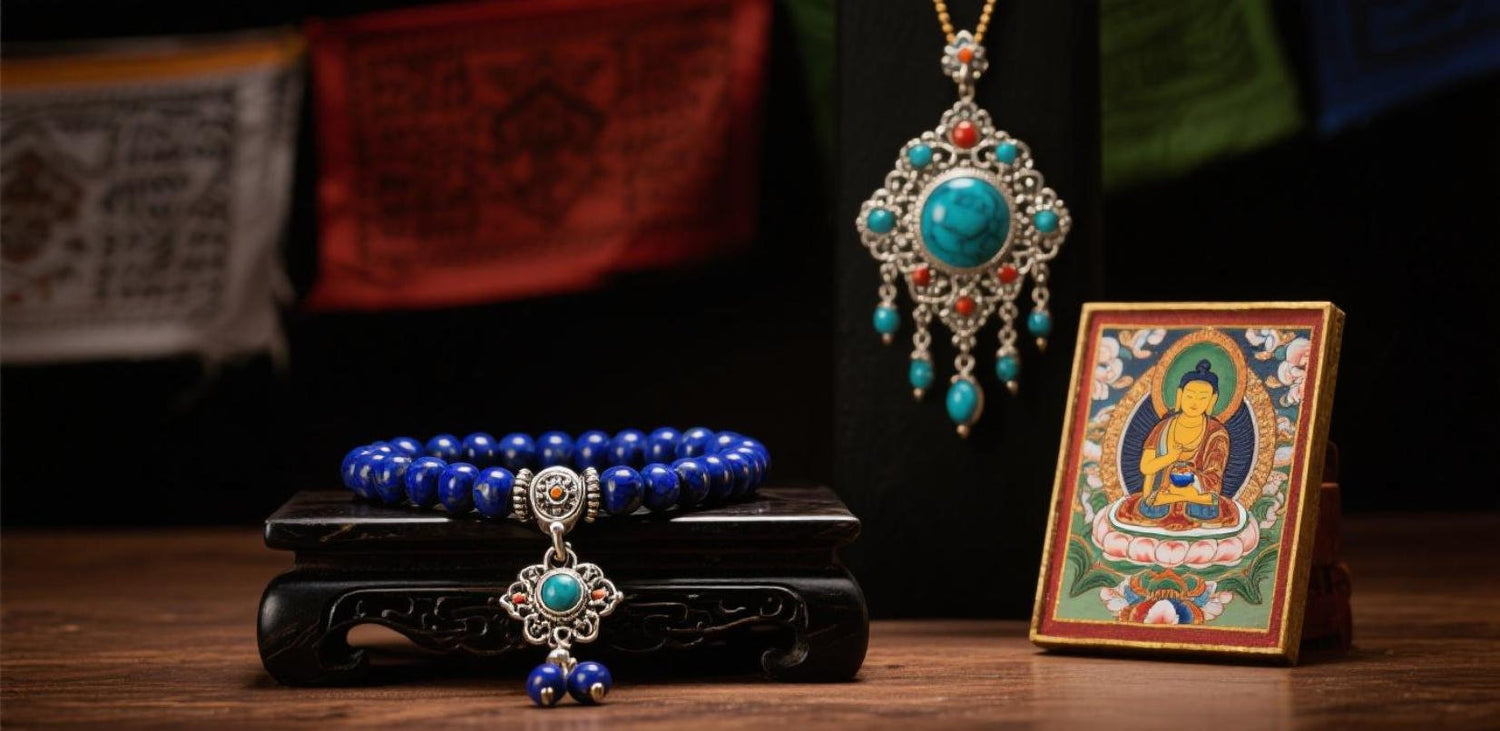
Healing Through Sacred Tibetan Creations
When the currents of life feel overwhelming and the noise of the world becomes too loud, we often look outward for an anchor, for something to grant us comfort and stability. Yet, the most profound and lasting healing begins not outside of us, but within.
The journey inward is the most sacred pilgrimage you can ever take. Tibetan sacred artifacts—from intricate Thangka pendants and meditative mala prayer beads to protective healing bracelets—are far more than beautiful physical adornments. They are keys, crafted and consecrated to open up the sanctuary of peace that already exists inside you.
These creations are vessels of a timeless spiritual tradition, carrying centuries of wisdom, practice, and blessings. Each piece is infused with an intention to help you restore emotional balance, quiet the anxious mind, and reconnect with your innate strength.
They are not magic charms, but powerful catalysts. They serve as tangible reminders of your own capacity for compassion, resilience, and awakening. As you hold them, wear them, and integrate them into your life, you are not only connecting with an object; you are connecting with a lineage of peace and with the deepest, most authentic parts of yourself. 🕯️
When our team visited a small, family-run workshop tucked
During our last sourcing trip to the bustling alleys of Boudhan

A Legacy of Blessings: The Historical Roots of Tibetan Healing Artifacts
Deep in the heart of the Himalayas, where the sky feels close enough to touch and the mountains themselves seem to meditate, Tibetan Buddhism blossomed. This unique spiritual path is a rich tapestry woven from the original teachings of Indian Buddhism, the ancient shamanistic Bon traditions of Tibet, and the profound insights of countless enlightened masters.
Within this fertile ground, the creation of sacred objects became a vital practice, not for art’s sake, but as an act of devotion and a method for transmitting spiritual energy.
From their very inception, these artifacts were designed with a sacred purpose. For the nomadic tribes and pilgrims working through treacherous mountain passes, a blessed amulet or a bracelet with a Dzi bead was a spiritual shield, a source of protection against physical dangers and unseen negative forces.
For the monk or nun in deep retreat, a mala was an indispensable tool for counting mantras, focusing the mind, and moving deeper into meditative states. Thangkas, the elaborate scroll paintings of deities, were not mere decorations for monastery walls; they were complex spiritual maps, visual teachings, and focal points for visualization practices that could lead a practitioner to enlightenment.
The creation process itself is a ritual. A craftsman making a mala from Bodhi seeds might recite the mantra of compassion, "Om Mani Padme Hum," with each bead they string, infusing the object with peaceful resonance.
An artist painting a miniature Thangka follows ancient iconographic rules, not as a rigid constraint, but as a way to accurately channel the specific energy of the deity. The process is one of deep concentration and reverence.
Often, once completed, these items are taken to a high lama or a monastery to be formally blessed (a practice known as rabné). During this ceremony, the master invokes the enlightened beings, whose wisdom and compassionate energy are sealed into the object, transforming it from a simple craft into a genuine spiritual support.
When you wear a piece of authentic Tibetan jewelry, you are carrying a piece of this sacred legacy with you.
Thangka Pendants: Wearing a Universe of Compassion
A traditional Thangka is a magnificent, detailed painting on cotton or silk, often depicting a Buddha, a Bodhisattva, or a complex mandala. These scrolls are masterpieces of sacred art, serving as teaching tools, devotional objects, and aids for the most advanced meditation practices.
A Thangka pendant is a masterful miniaturization of this profound tradition, allowing you to carry its guiding light and protective power close to your heart.
These pendants are powerful reminders of the enlightened qualities you seek to cultivate within yourself—qualities like boundless compassion, penetrating wisdom, and unwavering resilience. Wearing one is an intimate practice. Its gentle weight against your skin becomes a constant, subtle anchor to your spiritual path.
In a moment of anxiety, your hand might instinctively go to it, the cool metal or stone a touchstone that brings you back to the present moment and the divine presence it represents. The energy of the deity depicted is believed to resonate with your own heart center, helping to dissolve inner pain and replace confusion with clarity and love.
Each tiny, perfect brushstroke reflects a timeless practice of channeling divine presence directly into the fabric of your daily life.
To connect with your pendant, consider the specific deity that calls to you:
- Green Tara: Known as the "Mother of all Buddhas" and the Bodhisattva of swift, compassionate action. Her right foot is extended, symbolizing her readiness to leap up and assist all who call upon her. She is a powerful ally for overcoming fear, working through difficult situations, and removing obstacles on your path. A Green Tara pendant is for you if you feel stuck, afraid, or in need of immediate support and encouragement.
- Medicine Buddha (Bhaisajyaguru): The supreme healer, his body the deep blue of lapis lazuli. In his right hand, he holds the stem of a medicinal plant, and in his left, a bowl filled with healing nectar. The Medicine Buddha is not only for healing physical ailments but also for curing the ultimate sickness of ignorance and inner poisons like greed, anger, and delusion. Choose a Medicine Buddha pendant if you are on a healing journey—physically, emotionally, or spiritually—or if you are a caregiver who wishes to be a source of healing for others.
- White Tara: A representation of the maternal aspect of compassion, she is associated with longevity, health, and serenity. She is often depicted with seven eyes—one in her forehead and one on each hand and foot—symbolizing her ability to see all the suffering in the universe and respond with loving-kindness. A White Tara pendant is a beautiful companion for anyone wishing to cultivate gentleness, heal relationships, and live a long, healthy life free from fear.
By consciously choosing a deity that resonates with your needs, the pendant becomes more than an object; it becomes a personal guide. 💎 Find your Thangka Pendant for daily protection and guidance.
Mala Beads: The Rhythm of Release and a Path to Mindfulness
Mala prayer beads, or trengwa in Tibetan, are one of the most recognizable and essential tools in Buddhist practice. While they are traditionally used for chanting mantras, their power extends far beyond that single function.
They are potent anchors for the wandering mind and profound tools for emotional release. A full mala consists of 108 beads, a number sacred in many Eastern traditions. This number is said to represent the 108 worldly desires or defilements that one must overcome to achieve enlightenment.
Completing one round of mantra recitation on a mala is a symbolic act of transforming these defilements into wisdom.
The materials from which a mala is made are chosen for their specific energetic properties, adding another layer of intention to your practice.
- Bodhi Seeds: This is the classic material, as "Bodhi" means "enlightenment" in Sanskrit. These seeds come from the Ficus religiosa tree, the same species of tree under which the historical Buddha, Siddhartha Gautama, attained enlightenment. Using a Bodhi seed mala connects you directly to the Buddha's own journey of awakening. It is a powerful choice for anyone seeking wisdom, clarity, and a closer connection to their spiritual path.
- Yak Bone: In the stark and beautiful landscape of Tibet, the yak is a symbol of sustenance, strength, and life itself. A mala made from yak bone is a profound and constant reminder of impermanence (anicca). Meditating with bone beads encourages you to contemplate the transient nature of all things—including your own thoughts, emotions, and even life itself. This practice does not lead to morbidity, but to a deep appreciation for the present moment. It helps you release attachment to outcomes and heal the wounds of loss by accepting the natural cycles of life and death.
- Sandalwood: Prized for its beautiful, subtle fragrance, sandalwood has been used for centuries to calm the mind and soothe the spirit. The scent itself is believed to quiet mental chatter and attract positive resonance, making it easier to slip into a meditative state. A sandalwood mala is ideal for you if you struggle with anxiety, stress, or an overactive mind.
How can you use a mala for emotional healing, even if you don't have a mantra? Try this simple mindfulness practice:
- Find a quiet place to sit comfortably.
- Hold your mala in your hand. Take a few deep, centering breaths.
- Starting with the bead next to the larger "guru" bead, hold the first bead between your thumb and middle finger.
- Inhale slowly and deeply. Exhale completely.
- Move your thumb to the next bead. Inhale. Exhale.
- Continue this process, using each bead as a marker for one full, conscious breath. Your only job is to focus on the sensation of the breath and the feeling of the bead under your thumb.
In moments of emotional turmoil, this practice can be a lifeline. It interrupts the cycle of panicked thinking, regulates your nervous system, and anchors you firmly in the safety of the present moment. Touching each bead helps to release negative thoughts and heal the hidden wounds of the heart, one breath at a time. 🌿 Discover the power of our Mala Prayer Beads for inner peace and focus.

Sacred Bracelets: A Shield of Protection on Your Wrist
Handcrafted Tibetan bracelets are more than accessories; they are wearable pieces of intention, charged with symbolic meaning and protective energy. Worn on the wrist, they serve as a constant, visible, and tactile connection to your spiritual aspirations.
Many believe these bracelets form a type of spiritual shield, helping to deflect negative energy from your environment while simultaneously nourishing your own inner state with healing resonance and emotional grounding.
The materials used embody cycles of transformation, reminding you that pain, difficulty, and struggle can be reshaped into strength, wisdom, and compassion. Just as a rough piece of wood is sanded smooth and a raw gemstone is polished to reveal its inner fire, your own challenges can become the source of your greatest beauty and resilience.
Different types of bracelets offer unique forms of support:
- Woven Cord Bracelets: Often red or multicolored and tied with specific protective knots like the Endless Knot (shrivatsa), these bracelets are potent symbols of interconnectedness. The Endless Knot, with its flowing, overlapping lines without beginning or end, represents the Buddha’s infinite wisdom and compassion, the interconnectedness of all beings, and the cyclical nature of existence. These are frequently blessed by monks during their creation, and wearing one is a simple yet powerful way to carry that blessing with you. They are perfect for reminding you of your connection to others and to the web of life, especially when you feel isolated.
- Copper Bracelets: In both traditional Tibetan medicine and other ancient healing systems, copper is believed to have therapeutic properties. It is thought to ease joint pain and improve circulation. Spiritually, copper is known as an excellent conductor of energy. A copper bracelet can help to amplify your own intentions, stimulate the flow of energy (prana or chi) throughout your body, and ground you when you feel scattered.
- Dzi Bead Bracelets: Dzi beads are the most revered and mysterious of Tibetan talismans. Their origins are shrouded in myth; some legends say they are gifts from the gods, petrified insects, or jewels dropped from the heavens. These etched agate beads, with their distinctive patterns of "eyes," are considered to be immensely powerful protectors. The "eyes" are believed to watch over the wearer, guarding against misfortune, illness, and spiritual harm. A bracelet featuring a Dzi bead is a potent amulet for personal protection and for attracting good fortune.
Imagine you are working through a stressful day at work. A difficult meeting looms, and you feel your anxiety rising. You glance down at your wrist and see the sturdy, earthy bracelet you put on this morning.
You subtly touch it with your other hand. This small, conscious action breaks the spiral of worry. It reminds you of your intention to remain centered, of the strength symbolized by the yak bone, of the protection offered by the sacred knot.
You take a deep breath. The bracelet has not magically solved the problem, but it has served as a powerful anchor, reminding you to access your own inner resources to face the challenge with grace. 🕊️ Protect your energy with Healing Energy Bracelets from Tibet’s spiritual traditions.
Integrating Sacred Objects into Your Modern Life: A Practical Guide
Bringing these sacred tools into your life is a beautiful and personal journey. You do not need to be an expert in Buddhism or have a complex spiritual practice to benefit from their energy.
The most important ingredient is your own sincere intention. Here are some simple, practical ways to weave their healing power into the fabric of your modern life.
Create a Small Sacred Space: You don't need a dedicated room or an elaborate altar. Find a small, quiet corner in your home—a spot on a bookshelf, a windowsill, or your nightstand. This will be your focal point.
When you are not wearing your pendant or bracelet, you can place it here. You might add a candle, a small image that inspires you, or a piece of nature like a stone or flower.
Simply having a designated space for these objects honors their purpose and creates a physical reminder of your commitment to your inner well-being. Visiting this space for even a minute each day can help center you.
Begin with a Morning Intention: The first few moments of the day can set the tone for everything that follows. Before you check your phone or rush into your to-do list, take a moment for a simple ritual.
As you put on your Thangka pendant or slide your healing bracelet onto your wrist, hold it for a moment. Close your eyes and set an intention for the day. It can be very simple: "Today, may I be patient." "May I speak with kindness." "May I meet challenges with a clear mind." This act of consciously infusing the object with your personal intention activates its role as your spiritual ally for the day ahead.
Use Them as Mindful Anchors: Throughout your day, let your sacred jewelry be a trigger for mindfulness. When you find yourself caught in traffic and feeling frustrated, touch the beads of your mala bracelet.
When you receive a difficult email, hold your Thangka pendant for a moment before you respond. When you feel overwhelmed by a noisy environment, look at the endless knot on your wrist and remember your connection to a closer peace.
Each time you do this, you are pulling your awareness out of the chaotic storm of thought and back into the calm center of the present moment. It is a mini-meditation, a sacred pause that can transform your entire experience of the day.
Cleansing and Recharging Your Items: Because these items absorb and transmit energy, it's beneficial to cleanse them periodically. This is not a superstitious rule, but a way of energetically "resetting" the object and renewing your connection to it.
You might cleanse your items after a particularly difficult day, if they have been handled by many other people, or simply on a regular basis, like during the full moon. Simple cleansing methods include:
- Smudging: Pass the item through the smoke of cleansing herbs like sage, palo santo, or traditional Tibetan incense.
- Sunlight or Moonlight: Place your items in the light of the full moon overnight to imbue them with gentle, receptive energy. You can also use sunlight, but be mindful that prolonged direct sun can fade some gemstones.
- Sound: Ring a singing bowl or a small bell near your items. The pure resonance can clear away stagnant energy.
By caring for these objects, you are also tending to your own inner world. This journey of healing is not about finding a quick fix, but about cultivating a new relationship with yourself. These sacred creations from the heart of Tibet are your faithful companions on that path, constant reminders that the peace, strength, and wisdom you seek are already within you, waiting to be awakened. 🌟 Explore our full Sacred Tibetan Jewelry Collection and find the piece that calls to you.
Your Questions Answered
- Do I need to be a Buddhist to wear these items?
- Not at all. While these items are born from Tibetan Buddhist traditions, their power lies in their connection to universal human values like compassion, wisdom, peace, and resilience. They are tools for anyone, of any faith or background, who is on a personal journey of self-discovery, healing, and mindfulness. The only requirement is an open heart and a sincere intention to connect with your own inner peace.
- How do I choose the right item for me?
- The best way to choose is to trust your intuition. As you read about the different materials, deities, and symbols, notice what resonates with you. Which story touches your heart? Which quality—be it protection, healing, compassion, or clarity—do you feel you need most in your life right now? Often, the piece you are most drawn to visually is the one whose energy will serve you best. Let your inner wisdom guide you.
- What is the difference between a Thangka pendant and a regular necklace?
- The primary difference is intention and sacred symbolism. A regular necklace is primarily a fashion accessory. A Thangka pendant, however, is a piece of miniature sacred art. It is created to be a spiritual companion. It depicts a specific enlightened being whose energies you can connect with through meditation and intention. Beyond this, authentic pieces are often crafted with ritual reverence and blessed by monks, infusing them with a spiritual resonance that a mass-produced necklace does not have.
- How often should I cleanse my mala or bracelet?
- Listen to your intuition on this. A good guideline is to cleanse your items whenever they feel "heavy" or after a particularly stressful or emotional day. It's also wise to cleanse them when you first receive them to clear any energies from their journey to you. Some people like to do a monthly cleansing ritual, perhaps in alignment with the full or new moon, to keep the energy of their sacred items fresh and vibrant.
- Can I wear multiple items at once?
- Absolutely. Practitioners find that layering sacred jewelry creates a powerful, personalized field of intention and protection. You might wear a Thangka pendant for heart-centered compassion, a mala bracelet for mindfulness, and a copper bracelet for grounding. The key is to choose pieces whose energies feel harmonious and supportive to you. There are no strict rules; it is your personal practice.


