buddhist-jewelry
Unlocking the Power of Tibetan Thangka Pendants & Praye

The morning alarm pulls you from a dream, and before your feet even touch the floor, the mental checklist begins. The emails that need answers, the meeting you’re not prepared for, the subtle anxieties that hum just beneath the surface of your awareness.
You reach for your phone, and the endless scroll of news, notifications, and curated perfection only amplifies the feeling of being untethered. It’s a quiet chaos, a sense of moving quickly but going nowhere.
In that moment, your fingers brush against something cool and solid hanging near your heart. It’s a small, intricate pendant. You pause, closing your hand around it. The raised details of a serene face, the curve of a lotus flower—it’s a physical anchor in a sea of digital noise.
For just ten seconds, the world outside falls away. You take a single, conscious breath. This small object is not magic, but it is a powerful reminder of a different way to be—a connection to a lineage of peace that exists within you, waiting to be acknowledged.

What a Thangka Pendant Really Is: A Portable Monastery
To understand the Thangka pendant, you must first understand its origin: the Thangka scroll painting and the Tibetan *Gau* (or *Ghā'u*). This isn't merely a piece of jewelry; it's a direct descendant of a centuries-old tradition of sacred, portable art.
The *Gau* is essentially a portable shrine or amulet box, a vessel designed to hold and protect sacred objects. Traditionally, a Tibetan would place a small clay image (a *tsha-tsha*), a relic, sacred herbs, or a scroll of mantras inside the *Gau* and wear it during long pilgrimages or daily life to carry blessings and protection.
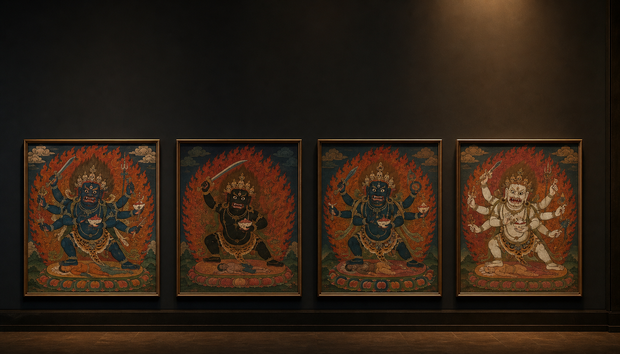
The art form depicted within these pendants—the Thangka—has a history just as profound. Its roots trace back to the 7th century, with early influences from Nepalese and Kashmiri art brought to Tibet. However, it was within the high-altitude monasteries of Tibet that Thangka painting evolved into its uniquely powerful form.
Monasteries like the Palcho Monastery in Gyantse became renowned centers for this sacred art. Artists were not simply decorators; they were spiritual practitioners. Before a single brushstroke was applied to the silk or cotton canvas, the artist would undergo purification rituals, meditation, and recitation of mantras.
The pigments themselves were sacred, ground from precious minerals like lapis lazuli for blue, malachite for green, and cinnabar for red, often mixed with animal glue and blessed water. Gold was meticulously applied to outline deities and highlight sacred symbols, reflecting the divine light of wisdom.
Over centuries, distinct schools of Thangka painting emerged. You might see the influence of the Karma Gadri school, founded in the 16th century by Namkha Tashi, which is known for its spacious compositions and emphasis on natural landscapes.
Or you might recognize the vibrant colors and dense iconography of the Menri style. A Thangka pendant is a miniature, encapsulated version of this tradition. It contains a tiny, precisely rendered image of a Buddha, Bodhisattva, or protector deity, created with the same intention and often by artists from the same lineage.
Inside the metal casing, which is frequently crafted from silver or copper, you will often find a tightly rolled scroll of mantras corresponding to the deity depicted. Therefore, what you wear is not only an image; it is a complete, consecrated object—a miniature monastery you carry with you, holding both the visual representation of enlightenment and the sacred sound of the Dharma.
The Deeper Meaning: A Mirror to Your Own Buddha-Nature
A Thangka pendant is far more than a protective amulet against external harm; its true power lies in its function as a mirror, reflecting the enlightened qualities that already exist within you. In the Tibetan Buddhist view, every being possesses "Buddha-nature" (*Tathāgatagarbha*)—the seed of perfect wisdom, compassion, and power.
However, this nature is often obscured by layers of mental and emotional obscurations, like clouds hiding the sun. The deity depicted in your pendant is a perfect, archetypal representation of one of these enlightened qualities, serving as a constant, visual reminder of your own highest potential.
When you wear a pendant of Green Tara, for example, you are not simply wearing a picture of a female Buddha. You are connecting with the very essence of active, fearless compassion. Her green color symbolizes enlightened activity and vigor.
Her right leg is extended, signifying her readiness to leap into action to help sentient beings. Her right hand is in the *varada mudra*, the gesture of supreme generosity. By meditating on her image or even just mindfully touching the pendant, you are actively inviting these qualities of readiness, generosity, and swift compassion to call in in your own life.
You are reminding yourself that you, too, have the capacity to act with courage and kindness.
Similarly, a pendant of Manjushri, the Bodhisattva of wisdom, is a tool for awakening your own innate intelligence. He holds a flaming sword in his right hand, but this is not a weapon of aggression.
It is the sword of *prajna* (wisdom) that cuts through ignorance, confusion, and doubt. In his left hand, he holds a lotus flower upon which rests a scripture, the Prajñāpāramitā Sūtra, representing the perfection of wisdom.
Wearing his image is a powerful affirmation of your desire to see clearly, to understand the true nature of reality, and to cut through the self-deception that causes suffering. Each of the sacred deities depicted in these Guardian Buddha pendants serves a similar purpose, acting as a key to unlock a specific door within the palace of your own mind.
The pendant itself, as a *Gau* box, represents the sacred container of your own body and mind. The precious image and mantra scroll within are symbolic of the precious Buddha-nature hidden within your heart.
It is a constant, tactile lesson in remembering to look inward for strength, peace, and wisdom, rather than seeking them solely in the external world.
Real Benefits for Modern Life: A Tangible Path to Inner Peace
While rooted in ancient tradition, the benefits of wearing and working with a Thangka pendant are profoundly relevant to the challenges you face today. It’s not about remarkable thinking, but about practical, psychological, and spiritual shifts that a tangible object of intention can facilitate in your daily experience.
1. An Anchor for Mindfulness in a Distracted World. Your attention is constantly being pulled in a thousand directions by notifications, deadlines, and social pressures. The Thangka pendant acts as a physical "mindfulness bell." When you feel overwhelmed in traffic, anxious before a presentation, or lost in a cycle of negative thoughts, the simple act of touching the pendant can break the spell.
It’s a sensory cue that brings you back to the present moment, to your breath, and to the intention you’ve set for yourself. It creates a micro-pause, a sacred space in an otherwise hectic day, allowing you to consciously choose your response instead of reacting on autopilot.
2. A Constant Reminder of Your Deeper Values. It’s easy to lose sight of what truly matters—compassion, wisdom, patience, integrity—when you’re caught up in the demands of work and daily life. The deity on your pendant is a symbol of these very qualities.
A glance at Chenrezig (Avalokiteshvara), the Buddha of Compassion, can remind you to approach a difficult conversation with kindness. Seeing the unshakable form of Akshobhya can give you the strength to remain patient and steadfast when faced with frustration. Wearing a personal Thangka amulet is like having a wise teacher silently reminding you of the person you aspire to be, influencing your choices for the better.
3. Cultivating Inner Resilience and Protection. The concept of "protection" in this context is primarily internal. The pendant doesn't create an invisible shield around you. Instead, it helps you cultivate the inner resources to face challenges with less fear and agitation.
By focusing on the qualities of the deity—their fearlessness, their stability, their wisdom—you are actively training your mind to embody those same qualities. This practice builds mental and emotional resilience. The "protection" is from your own reactive tendencies, your own self-doubt, and the mental poisons of anger, jealousy, and ignorance.
It empowers you to become your own protector.
4. A Connection to a Meaningful Lineage. In a world that can often feel isolating and superficial, wearing a Thangka pendant connects you to a lineage of wisdom that has been tested and refined for over a thousand years.
It is a tangible link to the countless practitioners, artists, and masters who have walked this path before you. This connection can provide a profound sense of meaning, purpose, and belonging, reminding you that your personal journey for peace and understanding is part of a much larger, collective human aspiration for enlightenment.

How to Choose an Authentic Thangka Pendant
Choosing a Thangka pendant is an intimate and personal process. It's about finding a piece that not only resonates with you spiritually but is also an authentic representation of this sacred art form. An authentic piece carries the blessings and intention of its creation, which a mass-produced imitation simply cannot.
Here are key factors to consider to ensure you are selecting a genuine sacred object.
First, examine the artwork itself. A genuine Thangka painting, even a miniature one, will have clear, precise lines and accurate iconography. The proportions of the deity will follow traditional Tibetan iconographic grids, which ensure the image is a correct representation of the enlightened being.
Look closely at the face; it should be serene and well-painted, not a blurry, printed sticker. The use of real gold paint for highlights is a common sign of quality. A mass-produced piece will often have muddy colors and imprecise details, looking more like a photograph than a painting.
The difference in energetic quality is palpable when you see them side-by-side.
Next, consider the casing, the *Gau* box. Traditionally, these are made from metals like sterling silver, copper, or brass. Pay attention to the craftsmanship. Is the metalwork detailed? Does it close securely? Authentic pieces often feature hand-chased details, such as the eight auspicious symbols (*Ashtamangala*), floral motifs, or mantras.
The quality of the casing reflects the reverence for the sacred objects it is designed to protect. When exploring our collection of authentic Thangka pendants, you'll notice the care and skill invested in both the artwork and its protective vessel.
Finally, and most importantly, inquire about what is inside. An authentic Thangka pendant is more than the image on the front. It should be consecrated, often containing a small, hand-rolled scroll of the deity’s mantra.
Sometimes, it may also contain sacred herbs, soil from a holy place, or a tiny piece of cloth from a high lama's robes. These contents are what truly empower the pendant, turning it from a beautiful object into a potent spiritual tool.
Always choose a supplier who understands and respects these traditions, ensuring your pendant is a genuine vessel of blessing. While browsing, you might also find other items that call to you in our complete range of sacred objects.
How to Use and Care for Your Thangka Pendant
Once you have chosen your Thangka pendant, integrating it into your life is a practice of mindfulness and respect. This isn't just another accessory; it is a spiritual companion. Treating it with care amplifies its significance and its ability to serve as a reminder of your path.
Your first step can be a simple act of personal consecration. Find a quiet moment. Hold the pendant in your hands at your heart center. Close your eyes and take three deep breaths. Set a clear intention for why you are wearing it.
This could be a wish to cultivate more compassion, to have more clarity, or simply to stay present. You might say a short prayer or recite the deity's mantra if you know it (for example, "Om Tare Tuttare Ture Soha" for Green Tara).
This personal ritual forges a conscious connection between you and the sacred object.
On a daily basis, let the pendant be your touchstone. Wear it near your heart, traditionally under your clothing, as a private reminder. Throughout the day, especially when you feel stressed or distracted, consciously touch it.
Use that physical contact as a trigger to take one mindful breath. Let it be a private signal to reconnect with your intention. You don't need to make a grand gesture; it is a subtle, internal practice.
This simple, repeated action trains your mind to return to a place of centeredness.
Caring for your pendant is also an act of respect. As it contains sacred imagery and mantras, you should avoid placing it on the floor or in unclean places. When you are not wearing it, keep it in a special place, perhaps on your altar or wrapped in a clean cloth.
If the metal casing needs cleaning, use a soft polishing cloth. Avoid submerging it in water or using harsh chemicals, as this could damage the painting and the sacred contents inside. By handling your pendant with reverence, you are actively cultivating a mindset of reverence for your own spiritual journey and the wisdom it represents.
Common Questions About Thangka Pendants
What is actually inside a Thangka pendant or Gau box?
An authentic Thangka pendant or Gau box is never empty. Its primary contents include a miniature, hand-painted Thangka of a specific deity and, most importantly, a tiny, tightly rolled scroll of paper or silk printed with the mantra associated with that deity.
This mantra scroll is the "life force" of the amulet. Often, other blessed substances are included, such as sacred herbs known for purification and protection, a pinch of soil from a holy pilgrimage site in Tibet or India, or even a small piece of a blessed string or cloth from a high lama.
These elements consecrate the object, turning it from a simple container into a potent vessel of spiritual presence.
Do I need to be a Buddhist to wear one?
No, you do not need to be a practicing Buddhist to benefit from a Thangka pendant. The qualities represented by the deities—compassion (Chenrezig), wisdom (Manjushri), and fearless action (Green Tara)—are universal human values.
Anyone seeking to cultivate these qualities in their life can find inspiration and focus by wearing one. The key is not religious affiliation but respectful intention. If you approach the pendant with sincerity and an open heart, as a tool for personal growth and mindfulness, you are honoring its purpose.
How do I choose the right deity for me?
Choosing a deity is an intuitive process. Read about the different Buddhas and Bodhisattvas and see which one's story and qualities resonate most with your current life situation.
Are you seeking to overcome fear and obstacles? Green Tara might be your guide. Do you need clarity and wisdom to make a difficult decision? Manjushri could be a powerful ally. Are you working on opening your heart and cultivating universal compassion?
Chenrezig would be a fitting choice. Often, people find they are simply drawn to one particular image without knowing why. Trust that intuition; it may be your own inner wisdom guiding you to what you need most.
Is it okay to wear it with other jewelry?
Yes, it is perfectly fine to wear your Thangka pendant with other necklaces or jewelry. From a spiritual perspective, the only consideration is to maintain a sense of respect.
Because it is a sacred object, it is traditionally worn at the highest point on the body, close to the heart. Simply be mindful of how you treat it. The pendant’s purpose is to be integrated into your life, not to be set apart in a way that feels unnatural or restrictive.
Its presence is a quiet, constant reminder, regardless of what else you are wearing.
How should I care for and clean my pendant?
Care for your pendant as you would any precious object. To clean the metal casing (usually silver or copper), use a soft, dry polishing cloth to gently remove tarnish and restore its shine.
Avoid using liquid polishes or submerging the pendant in water, as moisture could seep inside and damage the delicate painting and the sacred mantra scroll. When you are not wearing it, store it in a clean, dry place, like a small pouch or box.
Most importantly, avoid placing it on the ground or in a bathroom, as these are considered disrespectful placements for a sacred object.
What if the pendant breaks?
If your pendant becomes damaged, it should be treated with respect. In Tibetan tradition, damaged sacred objects are not simply thrown away. If it is repairable, you can have it fixed.
If it is beyond repair, the proper way to dispose of it is to burn it in a clean fire, allowing the sacred elements to return to the ether. If that is not possible, you can wrap it respectfully in a clean cloth and bury it in a clean place in the earth, like a garden.
This act honors the spiritual presence and intention that the object held.
Your Next Step on the Path
A Tibetan Thangka pendant is not a solution, but a key. It does not promise to erase life's challenges, but it does offer a powerful method for changing how you meet them. It is a bridge between your hectic outer world and your serene inner world, a constant, tangible reminder of the peace, wisdom, and compassion that are your birthright.
By choosing to wear one, you are making a conscious commitment to your own awareness, to your own heart, and to walking a path with intention. This small, sacred object can become a profound companion on your journey, a quiet source of strength that rests near your heart, reminding you of the enlightened nature that is always, already, within you.
If you feel called to find a companion for your own journey, we invite you to explore our curated collection of Guardian Buddha pendants. Each one is authentically crafted and consecrated, waiting to serve as a mirror to your own inner light.
Keep reading