
Tibetan Bracelet Complete Guide: Authentic Sacred Jewelry 2026 — authentic Tibetan Buddhist guide by Buddhabelief

Tibetan Bracelet Guide 2026: Meaning & Authentic Jewelry

It’s 10 PM. You’re scrolling, thumb moving almost on its own. Another perfect vacation, another career milestone, another curated life flashes by. A familiar, quiet question surfaces: “What am I actually doing?” Then you see it—a simple, knotted cord on someone’s wrist. It’s not flashy, but it seems to hold a certain stillness. You’ve seen them before, these simple strands and beaded loops, often labeled just “Tibetan bracelet.” You might wonder if there’s something more to them, a deeper story than just another accessory. If you're feeling a pull toward something more tangible and meaningful than a screen, you’re in the right place. This guide is for you, exploring the world of authentic Tibetan bracelets not as a trend, but as a timeless tool for finding your footing.

Tibetan Bracelet is 🧭 Sources & Further Reading Tibetan Buddhist tradition on Wikipedia Buddhism overview on Britannica Navigate Your Journey 🏛️ Browse Our Collection Authentic pieces 📖 Complete Guide Deep reference 🎯 How to Choose Selection guide It’s 10 PM.

The Foundation: What a Tibetan Bracelet Really Is

Let's clear the air on a common misconception. Online shops often present a Tibetan bracelet as a kind of mystical charm, an object that will mysteriously attract wealth or ward off all negativity just by wearing it. This view, while well-intentioned, misses the deep and practical heart of what these pieces represent in Himalayan culture. A Tibetan bracelet is not a magic wand. It's a reminder. It's a tool. It's a physical anchor to your own inner work.

We've spent years in the Himalayas, sharing cups of butter tea with elders in Lhasa and observing artisans in their Kathmandu workshops. We've seen these bracelets on the wrists of rugged Khampa nomads, revered Rinpoches, and everyday people navigating the bustling streets of Boudhanath. For them, the bracelet is a part of their practice, a constant, tactile connection to their intentions and values. It's a whisper, not a shout.

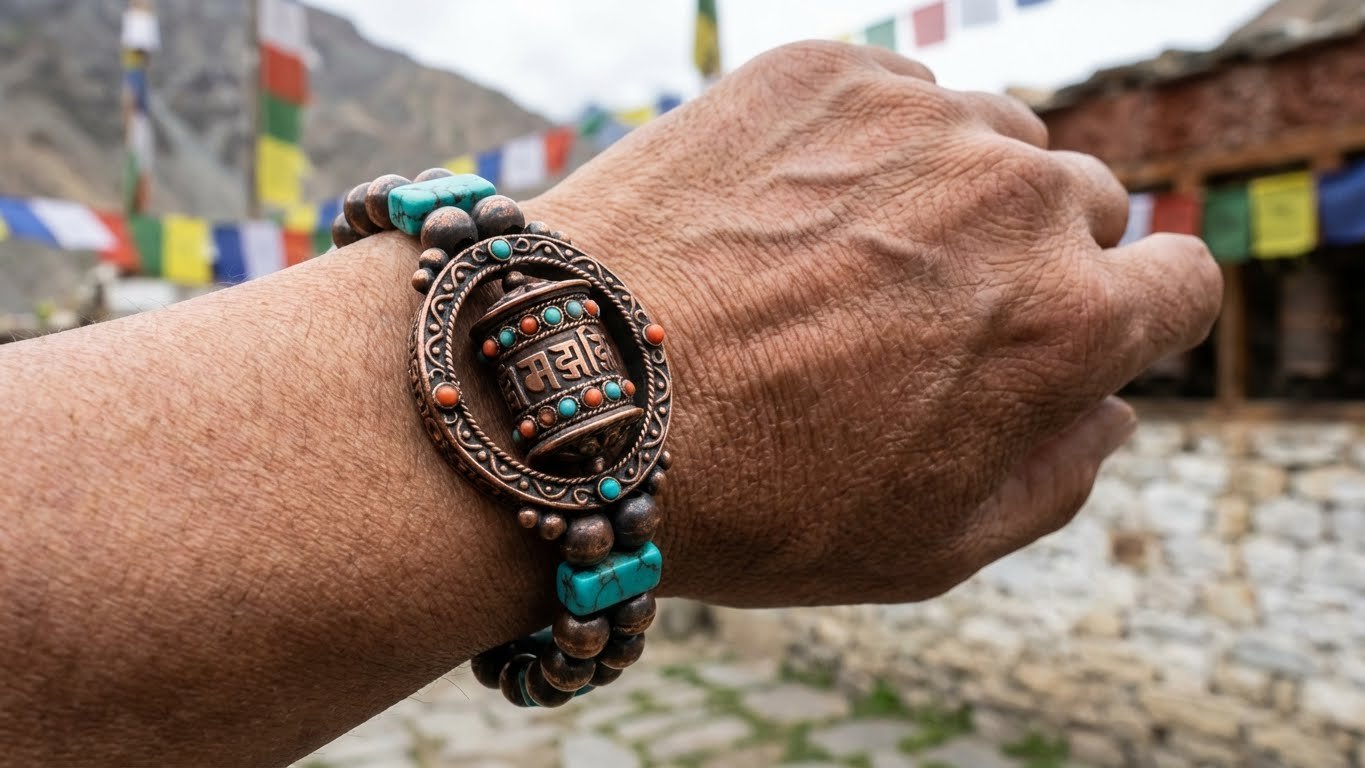
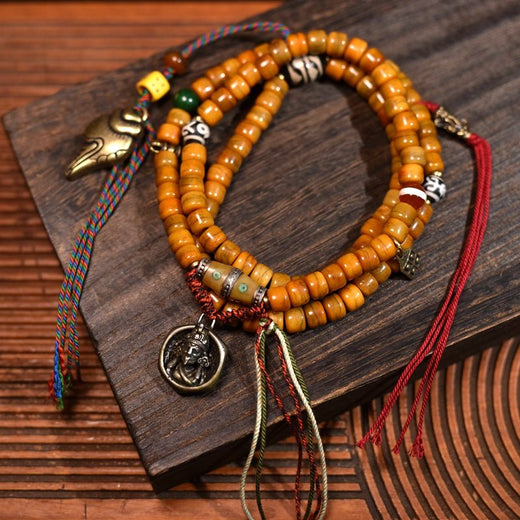
The materials themselves tell a story. A bracelet made from yak bone—harvested from herds grazing above 13,000 feet—is a reminder of impermanence, a core Buddhist teaching. One carved from Bodhi seeds connects the wearer to the story of the Buddha's enlightenment under the Bodhi tree in Bodh Gaya. Strands of turquoise and coral are not just for beauty; they are considered sacred substances in Tibet, representing the sky and the lifeblood of the earth. The knots themselves, often tied in specific, auspicious numbers like 108, represent interdependence and the unbreakable nature of commitment to one's path.

So, when you see a Tibetan bracelet, try to look past the idea of it being a passive good luck charm. Instead, see it for what it truly is: an active participant in your journey. It's a prompt to be mindful, a symbol of a personal commitment you've made, and a tangible link to a rich lineage of wisdom and craftsmanship. It doesn't do the work for you; it reminds you to do the work.

Why This Matters, Especially in 2026

You might wonder why a simple, handcrafted object holds so much relevance now, in a time of AI, virtual reality, and ever-increasing digital connection. The truth is, it's precisely *because* of our current environment that these anchors have become so essential. Your life is likely filled with notifications, endless feeds, and the subtle but constant pressure of digital existence. A Tibetan bracelet offers a quiet counter-current to that relentless flow.

Think about your workday. You're in back-to-back video calls, your inbox is overflowing, and a sense of overwhelm starts to creep in. That stressful email arrives, the one that makes your shoulders tighten. In that moment, the subtle weight or texture of the bracelet on your wrist—perhaps the cool touch of turquoise or the slight resistance of hand-knotted cord—can act as a circuit breaker. It's a physical sensation in an otherwise disembodied, digital experience. It's a silent invitation to take one conscious breath before you react. It doesn't solve the work problem, but it helps you meet the moment with a bit more space and clarity, rather than pure reactivity. This small pause can change the entire tone of your afternoon.

Or consider the evening scroll. You're tired, and you turn to your phone for distraction, only to be met with a curated stream of other people's highlights. The inevitable comparison game begins, feeding feelings of inadequacy or restlessness. Glancing at your wrist, you see the simple, earthy beads or the hand-tied knots. It's a connection to something real, something made by human hands in the valleys of Tibet, something that represents *your* path. This can be the prompt you need to put the phone down, to connect with yourself, and to honor your own unique journey, imperfections and all.

Those on a path of self-inquiry navigating their late twenties and early thirties often face a persistent question of "What's next?" The path isn't as clear as it once seemed. Committing to a spiritual practice can feel daunting, like another thing to add to the to-do list. Wearing a Tibetan bracelet can be a gentle first step. It's a small, daily commitment to your own well-being. It symbolizes your intention to walk a path of greater awareness, even if you don't know the destination. In 2026, as the world grows louder and more virtual, having a tangible piece of heritage and intention on your body is a quiet, grounded act of resistance.

A close-up shot of a person's wrist wearing a handcrafted Tibetan red string bracelet, their hand resting on a textured wooden table next to a journal.

The Real Benefits: How a Tibetan Bracelet Actually Works

The benefits of wearing a Tibetan bracelet are not mystical or instantaneous. They are practical, psychological, and built through your own interaction with the object. It's less about what the bracelet *does* to you and more about what it helps *you* do for yourself. The process is subtle, grounded, and unfolds over time.

H3: A Tool for Mindfulness, Not Magic

The most direct benefit is its function as a mindfulness tool. Our minds are constantly pulled into the past (rumination, regret) or the future (anxiety, planning). The bracelet exists in the present moment. Throughout the day, you will feel it on your skin—when you type, when you lift a cup of tea, when you rest your head in your hand. Each of these moments is an opportunity. Instead of a magical force field, think of it as a pattern interrupt. When you catch yourself in a spiral of anxious thoughts, the simple, conscious act of touching the beads or feeling the texture of the knots can break the loop. This physical action redirects your attention from the chaos in your head to the physical reality of the present. It's a technique. You are training your brain, breath by breath, to return to the here and now. The bracelet is your training partner, much like a mala used in formal practice.

H3: A Symbol of Your Personal Intention

Human beings are symbolic creatures. We use symbols to give meaning to our lives, from wedding rings to national flags. A Tibetan bracelet functions as a deeply personal symbol of your own intention. When you first receive it, you can take a quiet moment to decide what it will represent for you. Perhaps it's a commitment to patience. Maybe it's a reminder to speak with more kindness to yourself and others. Or it could simply represent your desire to be more present in your own life. Every time you look at it, you are reminded of this commitment. It's a form of gentle self-accountability. On a day when you're about to lose your temper, a glance at your wrist might be the pause you need to choose a different response. It externalizes your inner goal, making it more concrete and harder to forget amidst daily distractions. You can learn more about how different protection symbols carry ancient spiritual meanings that can amplify your intention.

H3: A Connection to Craft and Lineage

In a world dominated by mass-produced, disposable goods, there is a grounding that comes from wearing something made with human hands and intention. Each knot in our bracelets is tied by an artisan in our Kathmandu atelier, often while reciting mantras. The beads are shaped, polished, and strung with focused attention. When you wear one of these pieces, you are not just wearing an object; you are carrying a story. You are connected to Master Tenzin, who leads our workshop, and to the generations of craftspeople before him who have maintained these techniques since the 17th century. This connection provides a sense of stability and belonging. It reminds you that you are part of a larger human story, a lineage of people who have sought meaning, peace, and connection across centuries. This feeling can be a powerful antidote to the alienation and isolation that is so common today. If you're curious about the specifics of wearing such a piece, our guide to Buddha bracelet meaning and benefits offers further insight.

How to Choose an Authentic Tibetan Bracelet

Navigating the world of spiritual jewelry online can be confusing. Items labeled "Tibetan" are often mass-produced in factories with no real connection to the culture or craft. Choosing an authentic piece is about honoring the tradition and ensuring you have a meaningful tool for your practice. Here are a few things we've learned to look for over the years.

1. Consider the Materials:
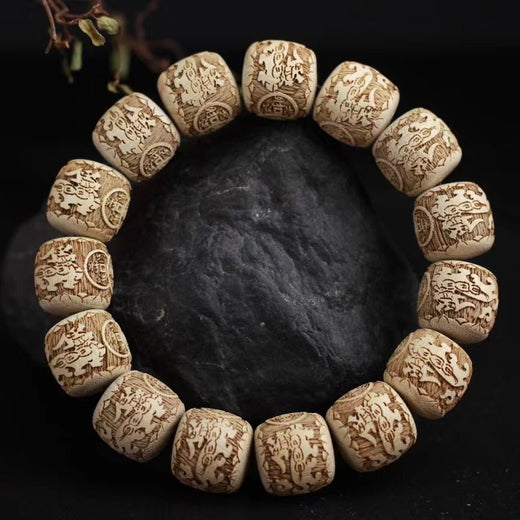
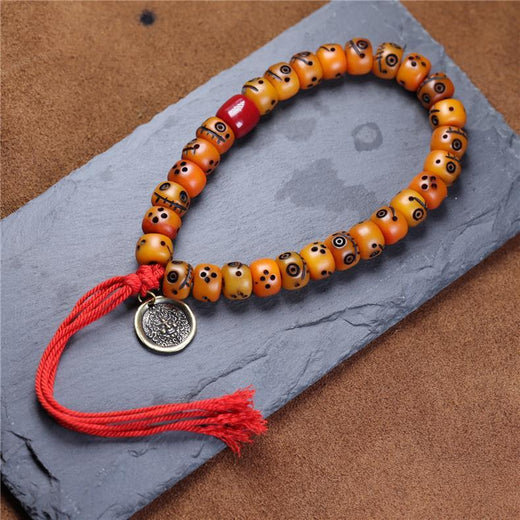
Authenticity starts with the materials. Traditional bracelets use elements from the Himalayan environment that carry specific meanings. Look for natural materials like yak bone (a reminder of impermanence), Bodhi seeds (symbolizing enlightenment), or natural stones like turquoise and coral sourced from Tibetan plateaus. Hand-hammered copper and silver are also common, often engraved with mantras using techniques passed down through generations. Be wary of brightly colored plastics, cheap alloys that turn your skin green, or perfectly uniform beads that show no signs of natural variation. The small imperfections—a slightly uneven patina on silver, the organic striations in a Bodhi seed—are often a sign of true, natural origin.

2. Examine the Craftsmanship:
A genuine piece feels different. Look for signs of human touch. Are the knots tied by hand? The "endless knot" or "lucky knot" is a common feature, tied with a skill that takes years to master. Machine-made items are perfectly symmetrical and flawless. Handcrafted pieces have character. You can see the slight variations in the knot tension or the way a bead is strung. This isn't a flaw; it's the soul of the piece. When an artisan like those in our Boudhanath workshop creates a bracelet, they are infusing it with their focused energy, a quality that cannot be replicated by a machine. The knots themselves often take 20–30 minutes to complete properly.

3. Understand the Source:
Where does the bracelet come from? Who made it? An authentic source will be transparent about their relationship with the artisans. We've built our connections in Nepal since 2015, ensuring the artisans are paid fairly and their craft is respected. This direct relationship supports the preservation of their cultural heritage. A generic reseller often has no idea where their items are truly from or under what conditions they were made. Choosing a piece from a source that honors the creators ensures your investment supports the continuation of these beautiful traditions.

Types of Bracelets in Our Collection:

  • The Handwoven Lucky Knot Bracelet: Often seen in red, these are perhaps the most iconic. The handwoven red string bracelet is a simple, powerful symbol of protection, connection, and good fortune. They are often blessed by monks during their daily prayers.
  • Dzi Bead Bracelets: An authentic Dzi is an investment piece — one you'll pass down. These ancient, etched agate beads are highly treasured in Tibetan culture for their protective qualities. A genuine Dzi bead bracelet is a rare and powerful companion.
  • Mantra Engraved Bracelets: Pieces made from copper or silver are often engraved with the mantra "Om Mani Padme Hum." Wearing a Tibetan silver bracelet like this serves as a constant reminder of the aspiration for compassion.

You can explore our full handwoven Tibetan bracelet collection to see these principles in practice.

A flat lay of three different authentic Tibetan bracelets on a slate background: a red string, a Dzi bead bracelet, and a silver mantra cuff.

How to Actually Use Your Bracelet: A Simple Daily Practice

So you've chosen a bracelet that resonates with you. Now what? The real value is unlocked not by just wearing it, but by integrating it into your life with intention. You don't need a complicated ritual. In fact, the simpler and more consistent your practice, the more effective it will be. Here is a straightforward way to begin.

Step 1: Setting a Morning Intention (2 minutes)
Before you put your bracelet on in the morning, take a moment. Don't do it while rushing out the door. Find a quiet spot, even if it's just the edge of your bed. Hold the bracelet in your hands. Close your eyes and take three slow, deep breaths. As you hold it, think of a simple quality you'd like to bring into your day. Not a huge goal, but something small and achievable. It could be "patience," "kindness," or simply "presence." You can say it aloud or just think it clearly: "Today, may this bracelet remind me to be patient." Then, mindfully place the bracelet on your wrist. That's it. You've just transformed it from a simple accessory into a dedicated tool for your day.

Step 2: The Pattern Interrupt (Throughout the Day)
This is where the practice comes alive. As you go about your day, you will inevitably face moments of stress, frustration, or distraction. You'll feel that familiar tension in your chest or the urge to mindlessly scroll your phone. When you notice this feeling, let it be your cue. Reach over with your opposite hand and consciously touch your bracelet. Don't just fidget with it. Feel the texture of the beads or the cord—whether it's smooth sandalwood, cool lapis lazuli, or woven silk. Roll a bead between your thumb and finger. Use the physical sensation as an anchor. As you touch it, bring your awareness to your breath for just one cycle: a full inhale, a full exhale. This tiny pause cuts through the momentum of the reactive thought pattern and gives you a sliver of space to choose how you want to proceed.

Step 3: Mindful Removal (1 minute)
At the end of the day, as you get ready for bed, reverse the process. As you take the bracelet off, pause for a moment. Hold it in your hands again. Briefly reflect on your day. Was there a moment when the bracelet helped you remember your intention? Maybe you took a breath instead of sending a sharp reply. Maybe you noticed a moment of beauty you otherwise would have missed. Acknowledge that small victory. This isn't about judging your performance but about reinforcing the positive connection. Place the bracelet somewhere special for the night, like a small dish on your nightstand—the way practitioners in Lhasa keep their mala beads on their altar. This simple act closes the loop on your day's practice and treats the object with respect.

Common Questions About Tibetan Bracelets

As you begin this journey, questions will naturally arise. Here are answers to some of the most common ones we hear, grounded in authentic tradition and practical application.

Do I have to be a Buddhist to wear a Tibetan bracelet?

Absolutely not. You do not need to identify as a Buddhist to wear a Tibetan bracelet and benefit from its purpose. The key is respect. These are not mere fashion accessories; they are objects from a rich spiritual tradition. We encourage you to approach them with a sense of reverence for their cultural origins. The principles they represent—mindfulness, compassion, intention—are universal human values that anyone can cultivate. Think of it as using a tool that has been refined since the 7th century when Buddhism arrived in Tibet. You can use a yoga mat without being a Hindu ascetic; similarly, you can use a Tibetan bracelet as a tool for your personal journey of self-awareness, whatever your spiritual background may be.

Which wrist should I wear my bracelet on?

You will find many opinions on this online, often with rigid rules. In Tibetan tradition, there is a general view that the left wrist is the "receiving" side, closer to the heart, and is therefore ideal for bracelets with intentions of compassion, wisdom, or healing for oneself. The right wrist is seen as the "giving" or active side, used for bracelets related to compassionate action in the world. However, the most senior teachers we've spoken with—including those at Sera Monastery in South India—emphasize practicality above all else. The most important rule is to wear it on the wrist where it will be most comfortable and serve as the most effective reminder for you. If you are left-handed, wearing it on your right wrist might make more sense. Don't let dogma get in the way of function.

Can I wear my Tibetan bracelet in the shower?

We strongly advise against it. While a quick splash of water won't ruin it, prolonged exposure to water, soaps, and lotions can degrade the natural materials over time. The natural fibers in the cord—typically hand-spun wool or silk—can weaken, wooden beads can swell, and metals can tarnish. More importantly, removing your bracelet before showering or sleeping can become a mindful ritual in itself. It's a moment to pause, acknowledge the end of the day, and handle a meaningful object with care. This simple act of preservation is also an act of respect for the bracelet and the intention it holds. Treat it as you would any cherished possession.

What does it mean if my bracelet breaks?

In the West, a broken object is often seen as a failure. In Tibetan Buddhist thought, it is viewed very differently. If a bracelet you've worn for a long time breaks, it is often seen as a positive sign. It can symbolize that the bracelet has served its purpose; it has absorbed whatever negative energy it was meant to, or it has seen you through a particular cycle of your life. It is not a bad omen. Rather than feeling sad, the traditional response is to feel a sense of gratitude. Thank the bracelet for its service to your practice, and then you can return it to the earth by burying it in your garden or a pot, allowing its natural materials to decompose. It signifies the completion of a chapter and readiness for the next.

How do I "cleanse" or "recharge" my bracelet?

The idea of "cleansing" spiritual items can sometimes become overly complex. You don't need elaborate rituals with sage or specific crystals unless that practice is personally meaningful to you. The energy of the bracelet is tied to your intention. The simplest and most direct way to "recharge" it is to simply reinforce your intention. You can do this by holding it in your hands, taking a few deep breaths, and restating the purpose you have given it. If you want to add a physical element, you can let it rest in the light of a full moon overnight or place it on a windowsill to catch the morning sun. The power is not in the moonlight itself, but in your mindful act of resetting your focus.

Are your bracelets actually blessed?

Yes, but it's important to understand what "blessed" means in this context. It is not a magic spell. When we say a piece is blessed, it means it has been part of a traditional spiritual ceremony. For instance, some of our pieces are blessed during the 49-day Chöd practice, a powerful ritual for overcoming obstacles, conducted by our teacher Lama Tharchin. Other pieces are blessed by the monks at Sera Monastery during their daily pujas (prayer ceremonies), where they recite mantras for approximately two hours each morning. This process infuses the object with the positive, peaceful, and compassionate energy of the practice. It's an offering of pure intention that becomes part of the bracelet's story, which you then carry with you.

What's the difference between a Tibetan bracelet and a mala bracelet?

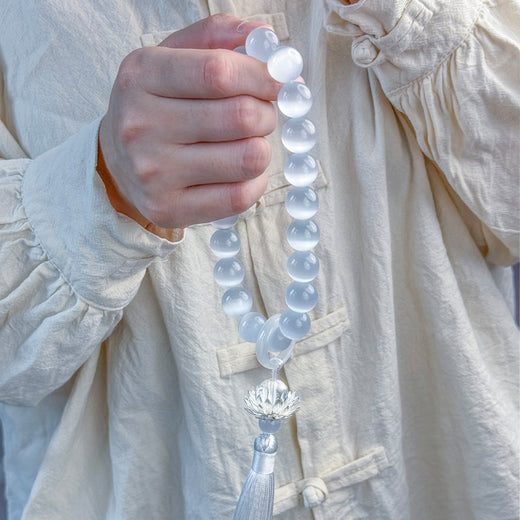
This is a great question. "Tibetan bracelet" is a broad category, while a "mala bracelet" is a specific type of tool. A mala, whether a full 108-bead strand or a shorter wrist version (often 21 or 27 beads), is specifically designed for counting mantras during meditation. Each bead is used to track one repetition of a mantra, like "Om Mani Padme Hum." A Tibetan bracelet, on the other hand, might not be used for counting at all. It could be a simple protective cord, a bracelet with a single Dzi bead, or a silver cuff with symbolic carvings. While a mala bracelet is a type of Tibetan bracelet, not all Tibetan bracelets are malas.

Why are authentic Dzi beads an investment?

You may notice a significant price difference with Dzi beads, and there's a good reason. An authentic Dzi is not a new, manufactured bead. They are ancient agate beads, some hundreds or even thousands of years old, whose origins are shrouded in mystery and folklore. They are found, not made. Their value comes from this extreme rarity, their historical significance, and the deep cultural belief in their protective power. Each bead has a unique pattern, or "eye," believed to correspond to specific benefits—a nine-eye Dzi, for example, is said to bring harmony and fulfillment. For Tibetans, owning a real Dzi is like owning a precious family heirloom. Therefore, a genuine Dzi bead is an investment piece — one you'll pass down through generations. It's a piece of history, not just jewelry.

Your Journey, Your Anchor for 2026

Standing before the prayer wheels at Jokhang Temple in Lhasa, you feel it immediately—that pull between the vastness of the spiritual path and the simplicity of taking one step. It's easy to feel overwhelmed, to think you need to read every text or master every meditation technique before you can even begin. But the journey always starts with a single, simple step.

A Tibetan bracelet is not the destination. It is not the answer to all of life's difficult questions. It is, however, a beautiful and tangible first step. It is a companion for the path. It is a quiet anchor in the often-stormy seas of your daily life.

As you move through 2026, with all its unique challenges and digital distractions, this small piece of the Himalayas on your wrist—hand-knotted with materials sourced from Dharamshala—can be your constant, gentle reminder. A reminder to breathe. A reminder to be kind to yourself. A reminder to come back to the present moment, the only place where your life is actually happening. It's not about becoming someone new, but about remembering the calm, clear-sighted person you already are, just beneath the surface of the noise.

If you feel ready to take that step, we invite you to explore our Tibetan bracelet selection. Find the piece that speaks to your heart, and begin your journey.

Previous Next

Leave a comment

0 comments

Please note, comments need to be approved before they are published.