
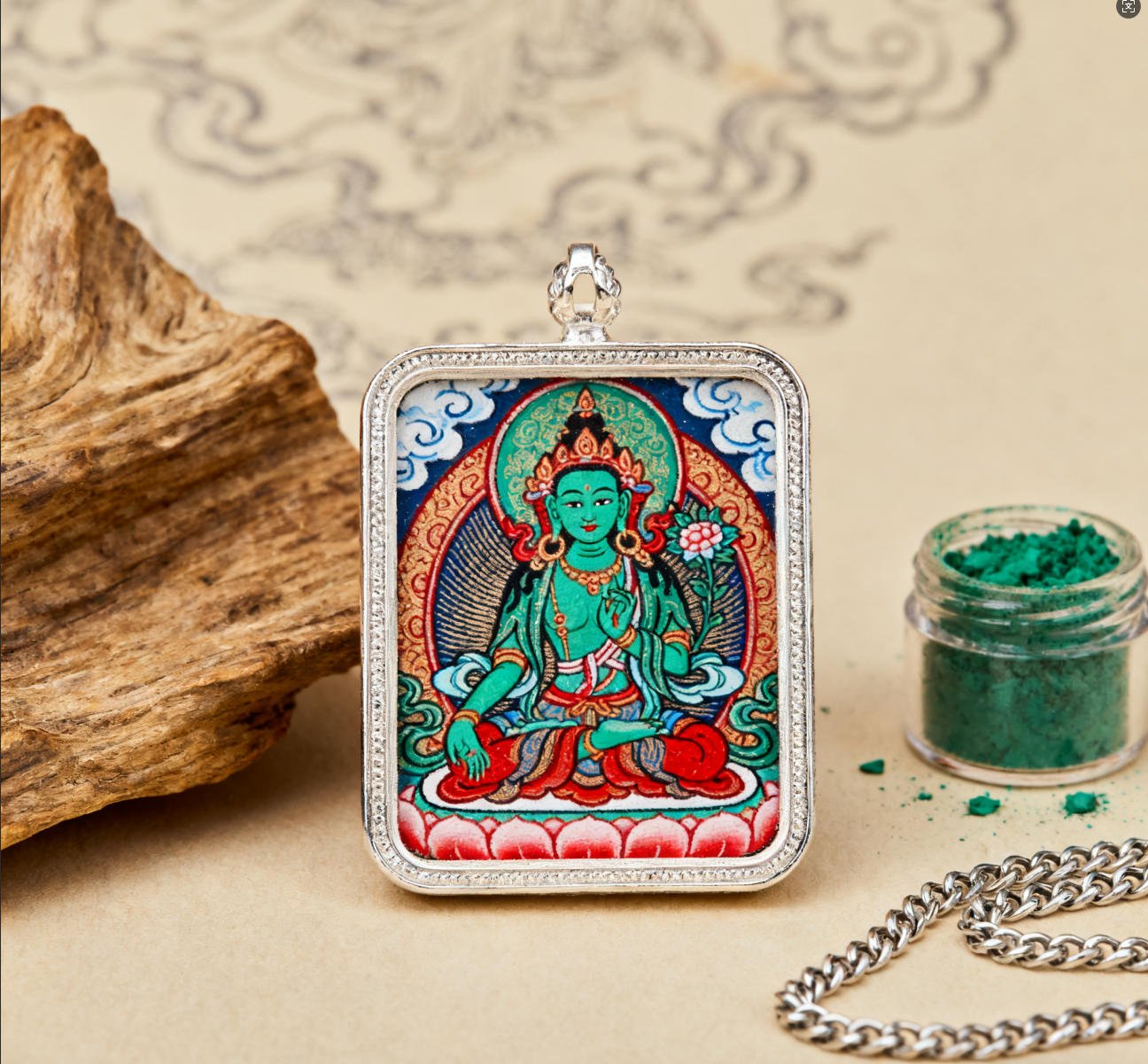
Tibetan Thangkas: A Guide to Sacred Art
🌸 For over a thousand years, deep within the serene monasteries of the Himalayas, an extraordinary art form has flourished. Tibetan Thangkas, painted with meticulously ground mineral pigments and infused with boundless faith, are more than paintings.
They are scrolls of enlightenment, vibrant works of art that masterfully blend the sacred and the beautiful. Traditionally reserved for temples and meditation halls, this ancient art has now found its way into the hearts and lives of people around the world, becoming a cherished accessory for those who, like you, appreciate the authenticity and spirit of brands like Buddhabelief.
But what is the true power held within these intricate designs? What makes wearing a Thangka pendant a profoundly meaningful experience? Who has been drawn to their unique energy, and why do some antique Thangkas command prices in the millions at auction?
It’s time to unroll the scroll and dive deep into the luminous world of Tibetan Thangkas. You are about to discover how a small, wearable piece of this tradition can bring immense spiritual comfort, cultural connection, and timeless style into your life.
When we visited a small thangka workshop tucked away in the
🛒 Shop Now to find your own spiritual Thangka pendant and begin your journey.

A Window into the Divine: The Sacred Origins of Tibetan Thangkas
To truly appreciate your Thangka, you must first understand its journey through time. The story of the Thangka is not only a history of art; it's a history of devotion. Its origins trace back to the 7th century, when Buddhism first began to flourish in Tibet.
The arrival of two Buddhist princesses who married the Tibetan king, Songtsen Gampo—Princess Bhrikuti of Nepal and Princess Wencheng of China—was a pivotal moment. They brought with them not only sacred texts and relics but also skilled artisans and exquisite Buddhist art, planting the seeds for a unique Tibetan artistic tradition.
Initially, Thangkas served a vital, practical purpose. Tibet is a vast, mountainous land, and for centuries, itinerant monks and lamas traveled from one remote village to the next to share the Buddhist teachings (the Dharma).
They couldn't carry heavy statues or elaborate murals. The Thangka, painted on cotton or silk canvas, was the perfect solution. It could be easily rolled up, protected by a silk cover, and transported across treacherous mountain passes.
Upon arriving in a village, the teacher would unfurl the Thangka, hang it for all to see, and use its vivid imagery to illustrate complex concepts like the life of the Buddha, the nature of compassion, or the intricate map of the cosmos depicted in a mandala.
The Thangka was a portable temple, a visual sermon, and a focal point for community devotion.
The creation of a Thangka was, and still is, a profound spiritual practice. The artist is not merely a painter but a yogi, a meditator, and a conduit for divine energy. Before a single brushstroke is made, the artist undertakes purification rituals, recites mantras, and meditates on the specific deity they intend to depict.
This state of deep concentration and spiritual alignment is maintained throughout the entire, painstaking process. Every line, every color, and every symbol is imbued with this focused intention. The artist’s faith and spiritual energy are literally woven into the fabric of the canvas, which is why a traditionally made Thangka feels so alive and potent.
The Anatomy of a Thangka: more than a Pretty Picture
A Thangka is a universe of meaning, a dense weave of symbolism where every element has a purpose. It’s like a tiny Buddhist encyclopedia you can carry with you. The value and power of a Thangka from Buddhabelief lie in its adherence to these ancient traditions, from the materials used to the sacred geometry that governs its composition.
The process begins with preparing the canvas, typically cotton, which is stretched and coated with a mixture of chalk and animal glue, then polished until it is flawlessly smooth. Upon this perfect surface, the artist lays down the foundational blueprint: a precise grid of lines and angles known as the thigse.
This grid is the sacred geometry that ensures every deity is depicted with the correct proportions as dictated by scripture. The serene face of the Buddha, the dynamic posture of Tara, the wrathful energy of a protector deity—all are guided by these ancient iconographic rules.
This precision is not about artistic limitation; it's about creating a spiritually accurate and powerful representation of enlightened energy.
The colors themselves are a a sign of the Thangka's connection to the natural world. Traditional painters use mineral pigments, painstakingly ground by hand into a fine powder and mixed with a binder. This is why their colors remain so vibrant for centuries.
- Lapis Lazuli: This deep, celestial blue, once more valuable than gold, is used for the hair of deities or the infinite sky, symbolizing purity and healing, often associated with the Medicine Buddha. - Cinnabar and Ochre: These create the rich, warm reds and oranges seen in a Buddha’s robes or the fiery aura of a wrathful deity, representing life force, power, and sacredness. - Malachite: This stone provides the vibrant green of Green Tara’s skin or the lush landscapes, symbolizing enlightened activity, growth, and fearlessness. - Gold and Silver: Real gold is ground into paint or applied as leaf to create halos, ornaments, and delicate lines, representing the luminous, unchangeable nature of enlightenment.
The symbolism extends to every detail. The lotus flower on which a deity sits represents purity, rising unstained from the mud of worldly existence. The Dharma wheel, or Dharmachakra, stands for the Buddha’s teachings and the path to wisdom.
Even a seemingly whimsical detail, like a treasure mouse spewing jewels, symbolizes abundance and prosperity. When you tell someone about the imagery on your Thangka, you’re not only showing off an accessory—you’re sharing a profound piece of Tibetan culture and timeless wisdom.
The Consecrated Thangka: Channeling Blessings into Your Life
What truly elevates a Thangka from a beautiful piece of art to a powerful spiritual object is the act of consecration. This is a crucial step that is often overlooked in mass-produced replicas but is central to the authenticity of a Thangka from Buddhabelief.
A Thangka’s value isn’t just about looking nice—it’s about the cultural energy and spiritual comfort it brings. And when a Thangka is consecrated by high monks, it feels extra special because it has been spiritually "activated."
This sacred ceremony is called rabney. During the ritual, a high lama or a group of monks invites the deity depicted in the painting to inhabit the image. Through chanting ancient mantras, making offerings, and performing specific mudras (hand gestures), they breathe life into the art.
One of the most significant moments is the symbolic "opening of the eyes." The lama carefully paints the pupils of the deity's eyes, signifying that the enlightened being is now present and can see and bless the world through the Thangka.
On the back of the Thangka, the sacred syllables "Om Ah Hum" are often inscribed, representing the Buddha's enlightened body, speech, and mind.
Why does this matter for you and your Thangka pendant? A consecrated Thangka is no longer just a representation of a deity; it is considered a living embodiment of that deity's enlightened qualities. It becomes a direct channel for blessings, protection, and inspiration.
It transforms from a simple object into a sacred amulet. When you wear a consecrated Thangka, you are carrying with you a vessel of positive energy, a focal point for divine presence that has been sealed by centuries of unbroken tradition.
This is the unseen, yet deeply felt, difference that makes an authentic Thangka a true spiritual companion.

Your Personal Calm Button: Integrating a Thangka into Your Modern Life
In our fast-paced, often chaotic world, finding moments of peace and grounding can feel like a challenge. Your Thangka pendant can become a powerful tool for exactly that—a "Calm Button" you can access anytime, anywhere.
The very creation of a Thangka is an act of supreme mindfulness, a process that takes serious dedication. When you wear a consecrated Thangka from Buddhabelief, you carry a piece of that focused, peaceful energy with you.
Imagine you're in a stressful meeting at work, or working through a crowded, noisy commute. Your mind is racing, and your shoulders are tense. In that moment, you can discreetly run your fingers over the smooth surface and intricate texture of your Thangka pendant.
This simple, tactile act can break the cycle of anxious thoughts. It serves as a physical anchor, pulling your awareness out of the chaos of your mind and into the present moment. It’s a reminder to take a deep breath, to reconnect with your center, and to let go of the stress.
That is the Thangka's quiet magic.
Beyond being a tool for mindfulness, your Thangka is a source of continuous inspiration. The deity it depicts embodies qualities you may wish to cultivate in your own life.
- Are you embarking on a new project and need courage and protection from obstacles? Your Green Tara Thangka is a reminder of her swift, compassionate action.
- Are you studying for an exam or facing a complex decision that requires clarity? Gazing at your Manjushri pendant, with his sword that cuts through ignorance, can inspire wisdom.
- Are you working to open your heart and be more kind to yourself and others? Your Avalokiteshvara (Chenrezig) Thangka is the ultimate symbol of universal compassion.
From Monastery Walls to Fashion Runways: The Thangka as a Cultural Statement
In recent years, Thangkas have transcended their traditional context and have become a "cultural vibe" in the world of fashion and personal style. This isn't just a fleeting trend. It reflects a closer shift in consciousness, a desire for adornment that carries meaning, story, and soul.
You and others are moving away from disposable, fast-fashion accessories and are seeking out pieces that express a unique identity and a connection to something timeless and authentic.
A Thangka pendant is the perfect embodiment of this movement, masterfully blending tradition with contemporary fashion. It’s a versatile piece that can be styled in numerous ways to reflect your personal aesthetic. Worn on a simple cord or a delicate chain, it can be a subtle, personal reminder of your spiritual path, resting close to your heart.
Layered with other necklaces or worn as a statement piece over a simple sweater or linen shirt, it becomes a bold declaration of your appreciation for art, culture, and mindful living. It’s a powerful statement piece that pairs beautifully with other meaningful accessories, like our authentic Tibetan bracelets.
More importantly, your Thangka is a conversation starter. When someone admires your pendant, they aren't just complimenting a piece of jewelry; they are opening a door for you to share something beautiful. You can tell them about the thousand-year-old art form, the meaning of the deity, the natural pigments used to create it, and what it personally means to you.
In that moment, you become a storyteller, a cultural ambassador sharing a small piece of Tibet's profound wisdom with the world. It’s a way to wear your values, to connect with like-minded people, and to carry a story that is much bigger than yourself.
The Art of Value: Why Some Thangkas Are Worth Millions
You may have seen headlines about antique Thangkas selling for astonishing sums at auction, leaving you to wonder what makes them so valuable. In 2014, a massive 15th-century embroidered silk Thangka, created during the reign of the Yongle Emperor, sold for a record-breaking $45 million at a Christie's auction in Hong Kong.
This exceptional piece was valued for its immense size, its imperial provenance, its incredible rarity, and its pristine condition after 600 years. This highlights the high-end art market for Thangkas, but the concept of "value" is multifaceted.
Several factors contribute to a Thangka's monetary value in the art world:
- Age and Provenance: Thangkas from the 13th to 16th centuries are exceptionally rare. A documented history linking a piece to a specific monastery or a famous master greatly increases its value.
- Artistry and Skill: The quality of the work is paramount. A master artist's hand is evident in the fineness of the lines, the subtlety of the color shading, the dynamic composition, and the emotional expression of the figures. The extensive and delicate use of real gold is also a significant factor.
- Materials and Condition: The use of pure mineral pigments and the overall state of preservation are critical. A Thangka that has retained its vibrant color and is free from significant damage is far more valuable.
- Rarity and Subject Matter: Some deities or narrative scenes are rarer than others, making them more sought after by collectors.
Ultimately, a Thangka is a bridge. It connects the ancient with the modern, the sacred with the fashionable, and the divine with your daily life. It is a work of art that looks outward with stunning beauty and inward with profound wisdom.
By choosing to wear a Thangka, you are not only selecting a piece of jewelry; you are embracing a legacy of faith, artistry, and mindfulness. You are carrying a story, a blessing, and a beautiful reminder of the enlightened potential that resides within you.
Frequently Asked Questions About Tibetan Thangkas
1. Is it okay for a non-Buddhist to wear a Thangka?
Absolutely. Wearing a Thangka is often seen as an act of appreciation for its beauty, artistry, and the universal values it represents, such as compassion (Avalokiteshvara), wisdom (Manjushri), and protection (Tara).
As long as you wear it with respect and mindfulness, it is a beautiful way to connect with Tibetan culture and its profound philosophies, regardless of your personal spiritual path.
2. How should I care for my Thangka pendant?
Treat your Thangka pendant as a cherished, sacred object. To preserve its beauty, avoid exposing it to harsh chemicals, perfumes, or prolonged contact with water.
When you're not wearing it, store it in a soft cloth or pouch to prevent scratches. Periodically, you can gently wipe it with a dry, soft cloth to clean it. This mindful care honors the artistry and spiritual intention within the piece.
3. What's the difference between a printed and a hand-painted Thangka?
A hand-painted Thangka, like those offered by Buddhabelief, is a unique work of art created by a skilled practitioner following traditional methods. It contains the artist's focused energy, uses authentic mineral pigments, and is a direct link in a long lineage of sacred art.
A printed Thangka is a machine-made reproduction. While it can be beautiful, it lacks the spiritual depth, unique character, and energetic potency of a piece painted by hand.
4. How do I choose the right deity for my Thangka?
The best way is to choose the one that resonates with you personally. Read about the different deities and their symbolism. Are you seeking more compassion in your life?
Avalokiteshvara might be right for you. Do you need strength and fearlessness to overcome an obstacle? Green Tara could be your guide. Trust your intuition. The deity you are most drawn to is often the one whose energy you most need at this point in your journey.
5. What does "consecrated" really mean for my pendant?
Consecration means the Thangka has gone through a sacred blessing ritual performed by a Buddhist monk or lama. This ceremony is believed to "awaken" the piece, inviting the spirit of the deity to reside within the image.
It transforms the pendant from being simply a beautiful object into a powerful spiritual tool and amulet, charged with positive energy and blessings for the wearer.


