Hot
Real Tibetan Jewelry on Celebrities
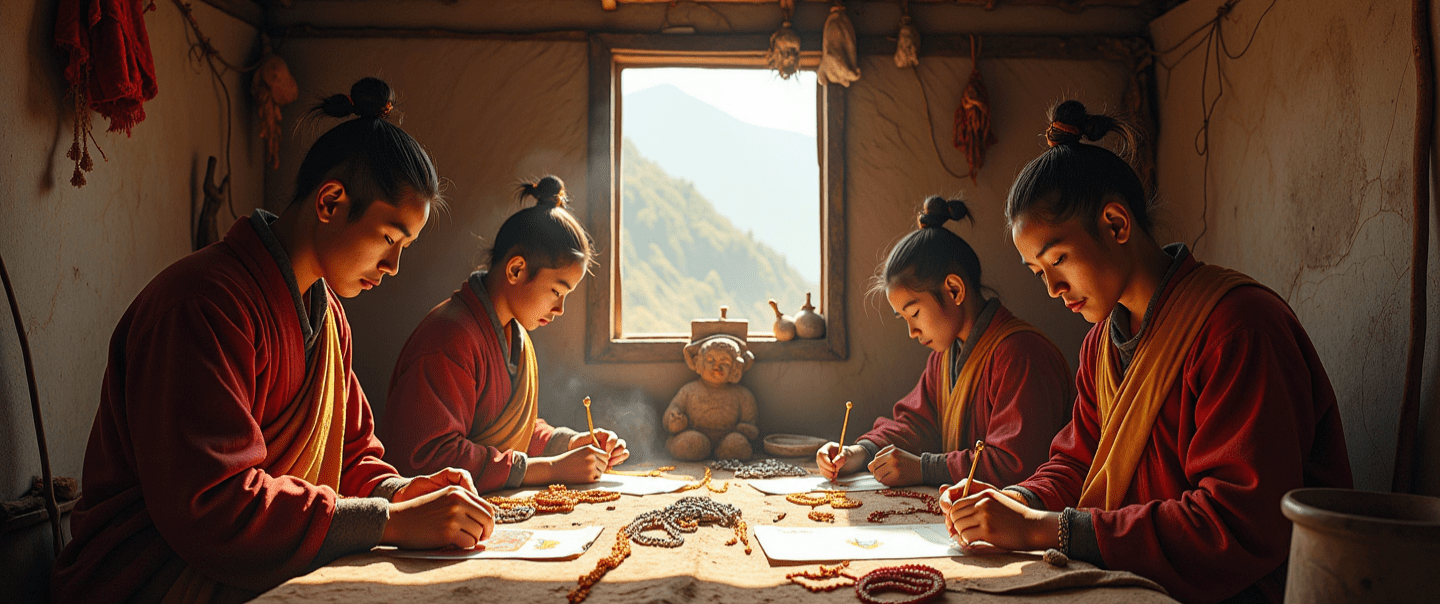
In an era where mindfulness and cultural authenticity are increasingly valued, the quiet power of sacred adornment is resonating more deeply than ever. It's no surprise that Tibetan Buddhist jewelry—like intricately crafted mala beads, miniature Thangka pendants, and vibrant presence bracelets—has found favor among celebrities and public figures worldwide.
These are not only fleeting fashion statements. These pieces, often blessed by high lamas in monasteries nestled in the Himalayas, transcend mere ornamentation. They serve as potent tools for meditation, powerful symbols of protection, and tangible connectors to an ancient stream of wisdom.
From Hollywood actors seeking grounding amidst the chaos to Asian superstars honoring their cultural roots, the embrace of this jewelry signifies a larger movement toward a more conscious and meaningful way of living. Let's explore how these stars are incorporating sacred accessories into their lives and what it reveals about the beautiful convergence of spirituality, luxury, and personal intention. 🕯️

Celebrities Mala Beads Thangka is celebrities Wearing Tibetan Buddhist Jewelry: Spirituality Meets Luxury 🌟 Celebrities Wearing Tibetan Buddhist Jewelry: Spirituality Meets Luxury In an era where mindfulness and cultural authenticity are increasingly valued, the quiet power of sacred adornment is resonating more deeply than ever.
The Ancient Roots of Spiritual Adornment in Tibet
Long before these pieces graced the pages of magazines or appeared on red carpets, they held profound significance in the rugged, high-altitude landscape of the Tibetan plateau. The tradition of wearing spiritual jewelry is deeply woven into the fabric of Tibetan culture, a practice that predates the arrival of Buddhism and is rooted in the animistic Bon religion.
For the nomadic peoples of Tibet, jewelry was more than decoration; it was a form of portable wealth, a marker of social status, and, most importantly, a source of spiritual protection against the harsh elements and unseen forces.
Materials were chosen not only for their beauty but for their inherent presence and symbolism. Turquoise, the "sky stone," was believed to connect the wearer to the heavens, offering protection and healing. Its vibrant blue-green hue represented the life-giving properties of water and air.
Coral, sourced from ancient trade routes, symbolized the lifeblood, vitality, and was thought to ward off negativity. Amber, a fossilized resin, was cherished for its warm, sun-like character, believed to purify the mind and body.
Perhaps most prized of all are the mysterious Dzi beads, etched stones of agate whose origins are steeped in myth. Some legends say they are fallen gifts from the gods, while others believe they are petrified insects.
Regardless of their origin, Dzi beads are considered among the most powerful talismans for drawing in good fortune and deflecting obstacles.
When Buddhism took root in Tibet in the 7th century, these ancient material beliefs did not disappear. Instead, they were beautifully integrated into Buddhist practice. Malas (prayer beads) began to be crafted from traditional materials like bodhi seeds (symbolizing the tree under which the Buddha attained enlightenment) as well as precious stones.
Amulet boxes, known as Gau, were designed to hold sacred relics, mantras, or medicinal herbs, worn close to the heart for protection and blessings. The jewelry became a physical intention-setting of one's faith and a constant reminder of the path to enlightenment.
Each piece told a story—of devotion, of lineage, and of the profound connection between the earthly and the divine.
More Than an Accessory: The Deeper Meaning of Sacred Jewelry
When you see a celebrity wearing a string of mala beads or a pendant depicting a Buddhist deity, you are witnessing the continuation of this ancient tradition. Each type of jewelry carries its own specific purpose and presence, acting as a spiritual companion for the wearer.
Understanding this symbolism allows you to appreciate these pieces not as trends, but as tools for personal transformation.
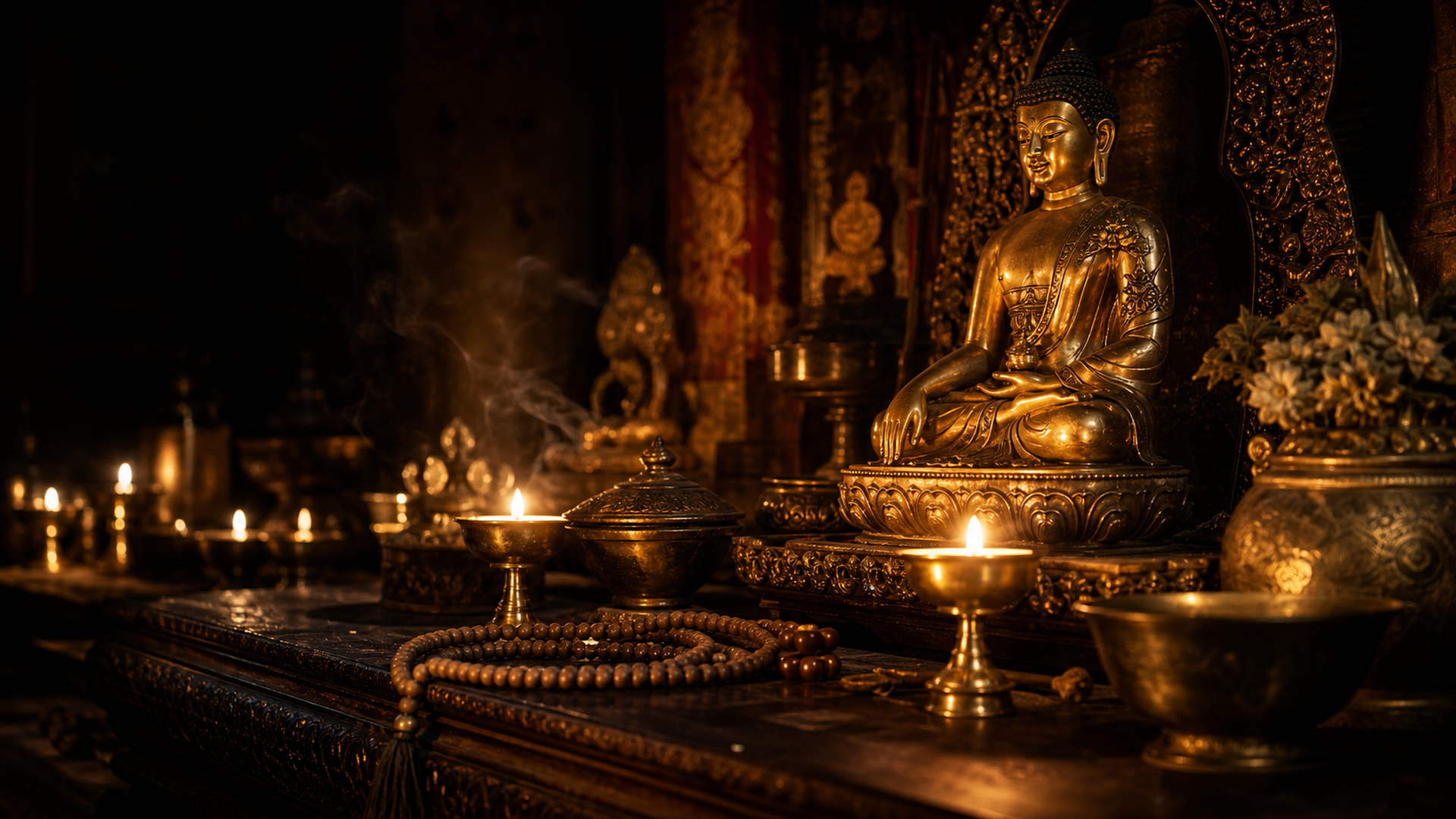
Mala Beads (Japa Malas): A mala is a string of beads used in meditation to count mantras, breaths, or affirmations. Traditionally, a full mala contains 108 beads, a number considered sacred in many Eastern traditions for a multitude of reasons—it is said there are 108 focus points converging to form the heart chakra, 108 earthly desires to overcome, and the distance between the Sun and Earth is roughly 108 times the Sun's diameter.
The 109th bead, known as the guru bead or Sumeru, represents the student-teacher relationship and marks the beginning and end of a meditation cycle. The material of the mala is also significant. Sandalwood is calming and promotes tranquility.
Rudraksha seeds, from the "Tears of Shiva," are believed to enhance concentration and shield against negativity. Gemstone malas, such as those made from amethyst or lapis lazuli, carry the qualities of the stones themselves.
Wearing a mala, even when not actively meditating, serves as a kinesthetic reminder of your intentions and your connection to your practice.
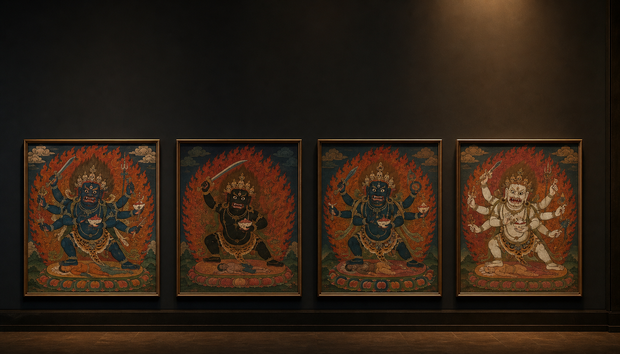
Thangka Pendants: Thangkas are traditional Tibetan scroll paintings, rich with intricate detail and iconography, that depict Buddhist deities, mandalas, or spiritual scenes. They are not merely art but objects of veneration and meditation aids.
A Thangka pendant is a wearable, miniature version of this sacred art form, often encased in metal and worn close to the heart. Each deity represents a specific quality or "enlightened presence" that you can invite.
For example, a White Tara pendant calls upon the presence of compassion, healing, and longevity. A Green Tara pendant connects you to the presence of swift, compassionate action and protection from fear. Wearing a Thangka pendant is like carrying a small, sacred portal with you, a constant source of inspiration and divine protection.
Protective Amulets and Grounding Bracelets: Beyond malas and Thangkas, Tibetan tradition is rich with protective talismans. The Endless Knot, one of the Eight Auspicious Symbols, represents the interconnectedness of all things and the eternal nature of the Buddha's teachings.
The Dorje (or Vajra) symbolizes the indestructible nature of enlightenment and is a powerful symbol of spiritual authority and power. Modern interpretations often take the form of grounding bracelets, combining these ancient symbols with grounding stones like black obsidian, lava rock, or tiger's eye.
These pieces are designed to bring focus and calm to your day, protect you from negative influences, and keep you centered throughout your day.
Hollywood's Embrace of Eastern Wisdom: Stars and Their Spiritual Statements
The allure of Tibetan Buddhist philosophy—with its emphasis on compassion, mindfulness, and inner peace—has long resonated with individuals in the high-pressure environment of Hollywood. For many actors and artists, spiritual jewelry is a way to stay grounded and connected to these values amidst the whirlwind of fame.
Keanu Reeves: Known for his profound introspection and minimalist lifestyle, Keanu Reeves perfectly embodies the quiet depth often associated with Eastern spirituality. He has frequently been spotted wearing simple, unpretentious Tibetan-style bracelets and mala beads.
While deeply private about his personal beliefs, his choice of accessories aligns perfectly with his public persona. He often favors malas made from natural wood or dark stones, suggesting a preference for grounding and simplicity.
These pieces are not worn as flashy status symbols but as personal, meaningful anchors. For Reeves, they appear to be a quiet statement of his inner world, a reminder to remain present and detached from the superficiality that can surround him.
Richard Gere: Perhaps one of the most well-known and dedicated Western practitioners of Tibetan Buddhism, Richard Gere's connection is far more than aesthetic. A longtime friend and student of His Holiness the Dalai Lama, Gere's use of spiritual jewelry is an authentic expression of his decades-long practice.
He is often seen with a simple cord bracelet or a traditional mala, worn not for show but for function. His choices reflect a deep understanding of the tradition, where the true value of an object lies in its use as a tool for spiritual development.
His public embrace of these symbols has done much to introduce Tibetan culture and its profound message of peace to a global audience.
Uma Thurman: Uma Thurman's connection to Buddhism is uniquely personal. Her father, Robert Thurman, is a preeminent Buddhist scholar and was the first American to be ordained as a Tibetan Buddhist monk. Growing up in an environment steeped in these teachings has clearly influenced her perspective.
She has been photographed wearing elegant mala necklaces and other spiritual adornments that feel both natural and deeply personal. Her style demonstrates how sacred jewelry can be integrated into a sophisticated, modern wardrobe, proving that spirituality and elegance can coexist beautifully.
For her, these pieces are likely not only accessories but touchstones to her upbringing and the profound philosophical principles she was raised with.

Icons of the East: How Asian Celebrities Honor Their Heritage
For many celebrities in Asia, wearing Tibetan Buddhist jewelry is a powerful way to connect with their cultural and spiritual heritage. It is a public affirmation of faith and a way to carry forward ancient traditions in a contemporary world.
Their choices often inspire millions of fans to explore the deeper meaning behind these beautiful objects.
Jackie Chan (成龙): The legendary martial artist and global superstar is known for his deep respect for Buddhist practices. He is frequently seen wearing a White Tara (白度母) Thangka pendant. In Tibetan Buddhism, White Tara is the embodiment of compassion, long life, healing, and serenity.
She is often called upon for protection and to overcome obstacles. Chan has spoken about how his hectic schedule and the physical demands of his work make spiritual grounding essential. His choice of a White Tara pendant is a direct reflection of his desire for protection, peace, and longevity—key themes in Tibetan spirituality.
It serves as a constant, wearable reminder to act with compassion and to maintain inner calm, no matter the external pressures.
Faye Wong (王菲): The iconic Chinese singer and actress is one of the most influential figures in Asian pop culture, and she is also a devout Buddhist practitioner. Her style has long been admired for its unique, ethereal quality, and she often incorporates spiritual elements into her look.
Faye Wong is frequently seen with Tibetan amulets, intricate Thangka pendants, and malas. She has shown a particular affinity for pieces depicting Green Tara, the female bodhisattva of enlightened action. Green Tara is known for her swiftness in responding to the prayers of sentient beings, offering immediate protection from suffering and fear.
Wong's choice reflects a deep connection to the compassionate and active aspects of the Buddhist path, and her open devotion has made spiritual jewelry a significant part of modern Chinese fashion and culture.
Li Na (李娜): As a former world-class tennis champion, Li Na lived a life of intense focus, discipline, and pressure. After retiring from the sport, she has dedicated more time to her Buddhist faith.
She is often photographed wearing Tibetan prayer beads and mala bracelets. Her preference for rudraksha malas is particularly telling. In Hindu and Buddhist traditions, rudraksha seeds are revered for their ability to promote mental clarity, increase focus, and calm the nervous system—qualities invaluable to a top athlete.
Li Na has shared how using these beads in her daily life supports her meditation practice and helps her maintain a state of mindfulness. Her journey from the tennis court to a more contemplative life shows how these sacred tools can support us through all of life's transitions.
Choosing Your Own Path: How to Select a Piece That Resonates With You
You don't need to be a celebrity or a devout Buddhist to benefit from the beauty and energy of Tibetan jewelry. The most important element in choosing a piece is your own intention. Think of it as selecting a spiritual ally that will support you on your unique journey.
Ask yourself: what energy do I want to cultivate in my life right now?
- For Peace and Grounding: If you're working through a stressful period or simply wish to cultivate more calm in your daily life, look for pieces made from grounding materials. Sandalwood has a soothing aroma and is known to quiet the mind. Howlite is a gentle stone that can ease anxiety and tension. A simple wooden mala or a bracelet with dark, earthy stones can be a powerful anchor to the present moment.
- For Compassion and Healing: To open your heart and foster a greater sense of connection with others and yourself, consider symbols of compassion. A White Tara or Green Tara pendant can be a beautiful reminder to act with kindness. Gemstones like rose quartz (the stone of unconditional love) or rhodochrosite can help heal emotional wounds and promote self-love.
- For Focus and Protection: If you need mental clarity for a big project or feel the need for a shield against negativity, choose pieces with protective qualities. Rudraksha beads are excellent for enhancing concentration. Lapis lazuli is known for stimulating wisdom and truth, while black tourmaline and obsidian are powerful protective stones that absorb and transmute negativity. A Dorje symbol or an Endless Knot can also serve as a potent talisman.
Trust your intuition. Often, the piece you are most drawn to visually is the one whose focus you need most. Allow yourself to be guided by the colors, textures, and symbols that speak to you.
Explore our full collection of authentic Tibetan jewelry to find the piece that feels like it was made just for you.
Integrating Sacred Jewelry into Your Daily Life
Once you've chosen your piece, the next step is to make it a part of your life. This is about more than simply putting on a bracelet or necklace; it's about building a relationship with a sacred object.
Here are a few ways to integrate your jewelry into your daily routine:
Set an Intention: When you first receive your jewelry, take a quiet moment to hold it in your hands. Close your eyes, take a few deep breaths, and set a focus for the piece.
You might silently say, "May this mala remind me to be patient," or "May this pendant protect my heart and inspire compassion." This simple act of consecration personalizes the object and imbues it with your unique purpose.
Practice Micro-Meditations: You don't need to sit for an hour to benefit from your jewelry. If you're wearing a mala bracelet at your desk and feel stress rising, simply pause. Close your eyes and touch each bead, taking one deep breath per bead.
Do this for just a minute or two. This small ritual can instantly break the cycle of stress and bring you back to a place of center.
Wear It with Mindfulness: Each time you put on your jewelry in the morning, let it be a conscious act. As you fasten the clasp, recall the focus you set for it. Throughout the day, when you catch a glimpse of it on your wrist or feel its weight on your chest, let it be a gentle nudge, a reminder to return to the present moment, to take a breath, and to reconnect with your deeper purpose.
By engaging with your jewelry in this way, it transforms from a beautiful object into a living part of your spiritual practice. It becomes a trusted companion, offering silent support and encouragement as you navigate the complexities of modern life with grace and intention.
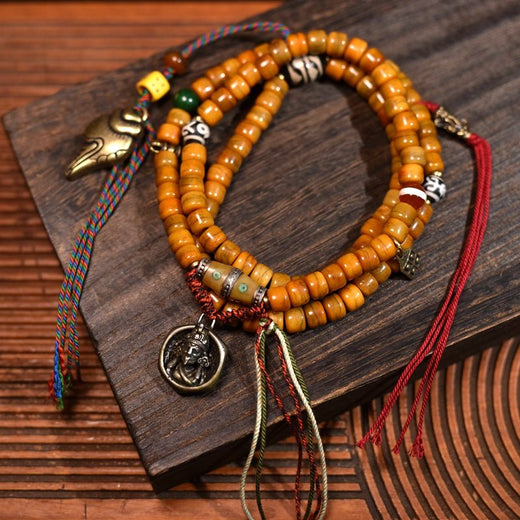
Explore our vintage Yak Bone 108 mala.
Frequently Asked Questions About Tibetan Buddhist Jewelry
1. Do I have to be a Buddhist to wear this jewelry?
Absolutely not. While these pieces have deep roots in Buddhist tradition, their core messages of peace, compassion, and mindfulness are universal. Practitioners from all walks of life and belief systems are drawn to the beauty and positivity of this jewelry.
The key is to wear it with respect for its cultural origins and with a positive intention in your heart. It can serve as a personal reminder of your own values, whatever they may be.
2. What does it mean for a piece to be "lama blessed"?
When an item is "lama blessed," it means it has been part of a sacred ritual or ceremony (a puja) conducted by a Tibetan Buddhist lama or monks. During these ceremonies, mantras are chanted and prayers are offered, infusing the objects with positive, protective, and spiritual presence.
This blessing is believed to enhance the item's spiritual qualities and transform it from a simple object into a sacred talisman that carries the resonance of the practice.
3. How do I care for my Tibetan jewelry?
To preserve the beauty and presence of your jewelry, handle it with care. Avoid exposing it to harsh chemicals, perfumes, or prolonged water submersion, which can damage natural materials like wood and certain gemstones.
You can gently wipe pieces with a soft, dry cloth. To cleanse the item's presence, you can let it rest in moonlight (especially during a full moon), place it on a selenite charging plate, or smudge it with the smoke of sage or palo santo.
4. What is the significance of the 108 beads on a mala?
The number 108 is sacred in many Eastern spiritual traditions, including Buddhism and Hinduism. There are numerous interpretations for its significance: it is said there are 108 earthly temptations to overcome, 108 focus points (nadis) that converge at the heart chakra, and some say the diameter of the Sun is 108 times that of the Earth.
In a practical sense, the 108 beads are used to count repetitions of a mantra, allowing the practitioner to focus on the sound and meaning rather than on counting.
5. How do I choose the right piece for my intention?
The best way is to trust your intuition. Browse different pieces and notice which ones you feel drawn to. Read about the symbolism of the deities (like Green or White Tara) and the qualities of the materials (like sandalwood for calm or rudraksha for focus).
Consider what you are seeking in your life right now—is it peace, protection, compassion, or clarity? Let that need guide your choice. The right piece will often feel as if it has chosen you.
Keep reading