

buddhist-jewelry
Men's Beaded Bracelets: Fit, Styling and Mala Context
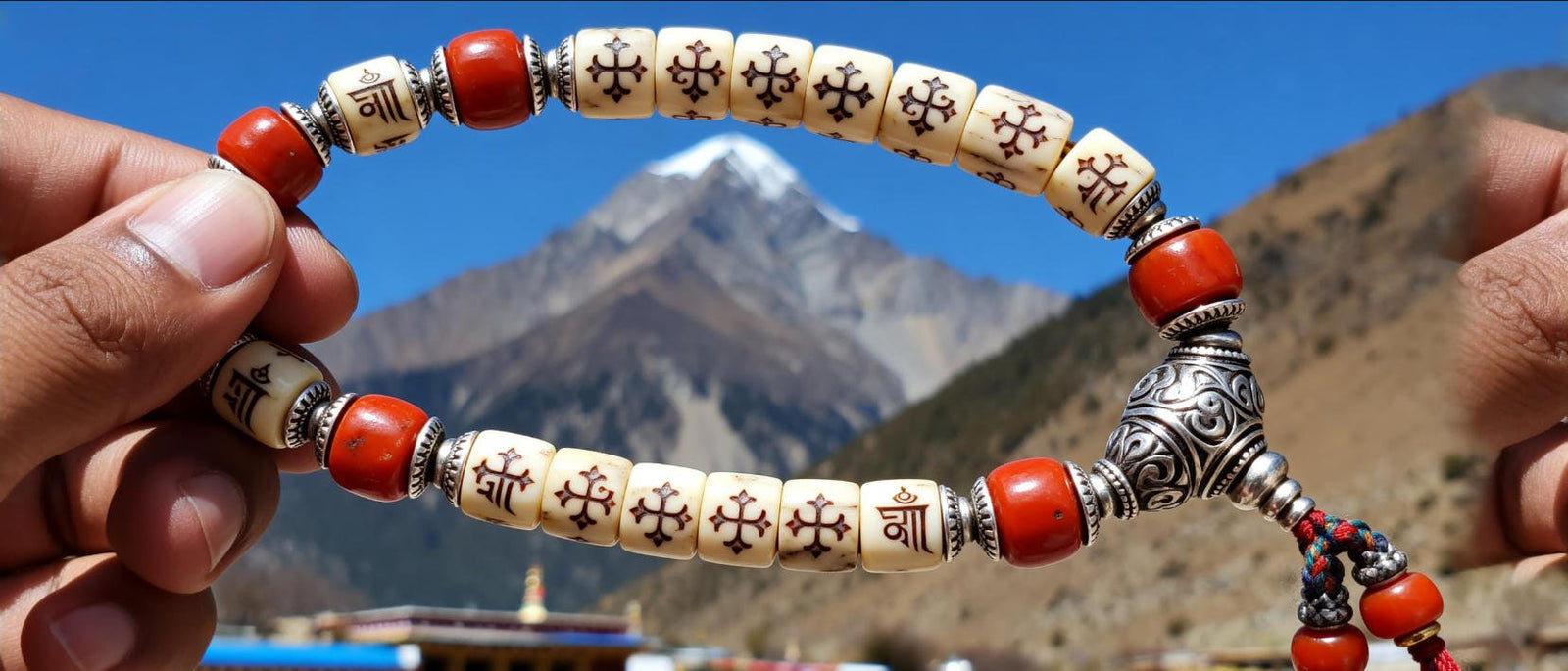
Men's beaded bracelets are easiest to style when they fit comfortably and have a clear place in the outfit. Start with one bracelet, check the actual measurements and decide whether it complements your watch or works better on the other wrist. You do not need a complicated stacking formula or a claim about a stone's energy.
If your bracelet is also a mala or carries a Buddhist image, its cultural context deserves a separate look. Appearance, material specifications and devotional use are related considerations, but one does not establish the others.

Men's beaded bracelets: get the fit right first
Measure your wrist where the bracelet will sit. Then check whether the seller gives wrist fit, inner circumference or the total length of the strand: those measurements are not interchangeable. Bead diameter and the closure can change how a bracelet feels even when the stated size looks familiar.
Try moving your hand, bending your wrist and resting your arm on a desk. A bracelet should not pull hard against its cord, press uncomfortably or slide into your work. The beaded bracelet size guide explains how to take a useful measurement before comparing listings.
Choose proportions, not a gender rule
Smaller beads can provide a quieter detail; larger beads create more visual presence. Neither size proves masculinity, confidence or spiritual seriousness. Consider your cuffs, the weight you enjoy wearing and whether the bracelet repeatedly touches your keyboard or tools.
Color can follow what you already wear. A contrasting bracelet may suit a simple outfit, while a similar tone can keep the effect understated. Describe the palette without assuming that every black bead is obsidian or every pale bead is jade. Material identity needs its own product information.
Three ways to wear one bracelet
With a T-shirt and casual trousers: Let one strand provide the detail. A clean sleeve edge and an uncluttered wrist make the bracelet easy to see. Add another accessory only if you prefer the result, not because a style rule demands it.
With a watch: Try the opposite wrist first. It separates the pieces and avoids repeated contact. If you prefer them together, check that the beads, clasp and watch case do not rub or strike each other. A visual match is not worth damaging either object.
With a shirt or jacket: Check the bracelet with the cuff fastened. It should not distort the sleeve or catch when you reach. A piece that works with rolled sleeves may be less comfortable under a fitted cuff; choosing a different accessory is a practical solution.
Stacking without crowding the wrist
If you like a layered look, add one piece at a time. Compare the result while seated as well as standing. Different surfaces can rub, and several bracelets may feel bulkier during ordinary tasks than they do in a photograph.
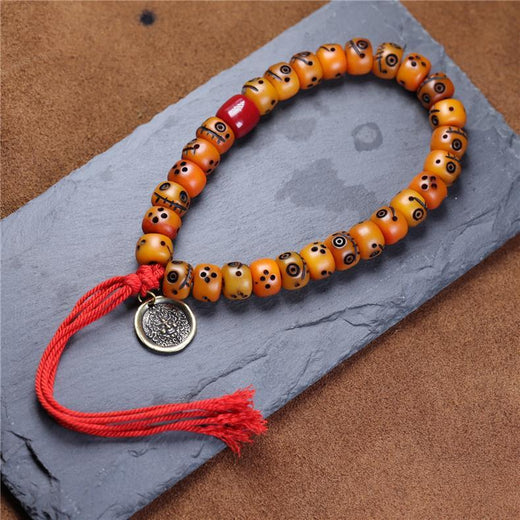
Keep any prominent image or pendant legible rather than burying it among competing charms. Stop when the arrangement becomes distracting or uncomfortable. A single well-chosen strand is a complete outfit decision, not an unfinished stack.
Mala beads for men: more than a styling label
A mala is associated with counting practices in several religious traditions. A bead bracelet is not automatically a practice strand, and an annual zodiac label does not establish which material someone needs. Ask about the actual bead arrangement and intended use rather than inferring a spiritual function from the product category.
For someone with an established practice, counting, recitation and handling instructions belong to that particular context. For someone choosing a bracelet visually, learning the motif's meaning is more useful than inventing an activation ritual. Ask what the design depicts and how the maker describes its intended use.
If you also wear a longer strand, the mala necklace guide addresses necklace fit and everyday use. Do not force a necklace into a wrist wrap just to create a matching set.
Choose men's beaded bracelets by fit, documented construction and the way you actually dress. A clear design choice leaves room for meaning without asking the object to make promises.
Start with the Tibetan bracelets collection, comparing one simple strand with the watch, cuffs and colors you already enjoy wearing.
Mala materials: names are not masculine traits
Bodhi, rudraksha, sandalwood and bone names appear in different bead traditions and retail descriptions. None is a requirement for a man or evidence of a particular personality. A commercial name does not establish botanical identity, bone sourcing, making method or a therapeutic effect. Choose the actual texture, dimensions and documented construction rather than a promise of discipline, confidence or success.
Counting and choosing a practice
A necklace or bracelet can be used for counting only in a way that suits its arrangement and the practice being followed. An openly taught recitation is different from a restricted mantra or visualization. Ask a qualified teacher when requirements are unclear; a product category does not prescribe one hand position, finishing-bead rule or practice for every tradition.
Care, storage and a broken cord
Inspect knots and attachments, and follow the supplied component-specific care instructions. Avoid assuming that damp cleaning, oils or smoke are suitable for a mixed assembly. A broken cord calls for collection of the beads and appropriate repair. It does not prove that a mala absorbed an influence, changed a karmic pattern or completed a spiritual task.
Details to compare


Questions and answers
What if I'm not a Buddhist? Can I still use a mala?
Art appreciation, personal wearing and formal religious practice are different contexts. Learn the meaning of the object, avoid claiming a status or authorization you do not have, and ask about expectations in the particular religious community.
How do I choose the right mantra for me?
Begin with an attributable public teaching for an openly taught recitation. A personal phrase and a lineage-specific mantra are not interchangeable practice authorizations. Ask the relevant teacher when transmission, pronunciation or visualization requirements are unclear.
Should I wear my mala on my left or right wrist?
For ordinary wearing, choose the wrist that fits comfortably with your work and other accessories. No single left-or-right rule covers every tradition. Follow any instruction from the particular practice separately from a fashion preference.
What is the significance of the 108 beads?
A 108-bead arrangement is familiar in several mala contexts, while shorter strands have other counts. The count does not determine finished length or one universal practice. Follow the particular counting instruction; symbolic interpretations are not measurements of bodily energy.
What does it mean if my mala breaks?
A cord can wear or fail. Stop wearing loose or damaged components, collect the beads safely and arrange suitable repair. A break is not evidence of bad luck, a karmic breakthrough or an object absorbing an influence.
Which wrist should a man wear a bead bracelet on?
For ordinary styling, use whichever wrist is comfortable for your work and other accessories. There is no universal men's wrist rule. A particular devotional instruction should be understood within its own tradition, not turned into a general fashion requirement.
Can I shower in a bead bracelet?
Do not assume the whole assembly tolerates water because one component seems durable. Cord, coatings, fittings and adjacent beads may require different care. Follow the exact maker's instructions and remove the bracelet when suitability is unclear.
Do I need a stone chosen for confidence or success?
No gemstone is required to create a polished outfit or establish those qualities. Symbolic wishes can have personal meaning, but they are not evidence that a bracelet changes personality or financial prospects.
Related reading and details
Related collection · Related collection · Related collection · Related product details
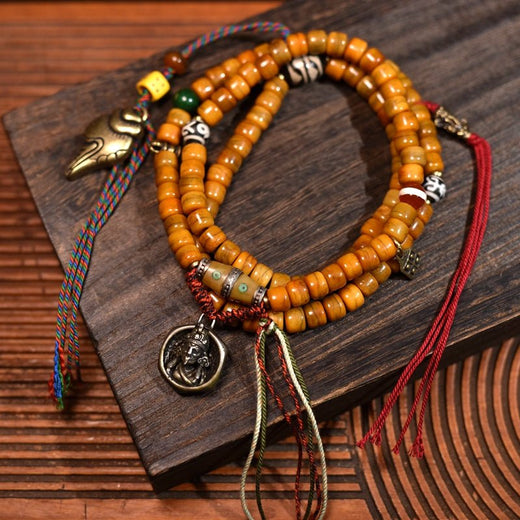
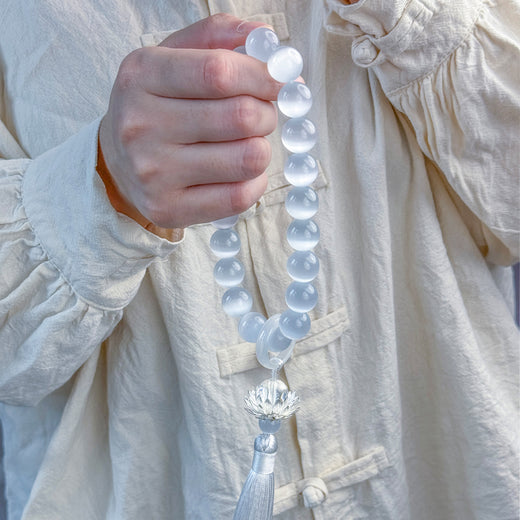
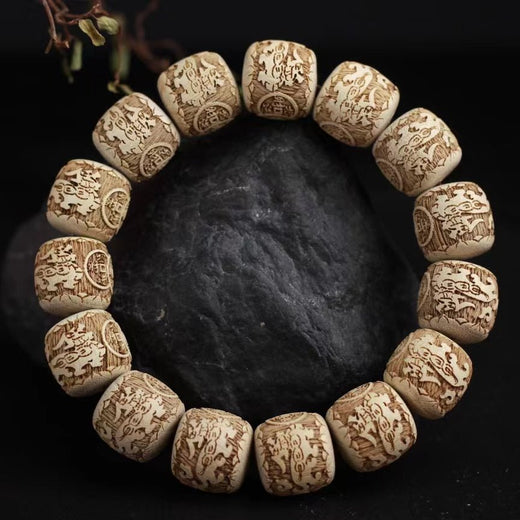
Keep reading