buddhist-jewelry
How to Choose an Authentic Buddha Pendant
For more Buddhist spiritual tools and meditation practices, explore our complete Meditation & Buddhist Spiritual Guide.
I found my Buddha pendant in the most unexpected place: a dusty antique shop in Chiang Mai, Thailand.
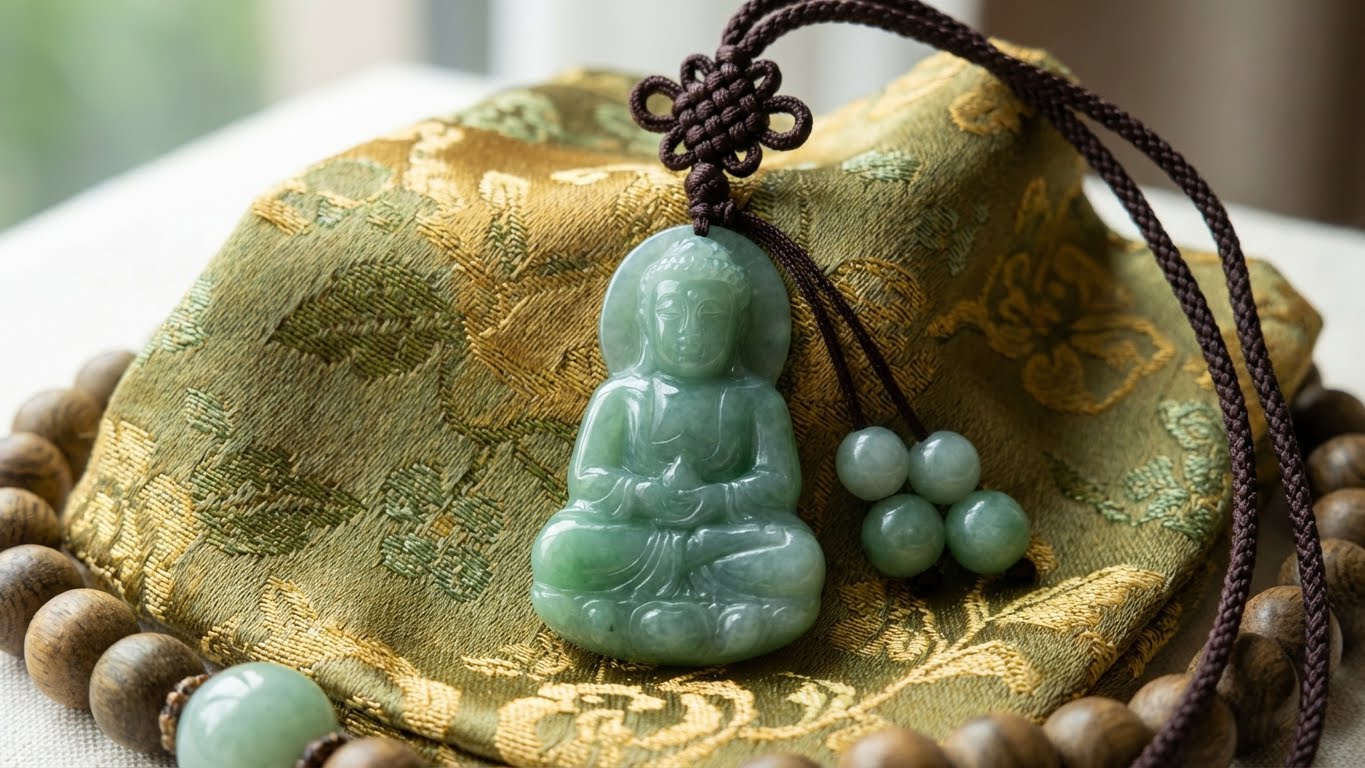
I was 26, traveling alone after a painful breakup, trying to "find myself" like every other confused twenty-something backpacker. I walked into this tiny shop to escape the heat, and there it was—a jade Buddha pendant, no bigger than my thumb, sitting in a cracked leather box.
The shopkeeper, an elderly Thai woman, saw me staring at it. She said: "This Buddha very old. Maybe 80 year. Someone love this Buddha very much—see how smooth? From touching, from wearing, from love."
I bought it for $40. Wore it on a simple cord. Didn't think much about it beyond "pretty souvenir."
But here's what happened: Every time I felt lost or scared or angry during that trip—and I felt all those things a lot—I would unconsciously reach for that pendant. Touch its smooth surface. Feel its cool weight. And somehow, I'd breathe a little deeper. Panic a little less.
Six years later, I still wear it. The cord has been replaced three times. The jade has deepened in color from my body oils. It's absorbed six years of my fears, my joys, my transformations.
That's what a Buddha pendant does. It doesn't fix your problems. But it becomes a anchor point—a physical reminder that peace is possible even when everything feels chaotic.
If you're considering a Buddha pendant or trying to understand the one you have, this guide will help you choose wisely and wear it with respect.
What Is a Buddha Pendant?
Definition and Purpose
A Buddha pendant is a necklace featuring Buddha imagery, worn as:
Spiritual purposes:
- Reminder of Buddhist teachings
- Connection to enlightenment
- Protection and blessing
- Meditation focus point
- Spiritual devotion
Practical purposes:
- Mindfulness anchor during daily life
- Grounding tool during stress
- Symbol of personal values
- Conversation starter about spirituality
- Beautiful, meaningful jewelry
Buddha Pendant vs. Buddha Statue
Pendant advantages:
- Worn close to heart chakra
- Constant physical reminder
- Portable, always with you
- Personal, intimate connection
- Touchable during stress
Statue advantages:
- Altar or meditation space focus
- Larger, more detailed
- Stationary energy anchor
- Traditional worship object
- Home blessing
Both serve different purposes. Pendant for personal practice, statue for sacred space.
Types of Buddha on Pendants
Laughing Buddha Pendant (Budai/Hotei)
Who he is:
- Chinese folk deity (not historical Buddha)
- Represents happiness, abundance, contentment
- Based on 10th-century wandering Chinese monk
- "Fat Buddha" or "Happy Buddha"
Identifying features:
- Large, round belly
- Wide, joyful smile
- Often holds gold ingot, sack, or beads
- Bald head with prominent forehead
- Casual, relaxed posture
Spiritual meanings:
- Joy and laughter as spiritual practice
- Abundance attracts more abundance
- Letting go of worries and stress
- Generosity and open-heartedness
- Good fortune and prosperity
Best for:
- Attracting wealth and success
- Reducing stress and worry
- Business owners and entrepreneurs
- Those needing more joy
- Feng Shui prosperity practices
Traditional belief: Rubbing Laughing Buddha's belly brings good luck and prosperity. Many rub their pendant when seeking fortune.
Meditation Buddha Pendant (Gautama Buddha)
Who he is:
- Historical Buddha (Siddhartha Gautama, 563-483 BCE)
- Founder of Buddhism
- Achieved enlightenment under Bodhi tree
- Teacher of Middle Way and Four Noble Truths
Identifying features:
- Serene, peaceful expression
- Sitting in lotus position (legs crossed)
- Closed or half-closed eyes
- Elongated earlobes (from his prince days wearing heavy jewelry)
- Topknot or cranial bump (ushnisha - symbol of wisdom)
- Lean, ascetic body
- Simple monk's robes
Common hand positions (mudras):
- Dhyana mudra (meditation): Hands resting in lap, palms up
- Bhumisparsha mudra (earth-touching): Right hand pointing down, touching ground
- Abhaya mudra (fearlessness): Right hand raised, palm facing out
- Dharmachakra mudra (teaching): Hands forming circle at chest
- Varada mudra (giving/compassion): Left hand palm out, fingers down
Spiritual meanings:
- Inner peace and tranquility
- Spiritual awakening possible for all
- Meditation and mindfulness
- Wisdom and clarity
- Liberation from suffering
Best for:
- Meditation practitioners
- Spiritual seekers
- Those on path to self-discovery
- People dealing with anxiety/depression
- Anyone needing reminder of inner peace
Other Buddha Forms on Pendants
Standing Buddha:
Posture: Standing, usually one hand raised
Meaning: Teaching, spreading wisdom, moving through world
Best for: Active spiritual practice, teaching, sharing wisdom
Walking Buddha:
Posture: Mid-stride, graceful movement
Meaning: Journey to enlightenment, progress, graceful living
Best for: Life transitions, moving forward, overcoming obstacles
Protection Buddha:
Posture: Standing or sitting, hand raised in Abhaya mudra
Meaning: Fearlessness, protection from harm, dispelling fear
Best for: Those facing challenges, needing courage, seeking protection
Reclining Buddha:
Posture: Lying on right side
Meaning: Entering final Nirvana (death), ultimate peace
Best for: Accepting impermanence, end-of-life peace, letting go
Note: Less common on pendants due to horizontal shape
Buddha Head Pendants
Controversy note: Buddha head alone (no body) is considered disrespectful in some Buddhist traditions.
Traditional view:
- Historically, invaders would behead Buddha statues
- Head alone = vandalism, not respect
- Seen as commercialization of sacred image
- Some countries (Thailand, Myanmar) consider it disrespectful
Modern view:
- In West, often seen as aesthetic choice
- Focus on Buddha's serene face
- No disrespectful intent
- Personal spirituality vs. cultural rules
Recommendation: If you want to be fully respectful, choose full-body Buddha pendants. If you have a Buddha head pendant, wear it with genuine reverence and understanding.
Materials for Buddha Pendants
Jade Buddha Pendants
Why jade is traditional:
- Most valued stone in Chinese culture
- "Stone of heaven"
- Believed to bring protection, luck, longevity
- Buddha + jade = double blessing
Green jade Buddha:
Meaning: Prosperity, heart healing, abundance
Quality: Ranges from pale celadon to deep emerald
Best for: Wealth, emotional healing, daily wear
Price: $30-$500+ (nephrite), $100-$5,000+ (jadeite)
White jade Buddha:
Meaning: Purity, clarity, spiritual connection
Quality: Creamy white to pure white
Best for: Meditation, new beginnings, mental clarity
Price: $40-$300+ (nephrite), $150-$3,000+ (jadeite)
Lavender jade Buddha:
Meaning: Spiritual nourishment, calm, emotional healing
Quality: Rare, pale to deep purple
Best for: Stress relief, spiritual growth
Price: $100-$1,000+ (rarer than green or white)
Explore authentic jade Buddha pendants in our jade collection.
Metal Buddha Pendants
Silver Buddha:
Tradition: Sacred metal in Buddhism
Properties: Protective, purifying, cooling energy
Best for: Daily wear, protection, elegance
Price: $30-$300
Care: Tarnishes (normal), polish with silver cloth
Gold Buddha:
Tradition: Most precious, especially for Laughing Buddha
Properties: Wealth, abundance, solar energy
Best for: Prosperity, luxury, investment piece
Price: $100-$5,000+
Types: 14K, 18K, 24K gold
Bronze/Brass Buddha:
Tradition: Ancient temple metal, traditional casting
Properties: Grounding, warm energy, authentic
Best for: Traditional feel, affordable, character
Price: $20-$150
Note: Develops beautiful patina over time
Copper Buddha:
Tradition: Healing metal in Tibetan Buddhism
Properties: Healing, energy conductor, warm
Best for: Health, energy work, traditional
Price: $25-$100
Wood Buddha Pendants
Sandalwood Buddha:
Significance: Sacred wood, used in temples
Properties: Calming fragrance, meditative
Best for: Meditation, stress relief, natural beauty
Price: $20-$80
Note: Fragrance fades over time (normal)
Bodhi wood Buddha:
Significance: Buddha achieved enlightenment under Bodhi tree
Properties: Spiritual awakening, wisdom
Best for: Serious practice, enlightenment work
Price: $25-$100
Rosewood Buddha:
Properties: Beautiful grain, durable, grounding
Best for: Daily wear, natural aesthetic
Price: $15-$60
Stone and Crystal Buddha Pendants
Black obsidian Buddha:
Meaning: Protection, grounding, truth
Best for: Strong protection, shadow work, psychic shielding
Price: $25-$100
Tiger's eye Buddha:
Meaning: Courage, confidence, prosperity
Best for: Decision-making, courage, wealth
Price: $20-$80
Amethyst Buddha:
Meaning: Spirituality, intuition, peace
Best for: Spiritual growth, third eye opening, calm
Price: $25-$100
Clear quartz Buddha:
Meaning: Clarity, amplification, purity
Best for: Mental clarity, amplifying intentions
Price: $20-$80
How to Wear a Buddha Pendant
Chain Length and Placement
18-20 inches (heart level):
- Most traditional and meaningful
- Pendant rests directly over heart chakra
- Maximum spiritual benefit
- Ideal for meditation and spiritual work
- Touching distance for mindfulness
24-28 inches (solar plexus level):
- Longer, more casual style
- Near solar plexus (confidence center)
- Modern, layered look
- Good for larger pendants
16 inches (collarbone level):
- Short, prominent placement
- Near throat chakra (communication)
- More formal, visible
- Good for smaller pendants
Adjustable cord:
- Most flexible option
- Change length based on outfit or energy need
- Traditional Buddhist style
- Can lengthen for sleep, shorten for meditation
Direction of Buddha
Facing outward (traditional):
- Buddha's face toward the world
- Sharing compassion with others
- Protecting you by facing threats
- Traditional temple orientation
- Most common recommendation
Facing inward (personal):
- Buddha's face toward your heart
- Receiving Buddha's blessings directly
- Personal meditation focus
- Less traditional but meaningful for some
Recommendation: Choose based on intention. Outward for daily life (compassion toward world), inward for meditation (receiving teachings).
Respectful Wearing Guidelines
Do wear:
✓ During meditation and spiritual practice
✓ Daily as mindfulness reminder
✓ During yoga or mindful activities
✓ When you need spiritual support
✓ As part of spiritual lifestyle
Remove when:
✗ Using bathroom (basic respect)
✗ During sexual activity (keep sacred separate from sensual)
✗ In situations of violence or conflict
✗ When intoxicated (disrespectful state)
✗ In environments of negativity (nightclubs, bars, etc.)
Buddhist perspective: Buddha is not a good luck charm or fashion accessory. Treat the pendant as you would treat a teacher—with respect, care, and appropriate context.

Choosing Your Buddha Pendant
By Your Intention
For wealth and prosperity:
→ Laughing Buddha pendant
→ Gold or yellow jade material
→ Buddha holding gold ingot or sack
→ Worn during business or financial decisions
For inner peace and meditation:
→ Meditation Buddha pendant
→ White jade or sandalwood
→ Buddha in dhyana mudra (meditation gesture)
→ Worn during meditation practice
For protection:
→ Protection Buddha (raised hand)
→ Black obsidian or silver
→ Abhaya mudra (fearlessness gesture)
→ Worn during challenges or difficult times
For happiness and stress relief:
→ Laughing Buddha
→ Light-colored materials (white jade, light wood)
→ Joyful, smiling expression
→ Touch when feeling stressed
For spiritual awakening:
→ Meditation Buddha
→ Bodhi wood or amethyst
→ Simple, unadorned design
→ Used as meditation focal point
Quality Assessment
Carving quality:
✓ Clear, defined features
✓ Proportionate body/head ratio
✓ Smooth finish without rough edges
✓ Respectful, accurate representation
✓ Appropriate mudra (hand position)
✗ Crude carving or distorted features
✗ Disrespectful or mocking representation
Material authenticity:
✓ Real jade: Cool to touch, heavy, translucent when held to light
✓ Real wood: Natural grain, appropriate weight, subtle fragrance (sandalwood)
✓ Real metal: Appropriate weight and feel for claimed type
✗ Fake: Plastic feel, too light, perfectly uniform color, cheap construction
Size considerations:
- Small (1-2 cm): Subtle, everyday wear, $20-$100
- Medium (2-3 cm): Standard, balanced, $30-$300
- Large (3-5 cm): Statement piece, ceremonial, $50-$500+
- Very large (5+ cm): May be too heavy for daily wear
Price Expectations
Budget ($15-$50):
- Wood or brass/bronze pendants
- Small to medium size
- Simple design
- Good for beginners, daily wear
Mid-range ($50-$200):
- Quality jade (nephrite) or silver
- Detailed carving
- Medium to large size
- Meaningful spiritual piece
Premium ($200-$1,000+):
- High-quality jadeite or gold
- Master carving
- Exceptional materials
- Heirloom or investment piece
Caring for Your Buddha Pendant
General Care
Daily wear:
- Keep clean and polished
- Wipe with soft cloth after wearing
- Remove before sleep (comfortable rest, prevent damage)
- Store in soft pouch or box
Cleaning:
- Warm water and mild soap
- Soft cloth or brush
- Dry thoroughly
- Polish occasionally to maintain luster
Storage:
- Clean, elevated place (never on floor)
- Soft pouch to prevent scratches
- Away from other jewelry that might scratch
- Not in bathroom or bedroom (keep sacred)
Material-Specific Care
Jade Buddha:
- Avoid chemicals and perfumes
- Clean with soft damp cloth
- Body oils naturally polish jade (good!)
- Occasional moonlight cleansing
Metal Buddha:
- Silver: Polish with silver cloth when tarnished
- Gold: Gentle soap and water
- Bronze/Brass: Embrace patina or polish if desired
- Avoid harsh chemicals
Wood Buddha:
- Keep dry (no water exposure)
- Natural oils from skin are good
- Sandalwood: Fragrance fades (normal, not a problem)
- Don't apply oils or chemicals
Stone/Crystal Buddha:
- Water safe for most (except selenite, malachite)
- Energetic cleansing: moonlight, sage smoke, sound
- Avoid direct sunlight (can fade some stones)
- Recharge regularly
Energetic Cleansing
When to cleanse:
- After purchase (clear previous energy)
- Weekly or monthly (regular maintenance)
- After stressful events (absorbed negativity)
- When pendant feels "heavy" or different
- After someone else touches it
Cleansing methods:
Moonlight: Full moon overnight (safest for all materials)
Sage or palo santo smoke: Pass through smoke 3-7 times
Sound: Singing bowl, bells, or chanting
Intention: Hold pendant, visualize white light clearing it
Running water: Natural stream best (but not for wood or some stones)
Using Your Buddha Pendant Spiritually
Setting Intention
When you first receive pendant:
1. Cleanse energetically (moonlight or sage)
2. Hold in both hands at heart level
3. State your intention: "May this Buddha remind me of [peace/compassion/wisdom/enlightenment]"
4. Sit quietly, feeling connection
5. Put on with reverence
Daily intention renewal:
- Each morning when putting on
- Touch pendant to heart
- Remember your commitment
- Set intention for the day
As Meditation Focal Point
Visual meditation:
1. Sit comfortably, pendant visible or held
2. Gaze softly at Buddha's face
3. Notice serene expression
4. Breathe deeply, embody that peace
5. When mind wanders, return to Buddha's face
6. 10-20 minutes
Touchstone practice:
- During meditation, hold pendant
- Feel its weight, texture, temperature
- Use as anchor for wandering mind
- Physical sensation keeps you present
As Mindfulness Reminder
Throughout your day:
- Each time you notice pendant, pause
- Take one conscious breath
- Check your emotional state
- Realign with your values
- Builds mindfulness habit naturally
During stress:
1. Notice you're stressed/anxious/upset
2. Touch Buddha pendant
3. Remember: suffering is temporary
4. Three deep breaths
5. Ask: "What would Buddha do?"
6. Choose wise response
Common Misconceptions About Buddha Pendants
❌ Myth: Buddha pendants are good luck charms
✅ Truth: They're reminders of teachings, not remarkable objects. Your practice creates "luck."
❌ Myth: Only Buddhists can wear Buddha pendants
✅ Truth: Anyone can wear them with respect and genuine intention.
❌ Myth: Laughing Buddha is the "real" Buddha
✅ Truth: Laughing Buddha (Budai) is a Chinese folk deity. Historical Buddha is Gautama Buddha.
❌ Myth: The pendant will protect you from all harm
✅ Truth: It reminds you to practice wisdom and compassion, which helps you avoid harm.
❌ Myth: More expensive pendant = more spiritual power
✅ Truth: Your intention and practice matter more than material cost.
❌ Myth: It's disrespectful for non-Asians to wear Buddha pendants
✅ Truth: Buddha's teachings are universal. Respectful wearing is about intention, not ethnicity.
❌ Myth: You must be religious to wear one
✅ Truth: Buddhism is more philosophy than religion. Secular mindfulness practitioners often wear them.
Frequently Asked Questions (FAQ)
Can I wear a Buddha pendant if I'm not Buddhist?
Yes, if worn respectfully. Buddhism's core teachings—compassion, mindfulness, reducing suffering—are universal. Many non-Buddhists wear Buddha pendants as reminders of these principles.
Key is genuine respect:
✓ Understand what Buddha represents
✓ Treat pendant with reverence
✓ Don't wear purely as fashion
✓ Remove in inappropriate situations
✓ Learn basic Buddhist teachings
Which Buddha is better: Laughing or Meditation?
Depends on your intention:
Choose Laughing Buddha if you want:
- Wealth and prosperity
- Stress relief and happiness
- Business success
- Lighthearted spiritual approach
- Feng Shui abundance work
Choose Meditation Buddha if you want:
- Inner peace and tranquility
- Meditation practice support
- Spiritual awakening
- Deeper philosophical practice
- Serious spiritual path
You can own both: Practitioners have different pendants for different intentions or moods.
What does it mean if my Buddha pendant breaks?
Traditional interpretation:
The pendant absorbed negativity or danger meant for you. It "sacrificed" itself to protect you. This is actually a good sign—it fulfilled its protective purpose.
What to do:
1. Don't throw away disrespectfully
2. Thank it for its service
3. Bury in nature (earth returns to earth) or keep respectfully
4. Repair if you feel called to (some say energy is broken, others say it can be restored)
5.
Choose new pendant when ready
Practical view: Sometimes things break. Cord wears out, clasps fail. Not always mystical. But even practical breaks can be meaningful reminders of impermanence (a Buddhist teaching!).
Can I wear my Buddha pendant to sleep?
Mixed opinions:
Some say yes:
- Provides protection during sleep
- Influences dreams positively
- Constant spiritual connection
- Some wear 24/7 and never remove
Some say no:
- Uncomfortable, can break chain
- Pendant may be damaged
- Sleep is already peaceful state
- Give both you and pendant rest
Recommendation: Personal choice. If uncomfortable or worry about damage, remove. If it feels right to keep on, that's fine too. Place removed pendant respectfully (not on floor, not in bathroom).
Should Buddha face me or face outward?
Traditional view: Outward
- Buddha faces the world
- Shares compassion with others
- Protects you by facing threats
- Traditional temple orientation
Alternative view: Inward for meditation
- Buddha faces your heart
- Direct blessing to you
- Personal meditation focus
- Less common but meaningful
Practical answer: Most people wear it facing outward naturally. Unless you specifically turn it inward for meditation, it will face out by default. Choose based on what feels right.
Can I wear Buddha pendant with other religious jewelry?
Generally yes, Buddhism is philosophical and non-dogmatic:
Common combinations:
- Buddha pendant + Christian cross
- Buddha pendant + Hamsa hand (protection)
- Buddha pendant + Om symbol
- Buddha pendant + evil eye
- Buddha pendant + other spiritual symbols
As long as you:
- Respect all symbols equally
- Understand each meaning
- Aren't creating confusion for yourself
- Feel authentic to your spiritual path
Some traditions may object: Very orthodox practitioners of any religion might say mixing is inappropriate. But many modern spiritual seekers blend traditions harmoniously.
Is it okay to buy a used Buddha pendant?
Yes, with proper cleansing:
Benefits of used pendants:
- May have accumulated positivity
- Environmentally friendly
- Often better quality (survived time)
- Can be more affordable
- Some antiques have beautiful patina
Important steps:
1. Cleanse thoroughly (sage, moonlight, sound)
2. Clear previous owner's energy
3. Set your own intention
4. Make it yours through wearing
Antique vs. vintage: Antique Buddhist pendants (50+ years old) often have exceptional craftsmanship and spiritual significance. Many are from monasteries or temples. These can be treasures if authentic.
What's the difference between a Buddha pendant and a Guan Yin pendant?
Buddha (male):
- Gautama Buddha, historical teacher
- Represents enlightenment, wisdom
- Masculine energy (though Buddhism transcends gender)
- Focus on achieving enlightenment
Guan Yin (female):
- Bodhisattva of Compassion
- Represents mercy, motherly love, compassion
- Feminine energy
- Focus on helping all beings, delaying own enlightenment to help others
- Often holds willow branch or water vase
Both are important in Buddhism: Buddha for wisdom and enlightenment, Guan Yin for compassion and mercy. Practitioners wear both or choose based on what they need most.
How often should I cleanse my Buddha pendant?
Regular schedule:
- Weekly: Quick smoke cleansing or intention clearing
- Monthly: Full moon energetic cleansing
- As needed: After stressful events, when pendant feels "heavy," after others touch it
More often if:
- You work in high-stress environment
- You're going through difficult time
- You do energy or healing work
- Practitioners touch your pendant
Signs pendant needs cleansing:
- Feels heavier than usual
- You feel drawn to cleanse it
- Lost its luster or shine
- You've been having negative experiences
- Pendant was exposed to very negative situation
Can children wear Buddha pendants?
Yes, with proper teaching:
Benefits for children:
- Teaches mindfulness early
- Provides calming tool for anxiety
- Introduces spiritual concepts
- Can help with emotional regulation
- Beautiful cultural/spiritual tradition
Important considerations:
- Teach them who Buddha is (teacher, not god)
- Explain treating pendant with respect
- Smaller, safer pendant (no choking hazards)
- Breakaway clasps for safety
- Age-appropriate understanding
Age recommendations:
- Under 5: Close supervision, breakaway cords only
- 5-10: Simple pendants, teach basic respect
- 10+: Can understand deeper meaning, more responsibility

Your Next Step with Buddha Pendants
If you're ready to choose your Buddha pendant:
- Clarify your intention: Peace? Prosperity? Protection? Spiritual growth?
- Choose Buddha type: Laughing for joy/wealth, Meditation for peace/wisdom
- Select material: Jade for traditional, metal for durable, wood for natural
- Determine size: Small for subtle, medium for balanced, large for statement
- Set your budget: $20-$50 starter, $50-$200 quality, $200+ investment
- Verify quality: Good carving, authentic materials, respectful representation
- Cleanse before wearing: Moonlight, sage, or intention clearing
- Set intention: Hold, state purpose, commit to practice
- Wear at heart level: 18-20 inch chain, Buddha facing outward
- Use actively: Touch during stress, meditate with it, live teachings
My jade Buddha pendant is six years old now. It's traveled with me through Thailand, India, Japan, and countless cities in between. It's been touched during panic attacks, held during meditation, worn through breakups and breakthroughs.
The jade has changed—deeper green, more translucent, warm from years of body contact. But more than that, I've changed. The pendant didn't change me. But it reminded me, thousands of times, that peace is possible. That I can breathe. That I'm not my thoughts or my suffering.
Your Buddha pendant can do the same. Not through magic, but through simple, constant reminder of who you can be.
Choose your pendant. Set your intention. Wear it with respect.
Explore our complete collection of authentic Buddha pendants and spiritual jewelry.
Peace is possible. The reminder is around your neck.
Keep reading