News
Chuba Tibetan Robe: A Guide to Its Meaning & Use for 2026
You might have a closet full of clothes, yet you stand in front of it feeling… nothing. The endless cycle of trends, the pressure to present a certain image, it can leave you feeling disconnected from the very things you use to cover your body.
You may have even felt a quiet pull towards something more meaningful, something that feels less like a costume and more like a second skin. This feeling isn't about needing more clothes; it's about a longing for intention.
It's about wanting to wear something that holds a story, a purpose. The Chuba, a cornerstone of our traditional Tibetan clothing collection, isn't just a garment; it's an answer to that longing.
The Foundation: What a Chuba Really Is
At its simplest, the Chuba (ཕྱུ་པ་) is the traditional robe worn by Tibetans since at least the 7th century. But to leave it there is like describing a mountain as just a pile of rocks.
It misses the entire spirit of the thing. A common misconception we encounter is people viewing the Chuba as a historical costume, something to be admired in a museum. In reality, it is a living, breathing piece of cultural identity and a masterpiece of practical design, born from the harsh, beautiful landscape of the Himalayas.
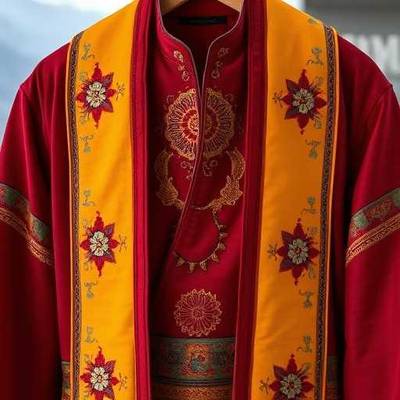
Walk through any market in Lhasa or a nomadic encampment in Amdo, and you'll see a garment that serves as your coat, your blanket, your pocket, and your formal wear all in one. The classic Chuba is a long, spacious robe with wide, elongated sleeves that can extend past the fingertips by several inches.
It's traditionally made from handwoven wool (for warmth) or silk (for special occasions) and is worn wrapped around the body, secured at the waist with a long sash or belt called a kera (སྐེད་རགས་).
This creates a large pouch above the belt, the ampa, which historically served as an all-purpose pocket for everything from tsampa bowls to small personal items. When it gets warm during the day, a nomad might slip their right arm out of the sleeve, draping it over their back for ventilation—a classic, iconic look you see all over Tibet.
There isn't just one type of Chuba. Its design varies wonderfully across the regions of Tibet:
- Ü-Tsang (Central Tibet): Here, the Chuba is often sleeveless and worn over a long-sleeved blouse (wonju). It's elegant and often seen in Lhasa, particularly among merchants and government officials.
- Amdo (Northeastern Tibet): Amdo Chubas are often more ornate, made from sheepskin with colorful embroidered trim in reds and golds, reflecting the pastoral, nomadic lifestyle of herding communities.
- Kham (Eastern Tibet): Khampa men are known for their wide, dramatic Chubas, often with high collars and made from rich brocades, sometimes lined with leopard or snow leopard fur, projecting an air of strength and pride.
The Chuba is a story woven in thread. It tells you about the wearer's region, their social standing, and the occasion. It's a garment designed for a life of movement, resilience, and deep connection to the land.
It's not a relic; it's a philosophy of dress that values function, durability, and meaning over fleeting fashion. When you understand this, you begin to see it not as an exotic robe, but as a piece of practical wisdom you can wear.
For a closer get into the specific elements of Himalayan dress, our guide to essential sacred garments offers a comprehensive overview.

Why a Chuba Tibetan Robe Matters in 2026
You might be thinking, "That's a beautiful piece of history, but what does a centuries-old robe have to do with my life, my anxieties, my endless Zoom calls?" It's a fair question. The relevance of the Chuba in 2026 isn't about recreating a nomadic life in a city apartment.
It's about embracing the principles it represents as an antidote to the very pressures that leave you feeling burnt out and disconnected.
Think about the state of your digital life. Your phone buzzes with notifications, your feed is a curated stream of other people's successes, and the pressure to be constantly "on" is immense. This creates a deep sense of internal noise and a feeling of being untethered.
The Chuba is a physical anchor in a sea of digital distraction. It is an act of defiance against the culture of speed and disposability. Choosing to wear something so intentional is a powerful statement to yourself that you value substance, history, and tranquility.
Consider a few scenarios where this shows up:
- Your Morning Meditation: Instead of grabbing your phone first thing, you reach for your Chuba. The weight of the hand-loomed wool settles on your shoulders. The simple, deliberate act of wrapping and tying it becomes the first mindful moment of your day. It's a ritual that signals a shift from the chaos of the world to the quiet of your inner space. Before you've even sat on your cushion, you've already begun your practice.
- The Weekend of Unplugging: You're feeling that familiar burnout from a long week. You decide to have a quiet weekend at home—reading, journaling, just being. Wrapping yourself in a soft, woolen Chuba feels like a hug. It's not restrictive loungewear; it's a wearable sanctuary. It creates a boundary, a gentle armor against the demands of the world, allowing you to truly rest and recharge.
- Creative Work: You're a writer, a designer, an artist. You sit down to create, but your mind feels scattered. Putting on your Chuba can be a way to step into your creative role. It's a uniform for your soul's work, helping you shed the identity of a bill-payer or errand-runner and inhabit the space of a creator. It connects you to a lineage of artisans and thinkers who valued deep, focused work.
The Chuba matters in 2026 because it represents everything our modern lives often lack: permanence in an age of the temporary, quiet in an age of noise, and meaning in an age of the superficial.
It's not about escaping your life; it's about bringing a piece of time-tested wisdom into it. Moving forward, you'll find that wearing one is a tangible reminder that you can choose a different way of being, one that is more grounded, intentional, and deeply your own.
Real Benefits: How a Chuba Works on Your Well-being
The power of a Chuba goes beyond its aesthetic or cultural significance. It interacts with your mind and body in subtle but tangible ways. It's not magic; it's the simple, grounded reality of how intentional objects can shape our experience.
When we spend years sourcing fabrics and working with artisans in our Kathmandu atelier, we're not only creating clothing. We're stewarding objects designed to bring a sense of peace and rootedness to your life.
A Wearable Sanctuary
The first thing you'll notice when you put on an authentic Chuba is its presence. Unlike a flimsy t-shirt, it has a gentle weight and a substantial texture. This isn't accidental. The feeling of the fabric on your skin—hand-loomed wool typically weighing between 800 to 1200 grams—and the comforting pressure on your shoulders can have a calming effect on the nervous system, similar to a weighted blanket.
The act of wearing it is a form of somatic mindfulness. You are more aware of your body, your posture, and your movement. When you feel that familiar wave of anxiety rising, the physical sensation of the Chuba can serve as a grounding point.
You can run your hand over the textured wool or silk, bringing your attention back from the spinning thoughts in your head to the present, tactile moment. It creates a personal space, a bubble of tranquility that you carry with you, turning any chair into a meditation seat and any room into a space for reflection.
Connecting to a Living Lineage
In a world that often feels fragmented and individualistic, there's a deep human need to feel part of something larger than ourselves. A mass-produced garment from a fast-fashion brand has no story. It was designed by a committee, made in a faceless factory, and will be discarded in a year.
A Chuba is the opposite. Each one from our authentic Tibetan garments collection is part of an unbroken chain of tradition. The way it's cut, the way it's stitched, the patterns woven into the fabric—these are techniques passed down through generations, documented in Tibetan weaving guilds since at least the 15th century.
When you wear it, you are not only wearing a piece of cloth; you are draping yourself in centuries of human experience, resilience, and artistry. This connection is a powerful antidote to feelings of isolation and meaninglessness.
It's a quiet reminder that you are part of a long story, and that the search for peace and meaning is a timeless human journey.
The Embodiment of 'Enough'
The modern wardrobe is built on the idea of 'not enough.' You always need the next season's color, the latest trend. The Chuba embodies the principle of 'enough.' It is a single, versatile, and durable garment.
It is designed to be worn for years, even decades, growing softer and more personal with time. This is an investment piece, one you'll still wear in 20 years. Embracing this philosophy is a radical act of self-care.
It frees you from the exhausting cycle of consumerism and comparison. By choosing one beautiful, meaningful, and well-made garment over twenty fleeting ones, you are making a conscious choice for sustainability—not only for the planet, but for your own peace of mind.
It teaches a quiet confidence that doesn't rely on external validation or constant updates. It is the simple, grounded comfort of knowing you have all that you need.

How to Choose an Authentic Chuba
When you decide to bring a Chuba into your life, you're choosing more than a robe. You're making an investment in an artifact of culture and spirit. The market is filled with imitations, so knowing what to look for is key to finding a piece that carries true resonance.
It's not about perfection in the machine-made sense; it's about the life and intention woven into the fabric by human hands. Our comprehensive Tibetan clothing guide offers more detail, but here are the core principles we follow.
First, consider the material. Authenticity starts with the fabric. Traditional Chubas are made from natural, resilient materials suited to the Himalayan climate. Look for:
- Handwoven Wool (Nambu): This is the classic, everyday material. It's durable, breathable, and genuinely warm. A real wool Chuba has a substantial, slightly rustic feel—you'll notice the weight immediately when you hold it. It shouldn't feel thin or synthetic.
- Sheepskin (Lokpa): Common in nomadic regions like Amdo, these are often worn with the fleece on the inside for unparalleled warmth. The trim is often decorated with colorful applique in patterns passed down through generations.
- Silk Brocade (Gos-chen): Reserved for festivals, ceremonies, or high-status individuals, silk Chubas are vibrant and ornate, often featuring auspicious symbols like dragons, phoenixes, or lotus flowers rendered in gold thread. These are true works of art.
Second, examine the craftsmanship. This is where you can feel the touch of the artisan. Master Tenzin, who leads our Boudhanath workshop, always says you can see the maker's mindfulness in the stitches. Look for sturdy, even seams that hold their line.
Notice the details on the collar and cuffs—often, a contrasting fabric or intricate piping is used with precision. An authentic Chuba is built for a lifetime of use. The construction should feel robust and generous, not flimsy or skimpy.
The cut should be ample, allowing for the characteristic wrap-around style and the creation of the ampa pouch where you'd traditionally carry your prayer beads or small offerings.
Finally, understand the source. The most meaningful piece is one that honors its origins. Ask where the garment was made and who made it. When you choose a piece from Buddhabelief's Tibetan clothing range, you're supporting the artisans who are the living keepers of this tradition.
We've spent years building relationships with weaving families and tailoring workshops in and around Kathmandu—families like the Sherpa weavers in Bhaktapur who've been working the looms since the 1970s—ensuring that these skills are preserved and the makers are compensated fairly.
An authentic Chuba carries the energy of this respectful exchange. It's a piece that not only brings peace to your life but also contributes to the well-being of the community that created it.
How To Use It Day To Day in Your Daily Life
Bringing a Chuba home is the first step. Integrating it into your life in a way that feels natural and respectful is the beautiful journey that follows. It doesn't need to be reserved for special occasions.
Its true power unfolds when it becomes a quiet companion in your daily practices of mindfulness and self-care.
1. Create a Morning Ritual: Let your Chuba be the first thing you connect with in the morning. Before checking your email or scrolling through social media, take a moment to put it on.
Don't just throw it on like a jacket. Hold it for a moment. Feel its weight. Notice the texture of the wool or silk against your fingertips. As you wrap it around your body and tie the sash, set an intention for the day.
It could be as simple as, "Today, I will be patient," or "Today, I will move with awareness." This five-minute ritual can completely reframe your mindset, starting your day from a place of calm and purpose instead of reaction and rush.
2. Designate It for Your Practice: Whether your practice is 20 minutes of silent meditation, a gentle yoga flow, or an hour of journaling, use your Chuba to define that sacred time. When you put it on, it's a signal to your mind and body that you are transitioning from 'doing' to 'being.' The spaciousness of the robe allows for comfortable, unrestricted movement, if you are sitting cross-legged or moving through gentle poses.
The traditional cut gives you room to breathe fully, something you'll notice immediately in your first seated session. When you take it off, the ritual is complete, allowing you to re-enter your day feeling centered and refreshed.
3. Wear it with Respectful, Modern Style: You don't have to look like you just stepped out of a monastery to wear a Chuba. For a simple, elegant look, you can wear a woolen Chuba open, like a long coat, over a simple base of a turtleneck and trousers.
Or, you can wear it traditionally wrapped but paired with modern, minimalist footwear. The key is to let the Chuba be the statement piece. It's about appreciation, not costume. You're not pretending to be Tibetan; you are honoring a beautiful tradition of craftsmanship and mindful living by incorporating one of these handwoven Himalayan dress pieces into your own search for meaning.
4. Care for it Mindfully: The way you care for your Chuba is also a practice. Instead of tossing it in a machine, take the time to spot-clean it or air it out on a line in natural sunlight.
For deeper cleaning, follow the instructions for the specific fabric, which often means gentle hand-washing or professional cleaning for silks. Store it by folding it carefully or hanging it on a sturdy wooden hanger.
This act of tending to your garment reinforces its value. It's not a disposable item; it's a cherished companion on your journey, deserving of your time and attention.
Common Questions About the Chuba
Questions arise naturally when you're exploring a tradition that's new to you. We've heard countless ones over the years in our conversations with practitioners just beginning their journey. Here are some of the most common ones, answered with the honesty and respect they deserve.
1. Can a non-Tibetan or non-Buddhist wear a Chuba?
Absolutely. The spirit of the Chuba—and of Tibetan Buddhism itself—is one of openness and shared wisdom. Wearing a Chuba is not an act reserved for a specific ethnicity or creed.
The key is intention. If you wear it with respect for its cultural origins, with an appreciation for the artisans who made it, and as a tool for your own mindfulness practice, you are honoring the tradition, not harming it.
It becomes a bridge of cultural appreciation, not a wall of exclusion. Think of it as accepting a beautiful, time-honored gift.
2. Is wearing a Chuba cultural appropriation?
This is an important and thoughtful question. The line between appreciation and appropriation is drawn by intent and action. Appropriation happens when a dominant culture takes elements from a marginalized culture without context, credit, or compensation, often turning sacred items into meaningless trends.
Appreciation, on the other hand, involves a genuine desire to learn, to honor the source, and to support the original culture. When you purchase an authentic Chuba from a source that directly supports Tibetan artisans—such as family workshops in the Lhasa Valley—and you wear it with an understanding of its history and purpose, you are participating in cultural appreciation and preservation.
You are helping to keep a beautiful tradition alive.
3. How do I clean and care for my Chuba?
Care depends on the material. For handwoven wool Chubas, less is more. Wool is naturally odor and stain-resistant. You can often simply air it out outdoors on a dry day.
For small spills, spot-clean with cold water and a mild soap. For a full wash, gentle hand-washing in cool water with a wool-specific detergent is best. Never wring it out; roll it in a towel to absorb excess water and lay it flat to dry.
Silk brocade or fur-lined Chubas are more delicate and should be taken to a professional cleaner who has experience with such materials—we recommend specialists familiar with Tibetan textiles. Proper care ensures your Chuba will be a companion for decades.
4. What's the difference between a man's and a woman's Chuba?
Traditionally, there are distinct differences. Women's Chubas (chuba) are often sleeveless and worn with a silk blouse underneath and a striped, woven apron called a pangden if they are married.
They are typically floor-length. Men's Chubas (phyn-chuba) are longer, have long sleeves, and are bloused at the waist, usually falling to knee-length to allow for more vigorous movement, especially for horse riding.
However, in a modern context, many of the simpler, woolen styles can be considered unisex, especially when worn open as a coat.
5. Is a Chuba practical for a modern, Western lifestyle?
While you might not wear a full brocade Chuba to the grocery store, a simple woolen one can be surprisingly practical. Worn open, it functions as a stylish and remarkably warm long coat for autumn and winter.
For life at home, it's the ultimate piece for comfortable lounging, meditation, or creative work. Its practicality isn't about fitting into every scenario of a fast-paced urban life, but about creating intentional spaces within that life where you can slow down, feel comfortable, and connect with yourself.
It's practical for the life you want to live, not only the one you have to.
6. What do the different colors and patterns mean?
The symbolism can be quite rich. Saffron and maroon are colors associated with the monastic community. In lay clothing, deep blues represent the sky, greens the earth and water, and reds the sacred life force.
Ornate brocade patterns often feature the Eight Auspicious Symbols (Ashtamangala), such as the Endless Knot (interdependence), the Lotus (purity), and the Dharma Wheel (the Buddhist path). Choosing a Chuba with these symbols can be a way to carry a reminder of these deep concepts with you throughout your day.
Your Journey, Woven in Thread
As we look toward 2026 and beyond, the world doesn't seem to be slowing down. The demands on your time and energy will likely only grow. The question is not how to keep up, but how to stay centered amidst it all.
The journey inward is the most important one you will ever take, and it requires tools that ground you, remind you of your purpose, and offer you sanctuary. At Buddhabelief, each piece in this collection is sourced directly from certified artisans in Nepal and Tibet, ensuring authentic craftsmanship and traditional blessing ceremonies.
A Chuba is more than a robe. It is a choice. It's a choice for intention over impulse, for meaning over mediocrity, and for connection over distraction. It's a piece of the Himalayas you can bring into your home, a tangible link to a tradition stretching back to the 7th century when Tibetan Buddhism first took root under the patronage of King Songtsen Gampo.
When you wrap it around your shoulders, you are not only putting on clothing; you are embracing a philosophy. You are reminding yourself that even in the most hectic of times, you can create a space of peace, dignity, and quiet strength—the same way monks in the Potala Palace have done for centuries. Tibetan Pangden Striped Apron Tibetan Monk Robes Tibetan Traditional Clothing Tibetan Clothing Essentials of Traditional Tibetan Clothing
This is the piece you'll reach for in ten years when you need comfort, its hand-loomed wool softened by time and wear. This is the garment that will hold the memory of countless moments of quiet reflection.
Let it be a companion on your path. We invite you to explore our sacred Tibetan dress collection and find the piece that speaks to your journey.
Keep reading