
News
Red String Bracelet: Love & Protection Meaning (2026 Guide)
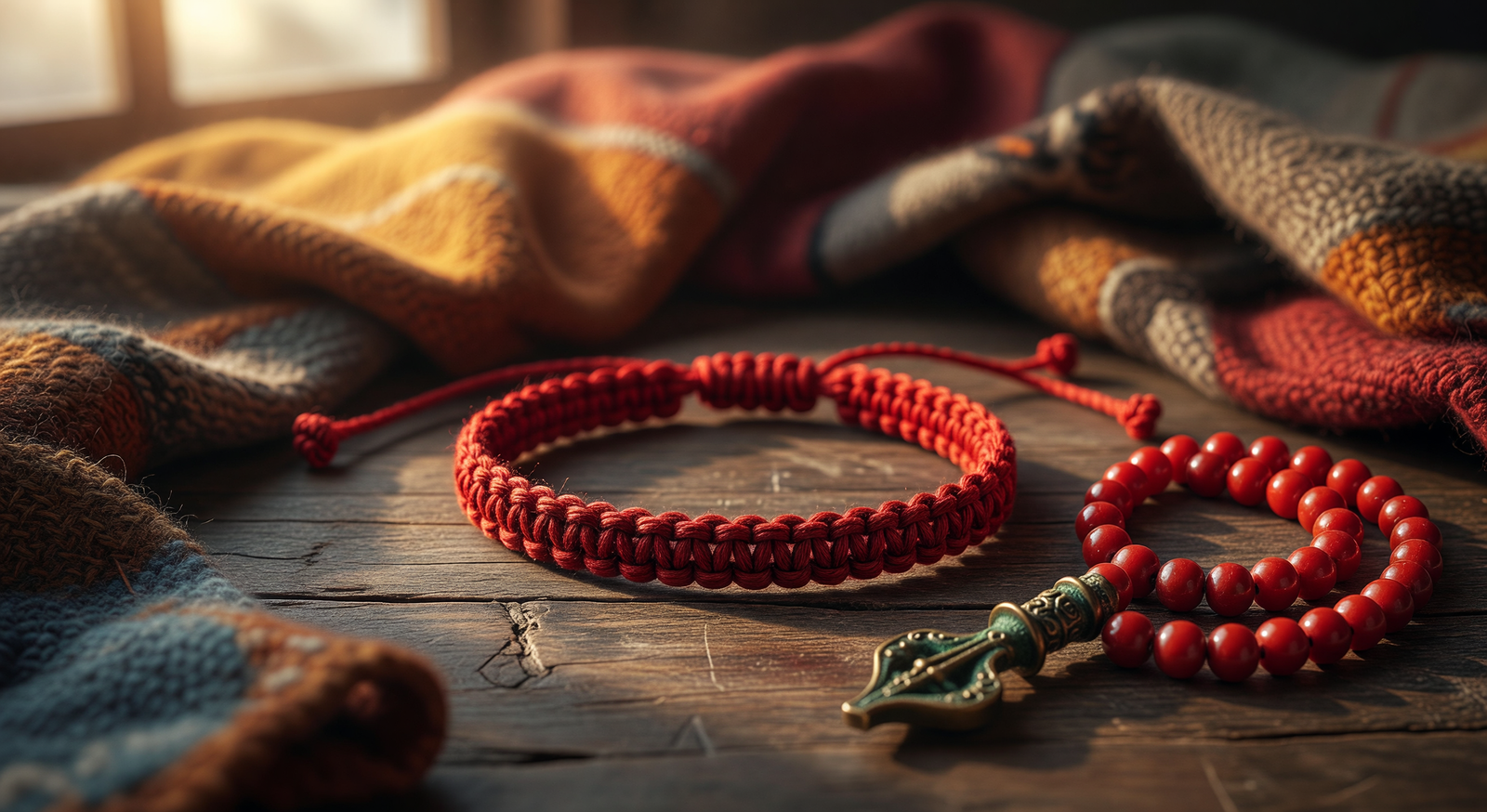
You're searching for a gift. not only any gift, but something for someone you care about deeply. Maybe your partner is starting a new, stressful job, or your best friend is working through a difficult life change.
You want to give them more than a platitude; you want to offer a tangible piece of your support, a quiet reminder that they are loved and protected. You've seen the simple red string bracelet, and you're wondering if it could be that perfect, meaningful gesture.
It's more than a trend; it's a tradition steeped in centuries of Himalayan wisdom, and understanding its roots is the first step in giving a truly thoughtful gift. It's why we take such care with our authentic Tibetan bracelets, ensuring each one carries the right intention from our hands to yours.
The Foundation: More Than a String, It's a Sacred Cord
When you see a red string on someone's wrist, your mind might jump to celebrity trends or Kabbalah, and that's a common connection. But in the Himalayan traditions we've spent years learning from, this simple cord has a much deeper, quieter, and more personal meaning.
It's not a mass-marketed charm. In Tibetan Buddhism, these are known as srung'dud or sungdi, which translates to "protection cord." The biggest misconception is that the string itself holds some kind of inherent rare quality.
The truth is far more beautiful: its power comes from the intention and blessing woven into it.
I've watched a monk in a monastery near Boudhanath, chanting mantras of compassion like Om Mani Padme Hum. As they chant, they tie intricate knots into a cord—sometimes seven, sometimes nine, depending on the practice.
Each knot is sealed with the presence of that prayer, that focused intention for well-being, for safety, for clarity. The cord becomes a vessel for that blessing. When a Rinpoche or a high lama gives a protection cord to a student or a visitor, they are offering a direct, personal connection to that protective presence and the lineage of their teachings.
It's a physical reminder of the refuge and compassion that the Dharma offers.
The color red is significant, but not exclusively used. In Tibetan culture, red symbolizes life force, compassion, and the protective quality of certain deities. However, you'll also see cords in the five traditional colors (blue, white, red, green, and yellow), each representing a different element or one of the Five Dhyani Buddhas.
The focus is less on a specific color's "magic" and more on the blessing it carries. So, when you choose a red string bracelet, you're not only picking a color; you're connecting with a tradition that sees protection not as a quietly striking shield, but as the cultivation of a compassionate and resilient heart.

Why This Simple Cord Matters So Much in 2026
It's easy to feel untethered today. Our phones buzz with constant notifications, our attention is pulled in a dozen directions, and genuine, quiet connection can feel like a luxury. We are more digitally "connected" than ever, yet those of us walking a spiritual path often feel a deep sense of disconnection from ourselves and from each other.
In this context, a simple, hand-tied cord around your wrist becomes a surprisingly powerful anchor—one I've seen worn by monks in the Jokhang Temple courtyard and by practitioners in Brooklyn alike.
Think of it as a low-tech shield for your heart. In a world that constantly demands your energy, the red cord is a physical, tactile reminder to pause. When you feel overwhelmed in a meeting, a glance at your wrist can be a cue to take a breath.
When you're separated from a loved one, touching the knots—typically tied in sets of three or nine—can evoke a feeling of their presence and care. It's a form of non-verbal communication, a constant, gentle hum of support that you carry with you.
This is especially true when giving one as a gift. Let's say you're giving it to your daughter as she leaves for college. You tie it on her wrist and tell her, "This is a reminder that you are strong, you are loved, and we are always with you." Now, for her, that bracelet is no longer just a string.
It's the memory of that moment. During a stressful exam or a lonely evening, it becomes a direct link to that feeling of home and unconditional love. It's a way of saying "I'm thinking of you" without sending a single text message.
In 2026, as we seek more tangible and authentic ways to express care, these simple, intention-filled objects have become more meaningful than ever. It's a core principle we see across all types of Tibetan sacred jewelry—the value is in the story and the intention, not only the material.
Real Benefits: How a Blessed Cord Actually Works
You might be wondering how a simple string can offer tangible benefits. Its power isn't mystical in a supernatural sense. Instead, it works on a psychological and spiritual level, acting as a tool to focus your own mind and heart.
It's a partner in your practice, whether that practice is formal meditation or simply trying to be a kinder person.
A Shield for the Mind: Filtering negativity
The concept of "negativity" can sound a bit vague. Let's make it practical. Think of the emotional drain you feel after a difficult conversation, or the anxiety that seeps in from scrolling through distressing news.
The protection cord serves as a conscious boundary. When you wear it with the intention of protection, it becomes a reminder not to absorb the chaotic energy of the world around you. It doesn't block bad things from happening.
Instead, it acts as a mental trigger. When you feel that negativity creeping in, the physical sensation of the bracelet on your skin—the slight pressure of the knot, the texture of the cord—can prompt you to return to your center, to remember your own resilience, and to consciously choose not to let external turmoil become internal chaos.
It's a key aspect of many ancient protection symbols—they empower the wearer from within.
A Cord of Connection: Deepening Bonds of Love
This is where the red string bracelet's meaning for love truly shines. When you give this bracelet to someone, the act of tying it on their wrist is a ritual in itself. You are setting a powerful intention for their happiness, health, and well-being.
For the person receiving it, the bracelet is no longer an object; it's a constant, physical symbol of your love and care. Every time they look at it, they are reminded of you and your intention.
This creates a powerful feedback loop of positive connection. It's a way to be present in someone's life even when you're miles apart. I've seen couples in Lhasa wearing matching cords—a private, meaningful symbol of their bond, a silent promise of mutual support that they carry into the world each day.
An Anchor for Your Intention: A Reminder of Your Path
Whether your intention is to be more patient, to practice compassion, or to overcome a personal challenge, the bracelet acts as your silent partner. It's a form of mindfulness you can wear. Throughout the day, as your hand moves and you catch a glimpse of the red cord, it's a gentle nudge: "Remember your goal.
Come back to your breath. Be kind." For someone with a meditation practice, it can be a reminder of the stillness they cultivated on the cushion, helping them carry that peace into their daily activities.
It transforms a fleeting thought ("I should be more present") into a consistent, gentle practice prompted by a simple, tactile cue—the weight of the cord around your wrist, the way it catches light. The meaning you infuse it with is the meaning it will reflect back to you.
How to Choose an Authentic Tibetan Protection Cord
In a market flooded with mass-produced trinkets, choosing a genuine protection cord can feel daunting. You're not only buying a piece of jewelry; you're investing in a piece with spiritual heritage. An authentic cord is defined by its source, its materials, and the intention with which it was made.
Here's what to look for when selecting one for yourself or as a gift.
Next, examine the materials and construction. An authentic cord is typically simple, made from high-quality silk thread designed to be worn continuously without fraying. The knots are often a key feature, like the Endless Knot, which symbolizes the interconnectedness of all things.
While our simple handwoven red string bracelets are a classic choice, this blessed cord is also incorporated into more substantial pieces. You might find it paired with a sacred Dzi bead for added protection, as seen in some of our investment-quality Dzi bracelets, or woven alongside handcrafted silver elements in our handwoven Tibetan bracelet collection.
The key is that the cord itself is treated with respect, not only as a cheap component to hold other beads.
Finally, trust your intuition. A genuine piece carries a certain feeling—a quietness, a sense of substance. It doesn't need to be flashy or expensive. It needs to feel right to you. When you're choosing one as a gift, think about the person who will wear it.
Would they appreciate the stark simplicity of a single cord, or would the addition of a small silver charm or a meaningful bead resonate more with them? The most authentic choice is the one that aligns with the heart of the person you're giving it to.

How To Use It Day To Day: A Small Ritual with Big Meaning
Receiving or putting on a protection cord is a moment to be cherished. It's a small ritual that sets the stage for the bracelet's purpose in your life. Rushing through it misses the point entirely. Here's a simple, respectful way to begin your journey with your bracelet.
If someone is giving it to you, allow them to tie it on your wrist. This is part of the gift. As they do, you can both hold a shared intention—for your well-being, happiness, or whatever you wish to cultivate.
If you are putting it on yourself, or giving it to someone, find a quiet moment where you won't be interrupted. Hold the bracelet in your hands for a moment. Close your eyes and take three slow, deep breaths.
Set a clear, positive intention. What do you hope this cord will remind you of? Is it love? Protection? Patience? Speak it silently or aloud.
Traditionally, the left wrist is considered the "receiving" side of the body, making it the ideal place to wear a bracelet intended for protection or to receive blessings. The right wrist is the "giving" side, associated with action and compassion extended to others.
You can follow this tradition or simply choose the wrist that feels most comfortable. The intention matters more than the rule. A comprehensive guide on wearing spiritual bracelets can offer more perspective if you're curious about the symbolism.
Once it's on, simply leave it. Wear it as you sleep, shower, and go about your day. Over time, the cord will wear. It might fray or the color may fade—the red dye from madder root particularly softens with months of contact against skin.
This is natural and beautiful. When it eventually breaks and falls off, it is not a sign of bad luck. In the Himalayan tradition practiced across Tibet and Nepal, this is seen as a positive sign.
It means the bracelet has absorbed the negativity it was meant to, or that the intention it held has come to fruition. Its work is done. At this point, you can thank it for its service and either burn it or return it to the earth by burying it in your garden or a pot.
Common Questions About the Red String Bracelet
Those walking a path of spiritual practice often ask thoughtful questions about these simple yet sacred bracelets. Here are answers to some of the most common ones you might be wondering about, especially if you're considering one as a gift.
What's the difference between a Tibetan red string bracelet and a Kabbalah one?
While they look similar, their origins and intentions are quite different. The Kabbalah red string is specifically tied to Jewish mysticism, traditionally made from wool, and worn on the left wrist to ward off the "evil eye." The Tibetan Buddhist protection cord, or srung'dud, is not focused on a single threat like the evil eye.
Instead, its purpose is broader: to serve as a vessel for blessings of compassion, health, and general well-being, bestowed by a lama or practitioner through mantras and prayer. The power is in the blessing infused into the cord, not only the object itself.
Our focus is on this Himalayan tradition, where the cord is a tangible link to a specific, positive intention—often blessed during ceremonies at monasteries like Jokhang Temple in Lhasa.
Do you have to be a Buddhist to wear one?
Absolutely not. The core principles embodied by the bracelet—love, compassion, protection, and mindfulness—are universal human values. You don't need to subscribe to any specific doctrine to benefit from a physical reminder to be kind, to feel safe, or to remember you are loved.
Wearing one is an act of personal intention. If the bracelet's symbolism resonates with you or the person you're giving it to, that is all the qualification needed. It's a tool for the heart, and the heart has no religion.
We see it as sharing a piece of Himalayan culture, not as a religious conversion tool.
Can I buy and tie one on for myself?
Yes, you certainly can. While it's a beautiful gift to receive, it is also a powerful act of self-compassion to give one to yourself. The ritual is just as important. Find a quiet moment to hold the bracelet, set a clear and kind intention for yourself—perhaps for healing, for strength during a difficult time, or for self-love—and then tie it on your wrist.
This act of consciously bestowing a blessing upon yourself can be deeply meaningful. It's a declaration that you are worthy of the same care and protection you would offer to a loved one. It becomes your personal promise to yourself.
What should I do when the bracelet falls off?
When your bracelet naturally breaks and falls off, the traditional viewpoint is to see it as a positive event, not a cause for alarm. It signifies that the cord has fulfilled its purpose. It has either absorbed the negativity it was meant to shield you from, or the intention you set has been realized.
The cycle is complete. The respectful way to dispose of it is to return it to the elements. You can burn it in a small, safe ceremony, or bury it in the earth—in a garden, a park, or a houseplant.
This practice reflects what I witnessed at Sera Monastery near Lhasa, where practitioners return blessed objects to nature as an act of gratitude and acknowledgment of impermanence, a core Buddhist teaching.
Is it okay to wear it in the shower or get it wet?
Yes, it's designed to be worn continuously. An authentic protection cord is meant to become a part of you, staying on through daily activities like showering, sleeping, and exercising. The natural fibers—typically hand-spun wool or cotton from Tibetan regions—will wear over time, and this is part of its lifecycle.
Getting it wet will not wash away the blessing or the intention. In fact, this constant wear is what allows it to serve its purpose as a consistent reminder. Don't worry about preserving it like a delicate piece of jewelry; its value comes from being with you through your life, not from being kept in perfect condition.
What's the best intention to set if I'm giving it as a gift for love?
If you're giving the bracelet as a symbol of love, the best intention is one that is selfless and unconditional. As you tie the cord, you can hold a silent wish in your heart.
For a romantic partner, it might be: "May you be happy. May you be free from suffering. May you always feel my support and love." For a child or friend, it could be: "May you be safe and protected.
May you have the strength to meet any challenge. May you always know how deeply you are loved." The key is to focus on the well-being of the other person, free of any expectation.
This pure, compassionate intention is the most powerful blessing you can give.
Your Journey, Tied with Intention
At its heart, a red string bracelet is a story you choose to wear. It's a story of connection, of care, of a quiet strength you carry with you. For you, the gift-giver, it's a way to offer a piece of your heart in a form that can be held and felt.
For the person who wears it, it's a constant, gentle reminder that they are not alone—that they are loved, protected, and part of something bigger. Buddhabelief works exclusively with monastery-certified craftsmen in Lhasa and Kathmandu to bring you pieces that carry genuine spiritual significance — not mass-produced replicas.
As we move through 2026 and beyond, these simple, tangible anchors become increasingly precious. They are a quiet rebellion against the noise and disconnection of modern life. They remind us that the most powerful forces—love, compassion, and intention—don't require a screen or a signal.
They just require a moment of focused, heartfelt presence. if you are choosing one for a loved one or for yourself, you are participating in a lineage that has brought comfort and meaning to practitioners since at least the 11th century, when Tibetan Buddhist masters first formalized the blessing of protective cords.
We invite you to explore our traditional Tibetan protection bracelets, each one hand-knotted by our artisans in Kathmandu's Boudhanath district with this same spirit of mindfulness and care. May you find the perfect piece to carry your intention forward.
Keep reading