buddhist-jewelry
Meditation Jewelry: Guide for Your Practice
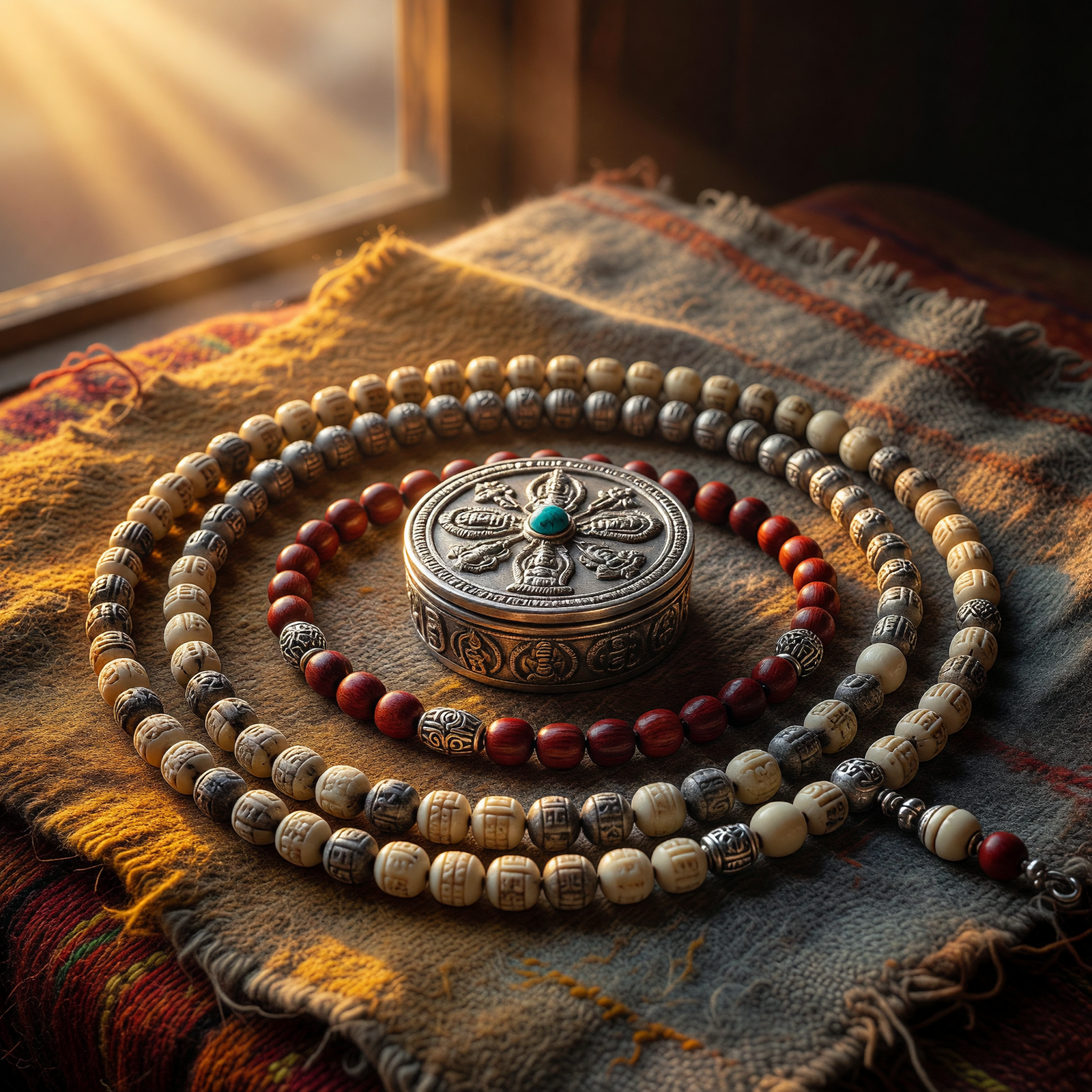
You're ten minutes into your morning sit. The initial chatter has quieted, your posture is settled, but a subtle restlessness remains. It's the echo of yesterday's quarterly review, the low-grade hum of concern for your aging parents, the silent to-do list scrolling behind your closed eyes.
You bring your attention back to the breath, but the mind slips away again. This is the plateau. It's not the struggle of a beginner, but the nuanced challenge of a long-term practitioner. It's in these moments that a physical anchor can make all the difference.
This guide isn't about the aesthetics of spiritual accessories; it's about how thoughtfully chosen pieces from our collection of authentic Tibetan jewelry can serve as potent, tangible supports for your dedicated practice.
When we visited the bustling stalls near the Boudhan
The Foundation: What Meditation Jewelry Really Is
Let's clear the air and address a common misconception. In the West, meditation jewelry is often marketed with vague promises of "calm, grounded presences" or as a kind of spiritual quick-fix. You see it on influencers who pair a mala with a designer handbag, speaking of "drawing in abundance" without a hint of understanding about the path of renunciation.
This is not our understanding. From the perspective of the artisans in our Kathmandu atelier and the monks at Sera Monastery who bless our pieces, these objects are not magic talismans. They don't give you presence; they help you focus yours. Tibetan jewelry collection
Think of a mala not as a battery, but as a lens. By itself, a lens does nothing. But when you use it to focus sunlight, it can create fire. Similarly, a mala is a tool to focus your intention, your awareness, your devotion.
Its purpose is deeply practical. It is a spiritual abacus for counting mantras, a tactile anchor to bring a wandering mind back to the present moment, and a constant, physical reminder of the vows you've taken and the path you've committed to walk.
The value isn't in some remarkable power inherent in the beads themselves. It's in the lineage they represent and the intention they are designed to hold. When Master Tenzin selects a piece of Bodhi wood from the suppliers near Bodh Gaya, he is not only choosing material; he is honoring the tree under which the Buddha attained enlightenment in 500 BCE.
When a piece is blessed during a 49-day puja at the monastery, it is being saturated in an atmosphere of dedicated practice. This doesn't imbue it with supernatural power. It connects it to a stream of genuine intention.
When you hold it, you are not only holding beads; you are holding a connection to that lineage, a reminder that you are not on this path alone. It's a tool, a support, a companion—not a shortcut.
Why This Matters in a World of Digital Ghosts
You already know the challenges. Your screen time report is a quiet indictment. Your calendar is a relentless grid of obligations. The world demands your attention in a thousand fractured ways, pulling you out of the present and into a cycle of planning, reacting, and recovering.
By 2026, this won't have lessened. The pull of the digital realm, of AI-driven demands and virtual spaces, will be even more pervasive. In such a disembodied world, a tangible connection to your practice isn't a luxury; it's a necessity.
This is where meditation jewelry moves from being a simple tool to a vital anchor. Consider these scenarios, familiar to anyone working through the complexities of a modern life with a serious practice:
- The High-Stakes Meeting: You're in a tense negotiation. Voices are rising. Your own reactivity, the old habit of defensiveness, starts to bubble up. Under the table, your thumb finds the smooth, cool surface of a single Dzi bead on your wrist. It's not a distraction, but a silent, grounding touchstone. It's a physical reminder to return to the breath, to listen with compassion, to respond rather than react. The bead doesn't solve the problem, but it helps you show up as the person your practice has been cultivating.
- The Difficult Family Dinner: You're visiting your parents. The same old conversations, the same unresolved dynamics, are playing out. It's easy to slip back into the patterns of your 16-year-old self. But the weight of the 108 sandalwood beads around your neck—each one hand-carved in Kathmandu—is a subtle, constant reminder of your commitment to patience and right speech. Each bead represents a mantra recited, a moment of clarity. It's a physical link to your adult self, the one who sits on the cushion every morning.
- The Plateau of Practice: You've been meditating for a decade. The initial insights have settled, and now there's just the daily work. It can feel stagnant. Picking up the same mala every single day, feeling the way your own skin has smoothed its surface over thousands of repetitions, becomes a a sign of your own persistence. It has absorbed the quiet intention of your best days and sat with you through your most distracted ones. It is a witness to your journey, a reminder that the path is not a series of fireworks but a steady, patient walk.
In a world of fleeting digital information, these objects offer permanence. They are analog tools in a digital storm. They don't beep, buzz, or demand an update. They simply are. They are a quiet rebellion against the noise, a commitment to what is real, tangible, and enduring—your own mind, your own heart, your own path.

The Real Benefits: How It Actually Works
So, how does a string of beads or a carved pendant translate into tangible support for your practice? The mechanism is not mystical; it is deeply rooted in psychology, physiology, and the Buddhist understanding of the mind.
It's about creating skillful conditions for your practice to flourish, both on and off the cushion.
A Tactile Anchor for the Wandering Mind
The Buddha taught that the mind is like a wild monkey, jumping from branch to branch. In meditation, our primary task is to gently train that monkey. A mala is one of the most effective tools for this.
The practice of japa, or mantra recitation, involves moving from one bead to the next with each repetition. This simple, repetitive physical action does several things. First, it engages the sense of touch, giving the mind one more point of focus beyond the breath or the mantra itself.
When thoughts of work or family arise, the feeling of the next bead in your fingers is a gentle, non-judgmental call to return. Second, it creates a rhythm that can be deeply settling to the nervous system.
The steady cadence of bead-mantra-breath helps to regulate physiological responses, easing you into a closer state of concentration (samadhi). It transforms meditation from a purely mental exercise into a full-body experience, making it more accessible, especially on days when the mind is particularly restless.
A Container for Intention and Blessing
An object is just an object. But an object that is consistently used with a specific intention becomes something more. It becomes a repository for that intention. Every time you pick up your mala for your Chenrezig practice, you are strengthening the association in your mind between that object and the quality of compassion.
Over years, the mala becomes a potent symbol, a kind of conditioned trigger for a state of mind. Just holding it can begin to evoke the feeling of calm and purpose you've cultivated. This is your work, your intention.
The blessing from a monastery adds another essential layer. When monks from Sera monastery perform a puja and consecrate these pieces, they are infusing them with an atmosphere of pure, concentrated intention from an unbroken lineage stretching back to the 15th century.
This blessing doesn't magically solve your problems. Rather, it serves as an inspiration and a connection. It reminds you that your personal practice is part of a vast, ancient stream of wisdom, supported by countless practitioners who came before you.
It's a powerful antidote to feeling isolated on your path.
A Bridge Between Formal Practice and Daily Life
Perhaps the most significant benefit for a seasoned practitioner is how these objects bridge the gap between your time on the cushion and the rest of your day. The ultimate goal of practice is not to be a great meditator, but to bring the qualities of mindfulness, compassion, and wisdom into every moment.
A wrist mala or a simple pendant is a perfect vehicle for this. A glance at the turquoise and coral on your wrist as you type an email can be a reminder to communicate with clarity and kindness.
The feeling of a Gau box amulet under your shirt while working through a crowded airport can be a reminder of your inner refuge. These pieces act as "mindfulness bells" you wear. They are discreet, personal reminders that interrupt the autopilot of daily life and invite you to come back to the present, to your breath, and to your deepest intentions.
This is how the practice moves from a compartmentalized activity to a lived, integrated reality. Exploring the different forms of traditional Tibetan adornments can help you find the right bridge for your own life.
How To Spot the Real Thing Meditation Jewelry
Choosing a piece of meditation jewelry is less like shopping and more like choosing a spiritual companion. It should be a considered decision based on your practice, your intention, and a respect for the tradition. Here's how to approach it from a practitioner's perspective, moving beyond surface-level aesthetics.
1. Start with Intention, Not Appearance:
Before you even look at a single item, sit with the question: "What aspect of my practice needs support right now?"
- Are you working on a specific mantra practice (like Green Tara or Medicine Buddha)? A full 108-bead mala is your essential tool.
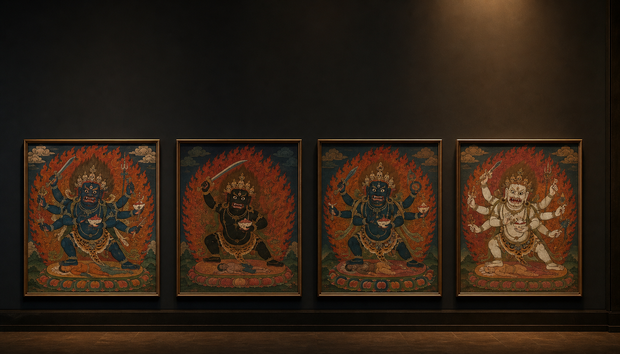
- Are you seeking to cultivate a quality of fierce compassion or overcome obstacles? A wrathful deity pendant or a Dzi bead with specific markings might serve as a potent reminder.
- Do you need a constant, subtle reminder of impermanence throughout your workday? A simple wrist mala made of bone could be your anchor.
2. Understand the Language of Materials:
In Tibetan Buddhism, materials carry specific symbolic weight and associations. This isn't about mystical properties, but about using symbolism to incline the mind.
- Bodhi Seeds: Directly represents the Buddha's enlightenment. They are a classic, potent choice for any practitioner, signifying the potential for awakening that exists within you. As you use them, they darken and absorb the oils from your skin, becoming a beautiful a sign of your practice over time.
- Sandalwood/Rosewood: These woods are prized for their calming, soothing fragrance. They are excellent for pacifying practices and for cultivating a sense of tranquility and focus.
- Bone: Often carved into skull beads, bone is a direct and powerful reminder of impermanence (anicca). It is not morbid; it is a call to practice with urgency and to appreciate the preciousness of this human life. It's a key support for developing renunciation.
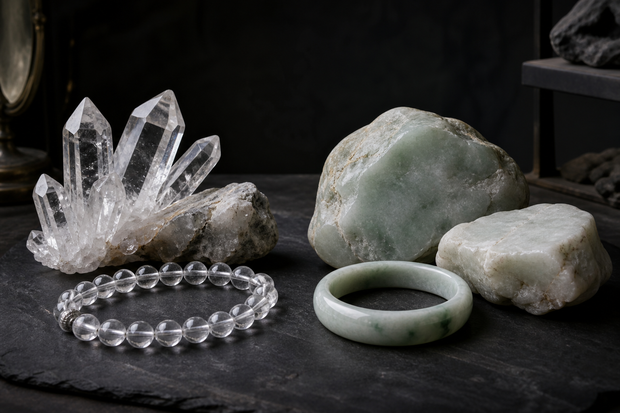
- Precious Stones (Turquoise, Coral, Amber): These have deep cultural significance in Tibet. Turquoise is associated with protection and health, while Coral is often linked to life force. An authentic Dzi bead is an investment piece, a stone etched with specific patterns believed to offer protection and support the wearer's spiritual journey. An authentic 9-Eyed Dzi bead, for example, is traditionally associated with completing the path.
3. Look for Signs of Authenticity and Craftsmanship:
The market is flooded with mass-produced fakes. An authentic piece is not only an object; it's the result of someone's dedicated practice and skill. Look for: — explore our Tibetan jewelry collection for authentic pieces.
- The Hand of the Artisan: Real Bodhi seeds have natural variations. Hand-knotted malas have a certain feel and durability that machine-strung ones lack. Look for the small, perfect imperfections that signal human touch.
- Lineage and Sourcing: Where do the materials come from? Who makes the pieces? We take pride in our direct relationships with people like Master Tenzin in our Boudhanath workshop. Knowing the story behind a piece connects you to a real person, a real place, and a real tradition.
- The Blessing Process: A genuine blessing is specific. Ask where, by whom, and in what context the pieces are blessed. It's not a generic stamp; it's a meaningful connection to a living monastic community.

How To Use It Day To Day in Your Practice
Receiving a new piece of meditation jewelry is the beginning of a relationship. How you care for it, consecrate it, and integrate it into your life will determine its effectiveness as a support for your path. It requires more than wearing it.
1. Personal Consecration:
Even if your piece has been blessed by a monastic community, you need to create your own personal connection. Find a quiet time when you first receive it. Sit, hold the piece in your hands, and generate your intention.
You might recite OM MANI PADME HUM 108 times, dedicating the merit to the awakening of all beings. You can gently blow on the piece, visualizing your intention and positivity permeating it. I've done this in my room in Lhasa, watching the afternoon light catch the beads—that moment of breath and intention formally makes it your tool, aligning it with your specific journey.
2. Proper Handling During Practice:
A full mala is traditionally held in the left hand (symbolizing wisdom) for most practices, with the beads drawn towards you using the thumb. Each bead passes over the index finger.
The large guru bead at the end is not counted; it signifies the end of one round, at which point you can pause, or reverse direction to begin another. Never step over your mala or place it on the floor.
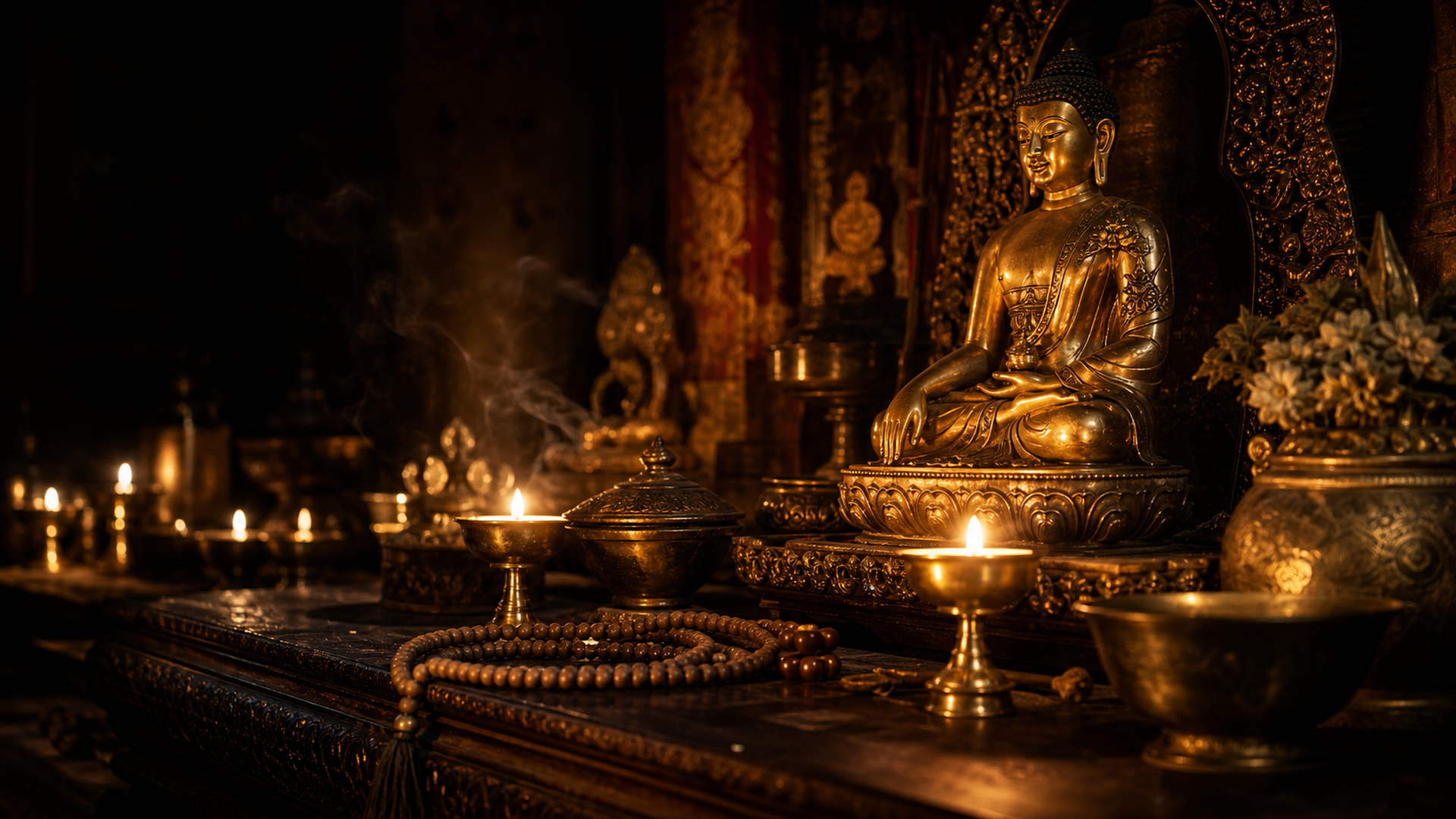
When not in use, it should be kept in a clean, high place, like on your altar or in a dedicated pouch made of natural cotton or silk. This isn't superstition; it's a discipline of respect for the tools of your practice, which in turn cultivates respect for the practice itself. authentic Tibetan pieces
3. Beyond the Cushion:
The real test is integration. Make a conscious choice to use your jewelry as a mindfulness trigger. For example, decide that every time you notice your wrist mala while driving, you will check your posture and relax your grip on the steering wheel.
Every time you feel your pendant while waiting in line, you will take three conscious breaths. Link the physical sensation of the object to a specific, small act of mindfulness. This creates new neural pathways, weaving your practice into the fabric of your ordinary life.
It's about converting idle moments into opportunities for practice.
4. Care and Impermanence:
Your mala will age. The string may fray, and one day, it might break. In the Tibetan tradition, a breaking mala is not seen as a bad omen. On the contrary, it is often viewed as a positive sign that the mala has absorbed a great deal of negative karma or that a cycle of practice is complete.
It is a direct teaching on impermanence. If it breaks, you can gather the beads and have them re-strung by a craftsperson in Kathmandu or your local community, perhaps adding a new counter bead to mark the transition.
This act of repair is itself a practice of care and continuity.
Common Questions from Dedicated Practitioners
As your practice deepens, so do your questions. Here are some of the inquiries we often receive from committed students of the Dharma, answered from our perspective.
What is the real significance of a monk's blessing?
A blessing, or rabné in Tibetan, is not a remarkable act that imbues an object with power. It is a ceremony of consecration that connects the object to a specific lineage and stream of intention.
When monks at Sera Monastery perform a puja for our pieces, they are reciting specific prayers and mantras for hours or even days, focusing their collective devotion and practice. The object sits in this sacred space, absorbing the presence of that concentrated practice.
For you, the practitioner, this means the object is no longer generic. It serves as a powerful reminder of the Sangha, the community of practitioners, and the unbroken line of teachers going back to the Buddha.
It's an inspiration, a support, and a tangible link to the heart of the tradition.
How do I choose between different Dzi bead patterns?
Choosing a Dzi bead is a very personal process. While different patterns have traditional associations—the 2-Eyed Dzi for harmony in relationships, the 9-Eyed Dzi for power and swift attainment—it's more important to follow your intuition and practice needs than a rigid set of rules.
Look at the different patterns and see which one speaks to you. Often, practitioners find themselves drawn to a specific bead without fully understanding why, only to realize later how its symbolism supports a challenge they are currently facing.
Think of it less as picking a symbolic tool and more as choosing a reminder that will travel with you. It's an investment piece you'll pass down, so select the one that feels like a true companion for your long-term journey on the path.
My mala broke. What does this mean and what should I do?
First, don't panic. A breaking mala is not a sign of bad luck. In the Himalayan traditions, it's often seen as a positive sign. It can signify the completion of a cycle of practice—that the mala has served its purpose for that phase of your journey.
It can also be interpreted as the mala having absorbed and broken a pattern of negative karma on your behalf. It is a direct, visceral teaching on impermanence. Carefully gather all the beads. You have a few options: You can have it re-strung, often adding a new or different bead to mark the event.
You can retire the beads on your altar as a respected object. Or you can offer the beads to a river or other natural place. The key is to treat the event with respect and mindfulness, seeing it as part of the path, not a problem.
Is there a difference between Bodhi seed and Bodhi root malas?
Yes, there's a significant difference. Authentic Bodhi seed malas are made from the seeds of the Ziziphus budhensis tree, which is native to Nepal and directly associated with the Buddha's enlightenment. These seeds are naturally textured, durable, and darken beautifully with age and use.
"Bodhi root" is often a marketing term for beads carved from the root of a different plant, or even from wood or bone, to look like seeds. While they can be beautiful, they do not carry the same direct symbolic connection as true Bodhi seeds.
For a practitioner who values lineage and authenticity, seeking out a genuine Bodhi seed mala is a worthwhile endeavor. The feel and history of the real seeds offer a closer connection to the tradition.
Can I wear jewelry associated with a deity I haven't been initiated for?
This is an excellent and nuanced question. Generally speaking, wearing a symbol of a deity like Green Tara or Chenrezig is an act of devotion and a reminder to cultivate their qualities—action and compassion, respectively.
It is perfectly fine and encouraged for anyone. However, for specific wrathful deities or symbols tied to higher yoga tantra practices, it is traditionally advised to have received the empowerment (wang) or at least the reading transmission (lung) for that practice from a qualified lama.
This isn't about gatekeeping; it's about ensuring you have the proper context and guidance to work with these potent presences skillfully. If you are unsure, it is always best to stick with universal symbols like the Vajra, endless knot, or general Bodhisattva imagery.
How do I properly care for my blessed items to maintain their integrity?
Caring for a blessed object is a practice in mindfulness. The primary rule is respect. Do not place your mala, pendant, or other sacred items on the floor or in a bathroom. Don't step over them.
When you are not wearing them, they should be kept in a clean, high place, such as on your altar or in a special pouch. Physically, you can gently wipe beads with a soft, dry cloth.
Avoid exposing them to harsh chemicals or soaking them in water, which can damage the string or the material itself. More importantly, the best way to care for their integrity is to use them.
The more you use your mala for mantra and practice, the more you strengthen its purpose and your connection to it. Its spiritual integrity is maintained through your own dedicated practice.
Your Journey is the Jewel
As you look toward the coming years, the path doesn't get easier; the challenges simply become more subtle. The work shifts from building the foundation of practice to integrating it into every facet of a complex life.
It's about maintaining your center in a world designed to pull you off it. The jewelry we offer is not the answer. You are the answer. Your commitment, your discipline, your quiet moments on the cushion—that is the heart of the path.
Our role is simply to provide authentic, skillfully made tools to support you on that journey. A piece crafted by an artisan who understands its purpose, blessed by a community dedicated to the Dharma, can be a faithful companion.
It can be the anchor in the storm, the tactile reminder of your deepest commitment, the bridge between your inner and outer worlds. This is the piece you will still wear in 20 years, its surface smoothed by your touch, a silent witness to your unwavering journey.
When you are ready to choose a companion for the path ahead, we invite you to explore the authentic pieces in our collection.
Frequently Asked Questions
What is the real significance of a monk's blessing?
A blessing, or rabné in Tibetan, is not a remarkable act that brings an object into connection with a lineage. It is a ceremony of consecration that connects the object to a specific lineage and stream of intention.
When monks at Sera Monastery perform a puja for our pieces, they are reciting specific prayers and mantras for hours or even days, focusing their collective presence and devotion. The object sits in this sacred space, absorbing the resonance of that concentrated practice.
For you, the practitioner, this means the object is no longer generic. It serves as a powerful reminder of the Sangha, the community of practitioners, and the unbroken line of teachers going back to the Buddha.
It's an inspiration, a support, and a tangible link to the heart of the tradition.
How do I choose between different Dzi bead patterns?
Choosing a Dzi bead is a very personal process. While different patterns have traditional associations—the 2-Eyed Dzi for harmony in relationships, the 9-Eyed Dzi for power and swift attainment—it's more important to follow your intuition and practice needs than a rigid set of rules.
Look at the different patterns and see which one resonates with you. Often, practitioners find themselves drawn to a specific bead without fully understanding why, only to realize later how its symbolism supports a challenge they are currently facing.
Think of it less as picking a 'magic spell' and more as choosing a symbolic reminder. It's an investment piece you'll pass down, so select the one that feels like a true companion for your long-term journey on the path.
My mala broke. What does this mean and what should I do?
First, don't panic. A breaking mala is not a sign of bad luck. In the Himalayan traditions, it's often seen as a positive sign. It can signify the completion of a cycle of practice—that the mala has served its purpose for that phase of your journey.
It can also be interpreted as the mala having absorbed and broken a pattern of negative karma on your behalf. It is a visceral teaching on impermanence. Carefully gather all the beads. You have a few options: You can have it re-strung, often adding a new or different bead to mark the event.
You can retire the beads on your altar as a respected object. Or you can offer the beads to a river or other natural place. The key is to treat the event with respect and mindfulness, seeing it as part of the path, not a problem.
Is there a difference between Bodhi seed and Bodhi root malas?
Yes, there's a significant difference. Authentic Bodhi seed malas are made from the seeds of the Ziziphus budhensis tree, which is native to Nepal and directly associated with the Buddha's enlightenment. These seeds are naturally textured, durable, and darken beautifully with age and use.
'Bodhi root' is often a marketing term for beads carved from the root of a different plant, or even from wood or bone, to look like seeds. While they can be beautiful, they do not carry the same direct symbolic connection as true Bodhi seeds.
For a practitioner who values lineage and authenticity, seeking out a genuine Bodhi seed mala is a worthwhile endeavor. The feel and history of the real seeds offer a closer connection to the tradition.
Can I wear jewelry associated with a deity I haven't been initiated for?
This is an excellent and nuanced question. Generally speaking, wearing a symbol of a deity like Green Tara or Chenrezig is an act of devotion and a reminder to cultivate their qualities (action and compassion, respectively).
It is perfectly fine and encouraged for anyone. However, for specific wrathful deities or symbols tied to higher yoga tantra practices, it is traditionally advised to have received the empowerment (wang) or at least the reading transmission (lung) for that practice from a qualified lama.
This isn't about gatekeeping; it's about ensuring you have the proper context and guidance to work with these potent presences skillfully. If you are unsure, it is always best to stick with universal symbols like the Vajra, endless knot, or general Bodhisattva imagery. handcrafted meditation jewelry
How do I properly care for my blessed items to maintain their integrity?
Caring for a blessed object is a practice in mindfulness. The primary rule is respect. Do not place your mala, pendant, or other sacred items on the floor or in a bathroom. Don't step over them.
When you are not wearing them, they should be kept in a clean, high place, such as on your altar or in a special pouch. Physically, you can gently wipe beads with a soft, dry cloth.
Avoid exposing them to harsh chemicals or soaking them in water, which can damage the string or the material itself. More importantly, the best way to care for their integrity is to use them.
The more you use your mala for mantra and practice, the more you strengthen its purpose and your connection to it. Its spiritual integrity is maintained through your own dedicated practice.
Keep reading