buddhist-jewelry
Yak Bone Bracelet Meaning: Authentic Tibetan Spiritual Guide
You’re ten years into your practice. You have a dedicated seat time, you’ve attended a few silent retreats, and the concepts of Dharma and Karma are no longer abstract ideas but lived realities. Yet, you might feel a certain… stillness.
Not the peaceful kind, but the plateau kind. The initial bursts of insight have given way to the steady, sometimes challenging, work of integration. You’re not looking for a spiritual shortcut or a meaningful charm.
You’re looking for a tool. Something tangible to cut through the subtle complacency and reconnect you to the raw, urgent truth of the teachings. This is where the quiet power of authentic Tibetan bracelets, particularly those made of yak bone, finds its purpose.
The Foundation: What a Yak Bone Bracelet Really Is
Let's be clear. A yak bone bracelet is not a macabre trophy or a piece of "tribal chic" jewelry. To see it as such is to miss the point entirely. In the West, we have a deep-seated aversion to reminders of death.
We sanitize it, hide it away, and pretend it won't happen to us. On the Tibetan plateau above 12,000 feet, this is not an option. Impermanence isn't a philosophy; it's the weather, the landscape, the very air you breathe.
The yak is the center of traditional Tibetan life. It's not only livestock; it's a partner. It provides transport, fuel, shelter, and sustenance. Its life is interwoven with the lives of the people it supports.
When a yak dies—almost always of natural causes due to its immense value—every part of it is used with reverence and gratitude. Nothing is wasted. This is the first teaching: interdependence and respect for life's cycles.
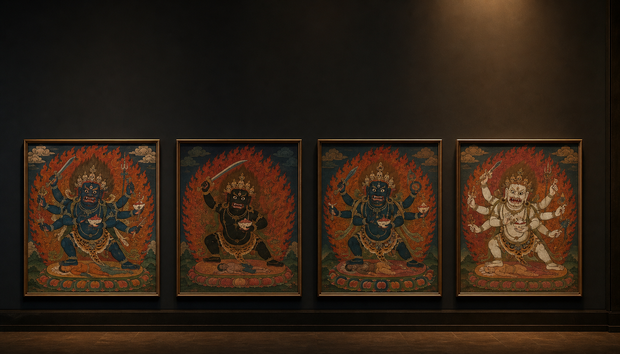
The use of bone, specifically, connects to the deepest layers of Vajrayana and the pre-Buddhist Bön traditions that flourished before the 8th century. Think of the wrathful deities, adorned with skulls and bone ornaments.
This isn't a celebration of violence. It's a powerful, non-dualistic statement: to truly understand life, you must unflinchingly look at death. To overcome fear, you must wear it. These practices, often associated with charnel grounds where sky burials take place in places like the Drigung Thil monastery, were designed for advanced yogis to directly confront their attachment to the body and the illusion of a permanent self.
A yak bone bracelet is a domesticated, accessible form of this potent teaching. It's not a skull cup (kapala), but it carries a whisper of the same medicine. It's a reminder, resting on your pulse point, that this body, this life, is temporary, precious, and unrepeatably beautiful.
It's not about death; it's about being radically alive, right now, because of it. Those on a path of self-inquiry often discover that it's not morbid at all. The reality is that it's a tool for liberation from the fear that holds us back from living fully.
Why This Matters for Your Practice in 2026

You’ve built a life. You have a career, responsibilities, perhaps a family. The challenges are no longer about “making it,” but about finding meaning within what you’ve made. This is where a serious practice often hits a plateau.
How do you apply the Dharma when you’re working through a complex corporate merger, caring for aging parents, or seeing your children navigate a world you can barely recognize?
This is precisely why a tangible reminder of impermanence (anicca or anitya) becomes not only helpful, but essential. By 2026 and beyond, the world will only offer more distractions, more digital abstractions, more reasons to live in your head.
The yak bone bracelet is an anchor to the real.
Consider these scenarios:
- The Professional Plateau: You’ve reached a senior position. The drive that got you here is now a source of stress. You feel the pressure to keep achieving, yet the rewards feel hollow. Catching a glimpse of the yak bone on your wrist during a tense board meeting isn't about manifesting success. It's a quiet, internal question: “Is this truly important in the grand scheme? What is the skillful action here, beyond ego?” It shifts your perspective from frantic striving to wise participation.
- The Family Impermanence: You’re watching your parents grow older. The roles are reversing, and it's a profound, often painful, lesson in attachment and loss. Holding your mala or feeling your bracelet is not a prayer to stop the inevitable. It’s a practice of presence. It reminds you that this time is finite and therefore infinitely precious. It helps you show up with compassion and equanimity, rather than fear and denial.
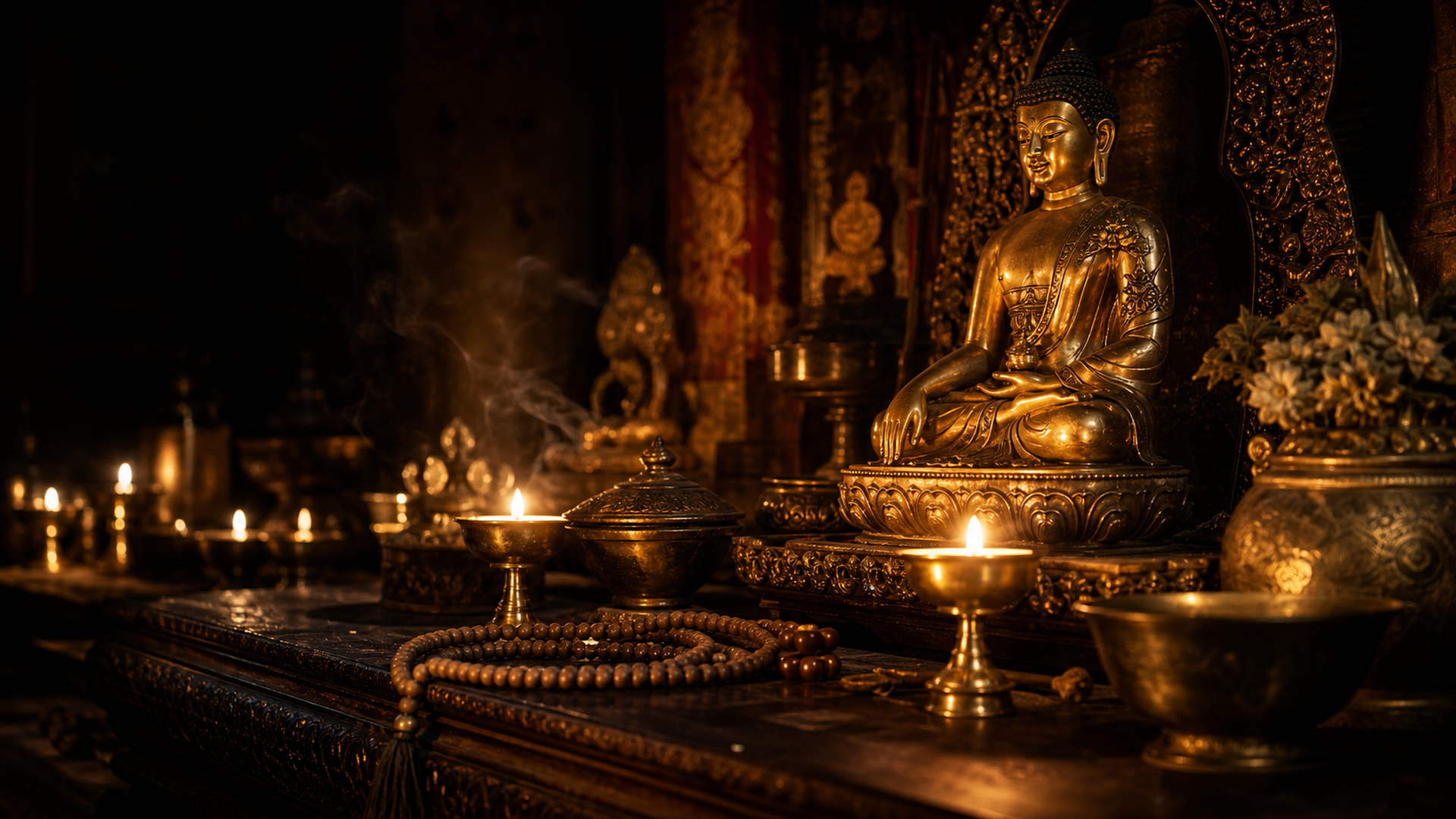
- The Practice Rut: Your 30-minute sit has become a habit, but the insight feels distant. Your mind is a whirlwind of to-do lists. The physical sensation of the beads—cool, smooth, organic—is a direct invitation back to the body. It’s a grounding wire. It breaks the loop of discursive thought and reminds you: this moment. This breath. This sensation. This is the entire path.
A yak bone bracelet isn't for the beginner seeking good vibes. It's for the seasoned practitioner who understands that the real work begins when the initial excitement fades. It’s a tool for the long haul, a companion for the subtle, challenging, and deeply rewarding work of integrating the Dharma into a complex, modern life.
It's an investment in the next decade of your journey.
The Real Benefits: How It Actually Works on the Mind
This isn't about meaningful energy or resonance. The power of a yak bone bracelet is rooted in sound Buddhist psychology and contemplative practice. It works because you work with it. We've seen for years how these pieces support practitioners, and the feedback always centers on three key functions.
A Tangible Reminder of Anicca (Impermanence)
The most fundamental teaching of the Buddha is impermanence. Intellectually, you know this. You’ve heard the talks, read the books. But the mind forgets. The body, however, has a different kind of memory. When you wear a yak bone bracelet, you are in constant, subtle contact with this teaching.
The material itself was once part of a living, breathing creature that walked the highest mountains on Earth. Now, it is on your wrist. One day, you and the bracelet will both be dust.
This isn't depressing; it's liberating. This physical reminder cuts through the illusion of permanence that our ego constantly builds. Every time you feel its weight, its texture, you receive a non-verbal dharma talk. It helps you hold plans loosely, forgive more easily, and cherish the present moment more deeply, because you are viscerally reminded that it's all you have.
Grounding in the Body (Kayanupassana)
In the Satipatthana Sutta, the first foundation of mindfulness is the body (kayanupassana). So much of our suffering comes from being lost in thought—worrying about the future, ruminating on the past. A spiritual bracelet, especially one with a distinct texture and history like yak bone, serves as a powerful tactile anchor.
When you find yourself caught in an anxiety loop or a spiral of anger, the simple instruction is to bring your attention to the physical sensation of the bracelet against your skin. Is it cool?
Is it warm? What is the texture of the carving? This act of focused, sensory awareness yanks the mind out of the abstract world of thought and plants it firmly in the reality of the present moment.
It's a portable, instantaneous mindfulness practice you can do anywhere, from a meditation cushion to a checkout line. This is a core reason why our guide on Buddha bracelet benefits emphasizes the role of a physical object in daily practice.
Connecting to Lineage and Place
This is not only any bone; it is specifically yak bone from the Himalayas. It carries the echo of a particular culture, a specific landscape, and a long lineage of practice. The Vajrayana path, especially in the Nyingma and Kagyu schools, is deeply connected to place.
The caves where yogis meditated, the mountains considered to be abodes of deities—the land itself is part of the mandala. When you wear a piece of authentic yak bone, sourced with respect from this region, you are creating a subtle connection to that lineage.
It’s a humble acknowledgment that you are part of a long stream of practitioners who have walked this path. It connects you to the grit, resilience, and profound wisdom of the Tibetan yogis and the Bön masters before them, who understood the potent alchemy of confronting mortality.
This connection can be a powerful source of inspiration, especially when your own practice feels isolated or difficult. It reminds you that you are not alone on this journey.
How to Choose an Authentic Yak Bone Bracelet

For a practitioner like you, authenticity isn't a buzzword; it's a prerequisite. An object intended as a support for your practice must be genuine in its material, make, and intention. A plastic imitation won't do.
Here’s what we've learned over years of working with artisans in Kathmandu and Lhasa.
1. The Material Itself: Spotting the Real from the Fake
The market is flooded with fakes made of resin, plastic, or common cow bone passed off as yak. Here’s how to tell the difference:
- Texture & Pores: Real yak bone has a unique, slightly porous texture. If you look closely, you’ll see tiny, irregular channels and pits where blood vessels once ran. Plastic is perfectly smooth. Cow bone is denser and has a more uniform, less pitted surface.
- Patina & Color: Natural, unbleached yak bone is not pure white. It’s a creamy, off-white, or even yellowish color. Over time and with contact with the oils from your skin, it will develop a beautiful, warm, honey-colored patina. This is a sign of authenticity. A piece that is stark white is likely bleached or fake.
- Weight & Temperature: Bone has a satisfying heft and feels cool to the touch initially, but quickly warms to your body temperature. Plastic feels light, cheap, and stays at a neutral temperature.
- The 'Hot Pin' Test (Use with Caution): If you gently touch a hot pin to an inconspicuous spot, plastic will melt and smell of chemicals. Bone will not melt and may give off a faint smell like burning hair. We don't recommend doing this on a finished piece, but it's a definitive test.
Most importantly, we ensure our yak bone is ethically sourced. It comes from animals that have died of natural causes on the high plateau. This is not only an ethical consideration; it's integral to the bracelet's meaning.
It represents the completion of a natural life cycle, not a life taken for ornamentation.
2. Craftsmanship and Intention
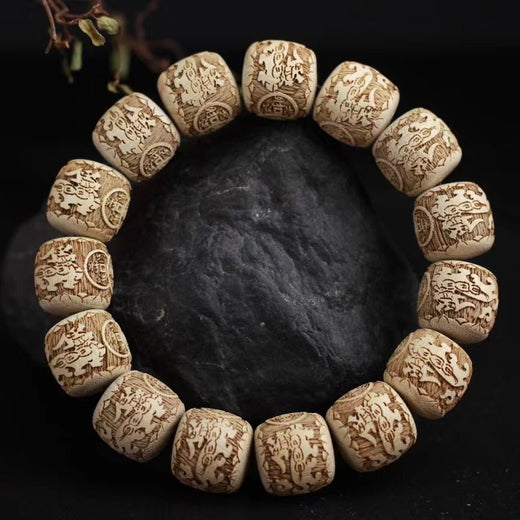
Look beyond the material to the way the piece is made. Mass-produced beads are perfectly uniform, spat out by a machine. The beads in our handwoven Tibetan bracelet collection are carved and finished by hand by artisans like Master Tenzin in our Kathmandu workshop.
You'll notice slight variations in shape and size, the subtle marks of the tool. This is not a flaw; it's the signature of the human hand and a sign of mindful creation. The bracelet you wear was shaped by a person, not a machine.
Often, these pieces are combined with other significant materials, such as in a Dzi bead bracelet, where the yak bone provides a grounding counterpoint to the Dzi's energy.
3. The Blessing: Specificity Matters
How To Use It Day To Day in Your Daily Practice
So, you’ve chosen an authentic piece. It’s not meant to be just another accessory you put on and forget. To unlock its true value, you need to integrate it into your life as a practice tool.
Here are some practical ways to do that, moving beyond simply wearing it.
1. The Morning Intention
When you put the bracelet on in the morning, take a moment. Instead of just clasping it, hold it in your palm for three breaths. On the first breath, acknowledge the bracelet as a physical object.
Feel its weight and texture. On the second breath, bring to mind its meaning: impermanence, the preciousness of this life. On the third breath, set a simple intention for the day: “Today, may I remember the truth of impermanence and act with compassion and wisdom.” This simple, 30-second ritual transforms the bracelet from jewelry into a daily vow.
2. A Touchstone During Difficulty
You’re in a difficult conversation. You feel your defensiveness rising, your heart rate climbing. This is a critical practice moment. Instead of reacting habitually, discreetly touch your bracelet. Use it as an anchor. The physical sensation can break the reactive loop.
Let it be a reminder: “This feeling, too, is impermanent. This situation is impermanent. The person in front of me is, like me, impermanent.” This doesn't make you passive; it gives you the space to respond with clarity instead of reacting with affliction.
This aligns with many of the core tenets found in our guide to ancient spiritual protection symbols, where the ultimate protection is your own mindful awareness.
3. A Focus Object in Meditation
If you find your mind particularly busy during your formal sitting practice, you can use the bracelet as a temporary focus object. Instead of the breath, bring your full attention to the point of contact between the bracelet and your skin.
Explore the sensation with the same curiosity you would bring to the breath. After a few minutes, once the mind has settled slightly, you can gently return your focus to the breath at the nostrils.
This is a skillful means, a technique to help quiet the “monkey mind” and ease into a closer state of concentration.
4. Caring for It as Practice
Over time, the bone will absorb the oils from your skin and develop a rich patina. This is part of its journey with you. To clean it, simply wipe it with a soft, dry cloth.
Avoid harsh chemicals or prolonged soaking in water. The act of caring for this object can itself be a mindfulness practice. As you wipe each bead, you can reflect on the moments you've shared with it—the challenges, the small insights, the moments of calm.
The bracelet becomes a physical record of your practice, its deepening color a reflection of your own journey.
Common Questions About Yak Bone Bracelets
Is it ethical to wear a yak bone bracelet?
This is a crucial question, and the answer lies entirely in the sourcing. For us and for traditional Tibetan artisans, it is deeply unethical to harm a yak for its bones. Yaks are immensely valuable partners in the Himalayan ecosystem and economy.
Our yak bone is sourced exclusively from animals that have died of natural causes at the end of a long life. This practice is rooted in the Buddhist principle of non-harm (ahimsa) and a cultural imperative of not wasting any part of such a revered animal.
It transforms an object of potential mourning into a tool for spiritual remembrance. When you choose an authentic, ethically sourced piece, you are participating in a cycle of respect, not harm.
What's the difference between yak bone and other bone malas (e.g., cow bone)?
While all bone can serve as a reminder of impermanence, yak bone holds a specific and potent significance within the Tibetan tradition. The difference is contextual and energetic. The yak is inextricably linked to the sacred landscape of the Himalayas and the very survival of the Tibetan people.
It embodies strength, resilience, and the ability to thrive in harsh conditions. Using yak bone connects the practitioner to this specific energy and the spiritual lineage of the region. Cow bone, while functionally similar, lacks this deep cultural and spiritual resonance.
For a practitioner engaged with Tibetan Buddhism, using yak bone is a way of honoring and connecting with the heartland of that tradition.
Is it macabre or bad luck to wear bone?
This is a common concern rooted in a Western, death-averse perspective. In Vajrayana Buddhism, the opposite is true. Confronting death directly is seen as the most powerful way to overcome fear and attachment, which are the roots of suffering.
The charnel ground ornaments of wrathful deities are not evil; they symbolize the total liberation from fear of life and death. A yak bone bracelet is a gentle, accessible version of this profound principle.
It is not bad luck; it is a tool to generate wisdom and compassion. It’s a reminder to live more fully and fearlessly precisely because life is temporary. It transforms a symbol of fear into a symbol of liberation.
Which wrist should I wear it on?
In many esoteric traditions, the left wrist is considered the “receiving” side, associated with internal practice, intuition, and connecting with blessings. The right wrist is the “giving” side, associated with action, compassion, and how you engage with the world.
A common approach is to wear a bracelet like this on the left wrist to internalize the teaching of impermanence. However, there is no rigid rule. We advise practitioners to experiment and see what feels most natural and supportive for their practice.
The most important factor is your intention, not the specific wrist. The true location of the practice is in your mind and heart.
How do I know if the bracelet I'm buying is authentic?
Authenticity comes down to three things: material, craftsmanship, and provenance. First, look for the signs of real bone—a creamy, not stark white color, tiny surface pores, and a cool, substantial feel. It should develop a patina over time.
Second, examine the craftsmanship. Hand-carved beads will have slight, beautiful irregularities, unlike machine-perfect plastic. Third, and most importantly, know your source. We have spent years building relationships with our artisans in Kathmandu, like Master Tenzin, and we can trace our materials.
A seller who can’t tell you the story behind the piece is likely selling a generic product, not a genuine practice tool.
Can I wear a yak bone bracelet if I'm not a Buddhist?
Absolutely. The core teaching of a yak bone bracelet is impermanence, which is not a religious dogma but a universal truth of the human condition. Anyone, regardless of their spiritual path, can benefit from a reminder to live in the present moment, to cherish life, and to face the reality of change with grace and courage.
While the bracelet has deep roots in Tibetan Buddhism, its message is for everyone. It serves as a non-sectarian tool for mindfulness and contemplation. If the idea of using a physical object to remember the precious, fleeting nature of life resonates with you, then this tool is for you.
Your Journey Forward: A Companion for the Path
A yak bone bracelet is not a solution, but a companion. It’s a quiet, steadfast reminder that rests on your wrist, a piece of the high Himalayas to ground you in the midst of your complex life.
It’s a non-verbal teaching on impermanence for when you’re facing a professional crossroads. It’s a call to presence when you’re with loved ones. It’s an anchor to the body when your mind feels lost in a storm of thought.
This is the piece you'll still be wearing in twenty years, not because of its monetary value, but because of the practice value it holds. Its patina will deepen along with your own understanding.
It is an investment, not in an object, but in your commitment to your own journey of awakening. If you feel called to this profound and simple tool, we invite you to explore our collection of Himalayan artisan bracelets and find the one that speaks to your path.
Keep reading