
God's Rites
Discover Red Tara — Tibet’s Fierce Compassionate Mother
You have a vision. It might be a creative project that feels stuck in the mud, a relationship yearning for deeper connection, or a community initiative that needs the right people to notice it. You’ve put in the work, your intentions are pure, but you feel invisible. Your voice isn’t carrying, your efforts aren’t attracting the support they deserve. It’s a quiet, frustrating feeling of being just on the edge of a breakthrough, if only the right conditions would align. You don’t want to force things or manipulate outcomes; you want to magnetize them. You wish for a way to draw in the resources, the love, and the opportunities that are in harmony with your highest purpose, not through aggression, but through an irresistible, compassionate power. This very longing is the domain of Red Tara, the embodiment of enlightened attraction and the power to bring all good things to you for the benefit of all.

What Red Tara Really Is: An Authentic History
To truly understand Red Tara, you must look beyond modern interpretations and journey back to the spiritual heart of the Himalayas. Her essence is not a recent invention but a powerful stream of practice flowing through centuries of Tibetan Buddhism. Red Tara, known in Tibetan as Drolma Marmo (སྒྲོལ་མ་དམར་མོ), is one of the 21 primary emanations of Tara, the female buddha of compassionate action. While Green Tara is famed for her swift protection from fear, Red Tara’s unique function is magnetizing, subjugating, and bringing auspicious conditions under your control.
Her practice is particularly prominent within the Sakya and Nyingma schools of Tibetan Buddhism. The Sakya tradition, founded in 1073 at the Sakya Monastery in Tibet, holds a powerful lineage of her practice, often in the form of the deity Kurukullā, with whom Red Tara is deeply interconnected. The great Sakya masters, such as the lineage of the Sakya Trizins, have long relied on this practice to gather disciples, secure resources for building monasteries, and magnetize the necessary conditions for the Dharma to flourish. Her practice wasn't for personal gain but for creating enlightened communities and environments.
In the Nyingma, or "ancient" school, Red Tara appears in numerous termas—sacred texts and objects believed to have been concealed by masters like Padmasambhava in the 8th century, to be rediscovered later by destined "treasure revealers" (tertöns). Figures like the great 19th-century master Jamgön Kongtrül Lodrö Thayé included Red Tara sadhanas (meditation practices) in his famous Rinchen Terdzö, or "The Treasury of Precious Termas." This demonstrates her vital role as a living practice, continually re-emerging to meet the needs of practitioners in different eras. Her origins are not a single, static story but a dynamic expression of wisdom, appearing through the visions and meditative experiences of realized masters. Connecting with her means you are tapping into this unbroken lineage of enlightened power, a practice tested and proven for over a thousand years in the monasteries and hermitages of Tibet.
The Deeper Meaning: Unpacking Her Sacred Symbolism
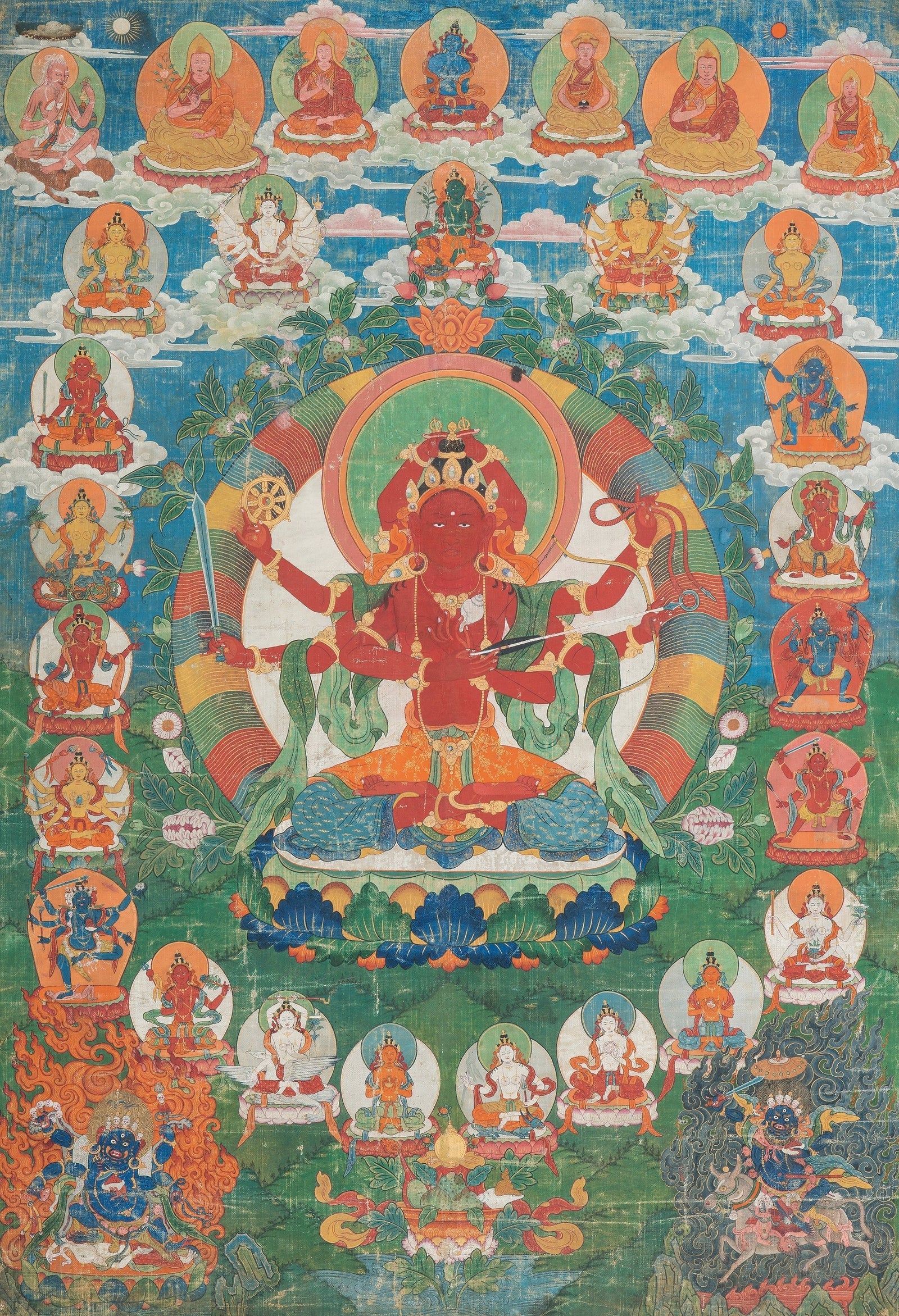
Every detail of Red Tara's form is a profound teaching, a map to understanding her unique spiritual function. When you look at her image or wear a representation of her, you are engaging with a rich vocabulary of enlightenment. Her power is not arbitrary; it is encoded in her sacred iconography, inviting you to awaken the same qualities within yourself.
Her body, radiant and ruby-red, is the first key. In Tibetan cosmology, red is the color of the Padma, or Lotus, Buddha family, presided over by Amitabha Buddha. This is the energy of discriminating awareness transformed into active, magnetizing compassion. It is the power of passion, not in the worldly sense of attachment, but the passionate, unwavering desire to liberate all beings. Her red color signifies the power to enchant and persuade, to draw beings and favorable circumstances towards the path of wisdom. She has one face, symbolizing the single, non-dual nature of ultimate reality (emptiness). Her three eyes perceive the past, present, and future simultaneously, representing her omniscient wisdom.
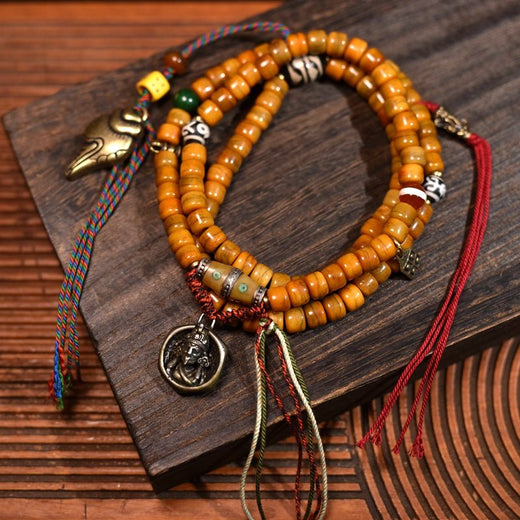
Red Tara is most often depicted with four arms, representing the Four Immeasurables—loving-kindness, compassion, sympathetic joy, and equanimity. In her hands, she holds the instruments of her enlightened activity. The upper right hand holds a hook (ankusha), which summons wisdom, long life, and prosperity. It has the power to hook beings out of the cycle of suffering. The upper left hand holds a noose or lasso (pasha), which appears to bind but in reality binds negative forces and obstacles, preventing them from harming you or your virtuous activities. Her lower two hands hold a bow and arrow made not of wood and metal, but entirely of delicate red and blue Utpala flowers. This is her most iconic implement. She draws the bowstring to her ear, ready to fire an arrow that does not wound but instead pierces the heart with longing for the truth. It captivates the mind, instilling devotion and focus, making it a powerful symbol for anyone needing to inspire others or capture the attention of a benefactor or collaborator. When you feel unheard, this flower-arrow is the symbol of your message landing with unerring, gentle precision. If you are seeking such a symbol of compassionate influence, **our selection of mindfully crafted Buddhist jewelry** often incorporates these profound elements.
Real Benefits for Your Modern Life
While her origins are ancient, Red Tara’s power is profoundly relevant to the challenges you face today. Her practice is not about retreating from the world but about engaging with it more skillfully and effectively. Connecting with her energy can manifest tangible, specific benefits that go far beyond generic feelings of peace.
One of her primary benefits is the enhancement of your power of communication and influence. If you are a leader, an artist, a teacher, or anyone whose work depends on conveying a vision, her practice can be transformative. It helps you articulate your ideas with a natural charisma that isn't manipulative but stems from a place of authentic compassion. Your words gain weight and resonance, allowing you to attract the right team, gain support for your projects, and inspire those around you. This is the magnetizing quality in action—aligning your intention so purely with the benefit of others that they are naturally drawn to your cause.
In your personal relationships, Red Tara’s energy helps overcome obstacles and foster deep, meaningful connections. This isn't about "love spells" but about dissolving the inner blocks of fear, resentment, or miscommunication that prevent harmony. Her practice helps you attract supportive friends, wise mentors, and loving partners who align with your spiritual path. For existing relationships, her compassionate energy can soothe conflicts and rekindle warmth, helping you to see the innate goodness in others and allowing them to see it in you.
Furthermore, her practice is renowned for magnetizing resources. This is not a simplistic "get rich quick" scheme. It is the subtle art of drawing forth the exact material and immaterial resources needed for your virtuous projects to succeed. This could be the funding for a non-profit, the right collaborator for a creative endeavor, or the perfect job opportunity that allows you to use your skills for good. Red Tara’s practice helps you create such powerful positive karma that the universe seems to conspire in your favor, bringing synchronicities and "lucky breaks" that are, in fact, the result of your aligned spiritual presence. By engaging with her, you learn to become a magnet for all that is good, true, and beneficial, not just for yourself, but for your entire community.

How to Choose Authentic Red Tara Artifacts
When you decide to bring an image of Red Tara into your life, whether as a statue for your altar, a thangka for your wall, or a piece of jewelry to wear close to your heart, authenticity is paramount. A sacred object is more than decoration; it is a conduit for blessing and a constant reminder of your highest aspirations. Knowing what to look for ensures you are choosing a piece that carries the true spiritual weight of its tradition.
First and foremost, pay close attention to the iconography. An authentic depiction will be precise. Look for her characteristic red color, her four arms, and her specific implements: the flower bow and arrow, the hook, and the noose. The proportions of the body and the expression on her face should convey a blend of fierce, focused energy and deep compassion. Mass-produced items often miss these subtleties, resulting in a generic figure that lacks the specific symbolic power of Red Tara. When you explore **our curated collection of authentic Dharma items**, you will notice this commitment to iconographic accuracy.
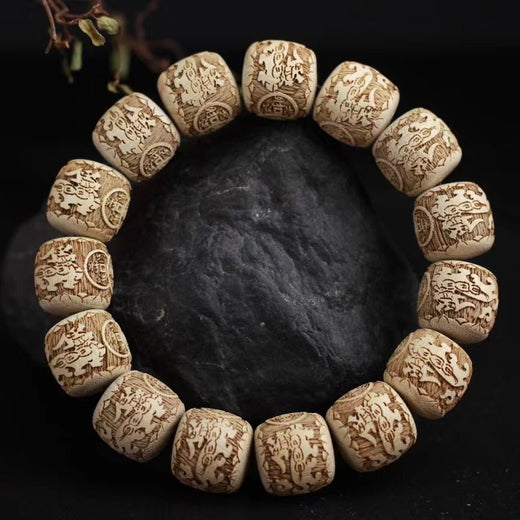
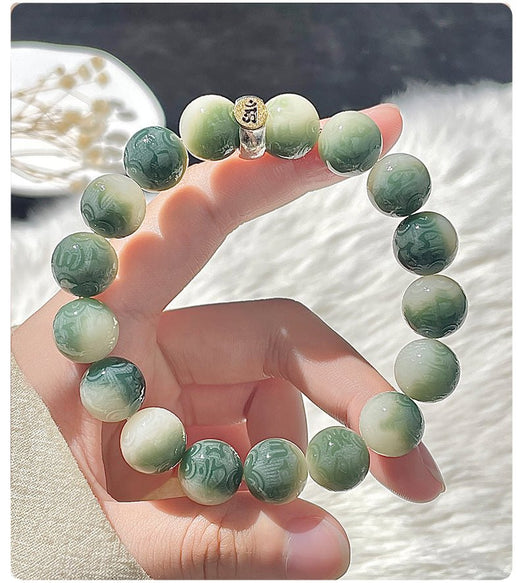
The materials and craftsmanship are also crucial. Traditionally, statues are crafted in Nepal and Tibet using the lost-wax casting method, often from copper or bronze and sometimes gilded with gold. For jewelry, materials like red coral, carnelian, or garnet are often used, as their color resonates with Red Tara's magnetizing energy. The quality of the work speaks volumes. Look for fine details, clear lines, and a sense of life in the piece. This indicates that the artisan was not merely a laborer but a skilled craftsperson with a deep respect for the tradition.
Perhaps most importantly, consider the source. The intention of the maker is infused into the object. An amulet or statue created by an artisan from a lineage of Buddhist practitioners, who may be chanting mantras as they work, carries a much different energy than a factory-made trinket. When you choose a piece from a trusted source that honors these traditions, you are not just buying an object; you are becoming a patron of a living spiritual art form and connecting with an unbroken chain of blessing.
How to Use a Red Tara Amulet or Mantra
Bringing Red Tara into your daily practice can be a simple yet profound act. You don't need to be an advanced practitioner to begin connecting with her compassionate, magnetizing energy. A few dedicated moments each day can begin to shift the currents of your life in a positive direction. Here is a straightforward guide to get you started.
Step 1: Set Your Sacred Space and Intention.
Find a quiet place where you won't be disturbed. You can sit before a small altar with an image or statue of Red Tara, or simply hold a Red Tara pendant or amulet in your hand. Before you begin, clarify your intention. What positive outcome are you seeking to magnetize? A harmonious relationship? Resources for a worthy project? Be specific, and most importantly, frame your intention within the Bodhisattva vow: "May I accomplish this for the ultimate benefit of all sentient beings." This shifts the practice from a selfish desire to a compassionate act.
Step 2: Recite Her Mantra.
The heart of the practice is the recitation of her mantra. The mantra of Red Tara is:
OM TARE TAM SOHA
OM represents the enlightened body, speech, and mind. TARE is the vocative form of Tara, meaning "O, Tara!" TAM is her unique seed syllable, the sonic essence of her being, vibrating with the power of attraction. SOHA is a concluding syllable, meaning "so be it" or "may the blessings take root." You can chant this mantra aloud or silently. Using a mala, or Buddhist prayer beads, to count 21 or 108 recitations is a traditional way to focus the mind.
Step 3: A Simple Visualization.
As you chant, visualize Red Tara before you, radiant and shimmering with ruby-red light. See this light pouring from her heart and into yours. Now, visualize this warm, red light radiating from you, extending out into the world. Imagine it as a gentle, irresistible force, hooking all the positive conditions, people, and resources you need for your virtuous goal. See this light pacifying any obstacles or negative energies, transforming them into wisdom. If you are wearing a piece from **our collection of Tibetan jewelry**, you can visualize the light emanating directly from it, amplifying your intention.
Step 4: Dedicate the Merit.
At the end of your session, take a moment to dedicate the positivity you have generated. You can say, "By this merit, may all beings be free from suffering and its causes, and may they quickly attain the state of perfect enlightenment." This final step ensures your practice benefits everyone and seals its positive power.
Common Questions About Red Tara
Is Red Tara the same as Kurukullā?
This is an excellent and common question. Red Tara and Kurukullā are very closely related but not always identical. Kurukullā is a specific, semi-wrathful female deity from the Lotus family whose function is enchantment and magnetizing. Her practice is particularly detailed in the Hevajra Tantra. Red Tara can be seen as a broader category that includes Kurukullā as one of her most famous forms. In many contexts, especially within the Sakya school, the names are used interchangeably. However, there are other, more peaceful forms of Red Tara as well. Think of Kurukullā as the most dynamic and powerful expression of Red Tara's magnetizing activity.
Is practicing with Red Tara a form of magic or manipulation?
This is a critical misunderstanding to clarify. The magnetizing power of Red Tara is not worldly magic aimed at controlling others against their will. The practice works by purifying your own intention and aligning your energy with enlightened, compassionate activity. It magnetizes by making your own mind and projects so virtuous and beneficial that people and resources are naturally drawn to them. The "hook" of Red Tara is the hook of compassion, which pulls beings toward liberation, not into a trap. If your intention is selfish or harmful, the practice will not yield the desired results, as it is fundamentally rooted in Bodhicitta—the wish to benefit others.
Do I need a formal empowerment (wang) to practice her mantra?
For a simple practice of reciting her mantra, OM TARE TAM SOHA, and doing a basic visualization as described above, a formal empowerment is not strictly necessary. This is considered a general blessing that is open to all. However, if you wish to engage in a more complex sadhana practice—especially one that involves visualizing yourself *as* Red Tara—then receiving the empowerment (wang), scriptural transmission (lung), and instruction (tri) from a qualified lama in an authentic lineage is absolutely essential. This ensures the practice is done correctly, safely, and with the full stream of blessings from the lineage.
Can anyone wear a Red Tara amulet or pendant?
Yes, absolutely. You do not need to be a formal Buddhist practitioner to wear a Red Tara amulet or to benefit from her protective and magnetizing presence. A sacred image serves as a powerful reminder of qualities like compassionate action, confidence, and influence. The key is the intention with which you wear it. By treating the image with respect and holding a positive aspiration in your heart, you create a connection to her energy. Wearing a piece from **the authentic pieces we offer** can be a beautiful way to keep this profound inspiration with you throughout your day.
Why is she often depicted as fierce or dancing?
Her dynamic, dancing posture (known as ardhaparyanka) signifies her active, energetic nature. She is not a passive, meditative figure but a buddha in immediate, joyful action, ready to spring forth to assist beings. Her expression can be described as "fiercely compassionate." This isn't anger but a powerful, focused intensity that cuts through hesitation, doubt, and delusion without a moment's delay. It is the fierce love of a mother who would do anything to protect her child from harm. Her energy is potent and effective, and her form reflects this dynamic power.
What is the main difference between Red Tara and Green Tara?
While both are emanations of Tara, their specialized functions differ. Green Tara is known as "The Swift Rescuer." Her primary activity is protective, offering immediate relief from the eight great fears (lions, elephants, fire, snakes, etc.), which metaphorically represent internal poisons like pride, ignorance, and anger. She is who you call upon in a moment of panic or danger. Red Tara's primary activity is magnetizing and striking. Her function is to bring beings, resources, and favorable conditions under your control for a virtuous purpose. In simple terms: you pray to Green Tara to get you out of trouble, and you pray to Red Tara to bring you what you need to succeed.
Your Next Step on the Path
You have now journeyed into the profound world of Red Tara, the compassionate mother whose power magnetizes all that is good. Her practice is a direct path to transforming feelings of powerlessness into skillful, influential action. She is not a distant deity but an intimate ally, the very embodiment of your own potential for fierce compassion and irresistible positive influence. By connecting with her through mantra, visualization, or a sacred object, you invite her blessings into every aspect of your life, empowering you to achieve your goals for the greater good.
This knowledge is the key, but the door is opened through practice. Your journey with this powerful expression of enlightened energy begins with a single, intentional step. To find a sacred object that resonates with your path and serves as a constant touchstone for her energy, we invite you to **explore the handcrafted treasures in our collection**. Let her ruby-red light illuminate your way.

Keep reading