God's Rites
Green Jambhala Meaning & Thangka Guide
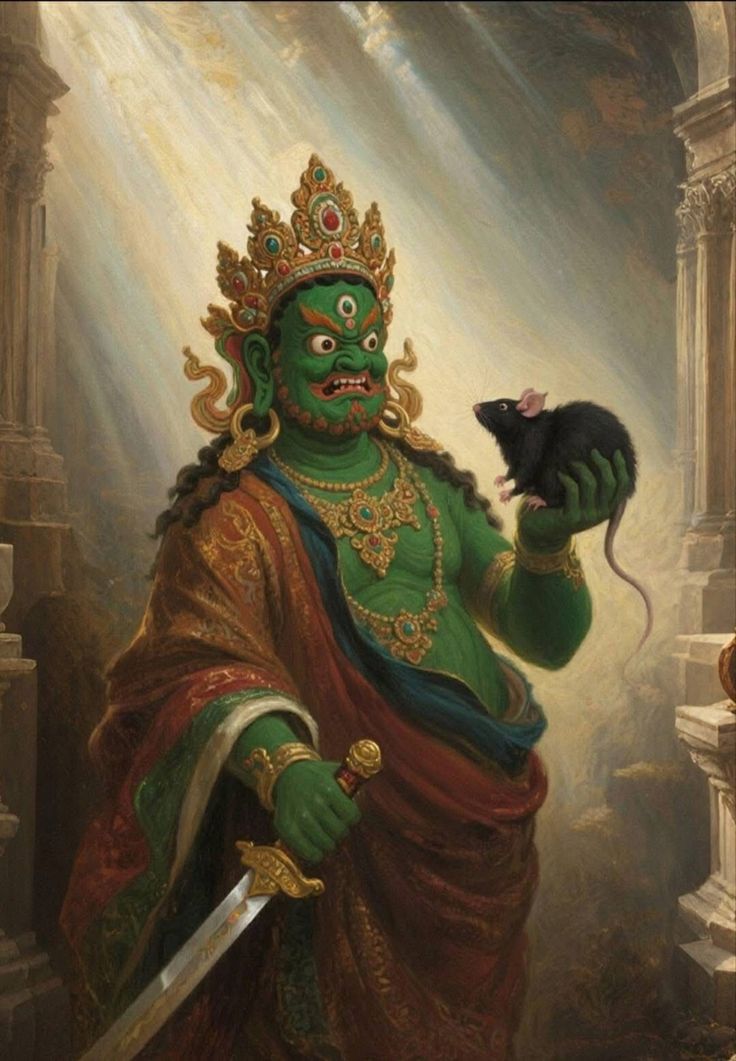
Green Jambhala is one of the five Jambhala figures in Tibetan Buddhism. He is associated with compassionate activity, generosity and the removal of obstacles to practice. In thangka art, his green color, jewel, mongoose and consort carry symbolic meanings rather than guaranteeing financial results.
You settle onto your meditation cushion, the intention for practice clear in your mind. You begin to focus on your breath, but within moments, the calm is fractured. A wave of anxiety washes over you—the looming credit card bill, the unexpected car repair, the constant, low-grade worry about making ends meet. It’s not a desire for luxury that distracts you, but the very real pressure of providing for yourself and your family. This financial stress feels like a chain, pulling your attention away from the Dharma, making your mind a turbulent sea of what-ifs. You wonder how you can possibly cultivate inner peace when your outer world feels so precarious. This is a profound and common obstacle on the path. Tibetan Buddhist teachings on Green Jambhala approach this tension through generosity, ethical responsibility and freedom from attachment.

What It Really Is: Uncovering the Authentic Roots of Green Jambhala
To truly understand the Green Jambhala Thangka, you must look past its surface as a beautiful piece of art and into its deep historical and spiritual origins. This is not a mythical figure invented for prosperity magic; his practice is rooted in the profound compassion of some of Buddhism's greatest masters. Green Jambhala is one of the five wealth deities, a powerful emanation who vowed to protect the Dharma and provide for practitioners, ensuring they have the necessary resources to pursue the path without hindrance.
His story is deeply intertwined with the life of the great Indian pandit and master, Atisha Dipankara Shrijnana (982–1054 AD). Atisha was a pivotal figure, a scholar from the famed Vikramashila monastery who was invited to Tibet to re-establish the pure Buddhist doctrine during a period of decline. His journey to Tibet was arduous and fraught with challenges. According to the lineage accounts, during his travels, Atisha encountered an old man dying of starvation. Filled with overwhelming compassion and having no food to offer, Atisha cut a piece of his own flesh to give to the man. The man refused, saying he could not eat the flesh of a monk. Overcome with a feeling of helplessness and profound empathy for all beings trapped in such suffering, Atisha sat down and wept.
At that moment, the Bodhisattva of Compassion, Avalokiteshvara (Chenrezig), appeared before him in a radiant form. He told Atisha that he would manifest as the wealth deity Jambhala to alleviate the suffering of poverty and create favorable conditions for Dharma practice. From Avalokiteshvara’s heart, a vibrant green light shone forth, coalescing into the form of Green Jambhala, who then transmitted his sacred mantra and practice directly to Atisha. This origin story is crucial. It reveals that the practice of Green Jambhala is not born of a desire for wealth, but from an act of supreme, selfless compassion—Bodhicitta. The practice you engage in today is a direct continuation of that powerful intention.
Green Jambhala is specifically associated with the Karma (Action) family of Buddhas, presided over by the green-hued Dhyani Buddha Amoghasiddhi. This connection signifies his role as a deity of swift and unobstructed accomplishment. When you invoke him, you are tapping into the enlightened energy that effortlessly accomplishes all beneficial activities. After Atisha brought the practice to Tibet, it was preserved and passed down through his Kadam lineage and was later integrated into all major schools of Tibetan Buddhism, including the Gelug, Kagyu, Sakya, and Nyingma. The Thangka, therefore, is not just a painting. It is a sacred map, a visual sadhana that holds the lineage blessings from Atisha himself, connecting your personal practice space directly to this unbroken chain of enlightened transmission.
The Deeper Meaning: Decoding the Sacred Symbolism of the Thangka
Every line, color, and object in a Green Jambhala Thangka is saturated with meaning. It is a visual dharma teaching, a blueprint for enlightenment that reveals the nature of true abundance. To engage with the Thangka is to engage with these layers of symbolism, allowing them to transform your understanding of wealth from a mundane pursuit to a spiritual path.
Your eyes are first drawn to his body, a vibrant, emerald green. This is not merely an artistic choice. Green is the color of the Karma family, the color of wind, movement, and all-accomplishing activity. It signifies that Green Jambhala's energy is active, swift, and potent. He works efficiently to remove the obstacles—both internal and external—that block your prosperity. This color connects him directly to Buddha Amoghasiddhi, whose wisdom vanquishes envy and jealousy, the very poisons that fuel a poverty mentality. By meditating on his green form, you are attuning your own energy to this enlightened activity, learning to act in the world with effortless, beneficial purpose.
Often, Green Jambhala is depicted in union with his consort, the dakini Vasudhara. This is the sacred imagery of Yab-Yum, meaning "father-mother" in Tibetan. You must understand this is not a depiction of ordinary passion. It is one of the most profound symbols in Vajrayana Buddhism, representing the indivisible union of method (upaya), embodied by the male deity, and wisdom (prajna), embodied by the female. Jambhala represents the skillful means of generosity and compassionate action, while his consort represents the wisdom that understands the empty, non-dual nature of reality. True, unshakable abundance arises only when your actions in the world are united with this profound wisdom. Their blissful union generates the enlightened energy that manifests as both spiritual realization and material well-being. Understanding this intricate symbolism is key to unlocking the power of your practice, and it's why every element in our authentic Buddhist artifacts is rendered with devotional precision.
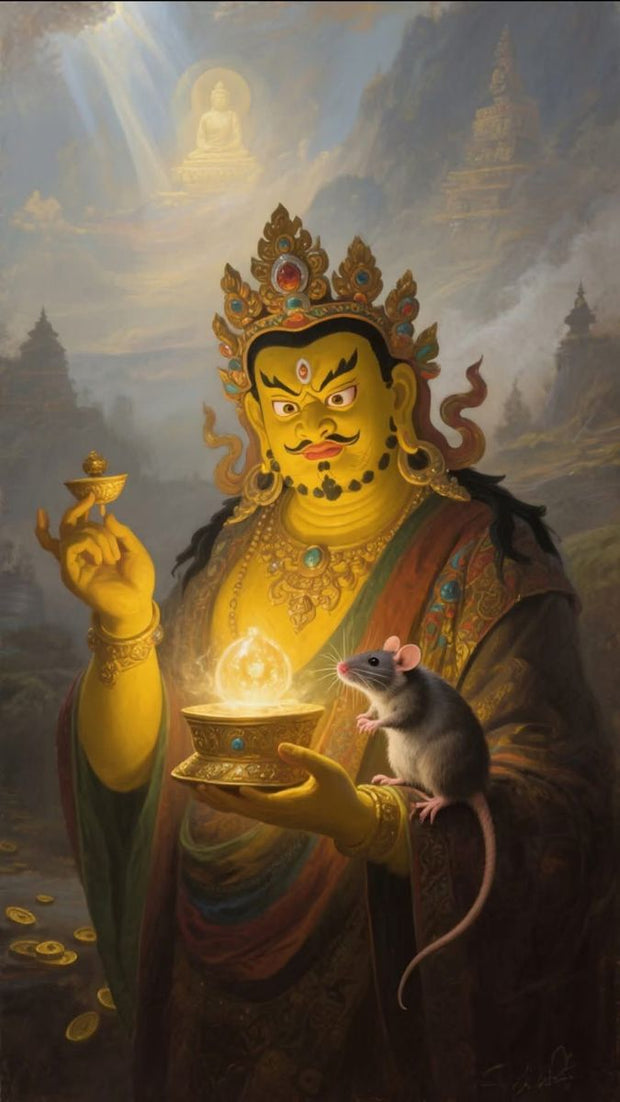
In his right hand, he holds a jewel-spitting mongoose, known as a Nakula. This creature symbolizes Jambhala's dominion over the Nagas, powerful serpent-like beings who are said to guard the hidden treasures of the earth. By subduing the Nagas, Jambhala controls the flow of these resources. The mongoose continuously spitting jewels represents a boundless, self-arising stream of wealth. It is not a one-time gift but a constant, effortless flow that is the natural state of being when one is free from greed and karmic obscurations. In his left hand, he often holds a wish-fulfilling jewel (cintamani) or a skull cup (kapala) filled with nectar and jewels. The wish-fulfilling jewel signifies his power to grant all sincere wishes that align with the Dharma, while the skull cup symbolizes the ultimate alchemical transformation: turning the poison of attachment into the nectar of wisdom and generosity.
Finally, observe his posture. He is not seated in passive meditation. He is dynamic, semi-wrathful, with one leg drawn in and the other extended, often stepping on a conch shell or a small figure. This posture shows he is ready to spring into action on your behalf. The semi-wrathful expression is not anger; it is fierce compassion, the intense energy needed to cut through delusion, greed, and the karmic obstacles that keep you impoverished. He actively tramples the forces of ego and attachment, liberating you from their grip so that abundance can naturally flow into your life.
Real Benefits for Modern Life: Beyond the Bank Account
When you approach the practice of Green Jambhala, it's essential to calibrate your expectations. This is not a spiritual lottery ticket or a "get rich quick" scheme. The benefits that flow from this profound practice are far more transformative than a simple increase in your bank balance, though that can certainly be one of the results. The ultimate purpose is to create the most conducive conditions for your Dharma practice, freeing your mind from the grip of material anxiety so you can focus on what truly matters.
The most immediate and tangible benefit for you is the profound alleviation of financial anxiety. The constant worry about bills, debt, and security creates a state of mental contraction and fear. This state, in itself, repels opportunities and clouds judgment. The practice of visualizing Green Jambhala and reciting his mantra begins to untie these knots of stress. It cultivates an inner state of trust and resourcefulness. You begin to shift your core belief from one of scarcity to one of abundance. This is not wishful thinking; it is a deep energetic and psychological realignment. As your inner landscape changes, you may find that you approach financial challenges with more creativity and calm, noticing solutions and opportunities that were previously invisible to you through the fog of worry.
On a deeper level, the practice is a powerful antidote to a "poverty mentality." This is a subtle but pervasive spiritual obstacle, a deep-seated feeling of "not enough" or "I don't deserve." It's a karmic pattern often rooted in past actions of stinginess. By making offerings and connecting with Jambhala's boundless generosity, you actively purify this negative karma. You are replacing the habit of miserliness with the habit of open-hearted giving. This internal shift is the real treasure. When you no longer feel a lack within yourself, you cease to project that lack onto your external world. This is the foundation upon which all true and lasting prosperity is built.
Furthermore, the practice is designed to fuel your capacity for generosity, the perfection of Dana Paramita. The wealth represented in Jambhala practice is not meant to be hoarded. The teaching emphasizes using available resources generously and responsibly to support family, community and Dharma practice. Sponsoring teachings, supporting monasteries or helping others are traditional expressions of that generosity; they should not be treated as a promise of financial return. You become a conduit for Jambhala's enlightened activity in the world. By cultivating this inner state of abundance, you are creating the fertile ground for your practice to flourish, a process supported by the sacred implements and art we offer.
For those of you engaged in business, creative pursuits, or any form of work, the practice supports what Buddhism calls "Right Livelihood." Green Jambhala practice can serve as a reminder to examine obstacles, act ethically and apply generosity within your work. It does not guarantee clients, income or business success; its practical value lies in aligning livelihood with intention and responsible action.

How to Choose an Authentic Thangka: A Practitioner's Guide
Choosing a Green Jambhala Thangka is a significant spiritual investment. An authentic Thangka is a potent tool for transformation, a sacred object that holds and transmits blessings. A poorly made or inauthentic piece, however, lacks this power and can even be an obstacle. You need to know what to look for to ensure you are bringing a genuine support for your practice into your home.
The single most important factor is the artist's intention and training. A true Thangka painter is not merely an artist; they are a practitioner. Traditionally, artists undergo years of rigorous training under a master, learning not only the technical skills but also the spiritual disciplines. Before and during the painting process, the artist engages in rituals, recites the mantra of the deity, and maintains a state of meditative concentration. This devotional process infuses the canvas with sacred presence. When you look for a Thangka, ask about the artist. Are they part of a recognized lineage, perhaps from a studio connected to a monastery like Shechen or from a family of painters in the Kathmandu Valley known for their devotion? This spiritual pedigree is what separates a living sacred object from a mere decorative painting.
Next, you must consider the materials and the iconography. Authentic Thangkas are painted on a specially prepared cotton or silk canvas, treated with a mixture of chalk and hide glue to create a perfect surface. The paints are not modern acrylics; they are ground mineral pigments. Lapis lazuli for blue, malachite for green, cinnabar for red—these stone-based colors are stable, vibrant, and considered pure. The gold details should be genuine 24k gold, painstakingly applied to create a divine luster. The proportions of the deity are not open to artistic interpretation. They are strictly dictated by iconographic grids found in Buddhist scriptures (sadhanas). Green Jambhala’s posture, the number of his arms, the objects he holds—every detail must be correct for the image to function as an accurate representation of the enlightened state you are visualizing.
When examining a potential Thangka, look for signs of quality. The linework should be exceptionally fine and precise, especially on the face. The "eye-opening" ceremony is the final and most crucial step, where the artist paints the eyes, symbolically inviting the deity to inhabit the image. The expression should convey fierce compassion, not simple anger. The brocade border is also an integral part of the Thangka, traditionally made of silk and chosen to complement the colors and energy of the central deity. Avoid pieces with blurry lines, incorrect proportions, or cheap, shiny paint. Sourcing a piece with a clear provenance, like those found in our curated collection of sacred art, ensures you are receiving a genuine tool for your spiritual journey. A final step for a truly powerful Thangka is to have it consecrated (rabné) by a qualified lama, a ritual that formally blesses the image and seals the deity's presence within it.
How to Use Your Thangka in Practice: A Step-by-Step Approach
Once you have brought an authentic Green Jambhala Thangka into your home, its true purpose can begin. The Thangka serves as your focal point for meditation, your visual gateway to connecting with the deity's enlightened energy. Treating it with respect and engaging in a consistent, simple practice can unlock its profound potential. Here is a guide to help you begin.
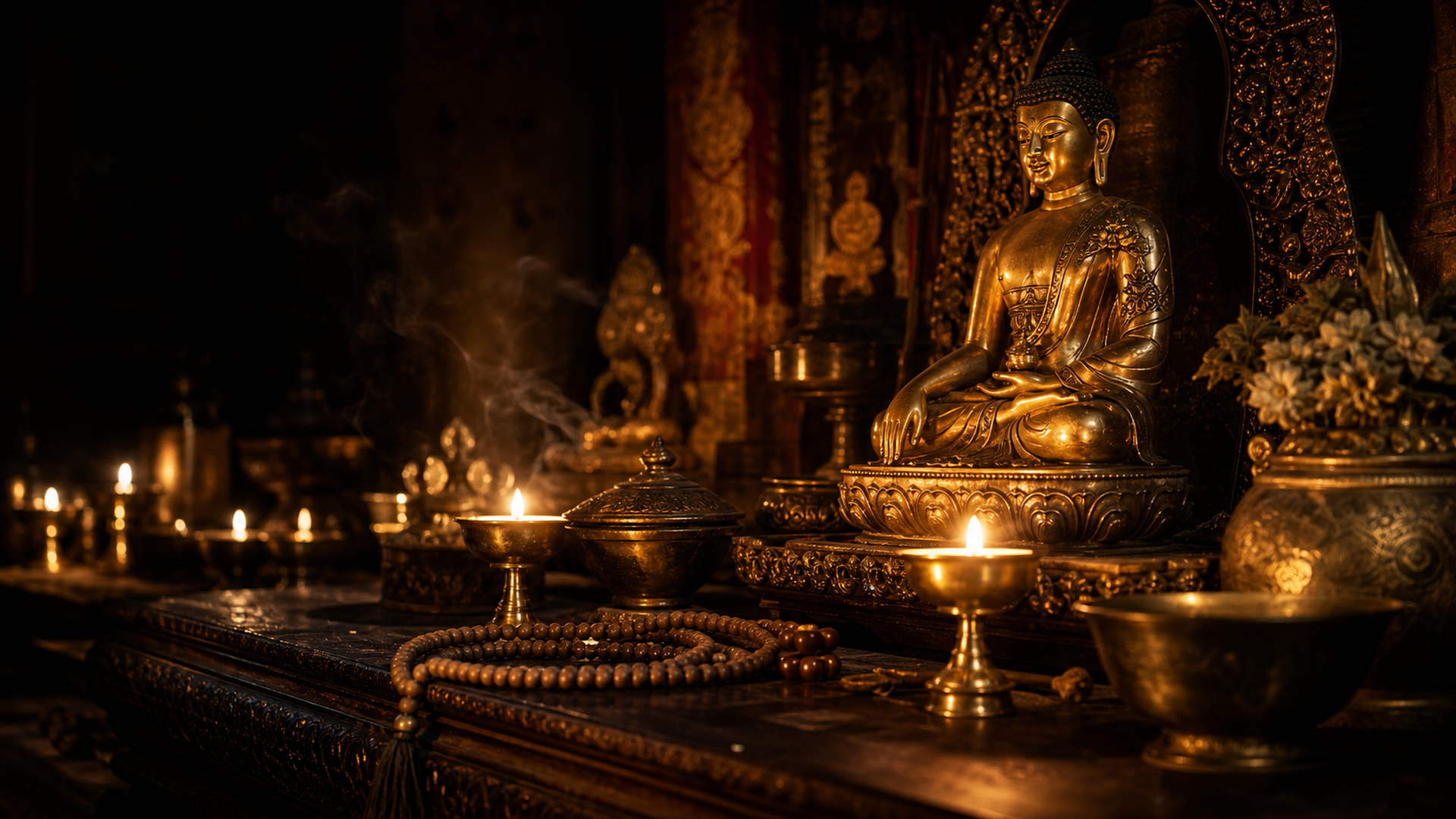
First, prepare your space. The Thangka should be placed in a clean, quiet, and elevated location, such as on a dedicated altar or hung on a wall where it is respected. It should never be placed on the floor or in a cluttered, dirty area. You can enhance the sacredness of the space by setting up a small altar before it. A traditional offering consists of seven bowls of clean water, representing the seven pure offerings made to the buddhas. You can also offer a candle or butter lamp (light, symbolizing wisdom), incense (purifying the air and environment), and fresh flowers (representing the beauty of the enlightened mind and the principle of impermanence).
Your formal practice session should begin with the proper motivation. Sit comfortably before the Thangka.
Step 1: Take Refuge and Generate Bodhichitta. Start by reciting the refuge prayer three times: "I take refuge in the Buddha, the Dharma, and the Sangha." This aligns your practice with the enlightened lineage. Then, cultivate Bodhichitta, the altruistic intention to practice not just for your own relief from financial stress, but for the benefit of all sentient beings who are suffering from poverty, lack, and dissatisfaction. This selfless motivation is the fuel that makes your practice powerful.
Step 2: Visualization. Gently gaze at the Thangka, taking in all the details of Green Jambhala's form. Observe his color, his consort, the mongoose, his posture. Then, close your eyes and reconstruct the image in your mind's eye as vividly as possible. Imagine he is present before you in a space of radiant light, alive and breathing, looking at you with immense compassion.
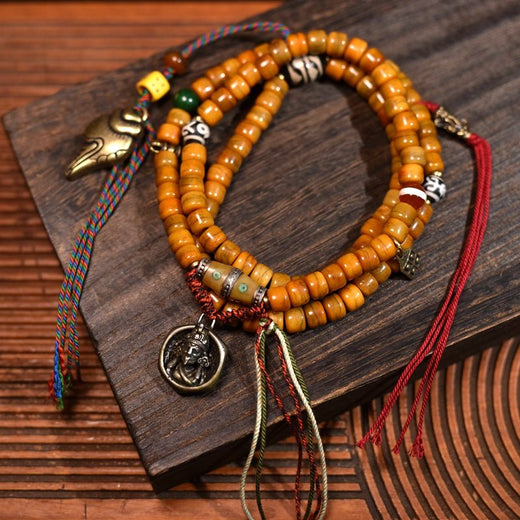
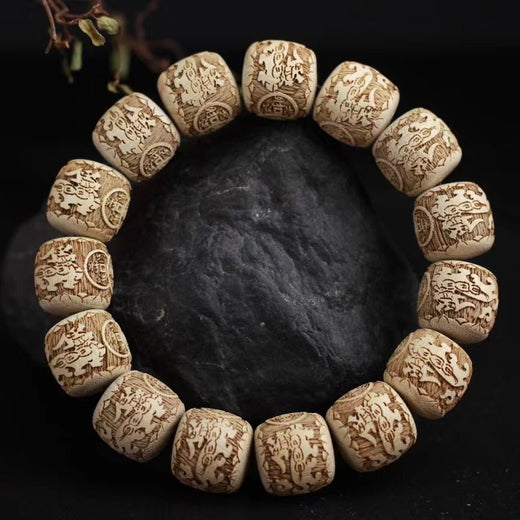
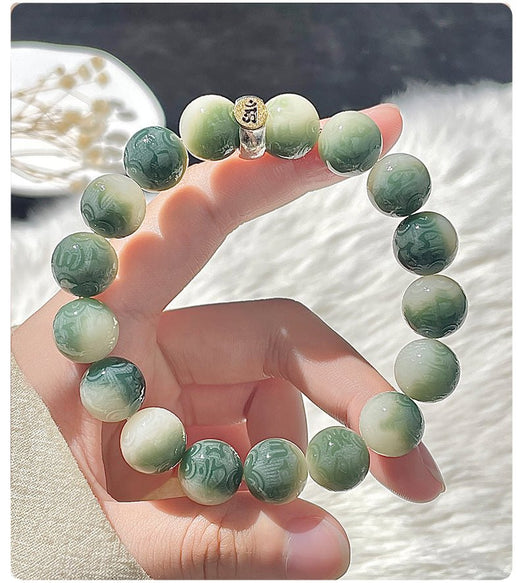
Step 3: Mantra Recitation. While holding the visualization, begin to recite his mantra: Om Karma Jambhala Ah Svaha. You can use a mala (prayer beads) to keep count, aiming for 21 or 108 repetitions per session. As you chant, imagine that streams of brilliant green light and a shower of

Keep reading