God's Rites
Red Jambhala Thangka: Wealth, Prosperity & Spiritual Gr
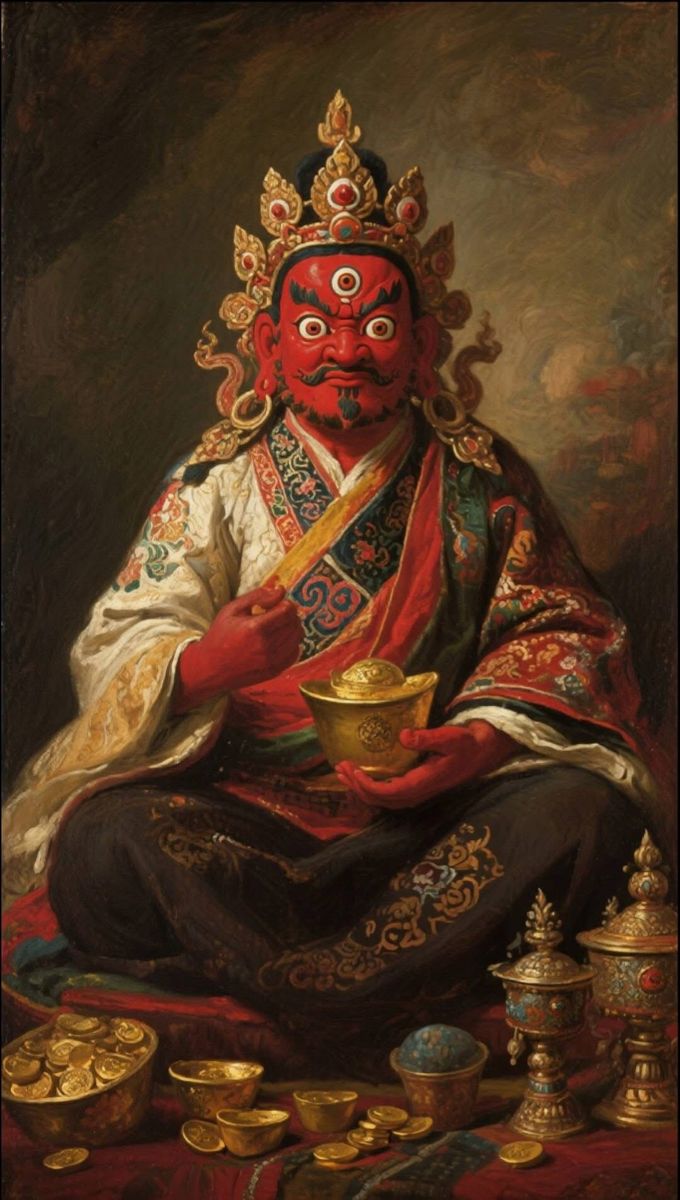
You’ve been diligent. You work hard, you follow your principles, and you try to act with integrity. Yet, you feel a persistent friction in your life—a sense that your material resources are always just short of what you need to feel secure, to be generous, or to fully pursue your deeper aspirations. Perhaps you run a business that feels stuck, or your creative endeavors never seem to find the support they need to flourish. It’s not about wanting a lottery win; it’s a deeper yearning for alignment, for your outer world to reflect the richness of your inner intentions. You sense that prosperity should be a supportive energy, not a constant struggle. This feeling, this quiet search for a way to bridge the gap between your spiritual values and your material reality, is the very space where the practice of Red Jambhala finds its purpose. It’s a call to connect with a form of enlightened energy that understands this friction and offers a path through it.

What a Red Jambhala Thangka Really Is
To truly understand the Red Jambhala thangka, you must look beyond its surface as a beautiful piece of art and see it as a living document of spiritual technology. Its origins are a fascinating story of cultural and religious synthesis, tracing back to the Hindu deity Ganesha, the remover of obstacles. As Buddhism traveled from India into Tibet, particularly through the Vajrayana traditions, Ganesha was incorporated into the Buddhist pantheon. He was not merely adopted but transformed, his energies re-contextualized within the Buddhist view of enlightenment. This form became known as Ganapati Jambhala, or Red Jambhala.
This tradition is particularly prominent within the Sakya school of Tibetan Buddhism, one of the four main lineages. The Sakya masters, renowned for their profound scholarship and meditative prowess, developed specific tantras and sadhanas (practice texts) centered on Red Jambhala. Historical texts point to the great Indian mahasiddha Atisha, who was instrumental in the second transmission of Buddhism to Tibet in the 11th century, as a key figure in carrying these wealth deity practices. From centers of learning like the original Sakya Monastery, founded in 1073 by Khon Konchog Gyalpo in the region of Tsang, these teachings were preserved and meticulously passed down from teacher to student. The practice was considered a powerful method not just for securing the patronage needed to support the monasteries themselves, but for practitioners to gain the resources necessary for long-term, intensive retreat.
Red Jambhala is one of the five Jambhala brothers, each with a unique specialty. While Yellow Jambhala is the most widely known for increasing general prosperity, Red Jambhala’s function is more specific and dynamic: his energy is that of magnetizing. He doesn’t just attract wealth; he actively draws in resources, influential people, and positive opportunities. He is often depicted in union with his consort, the wisdom dakini Vasudhara, representing the indispensable union of method (Jambhala's compassionate activity) and wisdom (Vasudhara's understanding of emptiness). This yab-yum depiction is crucial; it teaches that true, lasting abundance is born not from worldly grasping, but from the fusion of skillful action and profound insight. The artists who create these thangkas are often practitioners themselves, trained in workshops in places like the Kathmandu Valley in Nepal, a historical crucible where Tibetan and Newar artistic traditions blended to create some of the most stunning examples of sacred art. Each brushstroke is guided by iconographic texts, ensuring the thangka is not just a picture, but a precise map to a state of enlightened consciousness. When you bring one into your home, you are connecting with this unbroken lineage of practice stretching back a thousand years.
The Deeper Meaning: Decoding the Sacred Iconography
Every element of a Red Jambhala thangka is a precise symbol, a piece of a visual language designed to awaken specific qualities within your own mind. Looking at the thangka is a form of meditation in itself, and understanding its iconography unlocks its transformative power. Your mind begins to absorb the qualities the image represents, moving you from a state of lack to one of enlightened abundance.
First, consider his striking red color. In the Vajrayana tradition, red is the color of power, control, and magnetizing. It is the color of passion, but a passion that has been transmuted from selfish desire into the compassionate, irresistible force of a bodhisattva's activity. This red light radiates outward, drawing toward you all that is needed for your practice and your well-being, while also empowering you to influence your circumstances for the better. His body is often stout and powerful, signifying his stability and immense capacity to hold and distribute wealth.
His elephant head, linking him to Ganapati, is a powerful symbol of overcoming obstacles. Just as an elephant forges a path through the dense jungle, Red Jambhala’s energy clears away the blockages—both internal and external—that prevent prosperity from flowing into your life. These obstacles can be financial, but more often they are mental: doubt, fear, a deep-seated belief in scarcity, or the karmic residue of past non-generosity. The single tusk often depicted represents the wisdom of non-duality, the understanding that subject and object, self and other, are not truly separate—a key insight for practicing true generosity.
In his hands, he holds specific implements. In his right hand, you will often see a wish-fulfilling jewel, or *cintamani*. This jewel represents the mind of enlightenment itself, the source of all real and lasting treasures. It signals his ability to grant your sincere aspirations, not just for material gain, but for spiritual realization. In his left hand, he typically holds a mongoose, known as a *nakula*. This creature, in ancient Indian lore, was the enemy of the nagas (serpent spirits who guard treasures hidden beneath the earth). By subduing the nagas, the mongoose could make them release their wealth. Symbolically, the mongoose spewing jewels from its mouth represents Red Jambhala's power to control the energies of the universe and command them to yield their hidden treasures for the benefit of practitioners. This isn't about theft; it's about accessing the natural abundance of the world that is often guarded by our own ignorance and grasping. The wealth he provides is inexhaustible because its source is not worldly but spiritual. Many of **the sacred symbols found in our jewelry** echo these ancient implements, carrying their meaning into your daily life.
Real Benefits for Modern Life: Beyond Financial Gain
While Red Jambhala is unequivocally a wealth deity, to limit his function to merely increasing your bank balance is to miss the profound scope of his blessing. His practice is designed to cultivate a holistic sense of abundance that permeates every area of your life, making your modern journey more meaningful and effective. The benefits you can experience are tangible, practical, and deeply transformative.
The most immediate shift you may notice is the dissolution of a scarcity mindset. So much of our daily anxiety stems from a persistent, low-grade fear of "not enough"—not enough money, time, energy, or opportunity. Meditating on Red Jambhala’s powerful, stable, and generous form directly counteracts this fear. You begin to cultivate an inner feeling of richness and resourcefulness. This internal shift is the first and most crucial step, because your external reality is often a reflection of your internal state. When you operate from a place of abundance, you make decisions based on possibility rather than fear, which naturally leads to more prosperous outcomes.
This practice also enhances your ability to magnetize opportunities. Red Jambhala's energy is one of attraction. As you align with this energy through mantra and visualization, you may find that your "luck" seems to change. The right people, collaborators, or clients seem to appear at the right time. A project you were struggling with suddenly gains the support it needs. This isn't magic in a supernatural sense; it's a recalibration of your own energy. You become a more magnetic presence, your ideas gain more weight, and your ability to influence positive outcomes is amplified. For entrepreneurs, artists, or anyone whose work depends on connection and support, this is an invaluable benefit.
Furthermore, the practice enriches your relationships. The magnetizing quality of Red Jambhala isn't limited to finances; it extends to social and professional networks. It helps you build a strong community of support, attracting people who are beneficial to your spiritual and worldly goals. This can manifest as finding a wise mentor, a loyal business partner, or simply a circle of friends who uplift and inspire you. This social wealth is often more valuable than any monetary gain.
Ultimately, the greatest benefit is that the practice empowers your generosity. The entire purpose of accumulating resources from a Buddhist perspective is to have more to give. When you are no longer worried about your own survival, you are free to help others. Red Jambhala’s practice provides you with the means to become a source of abundance for your family, your community, and the world. This creates a virtuous cycle: the more you give, the more you receive, allowing you to give even more. You transform from a consumer of resources into a conduit of enlightened prosperity, which is the true meaning of wealth on the Bodhisattva path. Your life becomes a testament to the fact that spiritual practice and material well-being are not separate, but can be powerful allies on your journey. **Exploring the full range of our offerings** can help you find the perfect piece to anchor this intention in your daily life.

How to Choose an Authentic Red Jambhala Thangka
When you decide to bring a Red Jambhala thangka into your space, you are choosing more than a piece of decoration; you are acquiring a sacred tool for spiritual practice. Its authenticity is paramount, as a properly created thangka serves as a conduit for the deity's enlightened energy. A cheap, mass-produced print simply cannot fulfill this role. Here is what you need to look for to ensure you are choosing a genuine and powerful piece.
The first and most critical element is iconographic accuracy. A true thangka is not an artist's personal interpretation; it is a precise rendering based on detailed instructions found in Buddhist scriptures and commentaries. The proportions of the body, the number of arms, the specific implements held, the posture, the consort, and the surrounding figures must all be correct. An artist trained in a traditional lineage, often in a place like Nepal or Dharamshala, spends years learning these divine "blueprints." This accuracy ensures that the thangka is a reliable gateway for your meditation. When you see an image that feels "off" or has strange additions, it's a sign that it may lack this essential foundation.
Next, examine the materials. Authentic thangkas are painted on a specially prepared cotton or silk canvas, treated with a mixture of chalk and animal-hide glue (gesso) that is polished until it's perfectly smooth. The paints are not modern acrylics but are made from ground mineral pigments. Cinnabar or ochre for the reds, lapis lazuli for blues, malachite for greens—these natural substances are believed to carry their own energetic properties. Most importantly, look for the use of genuine gold. The fine lines that detail the robes, crown, and ornaments are often painted with 24k gold, which requires incredible skill. When you tilt an authentic thangka in the light, the gold should shimmer with a unique warmth that cannot be replicated by metallic paint.
Consider the artisan's intention. A thangka is traditionally seen as an act of devotion and a meditation in itself. The artist is expected to maintain a state of mindfulness and recite mantras while painting. This spiritual intention is infused into the piece, giving it a tangible presence and blessing. When you source your thangka, you are also connecting with the artist's lineage and practice. By choosing to support these traditional artists, you are participating in the preservation of a precious cultural and spiritual heritage. This is why it is so important to acquire pieces from sources that honor this tradition. **The craftsmanship in our Tibetan Buddhist jewelry and artifacts** is rooted in this same principle of sacred intention.
How to Use Your Thangka in Practice
Once you have chosen an authentic Red Jambhala thangka, integrating it into your life is a beautiful and rewarding process. It becomes a focal point for your aspirations, a daily reminder of the abundant, generous nature of your own mind. Here is a simple, respectful way to begin working with your thangka.
First, find a proper place for it. Your thangka should be placed in a high, clean, and respected area of your home or office. An altar is ideal, but a dedicated wall in your meditation space or study is also perfect. It should never be placed on the floor, in a bathroom, or in a location where people's feet would point toward it. Before hanging it, you can symbolically cleanse the space by burning a small amount of incense, such as sandalwood or juniper. If you have access to a Buddhist lama or teacher, you can request them to formally consecrate the thangka, which is a traditional blessing ceremony. However, even without this, you can generate a powerful intention of respect and devotion, which will activate its presence in your space.
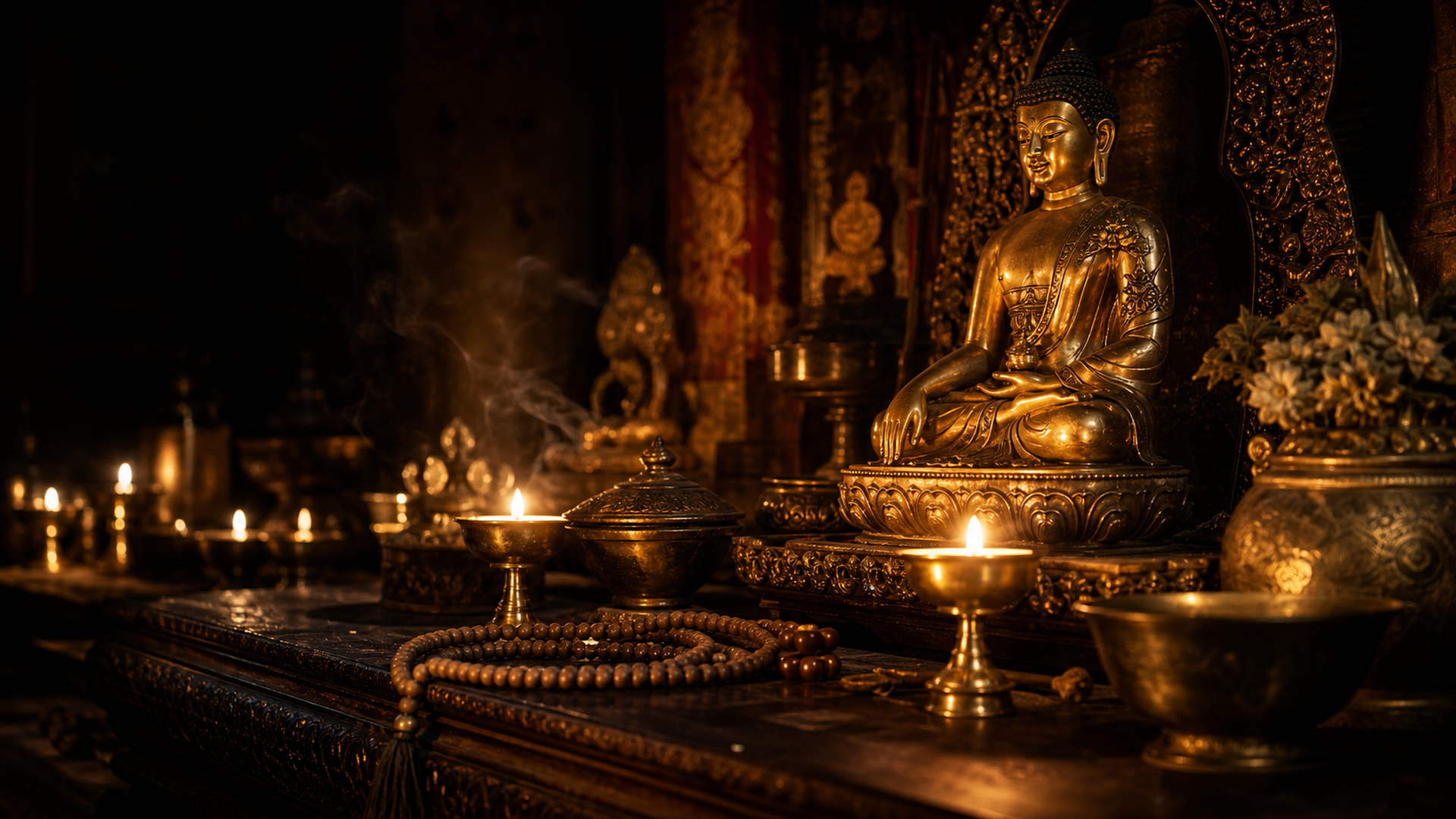
Next, learn to make simple offerings. Offerings are not meant to "pay" the deity, but are an expression of gratitude and a method for cultivating generosity. The simplest and most traditional offering is a set of seven water bowls, filled with clean water each morning and emptied at night. You can also offer a single bowl of water, a candle or light (symbolizing wisdom), flowers (symbolizing beauty and impermanence), or incense (symbolizing pure conduct). As you make the offering, do so with the thought that you are offering the best of everything not just to Red Jambhala, but to all enlightened beings, for the benefit of all sentient beings.
The core of the practice is mantra and visualization. You can sit comfortably in front of your thangka, gaze at the image, and allow its details to settle in your mind. Then, you can begin reciting Red Jambhala's mantra: Om Ganapati Jambhala Jalen Draye Soha. As you chant the mantra, visualize a radiant, warm red light emanating from the heart of Jambhala on the thangka. This light streams into you, filling your entire body and mind. It dissolves all poverty, all feelings of lack, and all obstacles to your prosperity. Imagine this light transforming into a shower of nectar and jewels, filling your home and your life with inexhaustible abundance. Continue for a set number of repetitions, like 21 or 108, and then rest your mind. Conclude your session by dedicating the positivity you've generated to the well-being and enlightenment of all beings. This final step is crucial; it ensures your practice is aligned with the compassionate path of the bodhisattva.
Common Questions About Red Jambhala Practice
Is Red Jambhala the same as the Hindu deity Ganesha?
While Red Jambhala (Ganapati Jambhala) is clearly derived from the Hindu deity Ganesha, they are not identical within their respective religious contexts. In Hinduism, Ganesha is a primary deity, the Lord of Beginnings and Remover of Obstacles. In Tibetan Buddhism, he was incorporated as a worldly protector and a wealth deity, but he is understood to be an emanation of a Buddha or Bodhisattva, like Avalokiteshvara. His practice is framed within the Buddhist path, meaning its ultimate goal is to generate resources to support one's journey to enlightenment and to benefit all sentient beings. The iconography is similar, but the philosophical view and motivation behind the practice are distinctly Buddhist.
Do I need a special initiation or empowerment to use a Red Jambhala thangka?
For deep, formal tantric practice involving complex visualizations and commitments, a formal empowerment (known as a *wang*) from a qualified lama is traditionally required. This ceremony directly transmits the blessing of the lineage to the student. However, for a more general practice of devotion, you do not need an empowerment to hang a thangka, make offerings, and recite the mantra. You can approach Red Jambhala with sincere respect and the motivation to cultivate generosity and overcome obstacles. This is a powerful and beneficial practice in its own right. If you later wish to deepen your commitment, you should seek guidance from a teacher in a genuine Tibetan Buddhist lineage.
Can this practice make me greedy or materialistic?
This is a common and important concern. The purpose of Red Jambhala practice is the exact opposite of fostering greed. Greed comes from a mindset of scarcity and fear—the belief that resources are limited and you must hoard them. Red Jambhala's practice cultivates a mindset of abundance and generosity, dissolving the very roots of greed. The wealth generated is not meant for selfish indulgence but as a tool for Dharma practice and for helping others. The motivation is key. If your intention is to gain resources so you can be more generous and have more freedom to pursue a meaningful life, the practice will be a powerful antidote to materialism. It's about transforming your relationship with wealth from one of attachment to one of enlightened stewardship.
How is Red Jambhala different from the other four Jambhalas?
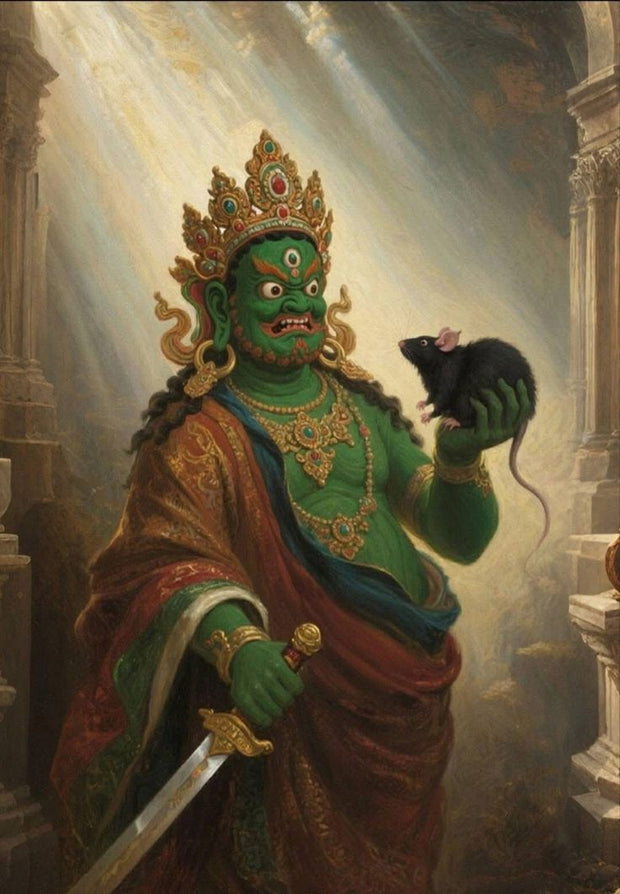
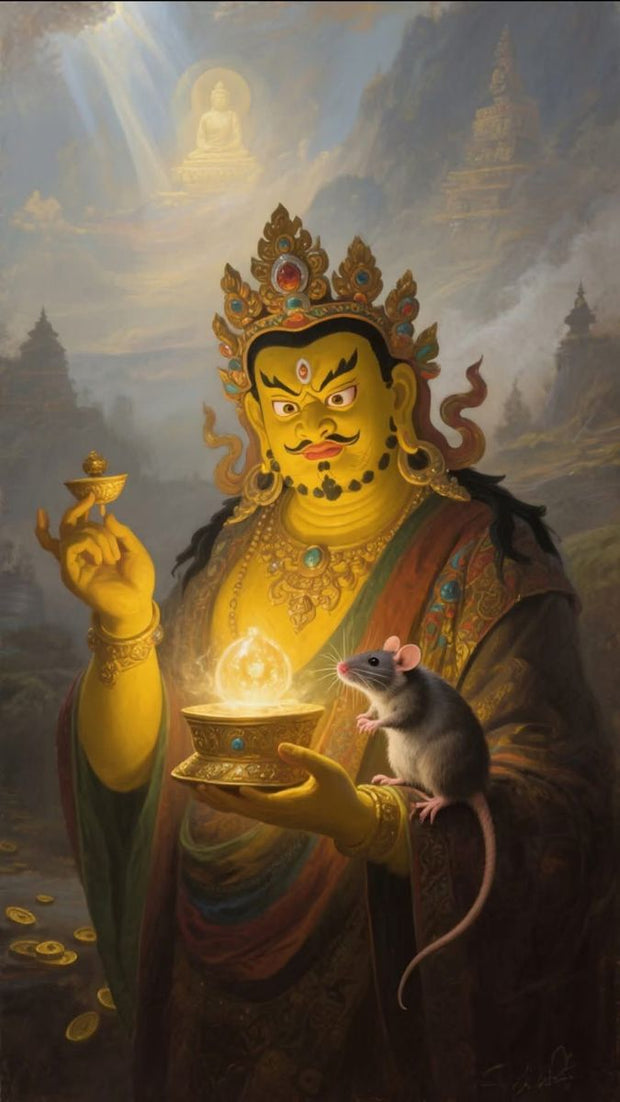
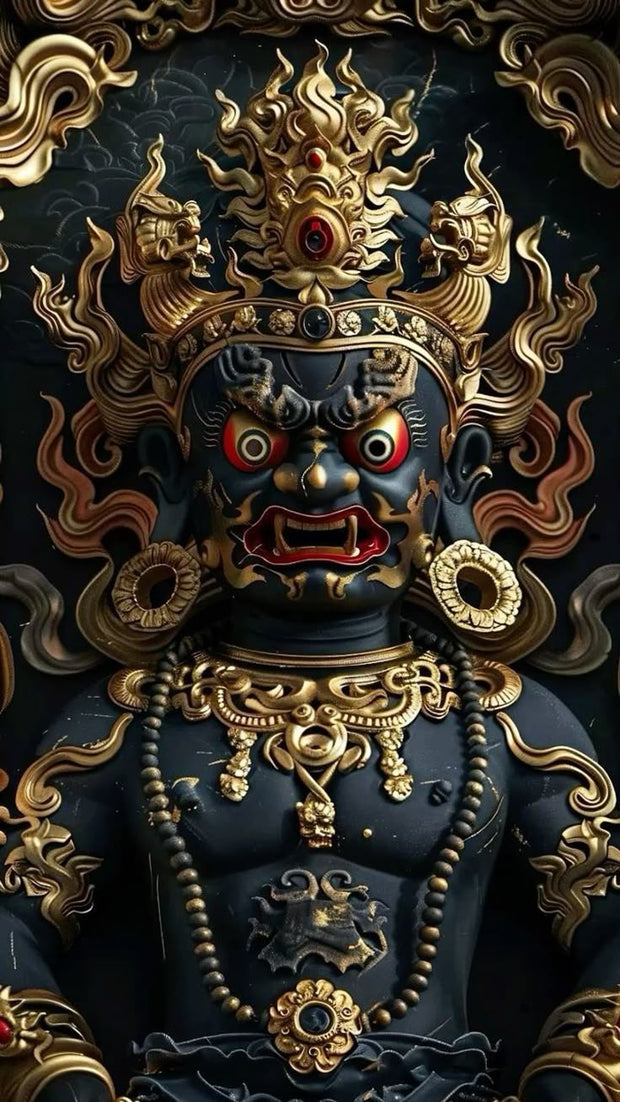
The Five Jambhalas are a family of wealth deities, each with a specific energy and function. Yellow Jambhala is the most common and works to increase wealth, virtue, and longevity. White Jambhala, born from the right eye of Avalokiteshvara, is particularly effective for healing illness and purifying negative karma that causes poverty. Black Jambhala is a more wrathful form, suited for those in dire need and for removing powerful obstacles to sudden prosperity. Green Jambhala is associated with success in activities and endeavors. Red Jambhala's unique function is magnetizing. He not only attracts wealth but also positive relationships, influence, and favorable conditions, making him particularly powerful for leaders, entrepreneurs, and those who need to gather resources and people for a specific project.
How long will it take to see results from this practice?
There is no fixed timeline for results, as they depend on several factors: your personal karma, the sincerity and consistency of your practice, and the strength of your motivation. The practice is not a transactional exchange. Some people may notice subtle shifts quickly—a change in mindset, a feeling of greater ease around finances, or the appearance of a small, unexpected opportunity. For others, the effects may build more slowly over time. The first and most important "result" is the inner transformation from a state of lack to a state of abundance and generosity. The external manifestations will follow from this internal shift. Patience and joyful effort are key.
Can anyone, regardless of their religion, benefit from a Red Jambhala thangka?
Yes, absolutely. As a piece of sacred art, anyone can appreciate the beauty and powerful symbolism of a Red Jambhala thangka. You can hang it in your home as an object of inspiration, a reminder of the qualities of abundance, generosity, and strength. For those who wish to engage in the spiritual practice, it is most effective when understood within the Buddhist framework of generating compassion (bodhichitta) and wisdom. However, the universal principles of overcoming a scarcity mindset and cultivating generosity are beneficial to people of any faith or background. The key is to approach the thangka with respect for its origin and sacred purpose.
Your Next Step on the Path of Abundance
You have now journeyed through the rich history, deep symbolism, and practical application of the Red Jambhala thangka. You understand that it is far more than a beautiful image; it is a key to unlocking a more prosperous and generous reality, a tool for aligning your material life with your deepest spiritual aspirations. It is an invitation to move beyond the struggle of scarcity and into a state of empowered, compassionate abundance.
Reading and learning are the first steps, but the true transformation comes from experience. It comes from bringing this sacred presence into your daily life and allowing it to work with you. If you feel a connection to Red Jambhala's promise of clearing obstacles and magnetizing all that is good, your journey is just beginning. To take the next step, you must find a piece that speaks to your heart. We invite you to explore **our authentic collection of Tibetan artifacts**, each crafted with intention and reverence, to find the thangka or statue that will become your trusted companion on this profound path.
Keep reading