God's Rites
Yellow Jambhala Thangka: Spiritual Wealth, Protection,
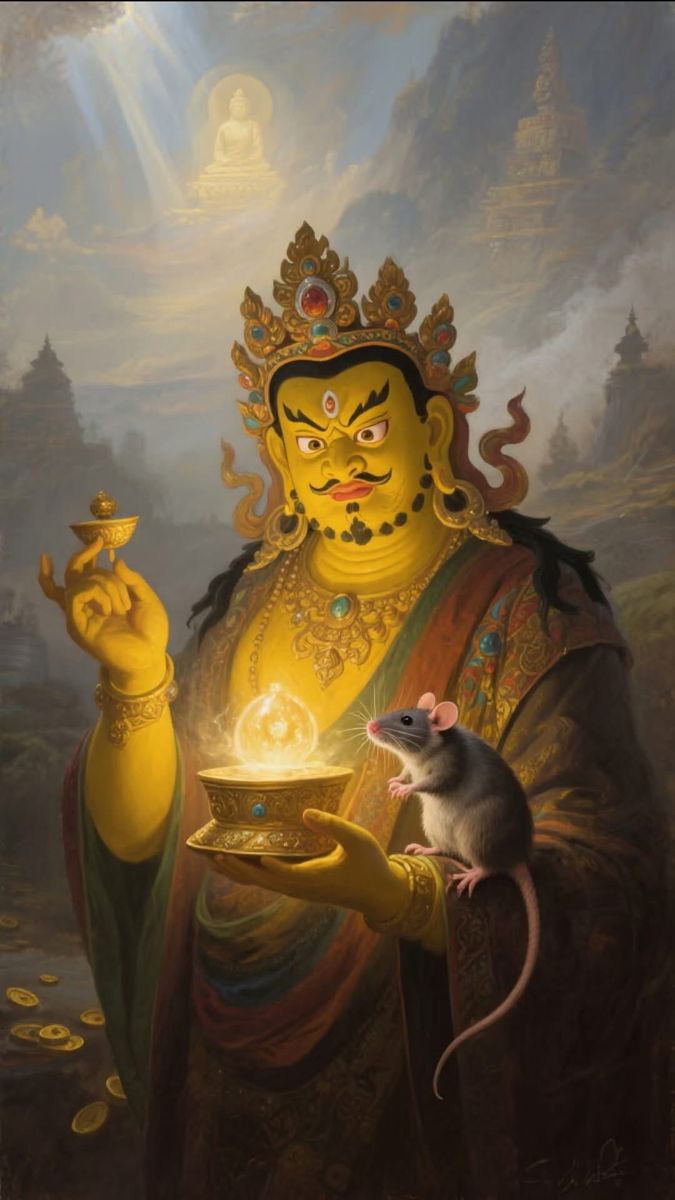
Yellow Jambhala Thangka: Spiritual Wealth, Protection, and traditional teachings for Modern Life
You’ve done everything right. You work diligently, you manage your resources with care, and you hold a genuine desire to provide for yourself and your loved ones. Yet, a subtle, persistent hum of anxiety about finances remains. It’s not just about paying the bills; it’s the feeling that you’re always just one unexpected event away from instability. This quiet stress can cloud your mind, making it difficult to be truly present, to practice generosity freely, or to invest time and energy in your spiritual path without a nagging worry in the background. You may find yourself thinking, “If only I had a little more breathing room, I could be more generous, more focused, more at peace.” This feeling isn’t a sign of greed. It is the deep, human yearning for the stability that allows your spirit to flourish. It is for this very obstacle—the inner and outer poverty that hinders spiritual progress—that the practice of Yellow Jambhala was born.

What a Yellow Jambhala Thangka Really Is
To truly understand the Yellow Jambhala thangka, you must look past modern interpretations of a "wealth god" and journey back to the sacred groves of ancient India, to the time of Buddha Shakyamuni himself. The origin of Jambhala is not found in folklore, but in the Mahayana sutras, specifically the Atanatiya Sutra. The story recounts a moment when the Buddha was teaching on Vulture Peak Mountain. A group of malevolent spirits, feeling their power threatened by the light of the Dharma, caused a massive landslide in an attempt to harm the Buddha and his assembly. At that critical moment, the great protector deities, including Jambhala, manifested. They shielded the Buddha, vowing to protect not only the teachings but also all future practitioners who uphold them.
In this profound act, Jambhala pledged to ensure that followers of the path would not be hindered by the debilitating effects of poverty. He understood that extreme want creates a state of mind where survival eclipses spiritual aspiration. His vow was to provide material and spiritual abundance to eliminate this specific obstacle. He is not a deity you pray to for lottery wins; he is a Bodhisattva, a compassionate being on the path to enlightenment, who has chosen to manifest in this form to aid others. His practice was later systematized and brought to Tibet by masters like the great 11th-century Indian pandit Atisha Dipankara, who was instrumental in the second major transmission of Buddhism into Tibet. Atisha's teachings on Jambhala were integrated into the major schools of Tibetan Buddhism, and the practice has been preserved in an unbroken lineage at great monastic universities like Drepung and Sera near Lhasa.
A thangka is the vessel for this traditional teachings. It is not mere decoration. It is a sacred scroll painting, a precise iconographic map created as a tool for meditation and visualization. Each brushstroke, applied with pigments ground from minerals and bound with hide glue, is an act of devotion. The artist, often a practitioner themselves, follows strict canonical guidelines passed down through generations. The thangka is a portal, a visual support (rten) that allows you to connect directly with the enlightened energy of the deity. When you gaze upon a Yellow Jambhala thangka, you are not just looking at a painting; you are engaging with a living tradition stretching back to the Buddha's compassionate promise of protection.
The Deeper Meaning: Unpacking the Sacred Symbols
Every element within a Yellow Jambhala thangka is a profound symbol, a piece of a visual language designed to awaken specific qualities within your own mind. Understanding this iconography transforms your viewing from passive observation into an active meditative engagement. It’s a direct communication of Dharma, bypassing the intellect and speaking to a deeper level of consciousness.
The most striking feature is Jambhala’s golden-yellow body, glistening like polished gold. This color is not arbitrary. In the Buddhist tantric system, it is associated with the element of earth, representing stability, fertility, and growth. It also connects him to the Buddha family of Ratnasambhava, the "Jewel-Born One," whose enlightened activity is to transform pride into the wisdom of equanimity and to increase all that is beneficial. His form is portly and powerful, not out of indulgence, but to signify immense richness and the potent energy required to overcome poverty in all its forms. His expression is semi-wrathful—eyebrows furrowed, mouth slightly open—indicating his dynamic power to conquer obstacles and negativity swiftly and effectively, while his overall demeanor remains benevolent and compassionate.
In his left hand, he cradles a mongoose, known as a nakula. This is perhaps his most famous attribute. The mongoose is the natural enemy of the naga, powerful serpent spirits who are believed to dwell underground and in bodies of water, guarding the treasures of the earth. By subduing the nagas, the mongoose symbolizes Jambhala’s complete dominion over these hidden sources of wealth. From its mouth, the mongoose spews forth a cascade of wish-fulfilling jewels, representing not only material prosperity but also the priceless treasures of spiritual realization, wisdom, and compassion. In his right hand, he holds a citron fruit, or bijapuraka, a symbol of abundance and the sweet fruition of all virtuous endeavors. It assures you that your positive efforts, both worldly and spiritual, will bear fruit.
Jambhala sits in a posture of royal ease upon a lotus flower and a moon disc. The lotus, which grows from the mud but blooms unstained above the water, signifies his purity of intention. Though he deals with worldly wealth, his mind is completely untainted by attachment, greed, or worldly concerns. His motivation is rooted in pure bodhichitta—the enlightened wish to benefit all beings. The moon disc represents the cooling of suffering and the radiant light of wisdom that illuminates the path. When you bring all these symbols together, you see the complete picture: Yellow Jambhala is the manifestation of enlightened generosity, the potent, stable, and pure energy that removes the obstacle of poverty so that you may freely practice the Dharma and benefit others.
Real Benefits for Your Modern Life
Engaging with a Yellow Jambhala thangka is not about passive wishing; it's an active practice that can create tangible shifts in your daily experience. The benefits extend far beyond the simplistic idea of "attracting money" and touch upon the very core of your relationship with abundance, security, and purpose.
One of the most immediate effects is a profound mindset shift from scarcity to abundance. In our culture, we are often conditioned to focus on what we lack. This "scarcity mindset" creates anxiety, fear, and contracted energy. By regularly meditating on Jambhala's image—his generous form, the endless stream of jewels—you begin to retrain your mind. You start to notice the resources you already possess, to see opportunities where you once saw obstacles, and to cultivate a deep inner feeling of richness that is independent of your bank balance. This inner state of abundance naturally begins to magnetize outer resources, as you operate from a place of confidence and openness rather than fear and desperation.
This practice is a powerful antidote to financial anxiety. When you are worried about your livelihood, your mind can become trapped in loops of "what if." This mental state makes clear, rational decision-making nearly impossible. The practice of reciting Jambhala's mantra and visualizing his stable, powerful form provides a sacred anchor. It calms the turbulent emotions surrounding finances, allowing you to approach your work and financial planning with a clear, focused, and inspired mind. You're better able to solve problems creatively and act with wisdom rather than reacting from a place of panic. This protective quality is why his image is a cornerstone of our collection of authentic Tibetan amulets, serving as a constant reminder of this stable, protective energy.
Crucially, the ultimate purpose of Jambhala's blessing is to empower your generosity. The wealth he provides is not meant for hoarding or selfish indulgence. It is "spiritual wealth"—the resources needed to live with dignity, support your family, pursue your spiritual practice, and, most importantly, to help others. As you feel more secure, your capacity to give—your time, your energy, your resources—naturally expands. This act of giving (dana) is a fundamental Buddhist virtue that creates immense positive karma, or merit. This merit, in turn, becomes the cause for future abundance, creating a powerful, self-perpetuating cycle of prosperity and generosity in your life.

How to Choose an Authentic Thangka
When you decide to bring a Yellow Jambhala thangka into your space, you are choosing more than a piece of art; you are acquiring a sacred tool. Its spiritual efficacy is directly tied to its authenticity. A genuine thangka is a vessel of blessings, while a mass-produced print, though beautiful, lacks the essential energetic imprint. Knowing what to look for is crucial.
The first and most important element is the artist's intention and training. Authentic thangkas are created by artists who have undergone years of rigorous apprenticeship. They learn not only the artistic techniques but also the complex iconographic measurements (thigse) and the spiritual significance of each deity. For these artists, painting is a meditative practice. They often recite mantras and perform rituals as they work, infusing the canvas with sacred presence. When you look for a thangka, inquire about the artist or the school from which it originates. A reputable source will be able to provide this information.
Next, examine the iconographic accuracy. Every detail on a thangka is prescribed by scripture. The proportions of Jambhala's body, the number of jewels, the specific posture, and the surrounding elements must be correct. Deviations from these traditional guidelines can render the thangka spiritually inert. An authentic piece will show a mastery of these details, creating a balanced, powerful, and spiritually resonant image. When exploring a curated selection of traditional Buddhist artifacts, you can begin to train your eye to recognize the harmony and precision that mark a master's hand.
The materials used are another hallmark of quality. Traditional thangkas are painted on cotton or silk canvas that has been treated with a mixture of chalk and animal hide glue. The paints are made from ground mineral pigments—lapis lazuli for blue, malachite for green, cinnabar for red, and genuine gold for the finest details. These natural materials are not only beautiful and durable but are also considered to hold their own subtle energies. A cheap print on canvas or paper simply cannot replicate the luminosity and spiritual weight of these traditional materials.
Finally, consider the process of consecration (rabney). After a thangka is completed and framed in its silk brocade, it is traditionally taken to a high lama or a monastery to be blessed. During this ritual, the lama invokes the deity, dissolving their enlightened essence into the physical image. This is what truly "activates" the thangka, transforming it from a beautiful painting into a living presence of the deity. Authentic sellers often ensure their pieces are properly consecrated, providing you with a tool ready for practice.
How to Use Your Thangka for Practice
Once you have welcomed an authentic Yellow Jambhala thangka into your home, you can begin to engage with it through a simple yet profound practice. This transforms it from a static object into a dynamic source of inspiration and blessing in your life.
First, choose a respectful place for your thangka. It should be hung in a clean, quiet, and elevated position, never on the floor. The ideal location is in your meditation space, study, or living room—a place where you spend time and can view it regularly. Traditionally, thangkas are not hung in bedrooms. Place it on a wall where it can be the focal point, perhaps on a small altar table.
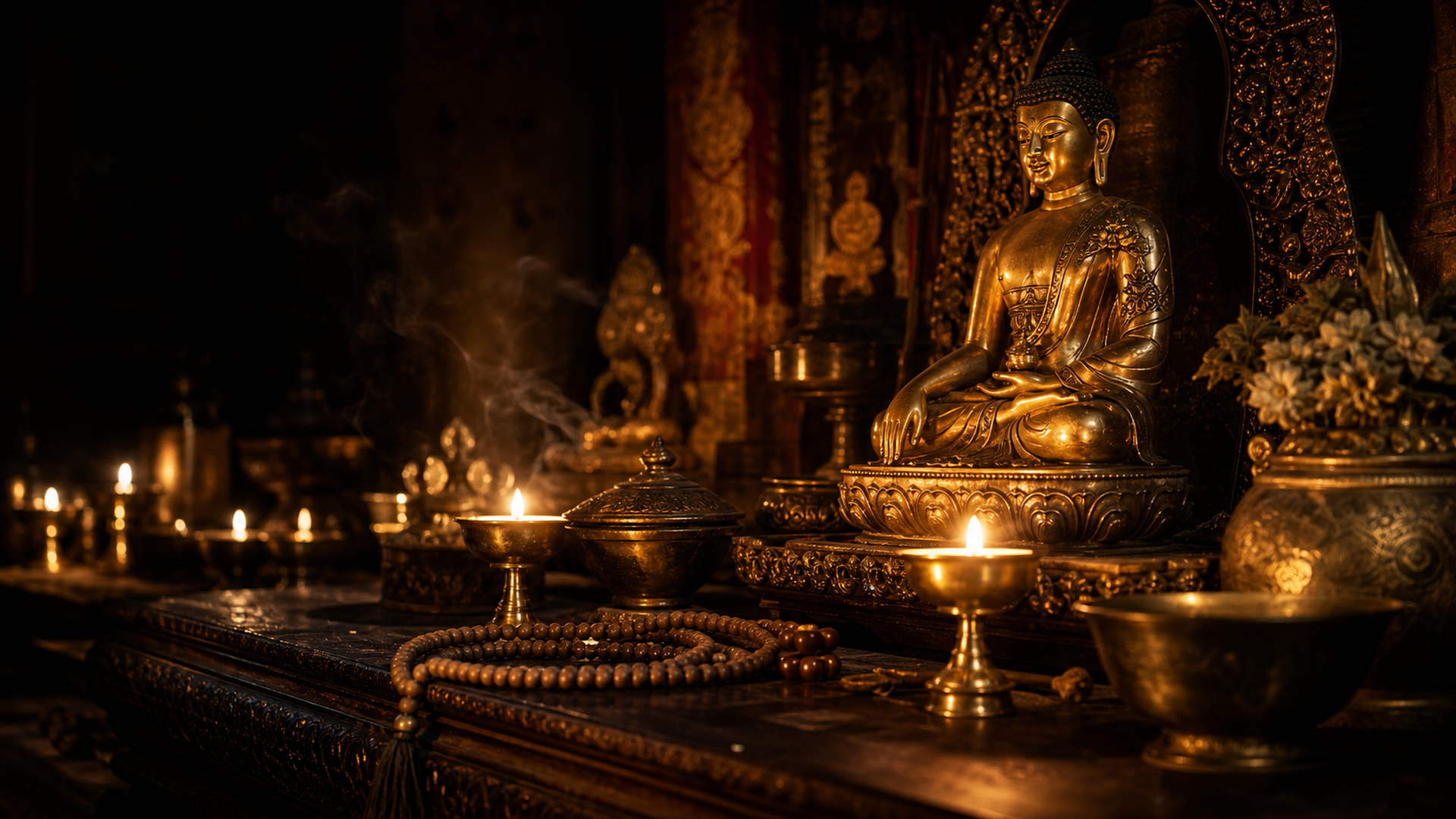
You can create a simple altar in front of the thangka to make offerings. This doesn't need to be elaborate. A clean cloth, a small bowl of fresh water (changed daily), a stick of good quality incense, and a candle or butter lamp are sufficient. The water offering is particularly significant for Jambhala. According to tradition, pouring a stream of water over a Jambhala statue while reciting his mantra is a powerful way to activate his blessings. With a thangka, you can achieve this through visualization: as you offer the bowl of water, visualize a pure, cleansing waterfall washing over Jambhala, pleasing him and invoking his enlightened activity of abundance.
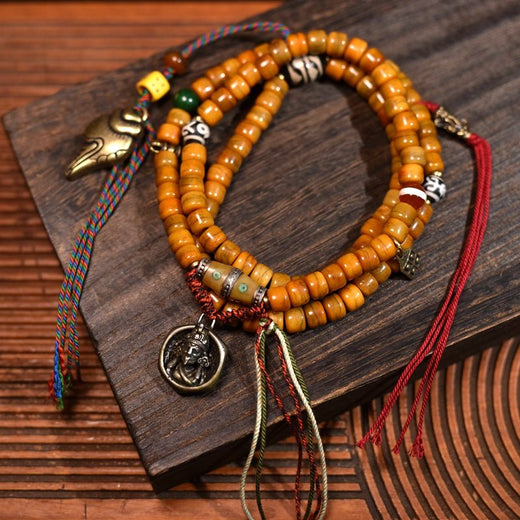
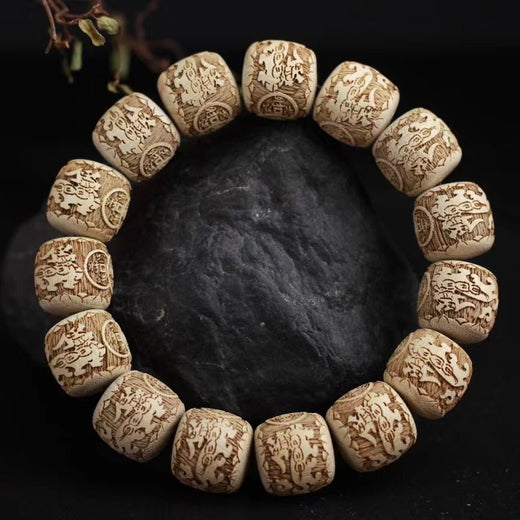
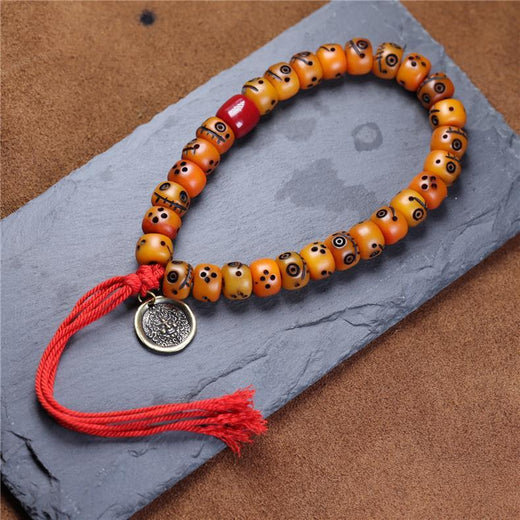
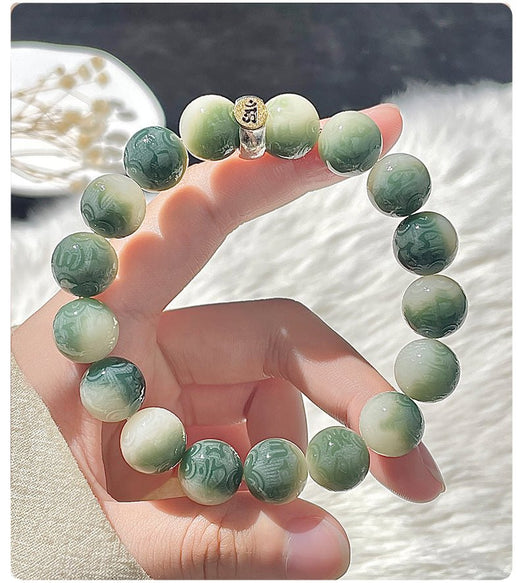
The core of the practice is the recitation of his mantra. The mantra of Yellow Jambhala is: OM JAMBHALA JALENDRAYE SVAHA Take a few moments to sit comfortably before the thangka. Gaze at the image, taking in all the details. Then, with sincere motivation—not just for your own gain, but with the wish to gain resources so you can better help others—begin to recite the mantra. You can do this out loud or silently. Using a mala, or Buddhist prayer beads, to count 108 recitations is a traditional and effective way to focus the mind. As you chant, visualize golden light radiating from Jambhala's heart, entering your body and home, filling your entire world with light, dispelling all poverty and lack, and bestowing limitless spiritual and material wealth. To deepen your focus, you can enhance your practice with a personal mala from our sacred jewelry collection.
At the end of your session, dedicate the merit. This is a crucial step. Make a heartfelt wish that the positivity generated by your practice may benefit all sentient beings, helping them to be free from suffering and its causes. This act of dedication aligns your practice with the Bodhisattva path and multiplies its power exponentially.
Common Questions About Yellow Jambhala
As you begin to explore this profound practice, questions naturally arise. Here are answers to some of the most common inquiries, helping to clarify the path and deepen your understanding.
Is practicing with a Jambhala thangka just about getting rich?
Not at all. This is the most common misconception. While the practice can certainly help alleviate financial hardship, its ultimate goal is to generate "spiritual wealth." This means creating the inner and outer conditions necessary for you to practice the Dharma without hindrance. The abundance Jambhala provides is a tool to cultivate generosity (dana), a core virtue that leads to spiritual merit and progress on the path to enlightenment. The focus is on removing the obstacle of poverty so you can have a stable mind and the resources to benefit others.
Do I have to be a Buddhist to have a Jambhala thangka?
You do not need to be a formal Buddhist to appreciate the beauty and spiritual artistry of a thangka. Many people are drawn to their peaceful and powerful presence. However, to engage in the actual practice of mantra recitation and visualization, it is essential to understand and respect the Buddhist context from which it comes. The practice is most effective when motivated by compassion and the wish to benefit all beings, which are central tenets of Buddhist philosophy.
What's the difference between Yellow Jambhala and the other Jambhalas?
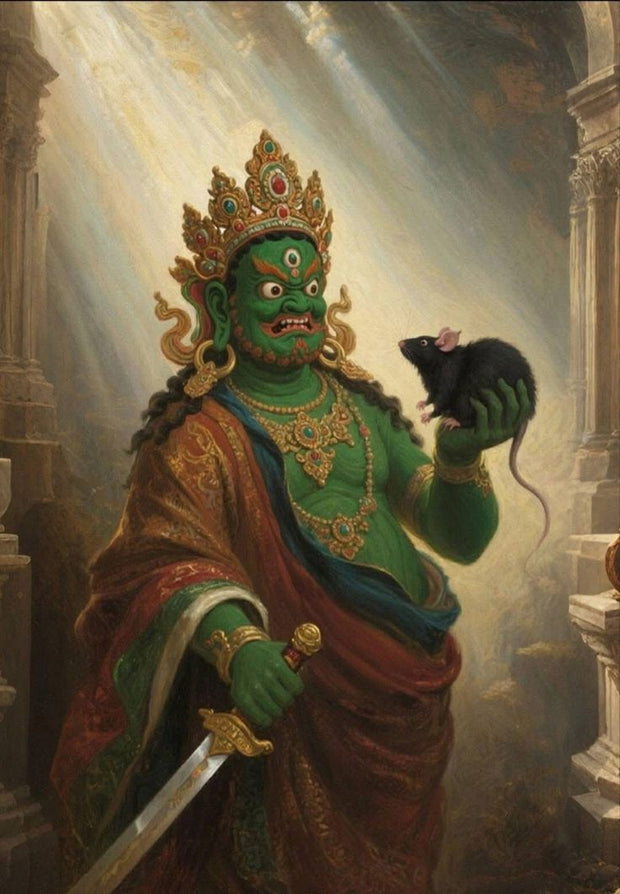
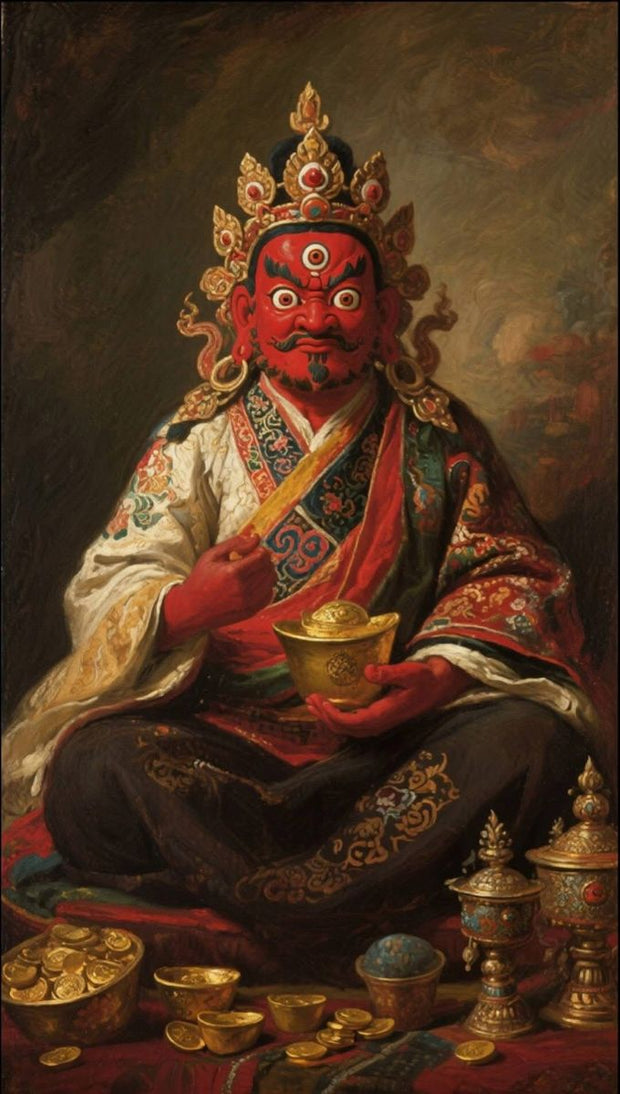
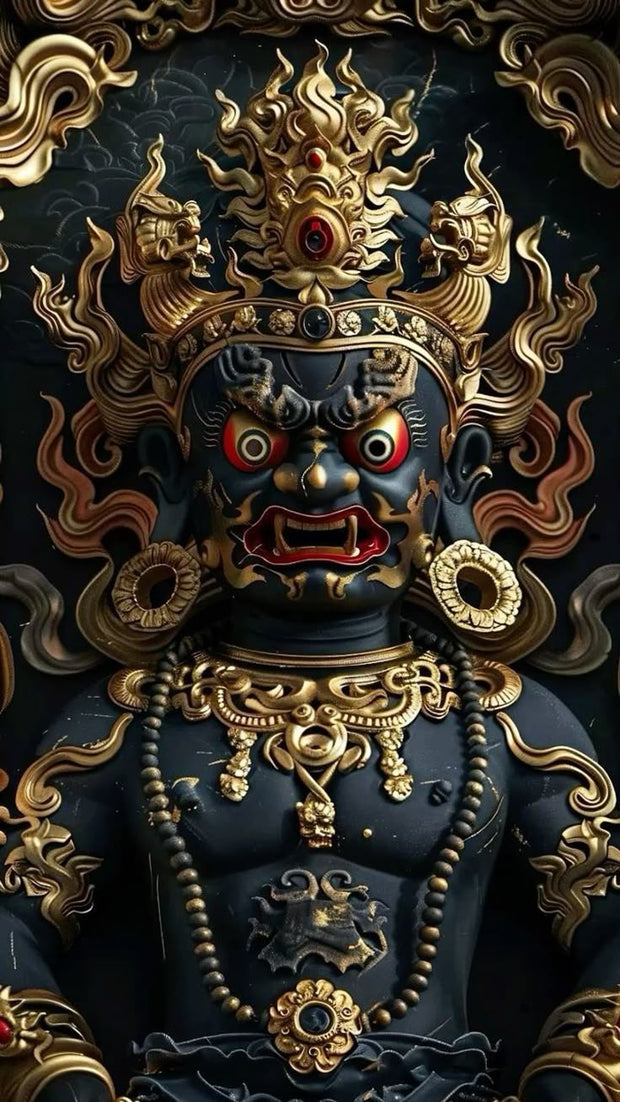
Yellow Jambhala is the most widely known and practiced form, considered a manifestation of the Bodhisattva Ratnasambhava. He is sought for increasing general prosperity and abundance. However, there are other forms, collectively known as the Five Jambhalas. White Jambhala (a manifestation of Avalokiteshvara) specifically helps to cure disease and stop suffering. Black Jambhala is a more wrathful form for removing obstacles and theft. Red Jambhala helps increase one's influence and positive relationships. Green Jambhala is associated with success in activities. Each has a unique mantra and practice, but Yellow Jambhala is the primary form for establishing a foundation of stability.
How should I care for my thangka?
A thangka is a delicate work of sacred art. It should be kept dry and out of direct sunlight, which can fade the natural pigments over time. Avoid touching the painted surface with your hands, as oils can cause damage. If the thangka has a silk cover, use it when the thangka is not being viewed for practice. If you need to transport or store it, always roll it from the bottom up with the painted image facing inward, and wrap it in a soft cloth like silk.
Why is the water offering so important for Jambhala?
The connection between Jambhala and water is profound. In Buddhist cosmology, wealth is often associated with water spirits, or nagas. Jambhala's power includes dominion over these beings. Furthermore, water itself is a universal symbol of purity, clarity, and abundance. Offering water is a symbolic act of purification and an invitation for the flow of prosperity. It is said that this offering is particularly pleasing to Jambhala and is a key method for activating his blessings.
Can a high-quality print be as effective as a hand-painted thangka?
While a beautiful, high-resolution print can certainly serve as an object of inspiration and a support for visualization, it is different from a traditional, hand-painted thangka. A painted thangka is created as a spiritual act, imbued with the artist's devotion, intention, and mantra recitation. When consecrated by a lama, it becomes a direct vessel for the deity's enlightened energy. A print, even if blessed, does not carry this same depth of creation. For serious practice, a genuine painted thangka is always the superior spiritual tool.
Your Next Step on the Path of Abundance
Bringing a Yellow Jambhala thangka into your life is an invitation. It is an invitation to shift your perspective from lack to abundance, to transform anxiety into confident action, and to root your worldly success in the profound spiritual purpose of generosity. This is not a passive charm, but an active partner in your journey—a sacred mirror reflecting your own potential for limitless inner and outer wealth. By engaging with this traditional teachings, you are not just decorating your home; you are planting the seed for a life of stability, purpose, and compassionate action.
If you feel a connection to this path, the next step is to find the authentic vessel that will support your practice. We invite you to explore our complete collection of sacred art and jewelry to find the piece that speaks to your journey. May your practice be fruitful, and may the blessings of Jambhala remove all obstacles, allowing you to flourish for the benefit of all.
Keep reading