God's Rites
Uncovering Tibetan Thangka Murals in Maitreya Hall
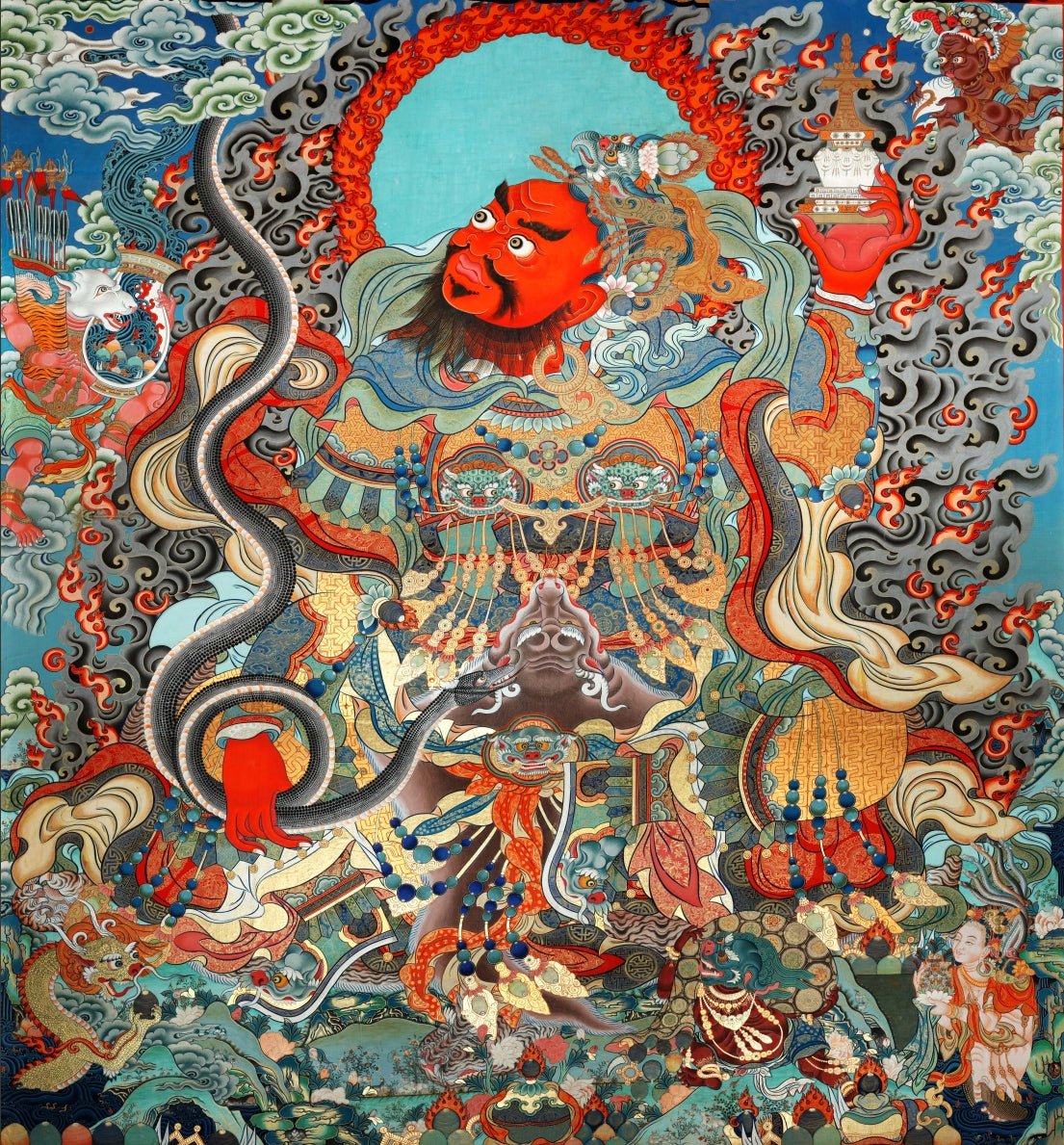
Imagine standing in a space where the air itself feels ancient, thick with the scent of juniper incense and melting yak butter. Your eyes, still adjusting to the dim light filtering from a high window, are drawn to the walls. They are not merely walls; they are vibrant, living chronicles painted in malachite green, lapis lazuli blue, and cinnabar red. You trace the delicate lines of a golden halo, the gentle curve of a Bodhisattva’s smile, the intricate pattern of a silk brocade robe. This isn’t a museum. It’s a place of active devotion, a Maitreya Hall in the heart of Tibet, and the murals surrounding you are not just art. They are portals. You may have felt a pull toward the profound symbolism of Tibetan Buddhism, a sense that there is a deeper reality just beyond the veil of your daily concerns. Standing before these murals, you feel that veil thin, realizing that this art is a direct path to understanding, a visual Dharma meant to awaken the seeds of enlightenment within you.

What It Really Is: The Living Walls of the Jampa Khang
When you hear "Thangka," you might picture a portable scroll painting, meticulously created on silk or cotton, designed to be rolled up and transported by monks and practitioners. And you would be right. But the tradition extends to a grander, more permanent form: the Thangka mural, or debri. These are not frescoes in the Western sense, where paint is applied to wet plaster. Instead, Tibetan muralists prepare a dry wall with layers of clay, straw, and a gesso-like substance, creating a smooth, canvas-like surface. Upon this, using the same precious mineral pigments and precise iconographic grids (thig-tse) as scroll painters, they bring entire Buddhist universes to life. These murals are the spiritual heartbeats of the monasteries they adorn.
To truly understand their power, we must journey to a specific place: the Jampa Khang, or Maitreya Chapel, within the venerable Tashilhunpo Monastery in Shigatse. Founded in 1447 by the First Dalai Lama, Gendun Drup, Tashilhunpo later became the principal seat of the Panchen Lamas, figures considered to be emanations of Amitabha Buddha. The Jampa Khang itself is a towering, nine-story structure built by the Ninth Panchen Lama, Thubten Choekyi Nyima, between 1914 and 1918. Its sole purpose is to house the world’s largest gilded bronze statue of Maitreya, the future Buddha, standing at a breathtaking 26.2 meters (86 feet) tall.
The murals that flank this colossal statue are not decorative afterthoughts. They are an integral part of the sacred environment, a visual commentary and expansion of Maitreya's significance. These vast paintings depict the complete narrative of Maitreya's life: his current existence as a Bodhisattva in the Tushita Heaven, the stories of his previous incarnations as recorded in the Jataka tales, and prophetic scenes of his future descent to Earth. They were painted by master artists, or Lhazo, from renowned schools like the Menri, who worked in a state of meditative concentration. Every color, every line, every symbol was imbued with intention and consecrated through ritual, transforming the physical walls into a sacred field of merit. When you gaze upon them, you are not just looking at a story; you are looking at a living transmission of wisdom, preserved across generations and intended for your spiritual awakening. This tradition of embedding profound teachings into art is the essence of what you'll find in our curated collection of authentic pieces.
The Deeper Meaning: A Blueprint for the Future
The murals of a Maitreya Hall are far more than a biography of a future Buddha; they are a profound map of time, potential, and the very nature of enlightenment. At the center of this cosmic map is Maitreya himself, whose iconography is rich with layers of meaning. Unlike most Buddhas and Bodhisattvas depicted in a meditative lotus posture, Maitreya is often shown seated in bhadrasana—the "Western" style, with both feet planted firmly on the ground. This is not a casual choice. It symbolizes his readiness to rise and descend into our world when the Dharma of Shakyamuni Buddha has faded. He is poised, waiting, an embodiment of active potential and imminent arrival.
Your eyes might then be drawn to his hands, often held in the Dharmachakra mudra, the gesture of turning the Wheel of Dharma. This signifies that when he comes, he will not be a silent sage but a supreme teacher, setting in motion a new cycle of teachings that will lead countless beings to liberation. In his crown, you may see a small stupa, a reliquary mound that represents the enlightened mind of his predecessor, Shakyamuni Buddha. This detail signifies his direct lineage and his role in continuing the sacred work of all Buddhas. The murals surrounding him unpack this potential. You will see depictions of Tushita Heaven, a celestial realm of pure joy where Maitreya currently teaches the gods. These scenes are painted with ethereal clouds and divine beings to inspire in you a longing for higher states of consciousness.
Other sections of the murals depict a future world transformed by his presence: a world where life spans are long, resources are abundant, and the primary pursuit is spiritual practice. The earth will be level, the crops will grow without effort, and kindness will be the common language. By immersing yourself in these visual prophecies, you are not engaging in idle fantasy. You are actively planting the karmic seeds to be reborn in that enlightened age. The murals teach you that the future is not a fixed, predetermined outcome but a potentiality shaped by present actions. The loving-kindness (the very meaning of "Maitreya") you cultivate now, the patience you practice, directly contributes to creating the causes for this golden age. The entire hall becomes a mandala, a sacred palace, with you at the center, invited to recognize your own potential to become a force for positive change in the world, a reflection of the great love Maitreya embodies.
Real Benefits for Modern Life: Cultivating Hope and Loving-Kindness
In a life often filled with uncertainty, pressure, and a relentless focus on immediate problems, the teachings embodied in the Maitreya murals offer a profound and practical antidote. Engaging with this sacred art is not about spiritual escapism; it is about cultivating specific inner resources that can transform how you navigate your daily reality. The benefits are not abstract—they are tangible shifts in your perception and emotional state.
First and foremost, contemplating Maitreya directly cultivates patience and future-oriented optimism. Our modern culture often demands instant gratification, leading to frustration and anxiety when results don't appear immediately. Maitreya’s story is the ultimate lesson in divine patience. He waits for millennia in Tushita Heaven for the precise moment when his coming will be of greatest benefit. Meditating on his poised, ready posture helps you internalize this quality. It teaches you to trust in the unfolding of your own life's path, to understand that some things require time to ripen, and to hold a deep-seated hope for the future, not as a passive wish, but as an active state of mind. This perspective can fundamentally change how you approach long-term goals, personal challenges, and even global crises, replacing anxiety with a calm, enduring confidence.
Second, the practice is a powerful method for developing maitrī, or unconditional loving-kindness. Maitreya’s name literally means "The Loving One" or "The Friendly One." The murals often depict him with a gentle, benevolent expression, his energy radiating outward to all beings without exception. When you sit before an image of Maitreya, you are encouraged to connect with this energy. You can practice by visualizing his warm, golden light filling your own heart and then extending it outward: to your loved ones, to your friends, to neutral people, and, most challengingly, to those with whom you have difficulty. This is not just a feel-good exercise. It is a form of mind-training that actively rewires your habitual reactions of anger, judgment, and fear, replacing them with a baseline of kindness and compassion. This practice can radically improve your relationships and your sense of connection to the world around you. You carry this field of loving-kindness with you, subtly influencing every interaction you have throughout your day, an inner strength reflected in the authentic Dharma implements we offer.

How to Choose Authentic: Recognizing the Spirit in the Form
Whether you are seeking a portable Thangka for your personal meditation space or a piece of jewelry bearing Maitreya's symbol, understanding the hallmarks of authenticity is crucial. The power of these sacred objects lies not just in their beauty, but in the intention, skill, and lineage they carry. An authentic piece is a vessel for spiritual presence, while a mass-produced replica is merely a decoration. Your ability to discern the difference is key to a meaningful connection.
The first element to examine is iconographic precision. In Tibetan art, every detail is prescribed by sacred texts (sutras and tantras). For an image of Maitreya, this means his posture (bhadrasana), his hand gestures (often the Dharmachakra mudra), and his specific attributes like the stupa in his crown and the water flask (kundika) must be rendered correctly. The proportions of his body must follow a strict geometric grid, known as thig-tse, which reflects a state of divine perfection. When you look at a piece, notice the details. Is the face serene and balanced? Are the hands and feet rendered with grace and accuracy? Inauthentic pieces often have distorted proportions or miss these crucial symbolic elements, indicating the artist lacked the proper training and understanding.
Next, consider the materials and technique. Traditional Thangkas and murals are painted with mineral pigments—ground lapis lazuli for blue, malachite for green, cinnabar for red—mixed with a hide glue binder. The gold details are not paint; they are genuine 24k gold, painstakingly applied as a powder or in delicate lines. These natural materials give the artwork a unique luminosity and depth that synthetic paints can never replicate. When you are looking to acquire a piece, ask about the pigments. For jewelry, inquire about the purity of the silver or gold. An authentic creator will be proud to share the details of their craft, a philosophy we deeply value in our complete collection. The brushwork on a Thangka should be exceptionally fine, with gradients achieved through tiny, layered strokes, not simple blending. This level of dedication is a form of meditation for the artist and infuses the work with spiritual merit.
How to Use It: A Contemplative Practice with Maitreya
Engaging with a Thangka mural, or even a high-quality image of one, is an active practice, a form of visual meditation that can bring the teachings of Maitreya directly into your experience. It is a way to move beyond intellectual understanding and foster a heartfelt connection with the qualities of loving-kindness and hopeful patience. Here is a simple, step-by-step guide to help you begin this profound practice.
Step 1: Prepare Your Space and Mind. Find a quiet place where you will not be disturbed. If you have a Thangka or a statue of Maitreya, place it before you. If not, use a clear, detailed image on a screen or printed out. Sit in a comfortable but upright posture, either on a cushion or a chair, with your spine straight. Take a few deep breaths, allowing the tension of your day to dissolve with each exhalation. Set a clear intention for your practice: perhaps it is to cultivate more kindness in your life, to develop patience with a difficult situation, or simply to connect with the sacred.
Step 2: Gaze and Receive. Allow your eyes to rest gently on the image of Maitreya. Don't try to analyze or "figure it out." Simply observe. Let your gaze wander over the details. Notice the serene expression on his face, the gentle posture of his body, the symbolism of his hand gestures, the vibrant colors of his robes and the world around him. Absorb the feeling that the image evokes. It might be a sense of peace, warmth, strength, or hope. For a few minutes, just be present with the image, allowing its sacred presence to permeate your awareness.
Step 3: Reflect on the Qualities. Now, bring to mind the core qualities of Maitreya: unconditional loving-kindness (maitrī) and patient, joyful effort. Reflect on what loving-kindness truly means—a genuine wish for the happiness and well-being of all beings, including yourself, without exception. Consider his patient waiting, his readiness to act at the perfect time. How might you bring a small fraction of this immense kindness and patience into your own life today? Think of a specific situation or relationship where these qualities could make a difference.
Step 4: Mantra and Visualization. To deepen the connection, you can silently or softly recite Maitreya's mantra: Oṃ Maitri Mahāmaitri Maitreye Svāhā. As you repeat the mantra, visualize a warm, golden light emanating from Maitreya's heart and flowing into your own. Feel this light fill your entire body, dissolving any feelings of anger, resentment, or anxiety. Let it fill you with a sense of profound peace and boundless friendliness. You can then extend this light from your heart outwards, to your loved ones, your community, and eventually to the entire world. Remain in this state for 5 to 15 minutes, or for as long as feels right for you.
Common Questions
Who is Maitreya Buddha?
Maitreya is a unique and highly revered figure in all schools of Buddhism. He is recognized as both a great Bodhisattva and the Buddha of the next world age. According to scripture, he currently resides in the Tushita Heaven, a celestial realm where he teaches the Dharma to the gods. He is not a historical figure from our past, but a prophetic one for our future. The teachings of the current Buddha, Shakyamuni, are said to have a lifespan, and as they gradually decline and are forgotten, our world will enter a period of spiritual darkness. It is at this point that Maitreya, having completed his Bodhisattva training, will descend to Earth to be born as a human, attain supreme enlightenment, and turn the Wheel of Dharma anew. His teachings will usher in a golden age of peace, longevity, and spiritual attainment. His name, derived from the Sanskrit word maitrī, means "loving-kindness," which is the core quality he embodies. He represents the ultimate hope in the Buddhist tradition—the promise that the path to enlightenment will never be permanently lost.
Why are Thangka murals so important in Tibetan Buddhism?
Thangka murals, or debri, are far more than religious decorations; they are foundational to Tibetan Buddhist practice and culture. First, they serve as crucial teaching tools. In a society where literacy was not always widespread, these vibrant, detailed murals provided a visual encyclopedia of the Dharma. They depict the life stories of Buddhas, the complex iconography of deities, the layout of mandalas, and the philosophical concepts of the path. By studying a mural, a practitioner can learn and internalize complex teachings in a direct, intuitive way. Second, they are objects of meditation and veneration. A properly consecrated mural is considered to be the actual embodiment of the deity it depicts. Gazing upon it is a form of meditation (dröl-gom) that creates a direct connection with the enlightened qualities of the Buddha or Bodhisattva, helping the practitioner to awaken those same qualities within themselves. Finally, the creation and sponsorship of a mural is considered an act of immense merit (punya), believed to generate positive karma that benefits the patron, the artist, and all who view it for generations to come. They transform a simple monastery hall into a potent field of sacred presence.
What makes the murals in a Maitreya Hall unique?
While all Thangka murals are sacred, those within a Maitreya Hall, or Jampa Khang, have a distinct and powerful focus: time and potentiality. Unlike murals depicting historical Buddhas or tantric deities for present practice, Maitreya murals are fundamentally oriented toward the future. They are visual prophecies. Their primary subject is the narrative of Maitreya's promise—his current life in Tushita Heaven, the lineage of his past deeds, and most importantly, detailed visions of the utopian world that will emerge upon his arrival. You'll see scenes of a world free from famine and conflict, where humans live for thousands of years in harmony. This focus on a positive, attainable future makes the atmosphere in a Maitreya Hall one of profound hope and inspiration. The art is not just a reminder of a past event; it is an active invocation of a future reality. This makes the practice within the hall a powerful way to cultivate optimism and the Bodhisattva aspiration to help create the causes for that enlightened age.
Can laypeople practice Maitreya meditation?
Absolutely. The practice of connecting with Maitreya is accessible and encouraged for everyone, not just ordained monks and nuns. At its heart, Maitreya practice is the cultivation of loving-kindness, which is a universal human capacity. You do not need complex empowerments or initiations to begin. Simple practices, such as contemplating an image of Maitreya, reflecting on his qualities of boundless friendliness and patience, and reciting his mantra (Oṃ Maitri Mahāmaitri Maitreye Svāhā), are powerful and beneficial for anyone. The purpose of the practice is to soften the heart, reduce anger and ill-will, and develop a more compassionate outlook on life. By engaging in this meditation, you are not only improving your own mental and emotional well-being but also aligning yourself with the positive, future-oriented energy that Maitreya represents, planting the seeds to connect with his teachings when he appears. It is a beautiful and direct way to bring the essence of the Dharma into your daily life.
What is the difference between a Thangka painting and a mural?
The primary difference lies in their form and function. A Thangka is a portable scroll painting, typically done on treated cotton or silk canvas. It is designed to be rolled up for storage and transport, and it is usually mounted in a rich silk brocade frame. This portability was essential for itinerant teachers and monks who traveled between monasteries or into nomadic communities. A mural, or debri, is a painting created directly on an architectural surface—the interior or exterior wall of a temple, monastery, or stupa. It is a permanent fixture of a sacred space. While both use the same mineral pigments and adhere to the same strict iconographic rules, the scale and context are different. Murals are often vast, covering entire walls and telling epic narratives in a sequence of panels. They create a complete immersive environment, transforming a room into a mandala or a pure land. A Thangka, by contrast, provides a focused, personal point of contemplation for an individual's shrine or practice space. Both are considered equally sacred and powerful when created and consecrated with the proper intention.
How does wearing a symbol of Maitreya connect to these teachings?
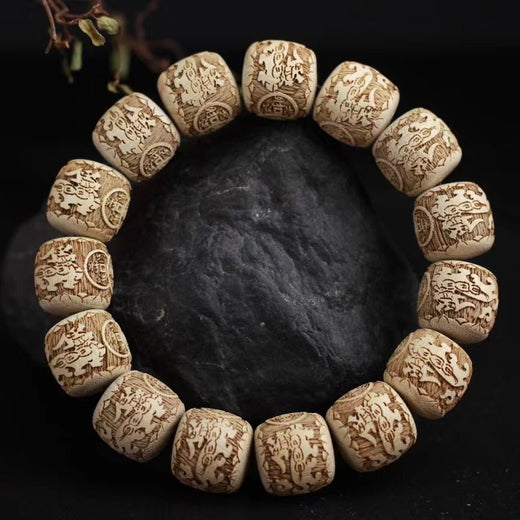
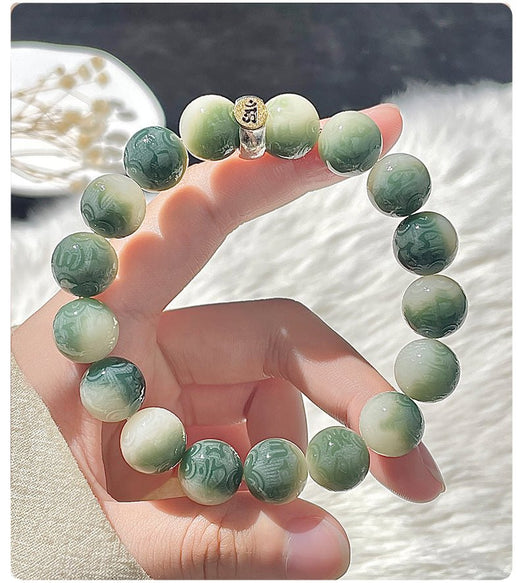
Wearing a symbol of Maitreya, such as a pendant or a sacred charm, is a way to carry the essence of his teachings with you throughout your day. It functions as a constant, subtle reminder of the qualities you are striving to cultivate: loving-kindness, patience, and hope. In Tibetan tradition, such items are more than just jewelry; they are considered sacred supports for your practice. Each time you see it or feel it against your skin, it can prompt you to be a little kinder in your interactions, a little more patient with challenges, and a little more hopeful about the future. It acts as a point of connection to Maitreya's benevolent energy, a silent mantra. For a practitioner, a consecrated amulet is believed to offer protection and blessings. By choosing to wear such a meaningful object, you are making a conscious statement about your values and aspirations, turning a simple act into a continuous stream of mindfulness and devotion. It is a way to integrate the profound inspiration of the Maitreya murals into the fabric of your everyday life, a principle you can see woven into our explore our full range of Tibetan treasures.
Your Next Step
The living walls of the Maitreya Hall are more than a destination; they are an invitation. They invite you to look beyond the immediate horizon of your life and connect with a future illuminated by boundless love and wisdom. The teachings they hold are not confined to the ancient stones of Tashilhunpo Monastery. They are a living transmission, accessible to you right now, through the simple acts of contemplation, kindness, and intention. You can begin to cultivate the world of Maitreya within your own heart.
Let this journey be the start of a deeper exploration. Carry the inspiration of Maitreya—his patience, his warmth, his unwavering hope—into your daily life. Let it inform your actions and soften your perspective. To support your path, we invite you to discover handcrafted Buddhist jewelry and artifacts that serve as a beautiful, tangible reminder of this profound connection to your own innate potential for enlightenment.


Keep reading