Hot
Wutun Monastery's Murals: Exploring Tibetan Buddhist Ar
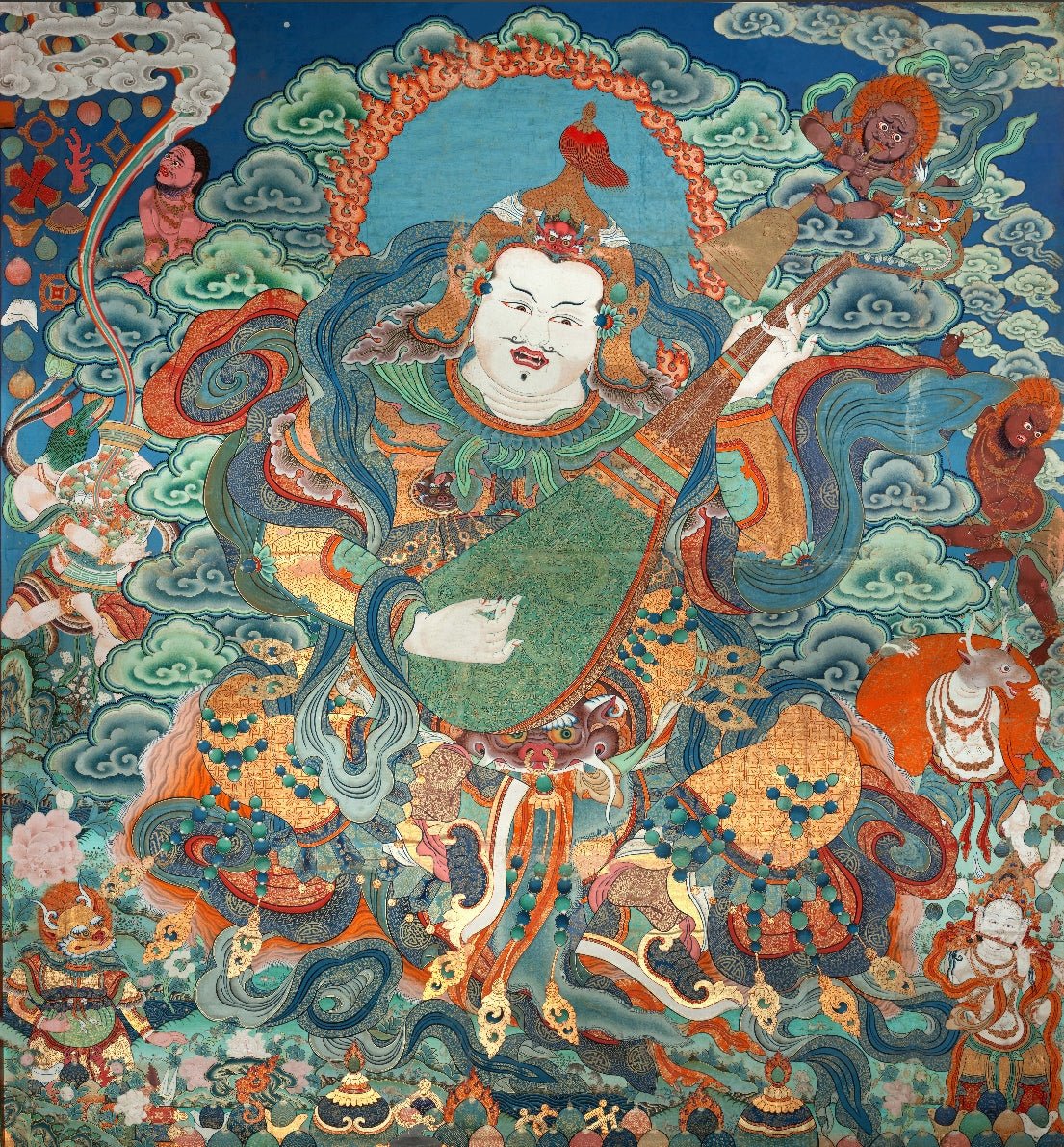
You’ve seen it before. Perhaps scrolling through images online, or maybe standing before a piece in a quiet museum gallery. A flash of brilliant lapis blue, a web of impossibly fine gold lines, the intense, knowing gaze of a deity that seems to look right through you. You felt a pull, a sense of awe that went beyond simple appreciation for something beautiful. It was a feeling of deep, resonant history and profound meaning, a silent story being told in mineral and pigment. This art spoke a language your mind didn't know, but your spirit somehow recognized. That magnetic quality, that spiritual vibrancy, is the hallmark of authentic Tibetan Buddhist art, and nowhere is its pulse stronger than in the sacred murals of Wutun Monastery.
This is more than just decoration. It is a living tradition, a direct transmission of wisdom passed down through generations of master artists. When you engage with this art, you are not just an observer; you are participating in a lineage of devotion. You are connecting with the same profound energy that has guided practitioners for centuries. Let’s journey together into the heart of this tradition and uncover the power held within the painted walls of Wutun.

What It Really Is
To truly understand this art, you must first travel in your mind to a specific place: the valley of the Longwu River in Tongren County, Qinghai Province. This area, known to Tibetans as Repkong (or Regong), is the heartland of one of the most celebrated and distinct schools of Tibetan art. Here, nestled among rolling hills, are the twin monasteries of Wutun—Senggeshong Yagotsang (Upper Wutun) and Senggeshong Magotsang (Lower Wutun). These are not just religious centers; they are the living, breathing crucibles of what is now a UNESCO-recognized tradition: the Regong Arts.
The origins of the Regong style are a beautiful tapestry woven from centuries of cultural exchange. While its roots are firmly planted in the soil of Tibetan Buddhism, its aesthetic flourished during the Ming and Qing dynasties, absorbing subtle influences from Han Chinese scroll painting. This fusion created something entirely new. You can see it in the flowing, graceful lines of the robes and the delicate, detailed landscapes that often form the backdrop for the central deities—elements that harmonize with the strict iconographic proportions and powerful symbolism of classical Tibetan painting. The result is an art form that is both spiritually potent and exquisitely refined.
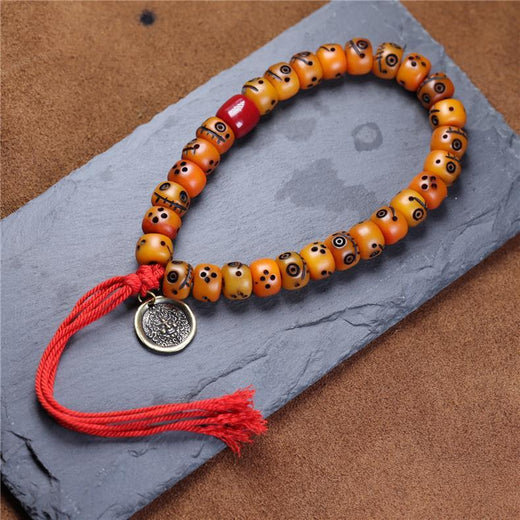
The murals of Wutun Monastery are the grandest expression of this tradition. They are not simply paintings on a wall. The process is a sacred act. The wall itself is meticulously prepared with a mixture of local clay, lime, and fine cotton fibers, creating a smooth, durable canvas. The master artist then sketches the complex composition with charcoal, adhering to ancient geometric grids known as thigse that ensure every deity, every symbol, is rendered with perfect, meaningful proportion. Then comes the color. The pigments are not from a tube; they are ground by hand from precious minerals—lapis lazuli for deep blues, malachite for vibrant greens, cinnabar for potent reds, and orpiment for rich yellows. These minerals are mixed with animal hide glue and a touch of ox bile, a traditional binder that lends a unique luminosity and permanence. This same lineage of artistic devotion is echoed in the craft of authentic Tibetan jewelry, where every detail carries intention.
The Deeper Meaning
When you stand before a mural at Wutun Monastery, you are not looking at a static image. You are witnessing a dynamic field of enlightened energy made manifest. Every color, every posture, and every object is a symbol, a key that can unlock a deeper understanding of the Dharma and of your own mind. This art is a visual language, and learning to read it transforms your experience from passive viewing to active contemplation.
At its core, the creation of this art is a spiritual practice. The artist is not merely an artisan; they are a practitioner, a type of yogi. Before beginning, they engage in purification rituals, recite mantras, and generate a state of meditative concentration. They visualize the deity they are about to paint, inviting its presence and qualities into their own being. The act of painting becomes a form of meditation, and the finished piece is imbued with that focused, sacred intention. This is why authentic Tibetan art feels so alive—because, in a very real sense, it is.
The figures you see are not gods to be worshipped in an external sense. They are visual representations of enlightened qualities that exist within you. The peaceful deities, like White Tara with her seven eyes, embody boundless compassion and readiness to aid all beings. Green Tara represents the swift, active aspect of compassion that overcomes fear. Wrathful deities, like Mahakala or Vajrapani, are often misunderstood by the Western eye. Their fierce expressions, flaming hair, and powerful stances are not demonic. They represent the potent, untamed energy required to obliterate ignorance, cut through attachment, and protect the practitioner from inner and outer obstacles. They are the fierce love of a parent protecting their child from harm.
The colors themselves are a sacred code. The five primary colors correspond to the Five Dhyani Buddhas and the five wisdoms:
- White (Vairocana): Represents the wisdom of the universal law, the purity that transforms the poison of ignorance.
- Blue (Akshobhya): Represents the mirror-like wisdom, the unshakeable, vast nature of space that transforms anger.
- Yellow (Ratnasambhava): Represents the wisdom of equanimity, the richness of enlightened qualities that transforms pride.
- Red (Amitabha): Represents the wisdom of discernment, the boundless compassion that transforms desire and attachment.
- Green (Amoghasiddhi): Represents the all-accomplishing wisdom, the enlightened activity that transforms jealousy.
Real Benefits for Modern Life
You might wonder how these ancient, sacred murals from a remote monastery can have any relevance to your life today. The connection is more direct and profound than you might imagine. Engaging with this art form, whether through a high-quality image or by wearing a piece of jewelry inspired by its symbolism, is a practice that offers tangible benefits for your modern mind.
First, it is a powerful antidote to a distracted mind. Your attention is constantly pulled in a thousand directions by notifications, deadlines, and endless streams of information. Contemplating a piece of Regong art forces you to slow down and practice single-pointed concentration. Try this: find an image of a Wutun mural or a detailed thangka. Allow your eyes to trace the delicate, golden lines of a deity’s robe. Follow the swirling patterns of the clouds. Rest your gaze on the serene expression of a Buddha. In these moments, the chaotic noise of the world recedes. You are not multitasking; you are simply being present with an object of profound beauty. This is a form of visual meditation, training your mind to focus and find stillness amidst the chaos.
This art also provides a sophisticated framework for working with your emotions. Western culture often encourages you to suppress or ignore difficult feelings. Tibetan art, however, displays the entire spectrum of experience. When you look at a wrathful deity, you are not being told to become angry. You are being shown that the raw energy you might label as "anger" or "frustration" is not inherently negative. It is a powerful force that, when harnessed with wisdom, can be transformed into the fierce determination needed to overcome your personal obstacles. The art gives you permission to acknowledge these powerful energies within yourself and see their potential for positive transformation, rather than judging them as "bad."
Furthermore, the very story of the art’s creation is a teaching in patience and perseverance. A single mural can take a team of artists months, or even years, to complete. Each brushstroke is deliberate, each detail painstakingly rendered. This immense dedication stands in stark contrast to our culture of instant gratification. Contemplating this reminds you that anything of true value—whether it's a spiritual practice, a career goal, or a meaningful relationship—requires sustained effort and devotion. It inspires you to approach your own life’s work with a similar sense of purpose. By connecting with this lineage, you tap into a source of enduring wisdom, a perspective that helps you navigate your daily challenges with greater resilience and grace. Bringing this tradition into your life through mindfully crafted symbolic jewelry can serve as a constant, wearable reminder of these profound benefits.

How to Choose Authentic
As the beauty and depth of Tibetan art gain recognition worldwide, the market becomes flooded with reproductions and pieces of inferior quality. To truly connect with the spirit of the Wutun tradition, it's essential to understand what makes a piece authentic. Authenticity here is not just about origin; it's about intention, materials, and the unbroken transmission of knowledge.
The first and most crucial element is the artist's lineage. True Regong art is created by artists who have undergone a rigorous apprenticeship, often lasting for more than a decade, under a recognized master from the Repkong region. This training is not just technical; it's a deep immersion in Buddhist philosophy, iconography, and meditative practice. The artist learns the sacred proportions, the meaning behind every symbol, and how to imbue their work with spiritual presence. When you seek an authentic piece, you are looking for the product of this disciplined, spiritual education. This is why it's so important to acquire pieces from sources that have a direct connection to and understanding of these artistic communities.
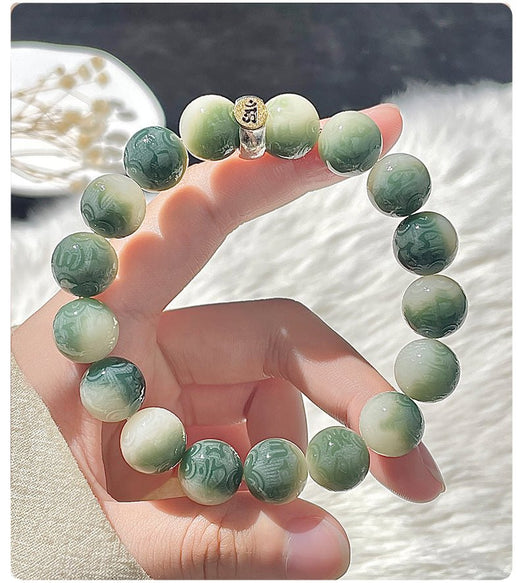
Next, pay close attention to the materials. Traditional Tibetan painting, as practiced in Wutun, shuns modern acrylics and synthetic paints. Look for the unmistakable luminosity that comes only from hand-ground mineral pigments. The blues will have the depth of real lapis, the greens the vibrancy of malachite. Most significantly, look for the use of genuine 24k gold. Gold is used for fine lines, halos, and brocade details. Its application is a highly skilled art in itself. When you view it, real gold will catch the light with a warm, divine shimmer that paint can never replicate. Similarly, in jewelry, authenticity lies in the use of genuine materials like sterling silver, turquoise, and coral, which have their own symbolic significance.
Finally, train your eye to recognize correct iconography and what can only be described as "life." An authentic piece will adhere to the strict iconographic grids. The deity's body will have perfect, harmonious proportions. The face, and especially the eyes, are the most telling feature. In a masterwork, the eyes are "opened" in a final, sacred ceremony, and they seem to hold a consciousness of their own. They will be full of compassion, wisdom, or fierce energy, but they will always feel alive. A poorly executed piece will feel flat, lifeless, and disproportionate. Trust your intuition, but educate it by studying high-quality examples. When you explore collections from trusted sources like ours, you can be confident that each piece has been selected with a deep respect for these principles of authenticity.
How to Use It
Acquiring a piece of authentic Tibetan art—whether a thangka painting or a piece of symbolic jewelry—is the first step. The next is to learn how to actively use it as a tool for your spiritual practice and personal growth. It is meant to be engaged with, not just passively admired. By creating a conscious relationship with the art, you unlock its true power.
If you have a thangka or a statue, the first step is to create a worthy space for it. In a traditional home, this would be on an altar. You can create your own sacred space by placing it in a clean, quiet, and elevated position in your home where you can sit comfortably before it. It should be a place of respect, never on the floor or in a cluttered, chaotic area. Placing it high on a wall or on a dedicated shelf signifies the high esteem in which you hold the teachings it represents.
Once you have your space, you can begin a simple visual meditation practice.
- Set Your Intention: Sit comfortably before the image. Close your eyes and take three deep, calming breaths. Set a simple intention for your practice. Perhaps you wish to cultivate more compassion, find clarity on a problem, or simply quiet your mind.
- The Expansive Gaze: Open your eyes and let your gaze rest softly on the entire piece. Take in the whole composition without focusing on any one detail. Absorb the colors, the overall feeling, the presence of the piece.
- Focus on the Central Figure: Now, bring your attention to the main deity. Look at their face, their eyes. Observe their posture (asana) and hand gestures (mudras). What qualities do they seem to embody? Serenity? Power? Compassion? Simply be with that quality.
- Explore the Details: Let your eyes wander and explore the intricate details—the symbols the deity holds, the figures in the background, the patterns on the robes. Let each detail be a point of gentle focus. If your mind wanders, gently guide it back to one of these visual anchors.
- Internalize the Image: After a few minutes, close your eyes again. See if you can hold the image, or even just the feeling of the image, in your mind's eye. Let the quality you've been contemplating—the compassion of Tara, the clarity of Manjushri—fill your awareness.
Common Questions
Is Wutun art the same as all Tibetan art?
No, it is a highly specific and celebrated regional style. While it shares the common iconographic language and spiritual purpose of all Tibetan Buddhist art, the Regong art of Wutun is distinct. It's particularly known for its exceptionally fine lines, brilliant color palette derived from local minerals, elaborate gold detailing, and a unique stylistic fusion that incorporates the delicate, flowing aesthetics of Chinese painting, especially in its landscapes and textile patterns.
Do I need to be a Buddhist to appreciate these murals?
Absolutely not. The artistic mastery, vibrant beauty, and sheer human dedication poured into these works can be appreciated by anyone, regardless of their spiritual background. The universal themes they explore—compassion, wisdom, overcoming obstacles, and the search for inner peace—resonate with all of humanity. However, understanding the Buddhist context and symbolism will undoubtedly deepen your appreciation and allow you to engage with the art on a much more profound level.
What are the wrathful deities? Are they evil?
This is a common and important question. Wrathful deities are not evil, demonic, or to be feared. In the Tibetan tradition, they are seen as compassionate protectors and manifestations of enlightened energy. Their fierce appearance—with sharp fangs, multiple limbs, and flaming hair—symbolizes the immense power and intensity required to cut through the most stubborn mental poisons: ignorance, hatred, and greed. They represent the active, dynamic force that destroys obstacles on the spiritual path.
Why is gold used so extensively in the art?
Gold holds multiple layers of meaning. Spiritually, its incorruptible and luminous nature symbolizes purity, enlightenment, and the unchanging, eternal quality of the Dharma. Aesthetically, it creates a divine radiance, making the figures appear to glow with inner light. Finally, using such a precious material is an act of devotional offering. By using the best and most valuable materials, the artist and patron are making the highest possible offering to the enlightened beings, thereby generating immense merit.
How can I tell if a thangka or mural is hand-painted?
Look closely for the subtle signs of the human hand. A hand-painted piece will have minute variations in its lines and colors. You may be able to see the texture of the brushstrokes and the rich, slightly uneven surface of the mineral pigments. A printed reproduction will be perfectly flat, uniform, and lack the energetic "presence" of an original. The gold on a genuine painting will have a deep, reflective shimmer, whereas the "gold" on a print is often just yellow or metallic ink that looks dull from different angles.
Can I hang a thangka print in my home?
Yes, of course. A high-quality print of a masterwork can still be a beautiful and powerful object for contemplation and inspiration. The most important thing is the respect with which you treat it. Hang it in a clean, high place, just as you would an original painting. A print can be an accessible way to bring the sacred iconography into your space and support your practice until you are able to acquire an original piece.
Your Next Step
You have journeyed from the initial, magnetic pull of an image to the heart of the Wutun valley, uncovering the deep layers of meaning, practice, and devotion woven into this sacred art. You now understand that these murals are more than just beautiful artifacts; they are living tools for transforming your mind and connecting you to a lineage of profound wisdom. This is not a journey that ends here. It is an invitation to bring this sacred presence into your own life, to make it a part of your daily path.
Let the art be more than something you see; let it be something you experience. Let the symbolism guide your reflections and the beauty quiet your mind. By choosing to engage with this tradition, you are keeping a precious flame alive. Begin your own exploration and find a piece that speaks to your heart in our curated collection of authentic Tibetan treasures.
Keep reading