birth-year-2003
2003 Guardian Buddha: Goat Year — Amitabha Guide
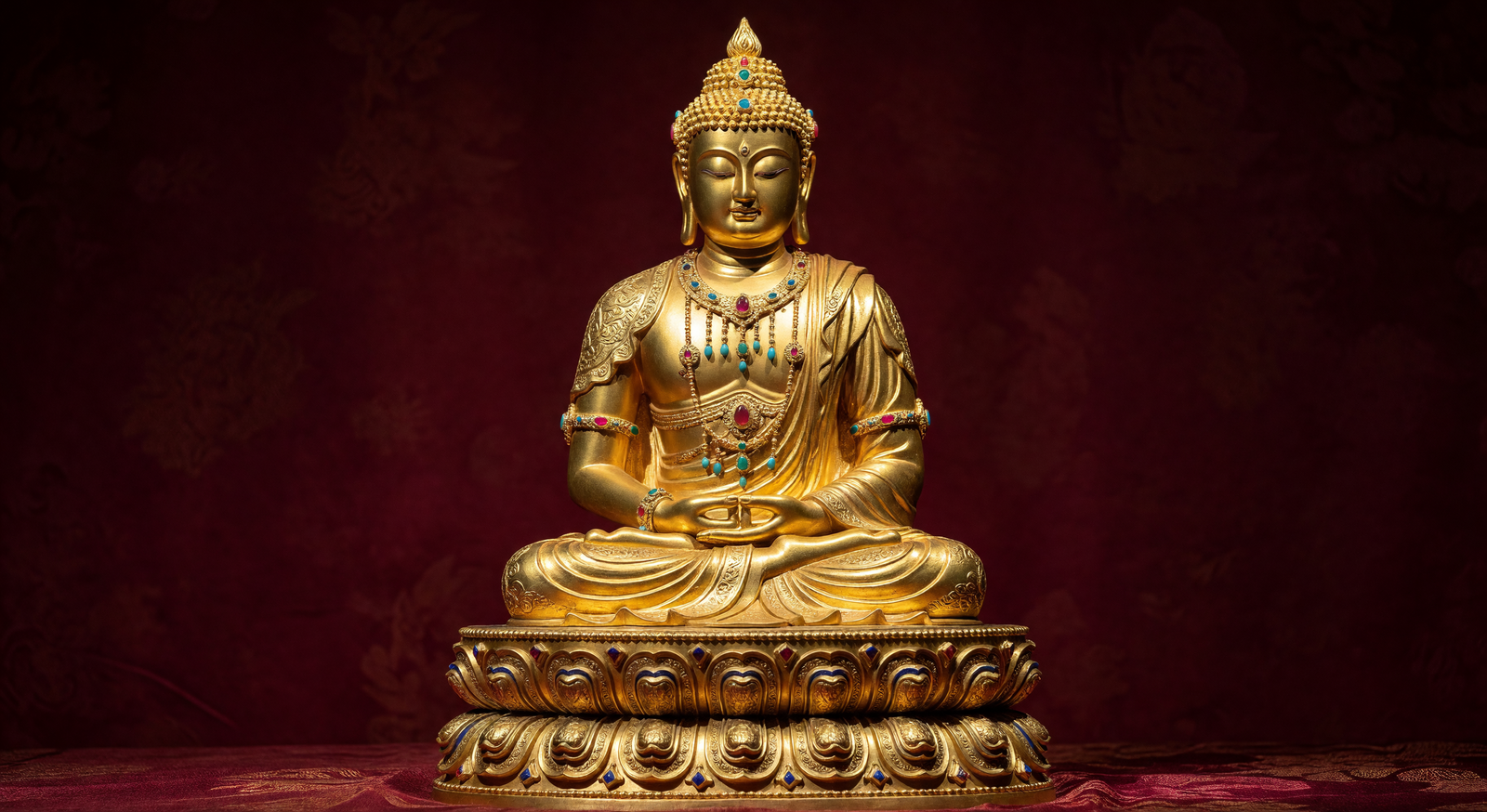
It’s late. The world outside your window is quiet, but your mind is not. The blue light from your screen illuminates your face as you scroll, searching for something you can’t quite name. You’ve seen the personality quizzes, the horoscopes, the endless stream of content trying to define who you are.
But none of it feels substantial. None of it feels grounded.
If you were born in 2003, you entered a world on the cusp of immense digital change. You’ve grown up working through a reality that is both hyper-connected and strangely isolating. You might feel a deep sense of compassion and a desire for harmony, yet find yourself adrift in a world that often feels loud, demanding, and chaotic.
You search for a quiet center, an anchor in the storm. This is why you are here, typing "2003 guardian buddha" into a search bar. It isn't a search for a superstition; it’s a search for a reflection of a closer part of yourself.
This search has led you to a specific name, a specific presence that has been tied to your birth year for centuries through a lineage of Himalayan esoteric teachings. Your guardian is Amitabha, the Buddha of Infinite Light.
This guide is not about simple answers. It is an invitation to understand the profound connection between your birth year, the gentle and compassionate energy of the Goat, and the boundless, illuminating presence of Amitabha Buddha.

2003 Guardian Buddha Birth is the blue light from your screen illuminates your face as you scroll, searching for something you can’t quite name.
Who Is Amitabha? — The Guardian Buddha for Goat Year
In the vast pantheon of Buddhas and Bodhisattvas, Amitabha holds a place of deep reverence and affection, particularly in traditions that have flourished from the high plateaus of Tibet to the serene temples of East Asia.
He is not a god to be worshipped in the conventional sense, but an embodiment of enlightened qualities that exist, dormant or active, within every sentient being. To understand the guardian buddha 2003 birth year is to understand Amitabha.
His name, in Sanskrit, translates to "Infinite Light" (Amitā-bha) and "Infinite Life" (Amitā-yus). These are not poetic descriptions; they are precise signifiers of his nature. He represents the boundless, compassionate light that is not diminished by time or space.
He embodies the eternal nature of awareness itself, beyond the cycle of birth and death.
Amitabha resides over Sukhavati, the Western Pure Land of Bliss. It is crucial to understand that Sukhavati is not a physical heaven one travels to after death. In the esoteric view, it is a perfected state of consciousness, a world of pure perception that can be accessed through deep meditation and sincere practice.
It is a place free from the lower realms of suffering, where the conditions are perfectly conducive to attaining enlightenment. Amitabha’s role is to guide beings toward this state of inner refuge.
Iconographically, Amitabha is almost always depicted in a deep, radiant red, the color of the setting sun. This color symbolizes warmth, compassion, love, and the transformation of desire into discerning wisdom. He sits in a full lotus posture of meditation, his hands resting in his lap in the Dhyana Mudra, the gesture of absolute balance and meditative concentration.
In his hands, he often holds a begging bowl filled with the nectar of immortality, symbolizing, among other things, his subjugation of the poisons of the mind.
For those born in the Year of the Goat, Amitabha’s qualities are a perfect complement. The Goat personality is known for its gentleness, artistic sensibility, and profound empathy. However, this sensitivity can sometimes lead to indecisiveness, worry, and a tendency to be swayed by external pressures.
Amitabha’s infinite light provides clarity and direction. His boundless compassion creates a safe, internal space for the gentle Goat to rest and find strength. He does not override the Goat's nature; he illuminates its highest potential.
Why 2003 Birth Year Carries This Specific Energy
To understand why Amitabha is the guardian for those born in 2003, we must look beyond simple astrology. In the Himalayan tradition, a birth year is not only a number. It is an energetic imprint, a snapshot of the collective consciousness and the subtle currents of the world at the moment of your arrival.
The events of 2003 created a unique psychic atmosphere, one that resonates deeply with Amitabha's qualities of compassion, discernment, and the search for profound connection.
The year 2003 was a year of profound contrasts, of great leaps in understanding and poignant reminders of fragility. In April of that year, the Human Genome Project was declared complete. For the first time, humanity had mapped its own biological blueprint.
This monumental achievement seeded the collective consciousness with themes of inner code, fundamental nature, and the deep, intricate patterns that define life itself. It was a scientific quest for the essence of being. This mirrors Amitabha's purpose: his light is what allows one to perceive their own fundamental nature—their Buddha-nature—the spiritual blueprint that lies beneath the surface of personality and conditioning.
Simultaneously, 2003 was a pivotal year in the digital socialization of humanity. While social media had existed in nascent forms, 2003 saw the launch and explosion of platforms like MySpace. This marked the beginning of an era where connection became both massively accessible and increasingly superficial.
The desire for community, a core trait of the Goat personality, began to be filtered through profiles and friend requests. For a generation born into this, the yearning for genuine, unconditional acceptance is a deep-seated need.
Amitabha represents this ultimate connection. His Pure Land, Sukhavati, is the ultimate community, and his compassion is an unconditional acceptance that asks for nothing in return, a stark contrast to the transactional nature of online validation.
It was also a year of poignant endings and sober reflection. The world watched the tragic loss of the Space Shuttle Columbia, a stark reminder of human vulnerability in the face of the vast cosmos.
Later in the year, the Concorde, a symbol of speed and technological optimism, took its final flight, closing a chapter in aviation. These events infused the year with a sense of transition, of contemplating limits, and of looking for something enduring in a world of impermanent forms.
Amitabha, as the Buddha of Infinite Life, speaks directly to this. His presence is a reminder of an awareness that does not perish, a light that does not fade. For a soul born into this complex energetic soup, the qualities of Amitabha Buddha are not only a comfort; they are a necessary tool for navigation.
How Amitabha Protects You — 3 Specific Ways
The concept of "protection" from a Guardian Buddha is not about warding off external dangers in a supernatural way. It is a far more subtle, internal, and profound process. Amitabha’s protection works by activating and strengthening specific qualities within you, allowing you to meet life's challenges with wisdom and grace.
For a 2003-born Goat, this protection manifests in three primary ways.
1. Illuminating Your Path with Discerning Wisdom
The Goat personality is creative and intuitive but can struggle with indecision. Faced with multiple paths, you might feel paralyzed by the fear of making the wrong choice, a feeling amplified by the "highlight reel" culture you grew up in.
Amitabha is the Buddha of Infinite Light. His practice is a direct antidote to the darkness of confusion and doubt. Connecting with his energy is like turning on a lamp in a cluttered room.
It doesn't remove the objects, but it allows you to see them clearly for what they are. This "light" is discerning wisdom (prajna). It helps you distinguish between choices rooted in fear, ego, or external pressure, and those aligned with your deepest, most authentic self.
He doesn't make the choice for you; he illuminates the path so you can walk it with confidence and clarity.
2. Transforming Destructive Emotions into Compassion
Amitabha is associated with the Padma, or lotus, family of Buddhas. This family's specialty is the transformation of craving, attachment, and desire—the "red" poisons of the mind. In a world that relentlessly markets desire and encourages attachment to outcomes, status, and possessions, this is a vital form of protection.
The sensitive nature of the Goat can make you particularly susceptible to feelings of longing or disappointment. Amitabha’s practice does not ask you to suppress these feelings. Instead, it provides a compassionate space to observe them.
Through his mantra and visualization, the raw energy of desire is not extinguished but transmuted into its wisdom aspect: active, discerning compassion for oneself and others. You learn to see the root of your wanting and redirect that powerful energy toward connection and kindness, protecting you from the cycle of craving and suffering.
3. Providing an Unshakable Inner Refuge
As a Goat, your empathy is a gift, but it can also be a burden. You feel the emotions of others deeply and can be easily hurt by disharmony or criticism. The world can often feel too harsh, too loud.
Amitabha’s most profound protection is the establishment of an unshakeable inner refuge. His Pure Land, Sukhavati, is not only a distant goal but a state of being you can access right now. By connecting with Amitabha, you cultivate a space within yourself that is always peaceful, always accepting, and always safe.
It is a place of unconditional self-compassion. When the outer world becomes overwhelming, you have a sanctuary to return to. This protects your gentle heart from becoming calloused and allows you to continue to engage with the world from a place of strength and open-heartedness, rather than from a place of fear and defense.

Wearing Amitabha in Jewelry — What to Look For
For centuries, Himalayan artisans have understood that sacred objects can serve as powerful reminders of our inner potential. An Amitabha pendant is not a good-luck charm. It is a focal point for your practice, a tangible connection to the qualities you wish to cultivate.
When you search for a piece of jewelry representing your 2003 guardian buddha, you are seeking an ally for your journey. Here is what to look for.
Authenticity of Depiction:
A true Amitabha pendant will be crafted with deep respect for traditional iconography. Look for the key features: his seated meditative posture, the Dhyana Mudra (hands in lap, palms up, thumbs touching), and often the alms bowl.
The expression on his face should be one of serene, compassionate repose. Mass-produced trinkets often miss these subtle but crucial details. Our artisans in the workshops of Kathmandu and Lhasa are steeped in these traditions, ensuring each depiction is accurate and imbued with intention.
When you explore our Guardian Buddha pendant collection, you will see this commitment to authenticity in every piece.
Material with Meaning:
The material of your pendant is part of its story. Black obsidian, a volcanic glass, is a traditional choice for protective amulets. It is believed to be a grounding stone, absorbing negativity and clearing confusion—a perfect complement to Amitabha’s illuminating light.
Sterling silver, often used for the setting or bail, represents clarity and the reflection of truth. Each material has its own energetic signature that should harmonize with the deity's purpose. Avoid plastics and cheap alloys, as they lack the resonant quality of natural materials.
Craftsmanship and Intention:
A sacred object should be created with a clear mind and a pure heart. Look for evidence of hand-craftsmanship—the subtle variations that show a human touch. The difference between a machine-stamped object and a hand-carved one is palpable.
Our authentic Amitabha pendants are crafted by individuals who often engage in their own daily practice. The carving itself becomes a form of meditation, infusing the piece with a quiet, stable presence. When you wear it, you are not only wearing a symbol; you are wearing the focused intention of its creator.
How to Wear Your Pendant:
Wear your Amitabha pendant close to your heart. It serves as a constant, subtle reminder throughout your day. When you feel lost in thought, anxious, or indecisive, simply touching the pendant can be enough to bring your awareness back to your breath and to the compassionate, clear qualities of Amitabha.
Before wearing it for the first time, you can cleanse it by holding it in the smoke of burning juniper or sandalwood incense, a traditional Himalayan purification method. Set a clear intention for what the piece represents to you—a commitment to clarity, compassion, and your own inner path.
Daily Practice with Amitabha — Mantra, Mudra, Altar
Connecting with your guardian Buddha is an active practice. It is a way of watering the seeds of enlightenment that already exist within you. A simple daily routine can create a profound shift in your consciousness over time, building a reservoir of peace and clarity.
Here are three core elements of a practice centered on Amitabha.
The Mantra: Invoking the Light
A mantra is not a string of meaningless words; it is the sound form of an enlightened being. To chant Amitabha's mantra is to invoke his presence and qualities within your own mindstream. The most common mantra for Amitabha in the Tibetan tradition is:
Om Ami Dewa Hrih
It can be pronounced: OM AH-MEE DAY-WA HREE
- Om: Represents the primordial sound of the universe, the body, speech, and mind of all Buddhas. It purifies the ego.
- Ami Dewa: The Tibetan pronunciation of Amitabha, meaning "Infinite Light."
- Hrih: This is the "seed syllable" of Amitabha and the lotus family. It is the sonic essence of compassion and the wisdom that transforms attachment. It is a sound that cuts through delusion.
Practice: Find a quiet place where you won't be disturbed. You can sit comfortably on a cushion or a chair. Take a few deep breaths to settle your mind. You can then begin to recite the mantra, either aloud or silently to yourself.
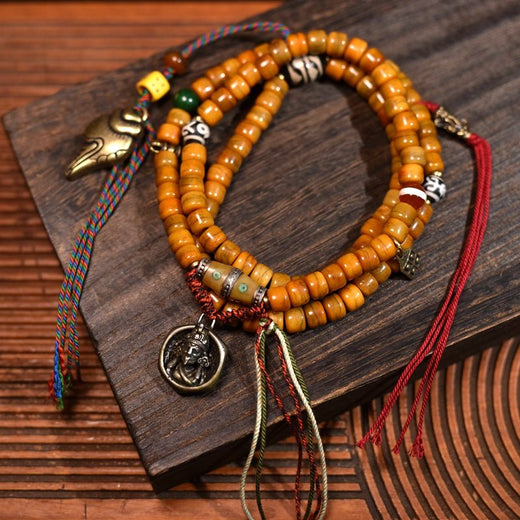
A traditional practice involves reciting it 108 times, using a mala (prayer beads) to keep count, but even 7, 21, or any number of repetitions done with focus is beneficial. As you chant, you can visualize a radiant, ruby-red light emanating from your heart, filling your entire body and then extending out to all beings.
This light is warm, healing, and unconditionally loving.
The Mudra: The Gesture of Equanimity
A mudra is a symbolic hand gesture that channels energy and shapes consciousness. Amitabha's mudra is the Dhyana Mudra, the gesture of meditation. It is a powerful symbol of inner balance and deep concentration.
Practice:
- Sit in a comfortable meditative posture.
- Rest both of your hands in your lap, with your right hand placed on top of your left hand.
- Both palms should be facing upward.
- Gently touch the tips of your thumbs together, forming a small, soft oval or triangle.
This mudra represents the perfect balance of wisdom (right hand) and method/compassion (left hand). The joining of the thumbs symbolizes the union of these two, which gives birth to enlightenment. Holding this mudra during your meditation or mantra recitation helps to quiet the mind, reduce mental distraction, and foster a state of deep inner peace.
It physically embodies the equanimity you are cultivating.
The Altar: Creating a Sacred Space
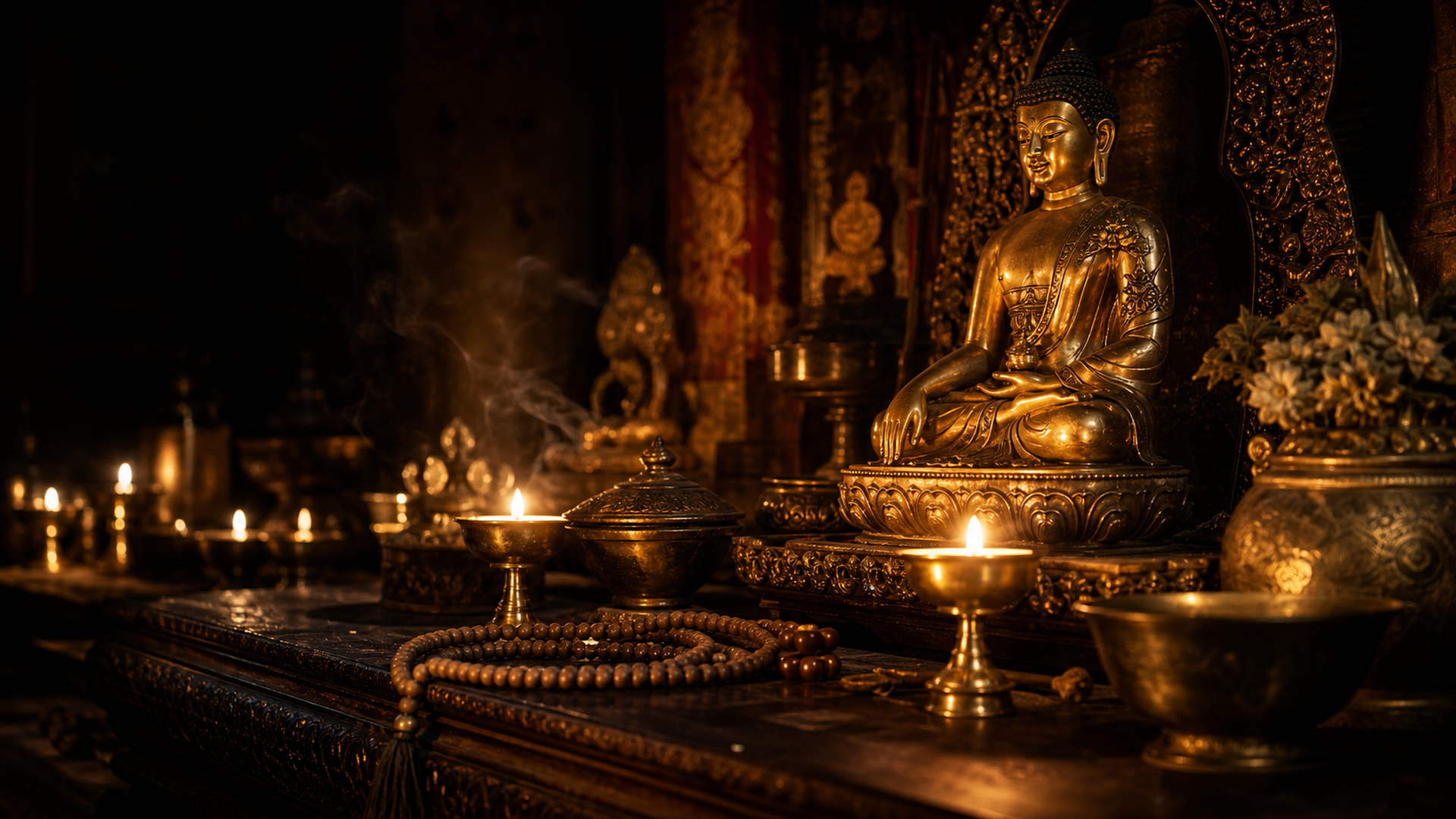
An altar is not for worship; it is a focal point for your intention. It is a beautiful, clean space that reflects your commitment to your inner work. It doesn't need to be large or elaborate. A small shelf or the corner of a desk is perfectly sufficient.
Setting Up Your Altar:
- A Representation of Amitabha: This can be a small statue, a framed picture, or even your handcrafted Amitabha jewelry placed on a special cloth when you are not wearing it. This is the central focus.
- An Offering of Light: A single candle or a small LED light. Light symbolizes the wisdom that dispels the darkness of ignorance, directly connecting to Amitabha's nature.
- An Offering of Scent: A stick of natural incense, like sandalwood or cedar. The fragrant smoke represents the purification of your thoughts, words, and actions.
- An Offering of Water: A small bowl of clean water. Water symbolizes clarity and the aspiration to maintain a pure and calm mind.
Your altar should be a place that feels peaceful to you. Spend a few moments there each day, even if it's just to light the candle and recite the mantra three times. This simple act, repeated over time, consecrates the space and reinforces your connection to the path.
It becomes a physical anchor for your spiritual life, a reminder of the quiet, luminous center within you, much like the great pilgrimage site of Bodh Gaya is an anchor for Buddhists worldwide.
Frequently Asked Questions about the 2003 Guardian Buddha
1. What if I was born in 2003 but don't feel like a typical "Goat"?
The Chinese zodiac archetypes are guides, not rigid definitions. They describe a general energetic tendency. Your personal life experiences, family, and individual karma play a much larger role in shaping your personality. The Guardian Buddha assignment is based on the subtle energetic signature of the year itself.
Amitabha’s qualities of compassion, discernment, and unconditional acceptance are beneficial for everyone, regardless of if you identify strongly with the Goat's traits. His practice can help illuminate the parts of yourself you *do* connect with, offering clarity and strength to your unique character.
2. Is Amitabha a god that I have to worship?
No. In Buddhism, Buddhas are not creator gods or external deities to be worshipped for favors. Amitabha is an enlightened being who perfected certain qualities—infinite compassion and wisdom—and serves as a guide and an inspiration.
The practice is about recognizing that these same qualities exist as a potential within you. Connecting with Amitabha is a method for awakening your own "inner Buddha," not for supplicating an external power. It is a path of self-realization, not of worship.
3. How is the guardian buddha for a 2003 birth year determined?
The assignment of the eight Guardian Buddhas and Bodhisattvas to the twelve zodiac signs comes from a branch of esoteric Buddhism. It's a system that maps the flow of cosmic energies (represented by the zodiac animals and their associated elements) to the specific qualities of different enlightened beings.
Each deity is

Keep reading