angel-numbers
333 Angel Number Meaning (2026): A Tibetan Buddhist Guide
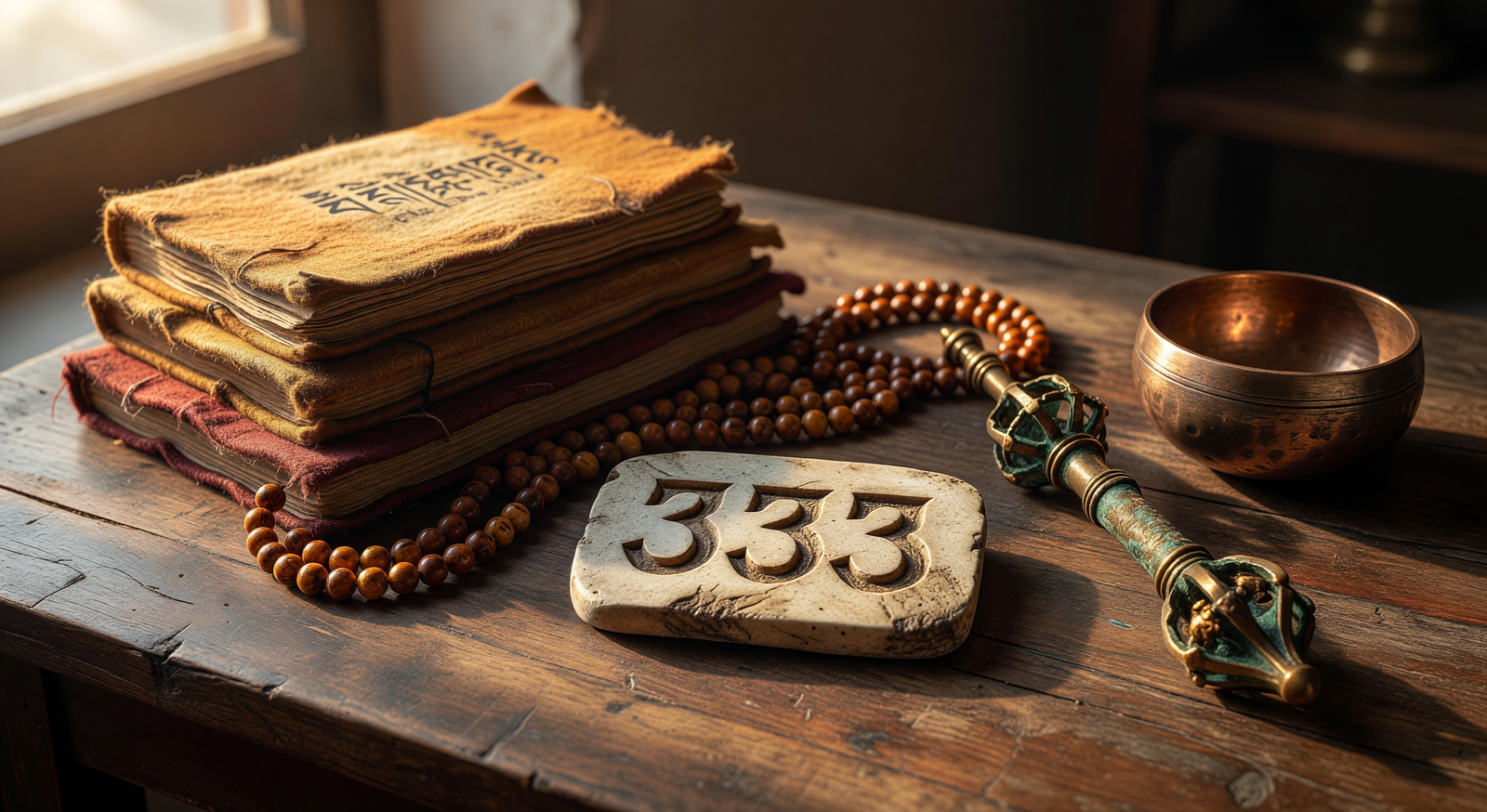
It’s 3:33 p.m. You glance at your phone after a meeting that could have been an email, your mind still buzzing with deadlines and that one awkward comment from your boss. The numbers seem to glow for a second longer than usual.
Later, your coffee costs $3.33. Then, you see a license plate with a bold 333. It feels like a tap on the shoulder from... something. If you're new to this, you might be wondering if it's just a coincidence or something more.
While many sources talk about angel numbers, we find a much older, more grounded wisdom reflected in these patterns. For a closer get into how we approach this phenomenon, you can explore our complete guide to angel numbers from a Tibetan perspective.
This isn't about magic; it's about meaning.
The Foundation: What Seeing 333 Really Is
When you start searching for the meaning of 333, you'll find a lot of talk about ascended masters, mind-body-spirit alignment, and divine protection. These interpretations are popular and can be comforting, but they often stay on the surface, feeling a bit like a spiritual fortune cookie.
They can leave you waiting for an external force to come and fix things. From the perspective we've absorbed over years spent in the Himalayas—walking the pilgrimage routes around Kailash, sitting in monasteries in the Kathmandu Valley—seeing 333 is less of a message *from* the outside and more of a reminder of what's *inside*.
The core misconception is that 333 is a sign that everything will be taken care of for you without effort. The more grounded truth is that it's a prompt to engage with the three most reliable sources of refuge and strength that exist.
In the Tibetan tradition, these are known as the Three Jewels, or Triple Gem: the Buddha, the Dharma, and the Sangha. Monks have recited this refuge formula daily since the 5th century, not as wishful thinking, but as a practical reorientation of the mind.
- The Buddha: This doesn't necessarily mean the historical figure Siddhartha Gautama. It represents the potential for awakened mind, for clarity, and for wisdom that exists within you. It's your own innate ability to see things as they are, free from the fog of anxiety or self-doubt.
- The Dharma: These are the teachings, the path, the truth of how things work. It's the 'how-to' manual for working through your mind and your life with more skill and less suffering. It's the practice of mindfulness, the cultivation of compassion—practical tools, not abstract beliefs. In Tibetan monasteries, monks spend years studying texts like the Bodhisattva's Way of Life to internalize these methods.
- The Sangha: This is the community of fellow practitioners and supportive friends. It's the network of people who are also trying to be a little more mindful, a little kinder. It's the real relief of knowing you are not on this journey alone.
So, when 333 appears, it's not an external master telling you you're safe. It's an internal alarm clock, set by a closer part of yourself, reminding you to take refuge. It's a call to connect with your own inner wisdom (Buddha), to lean on practical methods that work (Dharma), and to seek support from a genuine community (Sangha).
It's a shift from passive waiting to active participation in your own well-being.

Why This Matters More Than Ever in 2026
You might be thinking, "Okay, an ancient concept. How does that help me with my performance review next quarter or the fact that I feel completely burned out?" It's a fair question. Look ahead to the world you'll be working through in 2026, a world where these three principles shift from spiritual nice-to-have to fundamental toolkit for sanity.
The pace of change isn't slowing down. By 2026, AI integration will be even more smooth in our work and personal lives. This means more efficiency, but also a potential for greater disconnection and a feeling that our human skills are being devalued.
The pressure to be constantly optimizing, learning, and adapting will intensify. This is where the Buddha principle—your innate, unshakeable wisdom—becomes your anchor. When algorithms are suggesting what you should buy, watch, and even feel, the ability to connect with your own clear mind is the ultimate act of self-sovereignty.
It's the quiet confidence to know what's truly right for you, beyond the noise of the digital stream.
Consider your career. The gig economy and remote work trends continue to blur the lines between work and life. That feeling of being 'always on' that you have now? It's likely to become the default for many.
The Dharma—the practical path—offers the antidote. These aren't complex rituals. It's the five-minute breath awareness break between Zoom calls. It's the practice of non-judgment when you make a mistake, rather than spiraling into self-criticism.
It's the conscious choice to put your phone away for an hour. In a world demanding constant external output, the Dharma is about cultivating your internal state. It's the set of tools that prevents burnout by building resilience from the inside out, the way a thangka painter builds layers of pigment and gold leaf to create something that endures.
Finally, let's talk about connection. Social media platforms will evolve, creating ever-more-convincing illusions of community. Yet, studies on loneliness, like the one from Cigna reporting that over half of U.S. adults are considered lonely, suggest this digital connection isn't fulfilling our core human needs.
This is where the Sangha becomes critical. Seeing 333 is a nudge to seek out real community. This might not be a monastery. It could be a weekly yoga class where you actually talk to people, a book club, a volunteer group, or even the connection you feel to the artisans in our Kathmandu atelier who crafted your mala by hand over the course of several days.
It's about finding people who see you beyond your job title or your curated feed. It's the shared understanding and support that reminds you that your struggles and your aspirations are human and valid.
In 2026, authentic community will be the truest form of wealth.
Real Benefits: How the Triple Gem Works in Your Life
Understanding the concept of the Buddha, Dharma, and Sangha is one thing. Experiencing how it can shift your day-to-day reality is another. Let's break down the practical benefits of leaning into the 333 message through this framework that has guided practitioners since the time of Shakyamuni Buddha in the 5th century BCE.
The Buddha — Finding Your Inner Compass in the Noise
This isn't about praying to a statue. It's about recognizing that within the storm of your thoughts—the anxieties about the future, the replays of past mistakes—there is a quiet, clear space. That is your 'Buddha-nature.' Seeing 333 is a reminder to access it.
The tangible benefit is a growing sense of self-trust. When you're facing a big decision, like whether to take a new job or end a relationship, the mind spins with pros and cons, advice from friends, and what society expects.
Tapping into your inner Buddha means pausing, breathing, and listening to the quiet knowing beneath the chatter. It's the gut feeling that says, "This feels right," or "This is based in fear." Over time, this practice reduces decision fatigue and anxiety.
You start relying less on external validation (likes, praise, other people's opinions) and more on your own centered wisdom. It's the difference between being a leaf blown about by the wind and a deeply-rooted tree with roots that extend three meters into solid ground.
The Dharma — A Practical Path, Not a Vague Vibe
Spirituality can sometimes feel abstract. The Dharma is the opposite; it's grounded and practical. It's the 'how.' The benefit here is empowerment. Instead of feeling helpless in the face of stress or difficult emotions, you have a toolkit.
For example, the teaching of impermanence isn't a depressing thought; it's a practical tool. When you're in the middle of a painful moment of self-doubt, remembering that this feeling, like everything else, will pass, robs it of its power.
It creates space. Another tool is the practice of mindfulness. When you feel overwhelmed, the Dharma doesn't say 'just think positive.' It says, 'pay attention to your breath for one minute.' This simple act brings you out of the chaotic narrative in your head and into the present moment, where things are usually much more manageable.
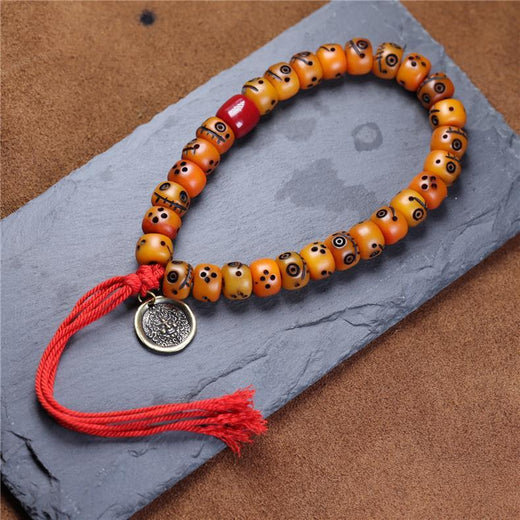
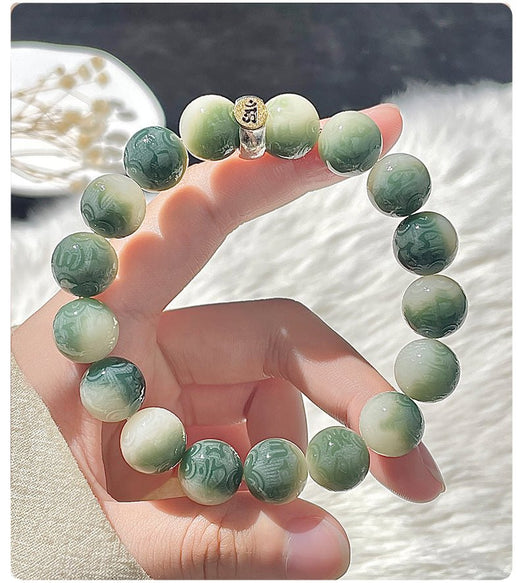
The Dharma gives you agency over your own mind. We find that our angel number jewelry collection serves as a physical reminder of these practical principles you can carry with you, the weight of a mala bracelet grounding you when you need it most.
The Sangha — Authentic Connection in a Disconnected World
The deepest-seated fear for those on a path of self-inquiry is that we are fundamentally alone in our struggles. The Sangha directly heals this fear. The benefit is deep resilience and a sense of belonging.
When you share your experience with a trusted friend or a community and they respond with, "Me too," the weight of that struggle is instantly halved. Seeing 333 can be a prompt to reach out.
Send that text. Make that call. Join that group. The Sangha also provides accountability and inspiration. When your own motivation for meditation or mindfulness wanes, seeing others in your community continue their practice can be the gentle encouragement you need.
It also includes the 'unseen' community—the lineage of teachers and practitioners who came before, and the artisans like Master Tenzin who pour their focused intention into the pieces we offer. Knowing you are part of this larger web of connection provides a deep, stabilizing comfort that a thousand followers on Instagram never could, a feeling you might recognize if you've sat in a monastery courtyard in Lhasa at dawn.
How to Choose an Authentic Reminder of the Triple Gem
When you feel a connection to the 333 message, you might want a physical object to serve as a touchstone—a daily reminder to connect with your inner Buddha, Dharma, and Sangha. But in a market flooded with mass-produced trinkets, how do you choose something with genuine integrity?
First, consider the intention behind the object. Was it created in a factory with speed and profit as the primary goals, or was it crafted by hands that understand its purpose? The artisans in our Kathmandu atelier are not only employees; they are practitioners themselves.
They understand that a mala is a tool for focus and that a symbol has weight. When they shape sterling silver or knot cord by hand, they do so with a mindful presence that becomes part of the piece itself.
You can feel this difference when you hold it—the weight settles differently in your palm.
Second, look at the materials. Natural materials carry a different resonance than plastics and cheap alloys. Sterling silver, for instance, has been valued across cultures for its purity and conductivity. Stones like turquoise or lapis lazuli have been used in Tibetan crafts since the 7th century, not only for their beauty, but for their perceived connection to the earth and sky.
Choosing a piece made from honest, high-quality materials ensures it will last. This isn't a disposable item; it's an investment piece—one you'll still wear in 20 years, its story intertwined with yours.
Finally, consider the blessing. This is a term that gets thrown around a lot. For us, it's not a vague marketing claim. Our malas and certain jewelry pieces are brought to the Sera Monastery, one of the great seats of learning in Tibet, where they are blessed during the 49-day Chenrezig puja, a powerful ceremony focused on compassion.
This process infuses the items with a specific intention of loving-kindness. When you choose one of these meaningful number-themed pieces, you are not only buying an object; you are carrying a small echo of that sacred sound and intention with you.
For instance, our Triple Gem 333 Silver Pendant is specifically designed to embody this principle, with three interlocking circles representing the inseparable nature of Buddha, Dharma, and Sangha.

How to Actually Use Your 333 Reminder
You've chosen a piece that resonates with you. It's beautiful, authentic, and feels right in your hand. Now what? How do you move it from being a piece of jewelry to a part of your practice? The key is simplicity and consistency.
1. The Morning Intention. Before you even look at your phone, take 60 seconds. Hold your 333 piece. As you do, set a simple intention for the day based on the Triple Gem. It could be:
- Buddha: "Today, I will trust my own judgment in meetings."
- Dharma: "Today, I will take three conscious breaths before reacting to stress."
- Sangha: "Today, I will send a message to a friend just to see how they are."
2. The Mid-Day Anchor. Your workday is a prime time for anxiety and distraction. Use your piece as a pattern interrupt. When you feel that familiar wave of overwhelm—the inbox is full, someone is being difficult—simply touch your necklace or bracelet.
You don't need to close your eyes or chant. Just feel the coolness of the metal or the smoothness of the bead against your skin. Let it be a secret signal to yourself to take one deep breath.
This tiny pause cuts through reactive thinking and brings you back to the present moment, reminding you of the inner resources you have at your disposal.
3. The Evening Reflection. Before you go to sleep, hold your piece again. Take a moment to reflect on your day through the lens of the Triple Gem.
- Where did I act from a place of clarity (Buddha)?
- When did I use a tool like mindfulness or patience (Dharma)?
- How did I connect with others in a meaningful way (Sangha)?
Common Questions About the 333 Meaning
1. Do I have to be a Buddhist to appreciate the Triple Gem meaning of 333?
Absolutely not. This is a question we hear often from those on a path of self-inquiry, and the answer is a clear and simple no. The principles of the Triple Gem—awakened mind, a skillful path, and supportive community—are universal human values.
You don't need to adopt any dogma or labels to benefit from them. Think of it as a framework, not a religion. 'Buddha' can be understood as your own innate wisdom or intuition. 'Dharma' can be seen as any practical method that reduces your stress and increases your well-being, whether it's a mindfulness app, therapy, or simply taking a walk in nature.
'Sangha' is the universal human need for genuine connection and community. Seeing 333 is simply a reminder to lean on these three pillars of a healthy, balanced life, regardless of your spiritual or religious background.
It's about finding what's true and helpful, not about conversion.
2. What if I stop seeing the number 333? Does it mean I've lost the connection?
This is a concern we hear regularly. It's natural to feel a little jolt of reassurance when you see the number and to miss it when it's gone. But the absence of the sign doesn't mean the absence of the message.
The purpose of seeing a number like 333 is to awaken you to the principles it represents. Once you have integrated the ideas of relying on your inner wisdom (Buddha), practical tools (Dharma), and community (Sangha), you no longer need the external reminder as frequently.
The training wheels have come off. The goal isn't to be dependent on seeing numbers forever. The goal is to internalize the lesson so that it becomes a natural part of how you navigate your life.
If you stop seeing it, take it as a positive sign that you are now carrying that awareness within you, ready to be accessed at any moment, with or without a numerical prompt.
3. How is the Tibetan Buddhist view of 333 different from the New Age interpretation?
The primary difference lies in the source of agency. New Age interpretations often frame 333 as a message from an external source—angels, spirit guides, or 'the universe'—assuring you that you are being watched over and protected.
This can be very comforting, but it can also foster a sense of passivity. The Tibetan Buddhist perspective, while not discounting the interconnectedness of all things, places the emphasis firmly on your own inner resources and actions.
The message isn't "you are protected," but rather, "you have the tools to protect yourself." It's a call to action, not a promise of divine intervention. It points you toward the inherent power of your own mind, the effectiveness of proven practices, and the strength of community.
It's a more grounded, empowering, and sustainable approach to spiritual growth that relies on your own effort and capacity.
4. Is wearing jewelry with numbers on it a form of cultural appropriation?
This is a thoughtful and important question. The line between appreciation and appropriation is about respect, understanding, and intention. Appropriation happens when a dominant culture takes sacred symbols from a marginalized culture, strips them of their original meaning, and commercializes them without acknowledging or supporting the source community.
We are deeply conscious of this. Our approach is one of appreciation and partnership. We have spent years living in the Himalayas, building relationships with the artisans and communities. We don't just use symbols; we explain their deep, traditional meaning, as we're doing here.
Furthermore, we ensure that the artisans, like those in our Boudhanath workshop established in 2015, are honored partners who are paid fairly and whose cultural heritage is respected. When you wear a piece from us, you are participating in a cycle of mutual respect, not appropriation.
You are helping to sustain a tradition and a community, all while genuinely engaging with the symbol's meaning.
5. Can a piece of jewelry really make a difference in my spiritual practice?
A piece of jewelry, in itself, has no power beyond what you give it. Its strength comes from the meaning and intention *you* invest in it. In a busy life, it's incredibly easy to forget our intentions.
We start the day wanting to be more patient, and by 10 a.m., we're completely lost in stress. The jewelry acts as a physical anchor for your intention. It's a tactile reminder that brings you back to your goal.
Every time you touch it or see it, it's a micro-moment of mindfulness. It's a prompt to take that one conscious breath. Over weeks and months, these thousands of tiny moments accumulate and create real change in your neural pathways.
It's not the object that's changing you; the object is a tool that helps *you* change yourself. It's a focal point for your own commitment to your well-being, which is one of the most powerful forces for growth there is.
6. How does 333 relate to other angel numbers like 111 or 444?
Each number sequence can be seen as highlighting a different facet of the path. If 333 is about the foundational support system of the Triple Gem, other numbers point to different stages or aspects of the journey.
For example, 111 is often seen as a number of new beginnings and intention-setting—a call to be mindful of your thoughts as they are creating your reality. 444 is frequently interpreted as a sign of stability, foundation, and diligent effort, like building a house brick by brick.
You can see how they work together. 111 is the spark of a new intention. 333 is the call to gather your support system (your inner wisdom, your practices, your community) for the journey. 444 is the reminder to do the steady, consistent work.
They aren't isolated messages but can be seen as a sequence of guidance. Our full guide on angel numbers explores these connections in more detail.
Your Journey with the Triple Gem
Seeing 333 is not a fleeting cosmic coincidence. It is an invitation. It's a gentle but persistent call to come home to yourself. In a world that grows louder and more demanding each year, the ability to find refuge in your own clear mind, in a path that works, and in a community that supports you is not a luxury; it is the very foundation of a sane and meaningful life.
You don't need to have it all figured out. You don't need any special experience. You just need to be willing to answer the call. The next time you see 3:33 on the clock, let it be a reminder of these three pillars.
Take one conscious breath. Think of one person who supports you. Trust that quiet voice inside. This is the path. It's not about becoming someone new, but about remembering the strength and wisdom you already possess.
Your journey is yours alone, but you don't have to walk it by yourself. If you feel ready to carry a physical reminder of this message, we invite you to explore our spiritual numerology jewelry, each piece handcrafted in silver or brass by artisans who walk this path alongside you.
Keep reading