Buddhabelief editorial
Crystal vs Jade: Material, Meaning & Buying Differences
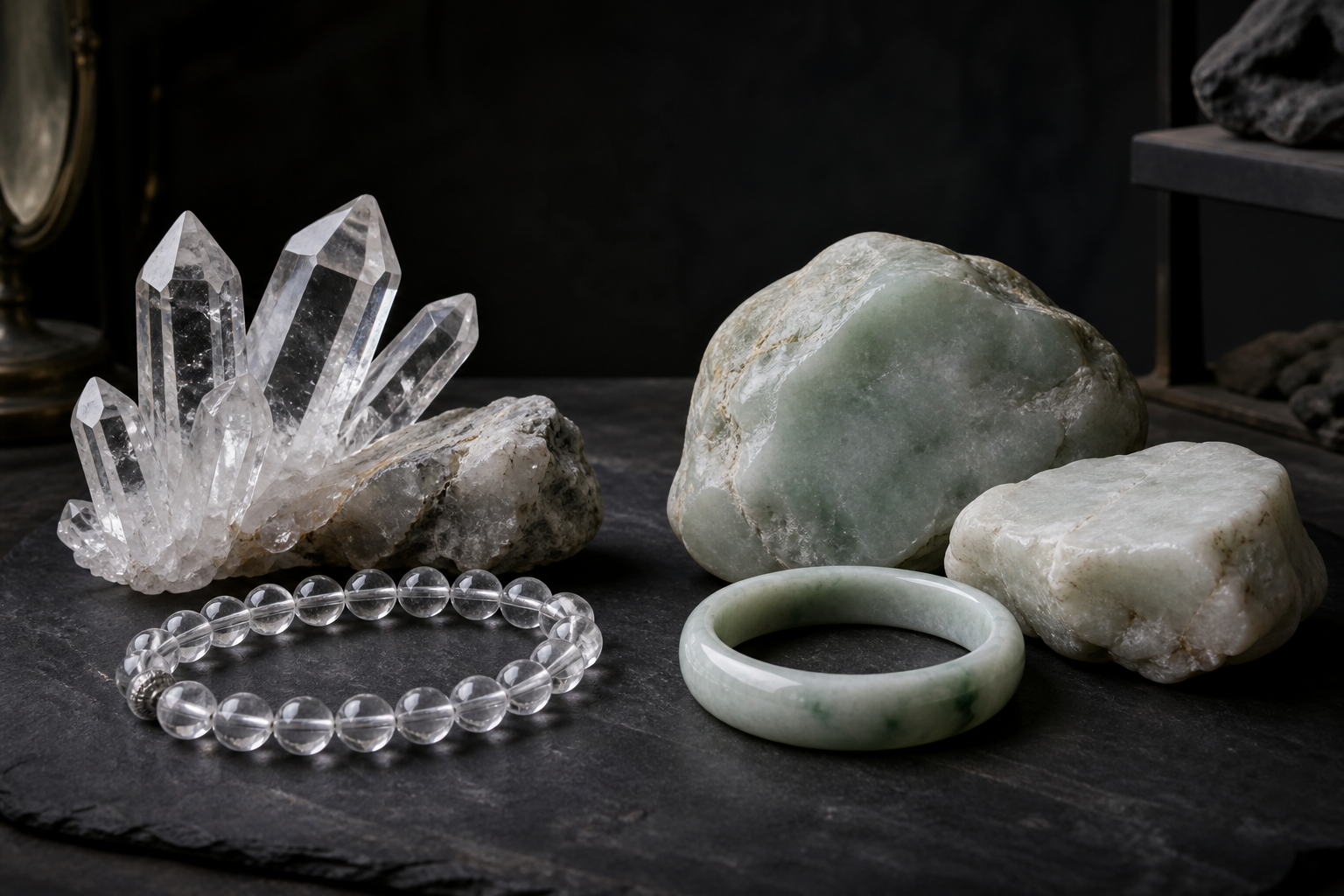

Crystal and jade are not two versions of the same stone. In jewelry, "crystal" often means quartz or another transparent crystalline mineral, while jade refers mainly to jadeite or nephrite. Quartz is harder against scratching; jade's interlocking structure makes it exceptionally tough against breaking.
What is the main difference between crystal and jade?
Crystal usually describes a mineral with an ordered crystal structure and visible crystal form, while jade is a trade and gemological name for exceptionally tough jadeite or nephrite. Clear quartz is silicon dioxide with Mohs hardness 7. Jadeite is about 6.5-7 and nephrite about 6-6.5, but both jade types resist chipping unusually well.
The comparison becomes confusing because retailers use "crystal" as a broad shopping category. A crystal bracelet may contain quartz, amethyst, agate, glass or another material. A jade bracelet should identify jadeite or nephrite, not merely use "jade" as a color word.
There is also a language difference between science and shopping. Most minerals are crystalline, including jade's component minerals, but a shopper asking for a crystal usually expects visible transparency, a quartz variety or a faceted bead. Clarifying the intended meaning prevents a technically correct answer from becoming a commercially misleading one.
Crystal vs jade at a glance
| Factor | Crystal, using quartz as the reference | Jade |
|---|---|---|
| Composition | Quartz is silicon dioxide | Jadeite is a pyroxene; nephrite is an amphibole aggregate |
| Structure | Can form visible hexagonal crystals | Dense interlocking microscopic crystals |
| Mohs hardness | Quartz: 7 | Jadeite: 6.5-7; nephrite: 6-6.5 |
| Toughness | Can chip or fracture along an impact | Exceptionally resistant to breaking and chipping |
| Typical appearance | Transparent to opaque; may show crystal faces | Translucent to opaque with smooth, dense texture |
| Common buying risk | Glass, synthetic quartz, dye or vague "healing crystal" labels | Imitations, dye, bleaching, polymer impregnation or loose trade names |
Quick verdict: choose crystal when you want transparency, visible crystal character or a specific quartz variety. Choose jade when you want a dense polish, exceptional toughness and the cultural history attached to jade objects. Neither category has proven medical or guaranteed-luck effects.
What counts as crystal in jewelry?
Scientifically, a crystal is a solid whose atoms are arranged in a repeating structure. In retail language, however, "crystal" is used much more loosely. It may describe natural quartz, colored quartz varieties such as amethyst, microcrystalline quartz such as agate, manufactured glass or faceted lead-free glass.
The U.S. Geological Survey's quartz resource describes rock crystal as the common transparent gem variety of quartz, made from silicon and oxygen. Quartz has been used for tools, decoration and jewelry for thousands of years.
When buying, ask for the specific mineral name. "Natural clear quartz," "amethyst" or "agate" is more useful than "energy crystal." If the piece is glass, that is acceptable when disclosed, but it should not be priced or described as natural quartz.
Common quartz-family choices
Rock crystal is colorless transparent quartz. Amethyst is purple quartz, citrine is yellow to orange quartz, and smoky quartz ranges from brown to nearly black. Agate and jasper are microcrystalline quartz materials with different visual structures. Retailers may group all of these under crystals even though their appearance and treatment risks differ.
This variety is one reason a crystal collection can feel broader than a jade collection. It is also why the specific mineral and treatment information should appear on every product page rather than only in the collection title.
What counts as jade?
Modern gemology uses jade mainly for jadeite and nephrite. GIA also recognizes some green omphacite under specific conditions. Jadeite and nephrite differ in chemistry and density, but both consist of interlocking crystals that create outstanding toughness.
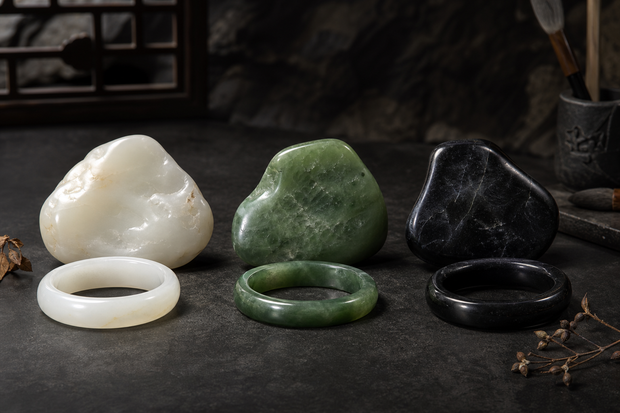
GIA's jade overview lists green, white, orange, yellow, lavender and black among jade colors. The material may be translucent or opaque, and quality depends on color, texture, transparency, treatment and workmanship.
Ancient Chinese jade was nephrite. The Smithsonian National Museum of Asian Art explains that early Chinese jades were worked into tools, ornaments and ritual objects and that mineral impurities created different colors. Jadeite became prominent in Chinese art much later.
Why jade feels different from quartz
Polished quartz often has a glassy surface and can show distinct internal fractures or inclusions. Jade's aggregate structure produces a denser, smoother visual impression. This difference is especially noticeable in bangles and larger beads, where light seems to enter jade softly rather than pass through as a clear window.
Touch is subjective and affected by room temperature, size and setting. Both materials can feel cool. The familiar "cold stone" test cannot reliably distinguish natural jade, quartz and glass under ordinary shopping conditions.
Hardness vs toughness: the buying distinction that matters
Hardness measures resistance to scratching. Toughness measures resistance to breaking, chipping or cracking. These properties are related to durability but are not the same.
The USGS mineral gemstone guide places quartz at Mohs 7 and summarizes jade around Mohs 6, while GIA gives the more specific ranges for jadeite and nephrite. Quartz can scratch some jade surfaces, but a jade bangle may survive an impact that chips a quartz point because jade's interlocking texture stops fractures from traveling easily.
Appearance: how crystal and jade handle light
Clear quartz can be transparent, with crisp crystal faces in rough specimens and a glassy luster when polished. Inclusions, veils and fractures may be visible. Colored quartz varieties gain color from trace elements, irradiation, inclusions or treatment.
Jade usually has a softer visual depth. Fine jadeite can be semi-transparent; nephrite often has a dense, fibrous-looking or softly translucent appearance. Jade is commonly shaped into bangles, beads, cabochons and carvings because its toughness supports thin or continuous forms.
Neither look proves authenticity. Glass can imitate transparent quartz, and dyed or polymer-treated material can imitate fine jade color. Compare under neutral light and ask what testing supports the product description.
Meaning and cultural context
Quartz crystals have accumulated many modern metaphysical associations, including clarity, amplification and intention. Jade has long-standing cultural associations in China with virtue, status, ritual, beauty and durability. Contemporary jewelry adds color-specific ideas such as harmony for green jade or purity for white jade.
These meanings belong to cultural history, religious practice and personal interpretation. They are not clinical evidence. Buddhabelief uses symbolic language to help customers understand why a material may matter to a wearer, while avoiding claims that crystal or jade treats disease, guarantees prosperity or prevents harm.
For a quartz-specific example, read our clear quartz guide, which separates modern spiritual language from material facts. For jade authenticity, use the jade bracelet buying guide.
Crystal vs jade for bracelets, malas and pendants
For bracelets
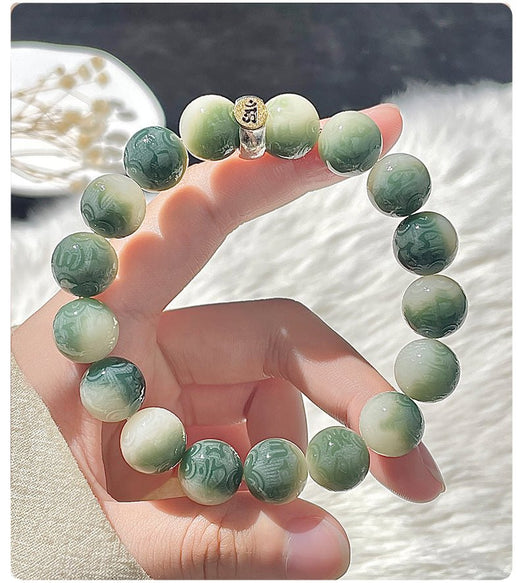
Jade is a strong choice for smooth beads and solid bangles because of its toughness. Quartz beads can offer more sparkle and transparency but should be protected from sharp impact. Elastic quality, drill-hole finish and bead spacing matter for both.
For malas
Quartz malas can be heavier and visually bright. Jade malas feel dense and smooth, though weight varies by bead size and mineral. For repeated counting, prioritize comfortable bead diameter, secure knots and a material description you can verify.
For pendants and carvings
Quartz points emphasize natural crystal form. Jade pendants emphasize polish and carving. Thin jade carvings can be durable, but delicate openwork still needs care. A drilled crystal point can crack around the hole if knocked.
Browse the crystal jewelry collection for quartz and adjacent materials, or compare it with the jade jewelry collection. Collection placement is merchandising, so always read the individual product's material line.
Treatments and authenticity checks
- Get the specific name. Ask "which mineral?" rather than accepting crystal or jade as a complete answer.
- Request treatment disclosure. Quartz may be heated, irradiated, dyed or synthetic. Jade may be dyed, bleached, impregnated, coated, waxed or heated.
- Use magnification carefully. Bubbles can suggest glass, while dye concentrations in cracks may suggest treatment, but absence of these signs proves nothing.
- Compare weight and feel only as clues. Temperature and heft vary with size, room conditions and setting.
- Use a qualified laboratory for high-value pieces. Refractive index, spectroscopy and other tests can separate materials and treatments that photographs cannot.
GIA's gem treatment overview explains that treatments alter appearance and that disclosure is essential. A treated gem can still be wearable and attractive; it simply should not be represented as untreated.
Synthetic materials and imitations
Synthetic quartz has essentially the same composition and crystal structure as natural quartz but is grown under controlled conditions. It is widely used in industry and can also appear in jewelry. Glass may imitate clear quartz but has a different structure. Disclosure separates a legitimate manufactured material from a deceptive listing.
Jade has both natural substitutes and manufactured imitations. Serpentine, quartz, glass and other green materials may be given jade-like trade names. Polymer treatment can also change the appearance and durability of jadeite. A laboratory can use multiple tests to identify the material and detect treatments that a buyer cannot see.
Do not perform destructive scratch tests on finished jewelry. They can damage the object and still produce ambiguous results. For low-cost pieces, buy from a seller with clear disclosures and returns. For high-value pieces, pay for qualified testing.
Price: why neither category has one price level
Quartz ranges from abundant commercial material to rare collectible specimens. Jade ranges from modest nephrite beads to exceptional jadeite sold at very high prices. The category name does not predict the price.
For quartz, value factors include variety, color, clarity, crystal form, size, origin claims and workmanship. For jade, evaluate mineral type, color, transparency, texture, treatment, carving and provenance. Brand story should not substitute for these factors.
Care and cleaning
Warm water, mild soap and a soft cloth are conservative choices for both when treatment and settings are uncertain. GIA's jade care guide notes that warm soapy water is safe and that unknown treatments call for caution.
Avoid sudden heat changes, harsh household chemicals and impacts. Store quartz away from softer stones because it can scratch them. Store bangles and crystal points so they do not strike each other. Follow our mixed-material jewelry care guide for malas and bracelets.
How to choose between crystal and jade
Choose by use first. If you want a solid bangle, a dense carved pendant or beads designed for frequent handling, jade's toughness is a practical advantage. If you want visible crystal faces, high transparency, faceted sparkle or a named quartz variety, crystal is the more natural category.
Choose by evidence second. A seller should name the material, disclose known treatments and show enough detail to assess construction. "Natural crystal" is incomplete if the mineral is not named. "Genuine jade" is incomplete if the seller cannot distinguish jadeite, nephrite and a jade-colored imitation.
Choose by meaning third. Symbolism can make an object personally useful, but it should remain separate from material identity. A clear quartz bracelet does not become more authentic because it is called an amplifier. A jade bangle does not become untreated because it is described as protective.
Choose by wearability last. Compare weight, bead diameter, wrist fit, clasp or elastic construction, edge comfort and how the material coordinates with what you already wear. A technically impressive stone that stays in a drawer is a poor everyday choice.
When a mixed crystal-and-jade design makes sense
Mixed designs can work when each material has a clear visual role. Transparent quartz can provide light and contrast around denser jade beads. Jade can anchor a strand that would otherwise feel visually busy. The construction should prevent harder quartz beads from repeatedly striking or grinding against softer jade surfaces.
For meditation jewelry, bead consistency and cord construction matter more than combining as many symbolic materials as possible. Read the mala beads meaning guide before choosing a mixed-material counting strand.
Three decision scenarios
You want a visible natural formation
Choose a quartz specimen or pendant that preserves crystal faces. Ask whether points are natural, polished or assembled, and inspect the mounting for pressure around fragile edges.
You want a durable symbolic bangle
Jade is the more established material for a continuous bangle. Measure fit carefully because solid bangles do not adjust, and request treatment disclosure before paying a premium.
You want a gift but do not know the recipient's beliefs
Choose by design and verified material rather than making a strong spiritual claim. A simple quartz or jade piece can carry a note about cultural context while leaving the recipient free to decide what it means personally.
Limits of an online material comparison
Photographs can suggest transparency, color and workmanship, but they cannot prove mineral identity or treatment. Studio lighting can make quartz look cleaner, increase jade translucency or conceal surface-reaching fractures. Video and neutral-light images improve context without replacing testing.
This guide also uses clear quartz as the main crystal reference because "crystal" is too broad to carry one set of properties. Amethyst, agate, calcite, glass and other materials sold in crystal collections differ in hardness, toughness and care. Check the specific product rather than transferring the quartz column of the table to every stone.
For expensive jewelry, ask whether the report identifies the exact object, natural or laboratory-grown origin where relevant, and detected treatments. For everyday pieces, prioritize accurate labeling, construction and a return policy.
Most importantly, compare like with like. A natural quartz point, a faceted glass bead, an untreated nephrite bangle and a polymer-treated jadeite bracelet belong to different material and value categories even when a retailer places them under one spiritual-jewelry heading.
Frequently asked questions
Is jade a crystal?
Jade is crystalline at the microscopic level, but in jewelry language it is not usually sold as a "crystal." Jadeite and nephrite are dense aggregates of interlocking crystals rather than transparent quartz points.
Is crystal more valuable than jade?
Neither category is always more valuable. Common quartz may be inexpensive, while rare specimens can be collectible. Jade values range even more widely, with fine untreated jadeite occupying a very different market from commercial nephrite beads.
Which is better for everyday wear?
Jade's toughness is excellent for bangles and beads. Quartz has good scratch resistance but can chip if struck. Choose a well-constructed design and care for either material according to its treatment and setting.
Can crystal and jade be worn together?
Yes. Keep in mind that quartz is harder and can scratch jade if loose pieces rub repeatedly. Secure settings, knotting and separate storage reduce that risk.
Which has stronger spiritual meaning?
That depends on the tradition and the wearer. Jade has deep historical roles in Chinese culture, while quartz has both ancient decorative uses and extensive modern metaphysical associations. Neither meaning should be turned into a guaranteed medical or financial claim.
Sources
Keep reading