Hot
5 Powerful Spiritual Tools for Protection & Blessin
You feel it sometimes, don't you? A subtle static in the air, a weight in your thoughts that wasn't there yesterday. It's the residue of a difficult conversation, the lingering presence of a crowded subway, or just the quiet hum of modern anxiety. You come home, seeking sanctuary, but the noise follows you in. You try to meditate, to find that still point within, but your mind is a whirlwind. It's a feeling of being spiritually untethered, vulnerable to the unseen currents that flow through our daily lives. You know there must be a way to fortify your inner space, to create a shield not of aggression, but of profound peace. You've heard of spiritual tools, but the concepts feel distant, perhaps too complex. What you truly crave is a tangible practice, an anchor you can hold in your hand, a sound that can clear a room, a tradition that has weathered centuries and can help you weather your day.

What These Tools Really Are: A Journey Through History and Place
To truly understand the power of these instruments, you must look beyond their surface beauty and into their deep, authentic origins. These are not mere decorations; they are technologies of consciousness, refined over millennia in the high-altitude clarity of the Himalayas. Their history is etched into the very materials from which they are made, carrying the legacy of masters, monasteries, and entire spiritual lineages.
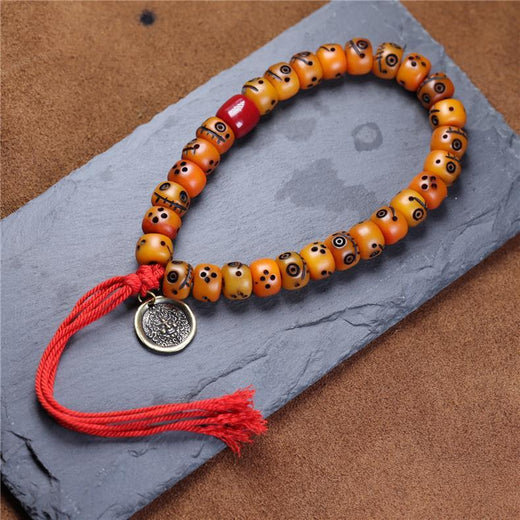
The Mala (Japa Beads), for instance, finds its roots not in Tibet, but in ancient India, over 3,000 years ago. Its use as a meditative tool was systemized within Hindu traditions before being adopted and profoundly integrated into Buddhism around the 3rd century BCE. When Buddhism traveled across the Himalayas into Tibet, the mala came with it, transforming in material and meaning. While early Indian malas were often made of Rudraksha or Tulsi seeds, Tibetan malas embraced materials with presence in their own sacred landscape: yak bone, symbolizing impermanence; Bodhi seeds from the tree of enlightenment; and turquoise, a stone believed to bridge heaven and earth. Each of the 108 beads came to represent the 108 kleshas, or afflictions of the mind, that one seeks to transmute through mantra recitation. The lineage of this practice is a direct, unbroken chain from the earliest yogis to the lamas of today.
The Singing Bowl has a more enigmatic history, often shrouded in the mists of the pre-Buddhist Bön religion of Tibet. While its exact origin is debated, we know that metallurgists in the regions of Nepal and Tibet, as early as the 12th century, perfected the art of crafting bowls from an alloy of seven sacred metals—gold, silver, mercury, copper, iron, tin, and lead—each corresponding to a celestial body. These weren't created for music in the Western sense, but for ritual. In monasteries like the ancient Samye Monastery, founded in the 8th century by King Trisong Detsen, bowls were used to mark the time for meditation, to make sound offerings, and to facilitate deep states of trance for oracles. Their sound was considered a direct echo of the universal "AUM," the resonance of creation itself.
Similarly, the Prayer Wheel (Mani Khorlo) is a uniquely Tibetan innovation, born from a compassionate desire to make the profound benefits of mantra practice accessible to all. Its conceptual origin is attributed to the great Indian master Nagarjuna in the 2nd century CE. However, it was the legendary Guru Rinpoche (Padmasambhava), who brought Buddhism to Tibet in the 8th century, that popularized their construction and use. He taught that spinning a wheel containing millions of copies of the mantra Om Mani Padme Hum would generate merit and blessings equivalent to reciting them all. This transformed the spiritual landscape, allowing laypeople, pilgrims, and the elderly to engage in continuous prayer as they walked the sacred circumambulation paths (koras) around stupas like Boudhanath in Kathmandu or the Jokhang Temple in Lhasa.
Prayer Flags (Lung Ta) are perhaps the most visible emblem of Tibetan spirituality. Their story begins before Buddhism, in the shamanic Bön tradition, where colored cloths were hung to appease local deities of the mountains, rivers, and sky. When Buddhism took root, this indigenous practice was infused with new meaning. The five colors were codified to represent the five elements—blue for space, white for air/wind, red for fire, green for water, and yellow for earth. Instead of appeasing spirits, the flags were now block-printed with mantras, sutras, and images of the "Wind Horse" (Lung Ta), a symbol of good fortune and well-being. The belief, carried on the fierce Himalayan winds, is that as the flags flutter and fray, the blessings are released into the world, benefiting all beings. The entire collection of authentic Tibetan spiritual tools is steeped in these powerful histories.
Finally, Tibetan Incense (Dhoop) is far removed from the perfumed sticks common in the West. Its creation is a spiritual and medicinal art form governed by ancient texts. The formulas, some dating back over a thousand years, were developed by scholar-physicians in monasteries like Mindrolling, a great center of the Nyingma lineage. Composed of dozens of wild-harvested Himalayan herbs, woods like sandalwood and agarwood, and precious resins, the incense is created not just for fragrance but for purification. It's used to cleanse sacred spaces of negativity, to create a conducive atmosphere for meditation, and as an offering to the Buddhas and Bodhisattvas. The smoke is seen as a vehicle, carrying one's prayers to the heavens.
The Deeper Meaning: Symbolism in Every Detail
Beyond their historical origins, each of these tools is a universe of symbolism, a physical map of the spiritual path. When you hold one, you are holding a key to a deeper layer of reality, a reminder of the principles that guide your practice. Understanding this symbolism unlocks their true potential to transform your mind and your environment.
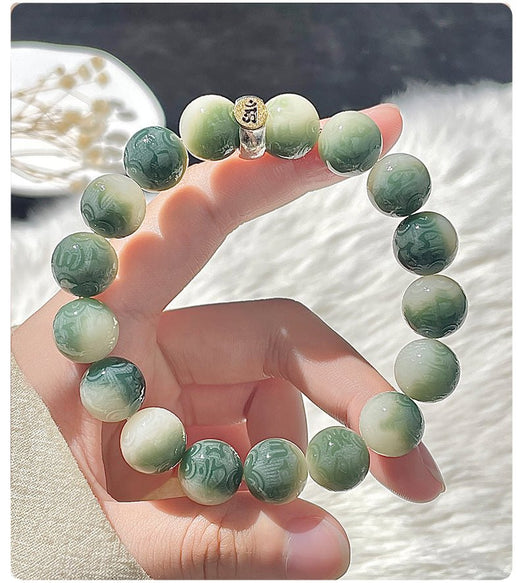
Your Mala is a microcosm of the universe and your journey through it. The 108 beads are not an arbitrary number. They represent the 108 worldly desires and afflictions that cloud our true nature. Each time you pass a bead through your fingers while reciting a mantra, you are symbolically transforming one of these poisons into wisdom. The large "guru bead" at the end is the anchor, symbolizing the teacher or the ultimate reality of emptiness (Shunyata) from which all phenomena arise and to which they return. The tassel, if present, represents the roots of the lotus plant, signifying our connection to the earth even as we reach for enlightenment. The string that holds it all together, often unseen, represents the unbreakable continuity of the Dharma—the teachings that bind all of existence in a web of compassionate interdependence.
The sound of a Singing Bowl is the sound of emptiness itself. When you strike the bowl, it produces a fundamental tone, but as you guide the mallet around the rim, it blooms into a symphony of overtones. This represents the Buddhist concept of dependent origination: from the single, empty source (the bowl, Shunyata), a multitude of interconnected phenomena (the sounds) arise. The resonance you feel in your hand and that fills the room is a tangible lesson in impermanence. The sound arises, swells, and inevitably fades back into silence, mirroring the cycle of all things. Using the bowl is a practice in listening—not just with your ears, but with your entire body—to the present moment, the only place where reality truly exists.
A Prayer Wheel is a physical expression of the enlightened speech of the Buddha. The mantra inside, Om Mani Padme Hum, is the essence of Chenrezig (Avalokiteshvara), the Bodhisattva of Compassion. By spinning the wheel, you invite this compassionate presence. The clockwise motion is crucial; it aligns with the movement of the sun and the direction of circumambulation around holy sites, symbolizing harmony with the natural and spiritual laws of the universe. The wheel itself teaches that enlightened action doesn't always require complex intellectual effort. A simple, mindful physical act, when infused with pure intention, can have a profound and far-reaching impact, sending ripples of peace and compassion out into the world for the benefit of all sentient beings.
The symbolism of Prayer Flags is a dynamic interplay of the elements. Each color is a prayer for balance and harmony within ourselves and the world. Blue (Space) is the boundless nature of mind. White (Air) is the purity of our actions. Red (Fire) is the warmth of compassion and the power of our life force. Green (Water) is the flow of life and the growth of wisdom. Yellow (Earth) is stability, nourishment, and the ground of our being. When you hang these flags, you are making a conscious choice to align with these primordial qualities. The wind, an invisible force, becomes your messenger, demonstrating that the most powerful things in life—like love, compassion, and blessings—cannot be seen, only felt and experienced. The eventual fading and dissolving of the flags is not a sign of failure but a beautiful, poignant reminder of impermanence and the necessity of release. You can find meaningful pieces that embody this profound symbolism.
The rising smoke of Tibetan Incense is a direct link between the human and the divine. It symbolizes the purification of the three poisons: greed, hatred, and ignorance. As the fragrant smoke cleanses the air of a room, it is a reminder to cleanse your mind of negative thoughts and emotions. It is an offering, a form of spiritual generosity, feeding the "scent-eaters" (beings in other realms) and creating merit. The upward-drifting smoke also represents the aspiration of the practitioner, the desire for one's consciousness to rise from the mundane concerns of the world towards the clarity of enlightenment. Each scent profile, derived from a specific blend of herbs, carries its own subtle character—sandalwood for calm, juniper for purification, agarwood for deep meditation—making the incense a precise tool for shaping your inner state.
Real Benefits for Modern Life: traditional teachings for Your Daily Path
While their origins are ancient, the benefits of these tools are profoundly relevant to the challenges you face today. They are not escapes from reality, but powerful aids to engage with it more skillfully, peacefully, and with a protected heart. Their effects are not rare in a supernatural sense, but in the way they consistently and reliably shift your state of being.
Using a Mala transforms a scattered mind into a focused one. In a world of constant digital distraction, the simple, tactile act of moving from one bead to the next anchors your attention. This isn't just "calming"; it's a form of single-pointed concentration training (samatha meditation). The rhythmic repetition of a mantra, coordinated with breath and touch, lowers your heart rate and blood pressure, physically counteracting the body's stress response. Over time, this practice builds a "muscle" of mindfulness. You'll find yourself less reactive to triggers at work, more present in conversations with loved ones, and better able to access a state of calm amidst chaos. It becomes your portable sanctuary, a way to instantly ground yourself whether you're in a stressful meeting or a noisy airport.
The sound of a Singing Bowl is a powerful tool for clearing. Your home, your office, and even your own presence can accumulate stress and negativity. The pure, complex frequencies produced by a quality bowl literally disrupt stagnant patterns. Think of it as a sonic reset button. Before you meditate, sounding a bowl can quiet the mental chatter, making it easier to drop into a deep state. After a long day, its sound can help release the tension you've absorbed from your environment. Many find it improves sleep by calming the nervous system before bed. It's a practical way to shift the entire atmosphere of a space from one of anxiety to one of tranquility, making your home a true refuge. — explore our protection jewelry collection for authentic pieces.
Engaging with a Prayer Wheel cultivates a heart of active compassion. It's easy to feel overwhelmed by the suffering in the world, leading to a sense of helplessness. The prayer wheel offers a simple, tangible action. As you spin it, holding the intention that all beings be free from suffering, you are actively training your mind in altruism (bodhicitta). This isn't passive wishing; it's a practice that rewires your default perspective from self-concern to a broader, more compassionate outlook. This shift has real-world effects: you may find yourself becoming more patient, more forgiving, and more likely to engage in small acts of kindness throughout your day. It's a remedy for cynicism and a way to keep your heart open, even when faced with difficulty.
Hanging Prayer Flags is an act of environmental and spiritual optimism. In a time of ecological and social anxiety, the flags are a powerful statement of hope. The act of putting them up connects you to the natural world—the wind, the sun, the changing seasons. Seeing them flutter outside your window is a constant, gentle reminder of your highest aspirations and your connection to something larger than yourself. They help protect against despair by actively sending out intentions of peace, compassion, and wisdom. This act of spiritual generosity, of offering blessings without expecting anything in return, cultivates a profound sense of well-being and interconnectedness. They remind you that even your smallest positive intentions have an effect that ripples out into the world. Explore our curated selection of sacred artifacts to find the tools that resonate with you.
Burning high-quality Tibetan Incense is a direct path to mental clarity and spiritual upliftment. The specific herbal formulas are designed to have a direct effect on the mind. Certain blends can sharpen focus for work or study, while others can facilitate deep relaxation and release emotional blockages. Unlike artificial air fresheners that merely mask odors, true Tibetan incense purifies the air and neutralizes negative presence. Using it to mark the beginning of your meditation or yoga practice creates a powerful sensory cue for your brain, signaling that it's time to transition from the busyness of the day to a state of inner stillness. It's a simple ritual that can dramatically deepen the quality of your personal practice and make your sacred space feel truly consecrated.

How to Choose Authentic Spiritual Tools
In a global market flooded with imitations, choosing an authentic spiritual tool is an act of discernment. An authentic piece is not just an object; it's a vessel of intention, crafted with knowledge and respect for tradition. Your choice matters, as the presence of the maker and the materials are imbued into the tool you will use for your practice. Here's what to look for.
First, consider the materials. An authentic Bodhi seed mala will have seeds that are unique, with slight variations in size and color, unlike perfectly uniform plastic beads. Yak bone malas should feel dense and cool to the touch, often showing the subtle grain of the bone. For singing bowls, look for the tell-tale signs of hand-hammering: small, overlapping circular marks on the surface. A machine-made bowl will be perfectly smooth and often has a less complex, more tinny sound. Authentic prayer flags are printed on simple, raw-edged cotton, designed to fray and dissolve naturally, not on synthetic polyester that will pollute the environment.
Next, evaluate the craftsmanship. A hand-knotted mala is a sign of quality, with a small knot between each bead that makes it more durable and easier to use. The carving on a prayer wheel should be detailed and precise, not blurry or mass-produced. The mantras should be legible. In incense, authenticity lies in the ingredient list. Look for terms like "wild-harvested," "Himalayan herbs," and "natural resins." Avoid anything with "fragrance oil" or "charcoal," which are signs of a low-quality, perfumed product. True Tibetan incense is a solid stick of compressed herbs, not a bamboo sliver coated in black paste.
Perhaps most importantly, consider the source. Where is the item coming from? Does the seller have a direct connection to the artisans in Nepal, Tibet, or India? A reputable source like Buddhabelief will be transparent about its relationships with the craftspeople, often sharing their stories and ensuring they are paid fairly. This ethical dimension is crucial. Your spiritual tool should be a link in a chain of positive intention, from the person who gathered the materials to the artisan who crafted it, to you. When you shop for your spiritual tools, you are supporting the preservation of these sacred arts and the communities that depend on them. An authentic tool feels different because it is alive with this lineage of care and respect.
How to Use and Consecrate Your Tools
Once you have chosen your authentic tool, the next step is to make it your own. This involves cleansing it of any presence it may have picked up on its journey to you and consecrating it with your own specific intention. This simple process transforms it from an object into a sacred companion on your spiritual path.
Step 1: Cleansing Your first act should be to purify your new tool. The most traditional method is through smoke. Light a stick of high-quality Tibetan incense, such as juniper or sandalwood, which are known for their purifying properties. Hold your mala, singing bowl, or prayer wheel in the rising smoke, turning it so the smoke touches all its surfaces. As you do this, visualize any residual or negative presence dissolving and being carried away, leaving the object clear and neutral. Alternatively, you can use sound. Place your item near a singing bowl and let the resonant tones wash over it, achieving the same purifying effect.
Step 2: Setting Your Intention Find a quiet space where you won't be disturbed. Hold the tool in your hands at your heart center. Close your eyes and take a few deep breaths to center yourself. Now, connect with your deepest aspiration for this tool. What do you wish to cultivate with its help? Is it peace? Compassion? Clarity? Protection? Formulate a clear, positive intention. For example, with a mala, you might silently say, "May this mala be a support for my practice, helping me to cultivate a calm and focused mind for the benefit of all." For prayer flags, "May these flags carry blessings of peace and harmony to all beings touched by this wind." Infuse the object with this heartfelt intention. This is the most crucial step; you are charging the tool with your spiritual purpose.
Step 3: The First Use and Placement Your tool is now ready. The first time you use it is part of the consecration. Recite your first round of mantras with your new mala. Sound your singing bowl with mindful attention. Take your prayer wheel for its first mindful spins. If you are hanging prayer flags, do so with a sense of reverence and celebration. When not in use, treat your tools with respect. Don't place them on the floor or in a bathroom. Keep your mala on your personal altar or a clean, high place. A singing bowl can sit on a dedicated cushion. This respect ensures the tool remains a powerful symbol of your spiritual commitment.
Common Questions About Spiritual Tools
Is it disrespectful for a non-Buddhist to use these tools?
Absolutely not. The core principles embodied by these tools—compassion, mindfulness, peace, and the desire to alleviate suffering—are universal human values. Tibetan Buddhism is an open and welcoming path, and the tools are considered skillful means (upaya) to help any being, regardless of their background, to connect with their own inner wisdom and compassionate nature. The key is respect. If you approach these tools with a sincere intention to cultivate peace and understanding, rather than treating them as exotic trinkets, your use is not only appropriate but encouraged. The Dalai Lama himself has often said that the aim of the teachings is to create happy human beings, not necessarily more Buddhists.
How do I care for my mala beads if they break?
A breaking mala is not a sign of bad luck; in fact, it is often seen as a positive sign. It can symbolize the end of a cycle, the completion of a certain karmic lesson, or a breakthrough in your practice. It signifies that you have imbued the mala with a great deal of focus and intention. When it breaks, gather all the beads you can find. You have a few options: you can have it professionally re-strung, which is a beautiful way to honor its journey with you. You can also offer the beads back to the earth by placing them in a garden or a body of water, thanking the mala for its service. Or, you can keep the guru bead on your altar as a reminder of your practice and commitment.
What do the different symbols carved on singing bowls mean?
The symbols etched onto singing bowls add another layer of meaning and intention. Common motifs include the mantra Om Mani Padme Hum in Tibetan script, which invokes the presence of compassion. You might also see the Eight Auspicious Symbols (Ashtamangala), which include the Endless Knot (interdependence), the Lotus Flower (purity), and the Treasure Vase (spiritual abundance). The Eyes of the Buddha, often seen on stupas, may also be carved on a bowl, representing the all-seeing wisdom that perceives the ultimate reality. Choosing a bowl with symbols that speak to your personal aspirations can deepen its significance in your practice.
Do prayer flags "expire" or need to be taken down?
Yes, in a sense. Prayer flags are intentionally made from non-durable material because their fading and disintegration is a central part of their teaching on impermanence. They are meant to be left up until they are tattered and worn by the elements. Traditionally, new flags are hung alongside the old ones, especially during Tibetan New Year (Losar). It is considered inauspicious to let the flags touch the ground. If you must take down very old, completely tattered flags, the proper way to dispose of them is by burning them. This allows the final prayers to rise to the heavens with the smoke, completing their sacred cycle.
Is there a "right" way to spin a prayer wheel?
Yes, there are a few key points. Prayer wheels should always be spun clockwise, which aligns with the direction of the Earth's rotation and the flow of presence in the universe. Your motivation is also paramount. You should spin the wheel not just for your own benefit, but with the sincere wish that the blessings generated will benefit all sentient beings without exception. It should be done mindfully, not mechanically. Feel the weight of the wheel, be aware of the gentle motion, and hold your compassionate intention in your heart. This transforms a simple physical movement into a profound spiritual practice.
What's the real difference between Tibetan incense and Japanese or Indian incense?
The differences are significant and stem from their ingredients, production, and purpose. Indian incense (agarbatti) typically has a bamboo core, is dipped in fragrance oils or perfumes, and produces a strong, sweet, and often smoky aroma. Japanese incense (Koh) is very refined, often coreless, and focuses on subtle, pure scents of single woods like sandalwood or aloeswood for creating a specific mood. Tibetan incense is unique in that it is a medicinal and ritual formula. It is coreless, made from a dough of dozens of Himalayan herbs, woods, and resins, and is extruded and dried. Its scent is earthy, complex, and herbal, and its primary purpose is not perfume but purification, healing, and creating a sacred space for practice.
Your Next Step on the Path
You have now journeyed through the history, meaning, and practical application of these profound spiritual instruments. You understand that a mala is more than beads, and a singing bowl is more than sound. They are conduits of intention, anchors for the mind, and sources of protection for the spirit. They are tangible connections to a lineage of wisdom that has guided seekers for centuries. The next step is not just to acquire a tool, but to welcome a companion for your journey inward. Let your intuition guide you. Which tool calls to you? Which practice speaks to the needs of your heart right now? Answering that question is the beginning of a deeper, more protected, and more blessed life.
We invite you to mindfully explore our complete collection of authentic, ethically-sourced spiritual tools. Each piece has been chosen with care, honoring the traditions and the artisans who keep this sacred knowledge alive. May you find the perfect key to unlock your own inner sanctuary.
For deeper context on the tradition behind this practice, see Tibetan Buddhist tradition on Wikipedia.
Keep reading