Hot
777 Angel Number: The Ultimate Meaning and Spiritual Gu

You glance at the clock on your laptop: 7:07 PM. Later, scrolling through your phone, you notice a post has exactly 777 likes. The next morning, your coffee and pastry come to $7.77. It’s a subtle pattern, a quiet hum beneath the noise of your day, but it’s there.
Your intuition stirs. This feels like more than a coincidence; it feels like a message, a signpost on your path. Modern spiritual circles have termed this phenomenon "angel numbers," a signal from a higher realm.
While this language is new, the profound spiritual resonance of the number seven is ancient, woven deep into the fabric of Himalayan wisdom for millennia. The feeling you have—that you are being guided, that you are on the verge of a breakthrough—is real.
This repeated appearance of 777 is not a message from an external being, but rather an awakening call from within. It is your own innate wisdom, your Buddha-nature, reminding you to look deeper and align with your truest spiritual path.

What the 777 Phenomenon Really Is: Ancient Roots in Buddhist Wisdom
To truly understand the power behind the number seven, you must look beyond modern interpretations and journey back to the very foundations of the Dharma. The significance of seven is not arbitrary; it is encoded in the life of the Buddha himself and in the core tenets of the path to enlightenment.
Its power comes from its connection to foundational truths, not fleeting spiritual trends. Consider the auspicious moment of Prince Siddhartha's birth in the gardens of Lumbini, around 563 BCE. Ancient texts, like the Lalitavistara Sūtra, describe how the infant Bodhisattva immediately stood, took seven steps to the north, and with a lotus flower blooming under each footfall, declared his purpose to end suffering for all beings.
These were not merely a baby’s first steps; they were the seven strides that established the direction of his life’s work, symbolizing his mastery over the six realms of existence and the unconditioned state of nirvana.
This sacred number echoes through the most profound teachings on mental cultivation. The Buddha articulated the Seven Factors of Enlightenment (Satta Bojjhaṅgā), which are the essential qualities you cultivate to awaken your mind.
These are not abstract concepts but a practical map for your inner journey: Mindfulness (sati), Investigation of phenomena (dhamma vicaya), Energy or persistence (viriya), Joy (pīti), Tranquility (passaddhi), Concentration (samādhi), and Equanimity (upekkhā).
When you see 777, you can see it as a direct reminder to check in with these seven qualities within yourself. Are you being mindful? Are you investigating your experience with wisdom? Are you cultivating a balanced and tranquil mind?
The number becomes a personal tool for spiritual inventory, a mirror reflecting the state of your practice. The very structure of sacred Tibetan spaces often incorporates this number, symbolizing the ascent of consciousness. A traditional chorten, or stupa, may have seven levels or rings on its spire, each representing a stage of spiritual attainment on the path to enlightenment, a tangible reminder of the inner work required to reach the pinnacle of awareness.
The Deeper Meaning of 777: A Call to Inner Alignment and Wisdom
When the number 777 appears in your life, it is a profound signal that you are in a period of accelerated spiritual growth and alignment. It is the universe affirming that your inner work is bearing fruit and that you are moving closer to your true nature.
Think of it as a resonance, a harmonic resonance between your personal journey and the universal truths of the Dharma. The threefold repetition of the number seven amplifies its core meaning: completion, spiritual perfection, and divine wisdom.
It suggests that three key areas of your life—your body (physical actions), speech (communication), and mind (thoughts and intentions)—are coming into a state of sacred harmony. You are being asked to pay close attention to the integrity and mindfulness you bring to each of these aspects of your being.
This is a time of integration, where your spiritual insights are no longer just concepts but are becoming a lived reality.
The appearance of 777 is a direct invitation to trust your intuition. In the context of Tibetan Buddhism, intuition is not a vague feeling but is understood as a subtle form of wisdom (prajñā), the mind that sees things as they truly are.
You are being encouraged to listen to that quiet, inner voice over the clamor of external opinions and internal doubts. This is a sign that you have the clarity and insight needed to make choices that are in alignment with your highest good and the good of all beings.
It signifies that you are on the right path, even if that path feels uncertain or challenging. The number is a confirmation from your own deepest consciousness that you should continue with courage and faith in your practice.
This journey toward inner wholeness is often supported by physical reminders, and as you deepen your practice, you may wish to explore our collection of sacred symbols to find a piece that resonates with your path.
Real Benefits of Heeding the 777 Sign in Your Modern Life
Recognizing the 777 signal is more than a momentary spiritual thrill; it's a practical tool that can bring tangible benefits to your daily existence. Its appearance serves as a potent, in-the-moment reminder to shift your state of being from automatic reactivity to conscious awareness.
Imagine you are in a tense meeting at work, feeling frustrated and unheard. You glance at your phone to check the time and see it is 7:07. Instead of dismissing it, you can use this as a trigger to practice cultivating one of the Seven Factors of Enlightenment: Equanimity (upekkhā).
You consciously take a deep breath, release the tension in your shoulders, and observe the situation without being swept away by emotional currents. The number becomes a private anchor, helping you navigate challenging situations with greater calm and clarity, leading to better decisions and more harmonious relationships.
Another powerful benefit is the cultivation of deep trust in your life's unfolding. When you are facing a major decision—a career change, a move, or a shift in a relationship—doubt and anxiety can easily take hold.
Seeing 777 repeatedly during this time is a powerful affirmation that you are being supported by a wisdom greater than your own conditioned mind. It encourages you to lean into the process with faith, knowing that the path is clearing for you.
This isn't about passive waiting; it's about active trust. It empowers you to take inspired action based on your intuition rather than fear. This builds a profound sense of inner security, reducing stress and allowing you to engage with life from a place of centered confidence.
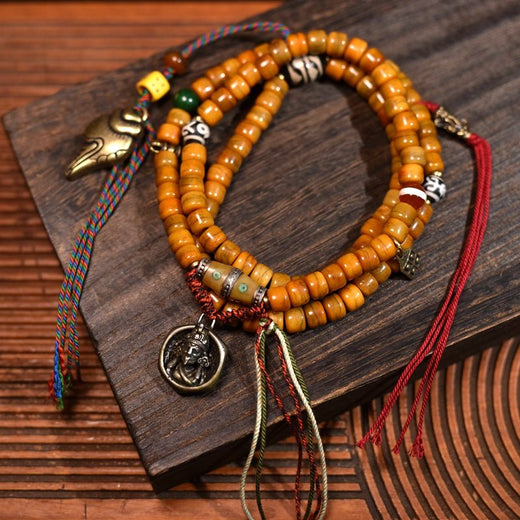
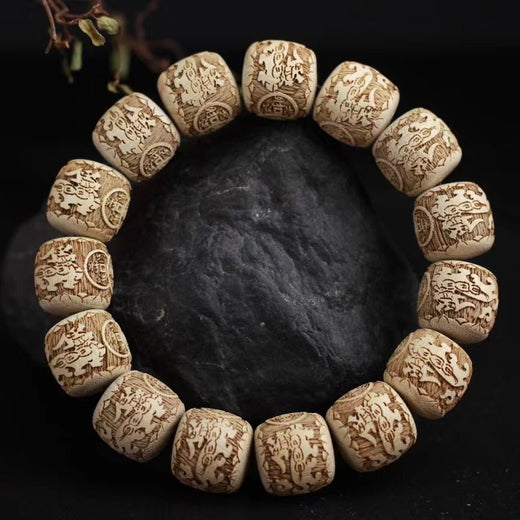
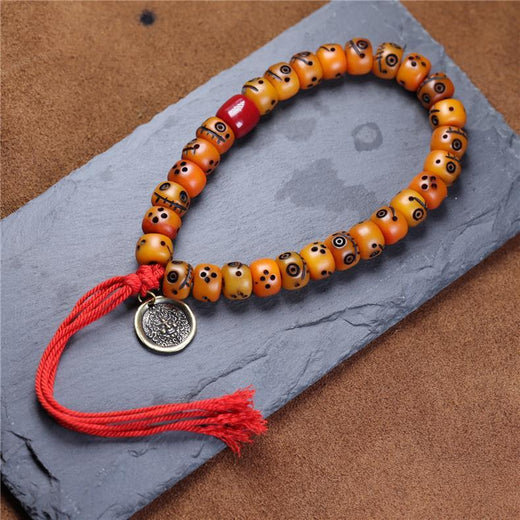
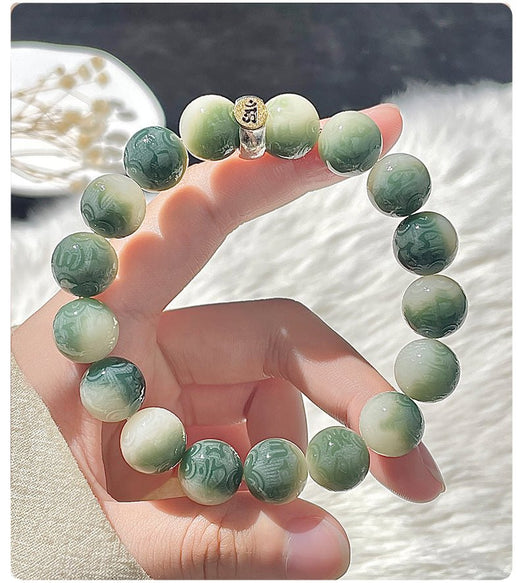
The spiritual insight isn't just for meditation cushions; it's for your desk, your commute, and your kitchen table. The tangible reminders you choose to surround yourself with, from a simple mantra to a beautifully crafted piece from our Tibetan jewelry collection, serve to deepen this daily practice of trust and awareness.

How To Spot the Real Thing Spiritual Jewelry That Resonates with 777's Presence
When you feel a connection to the deep spiritual presence signified by 777, you may be drawn to carry a physical object that embodies this resonance. Choosing a piece of authentic Tibetan jewelry is not like buying a fashion accessory; it is an act of intention, a way of selecting a companion for your spiritual journey.
Authenticity is paramount. True spiritual jewelry is defined by its materials, symbolism, and the intention with which it was made. Look for materials that have inherent meaning in Himalayan traditions. For instance, pure silver is associated with the moon, representing clarity, purity, and the wisdom of the feminine principle.
Turquoise is not merely a pretty stone; it is considered a sacred sky-stone, a bridge between heaven and earth that offers protection and healing. Coral, with its deep red hue, symbolizes life force, vitality, and compassion.
Beyond the materials, consider the sacred geometry and symbols carved or hammered into the piece. An Endless Knot (shrivatsa) represents the interconnectedness of all things and the endless cycle of cause and effect—a perfect reminder of the karmic harmony that 777 points toward.
A piece featuring the mantra "Om Mani Padme Hum" carries the presence of universal compassion, aligning your focus with the Bodhisattva Avalokiteshvara. The craftsmanship itself is a form of meditation. When you browse our curated selection of authentic pieces, notice the hand-hammered details and the subtle imperfections that speak of a human touch.
These items are often crafted by artisans in the Kathmandu Valley, individuals whose skills have been passed down through generations and whose work is infused with devotion. Choosing a piece is an intuitive process.
Let your eyes soften and see which symbol or stone calls to you. That is the one that holds the specific quality you need to support your path at this moment.
How to Use Your Talisman: A Simple Practice for Integrating 777's Wisdom
Once you have chosen a piece of spiritual jewelry that resonates with you, it becomes more than an ornament. It is a tool for practice, a focal point for your intention. Integrating its presence into your daily life can be done through a simple, mindful ritual.
This practice helps bridge the gap between seeing the external sign of 777 and embodying its internal wisdom. The key is to transform a passive observation into an active engagement with your spiritual path.
Follow these steps each morning, or anytime you need to recenter yourself:
Step 1: Set Your Intention (Sankalpa). Before you put on your bracelet, ring, or necklace, hold it in your hands. Close your eyes and take one deep breath. Ask yourself: "What quality do I wish to cultivate today?" You might choose one of the Seven Factors of Enlightenment, such as "tranquility" or "joy." State your intention clearly in your mind: "Today, I will move with tranquility." — explore our angel number jewelry collection for authentic pieces.
Step 2: Mindful Placement. As you place the jewelry on your body, do it with complete presence. Feel the coolness of the metal or stone against your skin. Notice its weight. See the light reflecting off its surface.
This simple act of mindful contact grounds you in the present moment and physically seals your intention for the day.
Step 3: The "Seven Breaths" Anchor. Throughout the day, whenever you notice your jewelry or see the number 777, use it as a cue to pause and take seven conscious breaths. Inhale slowly, bringing your awareness to your intention.
Exhale slowly, releasing any tension or distraction. This micro-practice takes less than a minute but can completely shift the quality of your day, pulling you back from chaos into your centered, intentional self.
Step 4: Evening Reflection. Before you take the piece off at night, hold it once more. Briefly reflect on your day. When were you able to embody your intention? When did you forget? Offer gratitude for the moments of awareness, without judgment for the moments of forgetfulness.
This completes the cycle and strengthens your practice for the following day. This ritual transforms your chosen object into a powerful spiritual ally. The full range of authentic Buddhist artifacts available can serve as profound supports for your practice.
Common Questions About the 777 Angel Number
As you begin to work with the presence of 777, questions naturally arise. Here are answers to some of the most common inquiries, viewed through the lens of authentic Buddhist wisdom to provide you with a closer, more grounded understanding.
Is 777 a sign from my guardian angel?
While the term "angel" is common in many spiritual traditions, Tibetan Buddhism frames this experience differently. Rather than a message from an external entity, seeing 777 is understood as a communication from your own deepest consciousness—your innate Buddha-nature.
It is the voice of your own awakened potential reminding you of the path. Think of it less as an external messenger and more as an internal compass, guiding you toward the clarity, wisdom, and compassion that already exist within you.
What should I do immediately after seeing 777?
The most powerful immediate action is to pause. The sign is a call to presence. Resist the urge to immediately search for external meaning and instead turn your attention inward. The simple "Seven Breaths" practice is ideal: stop what you are doing, close your eyes if possible, and take seven slow, deliberate breaths.
Inhale peace, exhale stress. This act grounds you in the present moment and opens a space for intuitive insight to arise naturally, allowing the message to be felt rather than just intellectually understood.
Does 777 relate to love and relationships?
Yes, but perhaps in a more profound way than simple romantic luck. In the context of the Dharma, 777 points toward the perfection of loving-kindness (metta) and compassion (karuna). It may be a sign that you are ready to heal old relationship wounds, to practice deeper forgiveness, or to approach your connections with others from a place of wisdom and non-attachment.
It encourages you to see the divine nature in others and to cultivate relationships that support mutual spiritual growth, based on shared values and unconditional positive regard.
Can 777 be a warning?
It is less a "warning" of impending doom and more a gentle but firm "invitation to awareness." If you have been acting out of alignment with your values—perhaps engaging in gossip, acting from greed, or neglecting your spiritual practice—seeing 777 can be a course-correction.
It's a reminder to check in with the Seven Factors of Enlightenment. Are you acting with mindfulness? Is there equanimity in your heart? It calls you back to your center, urging you to realign your actions, speech, and mind with a more wholesome and beneficial path before you stray too far.
How is the Buddhist view of 777 different from other spiritualities?
The primary difference lies in the source of the message and the prescribed action. Many New Age interpretations focus on guidance from external beings (angels, spirit guides) and often link the number to material gain or luck.
The Buddhist perspective is profoundly empowering and internal. It posits that the wisdom is already within you (your Buddha-nature). The number is simply a reflection of your own readiness to awaken. The path forward is not to wait for a miracle, but to actively engage in time-tested practices like meditation and mindfulness to cultivate the qualities the number represents.
Where can I find authentic items that carry this spiritual presence?
Authenticity is key. Look for sources that honor the traditions from which these sacred symbols originate. An authentic piece is made with intention, using traditional materials and craftsmanship. It is more than a product; it is a vessel of lineage and devotion.
Our shop is dedicated to preserving these traditions, offering handcrafted pieces made by artisans in the Himalayan region. Each item is chosen not only for its beauty, but for its spiritual integrity, ensuring it can serve as a true support for your practice.
Your Next Step on the Path of Awareness
The repeated appearance of 777 in your life is not an accident. It is a profound invitation from your own deepest wisdom to awaken. It is a sign that you are ready to walk your path with greater intention, clarity, and trust.
This number serves as a key, unlocking the door to the Seven Factors of Enlightenment and encouraging a life of balance, insight, and profound peace. You are being affirmed on your journey. Your efforts, your practice, and your quiet yearning for truth are being recognized.
Now, the next step is to answer the call with conscious action, integrating this sacred awareness into the fabric of your daily life.
Your journey of awakening is supported by intention and practice. To find a tangible symbol to serve as a constant reminder of your path and your potential, we invite you to explore our complete collection of handcrafted Tibetan jewelry.
Each piece is a a sign of the timeless wisdom that 777 represents.
For deeper context on the tradition behind this practice, see Tibetan Buddhist tradition on Wikipedia.
Keep reading