Hot
The Rise of Tibetan Spiritual Jewelry in Modern Wellnes
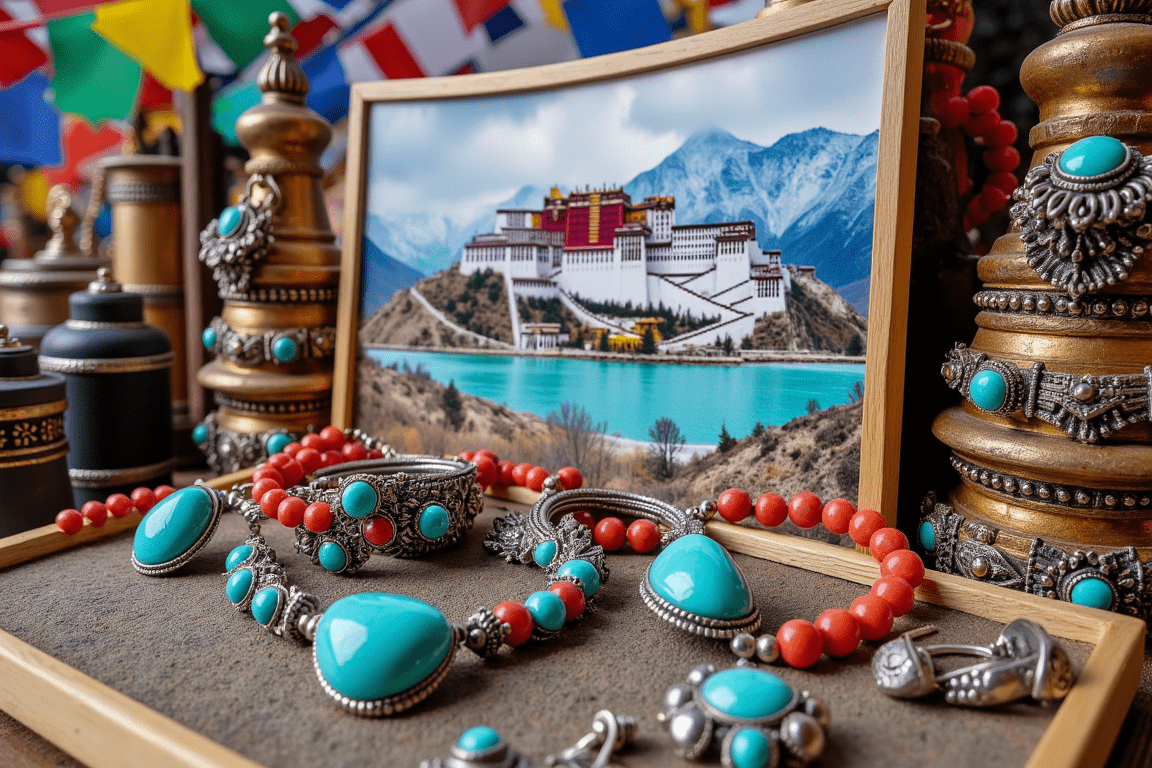
You find yourself at your desk, the blue light of the screen casting a familiar glow. You've scrolled through miles of digital content, each image and headline blurring into the next. There's a subtle but persistent hum of anxiety, a feeling of being untethered, floating in a sea of information without an anchor. You reach for your coffee, but your hand brushes against something solid and cool on your wrist—a bracelet of turquoise and silver. You pause. You run your thumb over the smooth, irregular surface of a stone, feeling its weight and its history. For a brief moment, the digital noise fades. You are not just a consumer of content; you are a physical being, connected to something real, something ancient. This small, deliberate act of touch brings you back into your body, back into the present moment. This is the quiet power that Tibetan spiritual jewelry is reintroducing into our modern lives—not as a fleeting trend, but as a tangible tool for grounding and reconnection.

What It Really Is: An Echo of the Himalayas
To understand Tibetan spiritual jewelry, you must first understand the landscape that birthed it: the vast, high-altitude plateau of Tibet, a place known as the "Roof of the World." This is not merely decorative adornment. It is a living tradition, a form of spiritual expression and protection forged over centuries in one of the most extreme environments on Earth. Its origins are deeply interwoven with the pre-Buddhist Bön religion, which revered the powerful spirits of nature—the mountains, lakes, and sky. The materials used were not chosen for aesthetics alone; they were chosen for their perceived power and connection to these elemental forces.
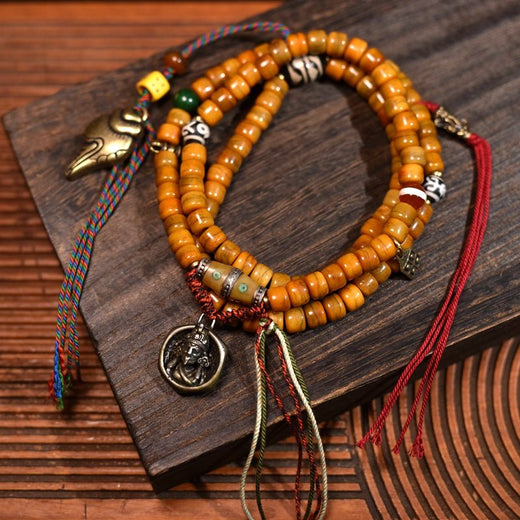
Turquoise, with its sky-blue to deep green hues, was considered a piece of the heavens fallen to earth, a sacred stone offering protection and symbolizing the boundless sky. It was mined from the Himalayan mountains for millennia. Red coral, not native to Tibet, was a precious commodity traded over treacherous mountain passes from the distant seas. It came to represent life force, blood, and vitality, a potent symbol in a land where life could be harsh. Amber, another traded treasure, was believed to hold the sun's presence, while Dzi beads, etched agate stones of mysterious origin, were considered the most powerful talismans of all, sometimes said to be gifts from the gods themselves.
As Buddhism arrived from India around the 7th century, these ancient animistic beliefs did not disappear. Instead, they merged. The artisans of Lhasa, working in the shadow of the sacred Jokhang Temple, began incorporating Buddhist iconography into their work. The Eight Auspicious Symbols, mantras, and depictions of deities found their way into silverwork and beadwork. The jewelry of the Khampa people of Eastern Tibet (Kham) became known for its bold, powerful designs, reflecting their warrior heritage, while pieces from Central Tibet might exhibit more refined, intricate metalwork. This jewelry became your portable wealth, your spiritual shield, and your identity marker, telling the story of your lineage, your region, and your devotion. Each piece was, and still is, a microcosm of the Tibetan worldview—a fusion of earthly materials and transcendent wisdom.
The Deeper Meaning: A Language of Symbols
Every element of authentic Tibetan jewelry is imbued with layers of meaning, forming a rich symbolic language that speaks directly to the core tenets of the Buddhist path. When you wear these pieces, you are carrying more than just stone and metal; you are carrying a map of the journey toward enlightenment. The symbols are not just decorative motifs; they are active reminders of the principles you aspire to cultivate within yourself.
Perhaps the most prominent are the Eight Auspicious Symbols, or Ashtamangala. The Endless Knot, with its interwoven lines and no beginning or end, teaches you about the interdependence of all phenomena and the union of wisdom and compassion. The Dharma Wheel, or Dharmachakra, represents the Buddha's teachings, the path that leads out of suffering. Seeing it on your wrist can be a reminder of right action and right thought. The Lotus Flower, which grows from mud to blossom in pristine beauty, symbolizes your own potential for purity, spiritual awakening, and detachment from the mire of worldly concerns.
Mantras are another central element. The six-syllable mantra of Chenrezig (the Buddha of Compassion), "Om Mani Padme Hum," is the most common. It is not a simple phrase but a universe of meaning. Om purifies pride, Ma purifies jealousy, Ni purifies passion and desire, Pad purifies ignorance, Me purifies greed, and Hum purifies hatred. Chanting it, or simply tracing the syllables on a prayer wheel pendant, is a profound practice of inner purification. The materials themselves carry their own presence. Turquoise is for healing and protection. Deep red coral is for vitality and overcoming obstacles. Lapis Lazuli, with its deep blue color and golden flecks, is connected to the Medicine Buddha and the wisdom of the mind. When you choose a piece, you are not just choosing a color or a shape; you are choosing an intention, a specific quality of the enlightened mind that you wish to call into your life. You can explore the rich iconography of the Eight Auspicious Symbols across our complete collection of handcrafted pieces.
Real Benefits for Modern Life: Your Tangible Anchor
In a life often lived through screens and abstract concepts, the physicality of Tibetan jewelry offers a powerful antidote. Its benefits are not remarkable in a supernatural sense, but deeply practical and psychological, serving as potent tools for cultivating mindfulness and intention in your daily routine. Think of your piece not as a passive object, but as an active partner in your wellness journey.
The most immediate benefit is its function as a mindfulness anchor. Imagine you are in a stressful meeting or navigating a difficult conversation. Your mind begins to race, and your body tenses. Instead of getting lost in the storm of your thoughts, you can bring your attention to the feeling of your mala beads against your skin. The cool, solid weight of the stones, the texture of the silver—this simple sensory input grounds you in the present moment. It is a physical, non-verbal cue to your nervous system that says, "Come back. Be here now. Breathe." This small act can break the cycle of anxiety and allow you to respond with greater clarity and composure.
This jewelry also becomes a vessel for your intentions. When you put on your bracelet or necklace in the morning, you can take a moment to infuse it with a purpose for the day. Perhaps you hold your Endless Knot pendant and set the intention to see your connection to others, even those you find challenging. Or you might touch your turquoise beads and set the intention to speak your truth with clarity and compassion. The jewelry then acts as a constant, subtle reminder throughout the day. Every time you catch a glimpse of it, you are gently nudged back toward your chosen intention, reinforcing the neural pathways for that new way of being. It transforms a passive accessory into an active tool for personal transformation, helping you bridge the gap between who you are and who you aspire to be.

How to Choose Your Authentic Piece
Navigating the world of spiritual jewelry requires a discerning eye and an open heart. The market is flooded with mass-produced imitations, but an authentic piece carries a presence that cannot be replicated. Choosing correctly is about honoring the tradition and finding a tool that will genuinely support your practice. Here is what you should look for. — explore our Tibetan jewelry collection for authentic pieces.
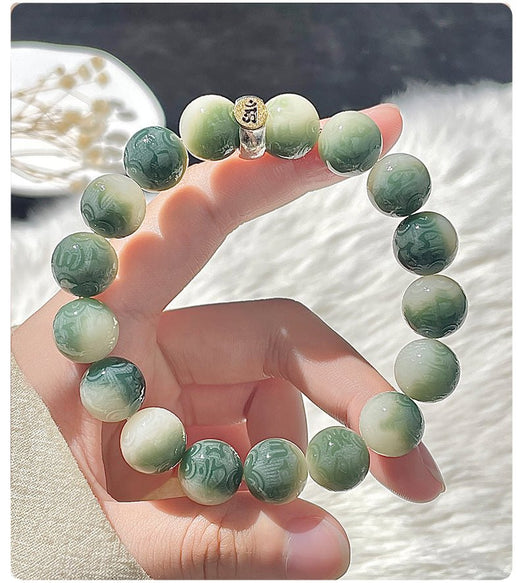
First, consider the material integrity. Real Tibetan turquoise is often a deeper, more varied color than the uniformly bright blue of dyed howlite, a common substitute. It may have a "spiderweb" matrix of other minerals running through it, which is a sign of its natural origin. Authentic red coral, especially older pieces, has a deep, rich color and a subtle texture; plastic or glass imitations feel light and lifeless in comparison. Feel the weight of the silver. Hand-worked Tibetan silver often has a substantial feel and may feature traditional techniques like repoussé (hammering designs from the reverse side) and filigree. These materials have a life and character of their own that synthetics lack.
Next, look for the artisan's footprint. True handcrafted jewelry is perfectly imperfect. Mala beads may have slight variations in size or shape. The knots tied between them, a traditional feature to create space for your fingers during mantra recitation, will be tight and even but may show the slight irregularity of a human hand. Mass-produced items are uniform and flawless, lacking the soul and character of a piece made by a skilled artisan who has poured their intention and skill into their work. This human touch is an essential part of the object's spiritual presence.
Finally, and most importantly, listen to your intuition. Which symbol resonates with your current life situation? Are you seeking the protection of a Vajra, the wisdom of Manjushri's sword, or the boundless compassion represented by the Lotus? The piece that is right for you will often feel like it is calling to you. It will catch your eye and hold it. Trust that feeling. It is your own inner wisdom guiding you to the tool you need for the next step on your path. When you're ready to find a piece that speaks to your path, we invite you to browse our curated selection of authentic Tibetan treasures.
How to Use Your Jewelry with Intention
Once you have chosen your piece, your relationship with it truly begins. To unlock its potential as a spiritual tool, it's important to use it with mindfulness and respect. This doesn't require elaborate ceremony, but rather a simple, heartfelt intention to connect with its purpose. Here are a few practices to integrate your jewelry into your life.
When your piece first arrives, take a moment to cleanse and consecrate it. This is about clearing any residual energy from its journey to you and attuning it to your own intentions. You can do this simply by leaving it in the light of a full moon overnight. Alternatively, you can pass it through the smoke of cleansing herbs like juniper—a traditional incense used in Tibetan monasteries—or sage. As you do this, hold the piece in your hands and silently or aloud, state your intention for it. For example, "May this mala be a tool for compassion," or "May this turquoise protect my energy and encourage clear communication." This simple act forges a personal bond between you and your jewelry.
Integrate it into a daily ritual. Instead of just throwing it on as you rush out the door, make the act of putting on your jewelry a mindful moment. As you clasp the necklace or slide the bracelet over your wrist, take one conscious breath. Recall the intention you set for it. This small pause can set the tone for your entire day, transforming a mundane habit into a sacred act of self-remembrance.
If you have a 108-bead mala, you can use it for mantra meditation. Hold the mala in your right hand, draped between your middle and index fingers. Starting with the bead next to the larger "guru" bead, use your thumb to pull one bead towards you for each recitation of your chosen mantra. When you have completed all 108 beads and reached the guru bead again, you can pause, or if you wish to continue, turn the mala around and go back in the direction you came from. You do not cross over the guru bead out of respect for the teacher-student relationship it represents. This rhythmic, tactile practice helps to focus the mind, calm the body, and deepen your connection to the mantra's meaning.
Common Questions About Tibetan Jewelry
1. Can I wear Tibetan spiritual jewelry if I'm not a Buddhist?
Absolutely. The universal themes embodied in this jewelry—compassion, wisdom, interdependence, and protection—are accessible to people of all faiths and backgrounds. The key is to approach it with respect, not as a mere fashion accessory, but as an object from a living spiritual tradition. When you wear a piece, you are connecting with the culture and values it represents. We encourage you to learn about the meaning of the symbols you choose and wear them with an intention that honors their origin. It is an act of cultural appreciation, not appropriation, when done with mindfulness and a genuine desire to connect with its deeper significance.
2. What is the significance of the 108 beads on a mala?
The number 108 is sacred in many Eastern traditions, including Buddhism. There are several interpretations of its significance. It is said there are 108 kleshas, or earthly afflictions and defilements, that one must overcome to attain enlightenment; reciting a mantra 108 times is a practice to purify them. In yogic philosophy, there are said to be 108 primary energy lines, or nadis, that converge to form the heart chakra. Astronomically, the distance between the Earth and the Sun is approximately 108 times the Sun's diameter. The number represents the entirety of existence, and completing a full cycle on your mala is a way of holding that cosmic totality in your hands.
3. How do I know which symbol or stone is right for me?
This is a deeply personal choice, and your intuition is your best guide. Begin by reflecting on what you are seeking in your life right now. Do you need more grounding and stability? A piece with earthy stones like jasper or lava might be beneficial. Are you working on opening your heart and cultivating compassion? A lotus symbol or a mala made of rose quartz could support that. Are you navigating a major life change and need strength and protection? A Dzi bead or a Vajra symbol might resonate. Research the meanings, look at different designs, and notice which ones you feel a natural pull towards. The right piece will feel like an old friend. As you learn more, you can see how these symbols are brought to life in our artisan jewelry.
4. Is it okay to wear multiple pieces of spiritual jewelry at once?
Yes, it is perfectly fine to wear multiple pieces. Many Tibetans wear several necklaces, bracelets, and rings, creating a layered tapestry of protection and intention. Think of it as creating your own personal mandala of presence. You might choose to wear a turquoise bracelet for protection on one wrist and a sandalwood mala for calm on the other. You could pair a compassion-focused "Om Mani Padme Hum" pendant with an Endless Knot ring to remind you of interdependence. The key is to be intentional. Choose pieces that complement each other and align with your overall purpose for the day.
5. What are Dzi beads, and why are they so highly valued?
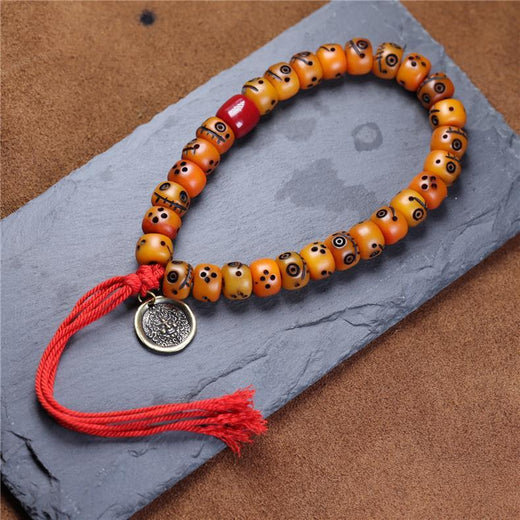
Dzi (pronounced "zee") beads are ancient agate stones etched with distinctive patterns, most commonly circles or "eyes." Their exact origin is shrouded in mystery, with Tibetan folklore suggesting they are not man-made but are of divine origin—fallen from the sky or found in the earth. They are considered the most powerful protective amulets in Tibetan culture, believed to ward off negativity, accidents, and disease. The number of "eyes" on a bead corresponds to different blessings; a 9-eyed Dzi, for example, is considered one of the most powerful, bringing immense good fortune. Their rarity, mysterious history, and remarkable spiritual reputation make them highly prized and sought after.
6. How should I care for and store my jewelry?
Treat your spiritual jewelry as a sacred object. When you are not wearing it, it's best to store it in a clean, special place, such as a dedicated pouch, a small box, or on your personal altar. This keeps it safe from damage and maintains its clarity. For most stones and metals, you can clean them gently with a soft, dry cloth. Avoid exposing materials like turquoise and coral to harsh chemicals, perfumes, or prolonged submersion in water, as they are porous and can be damaged. Periodically cleansing it, as described earlier, will keep its presence clear and potent. Caring for your piece with respect deepens your connection to it and honors its sacred purpose.
Your Next Step on the Path
You began this reading perhaps feeling that subtle disconnect, that longing for an anchor in the digital tide. Now you understand that Tibetan spiritual jewelry is far more than adornment. It is a bridge—a connection to an ancient lineage of wisdom, a tool for cultivating presence in your own life, and a physical expression of your deepest intentions. Each knot, each bead, each symbol carries a story and a purpose, waiting to become part of your own journey.
Wearing these pieces is an invitation to walk through your days with more mindfulness, compassion, and courage. It is a quiet rebellion against the noise of modern life, a commitment to your own inner peace. Your journey with these sacred objects is deeply personal, and the right piece will feel like a key, unlocking a part of yourself you wish to nurture. The path begins not with a grand gesture, but with a small, intentional choice. We invite you to take that first step. Begin your exploration here and find the piece that is waiting for you.
Keep reading