buddhist-jewelry
Bodhi Seed Malas: Ancient Wisdom, Daily Empowerment
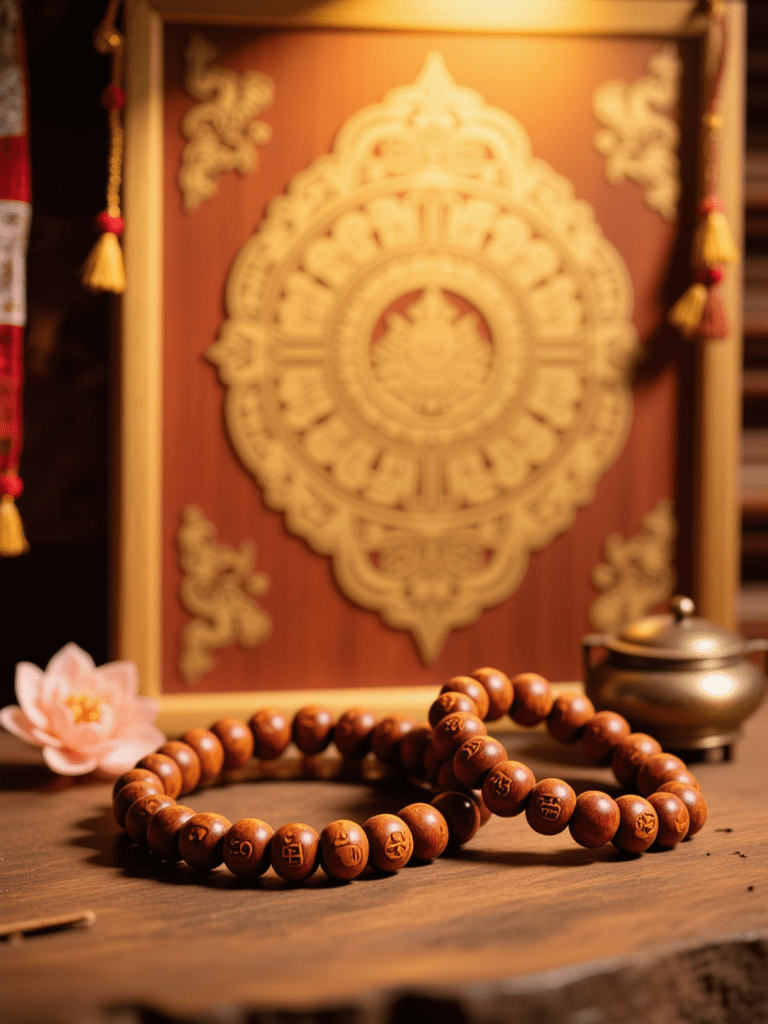
You settle onto your cushion, the intention for stillness clear in your mind. You close your eyes, take a deep breath, and try to release the day. But the mind has other plans. An email you forgot to send surfaces.
A snippet of a conversation loops endlessly. The grocery list writes itself. Your focus, which felt so solid moments ago, splinters into a dozen different directions. You grasp for an anchor, something tangible to pull you back from the mental chatter and into the quiet presence you seek.
It's in this very human moment of distraction that the true power of a Bodhi seed mala reveals itself—not as a piece of jewelry, but as a lifeline back to your own innate wisdom.
This string of 108 seeds is more than a counting tool; it is a direct, physical link to a 2,500-year-old lineage of awakening. Each bead that passes through your fingers is a step on a well-trodden path, a quiet assertion of your commitment to yourself.
It doesn't quietly strike the mind into silence, but it gives your hands a sacred task, grounding your restless focus and allowing your attention to finally settle. It is your partner in the practice of returning, again and again, to the present moment.
Crafted by hand at partner monasteries in Nepal and Tibet, each piece is made by skilled artisans following traditional Himalayan methods, then consecrated by resident monks.

What It Really Is: The Authentic Roots of an Awakening Tool
To truly understand a Bodhi seed mala, you must journey back to a specific place and moment: beneath a sacred fig tree, the *Ficus religiosa*, in what is now Bodh Gaya, India. It was here, around 500 BCE, that Siddhartha Gautama attained enlightenment and became the Buddha.
The name itself, *Bodhi*, is a Sanskrit word meaning "awakening" or "enlightenment." The tree became known as the Bodhi Tree, and its seeds became profound symbols of the potential for enlightenment that exists within all beings.
This is the heart of the mala's story.
However, a crucial piece of insider knowledge is that the vast majority of "Bodhi seed" malas you encounter today do not come from the *Ficus religiosa*. That tree is sacred and protected, its seeds not harvested commercially.
Instead, the term "Bodhi seed" has come to refer to seeds from several different plants that are used for practice, each carrying the symbolic weight of the original. The most prized and sought-after variety in Tibetan Buddhism is the Phoenix Eye Bodhi seed, which comes from the *Ziziphus budhensis* tree.
These trees grow in a very limited region, primarily in the Timal area of Kavrepalanchok District in central Nepal. This specific origin is not only trivia; it is deeply woven into the spiritual fabric of the Himalayas.
The local Tamang people have been the custodians of these trees for generations, and monasteries like the great Namo Buddha Stupa, a pilgrimage site where a prince offered his body to a starving tigress, are intrinsically linked to the harvesting and blessing of these sacred seeds.
The use of a 108-bead strand, or *japa mala*, was adopted from ancient Indian traditions and integrated deeply into Buddhist practice as it spread to Tibet, largely through the influence of masters like Padmasambhava (Guru Rinpoche) in the 8th century.
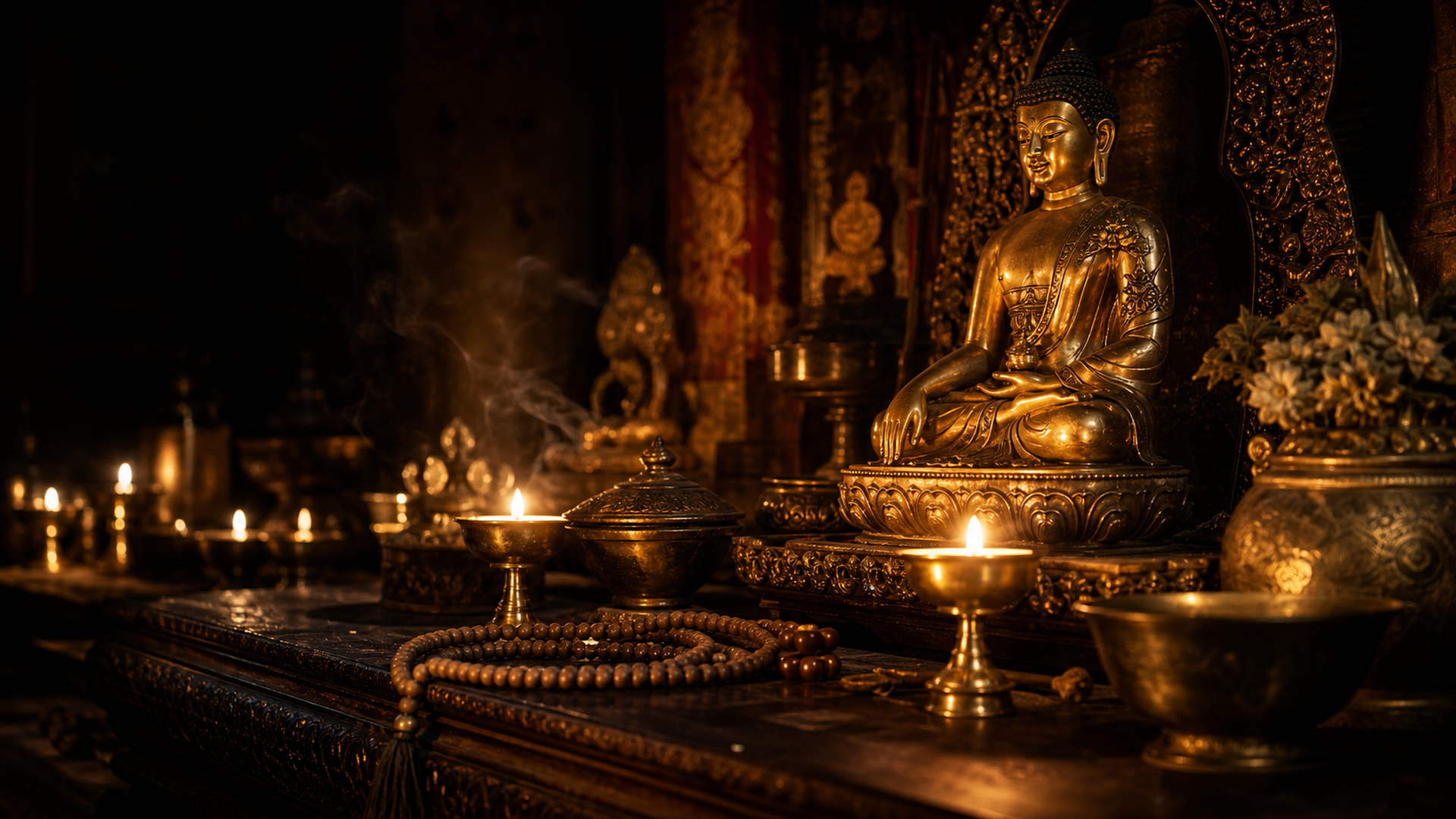
The mala became an indispensable tool, especially in Vajrayana Buddhism, for keeping count of mantra recitations, prostrations, and circumambulations. The Bodhi seed, in particular, was chosen not for its decorative quality but for its profound symbolism.
Holding a string of these seeds is to hold 108 reminders of the Buddha's own journey and your own capacity to follow that same path to awakening. These sacred prayer beads are not mere objects; they are historical artifacts, born of a specific geography and imbued with centuries of devotion.
The Deeper Meaning: What Each Bead Represents on Your Path
A Bodhi seed mala is a microcosm of the spiritual journey, a tangible philosophy you can hold in your hand. Its meaning extends far beyond its function as a simple counting device. Every element is intentional, designed to guide your awareness inward and connect you to the core tenets of the Dharma.
When you pick up your mala, you are engaging with a rich weave of symbolism that has been refined over centuries.
The seed itself is the most potent symbol. It represents the Buddha's enlightenment, a constant, physical reminder of the ultimate goal of your practice. Yet, it is also a seed—a symbol of potential. It reminds you that the capacity for awakening, your own "Buddha-nature," is not something you need to acquire but is already present within you, waiting to be nurtured and realized.
As you use your mala, the seeds begin to change. They absorb the natural oils from your skin, the energy of your intention, and the resonance of your mantras. Over months and years, they darken and develop a deep, smooth patina.
This physical transformation is a powerful teaching on impermanence (*anicca*), showing you how everything, including yourself, is in a constant state of flux. Your mala becomes a living diary of your practice, its darkening color a a sign of your dedication.
The number of beads, 108, is sacred in many Eastern traditions. In Buddhism, it is often said to represent the 108 afflictions or "kleshas" (defilements of the mind like greed, hatred, and ignorance) that we must overcome to attain enlightenment.
With each mantra you recite, you are seen as transforming one of these afflictions into pure wisdom. The 109th bead, which is larger and often decorative, is known as the guru bead, the *sumeru*, or the stupa.
It marks the start and end of a cycle of recitation. It symbolizes the guru or the ultimate reality, the wisdom that is both the source and the culmination of the path. You never cross over the guru bead out of respect; instead, you turn the mala around and go back the other way, acknowledging that the student-teacher relationship is central to the journey.
The tassel or counter strings attached to the guru bead represent the roots of the lotus plant, signifying the path from the mud of samsara to the blossom of enlightenment, and the interconnectedness of all beings.
Real Benefits for Modern Life: Beyond the Cushion
While its origins are ancient, the benefits of using a Bodhi seed mala are profoundly relevant to the challenges you face today. This isn't about abstract spiritual gains; it's about practical, tangible shifts in your daily experience.
The mala acts as a bridge between your formal practice and your life in the world, empowering you to carry your intentions off the cushion.
One of the most immediate benefits is **kinesthetic grounding**. When your mind is caught in a spiral of anxiety, replaying a past event, or worrying about the future, your thoughts are abstract and disembodied.
The simple, repetitive motion of rolling a bead between your thumb and finger is a powerful somatic anchor. It pulls your awareness out of the chaotic world of thought and into the physical reality of the present moment.
You feel the smooth, organic texture of the seed, the slight tension of the cord, the subtle click as one bead gives way to the next. This sensory input interrupts the thought loop and gives your nervous system a signal to settle.
It's a form of active mindfulness that you can practice anywhere, if you are in a stressful meeting or waiting in a long line.
The mala also instills **rhythmic focus**. When you chant a mantra, it's easy for the mind to either rush ahead or drift away completely. The mala acts as a regulator, a metronome for your recitation.
Each bead corresponds to one repetition, creating a steady, calming rhythm that helps synchronize your breath, voice, and mind. This disciplined pacing prevents your practice from becoming mechanical and keeps your intention sharp. Over time, this rhythm becomes deeply ingrained.
Your body learns what it feels like to be focused and calm, making it easier to access that state even without the mala in hand.
Finally, a Bodhi seed mala is a powerful tool for **habit formation and intentional living**. It becomes a conditioned stimulus for mindfulness. Just seeing it on your nightstand or feeling its weight in your pocket can trigger a mental cue to pause, breathe, and reconnect with your purpose.
When you wear it, it’s not only an accessory; it is a wearable reminder of your highest aspirations. It transforms from a practice tool into a piece of wearable intention, a quiet companion that, much like our full range of authentic Buddhist jewelry, serves as a personal touchstone throughout your day.
It’s a prompt to choose patience in traffic, to listen more deeply in a conversation, or to simply appreciate a moment of quiet in a busy day.

How to Choose an Authentic Bodhi Seed Mala
Selecting a Bodhi seed mala is an intimate process. This is an object that will become a close companion on your spiritual path, absorbing your energy and bearing witness to your practice. Therefore, choosing an authentic, well-crafted mala is essential.
An authentic piece not only supports your practice but also connects you to the lineage and craftsmanship it represents. Here’s what you should look for.
First, understand the **type and quality of the seed**. As mentioned, the most revered in Tibetan traditions is the Phoenix Eye Bodhi (*Ziziphus budhensis*). When inspecting these, look for the small, distinct "eye" on each seed.
This should be a natural marking, not something etched or painted on. The seeds should have a natural, slightly irregular shape and a pleasant, organic texture. Be wary of seeds that are perfectly uniform, glossy, or feel like plastic; they may be artificial or heavily treated.
Another popular type is the Moon and Stars Bodhi (*Daemonorops jenkinsiana*), which features one larger hole ("moon") and many tiny dots ("stars"). Authenticity here lies in the natural distribution and clarity of these markings.
Pay close attention to the **aging and patina**. New, untreated Bodhi seeds are typically a light, creamy beige color. They darken naturally over time with use. Some sellers artificially dye or oil seeds to make them look old and sell them at a premium.
An authentically aged mala will often have an uneven patina, with some beads being slightly darker than others, reflecting the natural process. A brand-new mala should look new. The beauty is in earning the patina yourself, letting the mala evolve with you.
Exploring an authentic collection of Tibetan Buddhist malas can help you see these subtle but important qualities firsthand.
Finally, inspect the **construction**. A durable mala is strung on a strong, multi-strand cord. Traditionally, knots are tied between each bead. These knots serve a practical purpose: they provide a small space that makes it easier to manipulate each bead with your thumb, and they prevent all the beads from scattering if the cord ever breaks.
Check the guru bead; it should be securely attached, and the hole should not be so large that the knots can slip through. The overall feel should be sturdy and supple, able to withstand years of dedicated practice.
How to Use Your Mala for Mantra and Meditation
Using a mala is a simple, beautiful, and deeply personal practice. While there are traditional guidelines, the most important element is your own sincere intention. The following steps provide a foundation for integrating a Bodhi seed mala into your meditation or daily mindfulness routine.
1. **Find Your Seat and Set Your Intention:** Begin by finding a comfortable posture, whether on a cushion or a chair, with your spine upright but not rigid. Take a few deep breaths to settle your body and mind.
Hold your mala gently in both hands in front of your heart. Take a moment to set a clear intention for your practice. This could be a dedication for the well-being of others, a desire for greater patience, or simply the wish to be fully present.
2. **Hold the Mala Correctly:** The mala is traditionally held in the left hand, which is associated with wisdom, though some specific practices call for the right. Let the mala drape over your middle finger.
The index finger, sometimes said to represent the ego, is typically not used to touch the beads; it can be extended gently away from the others. Your thumb will be the finger that moves the beads.
3. **Begin the Recitation:** Start with the first bead next to the guru bead. As you recite your chosen mantra one time, use your thumb to pull that bead towards you. Then, move your thumb to the next bead and repeat the mantra.
A widely used and powerful mantra is that of Chenrezig, the Buddha of Compassion: *Om Mani Padme Hum*. This simple practice of coordinating breath, sound, and touch focuses the mind and prevents it from wandering.
4. **Completing a Round:** Continue this process, bead by bead, until you have completed a full circle and your thumb arrives back at the guru bead. This marks one round of 108 repetitions. At this point, you do not cross over the guru bead.
Instead, as a sign of respect for the teacher and the teachings it represents, you pause. You can take a moment of reflection. Then, if you wish to continue, simply flip the mala around and go back in the direction you came, starting with the bead that was last.
Common Questions About Bodhi Seed Malas
Why do Bodhi seed malas darken over time?
The darkening of Bodhi seeds is a natural and cherished process. The seeds are porous and absorbent. As you handle your mala during practice, they absorb the natural oils from your skin, as well as moisture and dust from the environment.
This gradual absorption creates a beautiful, deep patina that is unique to you and your journey. This physical change is highly symbolic; it reflects the accumulation of your practice, your presence, and your intentions.
An aged, well-loved mala is a sign of dedication and is considered more potent and precious than a new one. It becomes a living record of your commitment to the path.
Can anyone use a Bodhi seed mala, or is it only for Buddhists?
While the Bodhi seed mala has its roots deep in Buddhist tradition, its use as a tool for focus and mindfulness is universal. Anyone, regardless of their spiritual beliefs, can benefit from using a mala.
It is fundamentally a tool to help quiet the mind, focus intention, and cultivate calm. The key is to approach it with respect for its origins. You don't need to be a Buddhist to use a mala for meditation or mantra, but understanding its history and symbolism will undoubtedly deepen your connection to the practice and the object itself.
What should I do if my mala breaks?
In the Tibetan tradition, a mala breaking is not seen as a bad omen. On the contrary, it can be viewed as a positive sign. It can symbolize the breaking of a cycle of suffering, a karmic completion, or a breakthrough in your practice.
It signifies that you have put a great deal of focus and intention into the mala. When it breaks, calmly gather all the beads. You can choose to have it restrung, often on a stronger cord, which can be a beautiful ritual of renewal and continuation of your practice.
Some people also choose to offer the beads to a sacred place, like a river or a stupa, or to place the guru bead on their altar as a reminder.
How do I care for and cleanse my mala?
Bodhi seeds are organic material and should be treated with care. To clean them physically, simply wipe them with a soft, dry cloth. You should avoid getting your mala wet, as water can cause the seeds to swell, crack, or mold over time.
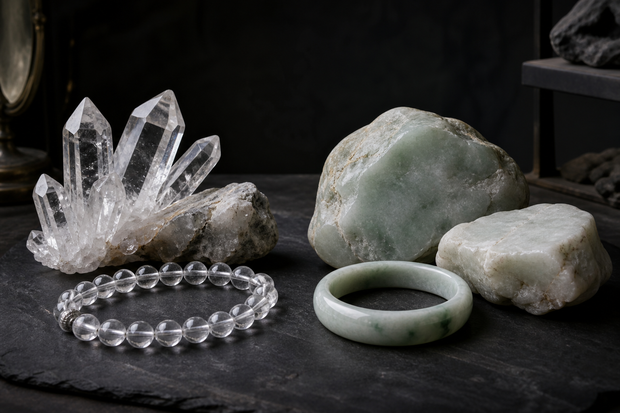
Cleansing your mala is also important, as it can absorb various influences from its environment. You can cleanse it by letting it rest in moonlight (especially during a full moon), smudging it with the smoke of sage or juniper, or placing it on an altar near crystals like selenite or clear quartz.
Storing it in a soft pouch when not in use will also protect it.
Is it okay to wear my mala as a necklace or bracelet?
Yes, it is perfectly acceptable to wear your mala. Many practitioners wear their malas around their neck or wrapped around their wrist. Doing so serves as a constant, physical reminder of their intention and practice throughout the day.
However, it's important to always treat it with respect. It is a sacred tool, not only a fashion accessory. You should avoid wearing it during activities where it might get damaged or dirty, such as exercising, showering, or sleeping.
When you wear it, let it be a private touchstone for your own mindfulness.
What's the difference between a Bodhi seed mala and one made of sandalwood or crystal?
The material of a mala contributes its own specific character and symbolism to your practice. Bodhi seed is unique because it directly symbolizes the ultimate goal of the Buddhist path: enlightenment (*bodhi*). Its primary quality is its connection to the story of the Buddha's awakening.
Other materials carry different properties. Sandalwood, for example, is known for its calming and soothing scent, which can aid in relaxation and focus. Crystal malas, such as those made of amethyst or rose quartz, are chosen for their specific qualities—amethyst for spiritual awareness, rose quartz for compassion.
The choice of material is personal, but Bodhi seed remains singularly focused on the core concept of awakening, which is why it is so revered. Each material offers a unique presence, as you can see in our curated mala bead collection.
Your Next Step on the Path
You've journeyed through the history, symbolism, and practice of the Bodhi seed mala. You now understand that it is far more than a string of beads. It is a key that can unlock deeper focus, a companion that holds the story of your dedication, and a direct link to the timeless wisdom of the Buddha's own awakening.
It is a tool for transforming the distraction you feel in your opening meditation into profound presence, one breath and one bead at a time.
The next step is to find the mala that feels right in your hands, the one that resonates with your personal intentions. This is a deeply individual choice. We invite you to explore our carefully sourced and authentically crafted collection.
Let your intuition guide you to the partner that will accompany you on your unique path to peace and wisdom. Your journey of a thousand mantras begins with a single bead.
Keep reading