
bead-bracelets
Chinese Bead Bracelets: Traditional Motifs, Materials & Care
Chinese bead bracelets combine spherical mineral, wood, or botanical seed beads with sculpted mythological spacers such as the Pixiu, Dragon Turtle (Longgui), Qilin, and Wu Lou bottle gourd. Grounded in classical woodcarving, courtyard architecture, and monastic counting traditions, these wrist strands pair straightforward everyday proportions with centuries-old East Asian decorative motifs.

Traditional Animal & Symbol Motifs on Bead Bracelets
Understanding the sculpted centerpiece on a Chinese bead bracelet starts with recognizing the four primary classical figures most commonly carved into stone, hardwood, or brass-tone metal spacers:
| Traditional Motif | Visual Identification Cues | Historical & Folklore Background | Common Pairing Materials |
|---|---|---|---|
| Pixiu (Pi Yao) | Winged lion-like torso, prominent fangs, single or twin curved horns | Ancient imperial architectural guardian noted across Han and Ming tomb carvings | Matte black obsidian, tiger's eye, carved boxwood spacers |
| Dragon Turtle (Longgui) | Domed tortoise carapace joined to a whiskered dragon head | Classical emblem pairing tortoise steadiness with dragon civic rank motifs | Dark stone beads, rosewood, carved brass-tone centerpieces |
| Qilin (Kirin) | Slender scaled cervid body, cloven hooves, flowing flame curls | Ming/Qing scholarly courtyard emblem associated with upright conduct | Pale wood, agate-toned beads, compact metal cylinders |
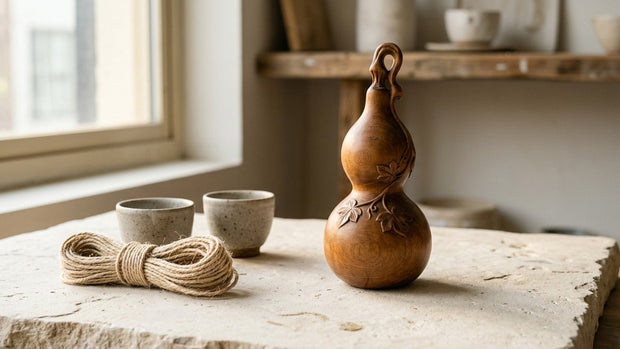
| Wu Lou (Bottle Gourd) | Distinctive waisted double-bulb silhouette | Classical travel flask and botanical motif tied to Taoist mountain lore | Boxwood, warm red cord wraps, mixed seed strands |
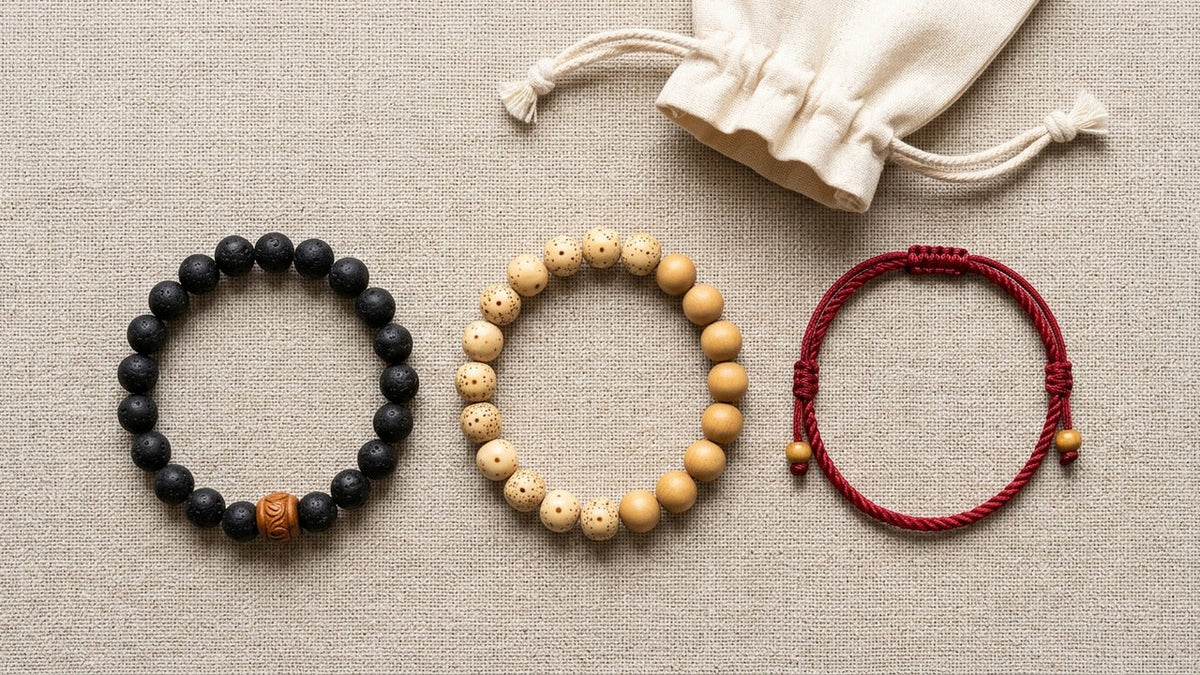
Alongside sculpted animal carvings, seasonal red cotton cord bracelets and woven Tai Sui year strands appear regularly in Chinese cultural gift boxes, marking milestone lunar years through calm color accenting rather than heavy metalwork. Explore classic animal and motif pieces across our carved cultural bracelets and Taoist-inspired jewelry collection.
Monk Strands vs. Everyday Single-Loop Wrist Bracelets
Shoppers comparing Chinese and Himalayan bead styles frequently notice overlap between monastic counting bracelets and contemporary casual wrist jewelry. Traditional devotional wrist strands, often cut with 18, 21, or 27 spherical beads, are shorter counting formats related to the 108-bead prayer mala (27 is one quarter of 108 and 18 is one sixth), allowing wearers to keep tactile rhythm discreetly during travel or daily reflection. Notice how unvarnished bodhi seed, sandalwood, and dark ebony wrist malas emphasize quiet uniformity and natural surface patina over metallic accents.
By contrast, contemporary Chinese motif bracelets commonly string 12mm to 16mm round mineral beads onto thick multi-core elastic cord anchored by one prominent carved guardian bead or barrel spacer. Compare natural seed formats and knotted strands inside our mala beads collection or browse the complete jewelry catalog.
Left Wrist vs. Right Wrist: How Cultural Customs Explain It
Many readers wonder which wrist is traditionally preferred for a carved motif or beaded bracelet. In Chinese social folklore, custom generally treats the left hand as the receiving side and the right hand as the releasing side, a symbolic pairing summarized in the popular proverb "left in, right out" (Zuo Jin You Chu). Consequently, cultural etiquette books commonly suggest wearing carved animal motifs or smooth stone strands on the left wrist while reserving the right hand for watches or writing comfort.
In practical modern wear, however, ergonomics often settles the question quickly: right-handed people usually prefer wearing beaded bracelets on the left wrist simply to keep heavier stones from scraping against computer trackpads, wooden desks, or ceramic cups all day. If you wear a wristwatch on your left wrist, sliding a compact 6mm or 8mm cord strand onto the right wrist prevents mineral beads from scratching watch cases.
Comparing Bead Diameters (6mm, 8mm, 10mm & 12mm)
Picking the right bead millimeter size makes the biggest visible difference once a bracelet arrives out of the box:
- 6mm Beads: Slim, lightweight profile suited to slender wrists, double-layer stacking beside a thin red cord, or discreet wear underneath buttoned office cuffs.
- 8mm Beads: The universal everyday benchmark, substantial enough to show wood grain or mineral banding cleanly while staying comfortable during keyboard typing.
- 10mm Beads: Bold casual proportion favored for solo wear over knitwear sleeves, giving carved spacers crisp visual room without feeling top-heavy.
- 12mm Beads & Larger: Statement wrist presence suited mainly to broader wrist circumferences (17.5cm and up) or multi-piece display trays.
Measure your bare wrist bone snugly with a flexible fabric tape and add roughly 1cm for casual breathing space on round bead bracelets so elastic fibers rest calmly rather than pinching between individual spheres. If your wrist sits midway between sizes, note that braided adjustable textile cords easily accommodate winter sweater sleeves as well as bare summer wrists without leaving elastic pressure marks. Comparing exact inner circumference in centimeters alongside bead diameter prevents oversized multi-stone loops from sliding awkwardly down toward the knuckles. Check whether any animal focal bead lies flatter across the top wrist curve than larger round beads, since ergonomic profiling helps daily desk typing feel balanced, keeping carved horn tips and stone faces comfortably clear of hard laptops and notebook edges throughout the workday.
Maintaining Wooden, Stone & Woven Cord Bracelets
Routine care preserves both bead finish and internal elastic or braided cotton fibers. Keep unfinished hardwoods, bodhi seeds, carved animal spacers, and woven cords away from showers, dishwater, hand sanitizers, and heavy workout sweat. Roll elastic bead strands smoothly onto your wrist over the thumb rather than yanking apart a single gap between two beads, which over-stretches internal filaments prematurely and wears through cord knots inside the focal spacer. Similarly, tighten and loosen braided slip-knot cords by gently sliding both side tails cleanly instead of tugging sharply from a single bead loop.
After wear, buff mineral and wooden beads lightly with a clean dry cotton cloth to distribute natural lustre evenly and keep dust out of carved scales or lotus crevices. If a matte wooden spacer sits next to brass-tone divider beads, storing the bracelet inside its own dry breathable linen bag prevents metal friction marks and humid air tarnish between wears. Pairing porous hardwood or seed beads sparingly with dry hand care also allows warm natural surface sheen to develop gradually without sticky residue build-up in carved recesses. When styling multiple Chinese bead strands alongside woven textile cuffs, limit wrist stacks to two or three complementary finishes such as dark obsidian, pale boxwood, and crimson braided cotton so neither sleeve hems nor carved relief spacers rub unevenly against one another during daily typing. Before traveling, coil stretch or knotted strands cleanly inside soft separate compartments apart from keys or watch clasps. Dive deeper into botanical counting formats in our Five Elements symbol & color guide and Eight Auspicious Symbols guide.
Frequently Asked Questions
What do the carved animal beads on Chinese bracelets represent?
Common motifs such as the Pixiu, Dragon Turtle (Longgui), Qilin, and Wu Lou derive from classical Chinese courtyard architecture, scholarly rank badges, and Taoist literary lore.
Which wrist should I wear a Chinese bead bracelet on?
Traditional Chinese custom commonly places bead and motif bracelets on the left wrist (symbolizing mindful reception), though practical comfort and avoiding desk or watch scratches always come first.
What is the difference between a Pixiu and a Dragon Turtle bead?
A Pixiu displays a winged feline-dog body with prominent paws, whereas a Dragon Turtle combines a rounded tortoise shell with a whiskered dragon head.
How many beads are on a traditional Chinese monk wrist bracelet?
Traditional pocket and wrist counting formats usually feature 18, 21, or 27 main beads, as shorter formats related to a full 108-bead mala strand.
How should I clean stone, wood, or cord bead bracelets?
Keep natural woods, seeds, and woven cords dry; skip soap or soaking, wipe gently with a dry microfiber or cotton cloth after wear, store flat away from humidity, and roll elastic bracelets gently over the hand without tugging single beads apart.
Shop this story
Pieces made by the same hands
Keep reading