
bead-bracelets
Lava Stone Meaning, Volcanic Origins & Bead Craft Guide
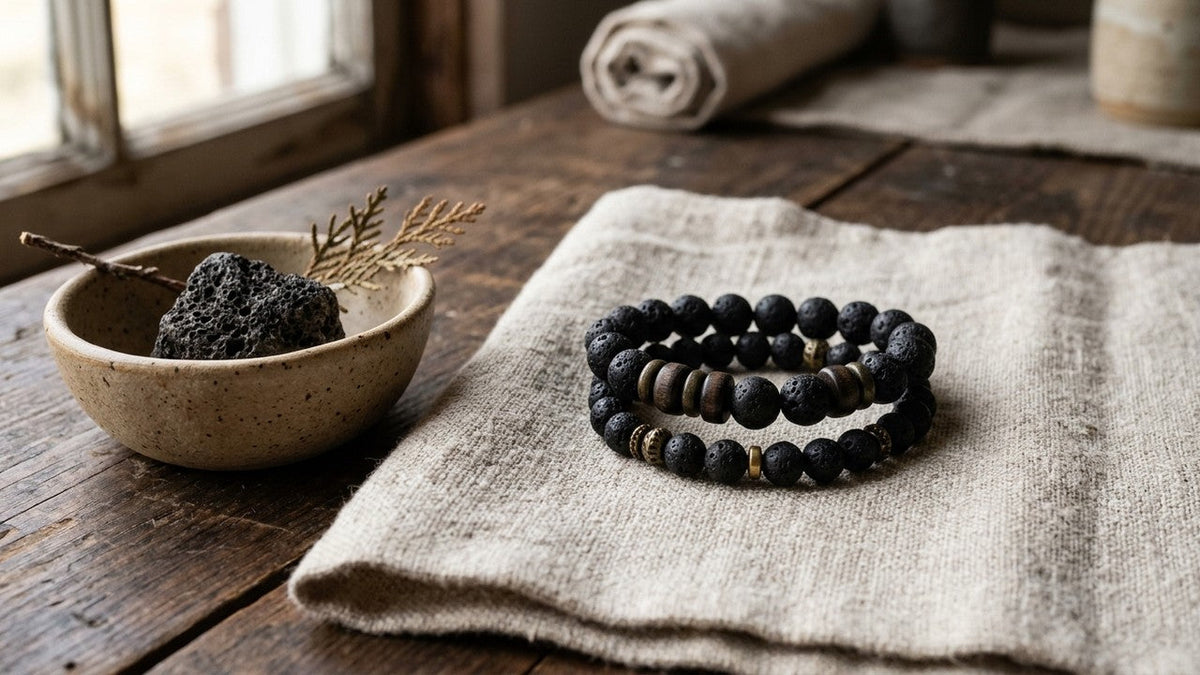
Lava stone beads bring one of geology's oldest stories onto the wrist. Formed where molten magma meets cool open air or ocean water, this matte charcoal volcanic rock stands apart from glossy gemstones by keeping every tiny pinhole carved during its rapid cooling. Understanding lava stone meaning starts with reading both its earth-born mineral history and the quiet artisan traditions that pair unpolished basalt with carved wood, bronze spacers, and sacred strand counts.

Geological Origins: How Molten Magma Becomes Volcanic Basalt
Chemically, most black lava beads are cut from fine-grained volcanic basalt rich in iron and magnesium silicates, known in petrology as mafic rock. During a volcanic eruption, dissolved gases expand as liquid stone rises toward lower surface pressure. When lava cools swiftly in open air rather than crystallizing deep underground over millennia, thousands of tiny gas pockets freeze inside the rock matrix as smooth vesicles.
Wait until basalt flows harden thoroughly, and quarrymen harvest dark blocks from extinct volcanic ridges across regions such as Idaho, northern China, eastern Europe, and island arcs of the Pacific. Unlike obsidian, which cools so instantaneously into natural volcanic glass that crystal grains never form, basalt retains a microcrystalline matte grain with natural pores ideal for lightweight jewelry.
- Volcanic Basalt vs. Black Obsidian: Obsidian breaks with glassy conchoidal sheen and reflects harsh studio light cleanly, while raw basalt drinks light softly into a charcoal velvet surface. Compare mineral finishes across our obsidian jewelry pieces and everyday stone beads bracelets.
- Featherweight Comfort for Large Beads: Because honeycomb-like micro-cavities reduce bulk rock density, an 8mm or 10mm basalt bracelet feels remarkably airy on the wrist compared with solid iron-heavy hematite or dense nephrite.
- Matte Grain Pairing: Lapidary workshops pair matte lava spheres alongside warm red agate, speckled bodhi seeds, or muted brass cylinders so high-gloss stones never look monotonous.
Cultural & Symbolic Meaning of Lava Stone Across Traditions
Long before modern lifestyle jewelry adopted beaded bracelets, communities living near dormant volcanoes treated dark basalt as a symbol of patience, renewal, and earthbound durability. In volcanic archipelagos, basalt boulders built garden walls, temple steps, and mortar bowls engineered to outlast generations of coastal wind and rain.
In contemporary cultural commentary, what readers often search as lava stone spiritual meaning draws traditionally from its visible origin story: people traditionally associate volcanic basalt with intense underground heat settling peacefully into cool, porous stillness. Wearers in quiet craft traditions keep matte black beads as a tactile anchor during breath counting, morning reflection, or walking practice. When strung into traditional mala strands, uneven pores provide quiet fingertip feedback that keeps counting deliberate without ever looking visually flashy.
| Feature / Comparison | Natural Matte Basalt Lava | Polished Black Obsidian | Porous Bodhi Root / Wood |
|---|---|---|---|
| Formation | Rapidly cooled bubbly volcanic basalt | Ultra-rapidly quenched silica-rich volcanic glass | Organic botanical seed or hardwood |
| Surface Texture | Micro-porous matte charcoal texture | Mirror-smooth glossy black polish | Smooth grain that warms gradually with wear |
| Weight on Wrist | Very light and breathable | Moderate mineral weight | Lightweight with organic warmth |
| Oil Absorption | Retains subtle botanical scent in open pores | Non-porous; oils remain wet on surface | Gradually darkens via natural skin oils |
| Visual Styling | Minimalist earth-tone studio matte | Reflective, crisp, nocturnal sheen | Warm heritage patina over months |
Craftsmanship: From Quarry Block to Finished Bead Bracelet
Shaping fragile vesicular basalt into round 6mm, 8mm, or 10mm beads demands careful lapidary calibration. Rough chunks are sliced into narrow square rods using diamond-tipped water saws so continuous cool water washes out abrasive stone dust. Rods are next milled into cubes and fed between grooved grinding wheels before tumbling softly in clean mineral grit.
Watch out for dyed synthetic imitations on crowded online marketplaces. Real natural basalt displays irregular, unscripted pinholes of varying depths and matte grey-charcoal mineral flecks under daylight, whereas cheap molded resin or dyed pumice often shows molded seam ridges, sticky chemical lacquer, or identical stamped crater patterns repeating bead after bead. Artisans occasionally apply a ultra-thin beeswax buff only to stabilize powdery dust while keeping open natural cavities clearly visible under macro scrutiny.
Sizing, Stringing & Styling With Wood, Agate, and Tibetan Spacers
Matching bead diameter to wrist circumference determines how balanced a dark basalt strand sits alongside watches or stacked cuffs. A snug 6mm strand layers discreetly beside a leather timepiece for desk work, whereas a 10mm cuff makes an unmistakable minimalist focal point alongside linen shirts or wool knitwear.
To keep elastic cords strong, measure your snug wrist circumference with flexible cloth tape and allow 0.5cm to 1.0cm extra slack so stretch cords never strain over brass spacers. For example, a 16.5cm wrist typically wears an 18-to-19-bead 8mm strand comfortably without leaving deep elastic indentations across the skin during desk typing. Browse diverse bead diameters in our Tibetan bracelets selection, read side-by-side diameter guidance in our mala material comparison guide, or review wrist count etiquette inside the complete mala beads guide.
Layering & Styling Notes for Neutral Everyday Wardrobes
Because dark volcanic basalt absorbs surrounding studio light cleanly instead of flashing mirror glare, stylists treat unpolished black lava strands as a quiet anchor between brighter mineral beads. Pair a single 8mm matte lava strand beside muted silver-toned hardware watches, warm sandalwood rounds, or subtle banded agate spacer beads to keep stacked textures balanced without looking overcrowded on relaxed weekend sleeves or tailored cuffs.
Practical Care & Scent-Diffusing Etiquette
Because open volcanic pores drink liquids readily, thoughtful wear habits preserve both elastic cords and nearby silk cuffs:
- Limit Botanical Oils to One or Two Beads: If applying cedarwood, frankincense, or bergamot oil for passive aroma diffusion, dilute the extract cleanly and touch only one or two dark lava beads with a cotton swab, avoiding metallic spacers and silk tassels.
- Allow Ten Minutes to Dry Before Dressing: Let absorbed oils settle cleanly into the microscopic cavities so pale cuffs never pick up faint oily marks.
- Skip Pools, Perfumes & Shower Steam: Chlorinated pool water and hot shower soaps gradually soften elastic filaments inside tight drill holes. Slide your bracelet onto a clean ceramic tray before swimming or bathing.
- Gentle Dry Dusting: After humid weather, roll beads lightly across a soft woven cotton cloth or dry goat-hair brush to clear dust from pitted pores without scratching matte finishes.
Frequently Asked Questions
What is lava stone made of naturally?
Lava stone is cooled igneous basalt rock formed when molten volcanic magma reaches the Earth's surface and solidifies rapidly while trapped gas bubbles escape, leaving fine microscopic cavities throughout the dark mineral texture.
Why do lava stone beads look porous and matte instead of glossy?
Unlike polished quartz, jade, or obsidian, unsealed basalt lava beads preserve natural pinholes created by cooling volcanic gases. Artisans tumble the beads just enough to smooth sharp edges while leaving their earthy charcoal texture unglazed.
What does the volcanic symbolism of lava stone represent in traditional craft?
Across island, East Asian, and Himalayan bead traditions, people traditionally associate volcanic basalt with raw earth element motifs, steady patience, and reminder symbolism tied to mountain stillness and an unhurried daily rhythm.
Why do people add aromatic botanical oils onto matte lava stone beads?
Because open volcanic pores act like a gentle sponge, wearers often brush a tiny drop of diluted cedarwood, sandalwood, or lavender oil onto a single uncoated bead and wait several minutes before putting on clothing so fabrics stay clean.
How do you clean a matte black lava stone bracelet without damaging the pores?
Wipe beads gently with a dry lint-free cotton cloth, or rinse briefly under lukewarm plain water without harsh soap or ultrasonic cleaners, then air-dry flat on a towel away from direct radiators or strong sunlight.
Shop this story
Pieces made by the same hands
Keep reading