
bottle-gourd
Wu Lou (Hulu Bottle Gourd): Taoist History & Carving Guide
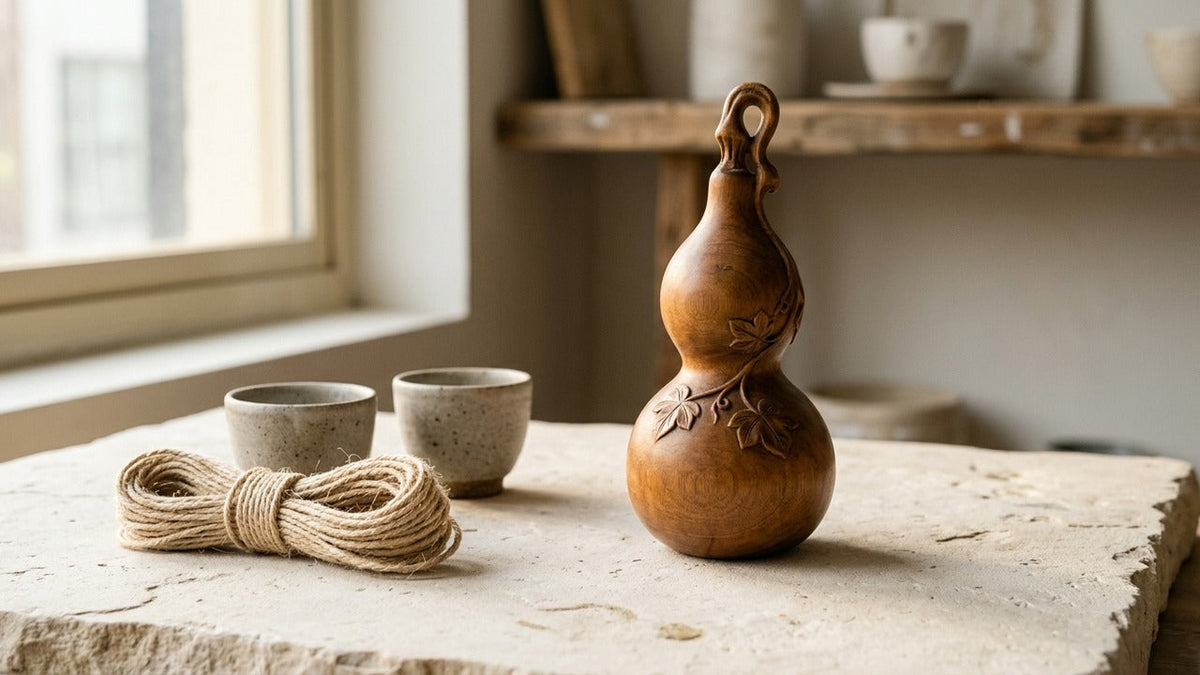
The Wu Lou (Mandarin Chinese Hulu, also known in English as the calabash or bottle gourd) is a naturally waisted fruit of the vine Lagenaria siceraria whose distinctive figure-eight silhouette became one of the most recognizable classical Taoist motifs. Historically hollowed and dried for carrying water, travel herbs, and calligrapher's ink across China, its double-bulb contour inspired centuries of ceramic vases, wood carvings, and miniature wearable pendants.

Botanical History: From Practical Road Flask to Cultural Icon
Before glazed ceramics and glass canteens became widely affordable for ordinary travelers, dried bottle gourds served as lightweight, watertight everyday containers across rural and monastic Asia. Harvested in late autumn after the vine leaves withered, mature gourds were soaked, cleaned of pulp and seeds, rubbed smoothly with natural wax or lacquer, and capped with carved wooden corks. Tied at the narrow waist with a braided hemp or silk cord, a seasoned Hulu hung conveniently from a walking staff or belt sash during mountain journeys.
Because the vine produces abundant creeping stems covered in numerous round seeds inside each hardened shell, traditional woodblock books and folk sayings linked the gourd with continuity, seasonal harvest, and uncluttered storage. Artisans soon began echoing the same waisted outline in celadon porcelain vessels, nephrite-toned mineral carvings, and compact pendant finials.
The Wu Lou in Taoist Literature & Classical Art
Within classical Taoist storytelling and Ming-Qing woodblock illustration, the double-gourd flask appears repeatedly beside traveling immortals and mountain scholars. One of the best-known figures among the Eight Immortals, Li Tieguai, is almost universally shown supporting himself on an iron crutch while carrying a curved bottle gourd slung over his shoulder or resting beside his knee. Across literary painting traditions, that gourd motif signified self-reliant travel, herbal curiosity, and spacious calm condensed inside a humble vessel.
In architectural scrollwork, scholar's rock displays, and carved wooden screens, Wu Lou contours also appear integrated with vine leaves, curling tendrils, and clean brass-tone fittings. Notice how pairing a classic gourd silhouette with subtle leaf veins captures recognizable heritage craftsmanship without requiring noisy surface decoration. In traditional ceramic kilns from the Tang through Qing dynasties, master potters also turned double-gourd vases from celadon, monochrome cobalt, and incised copper-red glazes, reserving narrow-waisted shapes for scholar studios and library mantels. That enduring geometric balance between a full lower bowl, pinched waist, and tapered upper chamber remains the primary design rule carvers follow when scaling miniature wooden or stone gourds for modern desks and jewelry cords. Explore related classical shapes in our Taoist symbols origins guide and browse carved cultural pieces in our Taoist jewelry collection.
Comparing Wu Lou Materials: Wood, Stone & Brass-Tone Crafts
Today's miniature Wu Lou pendants, desk ornaments, and bracelet drops reflect the full range of traditional studio materials, each carrying distinct texture, visual warmth, and handling weight:
| Material Type | Surface Look & Weight | Best Carving Detail | Recommended Care Note |
|---|---|---|---|
| Boxwood / Rosewood / Sandalwood | Warm organic grain, featherlight on chest cords or wrist straps | Crisp carved climbing vine leaves, fine waist grooves, subtle satin polish | Keep strictly dry; avoid bathroom steam and hand creams |
| Stone & Mineral Carvings | Cool initial touch, noticeable heft, translucent or matte veining | Smooth bulbous curves and softly rounded collar rims | Rinse never needed with soap; wipe clean with dry microfiber |
| Brass-Tone Hollow or Solid Metal | Crisp brushed patina sheen, durable against casual desk placement | Threaded screw caps, etched cloud rings, sharp bail loops | Store away from damp air; buff gently with dry cloth |
| Natural Miniature Dried Gourd | Original pale tan shell with organic surface variations | Fire-etched calligraphy or natural waist cord wrapping | Keep out of direct humid bathrooms or prolonged soaking |
Decorative Placement & Wearable Formats
Collectors generally interact with Wu Lou designs either as calm tabletop accents or compact daily accessories. On a desk, bookshelf, or tea tray, small carved wooden gourds sit neatly beside stoneware teapots or clothbound notebooks, adding warm organic geometry without cluttering limited surface space. Pairing one waisted wooden piece beside a flat scroll tray or inkwell echoes classical literati desk arrangement while leaving clear workspace for reading. Read how quiet curved accents pair alongside minimalist room organization in our Five Elements spatial & color guide and our Bagua spatial organization guide.
In wearable jewelry, Wu Lou motifs appear primarily as 15mm to 28mm drop pendants hung on dark braided textile cords, or as compact accent wooden spacers threaded along 8mm stone and seed bracelets. Before choosing a wearable gourd piece, inspect whether the stem top uses an inserted metal screw eye or an integrally carved pass-through loop, and check whether the bottom bulb sits smooth and snag-free against knit sweaters. Compact 18mm to 22mm pendants ride neatly near the collarbone on 45cm to 50cm cords, whereas slightly taller 28mm carved gourds balance longer 60cm to 65cm cord lengths over textured knitwear. Explore broader carved accessories in our carved bead bracelets and full Buddhabelief catalog.
Everyday Cleaning & Moisture Care Tips
Because traditional Wu Lou designs rely heavily on organic wood, hollow brass-tone metal, or dried natural shells, dry maintenance extends both structure and surface sheen for years. Never soak wooden or hollowed metal gourd pieces in ultrasonic cleaners, soapy bowls, or hot water, as trapped liquid inside a threaded cap or porous wood grain encourages warping or tarnish streaks. Keep pendants and bracelets off when washing hands with harsh cleansers, swimming, or entering steamy saunas so wood fibers keep their tight satin grain, and remove adjustable braided textile cords before applying thick scented lotions around the neckline so woven fibers remain crisp and free of discoloration.
After wearing a wooden gourd pendant against bare collarbones or wool knits, wipe the upper and lower bulbs lightly with a soft unbleached cotton cloth, coil the braided cord loosely without sharp creases, and store the piece flat inside a breathable linen pouch or wooden box away from direct radiator heat. If a compact metal Wu Lou drop includes a tiny threaded base cap, check periodically that threads sit finger-tight before wearing over textured sweaters so nothing snags unexpectedly. Should an unfinished wood gourd feel slightly dry after months of winter indoor heating, rubbing it gently between clean dry palms restores a natural warm satin glow without synthetic oils, waxes, or chemical polishes trapped inside carved leaf lines. Comparing smooth mineral stones against fine boxwood carvings makes pairing calm everyday pendants with winter knitwear or open linen collars effortless across every season, and checking cord knot tightness each month keeps daily wear carefree.
Frequently Asked Questions
What does the term Wu Lou (or Hulu) mean?
Wu Lou is a phonetic rendering of the Cantonese pronunciation for Hulu, the Chinese name for the naturally waisted bottle gourd (Lagenaria siceraria) historically dried and used as a travel flask.
Why is the Wu Lou associated with Taoist tradition?
Classical Taoist folk tales and temple paintings frequently depict traveling sages and immortals such as Li Tieguai carrying a dried bottle gourd as a compact travel vessel for water and botanical herbs.
What are traditional Wu Lou ornaments and pendants made from?
Artisans craft Wu Lou pieces from carved boxwood, rosewood, sandalwood, polished mineral stone, brass-tone metal, and naturally dried miniature gourds.
Can a wooden Wu Lou pendant or bracelet get wet?
No. Unsealed hardwoods, natural gourds, and hollow metal caps should stay dry; remove them before showering, swimming, or applying skincare products.
How do I store a carved Wu Lou piece between wears?
Wipe the surface lightly with a dry cotton cloth and place it inside a breathable cloth pouch or lined box away from damp bathrooms and direct heat.
Shop this story
Pieces made by the same hands
Keep reading