buddhist-jewelry
Jade Bracelet Meaning: A Complete Guide to Real Jade
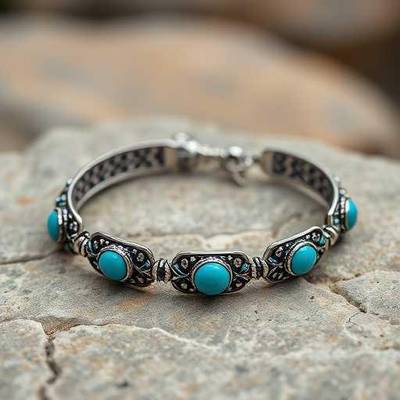
In many Chinese families, a jade bangle isn't just a piece of jewelry. It's the silent, steady weight on a grandmother's wrist, its soft clink a familiar sound of home. It's the precious gift a mother gives her daughter on her wedding day, a transfer of love, protection, and ancestral blessings.
This tradition is more than sentiment; it's a belief in the stone's living energy—a connection that deepens over a lifetime. A jade bracelet is a legacy, a guardian, and a tangible piece of cultural heritage.
Understanding this profound relationship is the first step in finding a piece of authentic jade jewelry that will become a part of your own story.
 Crafted by hand at monasteries in Nepal and Lhasa, each piece undergoes a traditional blessing ceremony performed by resident monks before leaving the workshop. Each jade piece is hand-carved by master craftsmen trained in centuries-old Tibetan and Himalayan jade-working traditions, ensuring authentic craftsmanship.
Jade Bracelet How To is it's the silent, steady weight on a grandmother's wrist, its soft clink a familiar sound of home.
What a Jade Bracelet Actually Represents
A jade bracelet, particularly the classic bangle, is a circle with no beginning and no end. This shape alone is a powerful symbol of eternity, wholeness, and the cyclical nature of life. But the meaning embedded within the stone itself is far deeper, woven through millennia of history, philosophy, and spiritual belief.
At its core, a jade bracelet is a vessel for good fortune and a shield against negativity.
Here’s a breakdown of its primary symbolism:
- Protection and Safety: This is perhaps the most cherished meaning. Jade is believed to be a guardian stone. It absorbs negativity, wards off evil spirits, and protects the wearer from harm and accidents. Many stories are told of a jade bangle suddenly breaking at a moment of danger, sacrificing itself to save its owner from injury. This act solidifies its role as a loyal, living protector.
- Health and Longevity: In traditional Chinese medicine, jade is considered to have healing properties. It’s believed to balance the body’s inner energy, or qi (氣), promoting calm, balance, and physical well-being. Wearing it against the skin is thought to allow the stone's beneficial minerals to be absorbed, purifying the body's systems and encouraging a long, healthy life.
- Prosperity and Luck: Jade has always been associated with wealth and good fortune. It's not only about attracting monetary wealth, but also richness in life—friendships, opportunities, and success. Emperors prized jade above gold and diamonds, believing it connected them to the heavens and ensured the prosperity of their dynasty.
- Wisdom and Harmony: The stone is a symbol of purity and serenity. It is believed to soothe the mind, release negative thoughts, and encourage wisdom and clarity. By promoting inner peace, jade helps the wearer navigate life's challenges with a calm and balanced perspective.
When you wear a jade bracelet, you are not merely accessorizing. You are carrying a powerful talisman imbued with centuries of belief in protection, health, and good fortune. It becomes an extension of yourself, a quiet companion on your life's journey.
Types of Jade Bracelets — Bangle, Beaded, Carved
While the classic bangle is the most iconic, jade bracelets come in several beautiful forms, each with a slightly different feel and aesthetic. Choosing a style is a personal decision that depends on your lifestyle, taste, and the specific energy you want to cultivate.
The Classic Jade Bangle
The jade bangle is a single, solid piece of jade carved into a perfect circle or oval. It is the most traditional and symbolically potent form.
- Symbolism: Its circular shape represents wholeness, unity, and eternity. With no beginning and no end, it symbolizes a life of completeness and unending good fortune. It’s a powerful metaphor for the circle of life and the enduring bond of family.
- Styles: Bangles come in different profiles. The "Princess Round" is fully rounded on the inside and outside, offering maximum contact with the skin. The "Flat Inner" style is flat against the wrist, providing a more modern and often more comfortable fit for daily wear.
- Considerations: A bangle must be sized perfectly to slip over the hand. It is meant to be worn continuously, becoming a permanent part of the wearer. Its solid nature means it carries a substantial, grounding weight.
The Beaded Jade Bracelet
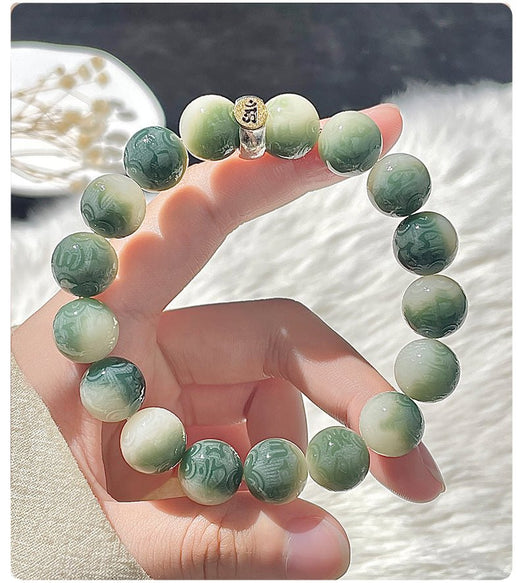
A more modern and versatile option, the beaded jade bracelet consists of polished jade beads strung together on a durable elastic or silk cord. This style offers flexibility and ease of wear.
- Symbolism: Each round bead mirrors the symbolism of the bangle—wholeness and completeness. A string of them can represent a multitude of blessings or a continuous flow of positivity. They are often combined with other stones or charms, like a Pixiu or Buddha, to add layers of specific meaning.
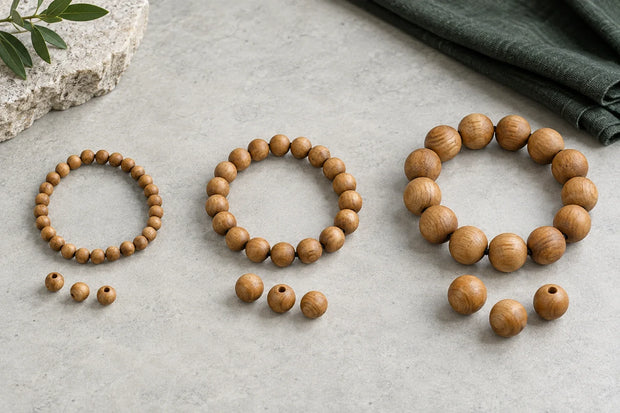
- Styles: Beaded bracelets vary in bead size, from delicate 4mm beads to bold 14mm statements. The color and quality of the individual beads determine the overall look and feel.
- Considerations: Beaded bracelets are easy to take on and off, making them a practical choice for those who can't wear a bangle at work or during certain activities. They offer a different aesthetic, often feeling more casual and contemporary. Explore our diverse collection of jade bracelets to see the variety available.
The Carved Jade Bracelet
Carved jade bracelets are wearable works of art. These can be bangles or linked pieces where the jade has been intricately carved with traditional motifs. The carvings add another dimension of symbolism to the piece.
-
Symbolism: The meaning of a carved bracelet is tied to its motifs.
- Dragons and Phoenixes: The ultimate symbols of yin and yang, representing success, power, and marital bliss.
- Bamboo: Represents resilience, integrity, and upward growth.
- Lotus Flower: A symbol of purity, enlightenment, and rebirth.
- Coins or "Bi" Discs: Symbols of wealth and heaven.
- Styles: Carvings can be subtle etchings on the surface of a bangle or elaborate, fully sculpted links. These pieces showcase the highest level of craftsmanship.
- Considerations: Carved pieces are often statement pieces, prized for their artistry as much as the quality of the jade itself. They require more delicate care to protect the intricate details.
The Jade Bangle's Spiritual Significance in Chinese Culture
To truly understand the jade bracelet meaning, one must look beyond its physical beauty and looking closely at its spiritual roots in Chinese culture. Across generations, jade has been revered as the "Stone of Heaven" (玉), a sacred bridge between the physical and spiritual realms.
A Conduit for Qi and a Protector of Health
At the heart of Chinese spiritual and medical philosophy is the concept of qi (氣), the vital life force that flows through all living things. A jade bangle, worn against the pulse points of the wrist, is believed to directly interact with the wearer's qi.
It is said that jade helps to balance and harmonize this energy flow. If your qi is weak or stagnant, the jade can help to invigorate it. If it is erratic or excessive, the stone can soothe and calm it.
This balancing act is the foundation of jade’s reputation as a healing stone, promoting not only physical health but also emotional stability and mental clarity. This is particularly true for green jade, which is deeply connected to the heart chakra and the energy of life and growth.
Many long-time wearers will tell you their jade "comes alive." They notice its color seems to deepen or become more vibrant over time. This is believed to be the result of the jade absorbing the wearer's essence and oils, a sign of a deep, symbiotic bond forming between stone and person.
The jade nourishes you, and in turn, you nourish the jade.
The Five Virtues of Jade
Confucius, the great Chinese philosopher, saw in jade a perfect metaphor for the ideal person. He associated its physical properties with the five cardinal virtues:
- Benevolence (仁): Its smooth, polished surface and gentle warmth represent kindness and compassion.
- Righteousness (義): Its translucency, which reveals the inner texture without hiding flaws, symbolizes integrity and honesty.
- Wisdom (智): The clear, resonant sound it makes when struck is compared to the clarity and penetration of a wise mind.
- Courage (勇): Its hardness and durability, its ability to be broken but not bent, represent fortitude and courage.
- Purity (潔): Its flawless nature and ability to be cleansed represent purity of the soul.
Wearing a jade bracelet, therefore, was not only for protection or status; it was a constant, physical reminder to cultivate these virtues within oneself. It was an aspiration to be as noble, pure, and resilient as the stone itself.
A Legacy of Love and Protection
The tradition of passing a jade bangle from mother to daughter is the most poignant expression of its meaning. This act is a profound transfer of energy, love, and protection.
The bangle, having been worn by the mother for years, is believed to be saturated with her protective energy and love. When she gives it to her daughter, she is passing on this shield, a piece of her own spirit to watch over her child.
It is a blessing for a happy marriage, healthy children, and a safe, prosperous life.
This is why a family heirloom jade bracelet is considered priceless. Its value is not in its carat weight or market price, but in the generations of love and protective energy it holds within.
It connects the wearer to her ancestors, reminding her that she is part of a long, unbroken line of strong women.

How to Choose the Right Jade for You
Selecting a jade bracelet is an intimate and personal process. It's a blend of understanding the technical qualities of the stone and listening to your own intuition. The belief is that the right piece of jade will "call" to you.
Understanding Jade: Nephrite vs. Jadeite
First, it's important to know that "jade" refers to two different minerals:
- Nephrite: The traditional jade of ancient China. It is tough, durable, and has a smooth, waxy luster. Its colors are typically more muted, ranging from creamy white and celadon green to deep spinach green and even black.
- Jadeite: Discovered in Burma (now Myanmar) in the 18th century, jadeite is rarer, denser, and harder than nephrite. It comes in a wider and more vibrant spectrum of colors, including the highly coveted "Imperial Green." High-quality jadeite is significantly more valuable.
Both are considered true jade. Buddhabelief specializes in high-quality jadeite for its vibrant energy and exceptional beauty.
Choosing by Color
The color of jade is its most defining feature, and each shade carries its own unique energy and meaning.
- Green: The most classic and sought-after color. It symbolizes health, prosperity, harmony, and growth. From pale apple green to deep emerald, the meaning of green jade is tied to the heart and life force.
- Lavender: A rare and serene color associated with spirituality, healing, and tranquility. It is believed to soothe the soul and connect one to higher consciousness.
- White: Symbolizes purity, calm, and focus. White jade is believed to clear the mind, aid in decision-making, and deflect negative distractions. Its clean energy is highly prized.
- Red/Orange: A vibrant and energetic color that represents joy, passion, and courage. It is believed to stimulate creativity and vitality.
- Black/Grey: A powerful protective color. Black jade is thought to be a strong shield against negativity, psychic attacks, and self-doubt.
- Yellow: Associated with good fortune, friendship, and loyalty. It brings a gentle, cheerful energy.
The "Grades": Understanding Jade Quality (Type A, B, C)
This is the single most important factor in determining authenticity and value. It refers to the treatment the jade has undergone, not its color or clarity.
- Type A Jade: 100% natural, untreated jadeite. It has only been shaped, polished, and sometimes waxed for luster. This is the only type of jade considered to have investment value and true spiritual presence. At Buddhabelief, we exclusively offer Type A jadeite.
- Type B Jade: Jade that has been soaked in acid to remove impurities and then injected with a polymer resin to enhance its transparency. This process makes the stone brittle and compromises its integrity. Its energy is considered to be broken.
- Type C Jade: Jade that has been artificially dyed to improve its color. The color is not natural and can fade over time or with exposure to chemicals. "B+C" jade has been both polymer-impregnated and dyed.
Always insist on Type A jade. A reputable seller will be transparent about this and should be able to provide a certificate of authenticity for significant pieces.
Getting the Right Fit for a Bangle
A bangle that is too small won't go on; one that is too large can easily fall off or break. Proper sizing is crucial.
- Tuck your thumb into your palm, as if you are about to put on a bangle.
- Take a measuring tape or a piece of string and wrap it around the widest part of your hand (usually across the knuckles).
- If using a string, mark where it overlaps and then measure that length against a ruler. This measurement is the circumference of your hand.
- Use the circumference to find your bangle diameter. You can use an online conversion chart, or simply divide the circumference by 3.14 (pi). For example, a hand circumference of 200mm would require a bangle with an inner diameter of about 64mm.
A perfect fit should be snug going over the knuckles but have a little room to move on the wrist. When in doubt, it's often better to go slightly larger by 1-2mm.
Spotting Fake Jade — The Definitive Authentication Guide
The market is flooded with imitations and treated jade. Arming yourself with knowledge is the best way to protect yourself and ensure you're investing in a genuine piece. While a gemological lab provides the only 100% certain verification, these at-home tests can help you spot obvious fakes.
Common Jade Imposters
Many stones are sold as "jade" but are entirely different minerals. Be wary of names like "New Jade" (serpentine), "Indian Jade" (aventurine quartz), "Korean Jade" (serpentine), or "Australian Jade" (chrysoprase). These are not jade.
1. The Temperature Test
This is one of the simplest and most effective initial tests. Real jade is a dense, non-conductive stone. How to do it: Hold the piece in your hand. Real jade will feel cool, smooth, and almost soap-like to the touch.
It should remain cool for a noticeable period before warming up to your body temperature. Fakes made of plastic, glass, or less dense stones will warm up very quickly.
2. The Sound Test
Authentic, high-quality jadeite has a unique resonant structure. This test is best for bangles. How to do it: Hold the bangle gently by a string or let it dangle from your finger. Tap it lightly with another piece of jade or a metal object.
A real Type A jadeite bangle will produce a high-pitched, clear, bell-like chime that lingers for a second or two. A fake, or even a treated (Type B) bangle, will sound dull and flat, like plastic hitting plastic.
The sound will be a low-pitched "clunk" with no resonance.
3. The Visual Inspection
Look closely at the stone, preferably with a 10x jeweler's loupe. What to look for:
- Imperfections: Natural jade is rarely perfect. It will have internal "flaws" like dark spots (mineral inclusions), cloudy formations, or tiny fibrous or crystalline structures. These are called shi wen (stone grain) and are signs of authenticity.
- Color Distribution: The color in real jadeite is not perfectly uniform. You'll see variations, veins, and subtle gradations of color. A piece that is one solid, perfectly even color throughout is highly suspect and likely dyed (Type C).
- Luster: Polished jadeite has a unique, vitreous (glassy) luster that appears to shine from within. It looks deep and watery. Fakes often look dull, waxy, or plasticky.
4. The Weight Test
Jadeite is a very dense stone. How to do it: Hold the piece in your palm and get a feel for its weight. Compare it to another stone of a similar size. Jade should feel noticeably heavier than you would expect for its size.
A piece that feels light or plasticky is a major red flag.
5. The Scratch Test (Use with Extreme Caution)
This is a definitive test but can damage your jewelry, so it should be a last resort. Jadeite is very hard (6.5-7 on the Mohs scale), harder than steel. How to do it: Take the tip of a steel knife or a pair of scissors and try to gently scratch the stone in an inconspicuous place (like the inside of a bangle).
Real jadeite will not be scratched by steel; in fact, it will leave a streak of metal on the jade that can be wiped away. If the stone gets scratched, it is not jadeite.
The Ultimate Proof: Certification
The most reliable way to guarantee authenticity is to buy from a reputable vendor who provides a certificate from an independent, accredited gemological laboratory. This certificate will confirm the material (Jadeite or Nephrite) and, most importantly, state that it is "Type A," meaning it is natural and untreated.
Every piece in our explore jade jewelry is guaranteed to be Type A, ensuring you receive only genuine, natural jade.
Caring for Your Jade Bracelet
An authentic jade bracelet is a lifelong companion. With proper care, its beauty and energy will last for generations.
- Regular Cleaning: The best way to clean your jade is simple. Use a soft, lint-free cloth with lukewarm water and a drop of mild, pH-neutral soap. Gently wipe the surface, rinse thoroughly with clean water, and pat dry. Avoid harsh chemicals, ultrasonic cleaners, and steam cleaners, as they can damage the stone's structure or wax polish.
- Avoid Impact: While jade is hard, it is not indestructible. A sharp blow against a hard surface can cause it to crack or shatter. It's wise to remove your jade bangle before engaging in sports, heavy lifting, or any activity where it might get hit.
- Protect from Chemicals: Remove your jade bracelet before swimming in chlorinated pools or using harsh household cleaning products. Perfumes, hairsprays, and lotions can also build up on the surface, dulling its luster over time. It's best to put your jewelry on last, after applying any cosmetics.
- Proper Storage: When you're not wearing your jade, store it in a separate soft pouch or a fabric-lined jewelry box. This prevents it from being scratched by other, harder gemstones like diamonds or sapphires.
- Wear It Often: This is the most cherished piece of advice. Jade is believed to benefit from the natural oils of your skin. Regular wear keeps it moisturized and helps enhance its luster and color over time. Your body's energy "nourishes" the stone, deepening your connection to it.
Explore our white jade Bodhi prayer beads.
Frequently Asked Questions
1. Which wrist should I wear my jade bracelet on?
In Feng Shui and traditional Chinese culture, the left wrist is considered the "receptive" side, responsible for taking in energy. Wearing your jade bracelet on the left wrist is believed to help you absorb its healing, protective, and lucky energies.
The right wrist is the "projective" side, for giving energy away. Some wear it on the right if they wish to project its qualities outward, such as giving protection to others.
2. What does it mean if my jade bracelet breaks?
If a jade bracelet breaks, it is not considered bad luck. On the contrary, it is believed that the bracelet has fulfilled its ultimate purpose: it sacrificed itself to protect you from a significant misfortune, accident, or influx of negativity.
You should thank the broken piece for its protection and respectfully wrap it in red cloth and bury it in the earth, returning it to nature.
3. Can the color of my jade change over time?
Yes, and this is considered a positive sign. With authentic Type A jade, wearers often report that the color becomes more vibrant, intense, or even greener over many years. This is believed to be the result of the jade absorbing the body's natural oils and qi, creating a closer bond.
The stone is "coming alive" and harmonizing with your personal energy.
4. Is it bad luck to buy a jade bracelet for myself?
Absolutely not. While receiving jade as a gift is a powerful symbol of love and blessing, buying it for yourself is an act of self-love, self-care, and self-protection. It is a conscious decision to invite the positive energies of health, luck, and harmony into your own life.
Choosing a piece that you feel personally connected to is a beautiful way to honor yourself.
5. What's the difference between jadeite and nephrite?
Both are genuine jade, but they are different minerals. Nephrite is a silicate of calcium and magnesium, known for its toughness and creamy luster. It was the jade of ancient China. Jadeite is a silicate of sodium and aluminum, which is rarer, harder, and comes in a much wider range of colors, including the most prized vibrant greens.
High-quality jadeite is generally more valuable than nephrite.
6. How can I tell if a jade bracelet is good quality?
Good quality is determined by several factors. First and foremost, ensure it is certified Type A (natural and untreated). Beyond that, look for intense, vibrant, and evenly distributed color. High-quality jadeite has good translucency, allowing light to penetrate the stone, which gives it a beautiful glow.
The texture should be fine and smooth, not coarse. Finally, craftsmanship—a well-proportioned, perfectly polished piece—also indicates high quality.
7. Why are jade bracelets so expensive?
The price of a genuine, high-quality jadeite bracelet reflects several factors. Rarity is the main driver; high-grade jadeite is found in very few locations, with the best coming from Myanmar. The mining and extraction process is difficult.
The vibrant, translucent green "Imperial Jade" is exceptionally rare and commands prices comparable to high-quality diamonds. Furthermore, the price includes the artistry and skill required to cut, carve, and polish the stone without wasting precious material.
A jade bracelet is far more than an accessory. It is a deeply personal talisman, a link to ancient traditions, and a vessel of powerful spiritual presence. It is a promise of protection, a wish for good health, and a symbol of love that transcends generations.
if you are choosing your first piece or seeking a new one to add to your story, the journey is about finding the stone that resonates with your spirit. It's a companion for life, one that will grow with you, protect you, and become a treasured part of your legacy.
We invite you to explore our curated selection of authentic, Type A jade to find the piece that is waiting to begin its journey with you. Discover your lifelong guardian in our collection of jade jewelry.
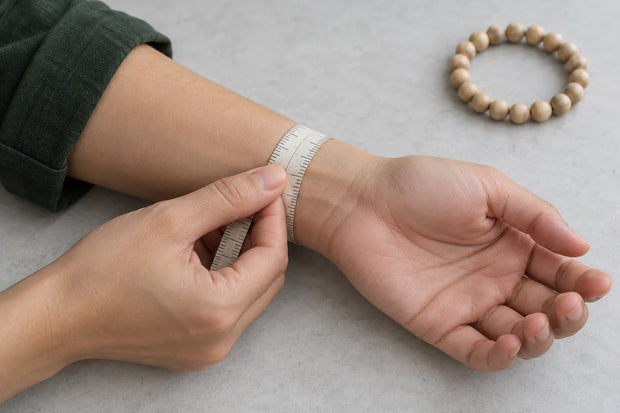
Before selecting a bracelet, measure the wrist and check what the seller means by its size label. Bead diameter alone does not establish a comfortable fit. Measure your wrist for a beaded bracelet.
Keep reading