buddhist-jewelry
Benefits of Using Tibetan Bodhi Seed Malas
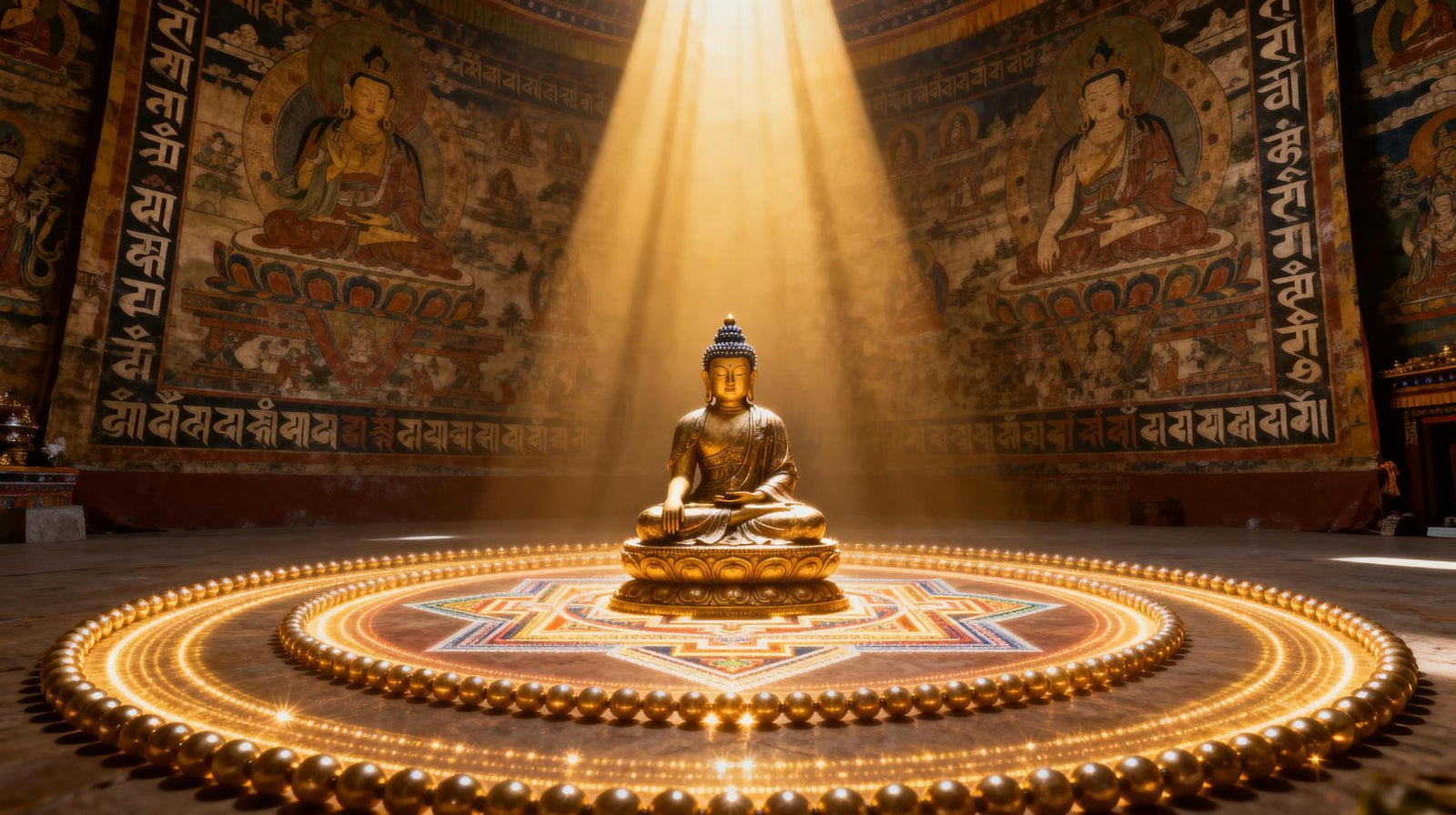
Benefits of Using Tibetan Bodhi Seed Malas
You sit down to meditate. The intention is there, the cushion is comfortable, the time is set aside. Yet, within moments, your mind is a flurry of activity—a forgotten email, a conversation from yesterday, a worry about tomorrow.
Your breath, which should be your anchor, feels distant and abstract. You try to count, but you lose your place. The frustration builds, and the session feels more like a struggle than a sanctuary.
This experience isn't a sign of failure; it's a universal aspect of the human mind. The challenge isn't to silence the mind by force, but to give it a skillful, tangible focal point. Imagine, in that moment of distraction, the feeling of a smooth, cool seed rolling between your thumb and finger.
Imagine a quiet, rhythmic click accompanying each breath, each mantra. This isn't just a distraction; it's a redirection. A Tibetan Bodhi seed mala is not a rare tool, but a profound one—a physical bridge back to your intention, bead by bead.

What a Bodhi Seed Mala Really Is
To truly understand the power of a Bodhi seed mala, you must first understand its authentic origins, which are deeply rooted in the sacred geography of the Himalayas. There's a common misconception that these beads come from the Bodhi Tree (Ficus religiosa) in Bodh Gaya, India, where the historical Buddha, Siddhartha Gautama, attained enlightenment.
While the name pays homage to this monumental event, the actual seeds used for the most revered Tibetan malas have a different, equally sacred source. They come from a tree species known botanically as Ziziphus budhensis, which grows in a very specific, limited region of Nepal.
The heart of this tradition lies in the Timal region, a cluster of villages nestled between the Sun Kosi and Rosi Khola rivers, east of Kathmandu. Legend, deeply woven into the fabric of Tibetan Buddhism, holds that the great 8th-century master Padmasambhava, also known as Guru Rinpoche, meditated in the caves of this area.
It is said that upon subduing local spirits and sanctifying the land, he introduced the practice of using these specific seeds for mantra recitation. The trees that grow there today are considered direct descendants of those blessed by his presence.
This connection to Guru Rinpoche, the master who firmly established Buddhism in Tibet, imbues these seeds with an immense spiritual significance that cannot be replicated.
The seeds themselves are unmistakable. An authentic Timal Bodhi seed is characterized by its natural surface patterns. You will notice tiny holes, or "eyes," on the surface. A single larger eye is called the "moon" (dawa), and the surrounding smaller dots are the "stars" (karma).
This "moon and star" pattern is the hallmark of genuine Ziziphus budhensis seeds. They are not perfectly round or uniform; each bead carries the unique signature of its growth. When new, they are a light, creamy color.
With years of dedicated practice, as they absorb the oils from your skin and the focus of your mantras, they transform, developing a deep, lustrous patina that ranges from golden honey to a rich, dark brown.
This physical transformation is a mirror of your own spiritual journey, making the mala a living a sign of your devotion. Understanding this history is crucial, as the rich tradition behind these sacred objects is why we focus on authentic Tibetan prayer beads.
The Deeper Meaning Woven into Every Bead
A Bodhi seed mala is far more than a simple counting tool; it is a microcosm of the Buddhist path, with each component carrying profound symbolic weight. Its very name, "Bodhi" (བྱང་ཆུབ), is the Sanskrit and Tibetan word for "enlightenment" or "awakening." By holding the mala, you are holding a constant, physical reminder of your own potential for awakening—the very goal of your practice.
The seed itself is a powerful metaphor. Just as a tiny seed contains the complete blueprint for a vast, sprawling tree, each sentient being contains the "Buddha-nature" (Tathāgatagarbha), the innate potential for perfect wisdom and compassion.
Using the mala is an act of nurturing that seed within you, watering it with the nectar of your mantra and devotion.
The traditional number of 108 beads is deeply significant across many Dharmic traditions. Within Tibetan Buddhism, this number holds several layers of meaning. One powerful interpretation connects it to the 108 volumes of the Kangyur—the collected words and teachings of the Buddha.
In this sense, completing one round of the mala is like honoring and internalizing the entirety of the Buddha's wisdom. Another common understanding is that the 108 beads represent the 108 kleshas, or mental afflictions (such as greed, hatred, and ignorance), that keep us bound to the cycle of suffering (samsara).
With each mantra you recite, you are actively purifying one of these afflictions, transforming poison into medicine, and confusion into wisdom.
The mala is not only a circle of 108 beads. It has a distinct beginning and end, marked by the Guru bead, or "sumeru." This larger, often more ornate bead represents the Guru or teacher—the embodiment of the wisdom you seek.
It symbolizes the ultimate reality, the state of enlightenment itself. In practice, you never cross over the Guru bead. Instead, upon completing a round of 108, you pause in a moment of reverence and gratitude, flip the mala, and begin again in the opposite direction.
This simple action is a profound teaching in itself, reminding you that the path is guided by wisdom and respect for the lineage of teachers. The tassel or threads extending from the Guru bead symbolize the roots of the lotus flower, which grows from the mud of samsara but blossoms, pure and unstained, above the water.
It represents your connection to the world and the aspiration to benefit all beings.
Real Benefits for Your Modern Life
While its roots are ancient, the Bodhi seed mala offers tangible, practical benefits that directly address the challenges of contemporary life. Its power lies not in magic, but in its ability to skillfully work with the neurology and psychology of your own mind.
You might seek it out for stress relief, but its function goes much deeper than simple relaxation.
Consider the state of anxiety or a scattered mind. Your thoughts are often caught in frantic, repetitive loops. A Bodhi seed mala acts as a powerful circuit breaker. The physical, sensory experience of rolling a bead between your thumb and finger provides immediate kinesthetic feedback.
This tactile sensation grounds you in the present moment, in your body, pulling your awareness away from the abstract chaos of your thoughts. It gives the "monkey mind"—that restless, chattering part of your consciousness—a simple, rhythmic task to perform.
This act of engagement doesn't suppress thought; it gently redirects focus, allowing the storm of mental activity to settle on its own, creating a space for clarity and calm (samatha).
Furthermore, the mala transforms your intentions from vague ideas into embodied actions. You can decide you want to be more patient, but that intention can easily be forgotten in a moment of frustration. When you pair that intention with a mantra and a mala, it becomes a practice.
Each bead you touch is a micro-commitment, a physical reaffirmation of your goal. You are not only thinking about patience; you are actively cultivating it through the coordinated effort of your body (turning the bead), your speech (reciting the mantra), and your mind (holding the intention).
This tripartite synchrony is a core principle of Vajrayana practice, creating a powerful and holistic method for personal transformation.
One of the most beautiful and motivating aspects of a genuine Bodhi seed mala is its evolution over time. As you use it, the seeds begin to change. They absorb the natural oils from your skin, the warmth of your hands, and the subtle presence of your practice.
A new, pale mala will gradually darken, developing a rich, deep patina and a smooth, polished feel. This is not mere wear and tear; it is a visible record of your journey. Your mala becomes a unique reflection of your dedication.
On days when your practice feels difficult or your motivation wanes, simply holding this object—feeling the smoothness forged by thousands of your own recitations—can be a profound source of encouragement. It is a tangible link to your own best intentions, a reminder that every moment of practice, no matter how imperfect, contributes to the path.
This tangible connection is what makes a Bodhi seed mala more than jewelry; it's a key piece in our diverse collection of spiritual tools.

How to Choose an Authentic Bodhi Seed Mala
Choosing a mala is an intimate process, and ensuring its authenticity is paramount for it to serve as a genuine support for your practice. The market is filled with imitations, so knowing what to look for will empower you to select a mala that carries the true spirit of the tradition.
The first and most crucial factor is the seed itself.
As discussed, authentic Tibetan Bodhi seed malas are made from Ziziphus budhensis, sourced from the Timal region of Nepal. Your primary identifier is the "moon and star" pattern. Look closely at the surface of the beads.
You should be able to see the natural, slightly irregular pores and lines. Be wary of beads that are perfectly smooth, uniformly colored, or feel lightweight and plastic-like. These are often made from dyed wood, bone, or synthetic materials.
Another type of seed you might encounter is the "Phoenix Eye" Bodhi seed (Daemonorops jenkinsiana), which has a distinct eye-shaped pattern. While these are also authentic and remarkable malas in their own right, often associated with wrathful deities, they are different from the Timal "moon and star" variety connected to Guru Rinpoche.
Pay attention to the feel and weight. Genuine Bodhi seeds have a pleasing density and a slightly cool, organic texture. They should feel substantial in your hand. The size and shape of the beads will have slight variations, a a sign of their natural origin.
A string of beads that are all perfectly identical in size and shape is a red flag. The mala's construction is also important. The cord should be strong and durable, often a multi-strand braided nylon or traditional silk, designed to withstand years of use.
Check the knots between the beads, if present. They should be tight and consistent, providing the right amount of space for your fingers to move from one bead to the next. The Guru bead should feel solid and be well-secured.
When you browse a collection of mindfully sourced mala beads, you begin to see the subtle differences in craftsmanship and material that distinguish a true practice tool from a simple piece of jewelry.
How to Use Your Mala for Practice
Once you have chosen your mala, integrating it into your practice is a straightforward and deeply rewarding process. The method is designed to cultivate mindfulness and focus. Traditionally, you hold the mala in your left hand, with the beads resting on your index finger.
The left hand is associated with wisdom, and this position signifies that the practice is undertaken with the motivation to develop wisdom and compassion. You use your thumb to move the beads.
Begin your practice by holding the mala gently and taking a few deep breaths to settle your mind. Set a clear intention. This could be a dedication of the merit of your practice to the well-being of all sentient beings, or a personal intention to cultivate a specific quality like patience or loving-kindness.
Start with the first bead next to the Guru bead. As you hold this bead between your thumb and index finger, recite your chosen mantra once. A common and powerful mantra is "Om Mani Padme Hum," the mantra of Avalokiteshvara, the Buddha of Compassion.
Upon completing the mantra, use your thumb to pull the next bead towards you, and begin the next recitation. You continue this process, bead by bead, mantra by mantra, moving around the mala.
The rhythm of your breath, the sound of the mantra, and the tactile sensation of the beads moving through your fingers create a powerful anchor for your attention. When your mind wanders—and it will—the physical act of moving to the next bead serves as a gentle, non-judgmental reminder to return your focus to the practice.
When you have completed 108 recitations and arrived back at the Guru bead, you pause. Do not cross over the Guru bead. This pause is a moment of reflection and respect for your teachers and the path.
To continue, you simply flip the mala 180 degrees and go back in the direction you came from. This ancient practice is embodied in every one of our handcrafted Tibetan malas, waiting to become a part of your daily ritual.
Explore our Taoist Eight Trigram amulet.
Common Questions About Bodhi Seed Malas
Can anyone use a Bodhi seed mala, or is it only for Buddhists?
A Bodhi seed mala is a tool, and like any tool, it can be used by anyone with a sincere intention. You do not need to be a Buddhist to benefit from its ability to focus the mind and ground your awareness.
The principles of mindfulness, intention-setting, and calming the mind are universal. However, it is important to approach the mala with respect for its deep cultural and spiritual origins within Tibetan Buddhism. Using it for mantra or breath counting is a beautiful way to connect with its purpose, regardless of your personal spiritual path.
How should I care for my mala?
Caring for your mala is simple and is itself a form of mindfulness. The most important rule is to keep it dry and away from harsh chemicals or perfumes. The best way to polish the seeds is through use; the natural oils from your skin will condition them beautifully over time.
If you need to clean it, a gentle wipe with a soft, dry cloth is sufficient. When you are not using your mala, it is traditional to store it in a special pouch or box, or to place it on an altar or another clean, respected place.
Avoid placing it on the floor or in a location where it might be stepped on.
What does it mean if my mala breaks?
In the Tibetan tradition, a mala breaking is not seen as a negative event. On the contrary, it is often viewed as a positive sign. It can symbolize the completion of a cycle of practice, the release of a significant amount of negative karma, or a breakthrough in your spiritual journey.
It signifies that you have worn through the karmic obstacles the mala helped you to purify. You can gather the beads and have them restrung, perhaps with a small ceremony of gratitude for the practice it has supported.
The restrung mala then represents a new beginning on your path.
Why do the seeds on my mala get darker with use?
The darkening of Bodhi seeds is a cherished and natural process. The seeds are porous and absorbent. As you hold and use your mala, they slowly absorb the oils from your skin, as well as the subtle energetic imprint of your practice and mantras.
This process creates what is known as a patina—a deep, lustrous sheen that develops over many years. A dark, well-worn mala is highly prized as it is a physical intention-setting of immense dedication and practice.
It tells a story of devotion without a single word.
What's the difference between "moon and star" and other Bodhi seeds like "phoenix eye"?
Both are considered authentic types of Bodhi seed malas, but they originate from different plant species and carry distinct symbolism. "Moon and star" seeds come from Ziziphus budhensis in Nepal and are directly associated with the peaceful blessings of Guru Rinpoche and the path to enlightenment.
"Phoenix eye" seeds, from the Daemonorops jenkinsiana palm, have a natural eye-like shape and are traditionally associated with more wrathful deities and the powerful, compassionate activity needed to cut through ignorance. The choice between them often depends on a practitioner's specific deity practice or personal connection.
How many times should I use my mala each day?
Consistency is far more important than quantity. The true benefit comes from establishing a regular, mindful practice. Even completing a single round of 108 mantras with your full, undivided attention is more powerful than reciting thousands of mantras while your mind is distracted.
It is better to start with a manageable goal—perhaps one round in the morning or evening—and build from there. The mala is not a spiritual odometer; it is a companion for your journey, meant to support you wherever you are on your path.
Your Next Step on the Path
You have now journeyed through the history, symbolism, and practical application of the Tibetan Bodhi seed mala. You understand that it is more than an accessory; it is a spiritual technology, a companion, and a mirror reflecting your own dedication.
It is a tangible link to a lineage of practice stretching back centuries, yet its benefits are perfectly suited to the needs of your life right now. The true journey, however, begins when you hold one in your own hands and begin to infuse it with your own breath, your own intention, and your own presence.
Your path is unique, and the mala you choose should feel like a true extension of that path. It should resonate with you, inviting you into practice rather than feeling like an obligation. The right mala will feel like it has been waiting for you.
Begin exploring our collection of authentic Bodhi seed malas to find the sacred companion for your journey toward awakening.
For deeper context on the tradition behind this practice, see prayer bead traditions on Wikipedia.
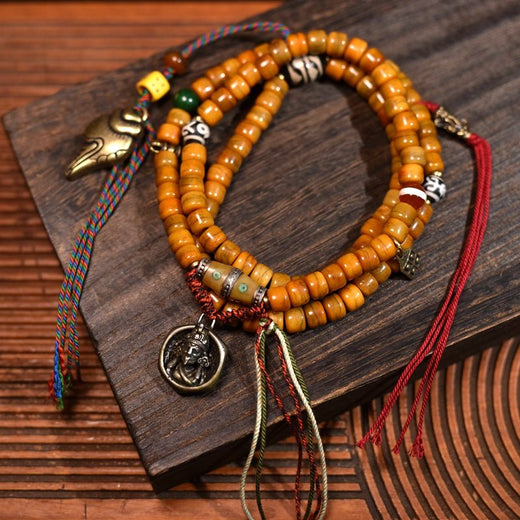
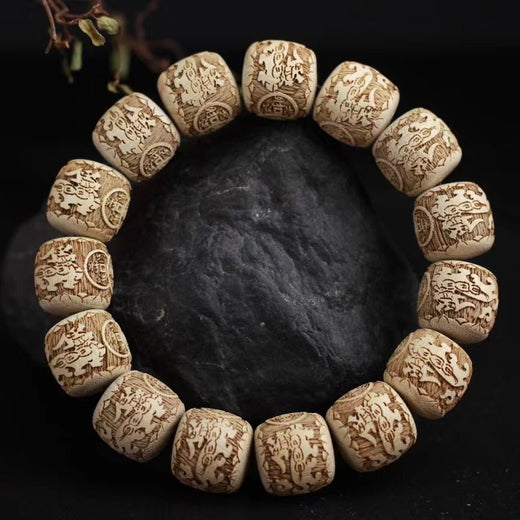

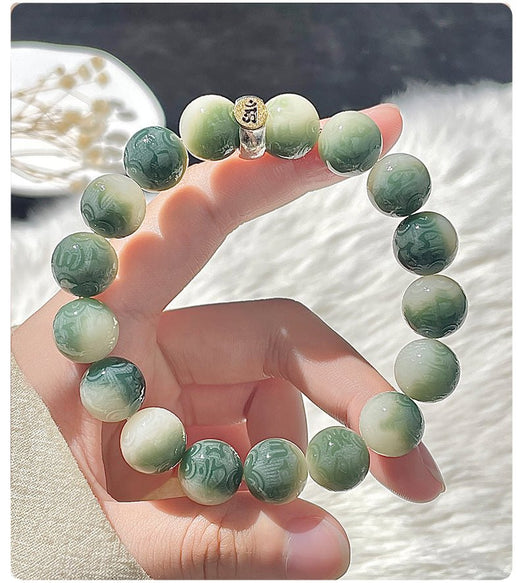
Keep reading