buddhist-jewelry
Gemstone Mala Meanings: A Guide to Crystal Energy & Int
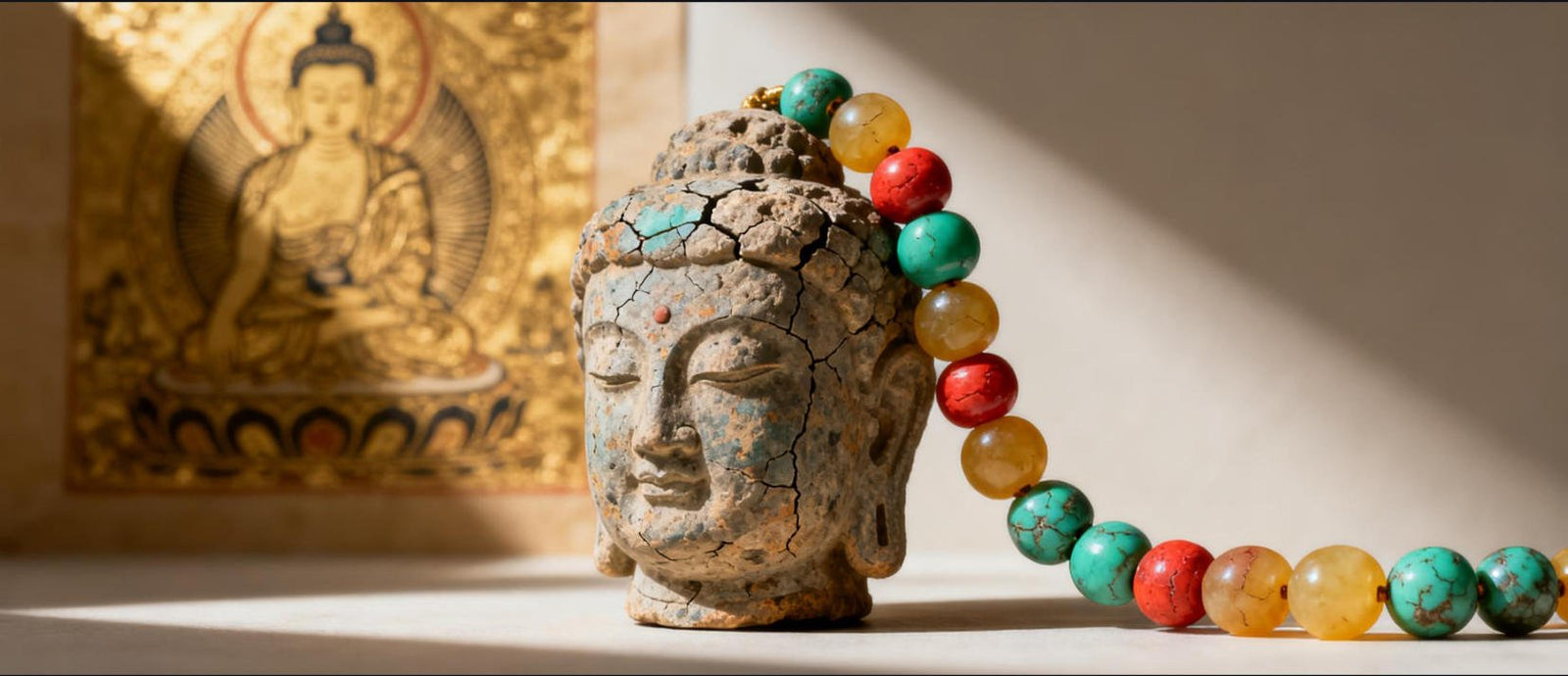
You sit down to meditate. The intention is there—to find a moment of quiet, to connect with your breath. Yet, the mind has other plans. An email you forgot to send surfaces. A conversation from yesterday replays itself, word for word.
The grocery list materializes. Your focus splinters into a thousand different directions, and the stillness you crave feels impossibly distant. This experience of a scattered mind isn't a personal failing; it's the default state of modern consciousness.
In these moments, the abstract instruction to "just focus" can feel hollow. What you need is not another command, but a tangible anchor—a physical object that can guide your wandering attention back home. This is the role a mala has served for centuries: a tool not to silence the mind, but to give it a single, sacred task, transforming distraction into devotion, one bead at a time.

What a Mala Really Is: A Tool Forged in History
To truly understand the mala, you must look beyond its current popularity as a spiritual accessory. Its origins are not in a design studio but in the contemplative practices of ancient India, over 3,000 years ago.
The term itself, mālā (माला), is a Sanskrit word meaning "garland" or "wreath." The earliest malas were simple tools for a practice called japa, the meditative repetition of a mantra or divine name.
They were designed for a purely functional purpose: to keep count of these repetitions without distracting the mind with the act of counting itself.
When Buddhism traveled from India to Tibet, carried across the Himalayas by masters like Padmasambhava (Guru Rinpoche) in the 8th century, the japa mala was adopted and profoundly integrated into Tibetan Vajrayana practice. In Tibet, it is known as a phreng ba (pronounced "treng-wa").
Here, its form and materials became imbued with deeper layers of symbolism. The establishment of the first Buddhist monastery in Tibet, the Samye Monastery, around 775 CE, solidified these practices. It was in places like this that the mala transformed from a simple counting device into a complete spiritual tool, a microcosm of the Buddhist path.
The structure became standardized: 108 beads, representing the 108 kleshas, or mental afflictions, that a practitioner seeks to overcome. A larger, distinct bead, called the guru bead or sumeru (named after the mythical cosmic mountain), was added to mark the start and end of a cycle of recitation.
This bead serves as a point of pause, a moment to honor one's teachers and the wisdom they represent. Often, counter beads are added at specific intervals to help track shorter counts within the full cycle of 108.
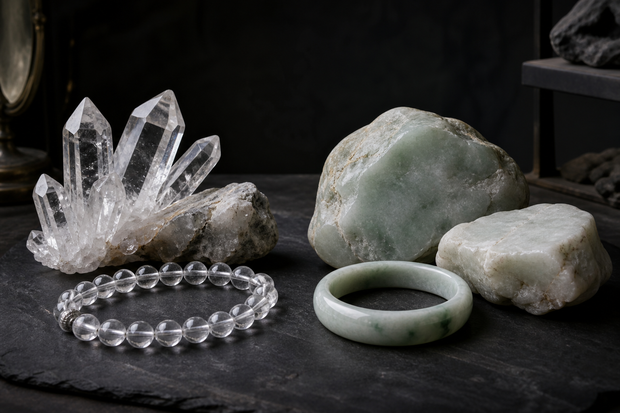
While early malas were often crafted from wood or seeds—most famously, Bodhi seeds from the species of tree under which the Buddha attained enlightenment—Tibetan Buddhism embraced the energetic properties of the earth itself. Gemstones and crystals became favored materials, not for mere ornamentation, but for their perceived resonance with specific deities, intentions, and energies.
Lapis Lazuli became associated with the Medicine Buddha's calming presence, Turquoise with the protective power of the goddess Tara, and Carnelian with the vital energy of the life force. The choice of material became an integral part of the practice, aligning the physical tool with the practitioner's specific spiritual goal.
When you hold one of these authentic mala beads, you are holding a direct link to this rich history—a technology of consciousness refined over millennia.
The Deeper Meaning Woven into Every Bead
A mala is far more than a string of beads; it is a profound map of the spiritual journey. Every single component, from the thread to the tassel, carries a weight of symbolism that enriches your practice and connects you to a lineage of wisdom.
Understanding this intricate design transforms the mala from an object you own into a path you walk.
The circular form of the mala itself is the first lesson. It represents the cyclical nature of existence, the wheel of samsara—the endless loop of birth, death, and rebirth driven by ignorance and craving.
Yet, with each pass of a bead through your fingers, you are actively engaging in a practice that leads toward liberation from this very cycle. The circle, therefore, also symbolizes the possibility of wholeness and enlightenment.
Your journey around the mala mirrors the journey through life, with the goal of breaking the cycle and realizing ultimate freedom.
The 108 beads are the steps on this path. This number is sacred across many Dharmic traditions. In Buddhism, it is most commonly said to represent the 108 types of kleshas, or defilements, that cloud the mind—desires, aversions, attachments, and delusions.
As you recite your mantra for each bead, you are not only counting; you are symbolically transforming each of these 108 afflictions into wisdom and compassion. Each touch is an act of purification, a conscious choice to replace a negative mental habit with a positive one.
The practice becomes a direct confrontation with the obstacles to your own inner peace.
The guru bead is the anchor of this entire process. It is the beginning and the end of each round of japa. It is never crossed. When you reach it, you pause. This pause is a moment of deep significance—a moment to express gratitude for the teachings, for your spiritual guides (the outer gurus), and for the innate wisdom within you (the inner guru).
It is a reminder that the goal of the practice is not endless repetition, but the attainment of the wisdom that lies beyond the practice itself. By turning the mala around to begin another cycle, you acknowledge that the journey is continuous, always returning to the source of wisdom for guidance.
The thread that holds the beads together symbolizes the unbroken continuity of the Dharma—the universal truth that runs through all phenomena. In our explore mala beads, you will find they are hand-knotted between each bead.
These knots are vital. They represent the challenges and karmic knots of life, but also the unbreakable link between all beings. They secure each bead, giving the mala strength and flexibility, just as the Dharma provides a resilient framework for working through life's complexities.
Finally, the tassel represents the roots of the lotus plant, which grows from the mud to blossom in pristine beauty. It symbolizes our potential to rise from the "mud" of our defilements to attain the "blossom" of enlightenment.
It is also seen as a symbol of our interconnectedness, the many strands coming together as one whole.
Real Benefits for Modern Life: An Anchor in the Storm
While the mala is an ancient spiritual tool, its benefits are profoundly relevant to the challenges of your contemporary life. Its power lies in its ability to bridge the gap between abstract intentions and concrete, physical action, offering tangible support for your mental and emotional well-being.
You’ve likely heard that meditation reduces stress, but how does a mala facilitate this? It works as a powerful tool for somatic mindfulness. When your mind is caught in a loop of anxious thoughts, the simple, repetitive, tactile sensation of your thumb passing over each smooth bead provides an immediate anchor to the present moment.
This physical act interrupts the cognitive churn. It gives your nervous system a clear, non-threatening point of focus, gently guiding you out of the fight-or-flight response and into a more regulated, parasympathetic state. It’s not about forcing calm; it’s about giving your body and mind a physical pathway back to it.
In an age defined by digital distraction and constant multitasking, the ability to focus is a superpower. The mala is a supreme single-tasking device. The practice of japa meditation—reciting a mantra for each of the 108 beads—is a training exercise for your attention.
Each time your mind wanders (and it will), the act of feeling for the next bead is a gentle, non-judgmental cue to return to your chosen focus. Over time, this builds mental muscle. You are not only completing a ritual; you are actively rewiring your brain's ability to concentrate and sustain focus, a skill that translates directly to improved productivity and presence in all areas of your life.
Setting an intention to be more compassionate or to have more courage can feel vague. How do you practice that? This is where a gemstone mala becomes a form of embodied intention. When you consciously choose a mala made of Rose Quartz to cultivate compassion or Tiger's Eye for courage, you make your intention physical.
The mala is no longer just a string of beads; it is a constant, wearable reminder of your commitment to yourself. Seeing it on your wrist during a difficult conversation or feeling its weight in your pocket before a challenging task serves as a subtle prompt, reconnecting you with the quality you wish to embody.
It transforms a fleeting thought into a persistent, accessible presence in your life. You can explore our full range of Tibetan Buddhist jewelry and artifacts to find the material that speaks to your personal goals.
Finally, the mala helps to create a ritual space in a life that often lacks it. The simple act of picking up your mala can signal to your brain that it is time to transition from the chaos of the day to a period of inner quiet.
This ritualization can be incredibly powerful. It carves out sacred time, even if it's just for five minutes, creating a dependable sanctuary you can return to daily. This consistency builds a deep sense of stability and self-reliance, proving that peace is not something you have to search for externally, but something you can cultivate internally, one bead at a time.

How to Choose an Authentic Mala
Choosing a mala is an intimate process, a matching of a spiritual tool to your unique path. To ensure the mala you select can truly support your practice, it’s important to understand the markers of authentic craftsmanship and quality.
An authentic mala is not only an assembly of parts; it is created with intention and an understanding of its sacred purpose.
First, consider the materials. The heart of a gemstone mala lies in the stones themselves. Look for genuine, grade-A natural stones. Synthetic or dyed materials, like colored glass or reconstituted stone dust, lack the energetic integrity and durability of the real thing.
You can often spot imitations by their unnatural color uniformity, a tell-tale plastic-like sheen, or a weight that feels too light for stone. An authentic stone will have natural variations, inclusions, and a cool, substantial feel in your hand. if you are drawn to the deep blue of Lapis Lazuli or the grounding energy of Black Onyx, ensuring the material is genuine is the first step toward a meaningful connection.
Pay close attention to the construction. A traditionally crafted Tibetan-style mala is always hand-knotted between each of the 108 beads. This is not merely a decorative choice; it serves several crucial functions. The knots provide the perfect amount of space between beads, allowing your fingers to move easily from one to the next during japa practice.
This prevents the beads from clacking together and helps you maintain a smooth, meditative rhythm. Furthermore, the knots provide immense durability, ensuring that if the mala ever breaks, you will only lose one bead, not all of them.
Symbolically, each knot represents the unbreakable bond of the Dharma and the interconnectedness of all things.
Examine the guru bead and the overall finish. The guru bead should be distinct and securely attached, serving as the clear starting and ending point for your recitations. The tassel, if present, should be made of high-quality thread, well-bound and neat.
The entire piece should feel solid and well-made, capable of withstanding daily use for years to come. Ultimately, the most crucial element in choosing a mala is your own intuition. As you look at different gemstone mala bead necklaces, notice which one you feel a pull towards.
Often, the mala you are most attracted to carries the exact energy or reminds you of the specific intention you need to focus on in your life right now. Trust that connection. It is the beginning of your relationship with this sacred tool.
How to Use Your Mala for Japa Meditation
Using a mala is a simple, beautiful practice that can ground you in the present moment and deepen your connection to your spiritual intentions. The practice is called japa, and it involves the rhythmic repetition of a mantra. Here is a step-by-step guide to begin.
First, prepare your space and yourself. Find a comfortable, quiet place where you can sit undisturbed for a few minutes. You can sit on a cushion on the floor or upright in a chair, with your spine straight but not rigid.
Take a few deep breaths to settle your body and mind. Hold your mala in your hands and take a moment to set an intention for your practice. What quality do you wish to cultivate?
What are you seeking clarity on? Then, choose a mantra. It can be a traditional Sanskrit mantra like Om Mani Padme Hum (the mantra of compassion) or a simple affirmation in your own language, such as "I am calm" or "I am present."
To begin the meditation, hold the mala in your right hand, as this hand is traditionally associated with projecting positivity. Let the mala drape over your middle finger. Your thumb will be used to move the beads.
The index finger, which is associated with the ego, should not touch the beads; you can simply extend it away from the others. Start with the first bead next to the guru bead.
Now, begin the recitation. As you hold the first bead between your middle finger and thumb, recite your chosen mantra once, either aloud or silently. Upon completing the mantra, use your thumb to pull the next bead towards you, and repeat the process.
Continue this movement, reciting your mantra for each bead, progressing around the mala. Allow the physical sensation of the beads and the sound of the mantra to be your focus. When your mind wanders, gently and without judgment, guide it back to the feeling of the bead in your hand and the resonance of your mantra.
When you have recited your mantra 108 times, you will arrive back at the guru bead. This marks the completion of one full round. Do not cross over the guru bead. Instead, take this as a moment to pause.
Reflect on your practice and offer gratitude. If you wish to continue with another round, simply turn the mala around and go back in the opposite direction. Using a mala in this way creates a beautiful synergy of breath, sound, and touch, making meditation an accessible and deeply embodied experience.
Explore our white crystal mala.
Common Questions About Malas
Can anyone use a mala, or is it reserved for Buddhists?
A mala is a tool for mindfulness and meditation, and its benefits are available to anyone, regardless of their spiritual beliefs or background.
People of all paths use malas to help focus the mind, set intentions, and cultivate a sense of peace. The key is to approach the mala with respect for its cultural and spiritual origins.
It is not merely a piece of jewelry but a sacred tool. As long as you use it with sincere intention, you are honoring its purpose.
What is the deeper significance of the 108 beads?
The number 108 is sacred in many Eastern traditions. In Buddhism, it most commonly represents the 108 kleshas (defilements or afflictions of the mind), such as greed, anger, and ignorance.
The practice of reciting a mantra 108 times is a symbolic act of transforming these 108 afflictions into 108 jewels of wisdom. Other interpretations suggest it relates to the 108 names of deities, the 108 energy lines converging to form the heart chakra, or astronomical calculations from ancient Vedic culture.
How should I cleanse my gemstone mala?
Because gemstones can absorb energy from their environment and from your use, it's beneficial to cleanse your mala periodically. Safe and effective methods include placing it in the light of a full moon overnight, smudging it with the smoke of sage or palo santo, or placing it near a singing bowl and letting the sonic resonance wash over it.
Avoid soaking your mala in water or salt, especially if it contains porous stones like turquoise or wood, as this can damage the beads and the string.
What does it mean if my mala breaks?
A breaking mala is not a sign of bad luck. In fact, it is often seen as a positive sign. Traditionally, it is believed to symbolize the breaking of a cycle of suffering or the fulfillment of the intention you were working with.
It signifies that you have completed a phase of your journey and are ready for the next. It is an opportunity for reflection and gratitude. You can gather the beads and have the mala respectfully re-strung, perhaps with a new intention, or retire the beads on your altar.
Which hand should I use for japa meditation?
In many traditions, the mala is held in the right hand, which is associated with giving or sending out energy, compassion, and positive intentions. The left hand is seen as the hand of receiving.
However, this is not a strict rule. Some practitioners use the left hand to draw energy inward. The most important thing is your comfort and what feels right for your practice. Let your own intuition guide you.
How do I choose the right gemstone for me?
There are three primary ways to choose a gemstone. First, use your intuition: browse a collection and see which stone you are visually and energetically drawn to.
This is often the most powerful method. Second, choose by intention: identify a quality you wish to cultivate (e.g., clarity, love, protection) and select a stone known for that property (e.g., Clear Quartz, Rose Quartz, Black Tourmaline).
Third, you can choose based on energetic systems like the chakras, selecting a stone that corresponds to a center you wish to balance. There is no wrong choice; the best mala for you is the one that resonates with your personal journey.
Find the perfect mala to support your practice in our curated selection of Tibetan malas.
Your Next Step on the Path
Your journey with a mala begins not when you own it, but when you begin to use it as a conscious tool for transformation. You have seen how it is more than a beautiful object; it is a piece of history, a map of the spiritual path, and a practical anchor for a restless mind.
Each bead is an opportunity to come back to yourself, to replace a moment of anxiety with a breath of peace, to transform a fleeting intention into an embodied reality.
The true power of the mala is not in the stones themselves, but in the focused attention and sincere intention you bring to your practice. The mala is simply the guide, the trusted companion that helps you navigate your inner world.
It is waiting to absorb your intentions and reflect your commitment back to you, one bead at a time. To begin this profound relationship, we invite you to explore our handcrafted collection and discover the mala that is waiting to support your journey.
Keep reading